
Entertainment
Starfleet Academy Is Secretly The Least Diverse Star Trek Show

By Chris Snellgrove
| Published

Starfleet Academy is the latest Star Trek show, and one of its big hallmarks is diversity. This includes showcasing characters from very different backgrounds (a human thief, a childlike hologram, an empathic princess, a pacifist Klingon, etc), complete with a wide range of sexualities (gay, straight, and bi? Oh my!). There is even diversity in age: the show focuses on both young characters and their older instructors, and Chancellor Ake alone has a few centuries on her young students.
However, calling itself diverse is a lie. Starfleet Academy is secretly the least diverse Star Trek series ever made. That’s because it has one flaw that effectively cancels out all of the diversity of its character backgrounds and sexualities. Namely, that every single alien character is written like a boring old human being.
The Oldest Trope In Star Trek

Since the days of The Original Series, Star Trek has had an unofficial rule: each show must include an outsider alien character who helps the audience learn more about their own humanity. Spock’s emotionless Vulcan ways contrasted with McCoy’s fiery passion, for example, and Spock ultimately sacrificed his life after learning the value of Kirk’s relentless drive (there’s no such thing as a no-win scenario). After Spock died foiling the ultimate no-win scenario, Kirk declared, “Of all the souls I’ve encountered, his was the most human.”
This wasn’t literally true, of course: not only did Spock remain fully green-blooded, but his decision to save the ship was rooted in his flawless Vulcan logic (the needs of the many outweigh the needs of the one). But his death helped Kirk to find joy in life and rededicate himself to new beginnings. In this way, Spock began the oldest trope in Star Trek: the outsider alien helping others learn more about their own humanity.
Trek Trope: The Next Generation

Later Star Trek shows embraced this trope to great effect: on The Next Generation, the android Data dreamed of becoming more human, and his quest helped everyone learn more about the power and promise of their own human journey. On Deep Space Nine, Odo was a Changeling who could never master looking like a solid, but his efforts to understand everyone else helped everyone gain new perspectives on what they took for granted. Neelix helped Voyager’s human crew discover joy in the small things, while T’Pol helped the humans of the Enterprise crew learn from their species’ mistakes as they began exploring strange, new worlds for the first time.
NuTrek has dabbled in this trope: on Discovery, Saru teaches the crew how to adapt to any situation, and Michael Burnham’s Vulcan upbringing helped her discover (for better or for worse) the importance of her emotions. Picard also dabbled in different alien outsiders, ranging from the android Soji to her positronic papa, Data. The return of Data hailed the return of TNG’s beloved alien outsider, and Strange New Worlds brought things full circle by putting Spock front and center.
Starfleet Academy Is Too Human For Its Own Good

Starfleet Academy is often praised for its diversity, and the cast of characters is truly unlike anything we have previously seen in other Star Trek series. Fully eight of the show’s 12 main characters are aliens, and over half of them are women. The show also puts men and women of color front and center: holographic SAM is the show’s biggest link between both Voyager and Deep Space Nine, and Jay-Den Kraag is showing us a strange new world of Klingon culture. Caleb, meanwhile, is the show’s de facto main character, and he often bridges the gap between the more dramatic and comedic elements of the show.
However, once you get past the diverse character archetypes and occasional forehead loaf, a surprising truth emerges: pretty much all the alien characters are written to be human. Darem is meant to be an exotic alien (he’s Khionian, b*tch!), but he is simply written as a cocky human, which is why he and would-be Alpha Caleb are constantly butting heads. SAM is an emissary from a holographic race who knows nothing about humanity, but she is constantly and inexplicably written as a teenage human.
The same goes for Genesis, an alien who is so human that she likes to chew bubblegum and wax philosophic about Daddy issues. Chancellor Ake is a Lanthanite who is nearly half a millennium old, but she is virtually indistinguishable from a quirky wine mom. On paper, the Klingon Jay-Den would be the most alien of them all because he hails from a warrior race, but in making him a softspoken, quippy pacifist making moony eyes at his crush, Starfleet Academy has made him the most human Klingon we’ve ever seen (yes, even more than Alexander).
They’re Only Human

Making all these aliens effectively human is by design, of course: Starfleet Academy is designed to appeal to young audiences, so this is a way of ensuring that these young characters are relatable despite their alien heritage. No matter what exotic planet they hail from, all of these 32nd-century cadets utilize slang and references very familiar to 21st-century youngsters. In this way, Paramount hopes to retain the old guard of Star Trek fans while appealing to Zoomers and even Generation Alpha.
Time will tell if Starfleet Academy manages to secure the (ahem) “next generation” of Star Trek fans, but they are already alienating older fans through (ironically enough) the lack of truly alien characters. There is no alien outsider to help characters and viewers appreciate their own humanity; instead, every alien is written as a human with a chip on their shoulder and a mouth like a sailor. Sure, this makes the latest Star Trek series feel like other popular drama series, but it also dilutes the new show by removing one of the franchise’s most distinctive sci-fi elements.
When Is A Star Trek Show Not Actually A Star Trek Show?
That leads to some downright philosophical questions, like “When is a Star Trek show not actually a Star Trek show?” Paramount is gambling that stripping the franchise of everything familiar in the name of mass appeal is the only way forward, but it’s an approach that has been driving away legacy fans in droves. Now, the studio is about learn the answer to “when is a Star Trek fan no longer a Star Trek fan?”
Simple: when they unsubscribe from Paramount+, the worst streaming platform the galaxy has ever known.
Entertainment
This robotic pool vacuum is basically a Roomba that can swim, and it’s $449 off today

SAVE 35%: As of May 6, you can get the Beatbot AquaSense 2 for $849 at Amazon, down from $1,298. That’s a 35% discount or $449 savings.

$849
at Amazon
$1,298
Save $449
I don’t have a pool (well, not a personal one, anyway; I live in an apartment complex), but I do have a robot vacuum, and I know the joy of watching a little machine clean my floors while I do other things. If you apply that same logic to pool maintenance (which I imagine is a lot more annoying than keeping your floors clean), then investing in a robo pool cleaner makes a lot of sense.
Mashable Trend Report
And, right now, you can get one of Amazon’s top-rated models for a fraction of the price. As of May 6, you can get the Beatbot AquaSense 2 for $849 at Amazon, down from $1,298. That’s a 35% discount or $449 savings. It’s also the lowest price we’ve seen this model go for. The only problem? Amazon marked this as a “limited-time deal,” and the countdown clock shows it ends in about 16 hours.
This thing works just like an indoor robot vacuum; it maps out its cleaning path and then uses an onboard 4-core CPU and 16 sensors to navigate using an S-path for the pool floor and an N-path to scrub the walls and waterline. It also has a “Double-Pass Scrubbing” feature for the waterline, so it’ll get the grimiest spots twice per pass. Bonus: When it’s done cleaning (or when the battery runs low), it automatically parks itself at the surface of the water so you don’t have to go diving to retrieve it.
Entertainment
Grandma Anne’s Secret Jell-O

I love making food that people appreciate — the kind of meal that makes the whole table go quiet at the first bite. But you know what I kind of love more? Making food that makes the whole table shriek like kids chasing the ice-cream truck.
So, when I happened upon a “secret Jell-O” recipe in chef Hillary Sterling’s new cookbook, Ammazza! — titled for the Roman slang term, which roughly translates to “wowee!” — I knew I had to share.
“This was the defining treat of my childhood,” explains Hillary. Growing up, her Grandma Anne always kept a bowl of Jell-O in the fridge. “She added halved grapes, and they’d hover in the middle while it ‘jellified.’ It tasted so cool, refreshing, and delicious.” As adults, Hillary and her sister tried to replicate it, but never managed to get the taste just right. That’s when their grandpa clued them in to Grandma Anne’s secret ingredient: sweet liqueur. “Turns out, our favorite childhood dessert was one part Grandma, one part frat party.”
Hillary’s own adaptation is a little more cocktail-party than frat, but just as festive: a ruby-red confection, studded with plums and served in a champagne coupe. Plus, it’s incredibly simple, with less than 10 minutes of active cooking time. And while I’ll give Grandma Anne the benefit of the doubt, and say she probably wasn’t trying to inebriate her grandchildren, this recipe has almost a shot’s worth of brandy per serving (wowee, indeed!). So, let’s maybe keep it at the grown-ups table.
Grandma Anne’s Secret Jell-O
from Ammazza! by Hillary Sterling
Serves 4
1/2 cup (115 g) prunes*
3/4 cup (180 ml) brandy
1 85-gram package cherry gelatin
*It’s true, prunes are dried plums. Here, they’re essentially rehydrated in the cooking process.
In a small pot, combine the prunes and 1/2 cup (120 ml) of the brandy. Bring to a boil, then turn the heat low, and cook until the prunes absorb all the liquid (about 5 minutes). Set aside. In a separate small saucepan, bring 1 cup (240 ml) of water to a boil. Place the gelatin in a heatproof bowl, then pour the hot water over it, whisking until fully dissolved (about 2 minutes). Stir in the remaining 1/4 cup (60 ml) of brandy and 1 cup (240 ml) of cold water.
Divide half of the gelatin mixture evenly among four glasses, filling them about halfway. (“This is the time to break out your heirloom wine glasses or champagne coupes,” says Hillary. “Style and presentation meant everything to my grandmother.”) Arrange the glasses on a small sheet pan for stability. Refrigerate, uncovered, until just set (about 1 hour).
Finally, divide the steeped prunes evenly among the glasses, gently placing them on top of the set layer. Top each glass with the remaining gelatin — the fruit will “float” as it sets. Cover and refrigerate until firm but still jiggly (about 1 hour more). Serve, and enjoy!

Thank you so much, Hillary! And congratulations on your beautiful cookbook.
P.S. More fun party recipes, including a chaotic pavlova and a pasta cake.
(Photos by Kelly Puleio. Excerpted with permission from Ammazza!, on sale now from Scribner, an imprint of Simon & Schuster. Copyright © 2026 by Hillary Sterling)
Entertainment
The Bradley Cooper Horror Movie That Will Break Your Brain
By Sean Thiessen
| Published
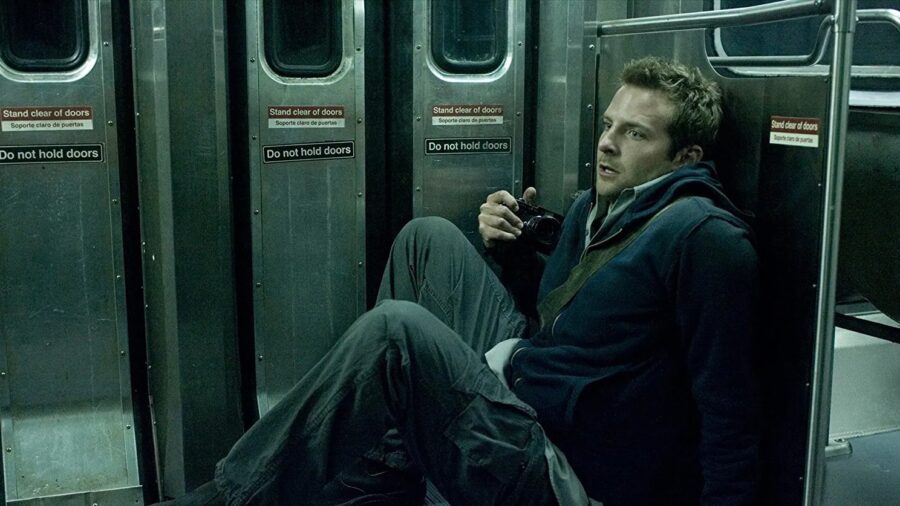
What do you get when you cross Bradley Cooper with a Clive Barker horror story? The answer: 2008’s gory cult classic The Midnight Meat Train. Though a slashed theatrical release buried the film, this disturbing bloodbath has finally been unearthed on Tubi.
Riding The Rails Has Never Been More Dangerous
Bradley Cooper leads The Midnight Meat Train as Leon Kaufman, a photographer keen on capturing the grit of city life. After his portfolio is rejected by a high-profile gallery owner for being too safe, Leon ventures out in search of danger. Spoiler alert: he finds it.

Leon captures a brutal act of violence on a subway and becomes obsessed with tracking down a serial killer who has been enacting carnage on the late-night train for years. Leon spirals down a tunnel of mystery that slowly unravels a conspiracy that goes all the way to the bottom. He struggles to gain the support of the police and even his own girlfriend, portrayed by actress Leslie Bibb. The Midnight Meat Train speeds toward a sinister conclusion that is a must-see for horror fans.
This Bradley Cooper film is unlike any other. The Midnight Meat Train was adapted from Barker’s short story by Pet Sematary (2019) screenwriter Jeff Buhler and directed by Japanese filmmaker Ryûhei Kitamura. The result is a dark, tense, and revolting horror mystery, complete with the hyper-stylized sensibilities of 2008.

The film was originally set as the feature directorial debut of Patrick Tatopoulos, a special effects wizard and production designer who cut his teeth on movies like Independence Day, I, Robot, and Underworld. It was scheduled to shoot in New York City in 2005.
Tatopoulos was replaced by Kitamura and, in an effort to cut costs, Bradley Cooper and the rest of the gang shot The Midnight Meat Train in the Los Angeles metro system. Production finally began in the spring of 2007.

Lionsgate distributed the film but only opened the movie in the secondary theatrical market, limiting the release to about 100 screens. It was then quickly released on DVD, much to the filmmakers’ dismay. Clive Barker openly criticized Lionsgate’s Joe Drake for burying other films in order to venerate The Strangers, for which Drake was a producer.
Critics twho saw The Midnight Meat Train generally liked it, praising the acting from Bradley Cooper, Leslie Bibb, Vinnie Jones, and the rest of the cast. The film carries a 70 percent critical score on Rotten Tomatoes on the consensus that it delivers the thrills, scares, and gore its target audience seeks.
Bradley Cooper’s Career Took Off After Midnight Meat Train

Bradley Cooper jumped from Midnight Meat Train into the following year’s breakout hit The Hangover. That film launched Cooper from a solid supporting actor to a bankable leading man. The Hangover spawned a lucrative trilogy of comedies that provided a steady stream for Cooper as he expanded to dramatic horizons.
Cooper has since led an exciting and successful career as an actor, director, and producer. His performance in 2012’s Silver Linings Playbook earned the actor his first Oscar nomination, which he followed up with nominations for his work in American Hustle, American Sniper, and A Star is Born. As a producer, his films Joker, A Star is Born, American Sniper, and Nightmare Alley were nominated for Best Picture.

Bradley Cooper’s horror background with Midnight Meat Train paired with the gnarly sensibilities of director James Gunn to bring about Rocket Raccoon in the Guardians of the Galaxy trilogy. The character may be Cooper’s most iconic, but it is easy to forget that such a high-profile actor lurks beneath the CGI surface of the lovable a-hole.
The evolution of Cooper’s career is a fascinating one, and The Midnight Meat Train is an important piece of the puzzle. It stands out among his list of comedies, dramas, and action films, and the film’s troubled release leaves it begging for rediscovery.
Now, nearly 20 years after its release, fans of Bradley Cooper can head on over to Tubi and ride The Midnight Meat Train all the way to the end of the bloody line.

Angels rout White Sox for rare consecutive wins
Alexandra Eala fights for victory during rain-soaked day in Rome


