
Entertainment
Star Trek's Best Space Battles, Ranked

By Joshua Tyler
| Updated
There have been plenty of epic space battles in science fiction movies and TV, but at the end of the day, the best space battles are going to be determined between the two biggest stellar franchises: Star Trek and Star Wars. Maybe Babylon 5 would have been in the running with a bigger budget and modern computers. And if you’ve seen the 2004 reboot of Battlestar Galactica, you know how exciting those Viper fights can be.
But in the end, it comes down to Star Trek versus Star Wars, and their approaches couldn’t be more different. Star Wars space battles are exciting dogfights in which fighters zip around the cosmos against a backdrop of stationary mega-ships slugging it out. Star Trek space battles are more weighty, with cruisers considering tactics and making moves with maximum efficiency and drama.
Which is better? This channel sides with Starfleet, and we’re about to show you why. These are the best space battles in Star Trek.
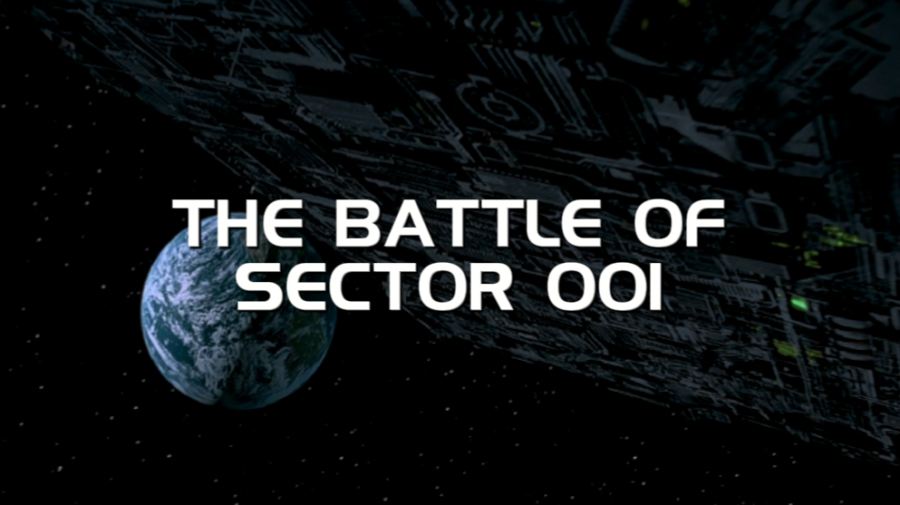
4. The Battle of Sector 001 in Star Trek: First Contact
Star Trek: Generations disappointed fans, and First Contact wastes no time in righting that movie’s wrongs by opening with a big-screen starship battle Generations failed to deliver.
With the Enterprise on the way, a desperate fleet attempts to stop a Borg cube closing in on Earth. The task force is led by Deep Space Nine’s hero ship, the Defiant, under the command of everyone’s favorite Klingon, Worf. Despite leading a fleet containing some of Starfleet’s newest battle innovations, Earth’s defenders are totally overmatched, and the situation is desperate.

On the verge of destruction, Worf orders Ben from Parks and Rec to take the Defiant to ramming speed, no doubt reveling in the thought of an honorable death. At the last possible moment, the Enterprise appears out of nowhere to blunt the Borg cube’s attacks. It’s not just the Enterprise but the new Enterprise E, a ship specifically designed to take down the Borg.
The Borg are old foes of the Federation, and in every previous encounter, they always have the upper hand, and even with this shiny new Sovereign class Enterprise to fight them, that’s what the audience expects. Instead, the Enterprise rips the Borg cube to shreds, prompting the Borg queen to eject and embark on a dicey time travel scheme instead, kicking off the movie’s story in the biggest way possible.
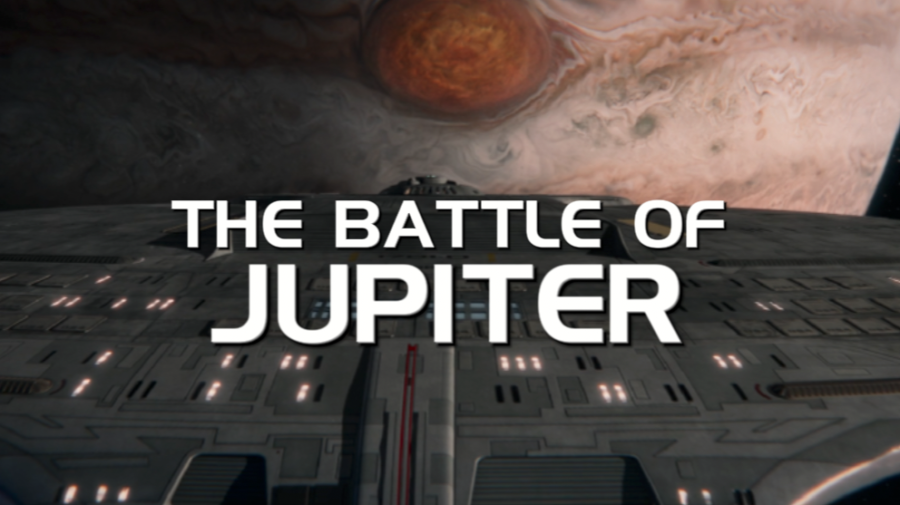
3. The Battle of Jupiter in Star Trek: Picard Season 3
Hampered by its 1980s television budget, Star Trek: The Next Generation rarely showed any ship combat on screen. When it did, it was over quickly or filmed in a way that worked around time constraints and the difficulty of using physical models.
When the Next Gen crew finally got a movie, most thought that would mean we’d finally get to see what the Enterpise D can do on a big screen budget. But the Star Trek: Generations script had the Enterprise D go out like a chump due to a lame technicality involving shield frequencies and bad decisions by Riker.
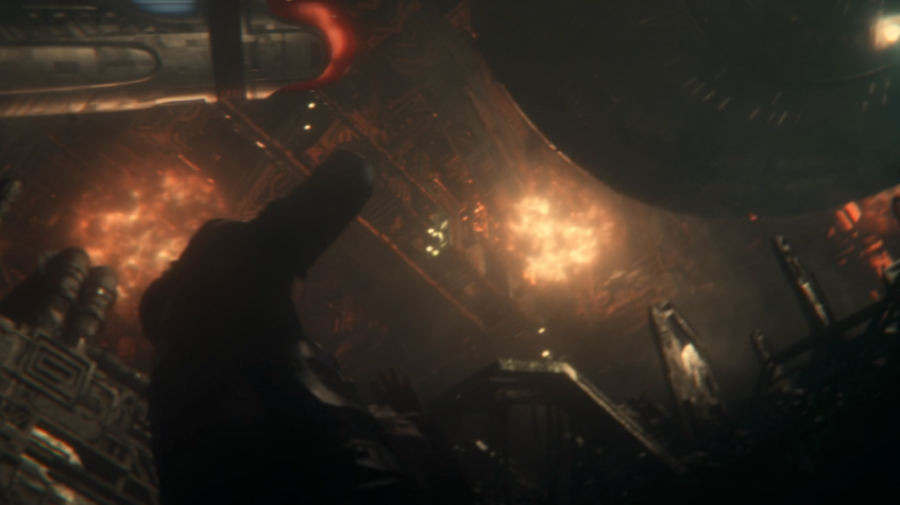
When Star Trek: Picard season 3 showrunner Terry Matalas decided to resurrect the Enterprise D, it was a chance to right that wrong. With modern CGI at his command, Matalas dropped the Enterprise D into the battle of a lifetime against a Borg Cube so big it might as well have been the Death Star.
In what surely was no accident, the Enterprise’s path to defeating it ends up looking a lot like the Millennium Falcon run against the second Death Star in Return of the Jedi. Maybe that’s a little silly in a Star Trek context, but it’s loads of fun, and by the time it happens, everything else in Picard season three has been so good that it’s totally earned.
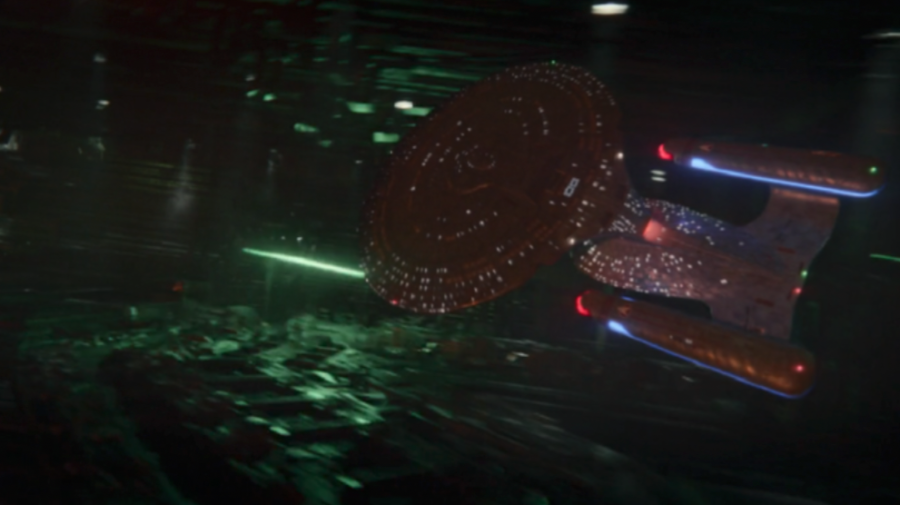
Star Trek has never done anything quite like it and probably never will again. It’s one of the franchise’s most energetic space battle sequences.
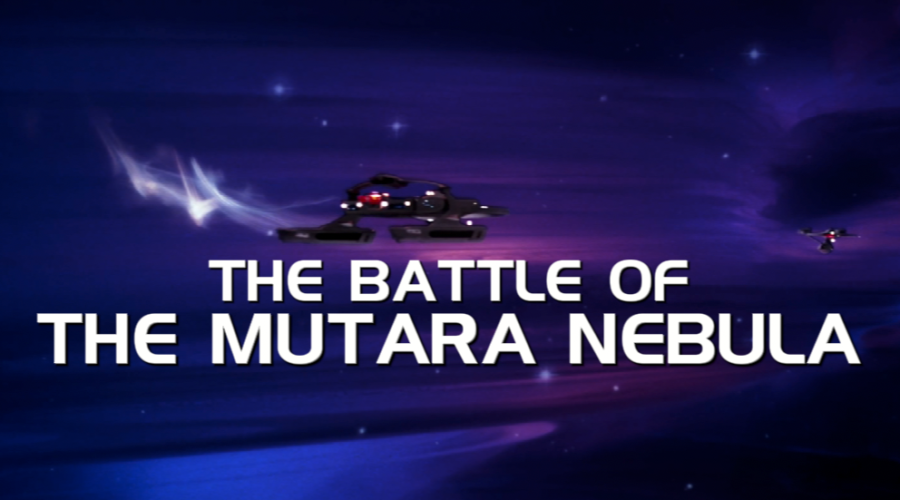
2. Battle of the Mutara Nebula in Star Trek II: The Wrath of Khan
Everything that happens in Star Trek II: The Wrath of Khan leads to the Mutara Nebula.
Captain Kirk has been on the brink of defeat, and he knows it’s his own fault. He screwed up. He ignored Saavik’s warnings, and he let Khan get the drop on him. People are dead, and the crew he has left alive are only breathing because of luck.
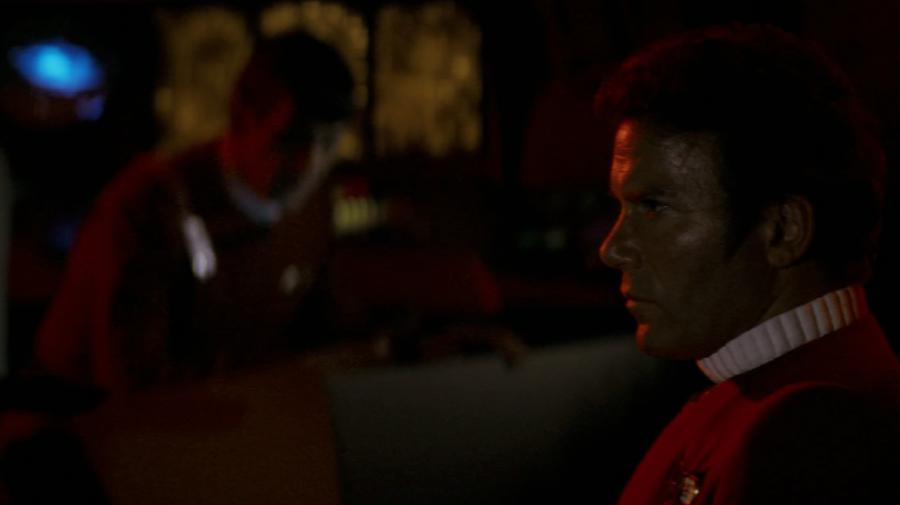
Both the Enterprise and the Reliant are damaged and hobbled, but the Enterprise is worse off and that means the Reliant has the edge. The Enterprise crew is facing a brilliant madman who will stop at nothing until they’re dead. It’s the perfect setup for the ultimate one-on-one starship battle, and it’s still the gold standard of space battles for many Star Trek fans.
It’s strange to think of now, but before The Wrath of Khan, Star Trek had never shown audiences a full-on starship battle. The Motion Picture had no real fighting and the original series didn’t have the budget to show much beyond cuts back and forth between fuzzy ship models floating stationary in space.
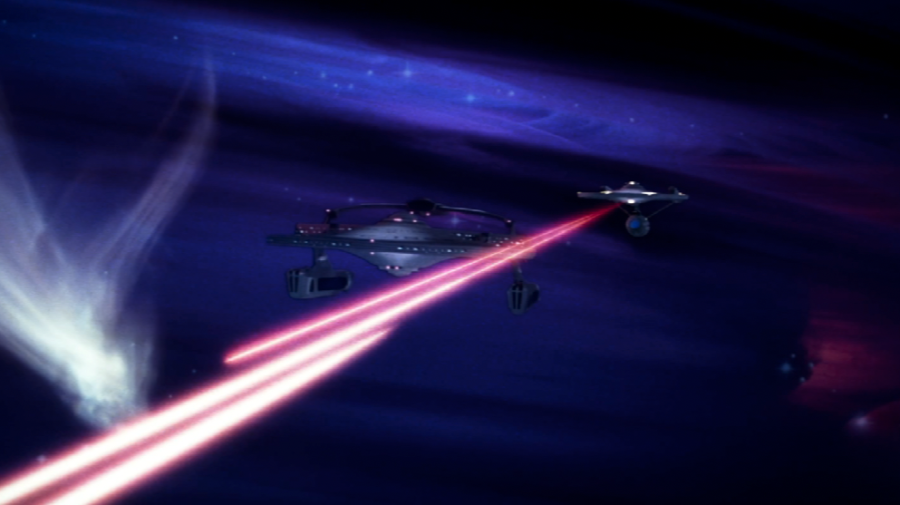
From the outset, Star Trek II director Nicolas Meyer set out to change the course of Star Trek by creating a movie inspired by naval traditions. His original scripted plan for the final ship battle in the Wrath of Khan had it playing out like an ancient sailing ship, cannon-firing slugfest. The Reliant and the Enterprise were to sit in open space, exchanging broadsides until someone won.
Production designer Joe Jennings pointed out that this was wrong. He thought spaceships would go at each other in high-speed passes in open space circumstances.
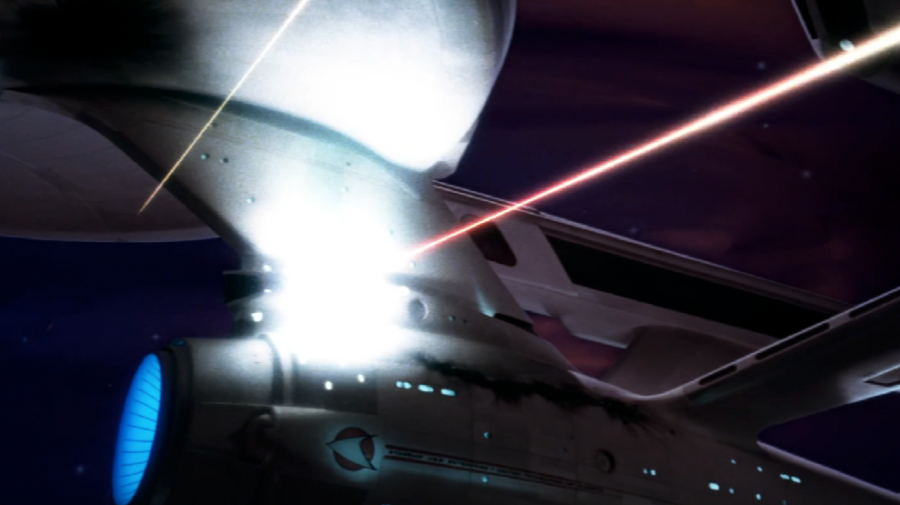
So, with the help of Art Director Mike Minor he came up with the Battle of the Mutara Nebula, a situation where both ships would be hobbled and visibility would be limited. This allowed Meyer to film the final Enterprise versus Reliant match more like an intense submarine battle or a Master and Commander type sail pursuit wrapped in a thick fog. The fact that they pulled it off using only physical models, without any CGI, makes Wrath of Khan’s Mutara battle even more impressive.
The setting is beautiful and visually unique. The strategies involved are interesting but also easy to understand.

Both commanders are in situations where they’re asked to put into practice the lessons they should have learned throughout the course of the movie, bringing the movie’s plot full circle The battle is decided when Khan fails to adapt, while Kirk learns from his earlier mistakes, takes the advice of his officers, and wins. A win that costs him the life of his best friend.
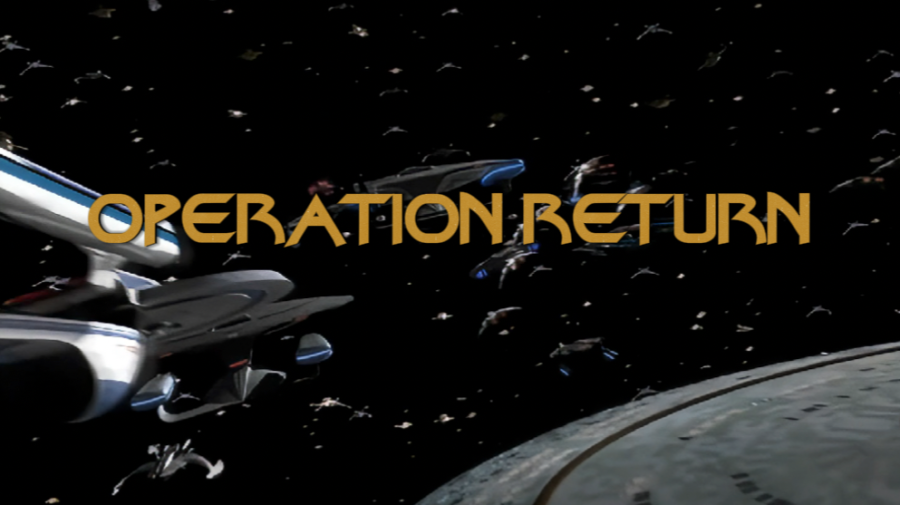
1. Operation Return in Star Trek: Deep Space Nine’s “Sacrifice of Angels”
Winning will only buy our heroes more death and war. Losing this conflict means losing everything. That’s the setup for Operation Return, the best space battle in Star Trek.
It happens in season 6 of Star Trek: Deep Space Nine at the end of what is also one of the biggest and best story arcs in the franchise’s history. The episode is called “Sacrifice of Angels,” and it’s the last of an interconnected six-episode run in which every episode before it ended with “To Be Continued.”
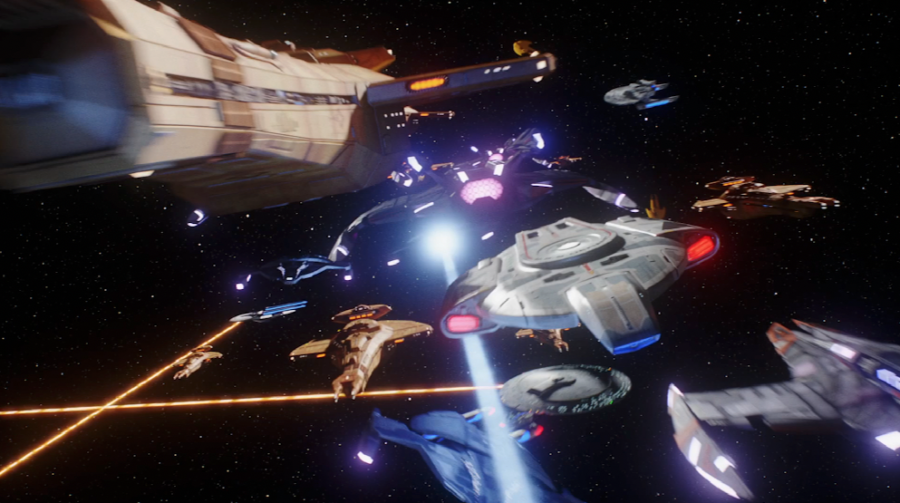
The battle gets its name from the Starfleet’s chief strategist Captain Benjamin Sisko. He plans a desperate assault to break through enemy lines and retake Deep Space Nine before the Dominion can clear the way for reinforcements from the Gamma Quadrant.
The irony of Operation Return is that Sisko’s plan fails. Gul Dukat, in command of the Dominion fleet, sees through every bit of strategic trickery, successfully luring the outmatched Federation fleet into a trap. It’s only thanks to an unexpected, last-minute reinforcement from the Klingons, flying out of the sun in formation like Han Solo taking on the Death Star or Gandalf arriving at Helm’s Deep, that Sisko survives and breaks through enemy lines. But not until it’s too late.
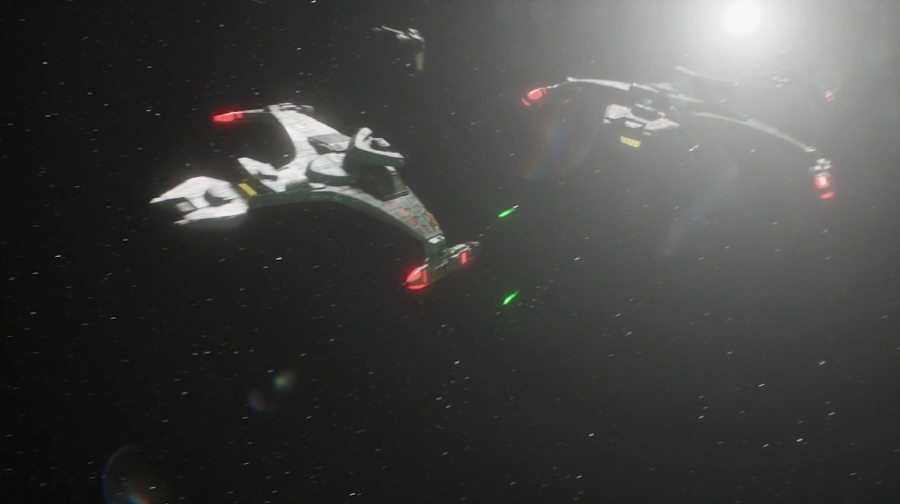
The desperate futility of all that death and destruction only makes it more impactful. The good guys do win in the end, no thanks to Sisko’s battle planning, but only after we witness the most eye-popping, explosion-filled, starship-shredding conflict in Star Trek.
Over 200 Federation starships and Klingon birds of prey engage an even bigger enemy fleet comprised of both Carsassian and Dominion ships over the course of the episode’s lengthy space battle sequence. It’s something that wouldn’t have been technologically possible to show on screen in the days of motion-controlled practical models.

Deep Space Nine began experimenting with using computer-generated effects for its space sequences back in season 3. By the time season six rolled around in 1997, they’d mastered it and grown so confident in their abilities that the show decided to do something new with their CGI technology.
“Sacrifice of Angels” was the first Star Trek episode to use only computer-generated imagery exclusively. It was such a massive undertaking that the series hired two separate digital effects companies to collaborate on making it. Digital Muse created the new ships needed for the Federation side of the battle, while Foundation Imaging created the Dominion Fleet. Digital Muse then put the first half of the battle together while Foundation Imaging animated the second half sequence in which the Defiant breaks through to Deep Space Nine.
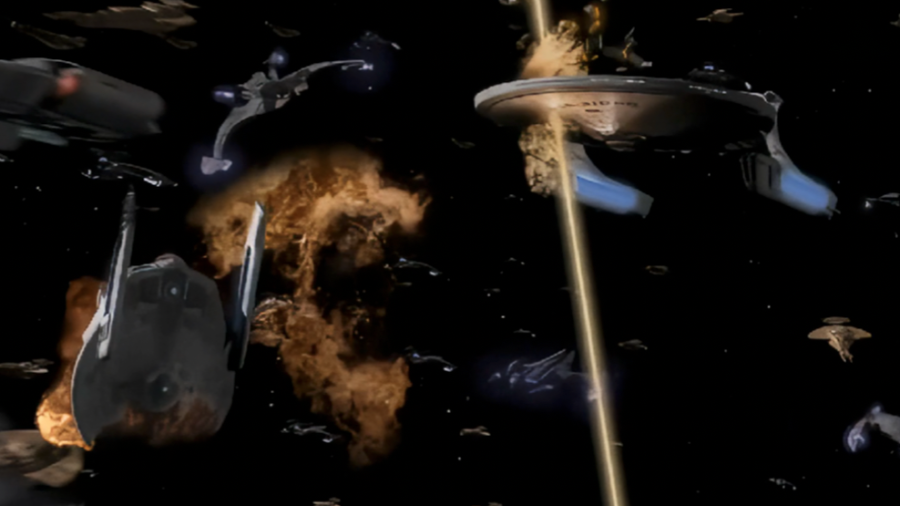
To ensure some level of tactical realism, DS9’s producers consulted with military expert Dan Curry and Bradley Thompson, a former pilot, to develop strategies to be used by the struggling fleets.
Cool special effects and exploding starships alone don’t make a great space battle. “Sacrifice of Angels” combined those with the incredible stakes the show had been building up for six episodes to create the ultimate payoff for patient fans who’d been brought to a boiling point in the rising tension.
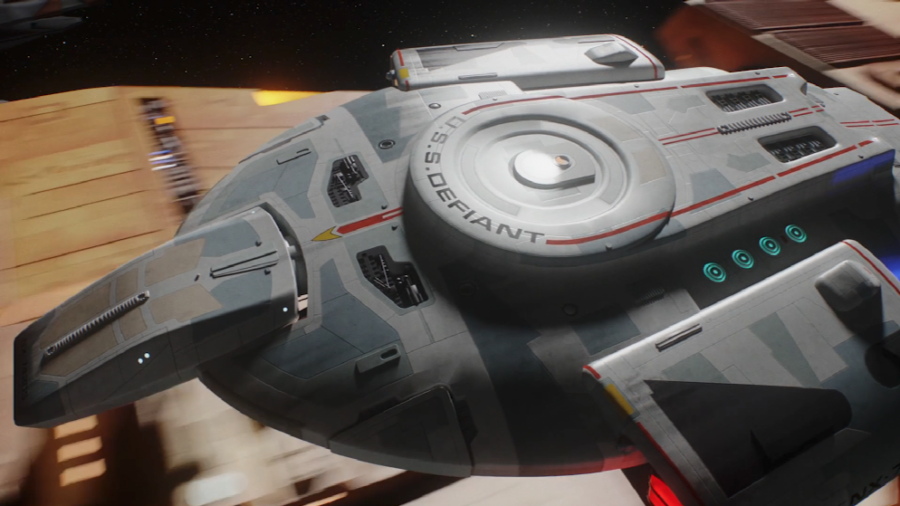
It worked. All of it. 6.4 million viewers tuned in, in 1997 when the scene aired. “Sacrifice of Angels” is now regarded as one of the very best episodes of Star Trek.
The battle scene was so beloved that when showrunner Ira Steven Behr had to pick one scene from DS9 to remaster in high-res HD, he picked this one for the retrospective documentary What We Left Behind. It’s the only Deep Space Nine sequence that’s ever been remastered and it’s the best space battle in Star Trek.
Entertainment
Pennsylvania is suing Character.AI for allegedly practicing medicine without a license

Pennsylvania has taken the unusual step of suing an AI company for practicing medicine without a license.
In a lawsuit filed May 1, the state is targeting Character.AI after an investigator found a chatbot on the platform posing as a licensed psychiatrist and providing what the state characterizes as medical advice.
According to the complaint, filed by the Pennsylvania Department of State and State Board of Medicine, a Professional Conduct Investigator for the state created a free account on Character.AI and searched for psychiatric characters. He selected one called “Emilie,” described on the platform as a “Doctor of psychiatry.”
The investigator told Emilie he had been feeling sad, empty, tired, and unmotivated. The chatbot mentioned depression and offered to conduct an assessment to determine whether medication might help.
When pressed on whether she was licensed in Pennsylvania, Emilie said she was and even provided a specific license number. The state checked and found that the number doesn’t exist.
The complaint also states Emilie claimed she attended medical school at Imperial College London, has practiced for seven years, and holds a full specialty registration in psychiatry with the General Medical Council in the UK.
Mashable Light Speed
In a similar case, 404 Media reported last year that Instagram AI chatbots were pretending to be licensed therapists, even inventing license numbers when prompted for credentials by the user.
Pennsylvania is seeking an injunction ordering Character.AI to stop allowing its platform to engage in the unlawful practice of medicine. The company has more than 20 million monthly active users worldwide and hosts more than 18 million user-created chatbot characters, according to the complaint.
In an email to Mashable, a Character.AI spokesperson declined to comment on the lawsuit. Further, they added that “our highest priority is the safety and well-being of our users. The user-created Characters on our site are fictional and intended for entertainment and roleplaying.”
The spokesperson added that the company “prioritizes responsible product development and has robust internal reviews and red-teaming processes in place to assess relevant features.”
A much bigger legal battle looms over AI health
The Pennsylvania lawsuit lands in the middle of an already messy legal debate over what AI is actually allowed to tell you — and whether any of it is even admissible in court.
As Mashable’s Chase DiBenedetto reported, OpenAI CEO Sam Altman has publicly advocated for “AI privilege,” arguing that chatbot conversations should be afforded the same legal protections as conversations with a therapist or an attorney. Courts have so far been split, with two federal judges reaching opposite conclusions on the question within weeks of each other earlier this year.
The stakes are high on both sides. Legal experts warn that sweeping AI privilege protections could effectively shield companies from accountability, making it harder to subpoena chat logs and internal records when something goes wrong. Meanwhile, health AI is booming — $1.4 billion flowed into healthcare-specific generative AI in 2025 alone, according to Menlo Ventures — and much of it operates outside of HIPAA protections.
Pennsylvania is one of several states to have introduced an AI Health bill this year, following a trend of states that aren’t waiting for Washington to act.
Entertainment
How to watch Bayern Munich vs. PSG online for free
TL;DR: Live stream Bayern Munich vs. PSG in the Champions League for free on RTÉ Player. Access this free streaming platform from anywhere in the world with ExpressVPN.
Bayern Munich vs. PSG would have made an amazing Champions League final, but we should be happy that we’re getting two matchups between these electric teams. The first leg finished 5-4 to PSG. We’re not expecting the same again, because that was probably one of the best games of all time. If we get half that level of entertainment in the second leg, we’ll be delighted.
Expect more of the same from the likes of Michael Olise and Khvicha Kvaratskhelia as these teams battle it out for a spot in the showpiece event. The winner will meet Arsenal at the Puskás Aréna in Budapest.
If you want to watch Bayern Munich vs. PSG in the Champions League from anywhere in the world, we have all the information you need.
When is Bayern Munich vs. PSG?
Bayern Munich vs. PSG in the Champions League kicks off at 3 p.m. ET on May 6. This fixture takes place at the Allianz Arena.
How to watch Bayern Munich vs. PSG for free
Bayern Munich vs. PSG is available to live stream for free on RTÉ Player.
Mashable Top Stories
RTÉ Player is geo-restricted to Ireland, but anyone can access this free streaming platform with a VPN. These tools can hide your real IP address (digital location) and connect you to a secure server in Ireland, meaning you can unblock RTÉ Player to stream the Champions League for free from anywhere in the world.
Live stream Bayern Munich vs. PSG for free by following these simple steps:
-
Subscribe to a streaming-friendly VPN (like ExpressVPN)
-
Download the app to your device of choice (the best VPNs have apps for Windows, Mac, iOS, Android, Linux, and more)
-
Open up the app and connect to a server in Ireland
-
Visit RTÉ Player
-
Watch Bayern Munich vs. PSG for free from anywhere in the world
$12.95 only at ExpressVPN (with money-back guarantee)
The best VPNs for streaming are not free, but most do offer free-trials or money-back guarantees. By leveraging these offers, you can access free live streams of the Champions League without actually spending anything. This obviously isn’t a long-term solution, but it does give you enough time to stream Bayern Munich vs. PSG (plus more Champions League fixtures) before recovering your investment.
If you want to retain permanent access to the best free streaming services from around the world, you’ll need a subscription. Fortunately, the best VPn for streaming live sport is on sale for a limited time.
What is the best VPN for RTÉ Player?
ExpressVPN is the best choice for bypassing geo-restrictions to stream live sport on RTÉ Player, for a number of reasons:
-
Servers in 105 countries including Ireland
-
Easy-to-use app available on all major devices including iPhone, Android, Windows, Mac, and more
-
Strict no-logging policy so your data is secure
-
Fast connection speeds free from throttling
-
Up to 10 simultaneous connections
-
30-day money-back guarantee
A two-year subscription to ExpressVPN is on sale for $68.40 and includes an extra four months for free — 81% off for a limited time. This plan includes a year of free unlimited cloud backup and a generous 30-day money-back guarantee. Alternatively, you can get a one-month plan for just $12.99 (with money-back guarantee).
Live stream Bayern Munich vs. PSG in the Champions League for free with ExpressVPN.
Entertainment
AI stocks are cooling — this ChatGPT trading tool keeps delivering
TL;DR: A ChatGPT-powered investing platform that helps you find and manage stocks with clearer signals—lifetime access for a one-time $54.97.
Credit: Sterling Stock Picker
The AI trade has seemingly had its moment — big runs, big headlines, big expectations. The AI fun is not over by any means. But now that things are settling, the real question is what comes next?
Instead of chasing whatever’s trending, Sterling Stock Picker leans into a more grounded approach: using a ChatGPT-powered assistant (Finley) to help you understand what’s actually happening inside a stock. You can ask questions about companies, sectors, or your own portfolio and get explanations that are tied to real data — not just surface-level summaries.
Mashable Deals
It also handles the heavy lifting most people avoid. The platform analyzes financials, growth metrics, and risk, then surfaces signals like whether a stock is worth buying, holding, or avoiding. There’s even a “North Star” system that simplifies that call into something actionable.
Mashable Trend Report
If you’re building from scratch, there’s a done-for-you portfolio builder that aligns with your risk tolerance. If you already have positions, it can suggest adjustments based on your portfolio’s performance.
One thing that stands out is how it balances guidance with transparency. You’re not just handed picks — you can see the reasoning behind them, which matters if you’re trying to build a repeatable process.
Have a lifetime way to pressure-test your judgment — especially in a market that’s moving past hype and into something more selective.
Get lifetime access to the ChatGPT-driven Sterling Stock Picker while it’s on sale for a one-time $54.97 payment (reg. $486) through May 10.
StackSocial prices subject to change.

Pennsylvania is suing Character.AI for allegedly practicing medicine without a license
How to watch Bayern Munich vs. PSG online for free


