
Entertainment
Star Trek's 10 Best Shows, Ranked

By Joshua Tyler
| Updated

Debate over the current state of Star Trek is always raging, but because there’s been so much Star Trek made for so long, it almost doesn’t matter. Whether good new Star Trek is being made or not, there’s plenty of great past Trek out there waiting to be watched and rewatched.
I’ve spent my entire life watching, writing, and thinking about Star Trek, so whether you’re planning a rewatch or diving into Star Trek for the first time, I’m here to be your ultimate guide to the most important parts of the franchise.
These are Star Trek’s ten best TV shows, ranked in order by quality.
10. Star Trek: Prodigy

Star Trek: Prodigy was primarily aimed at kids in the 12 – 15 age range, but proved entertaining for adults as well, largely because it takes Star Trek seriously. After a premiere episode that was clearly an intentional homage to Star Wars, Prodigy stopped trying to be something else and settled into being Star Trek. It’s Star Trek for kids, but it’s still actually Star Trek.
This CGI animated series consists of short, mostly under-30-minute episodes that follow the adventures of a group of kids who commandeer a lost Starfleet vessel, the USS Protostar. Aboard the ship is a hologram version of Star Trek: Voyager’s Captain Janeway, there to serve as an instructor.
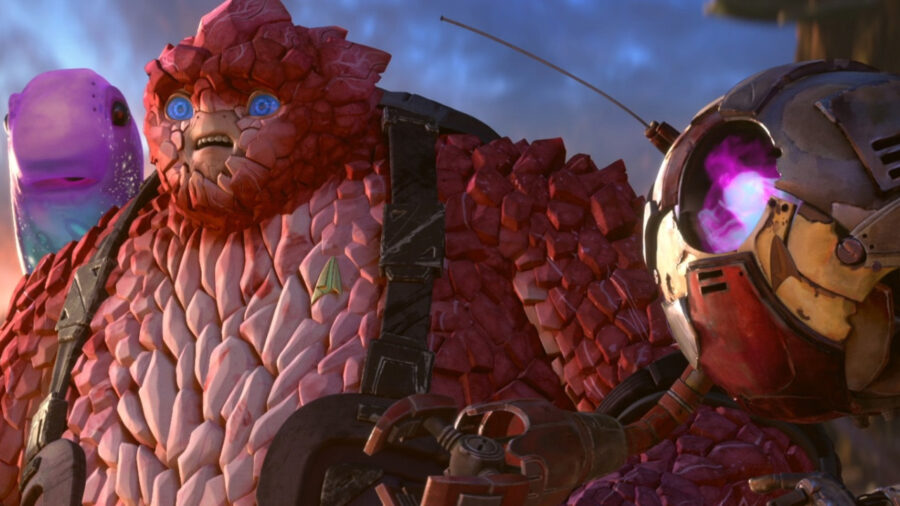
Janeway isn’t the only piece of Star Trek’s past included in the show. Unlike other new live-action Star Trek shows, Prodigy takes advantage of the Star Trek universe’s existing and established world. Rather than remaking Star Trek in its own image, Prodigy uses Star Trek to tell new stories using the world that we already know. It set out to add to the Star Trek universe, not reboot it, and for Trekkies, that’s a beautiful thing to behold.
Star Trek: Prodigy is straightforward and clearly aimed at kids, but still a lot of fun. It’s perfect for both getting the next generation involved in Star Trek and keeping adults happy and engaged.
9. Star Trek: Strange New Worlds

In Season 1, Star Trek: Strange New Worlds demonstrated strong potential and got off to a great start. It was the best first season of any Star Trek show outside the original series.
Since then, the writing has gradually degraded rather than improved. The stories have become increasingly illogical, turning into emotional venting rather than relatable character motivations and carefully plotted drama.
Season 3 began with an episode that, from a plot perspective, made no sense at all. It then produced episodes that were either jokes or ripped off from other Star Trek shows.
Captain Pike is the show’s biggest strength, and he’s brilliantly played by Anson Mount. Unfortunately, he rarely gets much screen time.
Strange New Worlds isn’t cheaply produced. It has many special effects, including numerous lovingly crafted, detailed shots of the glorious, newly refitted Enterprise. It’s something other new Trek shows don’t always do, and should be praised for it. However, it also relies too much on obvious LED walls and dark interior shots.
Star Trek: Strange New Worlds had the potential to rank highly on this list, but as the series progressed, it failed to capitalize on a strong start.
8. Star Trek: The Animated Series

Dwelling in the Star Trek dark ages between the cancellation of the original series and the revitalization of Trek with The Motion Picture is Star Trek: The Animated Series.
Unlike almost every other animated version of something popular in live action, the Trek animated series features the vocal talents of everyone in the original cast and an extra dose of James Doohan, who, in addition to voicing Scotty, also provides voices for lots of other ancillary characters. Working in its favor is the show’s ability to do things Trek couldn’t do on a live-action TV show’s special effects budget. We get new alien characters like a three-armed navigator named Mr. Arex, whose odd limb arrangement couldn’t have been done with TV Trek makeup.

Many of the episode scripts are written by incredibly talented science fiction writers, and there is an attempt here to explore big ideas in the same way the live-action show did. Unfortunately, those big ideas are now being shoehorned into a 20-minute animated show instead of a 42-minute live-action one. There isn’t much time, and a lot of the episodes end up feeling rushed. Some of them are flat-out silly.
The quality of the animation varies a lot, partly as a result of the time in which it was created (The Flintstones was still the pinnacle of animation in 1973). It’s also partly as a result of sheer laziness from the animators used to bring these stories to life.
Star Trek: The Animated Series is an uneven ride, but one that hardcore Trek fans won’t mind taking.
7. Star Trek: Voyager

Star Trek: Voyager began with the best premise any Trek show has ever had. A by-the-book Federation crew is stranded seventy years away from home with a bunch of terrorists. They’re forced to work together for survival and must claw and scratch their way back to the Federation in a hostile and totally unknown part of the universe.
For much of its run, Voyager ignored that premise and went with a script-of-the-week technobabble formula. When the show’s central premise was addressed, it was hampered by unevenly developed characters.
When at its best, Voyager is carried by the raw talent of Robert Picardo as the ship’s lovable holographic doctor and Jerri Ryan, after she joins the show as Seven of Nine in the fourth season. Their performances are so good that they elevate everything around them, including Kate Mulgrew, whose Captain Janeway is at her best when playing off Seven.
Star Trek: Voyager’s worst episodes are a slog but Voyager’s best episodes like “Equinox” and “Year of Hell,” make it all worthwhile.
6. Star Trek: Lower Decks
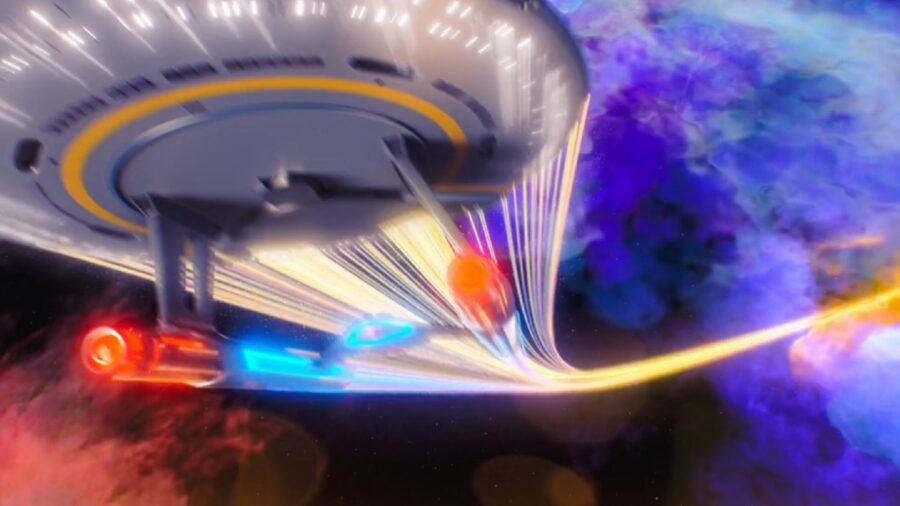
Star Trek: Lower Decks is faithfully set during the Star Trek: The Next Generation movie era, and it uses what we already know of that world to create new stories. Sometimes, it uses that period-specific space setting to create comedy (inside jokes that only real Trekkies will get and broader humor for the newbies). It does it all seamlessly.
The animated comedy show deserves praise for its consistency, among other things. Each episode of Star Trek: Lower Decks has a minimum level of quality. There’s not a bad episode in the show’s entire run, only some that are enjoyable and also episodes that are brilliant, epic, and among the best all-time. Consistent quality in entertainment is rare, especially where Star Trek is concerned.
In season 5, they wrapped up all the show’s loose ends and fixed many of the wrongs committed by other, inferior Star Trek shows. Lower Decks was, at the time of its release, the most Star Trek the world of Star Trek had been since the 90s. Effort like that deserves a high ranking, and so I’ve given it one.
5. Star Trek: Enterprise

Star Trek: Voyager finished its run on television in 2001, and the show had fallen far in the ratings. Meanwhile, the most recent Next Generation movies were being savaged by critics and fans alike. It seemed like the perfect time to take Trek in a new direction, so instead of pushing forward in the era started by Picard back in the 80s, Trek head honchos decided to delve into Trek’s past with a prequel series set before Kirk and Spock.
Enterprise followed the crew of Earth’s first-ever warp 5 vessel, the Enterprise NX-01, as humanity began its first push out into the galaxy with the help of the Vulcans. The series had an opportunity to show us the birth of the Federation, as humans journeyed around the cosmos, making new allies and encountering enemies like the Klingons for the first time.

It did not do that. Instead, the first season immediately got bogged down in a time-travel plot forced on them by the network. Lackluster ratings and lackluster fan response caused Star Trek: Enterprise’s cancellation after four seasons in 2005, sending the entire Trek franchise into a total hibernation until JJ Abrams rebooted everything with his 2009 Star Trek film.
So why is it so high on this list? While they initially failed to deliver the show’s premise, the series began to find its footing at the end of the third season. By the fourth, they actually started following through on the promise Enterprise made us in the beginning.
The fifth season could have been great, but we’ll have to settle for a third and fourth season, which showed hints of greatness in a series that never fully became what it might have been.
4. Star Trek: Picard Season 3

The first two seasons of Star Trek: Picard are so different from Picard Season 3 that they might as well be a totally different show. Not only did they bring in an entirely new cast, but also a new showrunner, Terry Matalas, and a new creative team behind the scenes. Since Star Trek: Picard season 3 is basically a different show, I’m treating it as a different show in these rankings.
The Star Trek: Picard team that took over for season 3 actually likes Star Trek and knows something about it. So they binned everything Picard had done previously and started from scratch. That included rebuilding the show’s atrocious opening credits.
Picard season 3 is the perfect send-off movie that the Star Trek: The Next Generation crew never really got. Along the way, it even managed to fix some of the franchise’s more egregious mistakes (everything that happened to Data, for instance).
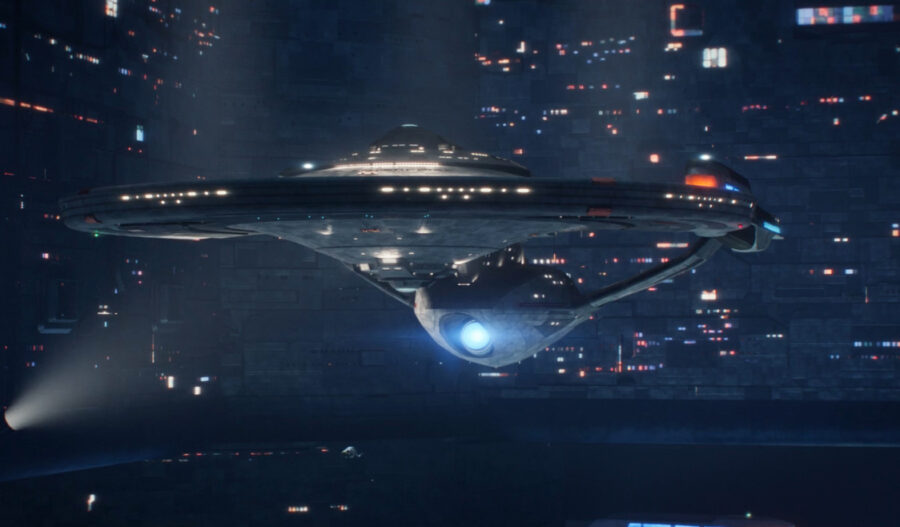
It’s not only Terry Matalas bringing back the entire Star Trek: The Next Generation cast that makes it good. Plugging in a bunch of old actors will only get your story so far, and the tone of the show is nothing like those classic Next Gen episodes.
Instead, Star Trek: Picard season 3 captures a vibe akin to the original movie era of Star Trek: II, III, IV, V, and VI. The series’ hero ship (yes, we have hero ships again) is specifically designed to be reminiscent of the refit Enterprise from that era. The Titan-A is a Neo Constitution, and it may be the coolest ship Star Trek has produced since the Enterprise-E.
Matalas’s obvious love and dedication to all things Star Trek made Picard season 3 soar. That one season, and only that one season, of the show is a proud addition to this list.
3. Star Trek: The Next Generation
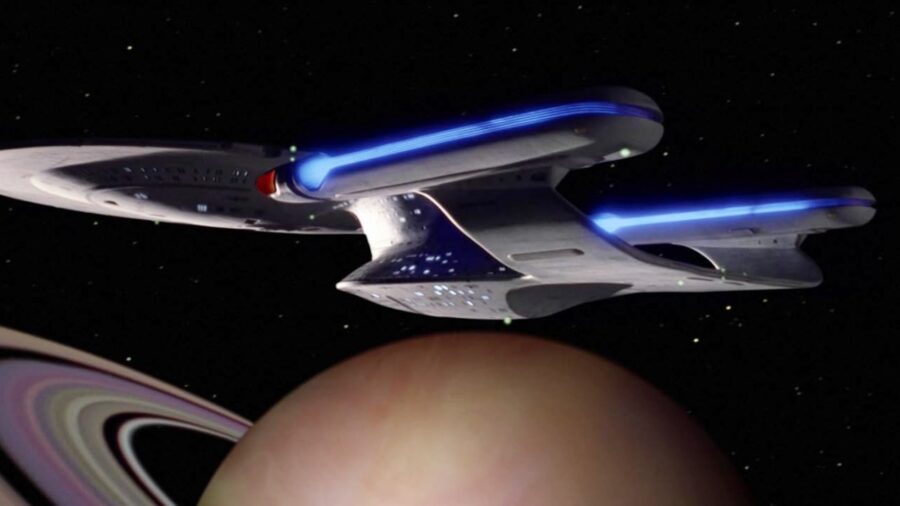
In 1994, Star Trek: The Next Generation was nominated for Outstanding Drama Series by the Emmys. It deserved to be nominated more. The long-gestating television follow-up to the Star Trek of the sixties debuted in 1987 and immediately struck a different tone than its predecessor with a mature, effete Captain who seemed more like a father figure than a gutsy adventurer.
It worked. It worked for much the same reasons the original series did: by taking on challenging topics in a science fiction setting, with great writing that was unafraid to take risks. TNG has stood the test of time because its lead, Captain Picard, became something of a father figure to the kids watching with their parents.

You want to BE Captain Kirk, the swashbuckling hero making all the tough calls and winning against impossible odds. You want to SERVE under Captain Picard, you want to stand with him, next to him, and soak in all his wisdom.
Whether you prefer Kirk or Picard is probably a function of who you are, but thanks to great writing and bold vision, The Next Generation stands the test of time, responsible for some of the best moments in all of Star Trek. Characters like Data, Worf, and Q are among the most enduring figures in all of pop culture.
2. Star Trek

The series that started it all has aged but is still entirely enjoyable, thanks in large part to the remastered versions, which cleaned up the original prints and updated some of the FX.
CBS wanted Gene Roddenberry’s vision to be Wagon Train in the stars, but Roddenberry and the show’s staple of respected science fiction writers (like Harlan Ellison) had loftier ambitions. They used their platform to tell complex, thought-provoking stories and build interesting characters.

The camaraderie of the holy trinity (Kirk, Spock, McCoy) is the centerpiece of the show, which did its best to challenge the ideals of its viewers (as with the first-ever interracial kiss on television in season 3) and also entertain them. It’s funny too, in all the right moments, with the constant teasing and push and pull between McCoy and Spock providing the perfect angel and devil on Kirk’s shoulders as he makes all the big decisions.
In Star Trek’s second season, Kirk admonished his crew to boldly go by telling them, “Risk is our business!” It was Star Trek’s business, too, and the franchise has always been at its best when it takes risks. Few have taken them better than the show that started it all.
1. Star Trek: Deep Space Nine

This was the first Star Trek series designed to play out like one long, seven-season movie. Back before linear storytelling was all the rage on television, with shows like Game of Thrones and Breaking Bad, Star Trek: Deep Space Nine blazed a trail as one of the first TV shows to tell a continuous story arc across multiple seasons.
The stories DS9 told were top-notch, thoughtful science fiction as it tackled the reality of Gene Roddenberry’s Root Beer in a universe that does not like bubbles. Part of the reason it’s so good is Ron Moore, who would later become known as the mastermind behind the brilliant Battlestar Galactica reboot. He honed his craft here, and many of BSG’s most successful moments can be traced directly to the roots he planted on Deep Space Nine.

The cast is the most talented in Trek, with people like Renee Aberjoinois (Shapeshifting Odo), Avery Brooks (The Sisko), Colm Meaney (O’Brien Must Suffer), Armin Shimmerman (Leader of the House of Quark), Nana Visitor (Terrorist in Charge), Andrew Robinson (Plain, Simple Garak) and Michael Dorn (Not a Merry Man) delivering Emmy-worthy (but unrewarded) performances.
Thanks to a rocky, uneven start in seasons 1 and 2, Deep Space Nine never got its due. But if you watched it and stuck with it, by Season 4 or 5, you knew this was some of the best television in the history of the medium, and the best Star Trek show the franchise has ever produced.
Where Should Newcomers Start Watching Star Trek?

So Star Trek: Deep Space Nine is the best show Star Trek has ever produced. But if you’ve never watched Star Trek before, is that where you should start streaming?
If you do opt for Deep Space Nine, you’ll be happy, but I’d suggest starting with The Next Generation. Star Trek: Deep Space Nine’s inciting event is something triggered by the events of The Next Generation, and while DS9 still makes sense whether you’ve seen those TNG episodes or not, viewing them will only deepen your appreciation of Captain Sisko’s character arc once you dive in. Besides, Next Generation may not be number one on my list, but it’s still really, really good.
The Worst Star Trek Shows

Wondering where shows like Star Trek: Discovery or Starfleet Academy would rank if we made a longer list? You don’t have to wonder.
We made a longer version ranking everything Star Trek has ever done. Journey into darkness with our full Star Trek ranking.
Entertainment
Beaches: A New Musical review: Jessica Vosk gives her all to a disastrous Broadway adaptation
Be sure to read the fine print about Beaches: A New Musical, now on Broadway. This is not an adaptation of the beloved 1988 movie, in which Barbara Hershey played advocate and lawyer Hillary Whitney, and Bette Midler brought bawdy brilliance to singer C.C. Bloom. The Broadway stage musical Beaches is instead based on the movie’s inspiration: Iris Rainer Dart’s 1985 novel about the highs and lows of the friendship of outgoing actress Cee Cee Bloom and sheepish preppy Bertie White.
The author has a heavy hand in this stage adaptation, writing both the book — with the help of playwright Thom Thomas — and the lyrics, while Mike Stoller, who once co-wrote songs for Elvis, composed the music. This makes for a stage show that is shockingly disconnected from Garry Marshall’s cinematic tearjerker, as the plot is starkly different, especially for Bertie/Hillary. However, directors Lonny Price and Matt Cowart fight hard to bring the Beaches that movie-goers loved to the stage in some capacity. And leading lady Jessica Vosk does her damndest to bring a Midler-level moxie to every scene and song.
It’s just a shame that Dart’s book and lyrics are less the wind beneath her wings and more an anchor sinking the whole production.
Beaches on Broadway ditches most of the movie’s songs.

Samantha Schwartz, Bailey Ryon, Jessica Vosk, Kelli Barrett, Emma Ogea, and Zeya Grace as Cee Cee and Bertie in “Beaches: A New Musical.”
Credit: Marc J. Franklin
Only “Wind Beneath My Wings,” which won the Grammy for Record of the Year and Song of the Year, makes the playlist for the stage musical Beaches. In the movie, Midler also sang moving covers of “Under the Boardwalk,” “The Glory of Love,” and “Baby Mine.” None of these makes the stage. And bad news for fans of Midler’s playful performance of “Otto Titsling,” the comical story of the uncredited inventor of the brassiere; that daffy track doesn’t make it to Broadway either. Worse news: This last omission sharply reflects how Dart leaned hard away from the movie’s most fun and campy bits.
Beaches — in both versions — begins with a grown-up Cee Cee (Vosk) rehearsing a song for a big show, when a mysterious phone call causes her to race away. Then, the story flashes back to decades before, when Cee Cee was a fiery little girl (Samantha Schwartz) who befriended a shy, posh little Bertie (Zeya Grace) on a beach in New Jersey. The two became pen pals, supporting each other through fights with their overbearing mothers and frustrations with boys and then men. For a stint in their 20s, they’d live together in a cramped but beloved apartment as Cee Cee tried to make it as an actress, and Bertie helped out at the theater — mostly to avoid her mother and Michael, the boring man she was expected to marry.
Both women will marry soon enough. But while Cee Cee’s career takes off, Bertie (unlike her movie counterpart, Hillary) fails to realize her dream of becoming a lawyer. However, she does still have a daughter that she adores. A big misunderstanding will keep the two friends estranged for years, but they’ll ultimately reconnect over Bertie’s pregnancy, and then again when she gets fatally ill.
Despite all the highs and lows of their relationships, the songs that Dart and Stoller write all feel achingly one-note. “You Believe in Me,” “Wish I Could Be Like You,” and “My Best” all share the sentiment that these two are so different yet love each other more than anyone else. Even “God Bless Girlfriends” — sung by their annoyed husbands — echoes this. And none of these numbers has the emotional wallop or the visual language of “Wind Beneath My Wings.” Instead, they all feel like mediocre AI-generated imitations of that great song.
Beaches on Broadway presents confounding characters.

Brent Thiessen (left) and Ben Jacoby (right) as husbands John and Michael in “Beaches: A New Musical.”
Credit: Marc J. Franklin
Seeing Beaches the movie made me curious about Beaches the musical, but Beaches the musical does not make me curious about Beaches the book. The songs are frustratingly forgettable, but moreover, the story feels vexingly dated and thin.
Mashable Top Stories
In Mary Agnes Donoghue’s script for the movie, Hillary’s ambitions as a lawyer made her equal to C.C. in ambition. In Dart’s Broadway show, it’s hard to understand who Bertie is, as the author/playwright leaves gaping holes in her story. Bertie has dreams of becoming an attorney, but when they go nowhere, it’s unclear what she’s done instead. Likewise confusing is, who is Aunt Neetie? Bertie’s daughter Nina brings her up repeatedly, qualifying her as her “real” aunt as a means to show disdain for Cee Cee. And while both “aunts” seem in contention for raising Nina after Bertie dies, because Neetie isn’t on stage, she’s a distracting obstacle with no grounding. What we do know is Bertie says she has no sister. So maybe Neetie is her sister-in-law? But after their divorce, Michael has no relationship with his daughter Nina. So, what’s the likelihood Aunt Neetie is Michael’s sister? It’s a perplexing plot hole that becomes more grievous in the show’s final act.
Dart also ignores Bertie’s privilege with a song called “Normal,” where Bertie taunts Cee Cee that the brassy star could never have a “normal” life. But all her examples are about being wealthy, like having servants on hand. And these are all things the affluent Bertie has had access to since birth. Her husband, Michael (Ben Jacoby), gives no further insight into who she is, as he’s a thinly sketched creep in a suit coat. By contrast, Cee Cee’s husband John (Brent Thiessen) is a creep in an open denim shirt. They come off as the same guy in different fonts.
Now, you might wonder if that’s intentional to bolster the queer undertones that existed in the movie. Queer audiences have long speculated whether or not these women were actually in love with each other. Well, a lyric in “The Brand New Me” might have you think so, as Bertie sings about realizing she’s in love with a girl. But it’s a misdirect; she means the brand-new her. Then, the women share a double wedding on stage, where both are giddily dressed as brides. Here, the six actresses who play Bertie and Cee Cee as children, teens, and adults frolic together, while the grooms are a bland accessory. (Like an unconvincing beard?)
Jessica Vosk and Beaches directors try to bring the camp and Midler flare.

Jessica Vosk stars as Cee Cee Bloom in “Beaches: A New Musical.”
Credit: Marc J. Franklin
This is a thankless show for the cast. The songs are awful. And all of the adult actors, aside from leads Jessica Vosk and Kelli Barrett, are tasked to play multiple thin roles, including teen Cee Cee (Bailey Ryon), teen Bertie (Emma Ogea), Cee Cee’s mom (Sarah Bockel), and nuns, TV studio techs, nurses, and people waiting for a plane. It can actually be confusing when all of a sudden the actor who plays Cee Cee’s husband is in a scene as a different character, with no attempt at disguise beyond a suit jacket. But props to Zurin Villanueva, who is given a smattering of bit parts, and manages to be dazzling and funny in every one. Here’s hoping she’ll get a role worth of her charisma soon.
As for Barrett, she commits completely to Bertie’s agonies and ecstasies as Dart’s script has her character turn on the head of a pin, from furious to benevolent. It’s not her fault that it doesn’t work. It’s the unconvincing lyrics, made-up cliches possibly snatched from Hallmark cards. Barrett is at her best in the dialogue scenes, where she can play with Vosk, whose vivacity lifts everyone around her.
Vosk gives her all to every underwhelming song. And while I can’t remember a single lyric from the new Broadway numbers, I can remember the way my heart soared as she hit a high note with a broad smile. She’s a stunner who understands why the audience has come. She’s working hard to give us Midler-like oomph. And that is echoed by her teeny counterpart, Samantha Schwartz, who is a dynamic pint-sized showgirl with charisma and chutzpah to spare.

Zeya Grace (left) and Samantha Schwartz (right) as Little Bertie and Little Cee Cee in “Beaches: A New Musical.”
Credit: Marc J. Franklin
Vosk sinks her teeth into Cee Cee’s zeal, jealousy, and earnestness. Directors Price and Cowart support her by bringing in Midler allusions, like a scene where the staging suggests Cee Cee is performing at a bathhouse, as Midler used to, or a double-bunned red wig that recalls Midler’s look in Hocus Pocus. Likewise, some costume choices — including the little girls’ outfits — recall the movie directly, gladly playing on the audience’s nostalgia. You can feel in these choices the attempt to please an audience of women who connected to Hillary and C.C.’s tumultuous story and to the queer audiences who love Midler’s brassy bravura. But these flourishes, while charming, cannot wrestle Beaches from the banality of Dart’s writing.
Plus, the rest of the staging is a mess. Rather than physical set pieces, a collection of columns affixed with projectors blares suggestions of a setting, like street signs or graphics, which do not evoke mood or location effectively. The front of the stage is a sandy beach dune, with fronds poking up for the girls to play on. Then, in the final act, when they are on a beach, the backdrop is painted. After so much projection, in this final moment, where the beauty of the beach itself could help anchor the heavy emotions about to flow, they went with a backdrop that looks like a motel room painting.
More thoughtless, though, was the blocking. A platform on the stage creates a second stage, which is used as a beach house veranda, a TV studio set, and a variety of other theater stages for Cee Cee to strut upon. This was multipurposeful and smart. However, the blocking often has the actresses sitting or lying down on this stage. In my orchestra seats, there were times I could not see who was singing without moving my head to crane around the person in front of me. I’m short, admittedly. But at the intermission, I switched seats with my guest, and he, who is not short, still had issues, despite the person in front of us not being exceptionally tall! Maybe this is a show better suited for the cheap seats?
All in all, Beaches is a profound disappointment. Vosk gives her all to racy jokes, high notes, and an iconically bold heroine. The supporting cast is asked to sing, dance, and play a bevy of small parts and thinly written characters. The directors try to weave in elements from the movie and Midler’s broader impact to appeal to fans of her and the film. But in the end, this show is doomed by Dart’s underwhelming writing.
Beaches is now on Broadway, and will begin national tours this fall.
Entertainment
Stuff Your Kindle Day is live now — score 150+ free ebooks for 1 day only
FREE BOOKS: The latest Stuff Your Kindle Day takes place on April 23. The Cozy Mystery Book Blast, hosted by Cozy Mystery Book Club, isoffering cozy mystery books for free.
This has been such a huge month for Stuff Your Kindle Day. We’ve already been blessed by a number of free giveaways, and we’re not done yet.
The Cozy Mystery Book Blast, hosted by Cozy Mystery Book Club, is offering participants the chance to download 150+ ebooks without spending anything. Everything that you download is yours to keep forever, so take this as your sign up to stock up ahead of the summer reading season.
Looking to make the most of the latest Stuff Your Kindle Day? We’ve lined up everything you need to know about this popular event.
When is Stuff Your Kindle Day?
The Cozy Mystery Book Blast takes place on April 23. This free giveaway only lasts 24 hours, so you will need to act fast to download everything you want to read. Clear your schedule, make a list of priorities, and add to your TBR list with this limited-time promotion.
Which ebooks are free?
The Cozy Mystery Book Blast has a helpful hub page with everything on offer organized by sub-genre:
You can find these free ebooks from the Kindle Store and other popular retailers. There really is something for everyone in this latest book blast.
Mashable Deals
Is Stuff Your Kindle Day the same as Amazon Kindle Unlimited?
Everything you download on Stuff Your Kindle Day is yours to keep, and there’s no limit on the number of books you can download. Stuff Your Kindle Day downloads don’t count towards the 20 books that Amazon Kindle Unlimited subscribers can borrow at the same time, so don’t hold back.
The best Stuff Your Kindle Day deal
Why we like it
These popular e-readers let you take your entire library on the go. With weeks of battery life and an anti-glare display, you can read anywhere and anytime with the Kindle. Plus, you can get three months of Kindle Unlimited for free with your purchase for a limited time.
Entertainment
Moon phase today: What the Moon will look like on April 23
We’re almost at the First Quarter which means the Moon is almost half illuminated. Each night it gets a little brighter, and this will keep happening until the Full Moon when the reverse will then occur and each night it will appear less.
What is today’s Moon phase?
As of Thursday, April 23, the Moon phase is Waxing Crescent. Tonight, 41% of the moon will be lit up, according to NASA’s Daily Moon Guide.
If you’re looking at the Moon with just your naked eye, you should be able to catch a glimpse of the Mares Serenitatis, Tranquillitatis, and Fecunditatis. If you have binoculars, the Mare Nectaris and Endymion and Posidonius Craters should also come into view, appearing from halfway up the Moon to near the top. And, finally, with a telescope you’ll see all this plus the Apollo 11 and 17 landing spots, and the Rupes Altai.
When is the next Full Moon?
The next Full Moon is predicted to take place on May 1, the first of two in May.
What are Moon phases?
NASA says that the Moon completes a full orbit around Earth in about 29.5 days, during which it passes through eight stages. Although the same face of the Moon is always turned toward us, the portion illuminated by the Sun shifts as it travels along its path, producing the familiar cycle of full, half, and crescent shapes. These variations are referred to as lunar phases, and there are eight altogether:
New Moon – The Moon is between Earth and the sun, so the side we see is dark (in other words, it’s invisible to the eye).
Mashable Light Speed
Waxing Crescent – A small sliver of light appears on the right side (Northern Hemisphere).
First Quarter – Half of the Moon is lit on the right side. It looks like a half-Moon.
Waxing Gibbous – More than half is lit up, but it’s not quite full yet.
Full Moon – The whole face of the Moon is illuminated and fully visible.
Waning Gibbous – The Moon starts losing light on the right side. (Northern Hemisphere)
Third Quarter (or Last Quarter) – Another half-Moon, but now the left side is lit.
Waning Crescent – A thin sliver of light remains on the left side before going dark again.

Athletics place OF Denzel Clarke (foot) on 10-day injured list
Record 216 WNBA games to be broadcast nationally this season


