
Entertainment
Star Trek Fan Theory Explains The Biggest Borg Inconsistencies
By Chris Snellgrove
| Published
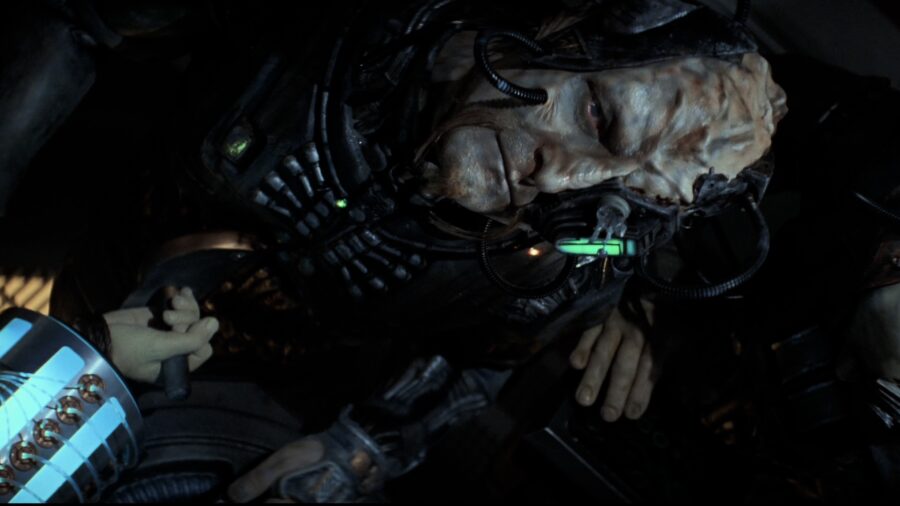
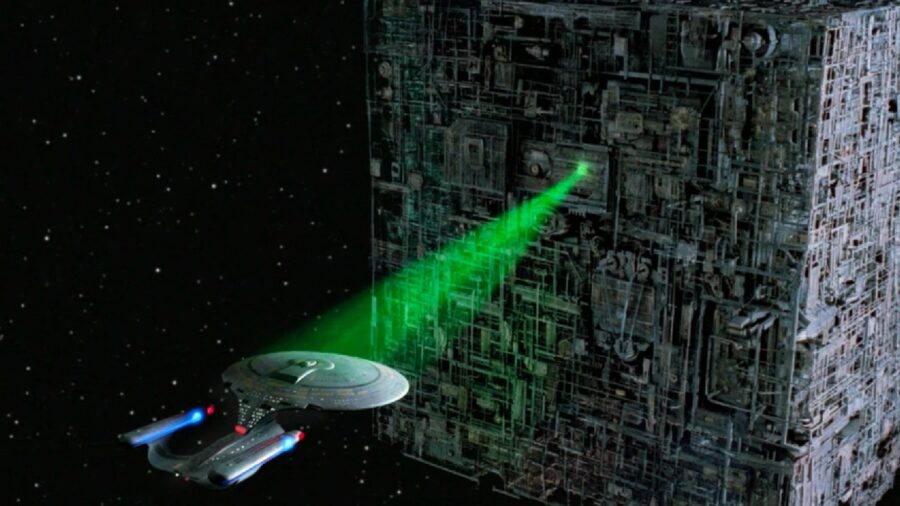
In the world of Star Trek: The Next Generation and its spinoff, the Borg have always been something of a paradox. We’ve seen how a single one of their Cube ships is a threat to the entire Federation, but most of the galaxy remains unconquered by the Borg despite how easy that would be for these bionic bad boys. However, one Star Trek Borg theory offers an explanation: namely, that the Borg have been kept in check by failsafes installed by their unknown creators.
The Star Trek Borg Theory
As for why Star Trek fans would create a special Borg theory in the first place, it mostly comes down to answering a burning question. Namely, if the Borg are powerful enough to conquer entire planets and star empires, why the heck do they barely make an effort to do so, and why is it so easy to defeat them? According to this theory, the Borg may be powerful, but they are held back by limitations imposed on them by their creators.
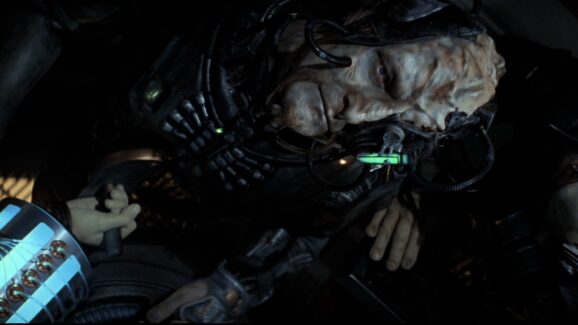
The Star Trek: The Next Generation two-parter “The Best of Both Worlds” gave us our most complete look at the Borg and serves as the main impetus for this fan theory. In this episode, a single Cube quickly becomes an existential threat to Earth, and it destroys dozens of ships before Riker and the Enterprise crew manage to stop it. Part of their efforts include beaming over to the alien vessel, where they discover the Borg mostly leave them alone until they start blowing things up.
If you’re a longtime Star Trek fan, you’ve probably pondered the bizarre Borg weaknesses that led to the creation of this theory. Like, why can our heroes simply beam over to this intimidating vessel, something that could be prevented by the aliens raising their shields around hostile ships? Why do the Borg not clock the presence of hostile visitors until those visitors get a chance to access and destroy key systems?
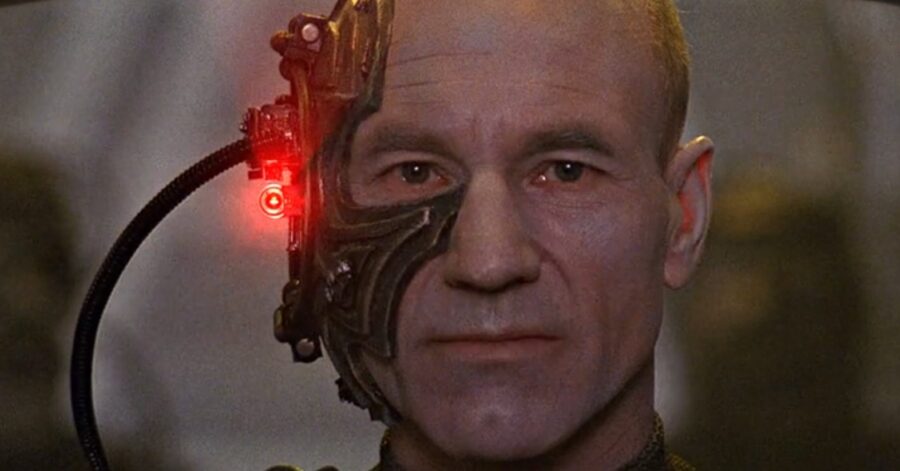
Once you start asking those questions, you’ll ask follow-ups. Like, why do these aliens not systematically assimilate or destroy everyone in the galaxy? Why do they never send more than one Cube to attack the Federation, and why do they avoid assimilating less advanced life forms even though this would help innovate their species? According to this Star Trek Borg theory, it’s because they were created by an advanced race like the Iconians who placed failsafes in the system in case their creation went rogue.
There are still many unknown variables in this theory…for example, it’s not clear why a race like the Iconians would design aliens as dangerous as the Borg in the first place, nor is it clear how or why these bionic bad guys went rogue. However, the theory maintains that the advanced race was aware of both the possibility and danger of the Borg going rogue and installed various failsafe devices to keep their creation from conquering or destroying the galaxy. These failsafes were only partially effective, though, because the Borg are still the single greatest threat to life around the galaxy.
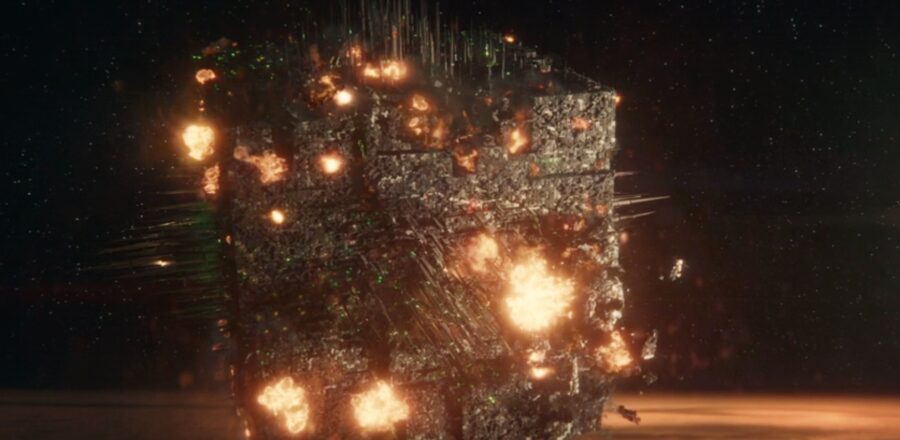
Star Trek has had more than one Borg theory over the years. For example, we’re fond of author Peter David’s theory that the Planet Killer from The Original Series was originally designed by aliens to destroy the Borg. However, most theories never address the convenient weaknesses of an enemy that can simultaneously threaten the entire galaxy but also be shut down by Data inputting a “sleep” command. This new theory attempts to square that circle, and while it’s not perfect, it did accomplish one thing: we’ll never look at the Borg or the Iconians the same way again.
Entertainment
Get Ankers 14-in-1 Thunderbolt 5 Dock for $60 less at Amazon

SAVE 15%: As of April 22, you can get the Anker Prime 14-in-1 Thunderbolt 5 Dock for $339.99, down from $399.99, at Amazon. That’s a 15% discount or $60 savings.

$339.99
at Amazon
$399.99
Save $60
Working off a laptop is great until you realize you only have two ports and need to plug something in. If you’re hooked up to an external monitor, keyboard, and mouse, you’re pretty much out of luck on the rest. Not only that, but your previously uncluttered desk will most likely look like a Best Buy exploded (a rat’s nest of cords isn’t cute or helpful for anyone getting work done).
If you literally hate mess and cords as much as I do, you need a docking station to hide all that chaos and protect your aesthetic. Right now, Anker’s Prime TB5 Docking Station is on sale for $339.99 at Amazon, down from $399.99. (That’s a $60 price cut.)
Mashable Deals
Are you going to use all 14 ports at the exact same time? Probably not, but you’ll never have to dig through your bag for a specific adapter again. You just plug a single cable into your laptop, and the dock handles the rest. It features a Thunderbolt 5 upstream port, two Thunderbolt 5 downstream ports, two USB-C ports, three USB-A ports, SD and TF card readers, a 2.5Gbps Ethernet port, an audio jack, and your choice of HDMI 2.1 or DisplayPort 2.1. It’s also fast enough to transfer a 150GB file in 25 seconds.
Entertainment
How I scored ad-free Paramount+ Premium for only 99 cents
SAVE $26: As of April 22, returning subscribers can score two months of ad-free Paramount+ Premium for only 99 cents per month with the code N8C27L. Usually $13.99 per month, that’s $26 in savings. Just note that your mileage may vary.
$0.99/month for 2 months (save $13/month) with code N8C27L
If you’re looking to save some money on your streaming lineup, my number one recommendation is to cancel your subscriptions. While it doesn’t work for every streamer, many will offer you a special discount to come back. Not to mention, you’ll be eligible for any new deals that may appear that are marketed to “new and returning customers.” Case in point: as of April 22, returning subscribers can get two months of ad-free Paramount+ Premium for just 99 cents per month.
I’ve tested this out myself, so I can vouch for it. When you navigate to Paramount+ and sign in to your existing account, you’ll be prompted to pick a plan. Select the Paramount+ Premium monthly plan for $13.99 per month. On the “Welcome back!” page, scroll down to the box that says “Have a promo code?” and enter N8C27L. Once you hit “apply” the price should drop to just 99 cents per month.

Credit: Paramount+
That’s all, folks. You can take advantage of two full months of ad-free Paramount+, Showtime, BET, CBS, Comedy Central, MTV, Nickelodeon, CBS live TV, UFC fights, and more for less than two bucks. That’s $26 total in savings.
Mashable Deals
Paramount+ has a surprisingly hefty library. Subscribers can enjoy Paramount+ Originals like Landman and RuPaul Drag Race All Stars, Showtime series like Dexter Resurrection and Yellowjackets, CBS hits like Survivor and NCIS, and nostalgic shows from Nickelodeon and MTV. Not to mention, there’s a lineup of movies that’ll keep you fully entertained for your two-month promotional period. Just be sure to cancel again before the second month is over if you want to avoid paying full cost. You can always sign up again when another deal arises. I know I will.
Entertainment
How Stargate SG-1 Used A Classic Trope To Emotionally Wreck Its Fans
By Jonathan Klotz
| Published

Garfield and Friends said it best: “Oh no, we’ve resorted to an evil twin storyline.” Star Trek: The Original Series did it the best with Mirror Universe Spock, and ever since, it’s been a lazy excuse for every series to use when they run out of ideas. The exception is Stargate SG-1’s sixth episode, “Cold Lazarus,” which plays with the trope by making the twin less evil and more confused.
When fans say they skip this episode when rewatching, it’s not because it’s a lazy, poorly written episode. In fact, it’s the opposite. The ending of “Cold Lazarus” is a pivotal character moment for Jack O’Neill (Richard Dean Anderson) and a gut punch to the audience.
Stargate SG-1’s First Evil Twin

“Cold Lazarus” opens with the SG-1 team on a planet that doesn’t look like Vancouver (it was a giant pile of sulfur at the port of Vancouver). The desert landscape is dotted with shattered blue crystals that look like the remnants of a civilization until we see a crystal eye-view of O’Neill, a mysterious light knocks him out, and all of a sudden, a second O’Neill is looking down at the first. Turns out, the crystals are the civilization.
Fake O’Neill is trying to figure out who O’Neill is and what SGC is all about. When he pulls out photos of his family, it takes Samantha Carter (Amanda Tapping) by surprise. O’Neill’s never mentioned his wife, Sara, or his son, Charlie. Confused, the Fake O’Neill goes to the home, where Sara is disgusted he’d come by and thinks it’s a sick joke that he’s asking about Charlie. If you’re wondering if you missed a key part of O’Neill’s backstory, don’t worry, this is the first time that either Sara or Charlie is mentioned, and tragically, we soon learn why.
No One Ever Dies

Charlie shot himself with O’Neill’s gun. Fake O’Neill starts to piece this together when he goes into Charlie’s old room and breaks down, prompting Sara and him to finally have the conversation about their shared grief. Back in SGC, the crystal’s nature is revealed to be an energy alien calling itself Unity, which accidentally killed a Jaffa, and the Goa’uld shattered them in retribution. That’s when O’Neill stumbles back through the Stargate, and the team realizes the mistake they made.
The Fake O’Neill is soon captured at a local hospital, suffering from Earth’s radiation, where he explains that he sensed O’Neill’s pain after he took his form and wanted to help ease the suffering, as nothing ever truly dies to Unity. To prove its point, Unity transforms into Charlie, giving O’Neill and Sara one last chance to see their child. Fans who haven’t lost a child can understand the emotion, but for fans who have, this scene is emotional torture, in the best way possible.

Jack knows this isn’t Charlie, but he talks to him like he is, and then they walk together through the Stargate back to Unity’s planet. It’s a beautiful moment that explains so much about O’Neill’s throwing himself into work and how even his friendships remain professional. “Cold Lazarus” may have started out with the “evil twin” trope in full effect, but the ending is proof that even early during its run, Stargate SG-1 was going to be the greatest.

Victor Wembanyama sustains concussion in Spurs' Game 2 loss
Lenyn Sosa's late clutch hit lifts Jays over skidding Angels


