Entertainment
Skibidi, When The Walls Fell: The Ongoing Problem With Star Trek’s Contemporary Slang
By Chris Snellgrove
| Published


Starfleet Academy, the latest Star Trek spinoff, has proven to be controversial for many reasons. One of them is the use of profanity-laced modern language, all of which sounds wildly jarring coming out of 32nd-century mouths. This is clearly Paramount’s desperate attempt to appeal to modern audiences, but diehard fans and even Trek icon Robert Picardo keep going out of their way to make excuses for the inclusion of this slang-filled language.
However, the blunt truth is that the character’s use of contemporary language makes no sense, and I can definitively prove it. What are the excuses fanboys have been making, and why are they wrong? Why does the use of such language contradict long-established lore, and why is it bad for Star Trek as a whole? Keep reading to find out!
The Universal Translator Explanation

Before we really dive into the problem with the modern language on Starfleet Academy, I figured we’d discuss the most common excuses that fans have made for it. Perhaps the most prevalent excuse is that Star Trek’s famous Universal Translator is working for the benefit of the audience watching at home. That is, these characters are likely speaking some sort of otherwise indecipherable space slang to one another, and the UT is conveniently translating that to modern speech for the viewers.
As excuses go, this is a fun one, and it gets full points for integrating the franchise’s most famous technology. But at its heart, this claim is more of an explanation rather than a justification. In other words, it explains why we might hear characters like Caleb casually discuss “toilet wine,” but it doesn’t really justify why that language is in the show.
That’s basically the crux of the matter here: Star Trek fans can sit around all day awarding each other No-Prizes for efforts to explain why the 32nd-century Starfleet cadets talk like 21st-century zoomers. But the core issue is that this modern language in a futuristic show is distractingly jarring, robbing otherwise moving scenes of any real drama even as it instantly dates the show.
The “Kids Will Be Kids” Excuse

The other major justification for Starfleet Academy dialogue being overly modern is that the characters are young and don’t speak like the more seasoned veterans of the franchise. Even Robert Picardo (who reprises his role as the Doctor for this show) offered this up as an excuse in a recent interview with Collider. There, he noted that “the cadets talk like kids in the present-day world and in their own vernaculars” and that they would need to learn to code-switch into the kind of “mid-galactic speech” necessary for “marshaling an argument in a diplomatic situation.”
There are two basic problems with this argument: the most obvious is that Star Trek has had plenty of younger, non-Starfleet characters (including Wesley Crusher, Jake Sisko, early Nog, and even Naomi Wildman) who didn’t speak almost exclusively in then-modern slang. If they had, we might have had Jake describe his latest story as “all that and a bag of chips,” or Nog describing how Starfleet Academy is “the bomb.” Heck, how did Voyager even make it seven seasons without anyone telling Captain Janeway, “You go, girl!”
You know that instant cringe you felt upon reading that? That’s just a small taste of how contemporary slang can ruin Star Trek stories that are meant to be timeless. Now, just think how goofy you will feel hearing Starfleet Academy characters using phrases like “I’m Khionian, b*tch!” and “nah, she chose the War College, bruh” in about 10 years.

The other problem with Picardo’s defense of the contemporary language is that the older characters on the show also talk like this. Chancellor Ake, for example, tells Nus Braka to “blow it out your a**,” and Cadet Master Lura Thok describes a situation as a “dumpster fire.” Heck, in the same episode, Picardo was helping to hype up, his character says that “speech and debate is not for the chickensh*t.”
Long story, not very short? The “kids will be kids” excuse doesn’t really work for the modern language on Starfleet Academy when we see the older characters using the exact same language, essentially proving that age will not magically cause Starfleet characters to stop talking like zoomers.
Why Profanity Should Be Relatively Rare In Star Trek

Now, time to address the elephant in the room, which is that Star Trek characters have used vulgar language before. Starfleet Academy didn’t magically introduce cursing to the franchise: Dr. McCoy is famous for his various “damn it, Jim,” phrases, and Kirk memorably said “Let’s get the hell out of here” at the end of “City on the Edge of Forever.” This level of mild cursing persisted through the golden age of Star Trek, and even Captain Picard once said “sh*t” (albeit in French) onscreen in an episode of The Next Generation.
However, Trek’s traditional use of vulgar language often reminds me of something my favorite professor once said. Much like the Doctor on Starfleet Academy, he was known to curse in class, and much like those hapless cadets, we asked him about why he spoke like that in the classroom. That was when he said something simple that has always stuck with me: “A gentleman never curses unintentionally.”

His point was that people shouldn’t blurt out foul language out of impulse or anger but should instead only use it for maximum impact in a conversation. This is why Star Trek saved its first “oh, sh*t” for Data when the Enterprise was about to crash in Generations: the rarity of the vulgarity and the extremity of the situation arguably merited the four-letter word. While it was used to increasingly weaker effect in NuTrek, the vulgarity (including F-bombs) in Discovery and Picard was generally spread out to maximize their rhetorical impact.
InStarfleet Academy, characters constantly call each other b*tch, use terms like “fish d*ck,” use “sh*t” as an adjective, and so on. The problem isn’t that Star Trek characters shouldn’t curse; rather, the problem is that if they do so all the time, the four-letter words lose any real meaning or power. Just like that, the vulgar language used to make these youthful characters sound more adult has them sounding like petulant children trying to show off!
Most Modern Profanity Should Be Completely Incomprehensible In The Future

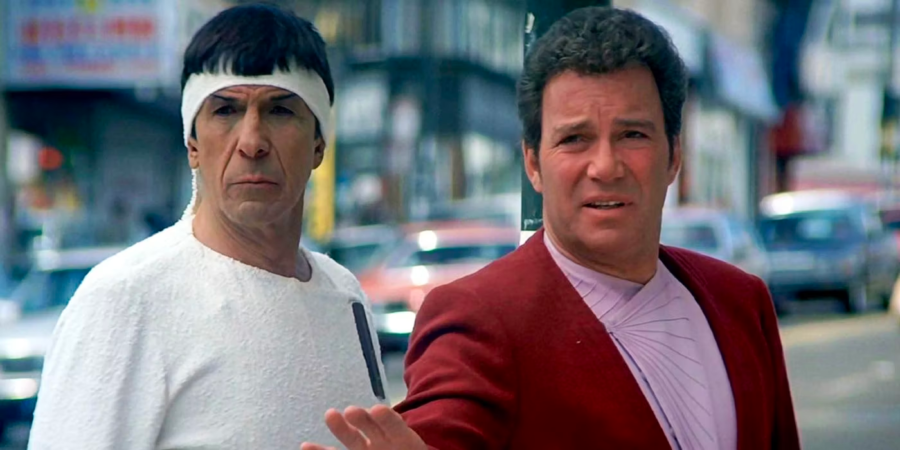
Perhaps the biggest reason there shouldn’t be so much vulgar, modern language inStarfleet Academy goes back to one of the most popular movies in the franchise:Star Trek IV: The Voyage Home. One of the best running gags in that movie is that Kirk and Spock didn’t really understand the vulgar language of the 20th century. This is why Kirk responds to someone calling him a “dumba**” with the memorable rejoinder “double dumba** on you!”
Later, Spock (who amusingly tries his hand at such language with phrases like “these are not the hell your whales”) describes such language as “colorful metaphors,” and Kirk says that profanity is “simply the way they talk here” (meaning the 20th century). He sums up his thoughts on the matter by saying that, in this relatively primitive time period that McCoy compares to the Dark Ages, “Nobody pays any attention to you if you don’t swear every other word.”
It’s not that Kirk didn’t know what these words meant, exactly; anyone with a fascination for the 20th century (like Captain Pike enjoying old sci-fi movies) would have a passing familiarity with profanity. But even minor variations on old slang (like putting “dumb” in front of “a**”) completely confused him. Furthermore, it was quite clear that the practice of constantly cursing to get someone’s attention was completely alien to him, someone born a couple of centuries later.
That’s the ultimate problem with the vulgarity in Starfleet Academy: rather than talking like 32nd-century characters who are studying to be the best of the best, they are swearing every other word like characters in the 20th century. Kirk himself identified this as behavior so archaic that visitors from the 23rd century can barely understand the vulgar phrases people are saying. But in Starfleet Academy, characters alive nearly a millennium later are constantly cursing like sailors and generally reminding us how much this franchise has regressed.

Star Trek fans, it’s time to get real: the distractingly modern dialogue has already dated Starfleet Academy, and the constant cursing makes no sense within the canon of the franchise. That doesn’t mean you can’t enjoy the show on its own merits, but it’s far past time the fandom stops making excuses for poor writing. The bottom line is that this show doesn’t sound like Star Trek on any level, making it increasingly difficult for anyone who has seen a single episode of The Original Series or The Next Generation to take any of this very seriously.
Or, to put this in a way that the writers of Trek’s newest series might understand: “Kurtzman and Paramount at the Rizzing. Skibidi, when the subscribers fell!”