
Tech
Reid Hoffman urges Silicon Valley leaders to stop bending the knee to President Trump
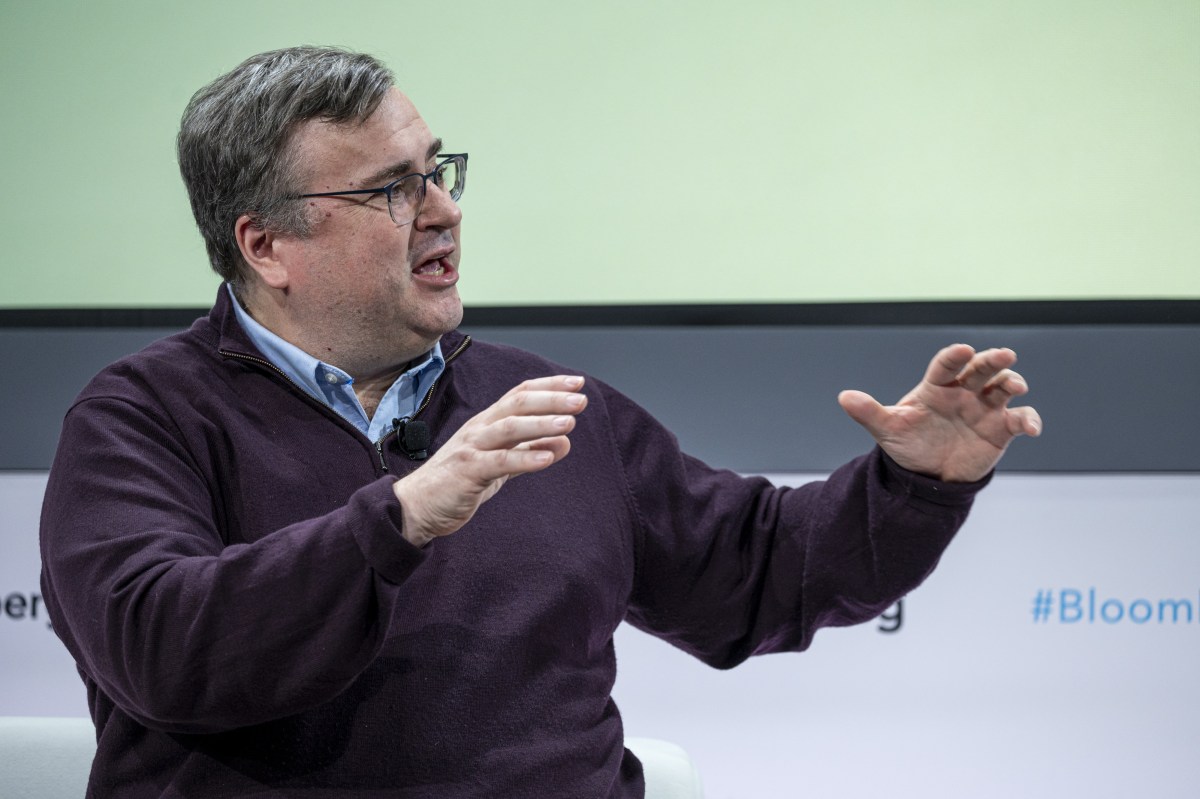
Billionaire tech mogul Reid Hoffman is urging his fellow tech moguls in Silicon Valley to not just condemn the killings of two American citizens at the hands of Border Patrol agents, but to stop pacifying President Trump.
In posts on X and an opinion column penned for The San Francisco Standard, Hoffman writes: “We in Silicon Valley can’t bend the knee to Trump. We can’t shrink away and hope the crisis fades. Hope without action is not a strategy –– it’s an invitation for Trump to trample whatever he can see, including our own business and security interests.”
There’s been some pushback among the most powerful in the Valley against these deaths. Besides Hoffman, a longtime critic of Trump, billionaire VC Vinod Khosla has been the most vocal, characterizing the White House and crew as “a conscious-less administration.”
OpenAI CEO Sam Altman, Apple CEO Tim Cook, and Anthropic CEO Dario Amodei have also expressed concern over the Border Patrol incidents, with some doing so in leaked internal memos. But most of them were quick to distance their concerns over this issue from the president himself.
That’s the distinction that Hoffman wants to end. He’s making the case that tech leaders have power “and sitting on that power is not good for business. It’s also not neutrality. It’s a choice.”
Still, many of the largest tech companies depend on the federal government for business, including AI regulation, tariffs that affect the costs of their products, and massive, lucrative contracts to supply the U.S. government with technology. (OpenAI even got in a bit of hot water in November after its CFO said, and later walked back, that the company wanted the feds to backstop their loans, essentially guaranteeing payment so the AI lab could get more favorable rates.)
Hoffman is echoing the sentiment of a growing contingent of tech workers, who have signed a petition asking their CEOs to call the White House and demand that ICE leave U.S. cities, to cancel all company contracts with ICE, and to speak out publicly against ICE’s violence.
Techcrunch event
Boston, MA
|
June 23, 2026
While there certainly are tech leaders who remain vocal supporters of Trump, like Elon Musk and Keith Rabois of Khosla Ventures, many leaders appear to be, at least publicly, walking the fence. Cook, for instance, wrote that he was “heartbroken” and urged “de-escalation” in his internal memo, but also attended an exclusive screening of First Lady Melania Trump’s documentary hours after the ICE shooting of Alex Pretti, one of the Americans killed in the incidents. Hence Hoffman’s call to arms.
Tech
Adobe adds its AI assistant to Premiere, Illustrator and InDesign

Adobe is updating its Firefly AI assistant and adding it to Premiere, Illustrator, InDesign, and Frame.io.
The company has given the assistant new abilities to make brand kits, product videos, and storyboards . Plus, the Firefly app now lets users save whatever they’ve created as an element that can be used across projects.

In Premiere, users can use the AI assistant to sort assets into bins, batch-rename clips, identify interview questions, and add markers. And in Illustrator, the assistant can do things like reorganize layers across a document or check for missing fonts.
Firefly is already usable with Express, Photoshop, and Acrobat, and is supported by ChatGPT, Claude, and Copilot. Adobe said that it plans to add support for Google Gemini and Slack soon.
Firefly updates
Adobe is slowly transforming Firefly to increasingly resemble Canva, at least when it comes to AI features, loading up the app with AI tools that can generate images, videos, and storyboards. The company is now adding a new feature called Elements that can save AI-generated characters, objects, and locations for later use.
Firefly is also getting a Projects feature that can store existing assets in one place and share context. This could be useful for teams creating a video series or brand campaigns. Both of these features are currently available in a private beta.

The company said users can now describe a brand and its style, or upload existing collateral, in Firefly to have it generate a brand kit, complete with logos, brand identity, and color palettes, or even generate product videos from photos. Users can also create storyboards to create videos.
Adobe is hard at work adding AI throughout its apps, and it is also working on an AI assistant that can work across its apps. The idea is to use AI to automate some of the tool usage within its apps that previously took several steps.
When you purchase through links in our articles, we may earn a small commission. This doesn’t affect our editorial independence.
Tech
Spotify’s reserved ticket sales to music superfans are now going live
Spotify’s move to cater to music’s superfans is now going live. On Thursday, the streaming giant announced the launch of “Reserved by Spotify,” a new system that will identify eligible top fans of an artist, then hold two tour tickets for them before the general ticket sale opens.
The feature will first be available starting today in the U.S. for Premium subscribers (ages 18+). Timed alongside his tour news, Role Model will be the first artist partner to take advantage of the ticket-holding system, and fans will begin to receive notifications today if they’re eligible to secure their tour tickets starting on June 23, before the general public sale. Spotify said it won’t collect any fees on the transactions.
The feature is only available for artists playing at Live Nation concerts for now, and ticket sales are through Ticketmaster. The streamer said it aims to add more partners over time to include smaller venues as well as international users.

The Reserved system is designed to reward music fans at a time when tickets for new concerts are immediately captured by scalpers using automated tools, which are then resold at a higher price as the event sells out.
For Spotify, Reserved serves as an easy way to encourage paid subscriptions and increase engagement with its app. If fans are getting concert tickets held for them by streaming their favorites, they’re more likely to log on and do just that.
Spotify first announced its plan to cater to superfans in May, noting that it would use signals like streams, shares, and other activity to determine who it considers a real fan. The company also said the platform would monitor activity to ensure that fans don’t game these stats using bots or AI agents.
In other words, it won’t be possible to snag the ticket by endlessly playing an artist’s music over and over — the company will look for signals that you’re still engaging with its app as a normal user would. Or, as Spotify puts it, “leaving music on in the background won’t give anyone a leg up.”
Reserved will also look at the user’s location to ensure they’re near the show before making an offer.
After going live, eligible fans will see a personalized offer on their Spotify Home screen, allowing them to view tour dates, see the Reserved window, and set a reminder to buy the tickets. When the window for the Reserved tickets opens — usually around a day — they can purchase two tickets before they’re on sale to the public.
In addition, Spotify noted that there will be more superfans than there are seats available in many cases, which means not every fan will get an offer of tickets every time.
Role Model, whose tour is reaching 17 U.S. cities and shows, will be the first of “a slate” of additional artists’ tours launching this week, noted Spotify without naming names. The Reserved tickets join others centered around live music, like the recently added support for a beta feature that lets artists upload live performance videos alongside other music videos.
When you purchase through links in our articles, we may earn a small commission. This doesn’t affect our editorial independence.
Tech
A tech worker-backed PAC is bringing a $5M knife to Big Tech’s $100M gunfight
A grassroots movement is forming among everyday tech workers who are demanding their companies develop and deploy AI responsibly. And the Guardrails Alliance, a new super PAC dedicated to supporting AI legislation, aims to leverage that discontent.
Democratic operatives Shaunna Thomas and Leah Hunt-Hendrix launched the Guardrails Alliance on Thursday with backing from tech employees, labor unions, and other groups, according to The New York Times.
“Our fundamental belief here is that people still do have the power to stop this autocratic takeover of the Trump administration and the tech sector,” Thomas told the NYT.
Guardrails positions itself as a populist political movement that runs on small donations from people in the trenches of the AI boom. The PAC has about $5 million at its disposal today and plans to raise $15 million this cycle — small potatoes compared to deep-pocketed adversaries like Leading the Future, which has more than $100 million from tech leaders like OpenAI president Greg Brockman.
Guardrails will buy ads to support Alex Bores, a New York congressional candidate who became Leading the Future’s first target and is running in the primaries next week. On Thursday, Bores shared an ad featuring the parents of Adam Raine, the teenager who died by suicide after months of prolonged conversations with ChatGPT.
Bores is also receiving support from another pro-legislation super PAC, Public First Action, which has backing from Anthropic.
While OpenAI has tried to distance itself from Brockman’s donations, many employees are reportedly unconvinced, and several have voiced concerns on social media about Leading the Future’s attacks on Bores.
This year, tech workers have also mobilized to demand their chiefs end contracts with U.S. Immigration and Customs Enforcement (ICE) and urge the Pentagon to withdraw its designation of Anthropic as a supply chain risk — a label critics say was imposed without due process in retaliation for Anthropic’s limits on its technology being used for mass surveillance and autonomous warfare.
“This is not about matching [Leading the Future] dollar for dollar,” Thomas said. “What this vehicle is meant to do is be a political home for people who are concerned about the way the anti-regulation AI tech sector is trying to manipulate elections.”
TechCrunch has reached out to the Guardrails Alliance.
When you purchase through links in our articles, we may earn a small commission. This doesn’t affect our editorial independence.

NYT Pips hints, answers for June 19, 2026
WTA roundup: Alexandra Eala stuns Elena Rybakina in Berlin


