
Entertainment
Reality Check: Inside Americas Next Top Model is rage bait. We watched it so you dont have to.

Make no mistake. Reality Check: Inside America’s Next Top Model wouldn’t exist without hatewatchers on TikTok.
Though America’s Next Top Model premiered in 2003, content creators on TikTok have been looking back on the competition show with damning critiques of its problematic photo challenges, fat-shaming tactics, and the harsh words from the show’s panel of judges. First, Reality Check: Inside America’s Next Top Model delves into these critiques, featuring TikTok snippets to give a sense of the avalanche of criticism. Then, Reality Check‘s directors Mor Loushy and Daniel Sivan (also co-executive producers) offer new interviews with ANTM host Tyra Banks, plus former ANTM judges — including photographer Nigel Barker, photoshoot director Jay Manuel, and runway walk coach Miss J. Alexander — where they’re asked to face the TikTok critiques on camera.
I watched all three episodes of Reality Check: Inside America’s Next Top Model, totaling just shy of three hours. Props to Loushy and Sivan, this mini-series has a sensational understanding of its audience, who want to see not only the ANTM’s most shocking moments but also the famous judges answering for them. And while this doc is definitely tapping into hate-watching, Reality Check satisfies by asking the hard questions — even if the answers leave much to be desired.
Who is interviewed in Reality Check: Inside America’s Next Top Model?

Miss J in “Reality Check: Inside America’s Next Top Model.”
Credit: Netflix
Among the show’s judges, Tyra Banks, Miss J. Alexander, Jay Manuel, Nigel Barker, and model manager Nolé Marin give talking-head interviews. Also featured in new interviews are director/developer Ken Mok and TV executive Dawn Ostroff.
Former contestants also share their story in Reality Check, including Ebony Haith (Cycle 1), Giselle Samson (Cycle 1), Joanie Sprague (Cycle 6), Whitney Thompson (Cycle 10), Dani Evans (Cycle 6), Bre Scullark (Cycle 5), Dionne Walters (Cycle 8), Keenyah Hill (Cycle 4), and Shandi Sullivan (Cycle 2). They share insights into the brutal truth behind their reality TV experiences, and it’s not pretty.
Who’s not interviewed in Reality Check: Inside America’s Next Top Model?

“America’s Next Top Model” stage is lit but empty.
Credit: Netflix
The most notable absences are Janice Dickinson and Tiffany Richardson, who both have segments dedicated to their time on the reality competition show.
As a judge, Dickinson was vicious in her opinions, insulting the contestants to their faces and unapologetically writing them off as ugly or fat. Jay Manuel, who throughout the doc series will defend the show and make excuses for many of its most controversial moments, notes he didn’t like Dickinson’s brutal approach to critiques and tried to push back with his own. However, he also suggests that her attitude reflected a segment of the modeling industry, and thus had its place on America’s Next Top Model.
Did the critiques get too personal? It seemed so for Tiffany Richardson in Cycle 4. She is the contestant whose dressing down from Banks became a meme: “We were rooting for you.” And while a substantial part of episode 3, titled “We Were Rooting For You,” focuses on this memorable moment, Richardson is not interviewed for Reality Check.
Another surprising absence is Adrianne Curry, the Cycle 1 winner of ANTM, who went on to use that spotlight to become an actress and TV personality. A less noticeable but curious omission, Kenya Barris — who co-created America’s Next Top Model and produced it ahead of creating hit sitcoms like Black-ish, Grown-ish, and Mixed-ish — is not interviewed or even mentioned.
America’s Next Top Model’s judges offer excuses, not apologies.

Jay Manuel in “Reality Check: Inside America’s Next Top Model”
Credit: Netflix
In episode one, Jay Manuel says, “It was such a different time,” when speaking to the representation that he and Miss J, as queer people of color, brought to the show. However, this phrase, used to express how America’s Next Top Model broke boundaries, is also employed by nearly every ANTM judge to justify how the contestants were treated.
Reality Check begins by swiftly recounting how Banks, as a Black woman, faced prejudice in her modeling career due to the fashion industry’s narrow definition of marketable beauty. With America’s Next Top Model, she wanted to open the door for other women to pursue careers in modeling and to show the world the breadth of beauty. However, the very premise of the show set every contestant up to be picked apart for how she looked, from her teeth to her skin to her weight, and on and on. As the face of the show, Banks was frequently seen supporting the very stringent view of beauty she claimed to be breaking down.
In this first episode of Reality Check, Banks is dismissive of people who criticize the ANTM but “didn’t watch it back then” when it first aired. She claims that binge-watching on streaming led to people rediscovering the show, and “overnight,” the attitude towards it changed to “look how wrong this is.” She ignores that America’s Next Top Model sparked discourse as it aired about the outrageous stunts pulled and the brutal pursuit of the picture-perfect shot.
Banks argues it’s “important to understand where [ANTM] came from,” and so begins the finger-pointing to 2000s culture that was obsessed with skinny women and heroin chic. The early 2000s were a cultural nightmare in that regard, judging every remotely famous woman who dared to have a less-than-flat stomach. But as a show that literally promised to present the next big name in modeling, ANTM bolstered that fixation on weight through their determination of what is beautiful or not.
Banks won’t acknowledge that; instead she blames pop culture, the modeling industry, her ANTM colleagues (claiming she had no power whenever a tough choice was made), and the audience that tuned in. “We kept pushing, and we kept creating more, more, more,” she said of bizarre photo shoots. “You guys were demanding it. The viewers wanted more and more and more.” And with every finger-pointing, Reality Check rebrands Banks as a reality TV villain, just as TikTok has been saying.
What scandals does Reality Check: Inside America’s Next Top Model get into?

Nigel Barker in “Reality Check: Inside America’s Next Top Model.”
Credit: Netflix
Reality Check digs into plenty of America’s Next Top Model’s most shocking moments.
Mashable Top Stories
ANTM‘s most disturbing photo shoots
Episode 2 touches on a barrage of gross or problematic photo shoots, including one where the contestants wore meat, another where unhoused people were treated like set dressing, and, of course, the race-swap challenge, where models were painted and dressed to represent an alternate ethnicity.
In this segment of Reality Check, Banks does say, “Yeah, there’s some dumb shit,” but also defends the race-bending shoot by saying, “This is my way to show the world that brown and Black is beautiful.”
Several models recount how their photoshoot assignments could feel cruel. One particularly horrid example was in Cycle 8, when the models were tasked to be gorgeous homicide victims. Dionne Walters, who was challenged to pose as a woman shot in the head, points out the producers knew her family had a tragic history with gun violence.
“I think they wanted to see some sort of mental breakdown,” she tells Reality Check, noting she’s proud she didn’t give them that. While apologies are few and far between in this mini-series, ANTM director Mok did say of this particular photo shoot, “I take full responsibility for that shoot. It was a mistake. It was crazy. That one I look back and like, ‘You’re an idiot.'”
ANTM makeovers that demanded cosmetic surgery
More disturbing, however, is how the contestants, many of whom were young and hadn’t been away from home before, were put into high-pressure situations that had lasting impacts on their lives.
Dani Evans and Joanie Sprague from Cycle 6 recount how the show demanded they get cosmetic dental surgery to continue in the competition. The former was pressured by Banks to get the gap between her two front teeth filled. The other went through hours of painful surgery to get rid of her snaggletooth.
To this, Banks replies, “I’ve actually apologized for the issue with Dani and what happened. That was between a rock and a hard place for me, because there were agents that would tell me she will not work with those teeth. It’s just not going to happen. That’s what they told me… But hindsight is 20/20 for all of us. It just so happens that a lot of things that are 20/20 for me happened in front the world.”
Evans responds in her Reality Check interview, “Bull fucking shit.”
Sexual harassment on ANTM

Tyra Banks attends”SMiZE & DREAM” Hot Ice Cream First Taste at Artechouse NYC on December 10, 2025 in New York City.
Credit: Manny Carabel / Getty Images
Other contestants, including Keenyah Hill from Cycle 4, share how the pressure to keep off weight was intense, leading to girls passing out. Footage from her season shows how Manuel had her pose as “Gluttony” for one photo shoot challenge, then as an elephant in another, with the judges calling her fat in critiques.
Beyond that, when Hill was sexually harassed by a male model on a photo shoot, she was chastised by the judges for speaking up. In the America’s Next Top Model episode, Banks told Evans from the judge’s panel she should have said something “in a fun way, where he knows to back the heck up, but it doesn’t put static in the air.” Essentially, Banks suggested it was on the model being harassed to manage others’ comfort about what happened.
In her interview for Reality Check, Hill gets emotional watching this footage back, pointing out that the male model is groping her legs in the photo that producers chose for judging.
Looking back on this incident for Reality Check, Banks admits, “It should’ve been stopped down. We now all understand the protections that women need. And so I say to Keenyah, ‘Boo-boo, I am so sorry. None of us knew. Network executives didn’t know. And I did the best that I could at that time.’ But she deserved more. She did.”
“We were rooting for you” wasn’t what it seemed.
We all know the meme. But those of us who watched Tiffany Richardson get screamed at by an uncharacteristically furious Tyra Banks remember how shocking that moment was. Reality Check provides context by presenting footage from America’s Next Top Model. Tiffany’s arc had been one of a bad girl redeemed. Previously cut from the show because of a physical altercation, she was back and thriving in Cycle 4. Then came the teleprompter challenge.
The contestants were tasked with reading from a teleprompter without first looking at the copy. Many stumbled on designer names like Hermès, and Tiffany angered the judges by rejecting this challenge, which was clearly designed to make these aspiring models look stupid. When she was told she was no longer in the running to be America’s Next Top Model, instead of crying, Richardson laughed as she said goodbye to her fellow contestants. And then Banks went off on her.
On TV, the dressing down was intense, in large part because it broke from Banks’ persona as a gentle, smizing mentor to the contestants. Within the televised rant, Banks said she was yelling but insisted it came from a place of love.
In Reality Check, Banks admits she went “too far.” Manuel reveals that Banks said “a lot more” than what was shown and “some of the things that were said were really not well-intentioned.” He declines to explain what else was said. But Marin adds, “All I know is next week we had all the lawyers on set.”
In an archival interview with E!, Richardson said, “If she loved me, she wouldn’t have shown that the way she showed it. If you love someone, you won’t humiliate them.”
The reality behind Shandi’s slut-shaming
Reality Check uncovers the harsh reality that Cycle 2 contestant Shandi Sullivan faced after the show made a spectacle of her “cheating” on her boyfriend. America’s Next Top Model presented Shandi’s story as a one-night-stand that betrayed her boyfriend back home — and was caught on tape. The morning after, Tyra had an unexpected “girl talk” with the models (while cameras rolled), talking about how bad she felt when she was cheated on. When Shandi called her boyfriend to confess, she wept while he called her a “bitch” on national television
In her interview for Reality Check, Sullivan reveals that she was blackout drunk that night. She notes that while camera crews filmed what happened, no one intervened. She felt the show exploited her to make “good TV,” which is a refrain echoed across the model interviews.
For her part, Banks distances herself from the incident by saying that part of production wasn’t her territory. Meanwhile, Mok argues, “We treated Top Model as a documentary,” to explain why no one intervened. However, Sullivan notes the show’s makers only gave her a phone to call her boyfriend after she threatened to quit the show. And then, they only gave the phone to her if she’d take the call with cameras rolling. She also reveals that after the show, strangers would slut-shame her on the street in front of her boyfriend.
Calling America’s Next Top Model a documentary is intellectually dishonest, as it implies the producers weren’t intervening at other times. But they were. His argument that the girls signed on knowing they’d be filmed at all times is infuriatingly insufficient. If these girls were in a fishbowl, even if they agreed to that, they had no say on if someone shakes the fishbowl to see their reaction. They were all pretty meat to the America’s Next Top Model grinder.
Reality Check: Inside America’s Next Top Model is now streaming on Netflix.
Entertainment
Alan Ritchson's Extremely Graphic Sci-Fi Series Is The Best Show You've Never Watched

By Jonathan Klotz
| Published

Before he was Reacher, but after he was Thad, Alan Ritchson played Barbie. Not that Barbie, Arthur Bailey, the hero of SyFy’s wild series, Blood Drive. A throwback to the grindhouse cinema of the 70s, Blood Drive is the most twisted series to air on the cable channel. If you think a show about a cross-country death race in a future wrecked by environmental catastrophe and controlled by a mega corporation sounds like Death Race 2000 or Twisted Metal, well, you’re right. There’s one small difference. The cars in Blood Drive run on human blood.
Gas Is People

Set years after the United States was cracked in half by earthquakes along the Mississippi river, Blood Drive’s evil corporation, Heart Enterprises, has monopolized the rare resources exposed by the massive fault. Water’s scarce, and gas is hard to come by, so of course the solution is cars that run on blood, which have helpful grinders built into the engines for sticking human bodies. Not all of them have that of course, but when you see the inside of the psychotic Grace’s (Christina Ochoa) car, you won’t soon forget it.
Grace and Arthur, a cop trying to do the right thing, are reluctantly partnered for the cross-country race. Together, they hit one nightmare after another on the open highway, from cannibals to Amazons, with every new city and rest stop hiding a deadly secret. Every now and then, they stumble across a small town in need of a few good men. Except this is Blood Drive. There are no heroes here.

It’s no surprise which character ended up becoming the fan favorite: Julian Sink, the Blood Drive Master of Ceremonies. Played over the top by Stargate’s Colin Cunningham (also John Pope in TNT’s Falling Skies), no one can out dandy Sink. He’s eccentric, he might be insane, and you can’t help but be charmed by the man with personality to spare.
Blood Drive Was Pure Grindhouse Fun

Alan Ritchson’s involvement in Blood Drive seems weird to everyone who only knows him from Reacher. Ritchson’s sense of humor lands right in the Grindhouse aesthetic, which is why he can deliver lines like “why are hot girls so mean,” when the Amazon Queen has him tied down. It’s an insane series that is well-served by the case-of-the-week setup. In addition to the Amazons and cannibals, there are nymphomaniacs, zombies, an asylum, a fight club, and an Asian martial arts-inspired episode. Again, this is an insane series filled with blood, guts, and sex. Thanks to the two leads, there’s something here to appeal to anyone.
Blood Drive only lasted one season and it sort of wraps up the story. SyFy cited poor ratings, but then again, they didn’t do a whole lot of marketing for the show that sounds ridiculous at first, and remains ridiculous, but it hides a wicked sense of black humor. Blood Drive is hard to find streaming, with episodes only available for purchase from YouTube and Fandango at Home, and the Blu-Ray has been out of print for nearly a decade.

If you can find it, Blood Drive is the perfect watch for anyone who enjoys the old-school grindhouse aesthetic, or wants something that dares to be different. The best part of the series though, the fake commercials for Grindhouse movies, the same gag used by Quentin Tarantino and Robert Rodriguez’s Grindhouse double-feature, are left off the home video releases. Still, if you want to see Alan Ritchson murder people, or Colin Cunningham have the time of his life, it’s worth hunting down a copy of SyFy’s bloodiest series ever.
Entertainment
How The Best Fantasy Movie Of The Decade Was Destroyed By Corporate Greed
By Jonathan Klotz
| Updated

The most successful fantasy films of all time, The Lord of the Rings trilogy and Harry Potter, have reigned at the top of the mountain for decades, yet the genre has experienced a resurgence in recent years thanks to the rise of podcasts. Actual play podcasts featuring players going through a tabletop RPG have become one of the hottest genres of the new medium, and the best of them, including Critical Role, Dimension 20, and Not Another D&D Podcast, were based on Dungeons and Dragons Fifth Edition.
You’d think that 2023’s Dungeons and Dragons: Honor Among Thieves, the best fantasy movie of the last decade, would have become a hit, but instead it disappointed at the box office (ironically, thanks to the franchise owner, Wizards of the Coast, horrible timing). Now it’s finally developing a following.
A Tabletop Adventure On The Big Screen

Dungeons and Dragons: Honor Among Thieves picks up after the adventuring party of Edvin the Bard (Chris Pine), Holga the Barbarian (Michelle Rodriguez), Simon the Sorcerer (Justice Smith), Doric the Druid (Sophia Lillis), and Forge the Thief (Hugh Grant) were betrayed by the obviously evil wizard Sofina (Daisy Head). Out for revenge, Evin and Holga get the band back together, go into an actual dungeon complete with a dragon, and pull off a fantastical heist.
The film has everything fans of the game have wanted to see on the big screen for decades, including an aarakocra and a cameo appearance by the characters from the 80s Dungeons & Dragons Saturday morning cartoon. Actual spells from the tabletop game are used, and real mechanics were played out.
All of this helped make the rollicking adventure feel like someone’s homebrew campaign brought to life. Even for those who don’t play the tabletop game, the comedy beats all and makes it a fun fantasy adventure.
Why Dungeons & Dragons Failed To Find A Big Theater Audience

Mere weeks before Honor Among Thieves was released, Wizards of the Coast, the company that owns Dungeons and Dragons, did something so heinous it caused a boycott by fans. For more than 20 years, the game had operated under the Open Gaming License (OGL).
That OGL let independent writers and small companies create adventures, rulebooks, podcasts, and entire businesses built around D&D without fear of being shut down. And Wizards of the Coast decided to end it all.

A leaked draft of a new license Wizards of the Coast was planning appeared online. The Open Game License was being changed so that Wizards would get a 25 percent cut of everything fans earn when a creator makes more than $750,000 from monetizing the game. Worse still, the new terms would ban all online tabletop simulators and allow Wizards of the Coast to claim sole ownership of anything created by fans.
This leak of the company’s plans sparked a firestorm in the Dungeons & Dragons community. Core fans revolted en masse. An organic, fan-driven boycott of the company and everything it was involved with began. That boycott included the movie, meaning the group of people Hollywood expected as the film’s core supporters were not only avoiding it, but actively campaigning to keep it from being seen. It worked.

The film received a favorable response from those who saw it, with a 91 percent “fresh” rating on Rotten Tomatoes from over 300 reviews by critics and a matching 92 percent from over 2,000 reviews by the public. Yet Dungeons and Dragons: Honor Among Thieves underperformed, barely squeaking by with $200 million worldwide. That failure is undeniable, but it’s not the fault of the movie. Honor Among Thieves was destroyed by the greed of the company that owns its IP.
The backlash became so intense that Wizards eventually reversed course and released key D&D rules under a Creative Commons license, making them far harder to control in the future. But that change was too late to save Dungeons and Dragons: Honor Among Thieves.
Standing On Its Own

Removed from the drama of early 2023, Dungeons and Dragons: Honor Among Thieves can now stand on its own merit. Thanks to streaming, audiences are watching and enjoying the movie.
Unfortunately, the movie’s weak performance destroyed the hope of a sequel. However, if Honor Among Thieves continues to gain a much-deserved cult following, there’s always a chance that the writer/director duo of Jonathan Goldstein and John Francis Daley (who also worked with Pine on Horrible Bosses 2) will get another chance to bring the game to life.

Whether Honor Among Thieves gets the sequel it deserves or not, thanks to streaming, fans can enjoy the funniest fantasy movie since Monty Python and the Holy Grail, and newcomers can get a taste of what it’s like to play the most popular tabletop role-playing game in the world.
Entertainment
The Unfairly Hated Netflix Sci-Fi Thriller That Tells The Truth About Humanity
By Robert Scucci
| Published
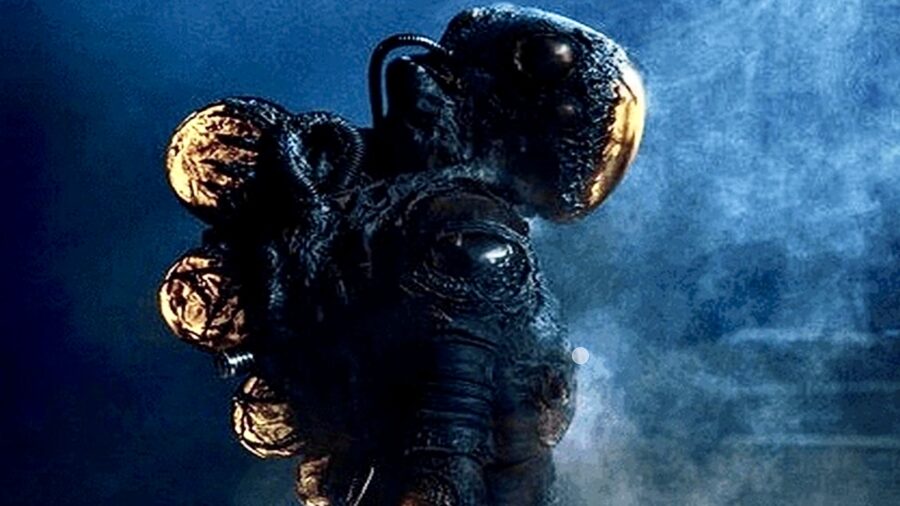
Has this ever happened to you? You go to work at your factory job, but you end up tearing your family apart because you keep having horrific nightmares about an impending alien invasion that only you’re aware of. Your daughters hate you because you keep blowing off family night and losing track of long stretches of time, and your wife all but commands you to go see a therapist because your nightmares are keeping her awake at night. She’s made it very clear that she’s at her wits’ end with your silly little dreams.
The oddly specific scenario I’m talking about is exactly what happens in Extinction, a Netflix Original sci-fi action thriller about the threat of an upcoming extinction event that won’t reveal itself until it’s already too late for everybody living on planet Earth to do anything about it.
Ignore That Terrible Review Score And Give Extinction A Chance

Taking an absolute beating on Rotten Tomatoes, Extinction currently touts an abysmal critical score of 32 percent against a slightly more favorable Popcornmeter score on the review aggregator. It’s the kind of score that might make you think that you’re about to get into a by-the-numbers “what if we got invaded by aliens?” kind of premise.
While you’re not wrong to make assumptions about the beats and storylines found in this Ben Young-directed film, it’s probably one of the better straight-to-streaming sci-fi films that I’ve seen in recent years.
He Was Right!
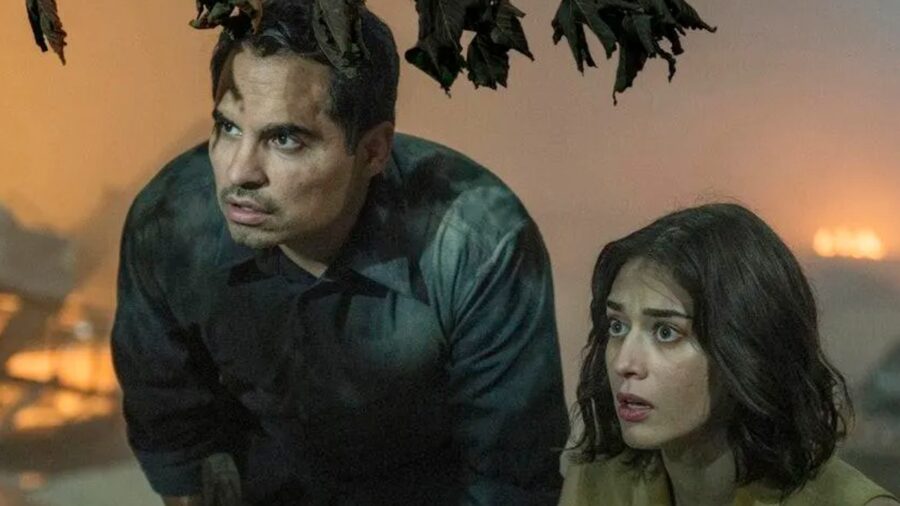
Michael Pena’s Peter may seem like he’s losing his mind because of his vivid nightmares of an imminent apocalypse, but Extinction doesn’t leave you guessing for long. Much to his wife Alice’s (Lizzy Caplan) disappointment, Peter skips out on therapy when he learns other patients are having the same exact dreams as him, which he interprets as some form of divine intervention, clueing him in on what’s to come.
At a party, Peter’s suspicions are confirmed when all hell breaks loose, and a deluge of invading spaceships starts tearing the city apart. I don’t know about you, but if I were getting nagged about my prophetic nightmares, only to find out that they were a legitimate warning that everybody should heed, I’d take pause in my frantic efforts to move my family to safety to briefly say, “Haha, I told you so,” before grabbing the photo album and getting the heck out of town. Sure, I’d do everything I can to protect my family, but thanks to my visions being correct, I’m now pack leader, and everybody has to do what I say.
Aliens Aren’t What They Seem
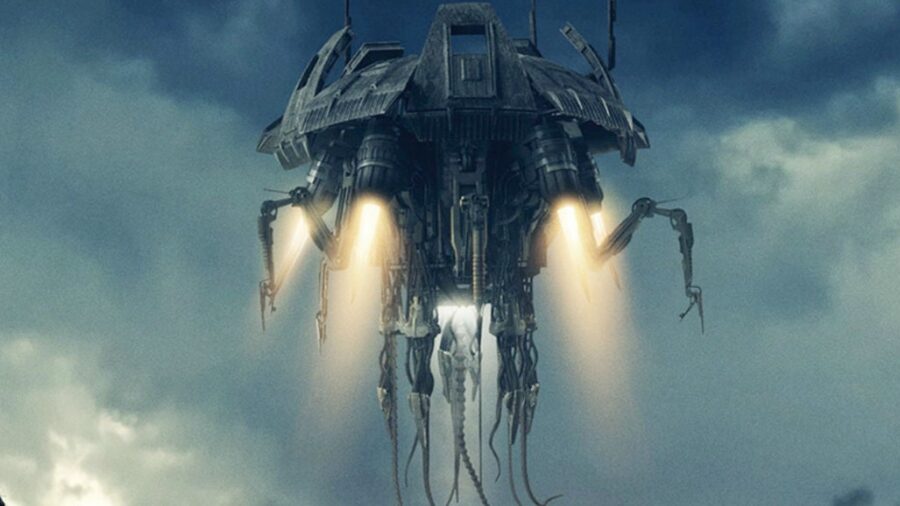
Looking for answers back at the facility where he works as an engineer in Extinction, Peter learns that his boss, David (Mike Colter), knew more about the invasion than he initially let on. Certain people like Peter were supposed to know about it so they could figure out how to deal with the visitors who are currently decimating the entire city.
Getting seriously wounded during the ensuing catastrophe, Alice needs immediate medical attention, prompting Peter to force one of the visitors to cooperate with him in restoring her vital functions. Meanwhile, his daughters, Hannah (Amelia Crouch) and Lucy (Erica Tremblay), are escorted to a military base, where they’ll probably remain safe for the next several… minutes.
Special Effects Are On Point
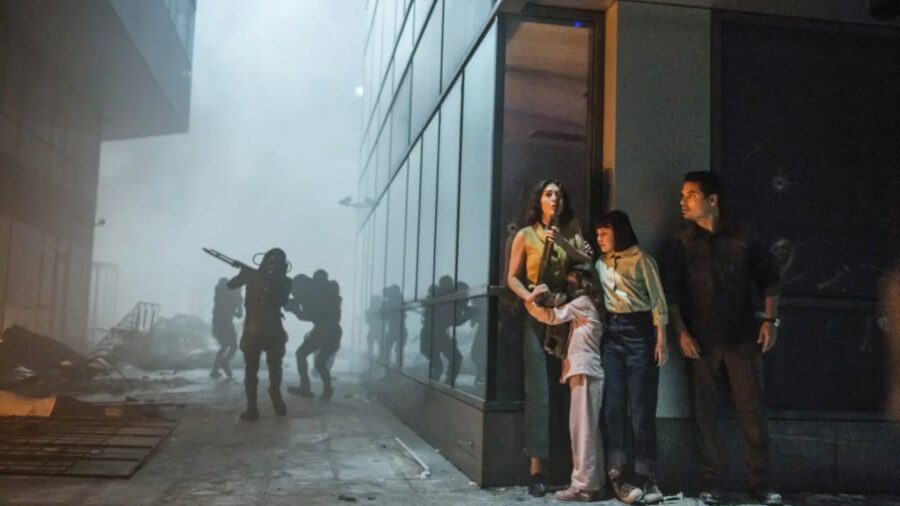
With a reported budget of just $20 million (chump change compared to an MCU joint), this Netflix Original wins some serious points for its use of special effects, especially when the alien-invasion first kicks off. Extinction uses a night skyline permeated by dust and fog to its advantage, and there’s no doubt in my mind that a boatload of CGI was used to make everything jump off the screen. But the lighting levels are so perfectly calibrated that it never once took me out of the movie because the film’s color palette does all of the heavy lifting.
As the black and grey horizon finds itself under attack, vibrant pops of red and orange break up the skyline, while the sound design that’s capturing what’s happening on ground-level is an assault on your ears that equally matches the assault that’s occurring on planet Earth, while civilization as we know it potentially arrives at its terrifying conclusion.


Extinction may not boast the most original premise, and received a ton of criticism for being so derivative, resulting in its poor reception. But for its production value alone, you should stream it the next time you’re looking to witness the apocalypse from the safety of your own home.

Report: Minnesota's Anthony Edwards out 'multiple weeks'
Sabastian Sawe shatters 2-hour barrier to win London Marathon


