
Entertainment
Raunchy, R-Rated 90s Comedy So Filthy That Its Stars Want You To Forget It Exists
By Robert Scucci
| Published

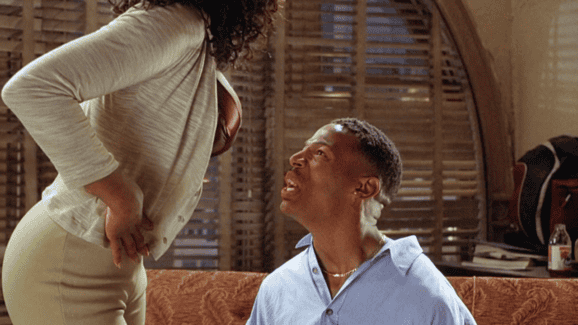
Mid to late 90s sci-fi comedies had a lot of fun with the “unsanctioned medical experiments going terribly wrong” plot, and with pretty solid results. 1996’s PG-13 rated The Nutty Professor cleaned house at the box office with $274 million, as did 1997’s G-rated Flubber with $178 million. Both of these family-friendly remakes proved there was a real market for this kind of humor. So much so that Marlon Wayans wanted in on the action, but with a little more R-rated edge in the form of 1998’s Senseless.
If there’s ever been a word to describe Senseless, look no further than the title. All of the familiar “unsanctioned medical experiment gone wrong” beats are here, but with a whole lot more flatulence, low-brow humor, and sexual innuendo. Senseless earned just $13 million at the box office against its reported $15 million budget, effectively putting it in the red. Even worse, it currently sits on Rotten Tomatoes’ wall of shame with an unthinkable 6 percent critical score, alongside a slightly more forgiving 45 percent approval rating on the Popcornmeter.

If you’re looking for the kind of punisher that performed so poorly it now only exists on ad-supported streaming, probably in a last-ditch attempt to recoup losses, Senseless is exactly what you should seek out. Personally, I don’t hate the film, but you really have to be in the right mood to choke this one down.
Co-Written By Craig Mazin
Co-written by Craig Mazin, best known for Chernobyl and The Last of Us, Senseless is a far cry from what the filmmaker would later prove himself capable of. Honestly, you can say the same about Marlon Wayans, David Spade, Matthew Lillard, and Rip Torn. The problem with Senseless is not the talent involved, but the cinematic experiment they embarked on here. They are all funny people in the right context, but somehow never quite figure out how to channel that energy.

Senseless centers on Darryl Witherspoon (Marlon Wayans), a struggling economics student working multiple odd jobs to make ends meet while also supporting his family back home. To stay in the black, Darryl engages in questionable practices like selling blood, plasma, and other bodily fluids to the appropriate venues for extra cash. When he learns about a controversial drug experiment overseen by Dr. Thomas Wheedon (Brad Dourif), Darryl jumps at the chance to get paid.
The experiment is simple on paper. Darryl injects a glowing green substance into his butt, which increases each of his five senses tenfold. Here’s the catch. If he messes up the dosage, he will lose one sense entirely while the remaining four go completely out of control. As you’d expect, this is exactly what happens in Senseless.
David Spade Doing His Usual Slappable Jerk Shtick

The primary conflict outside of the questionable chemicals coursing through Darryl’s bloodstream comes in the form of David Spade’s Scott Thorpe. Scott comes from a life of privilege and serves as Darryl’s direct competitor in an academic competition overseen by Randall Tyson (Rip Torn). Whoever wins gets fast tracked to a high paying Wall Street job, something Darryl desperately needs.
Spade is fully typecast as the same slappable jerk he played in films like PCU, Tommy Boy, and Black Sheep, and you get more of the same here. As much as I hate Scott Thorpe as a character, I have to give Spade credit where it’s due. He plays this kind of role so convincingly that I genuinely hated him as a person for years because I didn’t think it was humanly possible to fake that level of smugness.

At first, Darryl uses his heightened senses to impress Randall and undermine Scott, seemingly recalling stock figures from memory when he’s actually just reading a newspaper planted across the room that he can zoom in on. But things quickly spiral when Darryl is struck with sudden bouts of blindness, hypersensitive smell and taste, and the ability to hear what goes on in the women’s room in graphic detail as his love interest, Janice (Tamara Taylor), chats with her gassy friend behind closed doors.
Meanwhile, Darryl’s roommate Tim (Matthew Lillard), a straight-edge punk and hockey player, suspects he’s abusing hard drugs and intervenes whenever possible to keep him from going down the wrong path. If I had to describe Lillard’s vibe here, it’s what Machine Gun Kelly thought looked cool and then based his entire pop punk persona on.
Why It Failed

Senseless is a fascinating failure because everyone involved reliably brings exactly what you expect from them. The problem is that in this context, we get too much toilet humor and too many gross-out gags without fully leaning into their characterization. There are plenty of cheap laughs, most of them built on farts and funny faces. As a concept, Senseless has potential, but it simply does not work as a feature-length film because those gags can only stretch so far without being properly grounded.
I could easily see Senseless working as a recurring sketch where Darryl, or someone like him, keeps getting into ridiculous situations thanks to the drug, with the whole thing wrapped up in a few minutes. Some of the standalone gags would absolutely work in that format, but that’s not what we got. Instead, the film becomes an exhausting exercise in seeing just how far it’s willing to push things.


Senseless is streaming for free on Pluto TV as of this writing.
Entertainment
This $43 bundle quietly upgrades your entire PC experience

TL;DR: This rare Microsoft bundle deal gives you a lifetime license to Microsoft Office Professional 2021 for Windows and Windows 11 Pro for only $42.97 (reg. $418.99) through May 17.
$42.97
$418.99
Save $376.02
Looking for an affordable way to make your old PC feel new again? If you don’t have the funds to buy a brand new computer, don’t worry. The Ultimate Microsoft Office Professional 2021 for Windows lifetime license and Windows 11 Pro Bundle is the next best thing, offering your computer a total upgrade for only $42.97 through May 17.
Don’t count out your dusty old PC. This Microsoft bundle is here to give it a total facelift for less than $50. It kicks off with a lifetime license to some of the brand’s most popular tools — Microsoft Office, which you’ll pay for once and enjoy without any subscription fees.
Mashable Deals
You’ll get permanent access to a suite of eight helpful apps with Microsoft Office Professional 2021 for Windows. It includes staples that have been around for decades, like Word, Excel, PowerPoint, and Outlook. You’ll also get newer favorites like Teams, OneNote, Access, and Publisher.
Once you’ve loaded the apps onto your device, you can upgrade your OS to Windows 11 Pro. It’s an operating system made for modern professionals, with tools that support your workflow. Enjoy a more powerful search experience, improved voice typing, a seamless interface, snap layouts, and much more.
You can rest easy knowing Windows 11 Pro takes your cybersecurity seriously. You’ll have biometric logins, encrypted authentication, and advanced antivirus defenses to keep your data secure.
Mashable Deals
Show your PC some love with the Microsoft Office Professional 2021 for Windows and Windows 11 Pro bundle for only $42.97 (reg. $418.99) now until May 17.
StackSocial prices subject to change.
Entertainment
Star Trek’s First Broadcast Episode Was Very Carefully Chosen, Because It Was Boring
By Chris Snellgrove
| Published

These days, Star Trek is a bona fide pop culture phenomenon. But during the development of The Original Series, there was anxiety that the general public wouldn’t really understand Gene Roddenberry’s mashing up Western tropes with a sci-fi setting. Making matters worse was that the original pilot, “The Cage,” had been rejected by NBC for being too brainy. Fortunately, Roddenberry got a chance to shoot another pilot, one which impressed the network enough to order an entire season worth of episodes.
Several episodes of Star Trek: The Original Series had already been shot when the time came for this new show to make its broadcast premiere. The first episode that the general public saw was “The Man Trap,” which featured a shapeshifting monster that was revealed to be an alien salt vampire. This good-but-not-great episode was an odd choice, and it was one that the cast and crew hated. As it turns out, though, this episode was very carefully selected by executives because it served as an inoffensive, relatively straightforward encapsulation of everything Star Trek had to offer.
It’s A Trap!

Most of the information we have about why “The Man Trap” was selected as Star Trek’s first episode comes from the book Inside Star Trek: The Real Story. Within this impressive reference tome, Robert H. Justman and Herbert F. Solow revealed something surprising: NBC had several other episodes to choose from for the premiere, including “The Corbomite Maneuver,” “Charlie X,” “Mudd’s Women,” “Where No Man Has Gone Before,” and “The Naked Time.” All of them had already been shot and were mostly finished, so it was just a matter of figuring out which episode would serve as the best introduction to Star Trek, a heretofore unknown sci-fi series.
“The Man Trap” won out, mostly because the powers that be worried that other episodes would be off-putting to general audiences in some very specific ways. For example, they worried that audiences would find “Charlie X” a story that was “too gentle” because it focused on an adolescent with special powers. This was probably the right call, in retrospect: when Variety gave a negative review of “The Man Trap” (an episode chosen, in part, because of its relative maturity), they declared that Star Trek: The Original Series was “better suited to the Saturday morning kidvid bloc” (ouch!).
A Monster Hit Of An Episode

“The Corbomite Maneuver” was a great potential choice, but this episode’s impressive special effects were still in post-production, and almost all of its action took place on the ship. “Where No Man Has Gone Before” really outlined the premise of the new show, but it was deemed “expository” for general audiences expecting more action and danger. Justman thought “The Naked Time” was a killer introduction to the crew’s personalities, but the network passed, presumably because of how over-the-top (half-naked, swashbuckling Sulu? Oh, my!) that episode gets. “Mudd’s Women,” meanwhile, was deemed too offensive because the plot involved literally selling women to miners.
Through this process of elimination, executives decided that “The Man Trap” was the best intro to Star Trek. It had cool scenes on both the Enterprise and a distant outpost (a strange new world) and featured a straightforward action plot you didn’t have to be a sci-fi aficionado to understand. Finally, it was all about finding and defeating a creepy monster, which offered thrills to audiences of all ages. The network’s choice paid off, and Star Trek: The Original Series became the most popular sci-fi show in television history, even though the cast (including William Shatner and Leonard Nimoy) thought “The Man Trap” was the worst possible episode they could have chosen.

All of this is a keen reminder of how much thought and work went into putting Star Trek’s best foot forward. It might be a reminder that Paramount’s current upper leadership needs, as Starfleet Academy hit the ground running with the worst episodes of Season 1. The show got better after that, but it didn’t matter because the prospective audience had already been driven away. As it turns out, today’s execs need to learn something that the network execs of the ‘60s had learned very well: series succeed when you give the audience what they want to see and not what you want to show!
Entertainment
How A Fantasy Box Office Bomb Lost $200 Million In Theaters, And Suddenly Became A Streaming Hit
By Jonathan Klotz
| Published

For the last decade as streaming has taken off in homes around the world, it’s become possible for films that lost historical amounts of money in theaters to find success, even if it might be the post-Mystery Science Theater 3000 trend of “so bad it’s good.” That’s why a massive flop, for example say, Morbius, and films that slightly missed the mark like The Fall Guy can turn it around and become a streaming success.
What’s even more impressive is the amazing turnaround of 2013’s Jack the Giant Slayer, which lost Legendary Pictures an alleged $200 million, only to end up topping streaming charts in 2025.
The Classic Fairy Tale With A Twist
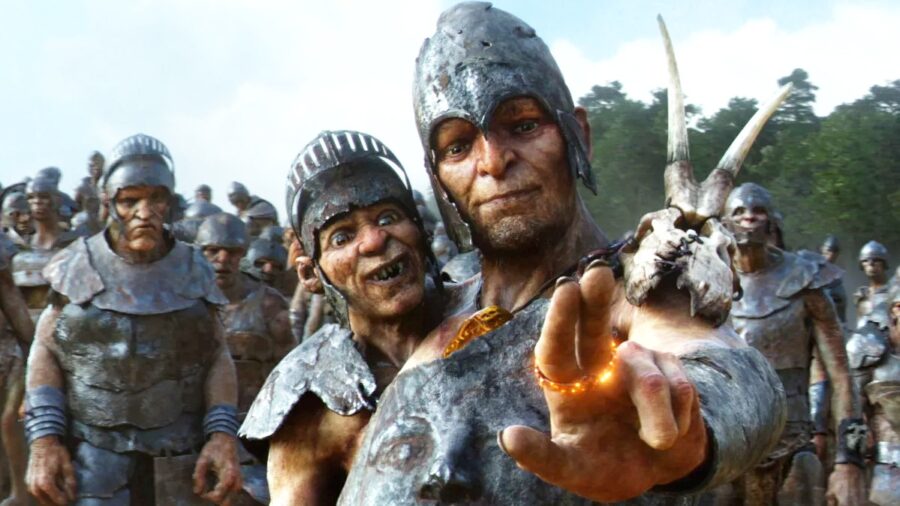
Everyone knows the story of Jack and the Beanstalk, the classic fairy tale about selling a horse for magic beans and climbing a beanstalk to find a giant living in the clouds. It’s simple, contains multiple morals, and can be easily adjusted to turn Jack into the villain, but Jack the Giant Slayer instead asks, “What if there was no moral, and instead of one giant, there was an entire army of evil giants?” The movie is the classic story, as you’ve never seen it before, and it almost works.
Nicholas Hoult plays Jack, the young man who finds himself trading his horse to a monk in exchange for beans that he can’t allow to get wet, ever. Like the rules in Gremlins, it’s not long before Jack accidentally gets the beans wet and a beanstalk grows under his house with the princess, Isabell (Eleanor Tomlinson), trapped inside as it grows into the sky. All the king’s men gather to rescue the princess, including Lord Roderick (Stanley Tucci), who, thankfully, Jack the Giant Slayer makes obvious is very evil, very quickly.
It’s up to Jack, Isabell, and the loyal Knight, Elmont (Ewan McGregor) to save the kingdom and stop the invasion of giants led by Roderick and the giant two-headed General Fallon (Bill Nighy). If there’s one thing Jack the Giant Slayer does better than every other adaptation, it’s the third act featuring a full-blown war between humans and giants, with a touch of humor and absurdity. Watching a giant toss a windmill like the glaive from Krull is the perfect amount of off-beat to distract from a surprising amount of body horror in both the giant’s designs and Fallon’s ultimate fate.
A Movie For No One
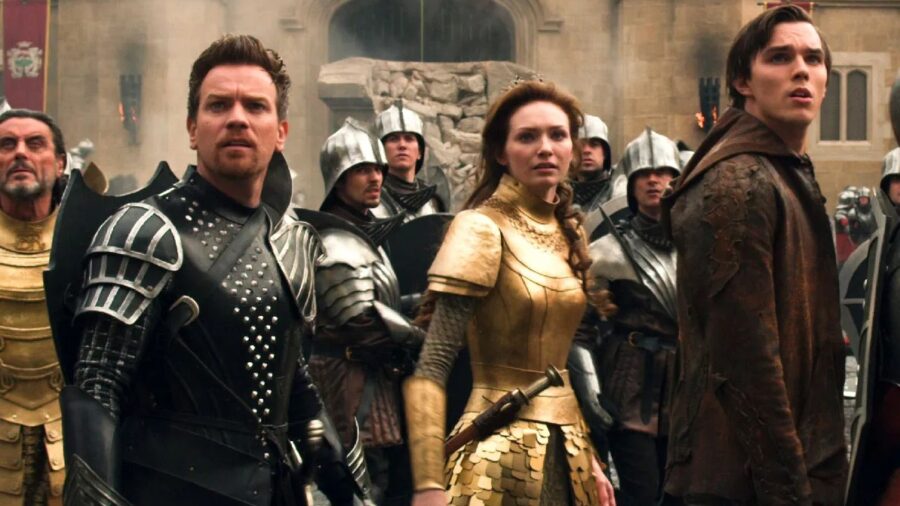
Jack the Giant Slayer looks too good, and the star-studded cast is having way too much fun for it to be a truly bad movie. The problem is that the pacing is off: it takes a little too long to get to the good stuff, then it feels a little too rushed, and though it is a fun adventure, it’s also, like the source material, simplistic. It’s not like the movie wasn’t watched in theaters; it made $197 million worldwide, which would be a great haul except it cost $185 million to make, and that’s not including the extensive marketing campaign.
The push and pull of director Bryan Singer’s vision of a dark take on the fable, complete with actual people-eating on screen, and the sanitized version that hit theaters, which was still too dark for children, since the film is surprisingly rated PG-13, meant it ended up being a film for no one. The Rotten Tomatoes ratings, of 52 percent from critics and 55 percent from the audience, are proof that the final product is not great, but not bad; it’s a movie that will keep you watching for a few hours and then leave no lasting impression. These days, Lionsgate and Sony wish they’d release a movie that is that well-received, as even Jack the Giant Slayer looks like a masterpiece compared to Borderlands or Kraven the Hunter.
Streaming is the perfect home for Jack the Giant Slayer, and 10 years later, it no longer matters that the movie lost hundreds of millions in theaters. It finally gets to stand on its own as a fun, if unremarkable, fantasy adventure.

Celtics storm to early lead, roll past 76ers in series opener
This $43 bundle quietly upgrades your entire PC experience


