
Tech
Prince Andrew advisor pitched Jeffrey Epstein on investing in EV startups like Lucid Motors
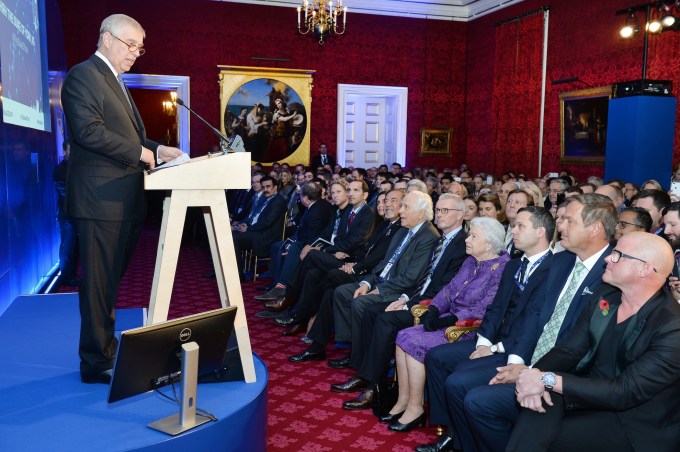
Electric vehicle startup Lucid Motors was scrambling to raise a Series D funding round in 2017. It had courted Ford as a potential investor, but Jia Yueting, the founder of rival EV startup Faraday Future, had quietly amassed around a 30% stake and was essentially blocking new investors.
David Stern, a mysterious businessman and close advisor to former Prince Andrew, saw an opportunity to break the logjam: bring in Jeffrey Epstein.
“Ford will likely be lead in $400m Series D in Lucid. Big strategic move,” Stern wrote to Epstein in emails released last week as part of the Department of Justice’s latest disclosure of 3 million documents related to Epstein. Jia “has massive cash issues” at Faraday, he wrote, and needs to “sell now to make payroll for his other business.”
It wasn’t the first EV startup Stern pitched Epstein, and it wouldn’t be the last, according to hundreds of documents reviewed by TechCrunch.
At the time, legacy automakers and newly minted startups, fueled by the breakthrough success of Tesla and progress by Google’s self-driving project, were jumping into electric and autonomous vehicles. And Stern was apparently hungry to take advantage of the resulting deal flow. The documents show he also pitched investments in Faraday Future and in another EV startup, Canoo.
It’s unlikely Epstein invested in any of them. Lucid didn’t close its Series D until late 2018, when it raised more than $1 billion from Saudi Arabia’s sovereign wealth fund. Faraday ultimately received a major investment from Chinese real estate conglomerate Evergrande in late 2017. Epstein said in a 2018 message included in the Justice Department’s files that he had no “direct” or “indirect” interest in Canoo.
These discussions instead provide greater insight into the many connections Epstein, a convicted sex offender, had to Silicon Valley startups up until his arrest and death in 2019. They also provide a snapshot of a relationship that has not been explored in previous reporting.
Techcrunch event
Boston, MA
|
June 23, 2026
By the time of the Lucid emails, Epstein and Stern had been working together closely for nearly a decade, the newly released documents show. To Epstein, Stern was “my china contact.” To Stern, Epstein was “my mentor, and I do what he tells me.”
A ‘ghost’ of a businessman

Stern is a mostly digital ghost with little information available about him on the internet prior to the release of the files.
He is perhaps best known as the director of Prince Andrew’s Pitch@Palace startup contest, which ran for a few years until Andrew’s connections to Epstein were exposed. Andrew even referred to Stern as a “ghost” in one 2010 email.
Stern appears to have first approached Epstein in 2008, according to the emails released by the DOJ — just one month before the financier pled guilty to soliciting a minor for prostitution in Florida. Stern was creating a fund, called AGC Capital, to take advantage of the economic boom in China, and he wanted Epstein to invest.
It’s not clear how Stern was introduced to Epstein. Stern did not respond to a detailed list of questions for this article.
Stern, who is German, attended the University of London and Shi-Da University in China in the late 1990s, and served as chairman of China Millennium Capital, the Chinese arm of Millennium Capital Partners, according to the bio section of the AGC Capital pitch deck, which is in the DOJ’s files.
Stern also worked for Siemens, negotiating “industrial Joint Ventures with Chinese State Owned enterprises,” before joining the Shanghai office of Deutsche Bank. He started a company called Asia Gateway in 2001 that “advised blue chip companies, Chinese enterprises as well as the Chinese government in growth strategies and investments.”
These jobs appear to have helped Stern make connections with powerful and wealthy Chinese businessmen, including Li Botan — the son-in-law of the fourth-most senior leader in China under Xi Jinping’s predecessor Hu Jintao. (Li would eventually go on to become a founding investor in Canoo with Stern.)
It’s not clear if Epstein invested in AGC Capital; the financier spent the next year serving his sentence. But Stern and Epstein remained in touch, and in 2009 Stern started pitching other ideas.
The documents reveal a relationship that starts off formal and terse, with Epstein at one point excoriating Stern for not having properly prepared a potential business deal.
“[I]f you want to do real deals you have to be precise and careful„ every error is a fortune,” Epstein wrote. “[Y]our first grade is an F.”

One of the first big projects the two men collaborated on was helping the Duchess of York, Sarah Ferguson, with her miserable finances, according to the emails.
The relationship deepened over the following decade. The two men got close enough that Stern felt comfortable asking Epstein in 2016 to become the godfather of one of his children. (Epstein wrote that he was “flattered” but declined because he “made a promise to my goddaughter that I would not be godfather to anyone else.”)
It’s hard to say how fruitful the relationship was on the business side. But between 2009 and 2019, Stern brought Epstein a number of potential deals across various industries.
Early on, he seemed dead set on starting a “secret” new fund with Epstein to invest in Chinese businesses together, which he referred to as JEDS — the two men’s initials combined. (It was also referred to in some emails as “Serpentine Group.”) Stern later pitched buying farmland in Russia, suggested purchasing the news organization Al Jazeera and taking it public, discussed buying troubled music publisher EMI, and considered acquiring an apparently distressed (and unnamed) undersea cable company.
They also had their eyes on banks. Stern and Epstein attempted to buy Luxembourg-headquartered private bank Sal. Oppenheim, the emails show. In 2016, they even discussed a buyout of Deutsche Bank, which had for years transacted with Epstein.
Stern repeatedly flaunted his connections with high-profile businessmen and politicians in his emails to Epstein and his other contacts. In February 2012, Stern suggested Epstein introduce Jes Staley — the head of J.P. Morgan’s investment bank at the time — to Malaysian politician Anwar Ibrahim.
“I know Anwar well,” Stern wrote. “If he becomes prime minister of malayisa [Staley] will clean up and it could be a gold mine for JPM.” (Ibrahim lost a contested election in 2013 but became prime minister in 2022.)
Stern also claimed to have had dinner with Jack Ma, had a planned meeting “alone” with UAE president Mohamed bin Zayed Al Nahyan, and said he was “friends” with the grandson of former Chinese president Jiang Zemin.
Going electric
By 2017, Stern was apparently eyeing the rush to build new mobility companies.
He tried to get Epstein to meet Faraday Future founder Jia to discuss an investment. It’s not clear if that ever happened; the company and Jia did not respond to requests for comment.
But former BMW and Deutsche Bank CFO Stefan Krause, who had been brought in to save Faraday Future, made a direct appeal to Epstein in April 2017.
“Faraday Future (FF) is a great story in itself, regretfully surrounded by a lot of noise around Jia Yueting (YT) and his other enterprises (LeEco, LeMall, LeSports, to name a few). These businesses are not working, so he run out of cash. FF is starving,” Krause wrote to Epstein. “Great chance to build a better Tesla.”
(Krause is described as a “friend” and a business partner of Stern’s in the documents. He didn’t respond to a request for comment.)
It appears those conversations petered out. Soon after, Stern suggested the Lucid Motors investment.
In May 2017, a pitch deck landed in Epstein’s inbox. It was put together by a fund called Monstera that Stern had created. “Monstera can gain a 32% shareholding in Lucid through the acquisition of the stake currently controlled by Yueting Jia,” one slide reads. Other emails show that Stern expected to spend around $300 million to acquire the 32% stake.
He referred to it as a “fire sale” in emails. Monstera could either hold the position or “[o]ffload” it “when Ford comes in.”
Ford ultimately pulled out, and Lucid had to wait to close its Series D until August 2018, when Saudi Arabia’s Public Investment Fund invested more than $1 billion. (SEC filings show the Saudi sovereign wealth fund repurchased Jia’s shares over the next few years. Lucid did not respond to a request for comment.)
When Krause left Faraday Future to start a new EV company in late 2017 — first called Evelozcity and later, Canoo — Stern was one of the original backers. He contributed just $1 million alongside larger sums from Li, the CCP-connected Chinese businessman, and Michael Chiang, a billionaire who runs Taiwanese electronics giant TPK. (Li’s involvement later triggered a national security review when Canoo went public in 2020.)
In June 2018, Stern sent Epstein a document about the startup, to which Epstein responded: “fun.”
But Epstein never invested in Canoo, either. He did, however, pitch powerful people on Stern’s behalf. Epstein emailed Deepak Chopra in May 2018 and told the self-help guru that “david has a new electric car co in los angeles.” He told Chopra “they are going to build the next gen health sensors into the car. you guys should talk.”
In June 2019, Epstein sent a message to Eduardo Teodorani, an Italian businessman who is a senior vice president of agriculture machinery giant CNH. “My friend David stern… has a electric car co that I think you should explore before he sells it to another co,” Epstein wrote. Epstein also connected Stern with Sheikh Jabor al Thani, a member of the Qatari royal family, on June 29 so he could “hear more about your car co.”
One week after he sent that message, Epstein was arrested. He died in prison a month later.
It’s not clear when Stern last spoke to Epstein. But in March 2019, he forwarded a story to Epstein titled: “Warren Buffet: Electric Cars Are Very Much in America’s Future.” In the body of the email, Stern wrote: “How do we get him ??”
Tech
Plaid valued at $8B in employee share sale

Plaid, a company that connects financial applications to users’ bank accounts, enabling payments and data verification, has allowed employees to sell some of their shares at an $8 billion valuation, the company confirmed to TechCrunch on Thursday.
The valuation represents a 31% increase from the $6.1 billion valuation the 13-year-old company achieved in April of last year, when it raised a $575 million round led by Franklin Templeton for partly the same purpose: purchasing shares from employees, including to help them cover the taxes associated with converting expiring restricted stock units (RSUs, a form of equity compensation) into shares.
Despite its new, bigger headline number, Plaid is still valued at 40% below its $13.4 billion peak in 2021, when ultra-low interest rates drove a massive surge in fintech valuations.
Such transactions have become increasingly common among private companies using liquidity as a retention tool. Recent examples include Stripe, which this week said it would allow employees to sell shares at a $159 billion valuation, as well as Clay, ElevenLabs, and Linear.
Beyond retention and to help staff cover tax bills triggered when RSUs vest, they relieve pressure on management to pursue an IPO before the company is ready.
Tech
Ultrahuman bets on redesigned smart ring to win back U.S. market after Oura dispute
Ultrahuman on Friday unveiled a new smart ring with longer battery life and a redesigned form factor, as the Bengaluru-based wearable maker seeks to revive its U.S. business that was disrupted last year by a patent dispute with rival Oura.
The Ring Pro, Ultrahuman’s third-generation smart ring, offers up to 15 days of battery life — compared with four to six days on the Ring Air — and is priced at $479. It will be available for pre-orders globally, excluding the U.S., with shipments beginning in March.
Ultrahuman’s U.S. business was disrupted in October 2025 after the U.S. International Trade Commission — a federal agency that handles trade disputes — ruled in Oura’s favor in a patent dispute. The ruling prevented the startup from importing new ring inventory into the country, although existing retail stock continued to be sold. The blow was significant. The U.S. accounted for about 45% of Ultrahuman’s roughly 700,000 daily active users worldwide, according to co-founder and CEO Mohit Kumar.
In August 2025, Ultrahuman also filed a separate patent infringement case against Oura in the Delhi High Court, where the matter remains pending.
Meanwhile, to work around Oura’s patent, Ultrahuman developed the Ring Pro with a new design, Kumar told TechCrunch, adding that the device has been submitted to the U.S. Customs and Border Protection for clearance. U.S. Customs and Border Protection for clearance to confirm it can legally be imported into the country.
Despite the U.S. disruption, Ultrahuman is currently operating at an annualized revenue run rate of about $150 million, Kumar said. It reported $64 million in operating revenue in the financial year ended March 2025. The startup remains profitable after tax, although margins are expected to narrow due to litigation costs, tariffs, and the redesign effort, he added.
Alongside the new ring, Ultrahuman introduced Jade, a real-time “biointelligence” system that analyzes user health data across its devices and services to generate personalized insights and recommendations.
Techcrunch event
Boston, MA
|
June 9, 2026
Kumar said Jade is designed to move beyond retrospective health summaries toward real-time, actionable guidance.

“Most AI tools today look backward at your data,” he said. “Jade is built to react to your health in real time and surface actions users can take.”
Kumar said Jade will be available to all Ultrahuman users, including those using the older Ring Air, and does not currently require a subscription.
The Ring Pro features a redesigned heart-rate sensing architecture for improved signal quality during sleep and a new dual-core processor to enhance data accuracy and on-device computing. The device can store up to 250 days of health data and weighs about 5% to 6% more than the Ring Air, launched in July 2023 at $349.
Ultrahuman has also introduced a Pro Charger with up to 45 days of battery life to support on-the-go charging and enable faster updates and diagnostics through direct case connectivity. The charger also supports wireless charging via Qi, the same standard used by most modern smartphones.

Women account for about 68% of Ultrahuman’s user base, up from roughly 65% a year earlier, Kumar said, reflecting strong adoption of the startup’s women’s health features.
Ultrahuman also offers subscription-based services across its broader health platform, including a coaching and recovery program called PowerPlugs, the Blood Vision metabolic panel, Ultrahuman Home, and a continuous glucose monitoring offering. Subscriptions contribute about 16% of Ultrahuman’s revenue, while Blood Vision accounts for roughly 5% to 6% of the business, Kumar said.
Ultrahuman’s key growth markets include the UK, Canada, Australia, and India, Kumar told TechCrunch, with the latter contributing about 8% to 9% of overall revenue after recent investments in local customer support.
Global smart ring shipments grew nearly 80% year-over-year in 2025, driven by demand for compact wearables with advanced sleep tracking and longer battery life, said Anshika Jain, senior analyst at Counterpoint Research. Oura continues to lead with more than two-thirds of the market, while Ultrahuman holds the second position.
Jain added that future leaders in the category will be defined by sensor accuracy, AI-driven insights, and seamless ecosystem integration.
Separate IDC data showed global smart ring shipments rising about 30% year over year in Q3 2025 to nearly 1 million units, driven in part by demand for screenless fitness trackers, said Navkendar Singh, associate vice president at IDC India. Ultrahuman captured roughly 25% of the market during the period, per IDC.
Founded in 2019, Ultrahuman has raised about $55 million to date and counts Alpha Wave Incubation, Blume Ventures, Steadview Capital, and Nexus Venture Partners among its investors.
Ultrahuman, Kumar said, is building additional production capacity to support demand for the Ring Pro over the coming months.
Tech
South Korea opens the door to let Google Maps operate fully
After years of appeals, Google has finally received conditional approval to export high-precision geographic information out of South Korea, a move that opens the door to let the company provide proper Google Maps services in the country, such as walking and real-time driving directions.
The move reverses a long-standing policy on data restrictions that had essentially made Google Maps and Apple Maps non-functional in the country. Google has so far provided maps services in South Korea using high-resolution, 1:5,000 scale map data, but without the ability to export that data to its servers, the company couldn’t offer features like turn-by-turn navigation or detailed listings for businesses.
South Korea has resisted Google’s appeals since 2011, arguing that the company’s precise satellite maps could endanger national security by exposing sensitive military sites when combined with commercial imagery and online data. Given that South Korea remains technically at war with North Korea, the government is cautious about exposing such locations, and had until now demanded Google set up a data center in the country and obscure sensitive locations.
The green light comes with strict rules designed to protect sensitive military and infrastructure sites. The South Korean government will verify compliance before any data leaves the country; any images of South Korean territory used in Google Maps and Google Earth must comply with national security regulations; and historical imagery in Google Earth and Street View must obscure sensitive military sites. Google is also required to either remove or limit coordinate data for South Korean locations, and only essential data for navigation and routing can be exported.
The government also requires all data processing to be done on servers operated by Google’s local partners. Sensitive topographic and military data remain off-limits, and any updates to military or security sites must be carried out promptly on domestic servers at the government’s request.
Google did not immediately return a request for comment.
The move will no doubt send ripples through Korea’s domestic maps market, which has seen local navigation apps such as Naver Map, T Map, and Kakao Map thrive in the relative absence of providers like Google or Apple.
Techcrunch event
Boston, MA
|
June 9, 2026
In its announcement, the Ministry of Land, Infrastructure and Transport said the decision was influenced by its intention to boost tourism in the country — because Google Maps has until now proved a bit useless in Korea, tourists have had to rely on local apps, whether or not they offer English language support.
The ministry said the move is also aimed at strengthening the country’s geospatial industry by supporting the development of high-precision, 3D infrastructure and geo AI technologies. The government is urging Google to help grow South Korea’s geospatial industry so that exporting the data benefits not just the tech giant, but also domestic innovation and economic growth.
Google has not yet said if it would set up a data center in South Korea. The company operates an array of data centers in Asia, including in Singapore, Taiwan, Japan, Thailand, and Malaysia.
The government also outlined new measures to handle potential security incidents related to the export of high-resolution maps. The ministry said it would work with Google to set up a “security incident prevention and response framework” to manage potential risks before any data leaves the country. For situations involving imminent threats to national security, a technical “red button” mechanism will be implemented, allowing for rapid emergency response.
In addition, South Korea will require a local officer to be stationed in-country to maintain constant communication with the government and ensure smooth handling of any security incidents.

Ryan O’Reilly’s late winner propels Predators to divisional victory
Bulls match third-longest skid in team history with loss to Blazers


