
Tech
Peak XV says internal disagreement led to partner exits as it doubles down on AI
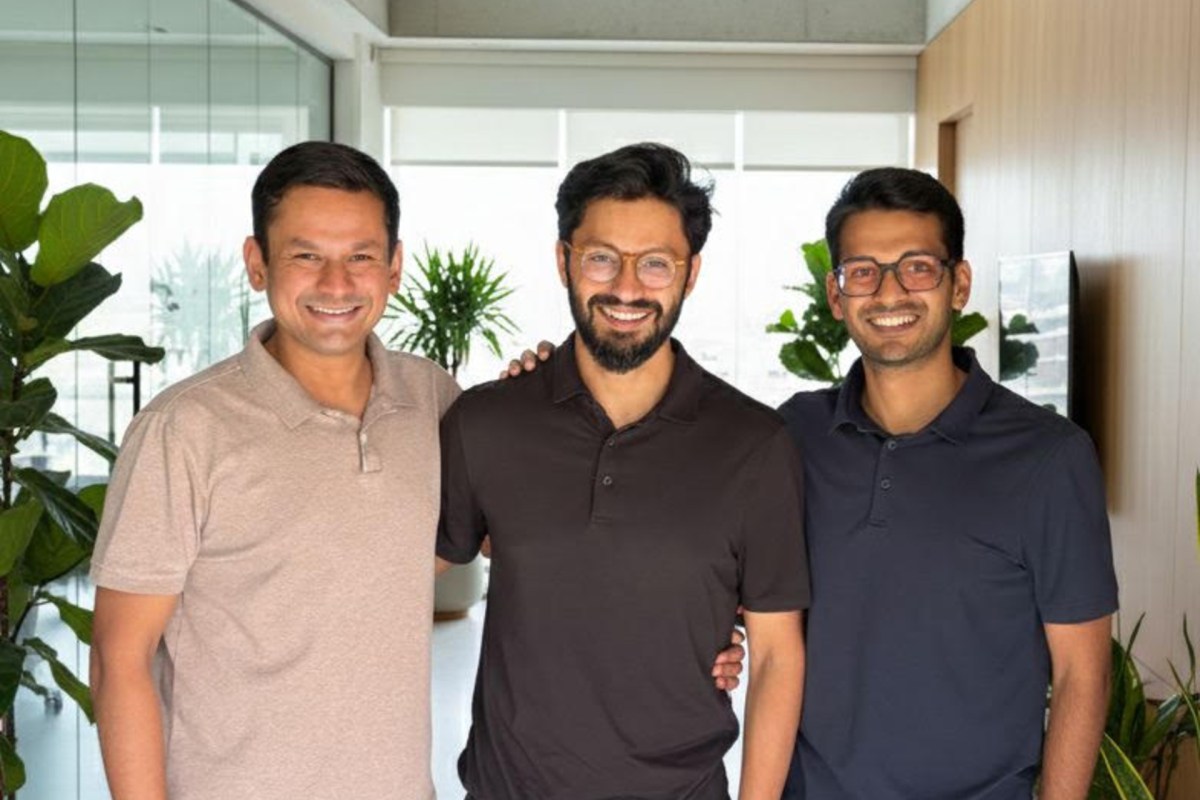
Peak XV Partners, a leading venture capital firm in India and Southeast Asia, has seen a fresh round of senior departures. These follow other leadership exits over the past year as it pushes ahead with plans to deepen its focus on AI investing and expand its footprint in the U.S., while keeping India as its largest market.
The latest departures stem from an internal disagreement with senior partner Ashish Agrawal (pictured above, left) that led to a mutual decision to part ways, Managing Director Shailendra Singh told TechCrunch. He added that two other partners, Ishaan Mittal (pictured above, right) and Tejeshwi Sharma (pictured above, center), chose to leave alongside him.
Singh said Peak XV did not want to go into the specifics of the disagreement and was focused on moving forward. “Just out of privacy, and out of, like, trying to be classy about it,” he said. Singh added that such departures were not uncommon at large, multi-stage venture firms and that Peak XV wanted to move on quickly after several years of working together.
All board seats held by the departing partners would be transitioned “imminently,” Singh said, noting that the firm already had overlapping representation across several portfolio companies. He said Peak XV was not concerned about continuity, noting that multiple general partners and operating partners were already involved across many of those boards.
The departures mark the exit of long-tenured investors from the firm. Agrawal had been with Peak XV for more than 13 years, while Mittal spent over nine years at the firm and Sharma more than seven years, per their LinkedIn profiles.
Agrawal wrote in a LinkedIn post that he had decided to “take the entrepreneurial plunge” and was teaming up with Mittal and Sharma to start a new venture capital firm. He described the move as an opportunity to build a new institution with longtime partners and thanked Peak XV’s leadership for what he called a “truly wonderful partnership.”
During his time at Peak XV, Agrawal led investments across fintech, consumer, and software, including Groww, one of the firm’s most prominent IPO exits in 2025. He also backed multiple early- and growth-stage companies alongside Mittal and Sharma, contributing to Peak XV’s broader portfolio build-out over the past decade.
Agrawal, Mittal, and Sharma did not respond to messages for comments.
Peak XV has also moved to strengthen its senior leadership from within. The firm on Tuesday promoted Abhishek Mohan to general partner, expanding its investment leadership bench, while Saipriya Sarangan was elevated to chief operating officer, taking charge of firm-wide operations.
The leadership changes come amid a standout year for Peak XV’s portfolio exits. Five of its companies — Groww, Pine Labs, Meesho, Wakefit, and Capillary Technologies — went public in November and December 2025, generating roughly ₹300 billion (around $3.33 billion) in unrealized, mark-to-market gains for the firm, in addition to about ₹28 billion (about $310.61 million) in realized gains from share sales during the IPOs.
In addition to the latest departures, Peak XV has seen a broader churn in its senior ranks over the past 12 months. Last year, long-time investment leaders Harshjit Sethi and Shailesh Lakhani exited the India team, while Abheek Anand and Pieter Kemps departed from the firm’s Southeast Asia operations. The firm has also seen leadership changes across its marketing, policy, and operations teams in recent months.
Singh dismissed a view circulating in the market that many of the partners who drove Peak XV’s largest exits were no longer at the firm, calling the narrative “not statistically true.” He said several of the firm’s most significant outcomes had been led by long-tenured partners who remained at Peak XV, and argued that the firm’s exit track record did not hinge on any single individual.
Peak XV currently has seven general partners, along with multiple partners and principals, according to Singh.
The VC firm, which split from Sequoia Capital in 2023 and currently manages over $10 billion in capital across 16 funds, has made about 80 investments linked to AI, Singh said, highlighting its push to deepen its focus on AI funding. It is also preparing to open a U.S. office within the next 90 days as it expands its global footprint, per Singh, while continuing to view India as its largest and most important market.
Singh stated the firm believed AI would reshape venture investing more profoundly than previous technology shifts, arguing that successful AI investing required investors with deep technical understanding rather than “generalist” experience. He added that Peak XV was looking to add more AI-native talent, including researchers and engineers with backgrounds in machine learning and large-scale model development.
The firm has invested in more than 400 companies, and its portfolio has seen over 35 initial public offerings and several M&As to date.
Tech
Doss raises $55M for AI inventory management that plugs into ERP

Enterprise resource planning (ERP) systems are often described as a company’s “central brain” because the software connects different departments — including finance, HR, and inventory — into a single database where everyone shares the same information.
In recent years, a new crop of AI-powered ERP startups, such as Rillet and Campfire, has emerged hoping to replace legacy offerings like NetSuite. These companies claim that traditional ERPs are clunky, expensive, and time-consuming to implement.
However, according to Doss co-founder and CEO Wiley Jones, many new AI ERPs lack robust inventory management, the process of ensuring that the data on physical goods remains synced with the accounting ledger.
Doss claims to solve this by providing an AI-native inventory management layer that integrates with existing accounting systems, whether traditional ERPs or ones built by AI-based startups.
On Tuesday, Doss announced that it raised a $55 million Series B co-led by Madrona and Premji Invest, with participation from Intuit Ventures. Other new and existing inventors in the round include Theory Ventures, General Catalyst, Contrary Capital, and Greyhound Capital.
Doss, founded in 2022, originally focused on a core accounting product similar to those offered by AI-native startups like Rillet and Campfire. But last year, the startup decided instead of competing with these companies, “we would rather partner with them, and play a different game,” Jones told TechCrunch.
Jones explained that AI-native ERP companies manage accounts receivable, accounts payable, and other finance functions, but most don’t offer procurement and inventory management that integrates with accounting workflows.
Techcrunch event
San Francisco, CA
|
October 13-15, 2026
“We’re building a lot of the traceability for the supply chain, but through the lens of plugging into a finance and accounting partner,” Jones said.
The company’s main partners include Rillet and Campfire. Many clients also use Doss in conjuction with Intuit’s QuickBooks.
“The reason that they work with us is that [physical goods management] is not something that they’re likely going to build as a core competency without putting in a lot of energy and effort,” Jones said.
Doss’ core customer base consists of mid-market consumer brands, typically generating between $20 million and $250 million in top-line revenue. One such customer is Verve Coffee Roasters, a high-end specialty coffee brand.
The startup sees itself as competing with traditional ERPs. But these players are not sitting ideal in the age of AI, either. NetSuite, for instance, has recently introduced its updated AI ERP. It also competes with other agentic procurement startups such as Didero.
While Jones admits that selling two ERP systems, one for accounting and another for inventory management like Doss, “is a hard sell,” he says that legacy ERPs are so hard to implement that many customers are choosing to have two newer, AI-powered systems.
“I think it’s going to be a very intense fight inside of mid-market that ultimately will be determined by whoever rebuilds their architecture to be most legible and usable for agents,” Jones said.
Editor’s Note: The story corrected the list of Doss’ partners.
Tech
Crunchyroll confirms data breach after hacker claims unauthorized access
Anime streaming service Crunchyroll has confirmed a data breach involving customer service ticket information following an incident with a third-party vendor, after a hacker claimed to have accessed user data and internal systems.
The streaming site, which Sony acquired from AT&T in 2020 for $1.18 billion, operates as a joint venture between U.S.-based Sony Pictures Entertainment and Japan-based Aniplex. Crunchyroll has more than 2,000 titles in over 12 languages and serves 15 million subscribers worldwide, per its website.
Reports of a threat actor claiming access to Crunchyroll user data surfaced online this week, with a hacker alleging that they obtained data about millions of users.
Crunchyroll said it is investigating the claims.
“Our investigation is ongoing, and we continue to work with leading cybersecurity experts,” the company said in a statement to TechCrunch, adding that it has not identified evidence of ongoing unauthorized access.
Separately, materials shared with TechCrunch by a cybersecurity-focused account, International Cyber Digest, indicate the attacker may have gained access to Crunchyroll’s Zendesk support system. Screenshots we have seen appear to show the company’s internal Slack messages and stolen support data, apparently stolen by hacking an employee at Telus Digital, an outsourcing giant that handles customer support for Crunchyroll. The hacker allegedly stole customer support ticket data until early 2025, at which point their access was revoked.
The cybersecurity account said the hack was separate from a recent breach affecting Telus Digital, which the company confirmed last week.
Crunchyroll did not respond to a follow-up question about whether the third-party vendor relates to its support partner, Telus Digital.
Telus Digital did not respond to requests for comments.
The hacker told BleepingComputer they had downloaded about eight million support ticket records from Crunchyroll’s systems, including roughly 6.8 million unique email addresses, though the claims have not been independently verified. The hacker also told the publication they gained access on March 12 after compromising an Okta single sign-on account belonging to a Crunchyroll support agent.
Tech
BKR Capital raises $14.5M (so far) to invest in Black founders
Canada’s BKR Capital announced Monday that its Fund II has closed CA$20 million (around $14.5 million), bringing it closer to its CA$50 million target.
This fund is looking to back “high-growth technology companies led by founders from the Black community, building solutions for the future of work, living, and global connectivity,” managing partner Lise Birikundavyi told TechCrunch. The firm is mainly looking at Canada but is open to backing select companies globally. The average check size will be between $250,000 and $1.5 million, she said.
Birikundavyi said that almost 70% of the Black population in Canada is first- or second-generation immigrants, “resulting in founders who build globally from day one, unlocking early access to international markets and creating a structural advantage in scaling.”
Though many U.S. firms have shied away from openly advertising a mission that could be perceived as diversity, equity, and inclusion (DEI), Birikundavyi said her Toronto-based fund doesn’t share those exact fears. What’s happening in Canada is less of a DEI rollback and more of a reframing, she said, where investors are “prioritizing discussion on performance,” even though “the underlying opportunity remains unchanged.”
She added, “Expanding access to overlooked founders continues to surface high-quality deals, making this less about DEI and more about arbitrage investing.” She believes investors in Canada still see “inclusive investment” as good for the ecosystem and full of potentially lucrative business opportunities.
The firm’s thesis is rooted in the belief that “overlooked markets and diverse lived experiences can unlock outsized venture opportunities,” Birikundavyi said. The firm launched in 2021 and raised $22 million for its Fund I (which Birikundavyi said is performing better than at least 75% of the other funds launched around the same time). She said BKR Capital hopes to make its final close for Fund II in December and invest in 25 companies.
Techcrunch event
San Francisco, CA
|
October 13-15, 2026

Daniss Jenkins, Pistons put streak on line vs. soaring Hawks
Report: Georgetown guard KJ Lewis entering transfer portal


