
Tech
Peak XV says internal disagreement led to partner exits as it doubles down on AI
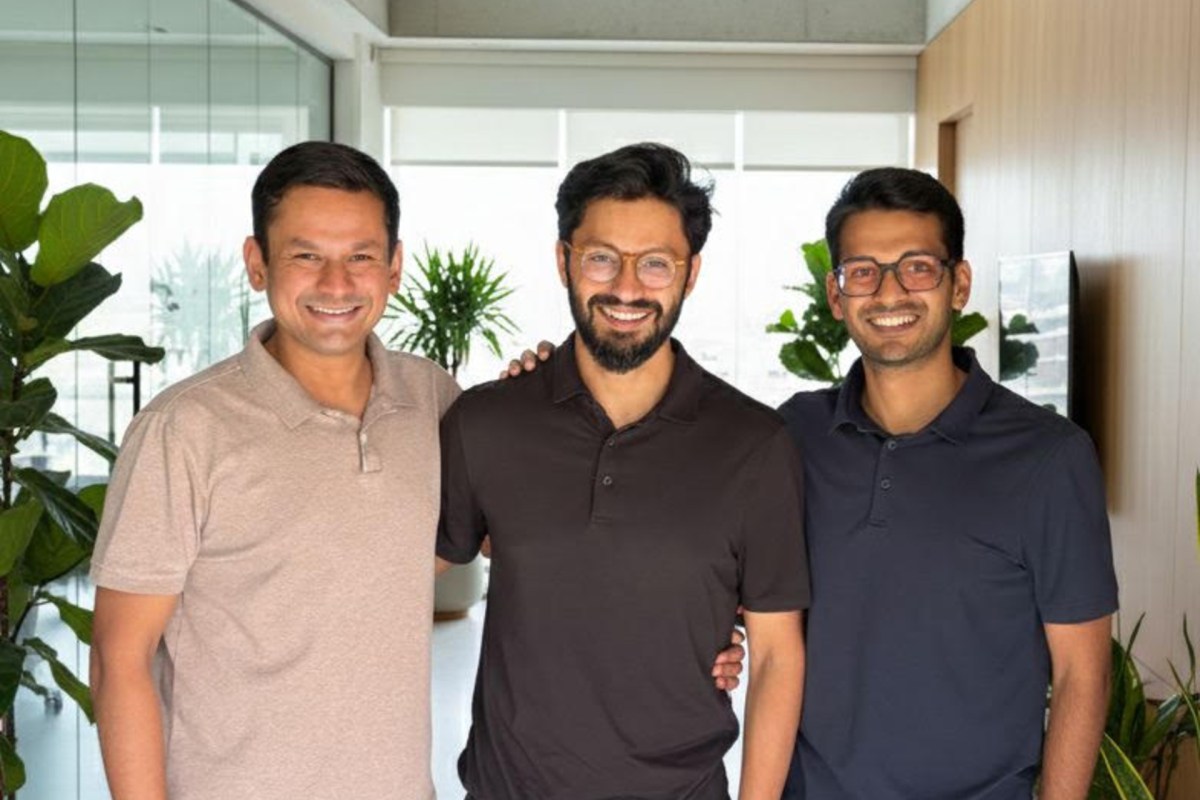
Peak XV Partners, a leading venture capital firm in India and Southeast Asia, has seen a fresh round of senior departures. These follow other leadership exits over the past year as it pushes ahead with plans to deepen its focus on AI investing and expand its footprint in the U.S., while keeping India as its largest market.
The latest departures stem from an internal disagreement with senior partner Ashish Agrawal (pictured above, left) that led to a mutual decision to part ways, Managing Director Shailendra Singh told TechCrunch. He added that two other partners, Ishaan Mittal (pictured above, right) and Tejeshwi Sharma (pictured above, center), chose to leave alongside him.
Singh said Peak XV did not want to go into the specifics of the disagreement and was focused on moving forward. “Just out of privacy, and out of, like, trying to be classy about it,” he said. Singh added that such departures were not uncommon at large, multi-stage venture firms and that Peak XV wanted to move on quickly after several years of working together.
All board seats held by the departing partners would be transitioned “imminently,” Singh said, noting that the firm already had overlapping representation across several portfolio companies. He said Peak XV was not concerned about continuity, noting that multiple general partners and operating partners were already involved across many of those boards.
The departures mark the exit of long-tenured investors from the firm. Agrawal had been with Peak XV for more than 13 years, while Mittal spent over nine years at the firm and Sharma more than seven years, per their LinkedIn profiles.
Agrawal wrote in a LinkedIn post that he had decided to “take the entrepreneurial plunge” and was teaming up with Mittal and Sharma to start a new venture capital firm. He described the move as an opportunity to build a new institution with longtime partners and thanked Peak XV’s leadership for what he called a “truly wonderful partnership.”
During his time at Peak XV, Agrawal led investments across fintech, consumer, and software, including Groww, one of the firm’s most prominent IPO exits in 2025. He also backed multiple early- and growth-stage companies alongside Mittal and Sharma, contributing to Peak XV’s broader portfolio build-out over the past decade.
Agrawal, Mittal, and Sharma did not respond to messages for comments.
Peak XV has also moved to strengthen its senior leadership from within. The firm on Tuesday promoted Abhishek Mohan to general partner, expanding its investment leadership bench, while Saipriya Sarangan was elevated to chief operating officer, taking charge of firm-wide operations.
The leadership changes come amid a standout year for Peak XV’s portfolio exits. Five of its companies — Groww, Pine Labs, Meesho, Wakefit, and Capillary Technologies — went public in November and December 2025, generating roughly ₹300 billion (around $3.33 billion) in unrealized, mark-to-market gains for the firm, in addition to about ₹28 billion (about $310.61 million) in realized gains from share sales during the IPOs.
In addition to the latest departures, Peak XV has seen a broader churn in its senior ranks over the past 12 months. Last year, long-time investment leaders Harshjit Sethi and Shailesh Lakhani exited the India team, while Abheek Anand and Pieter Kemps departed from the firm’s Southeast Asia operations. The firm has also seen leadership changes across its marketing, policy, and operations teams in recent months.
Singh dismissed a view circulating in the market that many of the partners who drove Peak XV’s largest exits were no longer at the firm, calling the narrative “not statistically true.” He said several of the firm’s most significant outcomes had been led by long-tenured partners who remained at Peak XV, and argued that the firm’s exit track record did not hinge on any single individual.
Peak XV currently has seven general partners, along with multiple partners and principals, according to Singh.
The VC firm, which split from Sequoia Capital in 2023 and currently manages over $10 billion in capital across 16 funds, has made about 80 investments linked to AI, Singh said, highlighting its push to deepen its focus on AI funding. It is also preparing to open a U.S. office within the next 90 days as it expands its global footprint, per Singh, while continuing to view India as its largest and most important market.
Singh stated the firm believed AI would reshape venture investing more profoundly than previous technology shifts, arguing that successful AI investing required investors with deep technical understanding rather than “generalist” experience. He added that Peak XV was looking to add more AI-native talent, including researchers and engineers with backgrounds in machine learning and large-scale model development.
The firm has invested in more than 400 companies, and its portfolio has seen over 35 initial public offerings and several M&As to date.
Tech
Mirage raises $75M to continue building models for its AI video editing app Captions

Mirage, the maker of video-editing app Captions, has raised $75 million in growth financing from General Catalyst’s Customer Value Fund (CVF).
Over the past year, the startup has made significant changes both to its product and corporate identity. The startup rebranded from Captions to Mirage to position itself as an AI lab that produces different models and also caters to industries like advertising and marketing. It has also trained a model specifically for pacing, framing, and attention dynamics in short videos.
The company also switched to a freemium model in January 2025 to better compete with apps like ByteDance’s CapCut and Meta’s Edits, which was released later in the year. It now offers a video-creation suite as well, with some of the features from Captions, that lets companies create and distribute videos in bulk.
Mirage’s co-founder and CEO Gaurav Misra said that the company aims to create more models. However, he didn’t specify what its next set of models would do, only saying that they would be focused on “assembly intelligence” — basically putting together a video using different sources and components.
Speaking about Mirage’s new audio model, which it claims can preserve accents in generated videos, Misra said, “The reason for the audio model was that we noticed that there was a gap in accents because a lot of our users are international. Accents are just very important. There was my own dad’s example. He was trying to use the app, and he would say a word in an Indian accent, and it would always make it sound like he’s talking in an American accent.”
According to data from analytics firm Appfigures, Captions has been downloaded over 3.2 million times in the last 365 days and has brought in $28.4 million in in-app revenue. Misra said the platform has been used to create more than 200 million videos so far, and that it has attracted an international user base, with only 25% of its revenue coming from the U.S.
Currently, Mirage’s marketing suite is available on the web, and Captions largely offers a mobile-first editing suite. The company aims to merge these two platforms to better target small businesses that may be looking to create marketing videos.
Techcrunch event
San Francisco, CA
|
October 13-15, 2026
Pranav Singhvi, managing director of General Catalyst’s CVF fund, said Mirage has great product-market fit.
“Mirage’s business equation is extremely figured out. They know exactly how to spend that dollar and generate a very attractive ROI. If you think about the market they’re going after, it’s in a sense an infinite total addressable market. You can start out in the creator world, the influencer world, and then use that as a mechanism to sell to enterprises as well,” Singhvi told TechCrunch.
There are tons of companies building AI video-generation pipelines for marketing. Canva has introduced several tools around marketing creation and tracking, while platforms like D-ID, HeyGen, Webflow, and Avataar have been releasing new models and features.
However, Singhvi seems confident about Mirage’s positioning and unit economics. “Regardless of what the other tools are out there, Mirage is clearly ahead of the pack from a unit economics standpoint. Ultimately, it’s all a reflection of their product,” he said.
Mirage aims to use the fresh capital to fuel growth, and expand in high-growth Asian markets.
Tech
Spotify’s new SongDNA feature maps how your favorite songs are connected
Spotify announced on Tuesday the global rollout of a new feature, SongDNA, that lets listeners more deeply explore their favorite music.
Now available to Premium subscribers on iOS and Android, the feature provides an interactive experience that lets users trace other components of a song beyond the singer, songwriter, or musician. With SongDNA, listeners could explore other connections, like who may have covered that song, plus other information like samples, interpolations, or what other projects the song’s collaborators have also been involved in.
The idea is something of an expansion to the existing “About the Song” feature, allowing Spotify’s customers to learn more about the writers, producers, and collaborators behind their favorite music. This could lead users to see how artists are connected to and influenced by one another’s work. For those in the music industry itself, the feature could help them find new collaborators, producers, engineers, and others they may want to work with.
It also offers those in the background of music production more visibility and credibility than they’ve previously had in the streaming age.

TechCrunch reported in October that Spotify was developing the SongDNA feature as a way to help users discover music through a song’s credits, after references to the feature were spotted in the app’s code by reverse engineer Jane Manchun Wong. The following month, the company officially confirmed its plans to launch SongDNA in early 2026.
In part, SongDNA has been built on top of data from the online community-built music database WhoSampled, which Spotify acquired last year. The feature also competes with TIDAL’s interactive credits, which similarly focus on the contributors behind the songs you stream.
“By bringing collaborators, samples, and covers together in one place, we’re making it easier for fans to discover new music and see how songs connect and come to life—while giving songwriters, producers, and rightsholders meaningful recognition for the role they play in creating it,” said Jacqueline Ankner, Spotify’s head of Songwriter & Publisher Partnerships, in a statement.
The feature is rolling out now in beta to Premium users globally across iOS and Android devices, with plans for the rollout to be complete sometime in April.
Tech
Snapchat’s new ‘AI Clips’ Lens format turns photos into five-second videos
Snapchat announced on Tuesday that it’s launching AI Clips in Lens Studio, its platform that lets creators design and publish AR and AI effects called Lenses. The new Clips are an AI-powered Lens format that transforms a single photo into a five-second video.
Unlike open-ended text-to-video tools, AI Clips are designed as a closed-prompt experience, where Lens creators design the Lens, and users can tap it to generate a video from their own photos.
For example, a Lens creator could design a Lens that allows users to generate a video of themselves walking down a red carpet using their own photo.
Snapchat says both experienced and new developers can use the new Lens format to turn a single prompt into a published Lens in minutes without the need for external tools.
AI Clips are available to Snapchat users who are subscribed to that platform’s Lens+ offering, which costs $8.99 per month. As its name suggests, Lens+ gives users access to exclusive Lenses and AR experiences, along with the features available as part of the standard Snapchat+ subscription.

“For the first time, developers can build and publish photo-to-video AI directly to Snapchat from the GenAI Suite in Lens Studio,” Snapchat wrote in a blog post. “There’s currently nothing else on the market that combines closed-prompt AI video generation with direct photo input, real distribution, and monetization.”
Lens creators enrolled in Lens+ Payouts, Snapchat’s monetization program that allows developers to earn money from their Lenses, can earn revenue from the AI Clips they create.
Snapchat isn’t the only platform focused on letting users create AI clips from their own photos, as YouTube announced last week that it was rolling out “Reimagine,” a new feature that lets users transform a single frame from an existing YouTube Short into an eight-second clip using their own photo.
The launch of AI Clips comes the same day that Snapchat announced that users created nearly two trillion Snaps, or 63,000 Snaps per second, in 2025.

15+ Ninja kitchen deals to shop before the Amazon Big Spring Sale
The best deals under $25 ahead of Amazons Big Spring Sale — save on Lego, Fire Sticks, and more


