
Entertainment
NYT Strands hints, answers for January 30, 2026
Today’s NYT Strands hints are easy if you have a bad sense of direction.
Strands, the New York Times‘ elevated word-search game, requires the player to perform a twist on the classic word search. Words can be made from linked letters — up, down, left, right, or diagonal, but words can also change direction, resulting in quirky shapes and patterns. Every single letter in the grid will be part of an answer. There’s always a theme linking every solution, along with the “spangram,” a special, word or phrase that sums up that day’s theme, and spans the entire grid horizontally or vertically.
By providing an opaque hint and not providing the word list, Strands creates a brain-teasing game that takes a little longer to play than its other games, like Wordle and Connections.
If you’re feeling stuck or just don’t have 10 or more minutes to figure out today’s puzzle, we’ve got all the NYT Strands hints for today’s puzzle you need to progress at your preferred pace.
NYT Strands hint for today’s theme: We’re not lost…
The words are related to directions.
Mashable Top Stories
Today’s NYT Strands theme plainly explained
These words describe things that guide.
NYT Strands spangram hint: Is it vertical or horizontal?
Today’s NYT Strands spangram is horizontal.
NYT Strands spangram answer today
Today’s spangram is Find Your Way.
NYT Strands word list for January 30
-
Beacon
-
Star
-
Find Your Way
-
Landmark
-
Sextant
-
Atlas
-
Compass
Looking for other daily online games? Mashable’s Games page has more hints, and if you’re looking for more puzzles, Mashable’s got games now!
Check out our games hub for Mahjong, Sudoku, free crossword, and more.
Not the day you’re after? Here’s the solution to yesterday’s Strands.
Entertainment
Deleted Scene Spoiled Darth Vader’s Secret Decades Early

By Chris Snellgrove
| Published

Back in 1998, the coolest Star Wars video game quietly dropped on PC. Star Wars: Behind the Magic was less a game and more an interactive encyclopedia, one filled with all kinds of weird secrets about the franchise. It was from this weird little CD-ROM that I first learned about the Rule of Two, something that would become a big deal in the Prequel Trilogy. It was also the first time I learned more details on Darth Vader being a Sith, something that was weirdly absent from most of the Star Wars Expanded Universe. Of course, the coolest thing about Behind the Magic was the inclusion of deleted scenes from A New Hope.
If we’re being honest, most of the deleted scenes from that first Star Wars movie are pretty bad, and it’s easy to see why they were cut from the film. However, one deleted scene that most fans have never seen (it most certainly wasn’t on that old CD-ROM!) was an extended version of the Death Star conference scene. It’s actually surprisingly great, with world-building and politics that feel right out of Andor. The scene also paints General Tagge as one of the most intense officers in the entire Empire. Most fascinatingly, though, this scene has Tagge call Darth Vader a “Sith,” a word we wouldn’t hear onscreen for another 22 years!
Tagge, You’re It
The extended version of this scene from A New Hope only has one angle, and it’s fixed on Tagge the entire time. While that’s a little weird, it also lets us appreciate how much passion the late, great Don Henderson is putting into his performance. Tagge puts forth some rather justified paranoia, saying that Vader has “gone too far” and that this Emperor-sent errand boy will be their “undoing.” He goes on to describe how dangerous the Rebel Alliance is and how the Death Star is more of a vanity project for Tarkin than a useful military asset. The rest of the scene plays out as it did in the original movie.
Beyond Henderson’s awesome performance, this extended scene is compelling because it provides some Andor-style Imperial worldbuilding. We find out that Motti isn’t the only one who distrusts Vader. We also find out that Vader was sent by the Emperor; the original film makes it seem like he is mostly Tarkin’s attack dog. Speaking of Tarkin, it’s awesome that Tagge calls out the Death Star as being part of “Tarkin’s bid for recognition” rather than “prudent military strategy.” Just like that, we have a fascinating glimpse into Imperial politics, including a high-ranked official saying that his boss is putting his ego ahead of the needs of the Empire.
When The Sith Hits The Fan

Of course, the main reason this extended scene excites Star Wars fans is that it represents the first time the word “Sith” is spoken onscreen. “Onscreen” is the keyword here: the novelization of A New Hope called Darth Vader a “Dark Lord of the Sith,” and he had the same title in some early Star Wars marketing. He was also referred to by this title or, more simply, by “Evil Sith Lord” on some of the Kenner toys. Despite Dark Horse Comics giving more details about ancient Sith in comics like Tales of the Jedi, we didn’t really get much information before the prequels about Vader’s Sith specifics.
This is likely because George Lucas was hesitant to let Star Wars Expanded Universe writers muck about with certain aspects of his mythology. That’s why the EU was filled with so many Dark Jedi bad guys, like Joruus C’baoth. Lucas didn’t have a problem with people writing about corrupted Jedi, but he had his own plans for how he’d portray the Sith. Those plans played out in the Prequel Trilogy, where the word “Sith” was first officially spoken onscreen in The Phantom Menace. In those prequels, details about the Sith were a well-kept secret, mostly known to Jedi and Sith practitioners such as Palpatine.
Keep It Secret, Keep It Safe
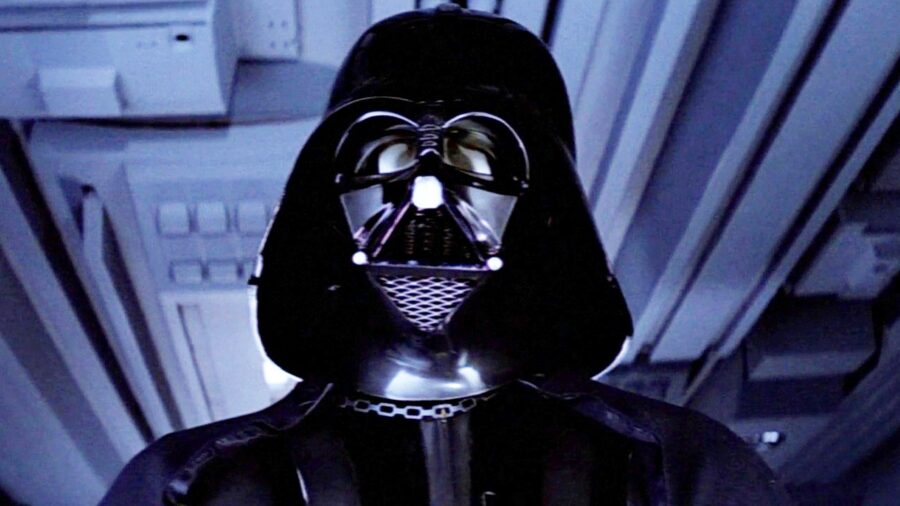
Had this extended scene from A New Hope made it to the final film, fans would have spent decades begging to know more about the Sith. Plus, they’d probably want to know how an Imperial commander knows all about one of the most secretive cults in a galaxy far, far away. However, Lucas cut this dialogue out, leaving the Sith to be a secret that he mostly explored onscreen in the prequels and, later, the Clone Wars TV show. Now, it’s left to fans like us to spread the word of a deleted scene that nearly changed everything.
Don’t know how to introduce it to your buddies? I recommend starting out by asking if they’ve heard the tragedy of General Tagge, the wise. Tell them it’s not a story that George Lucas would tell them, and then roll that beautiful bean footage!
Entertainment
House of the Dragon review: Season 3 atones for the sins of Season 2
Let’s face it: Season 2 of House of the Dragon promised fire and blood, but its baffling finale felt more like a puff of smoke.
The season fizzled to an ending with zero catharsis, forced Game of Thrones references, and a highlight reel of what was to come. In some ways, that structure mirrored the season’s core conflict. For all of Season 2, Queen Rhaenyra Targaryen (Emma D’Arcy) and Alicent Hightower (Olivia Cooke) tried everything they could to prevent all-out war. But while their stalling to prevent the inevitable was rooted deeply in the story, the show’s own reluctance to leap into the next phase of George R.R. Martin’s Fire and Blood felt more like it was spinning its wheels until Season 3.
Now, the third season of House of the Dragon is finally here, and its first four episodes manage to make up for Season 2’s finale and then some, delivering jaw-dropping spectacle and somber truths about the cost of war.
House of the Dragon‘s Battle of the Gullet is spectacular.

Steve Toussaint in “House of the Dragon.”
Credit: Ollie Upton / HBO
Remember how barely an episode of House of the Dragon Season 2 went by without a mention of Corlys Velaryon’s (Steve Toussaint) naval blockade in the Gullet? We finally get the payoff for that blockade at the top of Season 3, as the Triarchy’s fleet bears down on the Sea Snake’s forces. The ensuing clash, known as the Battle of the Gullet, is one of the defining fights of the Dance of the Dragons — the royal succession civil war between Rhaenyra Targaryen (Emma D’Arcy) and Aegon II Targaryen (Tom Glynn-Carney).
Given that so much of Season 2 was building to this point — hence the fan frustration that it wasn’t included — the pressure on House of the Dragon to pull off this battle is immense. Thankfully, the series more than delivers, with a sequence that had me yelling and pacing around my living room while also thinking, “We’re so back.”
Mashable Top Stories
A dazzling set piece involving ships, human soldiers, and multiple dragons, the Battle of the Gullet sets a new bar for Westerosi action. Every element is honed for maximum impact, from long takes of sailors boarding enemy ships to sweeping shots of dragons dive bombing the fleet. The battle, directed by Loni Peristere, wrings epic terror and awe from those big moments, but it also strikes gold in quieter moments, like a suspenseful boat chase that quickly becomes a stealth highlight of the episode.
Oh, and did I mention that this all takes place during the day, so you can make out every ounce of action taking place onscreen? For a franchise whose biggest battles have often been marred by darkness (looking at you, Battle of Winterfell), the Battle of the Gullet is a welcome adjustment. And, based on the first four episodes sent to critics for review, it’s only the beginning for House of the Dragon Season 3’s big action sequences.
House of the Dragon Season 3 pushes Rhaenyra to the brink.

Emma D’Arcy in “House of the Dragon.”
Credit: HBO
The Battle of the Gullet isn’t just an emphatic statement to open Season 3. It’s also a major turning point for the Dance of the Dragons, and for Rhaenyra in particular. All throughout House of the Dragon, she has balked at violence, worried at the havoc dragon warfare would wreak on the wider realm. By Season 3, though, Rhaenyra has lost so much to this conflict that she needs to do whatever she can to see it through. Only by taking the Iron Throne can she justify the pain she’s experienced. That means making impossible choices and committing to violence she once would have shunned, sometimes carrying it out with her own hands. As she does, House of the Dragon asks, even after all this, will victory be worth it?
It’s a haunting question, one that House of the Dragon teases out with tinges of psychological horror in the aftermath of the Battle of the Gullet. D’Arcy has always been magnificent as Rhaenyra, but here, they reach new heights with their raw portrayal of the queen’s grief and rage. Their trembling hands and wracking sobs were just as wrenching as some of the Battle of the Gullet’s most devastating moments, proving that House of the Dragon can match its biggest set pieces with pure human drama.
While the first half of House of the Dragon Season 3 manages to atone for Season 2’s ending, it still commits its share of familiar sins. Threats of sexual violence towards women abound unnecessarily in these episodes, a trend that harkens back to Game of Thrones‘ worst moments. (Although thankfully nothing here is nearly as graphic.) Elsewhere, several plot threads feel stagnant, with once major players like Criston Cole (Fabien Frankel) getting so little to do they may as well be set dressing. Their decreased roles may wind up paying off down the road, though, just like the many, many changes the show makes from Fire and Blood. While the latter reportedly strained the relationship between Martin and showrunner Ryan Condal, these changes do muddy the Targaryens’ already very complicated relationships in intriguing ways, to the point that I’m more fascinated at how the writers came to these new arcs than mad at not getting a precise adaptation.
Despite the occasional low point and my misgivings following Season 2, House of the Dragon Season 3 flies high. Instead of spinning its wheels, it roars into the Targaryens’ bloody future with action and creeping dread to spare, and that assurance and forward momentum turns out to be exactly what the show needs.
Topics
HBO
House of the Dragon
Entertainment
The Best New Show Of The Year Is A Supernatural Comedy Horror On AppleTV
By Jonathan Klotz
| Published

The 2026 television season has been a little lackluster so far when it comes to original, new series. The Boroughs was a fun binge on Netflix, Margo’s Got Money Troubles was a good comedy, but nothing can compare to the surprising success of Widow’s Bay on AppleTV. It’s a horror comedy, which might be the hardest combination of genres to pull off, that plays out like Twin Peaks meets Parks and Recreation. No show will leave you laughing so hard in one episode, before traumatizing you in the next.
Widow’s Bay Is The Most Original Show In Years

That odd mix of shows makes sense since Widow’s Bay was created by Katie Dippold, a writer for Parks and Recreation. The series takes place in the island town of Widow’s Bay in New England when Mayor Tom (Matthew Rhys) decides to boost tourism to the small community. The catch is that the community, primarily Wyck (Stephen Root) believes the island is cursed.
It’s not a spoiler to say that yes, yes it is cursed, and yes, there are real horrors at work on the island. That’s not surprising. What is surprising is the dry humor and Matthew Rhys’ perfect facial expressions, as the town’s residents will deliver the most absurd lines with a perfectly straight face. If you vibed with the humor of Parks and Recreation, you know what you’re getting into with the odd residents of Widow’s Bay, especially Kate O’Flynn as Tom’s assistant, Patricia. There’s a sequence with her involving a shotgun that is destined to be a social media hit for years to come, and one of those moments that you’ll think, “I’d do the same thing.”
Slapstick Comedy, Horror, And Amazing Sight Gags

Before starting your binge of the first season, avoid as many spoilers as you can. Widow’s Bay sets up mysteries early on with the chained church bell, the strange basement room, a rolling fogbank, and, while it’s not a supernatural mystery, how many Diet Cokes can Town Hall employee Dale consume? His desk is filled to the brim with cans. That can’t be healthy.
Keep your eyes peeled while watching Widow’s Bay as the production team was heavily influenced by The Simpsons usage of sight gags. Some are called out with blatant shots, others exist in the background of a conversation, but put together, they make the town of Widow’s Bay an absurdist version of Twin Peaks.
No one had supernatural slapstick down on their 2026 Bingo card, but here we are. While Netflix pulled the plug on The Boroughs, Widow’s Bay has already been confirmed for a second season, which is good considering the stakes-raising season finale ends by revealing a whole new layer to the mystery of the island. We have a long wait until Season 2 premieres, giving you plenty of time to watch the show of the Summer, and you can still convince your friends you were a fan of Widow’s Bay before it was cool. ]
Widow’s Bay Season 1 is now streaming on AppleTV.

Wyndham Clark up by 6 at US Open, Scottie Scheffler leads chasing pack
Deleted Scene Spoiled Darth Vader’s Secret Decades Early


