
Entertainment
New Star Trek Spinoff Is Two For Two On Ruining Beloved Alien Races
By Chris Snellgrove
| Published

When older Star Trek fans began questioning whether the newest spinoff, Starfleet Academy, would ruin the franchise, younger fans called us alarmist. After all, Trek has changed greatly in the last 60 years, so the fact that the new show had a different setting (the titular academy) and a different intended audience (the coveted 18-24 demographic) didn’t inherently mean that it would be bad. However, now that the show has completely ruined two of the franchise’s most iconic aliens (the Betazoids and the Klingons) in the first four episodes, it’s fair to say that skeptical older fans have been completely vindicated.
It all started in Starfleet Academy’s second episode (“Beta Test”), which involved our heroes trying to lure Betazed back into the Federation. This involves wooing planetary president Emerin Sadal, a deaf man who relies on lip reading and sign language (along with some spiffy interpreter droids) to communicate. After a generous offer to make Betazed the new home of Starfleet Academy, he decides to reunite with the Federation, and his two children stay behind; one attends the academy, and one attends the War College.
Bye-Bye, Betazoid Abilities
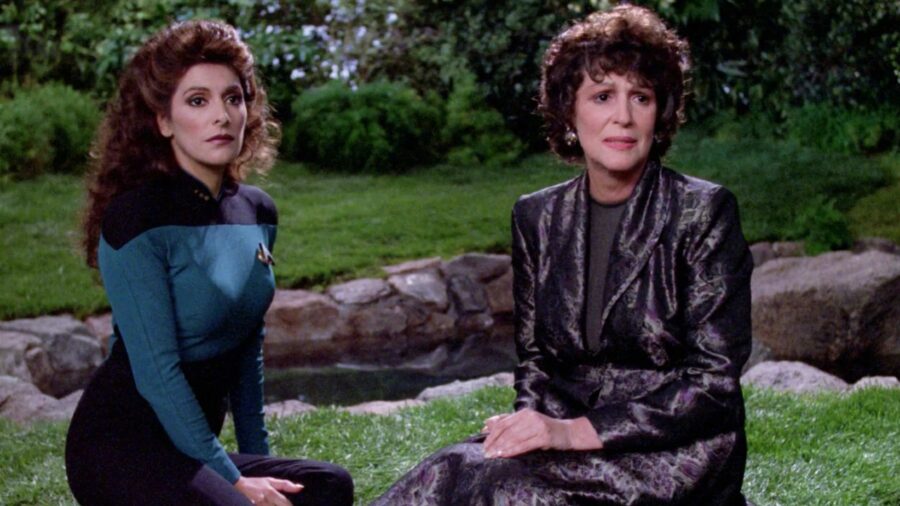
Despite the weird writing decision to make the leader of the Betazoids a kind of Trump-like figure hiding an empire behind a psionic wall, the president seems like an affable character, and deaf actor Anthony Natale does a great job of bringing him to life. The problem, however, is that the Betazoids (first introduced in Star Trek: The Next Generation) were always fully telepathic. Theoretically, there should be no need for the president to have to rely on lip-reading and sign language because he (like Lwaxana Troi and other full-blooded Betazoids) should be able to read the minds of just about anyone.
However, Starfleet Academy presents the Betazeds as a race of empaths who can only read emotions rather than thoughts. This is more in line with the abilities of Deanna Troi, who served as the ship’s counselor on both the Enterprise-D and the Enterprise-E. She was limited to reading only the emotions of others (something Picard often used for tactical purposes) because she was only half-Betazed, and while there have been some other Betazoids with limited abilities (most notably Lon Suder on Voyager), The Next Generation made it clear that the vast majority of these aliens have Professor X-like telepathic powers.
Therefore, it’s clear that Starfleet Academy just changed a major aspect of one of Star Trek’s most famous aliens, neutering their collective telepathic abilities for no apparent reason. Some fans have frantically tried to come up with theories as to how this happened, such as everyone losing some of their mental powers because of creating and maintaining a powerful psionic wall. But none of that is even alluded to in the episode, making it seem like these writers just did a huge retcon that completely changed the primary thing that made the Betazoids special.
The Klingons Are Now Dumb And Neutered
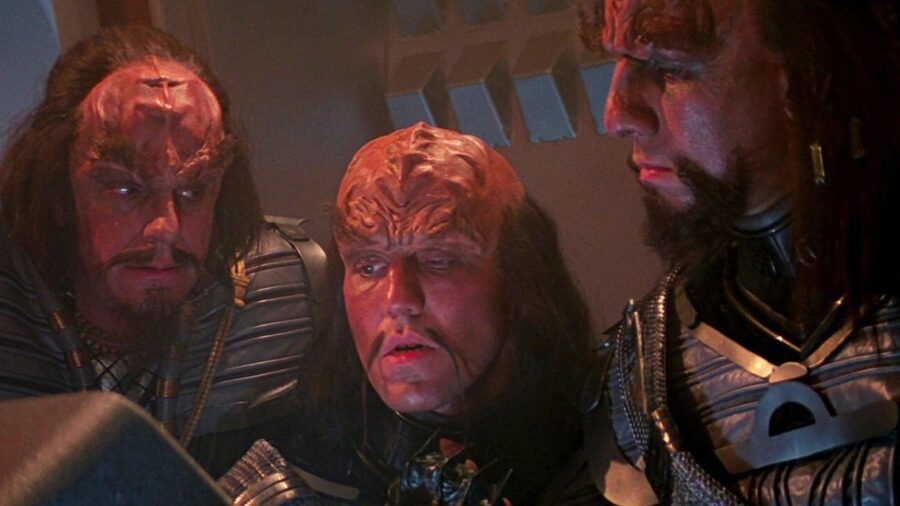
In the fourth episode of Starfleet Academy (“Vox in Excelso”), the writers also made huge changes to the Klingons: we discover that the Burn (an event that rendered almost all of the dilithium in the galaxy inert) destroyed the Klingon homeworld and most of their Empire because these worlds relied on dilithium reactors to power them. The burn caused those reactors to explode, destroying entire planets and (combined with the Burn causing starships to explode) leaving the Klingons as a race facing extinction.
From a lore perspective, there are plenty of problems with this; as I have written about in more detail, the dilithium reactors shouldn’t have exploded in the first place. The only reason that the starships exploded was that dilithium was being used to keep the matter and antimatter (important for traveling at warp speed) separated. Once they came into contact with each other, the ships instantly exploded.
Putting aside how little explanation this storyline makes, it’s also lazy writing that makes the Klingons look deeply stupid. Even if we accepted that dilithium works as a power source, there are far safer sources like fusion that don’t rely on an increasingly scarce resource (remember, the galaxy was running low on dilithium about 15-20 years before the Burn). It really seems like the writers just wanted to echo Star Trek VI: The Undiscovered Country, where the Klingons’ energy-producing moon of Praxis blew up because these aggressive aliens didn’t take enough safety precautions, resulting in the futuristic analog of the Chernobyl disaster.
Star Trek’s Most Famous Race Rots In Hell
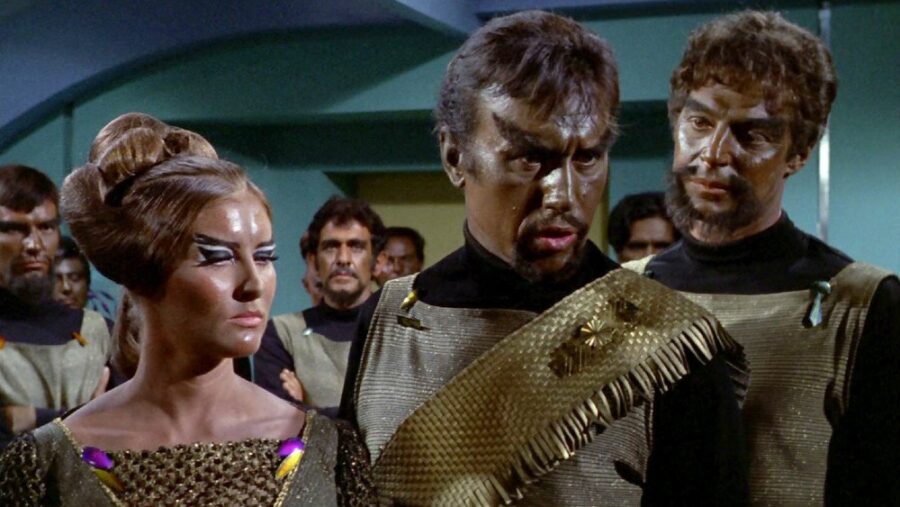
In other words, Starfleet Academy decided to turn Star Trek’s most famous alien race into idiots who hadn’t learned their lesson 800 years earlier and became homeless and nearly extinct because of their ignorance. On top of that, their culture believes that you can only get to Klingon heaven if you die in battle. Killing off the vast majority of these warriors offscreen while they were outside of battle means that, from a Klingon perspective, the writers just sent most of these aliens to Hell!
Now, the most prominent representative of this race is Jay-Den, Starfleet Academy’s Klingon cadet. However, due to the show’s insistence on making every character quirky and special, he’s decidedly un-Klingon-like, preferring pacifism and healing over fighting and conquest. He’s softhearted, softspoken, and (based on the most recent episode) possibly gay, making him unlike any other Klingon that has ever been in Star Trek.
The Softer Side Of… Klingons?

By itself, this isn’t a problem; both Star Trek: The Next Generation and Star Trek: Deep Space Nine centered plenty of awesome stories around Worf, a Klingon who was raised by humans and never felt like he fit in with the rest of this warrior culture. Of course, those stories generally relied on contrasting Worf with other Klingons like his brother or Gowron, both of whom served as the embodiment of this alien race’s values.
Starfleet Academy just unceremoniously killed off most of the Klingons in the galaxy, which changed their culture (they are now nomadic families where everyone has two dads), made them look like complete fools, and left as their token representative someone who is the opposite of traditional Klingons in every way. Jay-Den is an interesting character in certain aspects, and he is played by a talented actor (Karim Diane), but the problem is that he is more than a bit like a KINO; that is, Klingon in name only.
Star Trek In Name Only

That’s kind of the problem with Starfleet Academy in a nutshell: it’s a Star Trek show in name only. They brought in the Betazoids only to take away their signature ability, and they brought in the Klingons just to kill most of these warriors off and replace them with a stuttering soyboy medical student. It obviously begs the question: why try to make a Star Trek series if you are going to just ruin everything that made that franchise great?
If the writers needed empaths rather than telepaths to tell a certain story, they could have just invented a new race rather than relying on Betazoids. If the writers needed a nomadic race in the middle of a depressing diaspora, they could have made new ones rather than ruining the Klingons. Finally, if they just wanted to tell a silly comedy show about space cadets that occasionally veers into shallow melodrama, they could have made something other than a Star Trek show.
Paramount Goes Down With The Ship

Starfleet Academy is a beautiful series filled with talented actors, and some of the creators behind it (especially Tawny Newsome) are equally talented. But the show keeps destroying old lore while ruining legacy characters, all so Paramount can create a series that might as well have been called “This Ain’t Your Daddy’s Hogwarts.” They own the IP, of course, so these executives have every right to change everything that ever made Star Trek special.
But, now that the new show has fallen off the Paramount+ streaming charts altogether, the execs might finally learn a lesson worthy of their onscreen cadets: when you destroy everything the fandom loves, don’t be surprised when they hate what you have created!
Entertainment
macOS 27 Beta has a secret Siri AI interface. How to try it.

You’ve waited long enough for Apple’s relaunch of Siri as an AI assistant, and now you can finally try out the Siri AI beta for iOS. But, psst, don’t tell anyone, but there’s even more Siri AI for you to try out with a secret Siri AI interface on Mac.
A Reddit user on the r/MacOSBeta subreddit has discovered a “hidden lightweight UI” for Siri AI in the macOS 27 Golden Gate beta. This feature basically provides users with an array of AI tools, presented in a pop-up menu whenever text is highlighted.
The Siri AI pop-up interface includes AI tools such as Rewrite, Proofread, “How does this sound?,” and “Edit with Siri.” There are also menu options for summarization and providing bullet points from the selected text.
Siri AI can also provide a selection of specific tools dependent on the context of what’s selected. For example, highlighting a phone number provides a pop-up to “Add to contacts” or when selecting an address the pop-up offers an “Open in Maps” option. There are tools for creating calendar events, composing messages and emails, and tracking flights and packages as well.
Why is the feature hidden? Well, as MacRumors points out, the Siri AI interface in macOS 27 developer beta 3 and public beta 1 is simply an unfinished product. Certain features don’t yet work how they’re supposed to. Some options don’t work at all. Clearly, Apple has yet to make it available because it’s simply not ready.
Mashable Light Speed
However, Reddit users say there is a way to turn the interface on in the macOS Golden Gate Beta. According to Redditor pdfu, if users running the macOS 27 beta simply need to open up the Terminal and input a few lines of code.
Please note: We do not recommend running terminal instructions or changing important OS files unless you fully understand what you’re doing. We have not tested these terminal instructions, so proceed at your own risk.
sudo mkdir -p /Library/Preferences/FeatureFlags/Domain && sudo defaults write /Library/Preferences/FeatureFlags/Domain/WritingTools LightweightUI_macOS -dict Enabled -bool true
After that, the Reddit threat instructs users to restart their computer and the Siri AI interface will be enabled.
If you’ve had enough of the unfinished interface, you can turn it back off by once again opening Terminal and the following input:
sudo defaults write /Library/Preferences/FeatureFlags/Domain/WritingTools LightweightUI_macOS -dict Enabled -bool false
It’s unclear if the Siri AI interface will launch with the official version of the new macOS. However, it’s certainly interesting to see Apple further brand its Siri AI relaunch as an all-in-one AI tool across the company’s products.
Entertainment
X-Men ‘97 Just Secretly Connected Itself To The Raunchiest Marvel Movies
By Chris Snellgrove
| Updated

As a longtime Marvel fan, one of my favorite things about X-Men ‘97 is how many fun Easter eggs are stuffed into every single episode. Sometimes, these are winking references to earlier episodes. More often than not, they are connections to the comics and to the larger Marvel universe. Of course, these references are often of the blink-and-you’ll-miss-them variety. Because of this, you sometimes need to be as fast as Quicksilver on the remote control if you want to catch every wacky bit of trivia that pops up onscreen.
That was certainly the case with the recent episode “Weapon X, Lies, and DVDs.” This episode follows up on an earlier Animated Series episode (“Weapon X, Lies, and Video Tape”) and has Wolverine and a team of oddballs discovering major secrets about Weapon X. It’s an episode filled with some jaw-droppingly weird X-Men lore, including an appearance from everyone’s favorite xenomorph knock-offs, the Brood. However, that’s not the weirdest thing about this terrifying tale. The episode provides a list of characters attached to the Weapon X program, and if you pause at the right moment, you’ll see names from the raunchiest, bloodiest Marvel movies ever made: Deadpool and Logan!
The Ultimate In ’90s Media Technology

In Marvel Comics, it’s revealed that Weapon X wasn’t actually the name of the program. Instead, it was the Weapon Plus program, and Wolverine was referred to as “Weapon X” because he was the tenth experiment created by the program (X is the Roman numeral for 10). Incidentally, Weapon I was Captain America, who was turned into the world’s greatest soldier through an experimental super-serum. Later, the project switched to experimenting on mutants, with the goal of creating weaponized warriors who would be easy to control. There have been many characters experimented on or otherwise connected to the program, which is why so many names appear in “Weapon X, Lies, and DVD.”
The episode doesn’t get into the full tangled history of the program, which is consistently referred to as Weapon X. However, the characters do find test subject data on DVDs, all of which are helpfully labeled with the name of the person who was experimented on. One set of DVDs is very easy to view, and the other appears for only a brief moment. With the help of the pause button, though, you can identify some major names. This includes Bucky Barnes, better known to MCU fans as the Winter Soldier. It also includes characters who have only appeared in the comics, including the creepy villain, John Sublime.
The X-Men Get Raunchy

Unsurprisingly, Wolverine and his crew from this episode (including Maverick, Garrison Kane, Sabertooth, and Lady Deathstrike) all appear on the DVDs, as do other characters from Wolverine’s past, including Silver Fox. But for fans of the live-action movies, the most notable names that appear in the episode are Ajax and Deadpool (the villain and hero, respectively, of the first Deadpool movie) and X-23, who appeared in both Logan and Deadpool & Wolverine. Amusingly enough, this effectively connects the (mostly) family-friendly X-Men ‘97 with some of the raunchiest and most vulgar Marvel movies ever made!
Deadpool effectively paved the way for modern, R-rated superhero movies with a film that combined over-the-top ultraviolence and hilariously crass dialogue. It was also unapologetically raunchy, with a naughty Morena Baccarin sex scene that likely made the pre-cancerous Wade Wilson wish that his booty had a healing factor. Logan, meanwhile, was more serious but no less brutal, connecting X-23 (who was created for the kids’ show X-Men: Evolution) to a violent and heartbreaking film where we bid farewell to both Logan and Professor X. Now, that same character (who made a fan-favorite return in the wonderfully offensive Deadpool & Wolverine) is permanently tied to X-Men ‘97.

Does that mean we’re likely to see X-23 onscreen? Not really: even if X-Men ‘97 runs for several more seasons, there are so many ‘80s, ‘90s, and early ‘00s stories to adapt before the writers would ever get to her story. Deadpool might be likelier to appear: after all, he appeared in X-Men: The Animated Series via things like flashbacks and Morph transformations, and Morph continues to take on this appearance in X-Men ‘97. Is all of this leading up to a proper appearance from the Merc With a Mouth? Maybe. Somehow, though, I think Jean Grey will be too busy fighting Apocalypse to help Deadpool properly celebrate International Women’s Day!
Entertainment
Raunchy Stargate SG-1 Episode Is So Bad Even The Show Made Fun Of It
By Jonathan Klotz
| Updated

Once any show has been on the air for five years, it will start to wobble under its own internal logic, lore, and mythology. Stargate SG-1 was on the air for a decade, which means those early Season 1-3 episodes sometimes contradict what becomes canon later. In the case of Season 1’s “Hathor,” it’s unclear why a Goa’uld Queen needs male DNA to produce more larvae. Later episodes show that it’s not needed, and they can reproduce asexually, but that’s the least of the issues with “Hathor.”
Stargate Goes Full Species

“Hathor” centers around the unearthing of the Egyptian Goddess of Love, Hathor (Suanne Braun), who emerges from a sarcophagus after 3000 years, speaking English. Drawn to the Stargate, she shows up at Cheyenne Mountain and quickly starts bringing the men within the base into her thrall. Starting with Daniel (Michael Shanks), then General Hammond (Don S. Davis), O’Neill (Richard Dean Anderson) is the next to succumb, though Teal’c’s (Christopher Judge) Goa’uld renders him resistant to her power.
That sets up a showdown between the men and the women (all five of them), led by Captain Carter (Amanda Tapping) and Dr. Frasier (Teryl Rothery) in the locker room where Hathor is preparing to use a hot tub to birth a new generation of Goa’uld larvae using Daniel Jackson’s juices. That’s how the show refers to it. It’s as awkward as it sounds.
The Writers Chose To Ignore The Episode

Stargate SG-1 would eventually mock “Hathor” in the Season 8 episode “Citizen Joe,” a clip show that highlighted the ridiculousness of those early season episodes. “Hathor” was the first episode in the series where the team didn’t travel through the Stargate, and the only one written by David Bennett Carren and J. Larry Carroll. Hathor herself would come back two more times, as a much more formidable (and better written) villain, particularly in Season 2’s “Out of Mind.”
Ever since Homer introduced the concept of Sirens in The Odyssey, the “beautiful woman mind controls all men” trope is widely used in sci-fi and fantasy shows. Stargate SG-1 had no problem recycling classic tropes and often doing them incredibly well, from time loops (“Windows of Opportunity”) to “that old man can kick everyone’s ass” (Bra’tac), but “Hathor” was a misfire.
Teryl Rothery wasn’t even able to deliver the line “there’s five women in here, and we’re very lonely” while keeping a straight face. The more series re-watches you do, “Hathor” sticks out more and more like one of the worst episodes of the series. Unlike “Emancipation,” which was so bad it caused the writers to rework Carter’s character, “Hathor” has no silver lining, other than the self-styled goddess having more character, personality, and better lines in her later appearances. Her debut episode could be erased from the timeline, and you’d still know everything about her within minutes of her second appearance.
They can’t all be winners, and with a decade of episodes to get through, Stargate SG-1 was going to have some episodes you don’t have to bother watching.

Fresh off bitter loss, Cards take aim at MLB-worst Angels
Michigan ending AD Warde Manuel's embattled tenure


