
Entertainment
New Star Trek Spinoff Is Two For Two On Ruining Beloved Alien Races

By Chris Snellgrove
| Published

When older Star Trek fans began questioning whether the newest spinoff, Starfleet Academy, would ruin the franchise, younger fans called us alarmist. After all, Trek has changed greatly in the last 60 years, so the fact that the new show had a different setting (the titular academy) and a different intended audience (the coveted 18-24 demographic) didn’t inherently mean that it would be bad. However, now that the show has completely ruined two of the franchise’s most iconic aliens (the Betazoids and the Klingons) in the first four episodes, it’s fair to say that skeptical older fans have been completely vindicated.
It all started in Starfleet Academy’s second episode (“Beta Test”), which involved our heroes trying to lure Betazed back into the Federation. This involves wooing planetary president Emerin Sadal, a deaf man who relies on lip reading and sign language (along with some spiffy interpreter droids) to communicate. After a generous offer to make Betazed the new home of Starfleet Academy, he decides to reunite with the Federation, and his two children stay behind; one attends the academy, and one attends the War College.
Bye-Bye, Betazoid Abilities
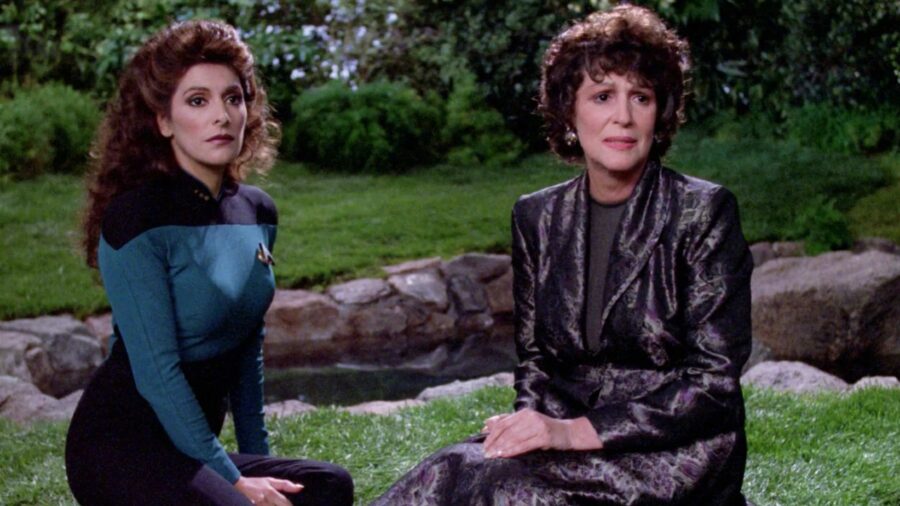
Despite the weird writing decision to make the leader of the Betazoids a kind of Trump-like figure hiding an empire behind a psionic wall, the president seems like an affable character, and deaf actor Anthony Natale does a great job of bringing him to life. The problem, however, is that the Betazoids (first introduced in Star Trek: The Next Generation) were always fully telepathic. Theoretically, there should be no need for the president to have to rely on lip-reading and sign language because he (like Lwaxana Troi and other full-blooded Betazoids) should be able to read the minds of just about anyone.
However, Starfleet Academy presents the Betazeds as a race of empaths who can only read emotions rather than thoughts. This is more in line with the abilities of Deanna Troi, who served as the ship’s counselor on both the Enterprise-D and the Enterprise-E. She was limited to reading only the emotions of others (something Picard often used for tactical purposes) because she was only half-Betazed, and while there have been some other Betazoids with limited abilities (most notably Lon Suder on Voyager), The Next Generation made it clear that the vast majority of these aliens have Professor X-like telepathic powers.
Therefore, it’s clear that Starfleet Academy just changed a major aspect of one of Star Trek’s most famous aliens, neutering their collective telepathic abilities for no apparent reason. Some fans have frantically tried to come up with theories as to how this happened, such as everyone losing some of their mental powers because of creating and maintaining a powerful psionic wall. But none of that is even alluded to in the episode, making it seem like these writers just did a huge retcon that completely changed the primary thing that made the Betazoids special.
The Klingons Are Now Dumb And Neutered
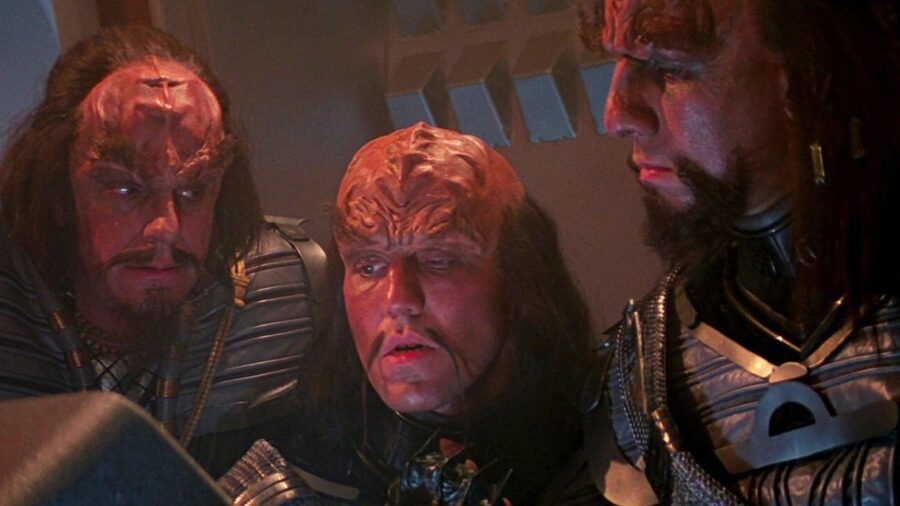
In the fourth episode of Starfleet Academy (“Vox in Excelso”), the writers also made huge changes to the Klingons: we discover that the Burn (an event that rendered almost all of the dilithium in the galaxy inert) destroyed the Klingon homeworld and most of their Empire because these worlds relied on dilithium reactors to power them. The burn caused those reactors to explode, destroying entire planets and (combined with the Burn causing starships to explode) leaving the Klingons as a race facing extinction.
From a lore perspective, there are plenty of problems with this; as I have written about in more detail, the dilithium reactors shouldn’t have exploded in the first place. The only reason that the starships exploded was that dilithium was being used to keep the matter and antimatter (important for traveling at warp speed) separated. Once they came into contact with each other, the ships instantly exploded.
Putting aside how little explanation this storyline makes, it’s also lazy writing that makes the Klingons look deeply stupid. Even if we accepted that dilithium works as a power source, there are far safer sources like fusion that don’t rely on an increasingly scarce resource (remember, the galaxy was running low on dilithium about 15-20 years before the Burn). It really seems like the writers just wanted to echo Star Trek VI: The Undiscovered Country, where the Klingons’ energy-producing moon of Praxis blew up because these aggressive aliens didn’t take enough safety precautions, resulting in the futuristic analog of the Chernobyl disaster.
Star Trek’s Most Famous Race Rots In Hell
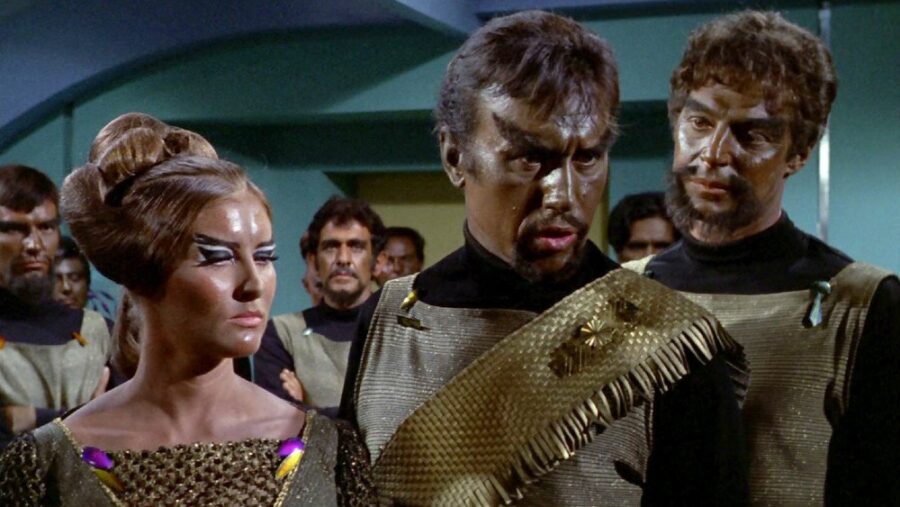
In other words, Starfleet Academy decided to turn Star Trek’s most famous alien race into idiots who hadn’t learned their lesson 800 years earlier and became homeless and nearly extinct because of their ignorance. On top of that, their culture believes that you can only get to Klingon heaven if you die in battle. Killing off the vast majority of these warriors offscreen while they were outside of battle means that, from a Klingon perspective, the writers just sent most of these aliens to Hell!
Now, the most prominent representative of this race is Jay-Den, Starfleet Academy’s Klingon cadet. However, due to the show’s insistence on making every character quirky and special, he’s decidedly un-Klingon-like, preferring pacifism and healing over fighting and conquest. He’s softhearted, softspoken, and (based on the most recent episode) possibly gay, making him unlike any other Klingon that has ever been in Star Trek.
The Softer Side Of… Klingons?

By itself, this isn’t a problem; both Star Trek: The Next Generation and Star Trek: Deep Space Nine centered plenty of awesome stories around Worf, a Klingon who was raised by humans and never felt like he fit in with the rest of this warrior culture. Of course, those stories generally relied on contrasting Worf with other Klingons like his brother or Gowron, both of whom served as the embodiment of this alien race’s values.
Starfleet Academy just unceremoniously killed off most of the Klingons in the galaxy, which changed their culture (they are now nomadic families where everyone has two dads), made them look like complete fools, and left as their token representative someone who is the opposite of traditional Klingons in every way. Jay-Den is an interesting character in certain aspects, and he is played by a talented actor (Karim Diane), but the problem is that he is more than a bit like a KINO; that is, Klingon in name only.
Star Trek In Name Only

That’s kind of the problem with Starfleet Academy in a nutshell: it’s a Star Trek show in name only. They brought in the Betazoids only to take away their signature ability, and they brought in the Klingons just to kill most of these warriors off and replace them with a stuttering soyboy medical student. It obviously begs the question: why try to make a Star Trek series if you are going to just ruin everything that made that franchise great?
If the writers needed empaths rather than telepaths to tell a certain story, they could have just invented a new race rather than relying on Betazoids. If the writers needed a nomadic race in the middle of a depressing diaspora, they could have made new ones rather than ruining the Klingons. Finally, if they just wanted to tell a silly comedy show about space cadets that occasionally veers into shallow melodrama, they could have made something other than a Star Trek show.
Paramount Goes Down With The Ship

Starfleet Academy is a beautiful series filled with talented actors, and some of the creators behind it (especially Tawny Newsome) are equally talented. But the show keeps destroying old lore while ruining legacy characters, all so Paramount can create a series that might as well have been called “This Ain’t Your Daddy’s Hogwarts.” They own the IP, of course, so these executives have every right to change everything that ever made Star Trek special.
But, now that the new show has fallen off the Paramount+ streaming charts altogether, the execs might finally learn a lesson worthy of their onscreen cadets: when you destroy everything the fandom loves, don’t be surprised when they hate what you have created!
Entertainment
This Colossal 85-inch Samsung Smart TV is just under $800 this weekend
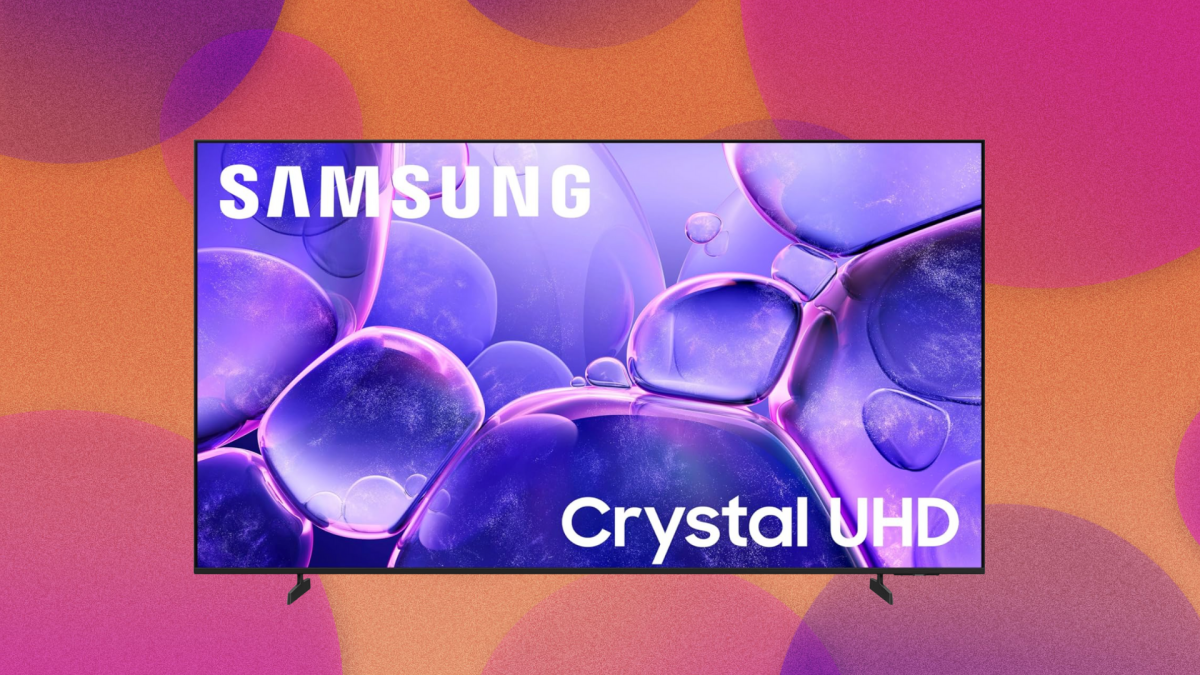
SAVE $100: As of Feb. 7, Amazon has this 85-inch Samsung Smart TV on sale for $797, which is 11% off its list price of $897.
$797.99
at Amazon
$897.99
Save $100
If you’re someone who has been wanting the biggest TV money can buy (within reason), you could get close to making your dreams come true this weekend. Amazon has this 85-inch Samsung Smart TV on a modest sale that nets out to a $100 discount. It may only be 11% off this weekend, but this is the lowest price that this model has seen since it was listed.
This Smart TV is as packed with features as it is large (which is saying something at 85 inches). Enjoy rich, dazzling colors when you watch your favorite movies and shows in 4K on this TV. It even upgrades what you’re watching to 4K, even if the source material wasn’t 4K to begin with. Even though this model is absolutely massive, the TV is designed to be as sleek as possible and seamlessly fit into your existing aesthetic.
The TV also comes with Samsung’s proprietary Motion Xcelerator, which anticipates the frame rate of your program and smooths the picture out at up to 60Hz.
There’s no need to purchase an additional streaming system with this TV. The built-in Samsung TV OS lets you log in to your favorite streaming services and start binging your faves right away.
Mashable Deals
Entertainment
Microsoft Office Professional 2021 for Windows is $34.97

TL;DR: Microsoft Office Professional 2021 for Windows is available for $34.97 (reg. $219.99) for a limited time through Feb. 22 at 11:59 p.m. PT.
$34.97
$219.99
Save $185.02
If you regularly work with documents, spreadsheets, presentations, or email, Microsoft Office Professional 2021 covers the basics in a single desktop suite. For a limited time, the Windows version is priced at $34.97 (reg. $219.99) through Feb. 22 at 11:59 p.m. PT.
This edition includes Word, Excel, PowerPoint, Outlook, OneNote, Publisher, Access, and the free version of Teams. Together, these apps support a wide range of everyday tasks, from writing reports and managing email to building presentations and organizing data. The software installs locally on Windows 10 and Windows 11 systems and does not require constant internet access once set up.
Mashable Deals
Office 2021 uses Microsoft’s familiar ribbon-based interface, which groups formatting and editing tools in a consistent layout across apps. That makes it easier to move between writing in Word, working with spreadsheets in Excel, and assembling slides in PowerPoint without relearning controls. Excel supports large datasets and formulas for reporting, while Publisher and Access offer options for layout-focused documents and database management.
Microsoft Office Professional 2021 is designed for Windows 10 and Windows 11 systems and installs directly on compatible PCs. Microsoft recommends at least 1GB of RAM, adequate available storage for installation, and a display resolution of 1280 x 800 or higher. The suite runs locally after installation and maintains its feature set consistent with the 2021 release.
Mashable Deals
For students, freelancers, or small teams who already know they want Microsoft Office tools on a Windows machine, this deal simplifies the decision. For just $34.97, down from $219.99, Microsoft Office Professional 2021 delivers a straightforward way to get established and familiar desktop apps at a lower cost, without requiring extra research into newer editions or add-ons.
StackSocial prices subject to change.
Entertainment
One AI hub, fewer tabs — 1min.AI’s lifetime plan costs $99.99
TL;DR: A $99.99 lifetime license to 1min.AI bundles AI tools for writing, images, PDFs, audio, and video in one place.
Anyone who handles writing, visuals, research, and document work on a Mac or PC knows how quickly even small tasks can add up. Switching between tools, copying files, and rewriting prompts can eat up time that could be better spent on big ideas. The 1min.AI Advanced Business Plan streamlines those steps by bringing together multiple AI-powered tools, and its lifetime subscription is now available for $99.99 (reg. $540).
Rather than locking users into a single assistant, 1min.AI lets you choose among several leading AI models, including GPT-4o, Claude 3, Gemini Pro, and others, based on the task. That flexibility is key when tone, structure, or output style changes from project to project. One model may excel at long-form blog posts, while another may be better for summarizing dense PDFs or generating social media copy.
Mashable Deals
The platform leans heavily into efficiency. Writing tools cover blog generation, keyword research, rewriting, summarizing, grammar checks, and brand voice creation. Image tools handle upscaling, background removal, object edits, and prompt generation. Document features allow users to chat with PDFs, translate files, and extract answers without manual skimming.
All functions run on a monthly credit system, which resets every month and includes four million credits for flexible use. For context, generating a 1,000-word article or upscaling several images uses only a fraction of the monthly allotment.
Customization is another great benefit. Users can save and reuse prompts in an unlimited prompt library, fine-tune instructions for specific outputs, and switch models mid-project without starting over. For teams, the Advanced Business Plan supports up to 20 members with shared access, collaboration tools, and centralized management.
Mashable Deals
For those looking to reduce tool-switching and speed up repetitive work across writing, visuals, and documents, the 1min.AI lifetime deal makes the platform far less intimidating. Get it today for $99.99 (reg. $540) for a limited time.
StackSocial prices subject to change.
Topics
Artificial Intelligence


Report: Cowboys to place franchise tag on George Pickens

Georgia roars back from 15-point deficit, upends LSU


