
Entertainment
New Star Trek Show Will Finally Stop Copying The Worst Thing About Discovery

By Chris Snellgrove
| Published
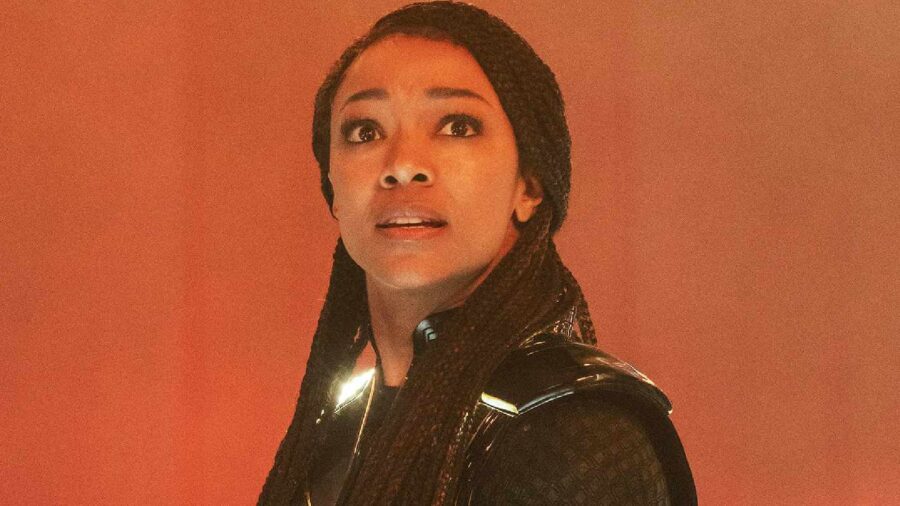
Starfleet Academy recently ended its first season with “Rubincon,” an episode (spoilers, space cadets!) which completed Caleb’s long-running story arc. He is finally reunited with his mother, and his mom has even made peace with Chancellor Ake, the one who put her in prison. This makes for a mostly crowdpleasing season capper that might (just might) prove popular enough to win over the show’s biggest haters.
It’s a solid episode, but as the credits rolled, I found myself letting out a breath I didn’t realize I was holding. Based on how this first season ended, it looks like Starfleet Academy is going to finally stop copying the worst thing about Discovery, which has been arguably dragging the newest NuTrek show down from the beginning. Now that Caleb is no longer the focus, this new Star Trek show can stop focusing on a main character and focus on the entire ensemble cast.
The Michael Burnham Show
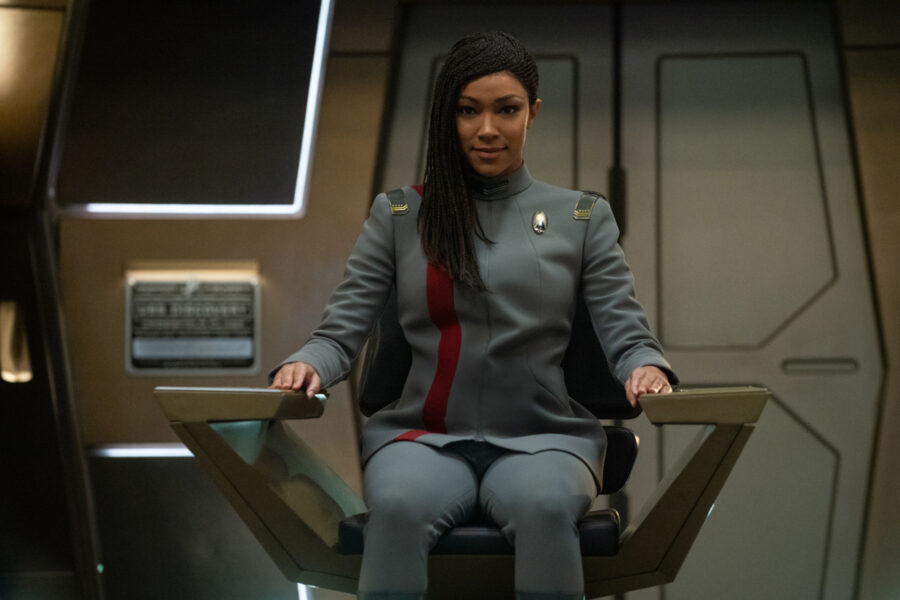
When Star Trek: Discovery first came out, it boldly went where no Star Trek show had gone before by focusing on a singular main character. Michael Burnham was the undisputed main character, and this controversial NuTrek show followed her fall and subsequent rise: she went from a brilliant Starfleet officer to a disgraced traitor to a decorated captain, all in the space of five seasons. While she ultimately proved to be a compelling character (a take admittedly as hot as the warp core), the endless focus on Burnham meant that we didn’t even learn the names of most of the bridge crew until Season 2.
Both Picard and Strange New Worlds proved to be a hard course correction, with these shows’ stories leaning extensively on a smaller ensemble cast. The same was true of Lower Decks, the gone-too-soon cartoon love letter to the Star Trek franchise. However, perhaps because it is a spinoff of Discovery, Starfleet Academy’s first season replicated the older show’s formula, albeit with a slight tweak.
Star Trek’s Latest Main Character

Caleb is, without a doubt, the main character of Starfleet Academy: the whole season revolves around his quest to find his jailbreak mother, and he has a shared history with both Captain Ake and Nus Braka, the show’s conniving supervillain. Caleb’s relationship with the bad guy gives him ongoing relevance to the plot, as does the fact that the ship’s captain acts as his surrogate mother. Fortunately, Starfleet Academy doesn’t focus on Caleb nearly as much as Discovery focused on Burnham, so there’s enough space to give the other cadets their share of the screen time.
Well, almost enough: one of the odder things about Starfleet Academy Season 1 is that Genesis is the only cadet who doesn’t get her own episode focusing primarily on her development. SAM, Darem, Tarima, and Jay-Den all get their own episodes, but the best the show can do for Genesis is to let her hum around an abandoned academy with Caleb. That episode (“Zo’Kheine”) mostly focuses on Darem and his people while Caleb stays home and tries to write a letter to a recovering Tamira.
Here Comes (And Here Goes) Genesis

Genesis gets into a few shenanigans, but for her, this episode mostly sets up an arc that she’s not command material. The Season 1 finale “Rubincon” pays lip service to this arc by having Genesis briefly take command. But considering that all she does in the captain’s chair is say that she has to pee, it’s fair to say that this storyline never really pays off.
Fortunately for Genesis and the other sadets, “Rubincon” also wraps up Caleb’s major storylines by having him reunite with his mother. She even makes her peace with the Federation, which means that Caleb can have his cake and eat it, too. He can stay enrolled at Starfleet Academy with his mother’s blessing and not be forced to choose between his biological family and his found family.
Trauma Boy, No More

It’s my hope that Starfleet Academy is done with focusing on a singular character. Again, Caleb is a very interesting character, and the show’s writers did a decent job of obsessing about him the way the Discovery writers obsessed about Michael. Nonetheless, the show already has more main characters than any show in Star Trek history, so making Caleb the de facto lead character meant even less of a focus on the ensemble cast.
Now, with any luck, Star Trek has evolved beyond the need to have a main character as surely as the Federation has evolved beyond the need for money. Of course, with my luck, the franchise will copy the Bridgerton formula and focus on a new main character each season. If that happens, maybe the writers can scratch the itch of their Caleb fascination by making him the 32nd-century equivalent of Lady Whistledown, who knows the tea (Earl Grey, hot) about everyone.
Entertainment
Mortal Kombat II review: The bar is in hell for video game movies, huh?

How many times do we have to go through this?
Yes, Mortal Kombat has been a massively popular video game franchise since its spawning in 1992. Yes, its over-the-top kills and thrillingly scornful catchphrases make the fighting games incredibly fun. But despite several attempts including 1995’s Mortal Kombat, 1997’s Mortal Kombat: Annihilation, and the 2021 reboot, also titled Mortal Kombat, not a single good live-action movie has been made from this IP.
Yet here we are again with another ugly, nonsensical mess, this time called Mortal Kombat II.
Mortal Kombat, the last film in this much-flubbed franchise, centered on Cole Young (Lewis Tan), a descendant of Sub-Zero (Joe Taslim), who’s a fish out of water in the titular fighting tournament world. This time, he’s relegated to a tertiary character, so the sequel can pivot to a new fish out of water, Johnny Cage (Karl Urban), a washed-up ’90s action star who’d rather crush a beer than a spine. However, when a malevolent conqueror named Shao Kahn (Martyn Ford) threatens Earthrealm, it’s up to Cage and a coterie of super-powered fighters to win a Mortal Kombat tournament to save their world.
Wisely, Warner Bros. led with Cage in their early promos, releasing teasers that showed a cheeky self-awareness of the Western martial arts movie while suggesting Mortal Kombat II would be funnier than its predecessor. Frustratingly, this is another example of good trailer, bad movie. And a big part of why is that Cage feels like he’s been wedged in, rather than centered on, for a new perspective.
Mortal Kombat II is a befuddling eyesore with sub-zero emotional depth.

Adeline Rudolph as Kitana.
Credit: Warner Bros. Pictures
Mortal Kombat (2021) director Simon McQuoid is back with muddy CGI settings, rubbery CGI fighters, and much of his movie’s cast reprising their roles. Along with Tan and Taslim, Jessica McNamee is back as Sonya Blade, Josh Lawson as Kano, Mehcad Brooks as Jax, Ludi Lin as Liu Kang, Tadanobu Asano as Raiden, and Hiroyuki Sanada as Hanzo Hasashi / Scorpion.
Joining the fighter line-up opposite Cage are fan-wielding Kitana (Adeline Rudolph), staff-armed Jade (Tati Gabrielle), the many-fanged Baraka (CJ Bloomfield), and Ford as brutish conqueror Shao Kahn.
Now, you might think that’s too many characters to create meaningful story arcs over the course of a 116-minute runtime. And you’d be right!
Sure, screenwriter Jeremy Slater could have narrowed the focus to Cage’s experience to better create a moving narrative, while still folding in the requisite fighting, brawlers, and game allusions. But hey, why not split the story focus between Cage, whose gruff has-been attitude pitches Mortal Kombat II toward a promising Galaxy Quest vibe, and Kitana, whose rebellious warrior princess thread is reminiscent of Guardians of the Galaxy‘s Gamora as she battled Thanos and her “sister” Nebula. But here, Thanos is Shao Kahn, who murders Kitana’s dad in the film’s glacially paced opening sequence. And Nebula is Jade, Kitana’s bestie/guard since she became Shao Kahn’s prisoner as a girl. (If you want more backstory, fret not, there’s plenty.)
Mashable Top Stories

Tati Gabrielle as Jade.
Credit: Warner Bros. Pictures
Cage won’t even show up for the first 14 minutes of Mortal Kombat II. In that time, the sequel plunges into the same grim and self-serious atmosphere that made McQuoid’s first Mortal Kombat a bore. Sure, the fight scenes are really violent and bloody, befitting the film’s R-rating. But the fights feel disconnected from the storytelling. Worse yet, these battles are shot with very little visual logic, meaning some big blows just don’t hit.
And yep, there sure are recreations of memorable characters, their costumes, weapons, and catchphrases. But the major important distinction between this rebooted movie franchise and the games is, the games were fun.
The most fun Mortal Kombat and Mortal Kombat II can offer is Kano, the only character who resolutely refuses to take things seriously.
Karl Urban shines, but Josh Lawson is Mortal Kombat II‘s MVP.

Karl Urban as Johnny Cage, Hiroyuki Sanada as Scorpion, and Josh Lawson as Kano.
Credit: Warner Bros. Pictures
As Cage, Urban brings with him an American arrogance that shakes up the seriousness of the Earthrealm battlers. He’s snarky where they’re stern, creating a feisty dynamic that borders on amusing. But as Cage’s clichéd plot line demands he become a selfless, brave hero, he becomes more grave and less giggle-inducing. Thank the gods for Lawson’s Kano.
This crusty criminal and unrepentant asshole died in the last movie, but like other MK fighters, he’s resurrected for this sequel. Thankfully, rather than being brought back as another humorless revenant, Kano is as chaotically insulting as ever, slinging barbs with reckless abandon. When he mocks necromancer Quan Chi (Damon Herriman) for his “eyeliner,” I howled with laughter. And for a brief moment I thought that between Cage and Kano, this movie might actually begin to get fun!
Alas, my hopes were squashed like a skull under a warhammer. Kano and Cage get to be comic relief, while Kitana broods and a new quest kicks off to heist a magical gem from Shao Kahn, which he effectively uses as an immortality cheat code. Again, life-or-death battles and a heist into the heart of a tyrant’s castle? This should be exciting and entertaining!
Inexplicably, McQuoid bleeds any tension from these sequences with a mangled visual language that makes fights hard to follow and the quest feel like an afterthought. Suspense cannot build because in every other scene, Slater’s script delivers another exposition drop to explain the tournament, the realms, the revenants — on and on! Video games are a visual medium. Movies are a visual medium. Yet much of this movie feels like I got locked into a tedious podcast.
In the end, Mortal Kombat II feels like the wretched compromise of two movie pitches. One is a sequel that closely follows the saga and dolesome tone of the last movie. The other is an action-comedy in the vein of Dungeons & Dragons: Honor Among Thieves. Whether it’s Kano reading other fighters to filth, or a sequence where Cage is chased around a village by a rampaging Baraka, there are moments where Mortal Kombat II flirts with not taking this IP deadly seriously. But then McQuoid pivots back to a tone that’s less Shogun and more Iron Fist. And as sloppy and artless as this adaptation is, it probably won’t matter.
Gamers need to demand more of video game movies.

CJ Bloomfield as Baraka.
Credit: Warner Bros. Pictures
It’s long been a cliché that video game movies are traditionally bad. I was recently disappointed by the Until Dawn movie and moved to consider my own mortality over the vacuousness of The Super Mario Galaxy Movie. And yet, studios keep plugging along with these movies “for the fans.”
Don’t be fooled. That’s a cynical sales pitch that assumes gamers love the source IP so much that studios don’t need to bring skilled filmmakers or spend the money on top-notch fight choreography, stunts, or visual effects. They believe the fans will come regardless of what they actually put on screen. And maybe they’re right! After all, critics warned that The Super Mario Galaxy Movie was a soulless sequel with more allusions than entertainment. But it’s nearing a billion dollars for worldwide box office. So, why should studios change strategy?
Warner Bros hired a commercial director to make his feature directorial film debut with Mortal Kombat, and now he’s back with a muddled vision that’s an ugly and lifeless slog. But if fans go to the theater or stream this exhaustively on HBO Max, like they presumably did its predecessor, then the bar is in hell, and it won’t be raised.
At least we have more Last of Us to look forward to, right?
Mortal Kombat II opens in theaters on May 8.
Entertainment
This robotic pool vacuum is basically a Roomba that can swim, and it’s $449 off today
SAVE 35%: As of May 6, you can get the Beatbot AquaSense 2 for $849 at Amazon, down from $1,298. That’s a 35% discount or $449 savings.

$849
at Amazon
$1,298
Save $449
I don’t have a pool (well, not a personal one, anyway; I live in an apartment complex), but I do have a robot vacuum, and I know the joy of watching a little machine clean my floors while I do other things. If you apply that same logic to pool maintenance (which I imagine is a lot more annoying than keeping your floors clean), then investing in a robo pool cleaner makes a lot of sense.
Mashable Trend Report
And, right now, you can get one of Amazon’s top-rated models for a fraction of the price. As of May 6, you can get the Beatbot AquaSense 2 for $849 at Amazon, down from $1,298. That’s a 35% discount or $449 savings. It’s also the lowest price we’ve seen this model go for. The only problem? Amazon marked this as a “limited-time deal,” and the countdown clock shows it ends in about 16 hours.
This thing works just like an indoor robot vacuum; it maps out its cleaning path and then uses an onboard 4-core CPU and 16 sensors to navigate using an S-path for the pool floor and an N-path to scrub the walls and waterline. It also has a “Double-Pass Scrubbing” feature for the waterline, so it’ll get the grimiest spots twice per pass. Bonus: When it’s done cleaning (or when the battery runs low), it automatically parks itself at the surface of the water so you don’t have to go diving to retrieve it.
Entertainment
Grandma Anne’s Secret Jell-O

I love making food that people appreciate — the kind of meal that makes the whole table go quiet at the first bite. But you know what I kind of love more? Making food that makes the whole table shriek like kids chasing the ice-cream truck.
So, when I happened upon a “secret Jell-O” recipe in chef Hillary Sterling’s new cookbook, Ammazza! — titled for the Roman slang term, which roughly translates to “wowee!” — I knew I had to share.
“This was the defining treat of my childhood,” explains Hillary. Growing up, her Grandma Anne always kept a bowl of Jell-O in the fridge. “She added halved grapes, and they’d hover in the middle while it ‘jellified.’ It tasted so cool, refreshing, and delicious.” As adults, Hillary and her sister tried to replicate it, but never managed to get the taste just right. That’s when their grandpa clued them in to Grandma Anne’s secret ingredient: sweet liqueur. “Turns out, our favorite childhood dessert was one part Grandma, one part frat party.”
Hillary’s own adaptation is a little more cocktail-party than frat, but just as festive: a ruby-red confection, studded with plums and served in a champagne coupe. Plus, it’s incredibly simple, with less than 10 minutes of active cooking time. And while I’ll give Grandma Anne the benefit of the doubt, and say she probably wasn’t trying to inebriate her grandchildren, this recipe has almost a shot’s worth of brandy per serving (wowee, indeed!). So, let’s maybe keep it at the grown-ups table.
Grandma Anne’s Secret Jell-O
from Ammazza! by Hillary Sterling
Serves 4
1/2 cup (115 g) prunes*
3/4 cup (180 ml) brandy
1 85-gram package cherry gelatin
*It’s true, prunes are dried plums. Here, they’re essentially rehydrated in the cooking process.
In a small pot, combine the prunes and 1/2 cup (120 ml) of the brandy. Bring to a boil, then turn the heat low, and cook until the prunes absorb all the liquid (about 5 minutes). Set aside. In a separate small saucepan, bring 1 cup (240 ml) of water to a boil. Place the gelatin in a heatproof bowl, then pour the hot water over it, whisking until fully dissolved (about 2 minutes). Stir in the remaining 1/4 cup (60 ml) of brandy and 1 cup (240 ml) of cold water.
Divide half of the gelatin mixture evenly among four glasses, filling them about halfway. (“This is the time to break out your heirloom wine glasses or champagne coupes,” says Hillary. “Style and presentation meant everything to my grandmother.”) Arrange the glasses on a small sheet pan for stability. Refrigerate, uncovered, until just set (about 1 hour).
Finally, divide the steeped prunes evenly among the glasses, gently placing them on top of the set layer. Top each glass with the remaining gelatin — the fruit will “float” as it sets. Cover and refrigerate until firm but still jiggly (about 1 hour more). Serve, and enjoy!

Thank you so much, Hillary! And congratulations on your beautiful cookbook.
P.S. More fun party recipes, including a chaotic pavlova and a pasta cake.
(Photos by Kelly Puleio. Excerpted with permission from Ammazza!, on sale now from Scribner, an imprint of Simon & Schuster. Copyright © 2026 by Hillary Sterling)

Lakers G Luka Doncic frustrated and unsure of return
Andrew Vaughn's homer powers Brewers over Cardinals


