
Entertainment
Netflix Just Released An Episode So Bad I’m Now Embarrassed I Ever Recommended This Show

By Joshua Tyler
| Published

One of the funnier scenes ever to make it into a movie happens in the classic Chevy Chase/Dan Aykroyd comedy Spies Like Us. The duo, playing inept spies, arrives at a Doctors Without Borders camp, and all it takes for them to convince the people there that they belong is to call everyone “Doctor” over and over and over again. It’s a fun, silly way of poking fun at pretentious PhDs and also the limited intelligence of our heroes.
Now imagine that sixty-second scene stretched over sixty minutes, played seriously instead of as a joke, and with Chevy Chase’s character replaced by a badly rendered miniature reindeer in a top hat. That’s what happens in season 2 episode 7 of Netflix’s pirate adventure show One Piece. Aptly titled “Reindeer Shames,” it may be the single worst hour of programming ever released on streaming, and somehow it’s the penultimate episode of the streamer’s new flagship show.

Having not seen episode 7 yet, and having previously enjoyed season one and all six previous episodes of season 2, I’d been recklessly recommending One Piece to everyone I know. Now, not only am I rescinding that recommendation, I’m not sure I have the strength to continue on and watch the second season’s final episode.
One Piece Fans Waited More Than Two Years For Time Wasting Filler

A quick positioning statement: I love anime and watch a lot of it. Like 99% of the people watching the Netflix show, though, I’ve never watched the anime version of One Piece. I’ve avoided it largely because there are thousands of episodes, and that seems daunting, but also because even its most ardent defenders often admit that many of those episodes are actually time-wasting filler.
The One Piece anime’s predilection towards time-wasting filler episodes may explain the presence of “Reindeer Shames” on the Netflix version, the plot of which involves none of the show’s actual cast. The story also has basically nothing to do with any of the narratives being developed in the rest of the season.
That might be an acceptable side trip in a series with thousands of episodes, but in the modern era of lazy streaming production, we only get eight episodes every two or three years instead of an annual two-dozen. Wasting one of those precious episodes on anything not directly relevant to what’s happening on the show would be a bad idea, even if it were somehow good. When it’s this bad, it feels almost criminal.
A Blatant Cost-Cutting Measure From Netflix

“Reindeer Shames” tells the story of a Doctor on the run in a country where Doctors are being rounded up for weird anime doctor-hoarding reasons. The Doctor encounters a tiny, talking reindeer who looks like he just fell off a Toys R Us plushy shelf during the Christmas holiday rush of 1997. Or he would look like that if the CGI used to animate him didn’t also look like it came from 1997.
It seems clear that at least part of Netflix’s motivation in making this episode was as a cost-cutting measure. The show’s other episodes look fantastic, with high-level special effects and large-scale action sequences. However, “Reindeer Shames” largely takes place in either an unremarkable bush or a single hut and offers only a few, half-hearted seconds of action at the end. And again, it doesn’t involve any of the show’s actual cast, which probably means Netflix only paid them for seven episodes while still producing eight.
Netflix Has Opened Its Own Learing Center

This has all the earmarks of a scam. Making your subscription-paying audience wait two and a half years for eight episodes and then cheaping out on one of them is the streaming version of a Minnesota Learning Center.
The talking reindeer is named Chopper, and I’m told by Jonathan Klotz, who I consider an expert in all One Piece matters, that this character is a beloved figure in the animated version of this tale. Maybe he’ll grow into that over the course of Netflix’s live-action series, assuming the awfulness of this outing doesn’t cause the show to be canceled. Still, he’s garbage in this episode, and plays out like a clumsy, half-baked attempt to create the next Baby Yoda in a world where everyone’s sick to death of Baby Yodas.
Stop Watching One Piece Unless Supervised By A Doctor

Instead of delivering the kind of pirate adventure One Piece viewers are tuned in for, the episode meanders around, fixating on endless speeches about how amazing and important Doctors are. Doctor this and Doctor that, and oh, aren’t Doctors incredible angels who totally aren’t doing this job just because they like buying Corvettes and hanging out at country clubs.
Sitting through “Reindeer Shames” made me wish One Piece was on YouTube instead of Netflix, so it could be interrupted by an Incogni ad. In that worse-than-streaming-sponsorships environment, I guess Chopper, since he isn’t a Doctor and only wants to be one, is the least worst thing about it. That’s a hopeful point for his continued Doctor presence on the show, which seems like something I’ll have to endure if I ever again work up the doctor-like courage to watch another One Piece episode. I probably won’t, at least not without the supervision of a Doctor.

“REINDEER SHAMES” REVIEW SCORE
Entertainment
Grandma Anne’s Secret Jell-O


I love making food that people appreciate — the kind of meal that makes the whole table go quiet at the first bite. But you know what I kind of love more? Making food that makes the whole table shriek like kids chasing the ice-cream truck.
So, when I happened upon a “secret Jell-O” recipe in chef Hillary Sterling’s new cookbook, Ammazza! — titled for the Roman slang term, which roughly translates to “wowee!” — I knew I had to share.
“This was the defining treat of my childhood,” explains Hillary. Growing up, her Grandma Anne always kept a bowl of Jell-O in the fridge. “She added halved grapes, and they’d hover in the middle while it ‘jellified.’ It tasted so cool, refreshing, and delicious.” As adults, Hillary and her sister tried to replicate it, but never managed to get the taste just right. That’s when their grandpa clued them in to Grandma Anne’s secret ingredient: sweet liqueur. “Turns out, our favorite childhood dessert was one part Grandma, one part frat party.”
Hillary’s own adaptation is a little more cocktail-party than frat, but just as festive: a ruby-red confection, studded with plums and served in a champagne coupe. Plus, it’s incredibly simple, with less than 10 minutes of active cooking time. And while I’ll give Grandma Anne the benefit of the doubt, and say she probably wasn’t trying to inebriate her grandchildren, this recipe has almost a shot’s worth of brandy per serving (wowee, indeed!). So, let’s maybe keep it at the grown-ups table.
Grandma Anne’s Secret Jell-O
from Ammazza! by Hillary Sterling
Serves 4
1/2 cup (115 g) prunes*
3/4 cup (180 ml) brandy
1 85-gram package cherry gelatin
*It’s true, prunes are dried plums. Here, they’re essentially rehydrated in the cooking process.
In a small pot, combine the prunes and 1/2 cup (120 ml) of the brandy. Bring to a boil, then turn the heat low, and cook until the prunes absorb all the liquid (about 5 minutes). Set aside. In a separate small saucepan, bring 1 cup (240 ml) of water to a boil. Place the gelatin in a heatproof bowl, then pour the hot water over it, whisking until fully dissolved (about 2 minutes). Stir in the remaining 1/4 cup (60 ml) of brandy and 1 cup (240 ml) of cold water.
Divide half of the gelatin mixture evenly among four glasses, filling them about halfway. (“This is the time to break out your heirloom wine glasses or champagne coupes,” says Hillary. “Style and presentation meant everything to my grandmother.”) Arrange the glasses on a small sheet pan for stability. Refrigerate, uncovered, until just set (about 1 hour).
Finally, divide the steeped prunes evenly among the glasses, gently placing them on top of the set layer. Top each glass with the remaining gelatin — the fruit will “float” as it sets. Cover and refrigerate until firm but still jiggly (about 1 hour more). Serve, and enjoy!

Thank you so much, Hillary! And congratulations on your beautiful cookbook.
P.S. More fun party recipes, including a chaotic pavlova and a pasta cake.
(Photos by Kelly Puleio. Excerpted with permission from Ammazza!, on sale now from Scribner, an imprint of Simon & Schuster. Copyright © 2026 by Hillary Sterling)
Entertainment
The Bradley Cooper Horror Movie That Will Break Your Brain
By Sean Thiessen
| Published
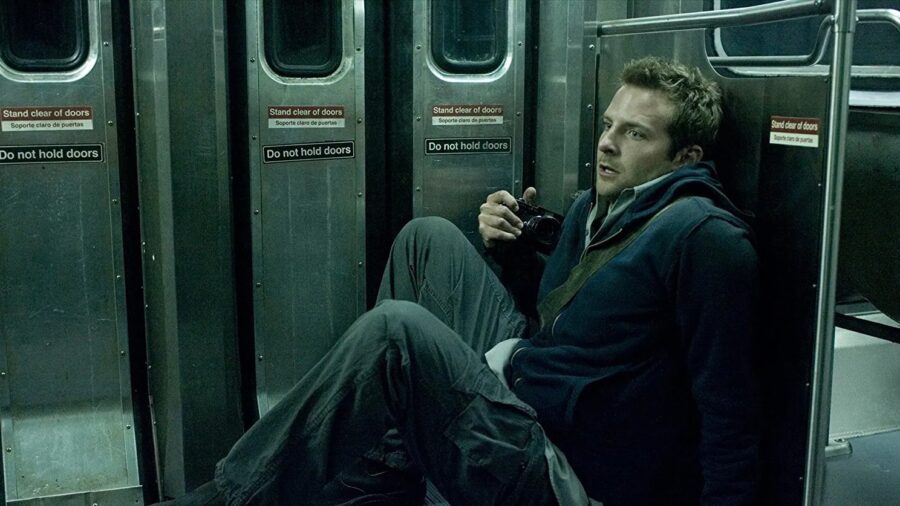
What do you get when you cross Bradley Cooper with a Clive Barker horror story? The answer: 2008’s gory cult classic The Midnight Meat Train. Though a slashed theatrical release buried the film, this disturbing bloodbath has finally been unearthed on Tubi.
Riding The Rails Has Never Been More Dangerous
Bradley Cooper leads The Midnight Meat Train as Leon Kaufman, a photographer keen on capturing the grit of city life. After his portfolio is rejected by a high-profile gallery owner for being too safe, Leon ventures out in search of danger. Spoiler alert: he finds it.

Leon captures a brutal act of violence on a subway and becomes obsessed with tracking down a serial killer who has been enacting carnage on the late-night train for years. Leon spirals down a tunnel of mystery that slowly unravels a conspiracy that goes all the way to the bottom. He struggles to gain the support of the police and even his own girlfriend, portrayed by actress Leslie Bibb. The Midnight Meat Train speeds toward a sinister conclusion that is a must-see for horror fans.
This Bradley Cooper film is unlike any other. The Midnight Meat Train was adapted from Barker’s short story by Pet Sematary (2019) screenwriter Jeff Buhler and directed by Japanese filmmaker Ryûhei Kitamura. The result is a dark, tense, and revolting horror mystery, complete with the hyper-stylized sensibilities of 2008.

The film was originally set as the feature directorial debut of Patrick Tatopoulos, a special effects wizard and production designer who cut his teeth on movies like Independence Day, I, Robot, and Underworld. It was scheduled to shoot in New York City in 2005.
Tatopoulos was replaced by Kitamura and, in an effort to cut costs, Bradley Cooper and the rest of the gang shot The Midnight Meat Train in the Los Angeles metro system. Production finally began in the spring of 2007.

Lionsgate distributed the film but only opened the movie in the secondary theatrical market, limiting the release to about 100 screens. It was then quickly released on DVD, much to the filmmakers’ dismay. Clive Barker openly criticized Lionsgate’s Joe Drake for burying other films in order to venerate The Strangers, for which Drake was a producer.
Critics twho saw The Midnight Meat Train generally liked it, praising the acting from Bradley Cooper, Leslie Bibb, Vinnie Jones, and the rest of the cast. The film carries a 70 percent critical score on Rotten Tomatoes on the consensus that it delivers the thrills, scares, and gore its target audience seeks.
Bradley Cooper’s Career Took Off After Midnight Meat Train

Bradley Cooper jumped from Midnight Meat Train into the following year’s breakout hit The Hangover. That film launched Cooper from a solid supporting actor to a bankable leading man. The Hangover spawned a lucrative trilogy of comedies that provided a steady stream for Cooper as he expanded to dramatic horizons.
Cooper has since led an exciting and successful career as an actor, director, and producer. His performance in 2012’s Silver Linings Playbook earned the actor his first Oscar nomination, which he followed up with nominations for his work in American Hustle, American Sniper, and A Star is Born. As a producer, his films Joker, A Star is Born, American Sniper, and Nightmare Alley were nominated for Best Picture.

Bradley Cooper’s horror background with Midnight Meat Train paired with the gnarly sensibilities of director James Gunn to bring about Rocket Raccoon in the Guardians of the Galaxy trilogy. The character may be Cooper’s most iconic, but it is easy to forget that such a high-profile actor lurks beneath the CGI surface of the lovable a-hole.
The evolution of Cooper’s career is a fascinating one, and The Midnight Meat Train is an important piece of the puzzle. It stands out among his list of comedies, dramas, and action films, and the film’s troubled release leaves it begging for rediscovery.
Now, nearly 20 years after its release, fans of Bradley Cooper can head on over to Tubi and ride The Midnight Meat Train all the way to the end of the bloody line.
Entertainment
R-Rated, Netflix Original Action Thriller Is A Violent, High-Stakes Protection Job
By Robert Scucci
| Published

One unfortunate reality about most action movies is that the person who needs a bodyguard the most is often the most annoying, insufferable person you could ever encounter. 2019’s Close is no exception, but we eventually learn that the spoiled heiress in question can’t help being totally clueless about how the world works or how people operate. In this case, it leads to a satisfying character arc because our clueless damsel in distress eventually decides to take control of her situation with the help of one of the most badass hired guns money can buy.
Your Typical Protection Job
The dynamic in Close is about as simple as it gets when we’re introduced to Zoe Tanner (Sophie Nélisse), the spoiled heiress of Hassine Mining. Zoe’s stepmother, Rima Hassine (Indira Varma), is horrified to learn that her late husband, Zoe’s father Eric Hassine, left all his shares in the company to his daughter, causing immediate tension within the family. Rima, the acting CEO of Hassine, a company founded by her family, asks Zoe to tag along on a trip to Morocco, where she intends to close a billion-dollar mining deal.

Now that we have the brat out of the way, we can talk about Sam (Noomi Rapace), the close protection officer hired to keep an eye on Zoe at the fortified family compound while Rima is out handling business. As you would expect in a movie like Close, the house is raided by armed intruders, and Sam has to not only win Zoe’s trust, but also figure out who sent these hired goons to the private residence to shake things up.
Rima’s business dealings begin to go south during this all-guns-blazing odyssey because her daughter has been reported missing by every news media outlet, and she’s implicated in the murder of a police officer, causing Hassine Mining’s share prices to plummet. There are plenty of shots of Rima sitting in an empty boardroom looking at market reports involving her mining company and Sikong, the mining company competing with it to drive this point home.

Since global market reports typically involve more than two companies in the real world, it’s reasonable to believe that the board members of Sikong have something to do with Zoe’s abduction and the events that transpire shortly thereafter. Or maybe, perhaps, this is Rima’s way of reclaiming the company that she believes she deserves full ownership in. It’s one of those things that happens in modern movies because people are only half paying attention, so really obvious visual cues are pretty much a requirement.
Good Gunplay With A Forced Girl Power Arc
Like most action thrillers released exclusively by Netflix, Close has the same flat lighting and muted color grading you’ve seen a hundred times before. Generic visuals notwithstanding, the action sequences are tight, controlled, and grounded enough to make you want to stick around. They’re not so over-the-top that you have to suspend an insane amount of disbelief, and the overall conflict is simple enough to sink your teeth into on an intellectual level.

Within this framework, I actually liked the chemistry between Sam and Zoe, which is adversarial at first, naturally, but warms up once they spend some time together. What works really well is how Sam treats this whole thing like a job because, to her, that’s all it is, which humbles Zoe on more than one occasion. Sometimes, all a spoiled brat with no real concept of how the world works needs to hear is, “I don’t care about you, this is just work,” in order to be truly put in her place. I liked this dynamic a lot, but also understood that whatever character development happens here eventually has to move beyond that initial setup because the movie needs somewhere to go.
What really pissed me off, however, was the third-act moment when Zoe stops Sam and asks why she never told her about her estranged daughter. It’s a weird, entitled “we’re supposed to be besties who tell each other everything” moment that comes out of nowhere and makes no sense.

At this point in the film, Sam comes off as a hardened veteran who’s seen some things. Her ability to size up a room and plan alternate escape routes on the fly is beyond impressive, and she’s able to adapt to every scenario with barely a moment’s notice. She straight up told Zoe earlier that this is a professional relationship, and even though their dynamic changes throughout the film, it’s reasonable to assume Sam rightfully has qualms about telling some trust fund baby she barely knows about the child she put up for adoption when she was 16.
The movie doesn’t benefit from exchanges like this, but it’s certainly made worse by them. On one hand, I get it. Zoe is a rich kid who’s had basically no parental supervision her entire life, and she’s trying to make a human connection during an extremely heightened situation. But maybe you shouldn’t ask personally invasive, potentially upsetting questions to the person hired to protect you, especially when you’re caught in the middle of a hail of gunfire. I’m no bodyguard, but I believe the better approach is: survive now, chat about missed, life-altering opportunities later.

Close is just another girl power John Wick kind of thing, and after a while they all start to blend together. So do the male-driven ones, relax. If you want something similar but better, you can stream Gunpowder Milkshake on Netflix or Atomic Blonde on Hulu. If you eventually want to see them all, though, you’ll probably circle back around to Close, which is currently streaming on Netflix.

Pete Alonso helps power Orioles past Marlins
Royals' Cole Ragans leave game with triceps, elbow soreness


