
Entertainment
NASA Lost Contact With Voyager-1

By Jacob VanGundy
| Published
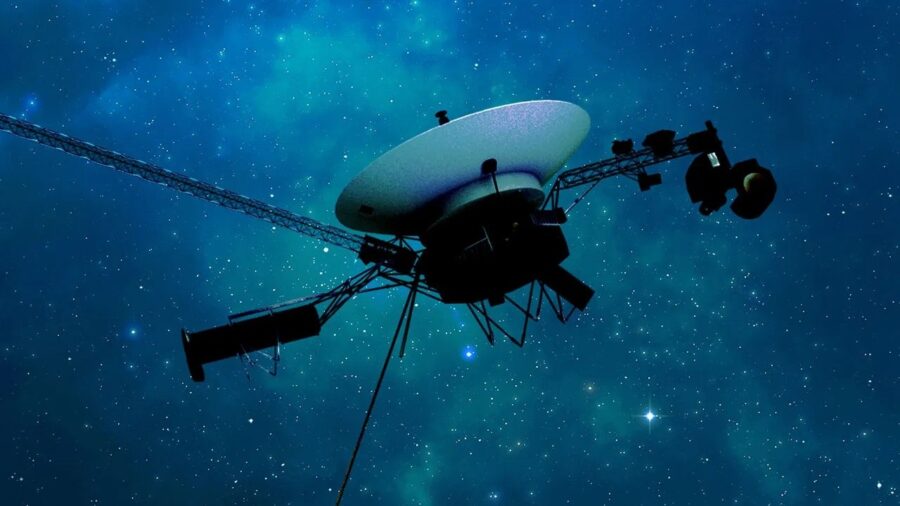
NASA briefly lost contact with Voyager-1 earlier this month, with communications being restored a few days later. The aging space shuttle has had numerous problems in recent years as it has gotten further from Earth, with the communication error being the latest in a series of problems the team has had to solve to keep the mission going. The exact cause of the problem remains a mystery and raises concerns that the vessel may only remain functional for a little while longer.
What Went Wrong
On October 18 Voyager-1’s signal was lost after a command to turn one of the heaters was sent two days earlier. The command triggered the vessel’s fault protection system, a built-in failsafe that can turn devices on and off to keep the ship functional. The fault protection system disabled the ship’s primary radio, causing the signal to be lost.
It’s unknown why turning the heater on caused Voyager-1’s fault protection system to activate. Power shortages are usually to blame for the system activating, but the ship should have had more than enough energy to run the heaters. The fact that the system was initiated means there’s likely an unknown issue with the unmanned vessel.
Communication Restored
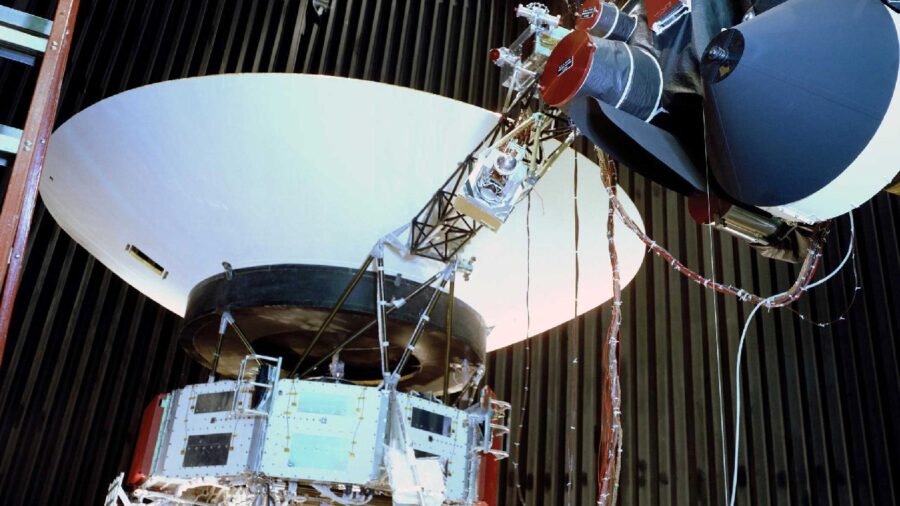
Communication was restored with Voyager-1 on October 24, thanks to the ship’s secondary radio system. Realizing that the main X-band radio may have been deactivated, the flight team began searching for fainter transmissions from its secondary S-band radio. It was uncertain if that weaker radio would function so far from Earth, but the team was able to find the frequency and re-establish communications.
While the Voyager-1’s S-band radio wasn’t designed to function so far from Earth, NASA has opted to keep using it to communicate with the ship for the time being. The flight team is working to figure out what caused the fault protection system to activate before attempting to reactivate the X-band radio to avoid another failure. This marks the first time since 1981 that the ship’s S-band radio has been utilized.
47 Years Of Voyager
Voyager-1 and its sister ship Voyager-2 were launched 47 years ago and both ships have become increasingly difficult to maintain in recent years. Earlier this year the team had to resolve an issue with clogged thrusters from decades of constant use. Scientific devices were also disabled earlier this year in an attempt to conserve energy.
The unmanned vessels are the only human-made devices to reach interstellar space, making them unique and incredibly valuable resources for scientists. Permanently losing contact with Voyager-1 would have been a catastrophe for the NASA team in charge of the mission. While issues with scientific devices and thrusters can impede the mission, a total loss of communication would mark the end of the vessel’s scientific value.
NASA has claimed that they hope to keep both Voyager-1 and its sister functioning and relaying interstellar data back to Earth until at least 2026. The recent transmission loss proves just how much work and luck is required to make that goal a reality. While it’s a relief that communication was re-established, the lost transmission was a stark reminder that the mission’s end is coming.
Source: NASA
Entertainment
NYT Strands hints, answers for April 19, 2026

Today’s NYT Strands hints are easy if you’re constantly changing.
Strands, the New York Times‘ elevated word-search game, requires the player to perform a twist on the classic word search. Words can be made from linked letters — up, down, left, right, or diagonal, but words can also change direction, resulting in quirky shapes and patterns. Every single letter in the grid will be part of an answer. There’s always a theme linking every solution, along with the “spangram,” a special, word or phrase that sums up that day’s theme, and spans the entire grid horizontally or vertically.
By providing an opaque hint and not providing the word list, Strands creates a brain-teasing game that takes a little longer to play than its other games, like Wordle and Connections.
If you’re feeling stuck or just don’t have 10 or more minutes to figure out today’s puzzle, we’ve got all the NYT Strands hints for today’s puzzle you need to progress at your preferred pace.
NYT Strands hint for today’s theme: Small change
The words are related to changes.
Mashable Top Stories
Today’s NYT Strands theme plainly explained
These words describe fine-tuning.
NYT Strands spangram hint: Is it vertical or horizontal?
Today’s NYT Strands spangram is vertical.
NYT Strands spangram answer today
Today’s spangram is There I Fixed It.
Mashable 101 Fan Fave: Nominate your favorite creators today
NYT Strands word list for April 19
-
There I Fixed It
-
Adjust
-
Modify
-
Alter
-
Improve
-
Tweak
-
Refine
Looking for other daily online games? Mashable’s Games page has more hints, and if you’re looking for more puzzles, Mashable’s got games now!
Check out our games hub for Mahjong, Sudoku, free crossword, and more.
Not the day you’re after? Here’s the solution to yesterday’s Strands.
Entertainment
Wordle today: Answer, hints for April 19, 2026
Today’s Wordle answer should be easy to solve if you can never sit down.
If you just want to be told today’s word, you can jump to the bottom of this article for today’s Wordle solution revealed. But if you’d rather solve it yourself, keep reading for some clues, tips, and strategies to assist you.
Where did Wordle come from?
Originally created by engineer Josh Wardle as a gift for his partner, Wordle rapidly spread to become an international phenomenon, with thousands of people around the globe playing every day. Alternate Wordle versions created by fans also sprang up, including battle royale Squabble, music identification game Heardle, and variations like Dordle and Quordle that make you guess multiple words at once.
Wordle eventually became so popular that it was purchased by the New York Times, and TikTok creators even livestream themselves playing.
What’s the best Wordle starting word?
The best Wordle starting word is the one that speaks to you. But if you prefer to be strategic in your approach, we have a few ideas to help you pick a word that might help you find the solution faster. One tip is to select a word that includes at least two different vowels, plus some common consonants like S, T, R, or N.
What happened to the Wordle archive?
The entire archive of past Wordle puzzles was originally available for anyone to enjoy whenever they felt like it, but it was later taken down, with the website’s creator stating it was done at the request of the New York Times. However, the New York Times then rolled out its own Wordle Archive, available only to NYT Games subscribers.
Is Wordle getting harder?
It might feel like Wordle is getting harder, but it actually isn’t any more difficult than when it first began. You can turn on Wordle‘s Hard Mode if you’re after more of a challenge, though.
Here’s a subtle hint for today’s Wordle answer:
To rise.
Mashable Top Stories
Does today’s Wordle answer have a double letter?
There are no recurring letters.
Mashable 101 Fan Fave: Nominate your favorite creators today
Today’s Wordle is a 5-letter word that starts with…
Today’s Wordle starts with the letter T.
The Wordle answer today is…
Get your last guesses in now, because it’s your final chance to solve today’s Wordle before we reveal the solution.
Drumroll please!
The solution to today’s Wordle is…
STAND
Don’t feel down if you didn’t manage to guess it this time. There will be a new Wordle for you to stretch your brain with tomorrow, and we’ll be back again to guide you with more helpful hints. Are you also playing NYT Strands? See hints and answers for today’s Strands.
Reporting by Chance Townsend, Caitlin Welsh, Sam Haysom, Amanda Yeo, Shannon Connellan, Cecily Mauran, Mike Pearl, and Adam Rosenberg contributed to this article.
If you’re looking for more puzzles, Mashable’s got games now! Check out our games hub for Mahjong, Sudoku, free crossword, and more.
Not the day you’re after? Here’s the solution to yesterday’s Wordle.
Entertainment
Hurdle hints and answers for April 19, 2026
If you like playing daily word games like Wordle, then Hurdle is a great game to add to your routine.
There are five rounds to the game. The first round sees you trying to guess the word, with correct, misplaced, and incorrect letters shown in each guess. If you guess the correct answer, it’ll take you to the next hurdle, providing the answer to the last hurdle as your first guess. This can give you several clues or none, depending on the words. For the final hurdle, every correct answer from previous hurdles is shown, with correct and misplaced letters clearly shown.
An important note is that the number of times a letter is highlighted from previous guesses does necessarily indicate the number of times that letter appears in the final hurdle.
Mashable 101 Fan Fave: Nominate your favorite creators today
If you find yourself stuck at any step of today’s Hurdle, don’t worry! We have you covered.
Hurdle Word 1 hint
The edge.
Hurdle Word 1 answer
BRINK
Mashable Top Stories
Hurdle Word 2 hint
Moody.
Hurdle Word 2 Answer
POUTY
Mashable 101 Fan Fave: Nominate your favorite creators today
Hurdle Word 3 hint
America’s bird.
Hurdle Word 3 answer
EAGLE
Hurdle Word 4 hint
A platform.
Hurdle Word 4 answer
FORUM
Final Hurdle hint
Cheapskate.
Hurdle Word 5 answer
MISER
If you’re looking for more puzzles, Mashable’s got games now! Check out our games hub for Mahjong, Sudoku, free crossword, and more.

Keith Horne surprise leader of Senior PGA Championship
NYT Strands hints, answers for April 19, 2026


