
Entertainment
Match vs. eharmony: Which dating app is worth your money?

If you’re looking for a serious relationship, you’ve most likely considered downloading either eharmony or Match. Both of these dating apps are known as more serious platforms (e.g., the place to go when you’re ready to swap keys or walk down the aisle), especially compared to swipe-heavy options like Tinder or Bumble. But just because they share a reputation doesn’t necessarily mean they use the same methodology or cater to the same crowd.
According to a 2026 SSRS Opinion Panel Omnibus poll, 50 percent of adults who have used a dating app report being in a committed relationship with someone they met on a platform. The study also shows us who is using these two legacy sites the most: Match is the go-to for 33 percent of users aged 50 and over, while eharmony pulls in 25 percent of that same demographic.
But data can only tell us so much. That’s why I’m putting both of these platforms on the proverbial chopping block (I’ve always wanted to say that) to help you choose the best fit for your soon-to-be-not-situationship.
As someone who’s reviewed dating apps for years, I’ve seen firsthand how the algorithms work and which features are just a thinly veiled cash grab. I even got myself banned from Match for over a year because I kept creating and deleting accounts to test their security protocols (great news: they take suspicious activity very seriously).
So, to save you the trouble of downloading two apps (or maybe neither of these, depending on what you’re looking for), I’ve written up a thorough comparison of eharmony and Match that tells you everything you need to know, from safety features to pricing structures.
How does eharmony’s matching algorithm compare to Match?
It all comes down to how much time you have and how much effort you’re willing to put in.
eharmony asks you to take a 20-minute Compatibility Quiz (it might take you less or more time depending on how much you think about your answers and how forthcoming you are). It feels a bit like a Rorschach test; there’s a section that asks you to look at pairs of abstract shapes and choose which one appeals more to your emotions. I’m not saying this is a good or a bad thing, but it’s definitely something to know before you download the app. Once you’re finished answering the questions, the app uses the data to assign you a compatibility score with other users. You’ll then be able to peruse a “Discover List” of potential matches, but spoiler alert: you’ll have to cough up some cash to move forward (I’ll cover this in a bit).
Match, on the other hand, is more straightforward. The initial questionnaire takes about five minutes, and then you can see who’s out there. It’s similar to Tinder in that you can “like” and mutually match or skip profiles. The algorithm also sends daily curated matches (Highlights) — potential matches the app thinks you’ll find compatible with, based on your stated preferences and in-app behavior.
What about the interface?
The uglier an app interface is, the less likely I am to use it, regardless of its functionality. Fortunately, both of these legacy apps have gone through some serious modernization recently to compete with the swiping giants. But if I had to choose which platform has a more aesthetically pleasing and user-friendly interface, Match wins hands down.
When I first tested eharmony, I struggled during onboarding. The interface makes some questions (like your gender preferences) look like you can only choose one thing, when in reality, multiple selections are possible. Also, eharmony’s dated hunter-green color scheme just doesn’t do it for me. But the biggest UI offense? Once you finally get through the quiz, you are dumped into a feed of aggressively blurred photos with a bright orange banner constantly nagging you to buy a subscription. It comes across as cluttered, restrictive, and pushy.
Match, on the other hand, greets you with a warm and inviting purple-and-pink color palette. The app makes it clear which selections were single-choice versus multiple-choice. More importantly, the interface itself is far more open, and the app doesn’t spam you with upgrade banners every time you click a button. It just feels like a much cleaner, more modern place to spend your time.
How much do these platforms cost, and what features do their subscription tiers offer?
OK, so the No. 1 question people ask about eharmony is “what does it cost?” and rightfully so because it’s expensive and the push for a paid subscription is predatory. That said, you’ll probably need to spring for a paid membership with Match to meet your forever person, but it’ll cost you a lot less, and your results will likely be more aligned with your expectations.
Here’s what you’ll pay and what you get:
eharmony
eharmony’s free version is pretty much a joke — it’s basically a teaser for what could be, but maybe isn’t (if that makes sense). You literally cannot see unblurred photos or have unrestricted messaging without paying for a premium membership. Once they’ve convinced you to pay up, you have to choose a six, 12, or 24-month subscription. Prices fluctuate, but you’re usually looking at a minimum of $59.90 a month for a shorter six-month plan (or around $25.90 per month if you commit for two years). That’s kind of pricey if you ask me.
If you do pay, eharmony’s premium tiers (Light, Plus, and Unlimited) will give you the bare minimum: unlimited messaging, the ability to see unblurred photos, distance searches, and the ability to see who viewed your profile.
But, wait, it gets worse: In June 2025, the Australian Competition and Consumer Commission (ACCC) took eharmony to federal court for “misleading and deceptive conduct.” Users complained they were trapped by hidden auto-renewals they didn’t know they were agreeing to, and some were even chased by debt collectors for hundreds of dollars.
Match
Match is less predatory and more transparent in its pricing, and you can explore the app without being constantly badgered to upgrade. Match lets free members chat with their mutual matches and rate up to 50 profiles a day in their Recommended Stack. When you’re ready to upgrade, Match’s premium tiers start at $44.99 for a one-month plan, though that price decreases if you commit to an annual subscription. Premium features include unlimited likes, unlimited rewinds, and the ability to rate an unlimited number of profiles on the “Discover” tab. The more you pay, the better the features. The highest tier will get you Priority Likes and automatic Boosts.
You can also pay for a la carte add-ons, like “Private Mode” (which hides your profile from everyone except people you choose to contact) or one-off “Boosts” that bump your profile to the top six search results for 60 minutes.
The best thing about Match’s premium subscription? There’s a three-day refund window. If you pay for the app, browse for a few days, and realize your local dating pool is a total dumpster fire, users have reported successfully asking for their money back within those first three days. With eharmony, you’re locked in.
So, which one is better?

If you couldn’t tell, Match is the clear winner here. With transparent pricing, a modern interface, and the freedom to see who’s in your dating pool before handing over your credit card (this is the bare minimum, right?), it just respects your time and your wallet a whole lot more. Plus, with that three-day refund window and strict security protocols, it’s easily the smarter, safer investment for finding your forever person.
As for eharmony? I’d consider it a last resort. Because of the steep paywalls and the way the algorithm heavily restricts your options, you really need to have plenty of disposable income and live in a major metropolitan area to make it worth your while. If you live in a smaller city or town, you’re just going to end up paying a hefty premium to look at a handful of blurred photos that are two hours away.
Entertainment
NYT Connections hints today: Clues, answers for May 30, 2026

The NYT Connections puzzle today is not too difficult if you have a good head on your shoulders.
Connections is the one of the most popular New York Times word games that’s captured the public’s attention. The game is all about finding the “common threads between words.” And just like Wordle, Connections resets after midnight and each new set of words gets trickier and trickier—so we’ve served up some hints and tips to get you over the hurdle.
If you just want to be told today’s puzzle, you can jump to the end of this article for today’s Connections solution. But if you’d rather solve it yourself, keep reading for some clues, tips, and strategies to assist you.
What is Connections?
The NYT‘s latest daily word game has become a social media hit. The Times credits associate puzzle editor Wyna Liu with helping to create the new word game and bringing it to the publications’ Games section. Connections can be played on both web browsers and mobile devices and require players to group four words that share something in common.
This Tweet is currently unavailable. It might be loading or has been removed.
Each puzzle features 16 words and each grouping of words is split into four categories. These sets could comprise of anything from book titles, software, country names, etc. Even though multiple words will seem like they fit together, there’s only one correct answer.
If a player gets all four words in a set correct, those words are removed from the board. Guess wrong and it counts as a mistake—players get up to four mistakes until the game ends.
This Tweet is currently unavailable. It might be loading or has been removed.
Players can also rearrange and shuffle the board to make spotting connections easier. Additionally, each group is color-coded with yellow being the easiest, followed by green, blue, and purple. Like Wordle, you can share the results with your friends on social media.
Mashable Top Stories
Here’s a hint for today’s Connections categories
Want a hint about the categories without being told the categories? Then give these a try:
-
Yellow: Not happening
-
Green: Reasonable
-
Blue: Keyboard symbols
-
Purple: Famous tunes
Here are today’s Connections categories
Need a little extra help? Today’s connections fall into the following categories:
Looking for Wordle today? Here’s the answer to today’s Wordle.
Ready for the answers? This is your last chance to turn back and solve today’s puzzle before we reveal the solutions.
Drumroll, please!
The solution to today’s Connections #1084 is…
What is the answer to Connections today
-
“In your dreams”: IMPOSSIBLE, NEVER, NO WAY, SORRY
-
Sensible: CLEAR, LUCID, RIGHT, SOUND
-
Typographical symbols: BRACE, CARET, PIPE, TILDE
-
Song of the Year nominees at the first Grammy Awards: FEVER, GIGI, VOLARE, WITCHCRAFT
Don’t feel down if you didn’t manage to guess it this time. There will be new Connections for you to stretch your brain with tomorrow, and we’ll be back again to guide you with more helpful hints.
Are you also playing NYT Strands? Get all the Strands hints you need for today’s puzzle.
If you’re looking for more puzzles, Mashable’s got games now! Check out our games hub for Mahjong, Sudoku, free crossword, and more.
Not the day you’re after? Here’s the solution to yesterday’s Connections.
Entertainment
Vin Diesel's Perfect, R-Rated Sci-Fi Thriller Is Finally Coming To Netflix
By Jonathan Klotz
| Published

Before The Fast and the Furious, before The Last Witch Hunter, Vin Diesel was able to create a franchise out of a low-budget sci-fi horror film with barely any plot, through sheer force of personality. His deep voice, ability to show no emotion, and action star physique helped turn his role as Riddick into a star-making performance. The 2000 sci-fi horror Pitch Black is coming to Netflix on June 1, and there’s never a bad time to remind yourself why Vin Diesel became a superstar.
Riddick Is Vin Diesel’s Best Character

No one thought Pitch Black would launch a franchise when it debuted in February 2000, the dumping ground for Hollywood studios, but that’s what happened. Diesel’s Riddick makes his first appearance as a prisoner onboard a doomed shuttle crash landing on a planet about to experience a total eclipse for the first time in 22 years. That’s relevant for two convenient reasons: one, the massive horde of flying predators destroyed by sunlight, and two, Riddick had a prison doctor operate on his eyes giving him “shine,” and now he can see in the dark. Relying on a wanted criminal and known killer for salvation are the various miners (including Farscape’s Claudia Black), pilgrims, and tourists also onboard the shuttle. It’s a very simple plot but it works.
The simplicity plays to Vin Diesel’s strengths as an actor, namely, his physical presence or as the kids say, aura farming, and not his emoting. Ironically, showing the taciturn Riddick fighting against the feelings of compassion and kindness is Diesel’s best acting work. He turns the one-note tough guy character into a star-making performance with a few grunts and a single kind gesture.
Keep It Simple Stupid

Simple doesn’t always mean bad. Pitch Black wisely uses the darkness to obscure the deadly nocturnal predators as much as possible in both a budget saving move, and one that means the tension cranks up without anything actually happening on screen. Audiences loved it, earning the film over $50 million during its theatrical run before becoming a best-selling DVD release. It did so well, director and writer David Twohy reunited with Diesel for the sequel, The Chronicles of Riddick, which ditched the survival horror elements of the original film and replaced them with deep lore, dozens of characters, multiple deep space factions, and Dame Judi Dench as an Air Elemental.
The third film in the franchise, Riddick, went back to the simple survival story of Pitch Black, and again, it was a hit, reinforcing that Diesel works best in small scale films. You might be thinking, The Fast and The Furious isn’t small scale, but think back, and the entire plot centered on stealing VCRs. That’s grounded and realistic compared to what came next. Fans of Diesel’s sci-fi franchise can only hope that the upcoming fourth film, Furya, is more Pitch Black and less Chronicles of Riddick.

All three of the Riddick films are now available on Netflix. If you haven’t watched Pitch Black in decades, it’s a great time to give it a rewatch. In retrospect, the tight plot and single setting is quaint. In a good way. There was a time when an original sci-fi film with no star power behind it could go wide in theaters, earn millions of dollars, and create a new fanbase out of thin air.
Starting on June 1, you can catch Pitch Black on Netflix.
Entertainment
New Star Wars Movie Failed By Solving Marvel’s Biggest Problem
By Chris Snellgrove
| Published

Right now, it’s fair to say that Disney is a victim of its own success. The House of Mouse decided to get into the streaming game with Disney+, and they made this new platform the home of all things Marvel and Star Wars. They succeeded in containing the world’s two biggest intellectual properties under one roof, but this came at a cost. The MCU began to suffer under its own weight, and fans began to resent many of the new shows on Disney+. The most common complaint is that most of these series felt like annoying “homework” they had to watch just to understand the next big Marvel movie.
Is that criticism fair? That’s debatable. While some Marvel shows on Disney+ stand alone, some are basically required viewing if you want to follow along with the newest films. However, when watching The Mandalorian and Grogu, I couldn’t help but feel like movie writer Dave Filoni was trying to avoid comparisons to Marvel by creating a movie that required no homework whatsoever. He succeeded in making a movie that fans could enjoy even if they’ve ignored Star Wars for the last two decades. This approach backfired, though. While the latest Star Wars is amazingly accessible, it’s so disconnected from the franchise that it feels completely meaningless.
Way Too Much Homework
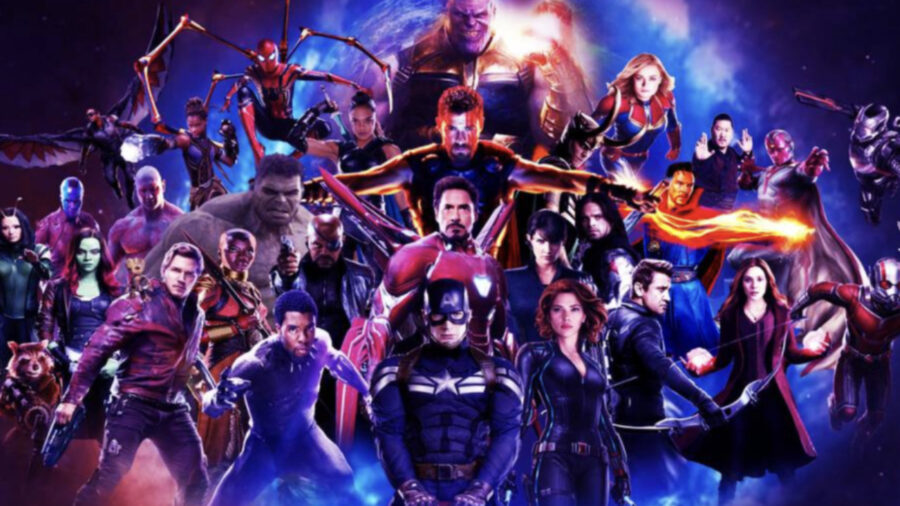
Complaints about Marvel TV shows feeling like homework are tied to broader debates about what, exactly, a movie should be. Many like the idea of a film as being a self-contained unit of entertainment unto itself. This is one (admittedly, of many) problem that certain Star Wars fans had with the Prequel Trilogy and the Sequel Trilogy: interesting characters like Count Dooku and Snoke are placed onscreen with no real introduction or fanfare. The assumption made by those in charge of Star Wars (George Lucas and, later, Disney) is that fans could simply get these characters’ backstories in various books and comics and didn’t need to see it onscreen.
The Marvel Cinematic Universe took this idea and made it much, much worse. You had to watch entire films (like the solo Iron Man, Thor, and Captain America movies) to really understand big team-ups like The Avengers. Later, Disney+ became home to shows you had to watch ahead of movies. Doctor Strange and the Multiverse of Madness makes no sense without watching WandaVision, for example, and The Marvels makes no sense without watching Ms. Marvel. This led to widespread fan complaints that Disney had basically assigned homework and that we’d need to watch eight hours of a TV show just to understand a movie.
No Homework (And No Meaning)

Initially, this wasn’t really a problem with Star Wars because The Rise of Skywalker was so bad that we went seven years before seeing a new film in the franchise. That meant that various Disney+ shows in a galaxy far, far away could mostly stand on their own. But The Mandalorian and Grogu finally brought Star Wars back to theaters, and we’ll be getting more franchise films (like Starfighter) in the coming years. Mandalorian and Grogu writer and new Lucasfilm President Dave Filoni seemingly tried to avoid the homework problem by making a movie that requires almost no prior Star Wars viewing whatsoever, a decision that became something of a double-edged sword.
On one hand, Filoni made The Mandalorian and Grogu the most accessible Star Wars film since A New Hope. If someone only vaguely remembers an episode or two of The Mandalorian Season 1, they can follow along. They know the title characters, and Din Djarin even gets a new version of his old ship back. Even if you’re a Star Wars fan who never watched the show at all, it’s easy to follow along with the plot. The Boba Fett-looking man and his Baby Yoda sidekick are the good guys, the Stormtroopers are the bad guys, and all you have to do is turn your brain off and watch.
Two Hours Of Your Life You’ll Never Get Back
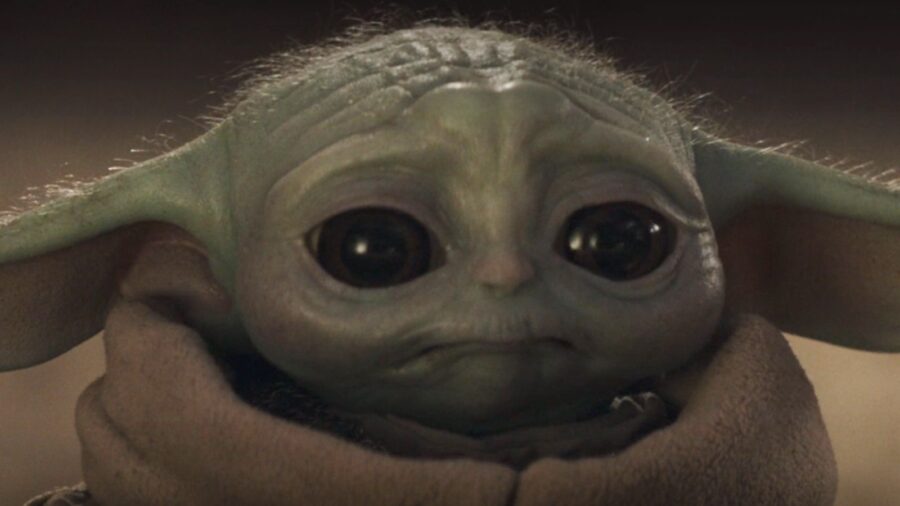
On the other hand, Filoni’s ultra-accessible writing is a big part of why The Mandalorian and Grogu failed. The movie doesn’t touch on or resolve any of the major plot points from The Mandalorian or advance Din Djarin or Grogu’s characters in any meaningful way. It’s such a disposable plot that if The Mandalorian ever gets a Season 4, you could skip the film entirely before watching the new season. If the show doesn’t get another season, though, this movie is the worst kind of finale for these characters because there are no significant payoffs to ongoing mysteries like Grogu’s past or Din Djarin’s future with the Mandalorians and the New Republic.
All of this underscores how cynical The Mandalorian and Grogu really is. Disney didn’t create this movie to provide an emotionally rewarding sendoff, and they obviously didn’t make it because the writers had a great story to tell. No, the House of Mouse just wanted to put Star Wars back in theaters with a film that would wash The Rise of Skywalker out of our mouths. The idea is to prime audiences for more Star Wars films in the coming years, but the effort backfired. If this is the best thing you can put onscreen today, why would anyone spend good money to see the crap you put onscreen tomorrow?
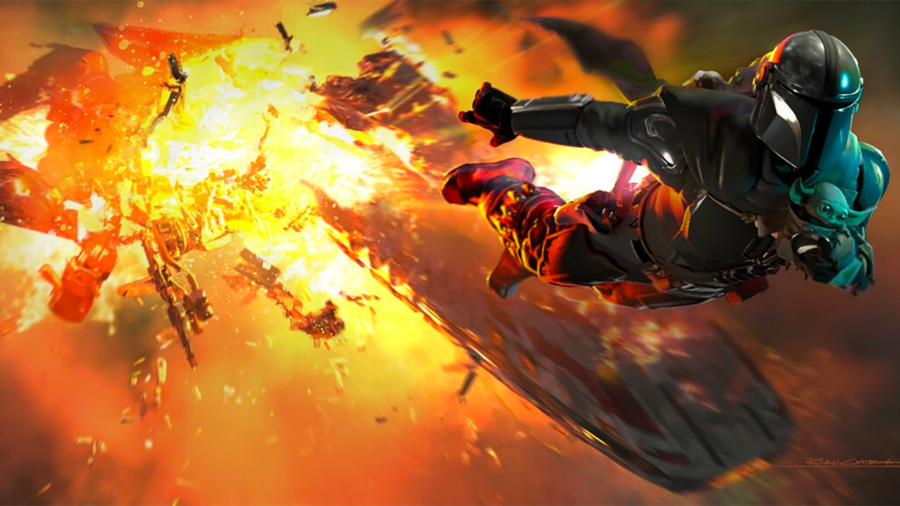
So, congrats, Dave Filoni (and cowriters Jon Favreau and Noah Kloor): you played yourself. You solved the homework problem that has plagued Marvel by creating the most accessible Star Wars film in half a century. But the result is a disconnected mess, one that pisses off fans of The Mandalorian while making everyone else wonder why this film was even made. At least failures like the prequels and the sequels were trying to tell a meaningful and impactful story. All that The Mandalorian and Grogu is telling us is that Yoda’s admonition of Count Dooku applies very much to Clone Wars showrunner Filoni: “much to learn, you still have.”

Kirby Smart, SEC Continue Complaining About College Football’s Future
Report: Serena Williams wants to make comeback at Queen's Club


