
Entertainment
Lord Of The Rings Legend Rewatched Films Before Death

By Chris Snellgrove
| Published
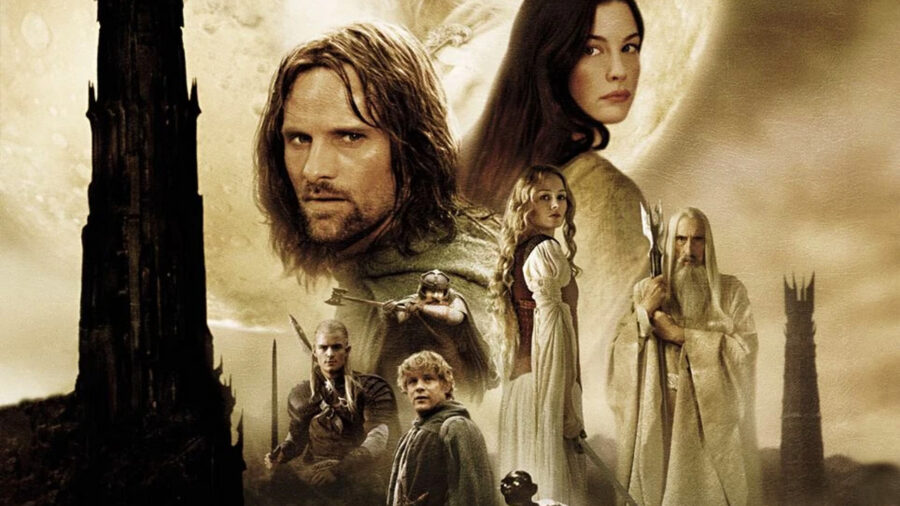
The passing of Christopher Lee remains one of the saddest celebrity deaths for fans of Lord of the Rings. The actor had a storied career spanning decades, but there was something about his performance as Saruman that helped ground Peter Jackson’s adaptation of J.R.R. Tolkien’s classic fantasy tale. But here is something that should comfort all fans of the films: according to a recent documentary, he actually re-watched Lord of the Rings the night that he died.
Christopher Lee Watched The Lord Of The Rings On His Death Bed
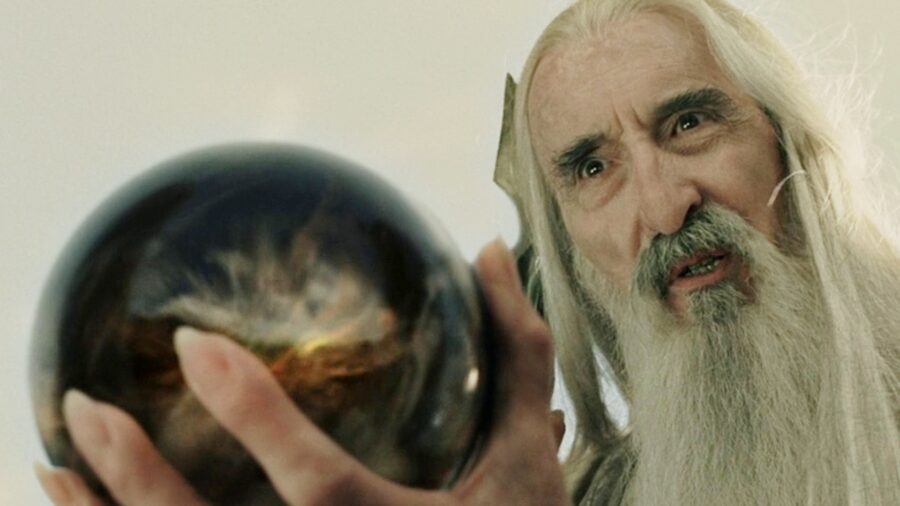
This information comes to us courtesy of the recent documentary The Life and Deaths of Christopher Lee. The acclaimed actor’s son-in-law Juan Aneiros appears in the documentary and describes how Lee was in the Chelsea and Westminster Hospital receiving care and was very optimistic that he would soon be heading home. Aneiros and his wife (and Lee’s only daughter) Christina were there, and they all watched the Lord of the Rings along with the nurses, having no idea that the actor would be dead in the morning.
According to Aneiros, it was Christopher Lee’s idea to watch Lord of the Rings that night, in part because “he loved that movie.” It was coming on television, and the actor wanted to watch the film with his family in part to give them some behind-the-scenes info. He made an offer to his daughter and son-in-law that most fans of the franchise would have loved to receive: “I’ll explain to you how the movie [was made].
Didn’t Expect Lee To Pass That Night
Christopher Lee got his wish that night, and his family sat down with him to rewatch Lord of the Rings. It’s a pleasant memory, but one that has been made understandably bittersweet by the actor’s death. Aneiros says that they left thinking that Lee was okay and would be coming home soon; later, he remembers seeing his wife’s stressed face and hearing her sad pronouncement that “daddy is gone.”
Part of what made Christopher Lee’s death so shocking to Aneiros is that he thought the man would be extremely long-lived, much like his character in Lord of the Rings. “I actually thought he was eternal,” the son-in-law said. Because of that, Lee’s sudden death was “a shock,” but the family was able to take comfort from the manner of the man’s passing.
The Christopher Lee Documentary
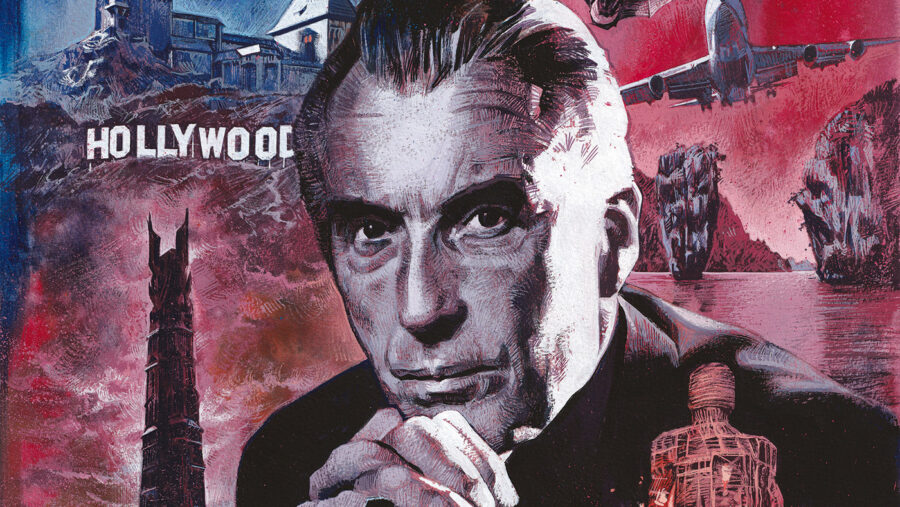
In the documentary, Aneiros reiterates something we already know about Christopher Lee: namely, that the Lord of the Rings legend passed away peacefully in his sleep. “He didn’t suffer,” Aneiros said, “he just went to sleep.” While we would have selfishly loved to see more of the talented performer in other roles, it’s comforting to know that his death involved no pain or suffering.
These days, it’s hard not to think about Christopher Lee and the original Lord of the Rings performers as the franchise tries to forge a new path for an entirely new audience. The Rings of Power show is trying to bring some of the earliest days of Middle Earth to life, but its low viewership numbers suggest that many fans would rather toss this show into the crack of Mount Doom than watch it again. One can easily imagine what Lee’s Saruman would tell Amazon executives about this very expensive (season 1 alone cost $465 million) failure: “you have elected the way of pain.”
If nothing else, that’s certainly what all of us watching it have elected for ourselves.
Source: Yahoo! Movies
Entertainment
NYT Strands hints, answers for July 23, 2026

Today’s NYT Strands hints are easy if you’re a veteran.
Strands, the New York Times‘ elevated word-search game, requires the player to perform a twist on the classic word search. Words can be made from linked letters — up, down, left, right, or diagonal, but words can also change direction, resulting in quirky shapes and patterns. Every single letter in the grid will be part of an answer. There’s always a theme linking every solution, along with the “spangram,” a special, word or phrase that sums up that day’s theme, and spans the entire grid horizontally or vertically.
By providing an opaque hint and not providing the word list, Strands creates a brain-teasing game that takes a little longer to play than its other games, like Wordle and Connections.
If you’re feeling stuck or just don’t have 10 or more minutes to figure out today’s puzzle, we’ve got all the NYT Strands hints for today’s puzzle you need to progress at your preferred pace.
NYT Strands hint for today’s theme: Hail to the chief petty officer
The words are related to the military.
Mashable Top Stories
Today’s NYT Strands theme plainly explained
These words describe military titles.
NYT Strands spangram hint: Is it vertical or horizontal?
Today’s NYT Strands spangram is vertical.
Meet The Mashable 101: Our list of the content creators shaping the internet today
NYT Strands spangram answer today
Today’s spangram is Navy Ranks.
NYT Strands word list for July 23
-
Recruit
-
Admiral
-
Ensign
-
Navy Ranks
-
Lieutenant
-
Commander
Looking for other daily online games? Mashable’s Games page has more hints, and if you’re looking for more puzzles, Mashable’s got games now!
Check out our games hub for Mahjong, Sudoku, free crossword, and more.
Not the day you’re after? Here’s the solution to yesterday’s Strands.
Entertainment
The World’s Richest Man Just Promised An AI Version Of The Odyssey, But It’s Never Going To Happen
By Chris Snellgrove
| Published

Every day, we get another reminder that the internet isn’t real life. For example, right-wing voices have been hating on Christopher Nolan’s The Odyssey for months, backlash that mysteriously began when the director cast a Black woman and a trans man in prominent roles. The haters spent plenty of time, energy, and endless social media posts trashing the film and predicting it would fail because it’s woke garbage. Of course, when the movie actually premiered, it was a critical darling that made over a quarter of a billion dollars in its first weekend.
In a sane world, that would have ended the discussion. The movie thousands of people thought would fail succeeded; end of story, right? Well, you’re not in a sane world, bucko, you’re in Hellworld. Case in point? Spurred on by comments from his loyal army of sycophantic followers, Elon Musk has now pledged to use his pet AI Grok to create a more “historically accurate” version of The Odyssey. His fans are excited, but I’ve got some bad news: not only would such a film be a critical and commercial flop, but there’s no way in hell this movie ever comes out.
The Odyssey: Video Game Cutscene Edition
Why am I so confident that Elon Musk’s Grok-powered version of The Odyssey will never come out? Simple: while Musk has achieved massive financial success (he was, for a moment there, the world’s first trillionaire), he has spent much of the last decade promising things that just never happened. Like, he previously promised SpaceX would be landing humans on Mars by 2025 at the latest; not only did that never happen, but SpaceX’s stock value is currently tumbling following several engine failures and an aborted flight.
The list goes on. Fully self-driving cars straight out of a sci-fi movie? He made the promise, but that never happened. The Hyperloop, announced in 2013? The project shut down in 2023. The pledge to have a million robotaxis on the streets by 2020? Yeah, that project died quietly amid the global COVID-19 pandemic. For all of his successes, this is who Elon Musk is: a relentless hypeman who promises more than he can deliver and tries to cover up his failures with more breathless announcements that he thinks his biggest fans will respond well to.
This AI Movie Is Its Own Trojan Horse

That’s what this AI Odyssey announcement is about. After years of being lauded by liberal fans as a real-life Tony Stark, Musk went fully right-wing, complete with pivotal endorsements of Donald Trump and a temporary role in Trump’s government. As such, Musk has become one of the most popular figures in conservative circles. While his political allegiances shifted, one thing never changed: Musk’s absolutely palpable desire for people to like him. Accordingly, he spends plenty of time on X, engaging with conservative fans and platforming both conservative thoughts and movies (like Citizen Vigilante). By and large, his fans hate Christopher Nolan’s The Odyssey, so he has pledged to give them an alternative.
Once again, Musk is telling his fans what they want to hear. Hate that “woke” movie everyone’s talking about? Well, he’ll make his own, and he’ll do it without help from Hollywood! That’s the promise, at least, and Musk’s fans are eating this up with a fork and spoon. None of them seem to think that this project, like so many others, will quietly disappear. Or that the man who has spent years running a social media platform into the ground might not actually be the best guy to deliver an actual film and not sloppy shorts that look like a PS4 cutscene.
Elon Musk’s Movie Is Already History

But let’s say, for the sake of argument, that Musk actually makes his more “historically accurate” version of The Odyssey. Why does anyone think this thing will be watchable, much less better than Christopher Nolan’s version? Not only does the proof of concept suck, but Musk’s rejection of Hollywood has seriously reduced his talent pool for things like voice acting, art design, and so on. Plus, the very announcement brings up an obvious question: why has Musk given himself until the end of the year to make this film? Nolan shot a real movie with real people in only three months, so why will it take Grok’s prompt engineers almost twice as long to make their own?
The answer is simple: this movie is never going to see the light of day. Elon Musk’s biggest fans are frothing at the mouth about Nolan’s The Odyssey right now, but soon enough, they’ll have something new to obsess over, like Spider-Man saying something too woke in Brand New Day. As they move on, the once and future (?) trillionaire will move on as well, making even more promises he never plans to keep. With any luck, all of the people demanding an AI version of The Odyssey will start clamoring for an AI adaptation of another ancient text. May I suggest The Bible, complete with a historically accurate, very brown Jesus Christ?
Entertainment
R-Rated Supernatural Thriller Hides Its Dark Truth In The Tapes
By Robert Scucci
| Published

2024’s Shelby Oaks is a unique watch because it effortlessly integrates found-footage filmmaking into a more traditional storytelling framework. Much of the first act plays out like a true crime documentary, establishing the mystery and the characters navigating it. Then the perspective shifts to the footage the documentary is about, and suddenly we’re in a straight-up supernatural thriller. While I’m a huge fan of found footage and analog horror, I can’t recall another film that switches filming styles depending on the scene, which makes Shelby Oaks, as far as I can tell (but please correct me if I’m wrong), a sample size of one.
Granted, I haven’t seen every found-footage film ever released, and I have my blind spots like everybody else, but my main takeaway was that Shelby Oaks earns serious points for its camera work and the layered storytelling built around it. While the ending was a bit predictable for my tastes, everything leading up to it was solid, and I’m glad I sat down with this one because it’s incredibly fluid in its delivery, allowing its mystery to unravel naturally.
From YouTubing To Doom Snooping

Shelby Oaks starts out like a documentary, introducing us to Mia Brennan-Walker (Camille Sullivan). Mia’s younger sister, Riley (Sara Durn), disappeared 12 years earlier while working on a project for her YouTube series, The Paranormal Paranoids. While investigating a prison, three of Riley’s collaborators, Laura (Caisey Cole), David (Eric Francis Melaragni), and Peter (Anthony Baldasara), also disappear. Their bodies are eventually recovered, horrifically mutilated. The only lead police have is one of the group’s two recovered video cameras, which contains footage of Riley during what many assume were her final moments.
This entire opening sequence blends documentary and found-footage filmmaking while establishing Shelby Oaks’ central conflict: Mia believes Riley is still alive, everybody else thinks the YouTube channel was an elaborate hoax, and her husband Robert (Brendan Sexton III) is ready to leave her because her obsession with the case has consumed her life after years without answers.

That all changes when a man later identified as Wilson Miles arrives at Mia’s doorstep carrying a tape labeled “Shelby Oaks,” the town where Riley was last investigating. After handing over the tape, Wilson tells Mia, “She finally let me go,” before blowing his head off on her front porch. It’s a horrific sequence that comes completely out of nowhere, but it’s enough to convince Mia that whoever “she” is may have imprisoned Riley as well.
While examining the tape and some of Riley’s personal effects, Mia comes to the horrifying conclusion that Riley had been stalked by a demon ever since suffering night terrors as a child, and that those experiences likely fueled her fascination with the paranormal in the first place. Her amateur sleuthing sends her down a twisted path involving demonic hellhounds, incubi, and the revelation that Riley, and possibly Wilson, were caught up in something much larger involving forces she doesn’t begin to understand until she discovers what, who, and where Wilson escaped from.
This Could Totally Become A Franchise

Everything about Shelby Oaks is expertly crafted, but I’m most impressed by how effortlessly it shifts between filming styles. It almost feels like the camera zooms out from the initial source of terror, giving us a more conventional supernatural mystery centered on Mia and her investigation. She repeatedly combs through the recovered footage for clues, but those investigation scenes aren’t presented as found footage themselves. That approach lets you experience Riley’s terror firsthand before stepping back to piece everything together alongside Mia.
Once I got to the big third-act reveal, I was a little underwhelmed because my immediate reaction was, “Oh yeah, that makes sense,” and then… that was it. Sometimes that’s just how movies go, and I’m not too upset about it because Shelby Oaks takes enough creative swings to make the entire experience worthwhile.

What I’m more interested in seeing, though, is a prequel that unpacks what else is on those tapes. Shelby Oaks ends in a way that hints at a sequel, though it works perfectly well as a standalone film. A prequel, however, would be next level. My thinking is that the tape Mia receives from Wilson is just one of many recorded during the 12 years Riley was missing. A found-footage compilation built around those tapes could make for some incredible worldbuilding that pushes Shelby Oaks into franchise territory, and that’s something I’d absolutely like to see.
I’m just spitballing here, however, and right now all we have is Shelby Oaks. Overall, I was impressed with the filmmaking and the buildup leading into the third act. I’ll admit I was a little underwhelmed by the conclusion, but I’ve also seen a ton of movies like this, so maybe I’m just being a tad cynical. I’d definitely recommend it to my horror-loving friends.

As of this writing, you can stream Shelby Oaks on Hulu.


Royals' Salvador Perez hits 317th homer, ties George Brett's club mark
NYT Strands hints, answers for July 23, 2026


