
Entertainment
Liam Neeson's Most Overlooked Action Thriller Was A Violent Hit With Women

By Zack Zagranis
| Published
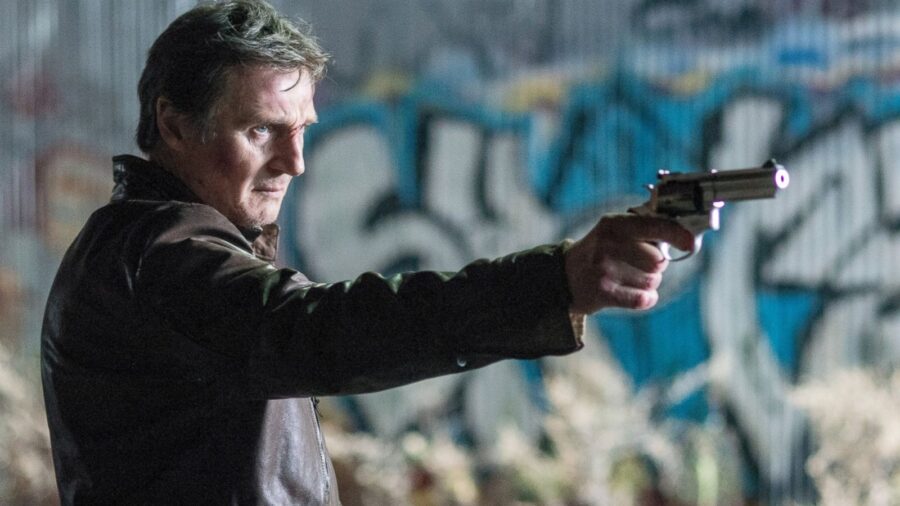
Everyone knows by now that Liam Neeson has a particular set of skills that he’s acquired over a long career in Hollywood. Skills that make him a dream come true for action movie fans. Those skills are on full display in the 2015 underrated action gem Run All Night.
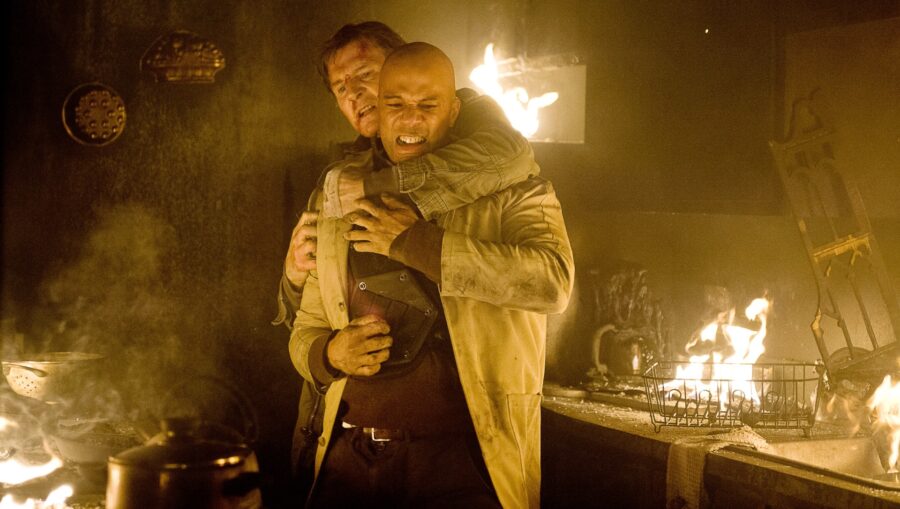
In Run All Night, Liam Neeson plays a perpetually drunk former hitman, Jimmy “The Gravedigger” Conlon, forced to go against his best friend and former boss Shawn Maguire, played by Ed Harris, in order to save his son, Mike Conlon, played by Joel Kinnaman. Along with Neeson and Harris, the film also stars Daredevil‘s Vincent D’Onofrio as Detective John Harding and Genesis Rodriguez of Tusk fame.
Run All Night was directed by Jaume Collet-Serra from a screenplay written by Brad Ingelsby, creator of the popular HBO Max mini-series Mare of Easttown. The film marked the 3rd collaboration between Liam Neeson and Collet-Serra. The duo previously worked together on the movies Unknown and Non-Stop.
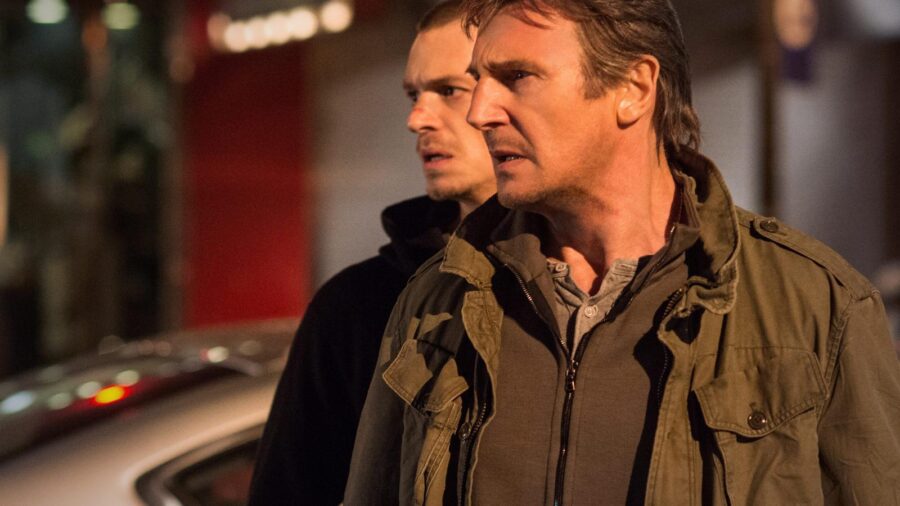
In 2012, Warner Bros. purchased Ingelsby’s script, then titled The All-Nighter, for six figures. The following year, Liam Neeson joined the cast right around the time Jaume Collet-Serra came aboard the project. The movie was scored by frequent Zack Snyder collaborator Junkie XL, who thought it would be more interesting to base the score on emotional beats rather than let the action dictate the musical direction.
Run All Night was a minor Box-Office success, grossing $26.5 million domestically and another $45.1 million overseas, for a grand total of $71.56 million, against a production budget of $50 million. Interestingly, the audience for the Liam Neeson action-thriller was 52% female on its opening weekend, a number considered high for an all-male action movie. The figure just helps to further dispel the stereotype that only guys like to see people crashing cars and beating the crap out of each other.
Run All Night is just one of several action movies starring late-career Liam Neeson. Ever since 2008’s Taken, Neeson has focused almost exclusively on action/crime movies. In addition to Taken 2 and 3, Neeson has appeared in at least 20 other movies that IMDb considers either action, crime, or both.
To say the man is being typecast is an understatement. To put it another way, when a trailer for a Liam Neeson movie comes on, most fans assume it’s a Taken sequel until told otherwise.
That’s not to say that the Northern Ireland-born actor hasn’t dabbled in other genres in the last 15 years. In the last decade and a half, Liam Neeson has managed to squeeze in a few romantic dramas, such as Made in Italy and Ordinary Love, along with a handful of cameos here and there. Perhaps Neeson’s oddest collaborations have been with American Dad creator Seth MacFarlane, who cast him as the lead in 2025’s The Naked Gun reboot.
MacFarlane lso put Liam Neeson in his other live-action endeavors like A Million Ways to Die in the West, Ted 2, and The Orville, as well as using the actor for a few bits on Family Guy. Neeson is known primarily for serious roles, making it even weirder that Seth casts him exclusively as comedy relief. For whatever reason, it works.
Neeson’s cameo in Ted 2 as a grocery store customer buying Trix is easily the funniest gag in the movie.
Cameos aside, action movies really have become Liam Neeson’s bread and butter lately. Not just any action movies, either, but the kind where an old, grizzled ex-CIA agent/mob hitman/bank robber comes back and grimaces his way through one last job. His characters are the grimdark versions of the wisecracking, one-liner-spouting action heroes of the ’80s played by actors like Schwarzenegger and Stallone.
Where Arnold’s characters would snap a foe’s neck on an airplane and then tell the flight attendant, “Don’t disturb my friend. He’s dead tired.” Liam Neeson’s character gives the bad guys a speech that basically amounts to “I’m a highly trained killer, and I’m gonna hunt you down and murder you.”
But that’s ok. Liam Neeson, after all, has a particular set of skills that includes playing badasses over 60. Why not stick to what you’re good at? If Neeson’s particular kind of bleak, gritty action movie is your thing, you could do a lot worse than Run All Night.
Entertainment
The Star Trek Sex Scene That Was Almost Too Much For Audiences
By Chris Snellgrove
| Published

If there’s one thing Star Trek has always been weird about, it’s sex. Sure, The Original Series liked to titillate audiences, but broadcast restrictions kept them from getting too spicy. The Next Generation was comparatively celibate, to the point that Patrick Stewart would beg new writers to get Captain Picard laid. Eventually, the pendulum swung the other way: Discovery gave us an explicit sex scene that traumatized an unwilling participant while traumatizing the audience with the sight of naked Klingon breasts.
Obviously, it’s hard for this franchise to get sex scenes just right. When they aren’t offensive, they’re just downright goofy, like the time Dr. Crusher boned down with the Scottish bad boy that lived in her mother’s sex toy candle. Understandably, Star Trek: The Next Generation showrunner Michael Piller was worried about how audiences would react to a sex scene with Deanna Troi in “The Price” because fans kept writing in complaints before the episode even aired. But he didn’t get a single complaint after the episode, proving that audiences secretly loved seeing everyone’s favorite Betazed getting shagged!

In “The Price,” the Enterprise is hosting a number of intergalactic dignitaries who are negotiating for the rights to a major prize: access to a seemingly stable wormhole from the Alpha Quadrant to the Gamma Quadrant. One of the negotiators is secretly empathic, so it’s no surprise when he hits it off with empathic Counselor Deanna Troi. The two form a hot and heavy sexual relationship, one that only comes to an end when Troi must reluctantly reveal how her new lover has been secretly using his own Betazed abilities to manipulate negotiations from the beginning.
When previews for “The Price” first aired, the fandom collectively decided they were going to hate the scene where Troi takes Ral (her new bad-boy boyfriend) to bed. There are many possible reasons for this. Some fans hated to see Troi hook up with anyone but Riker, her fellow officer and one true Imzadi. Meanwhile, some fans hated to see Troi hook up with anyone but themselves. Whatever their motivation, more than a few fans decided to write to the Star Trek: The Next Generation crew to complain about the impending onscreen erotica.
“I’m Sensing Great Thickness, Captain”

This information comes to us courtesy of Michael Piller. As written in Captains’ Logs: The Unauthorized Complete Trek Voyages, the TNG showrunner later lamented that “It was never meant to be outrageous television.” Despite this, “We got quite a few letters from outraged people before it aired.” Obviously, these fans thought Star Trek was about to get downright salacious. However, this story has an unexpected punchline: Piller noted that “nobody wrote after it aired.” The implication here is that nobody, even the fans who thought they would despise it, actually hated this sci-fi sex scene.
By today’s standards, the sex scene is relatively mild. There isn’t any nudity or simulated sex onscreen, and the whole thing was more sensual than anything else. Ral gives her a hot oil foot massage, she ends up straddling him, and the two spend plenty of time baring their souls while staring into each other’s eyes. Sure, it’s not as explicit as something you might find over on GornHub (what are you doing, step-reptile?!?), but by the standards of early ‘90s TV, this scene was downright smoking.

Judging from the complete and utter lack of complaints, it seems like the fandom really enjoyed this sensual scene. The franchise might have had trouble getting things just right over the years, but it seems like the TNG writers and producers finally found the right recipe for a successful Star Trek sex scene. Just take half a cup of foot stuff, eight ounces of diaphonous clothing, and three cloves of Marina Sirtis on top. Throw in a spandex-clad exercise scene as an appetizer and baby, you’ve got yourself one hell of a meal!
Entertainment
Mashable will send the best deals directly to your phone daily — how to sign up for free
Mashable Deals
I spend a lot of time trawling through the depths of the online world to find deals that are genuinely worth your time and money. And no, I’m not talking about those heavily discounted products that have actually been stuck at that “low price” for months. I’m talking about limited-time discounts on the products that I’d actually recommend to a friend.
That’s the aim of the game for Mashable’s team of shopping experts. We’re constantly scanning leading retailers like Amazon, Walmart, and Best Buy to bring you new opportunities to save your precious cash. But we’re not satisfied with the current state of affairs. We don’t want you to miss a thing, and that’s why we landed on the Mashable Deals text group.
Become a subscriber of the Mashable Deals text group and I’ll send you the very best deals directly to your phone. You don’t need to pay anything to get access to these deals. Simply sign up above and you’ll be the first to know about huge savings on MacBooks, limited-time discounts on AirPods, price cuts on items under $50, and all of those other deals that drop throughout the week.
I’ll send a Deal of the Day most days. During major shopping events like Prime Day and Black Friday, we may bump this up to a couple of sends per day. But that’s only if we come across multiple offers that are truly worth the send. If we track down a bunch of impressively low prices during a busy shopping event, we’ll drop those in a single text.
We’re not going to spam you. The daily deals that we send to the Mashable Deals text group will have been researched and assessed by the team with the same level of care that we dedicate to the rest of our shopping content.
Mashable Deals
Signing up for the Mashable Deals text group is quick, safe, and totally free. You can also opt out anytime you like. I hope you give it a try.
Entertainment
Mads Mikkelsen Steals Dogs and Jumps Out of Moving Cars in Unrated New Black Comedy
By Chris Sawin
| Published

The Last Viking has an opening and an ending that feels like a hand-painted fairy tale revolving around a Viking clan where everyone remains equal; young and old, fat and skinny, ugly or beautiful – everyone is treated the same. But one day, during a battle, a young Viking loses one of his arms.
In comparison to everyone else, he feels ugly and less than everyone else. His father, the chieftain, witnessed this and ordered every male in the clan, toddler, adult, or elderly, and everything in between, to chop off one of their arms. Part of it was to help his son feel better, but it was also to keep the clan equal among themselves.

In the present day, Anker (Nikolaj Lie Kaas) has just committed robbery and murdered someone in the process. He takes a duffel bag full of money and locks it in a locker. He instructs his brother, Manfred (Mads Mikkelsen), to swallow the key and retrieve the bag only once everything has died down. He then gives Manfred specific instructions to bury the bag in a designated place near their mother’s house.
Anker is sentenced to 15 years in prison. Once he gets out, Manfred refers to himself as John W. Lennon and has no memory of where he buried the loot. As Manfred is going through something irregular, Anker is forced to help him in some capacity so he can be well enough to remember where the money is.
Life After The Heist

Written and directed by Anders Thomas Jensen (Riders of Justice, Men and Chicken), The Last Viking is a crime drama with some dark comedy thrown in for good measure. Manfred flips out whenever someone still calls him Manfred. He’s been stealing the neighbor’s dogs and stabbing their sister, Freja (Bodil Jorgensen), in the thigh because she didn’t call him John. Manfred also likes to jump out of moving cars, and he threatens to kill himself by shoving a fondue fork in his head. Both he and Anker have terrible tempers, as well.
The film follows Anker as he tries to shake some sense into Manfred. He wants his money so he can get away from his brother forever. Manfred has experienced some sort of severe trauma that has resulted in him having dissociative identity disorder. While we all exist as one identity in one reality, Manfred has several personalities that exist in different realities. They find this out after Manfred is committed to a psych ward.

Manfred’s psychologist, Lothar (Lars Brygmann), who is obsessed with IKEA, believes that, since Manfred believes he is one of The Beatles, he needs to unite with others who share his condition and believe they are the other Beatles. Once united, they can play Beatles songs together and, hopefully, regain some sense of normalcy.
Lothar tracks down a mute who believes he’s Ringo and Anton (Peter During), who has more than 40 personalities, including Bjorn from ABBA, Heinrich Himmler, and Paul McCartney and George Harrison. Anker and Manfred’s mother’s house is now owned by a couple who rent it out as an Airbnb; a former hand model named Margrethe (Sofie Grabol) and her much older husband, Werner (Soren Malling). Werner has been trying to write and illustrate a children’s book for the past five years, but has never finished it.

Lastly, there’s Flemming (Nicolas Bro), the flat owner and maintenance man to the flat Anker, Manfred, and Freja live in. Flemming wants all of the money that Anker has been hiding. He was paid before Anker went to prison, but he spent it all and now wants whatever is left. He basically hunts Anker the entire film and has a nasty streak despite his calm demeanor.
Drama And Trauma With A Side Of Humor
Anders Thomas Jensen makes this eclectic cast of characters feel necessary in the grand scheme of things. The Last Viking may centrally be about Anker and Manfred, but the way the story incorporates everyone else is extraordinary. There is humor in the film, but the drama and trauma keep your interest. Why Manfred decided to change his name and why Anker can’t remember certain things about his past is explained, and it’s devastating.

There’s a broken mentality to every character in the film, but the concept of either feeling less broken or being a bit more whole as a group is explored in The Last Viking. Every question you might have, like how the film’s title factors into the story, is explored to meaningful satisfaction. The one issue is that I wish the humor hit harder. For a film that is so serious, the comedy is extremely subtle and lighthearted. Maybe devoting more of the film to humor would have taken away from the overall story, which is already so well-connected and has a solid conclusion.
The Last Viking is stupidly sentimental and surprisingly sweet. It’s a film about a bunch of individuals who are completely and totally dysfunctional on their own but somewhat functional together.


The Last Viking hits theaters and digital/on-demand on May 29.

Brewers LHP Angel Zerpa to have Tommy John surgery
Chiefs GM: Patrick Mahomes 'way ahead of schedule'


