
Tech
Klarna CEO doubts that other companies will replace Salesforce with AI
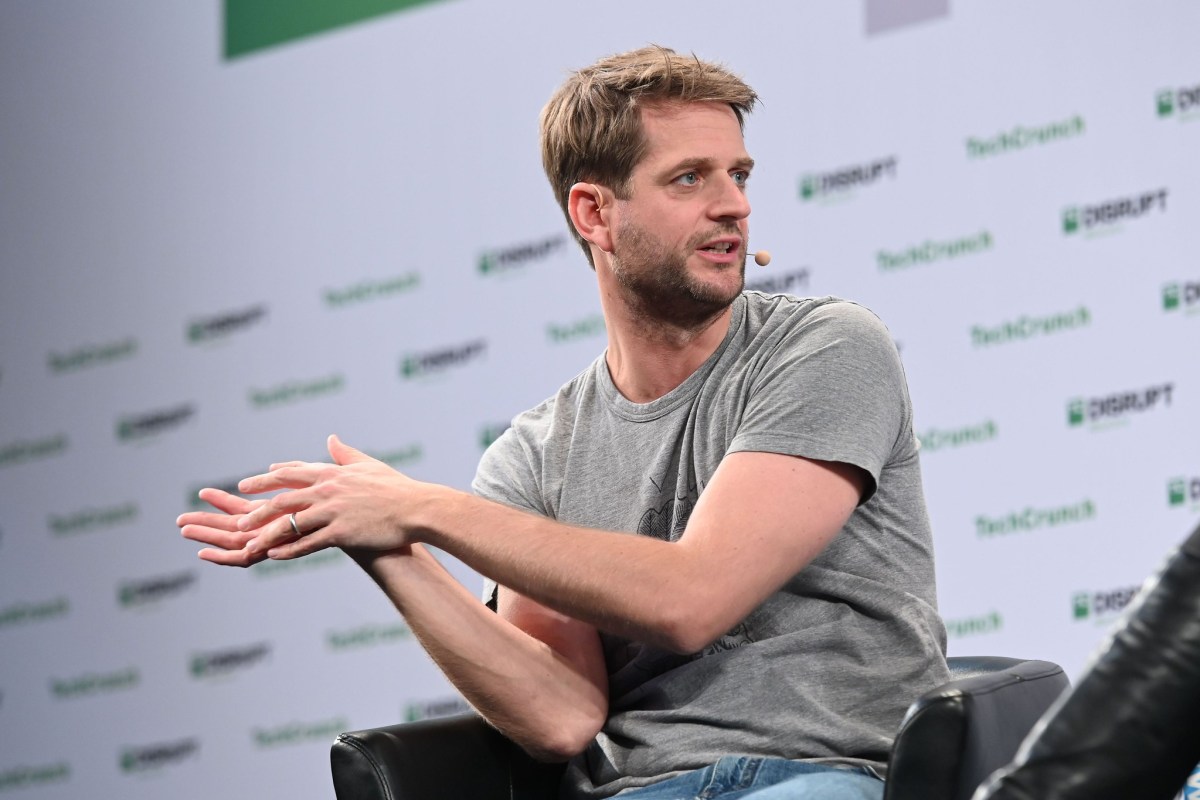
The founder and CEO of IPO-bound fintech Klarna took to X to once again explain why his company ditched Salesforce’s flagship CRM product about a year ago in favor of its own homegrown AI system.
But this time, Sebastian Siemiatkowski emphasized that he doesn’t think others will — or should — follow his lead. “I don’t think it is the end of Salesforce; might be the opposite,” he wrote.
The news that Klarna had developed its own in-house AI system based on OpenAI’s ChatGPT that allowed it to drop its contract for Salesforce CRM went viral in September. This came after Siemiatkowski spoke about it during an investor day, explaining that the project led to replacing 700 full-time contract employees and a savings of approximately $40 million annually.
Salesforce founder and CEO Marc Benioff then expressed skepticism about how, exactly, Klarna is managing its customer data and meeting its compliance needs. “Suddenly, @Benioff was asked on stage why Klarna was leaving Salesforce. I was tremendously embarrassed,” Siemiatkowski wrote.
So, as news circulates that the company could go public next month — meaning Klarna’s confidential financial information should be made public soon — Siemiatkowski is clarifying.
As a fintech in a highly regulated industry, he doesn’t want the public to think that Klarna is uploading all of its customers’ data into OpenAI. Instead, he said on Monday that the project involved taking the data stored in the many SaaS systems Klarna was using — including Salesforce — and consolidating onto its own internally developed tech stack.
While Siemiatkowski didn’t detail exactly where Klarna moved all of this data, he did name Swedish company Neo4j and its graph database as a product Klarna is using.
“So no, we did not replace SaaS with an LLM, and storing CRM data in an LLM would have its limitations. But we developed an internal tech stack, using Neo4j and other things, to start bringing data=knowledge together,” he wrote.
“We allowed our internal AI to use this knowledge, and we realised with the help of @cursor_ai we could quickly deploy new interfaces and interactions with it,” he explained.
This is all the latest iteration of an ancient debate when it comes to enterprise software: build it versus buy it.
Siemiatkowski doesn’t think most companies will opt to build their own next-generation AI-centric software.
But he still thinks that the SaaS industry is heading for major consolidation. “Will all companies do what Klarna does? I doubt it. On the contrary, much more likely is that we will see fewer SaaS consolidate the market, and they will do what we do and offer it to others,” he wrote.
Tech
AI evaluation startup Braintrust confirms breach, tells every customer to rotate sensitive keys

AI evaluation startup Braintrust has urged customers to revoke and replace their API keys after an earlier breach of customer secrets.
According to an email sent to customers Monday and seen by TechCrunch, the startup confirmed “unauthorized access” in one of its Amazon Web Services (AWS) cloud accounts, which contained API keys used by customers for accessing cloud-based AI models.
“We’ve communicated with one impacted customer and to date have not found evidence of broader exposure,” read the email.
The email asked “every customer to rotate” any of the API keys that they store with Braintrust.
Braintrust disclosed the security incident on its website on Tuesday. “The incident has been contained, and in the meantime, we’ve locked down the compromised account, audited and restricted access across related systems, and rotated internal secrets.”
The company said the cause of the breach is under investigation.
Braintrust spokesperson Martin Bergman told TechCrunch that the company sent the email to customers “out of an abundance of caution” and that it “confirmed a security incident, but there is no evidence of a breach at this time.”
Techcrunch event
San Francisco, CA
|
October 13-15, 2026
Braintrust provides a platform designed for companies to monitor AI models and products. Founder and CEO Ankur Goyal previously told TechCrunch that Braintrust is like an “operating system for engineers building AI software.” The startup raised $80 million in a Series B funding round in February, which valued the company at $800 million.
Jaime Blasco, the co-founder of cybersecurity startup Nudge Security who received a breach email alert from Braintrust, told TechCrunch that the incident could have “downstream implications for affected customers,” like AI companies that rely on Braintrust.
Contact Us
Do you have more information about this breach? Or other data breaches? From a non-work device, you can contact Lorenzo Franceschi-Bicchierai securely on Signal at +1 917 257 1382, or via Telegram and Keybase @lorenzofb, or email.
Hackers frequently target corporate accounts on cloud services or third-party platforms as an effective way of stealing secrets, like API keys. Once hackers get their hands on API keys, they can log into the company or customers’ systems appearing as if they are legitimate users, without needing to break into the target company’s systems.
CircleCI, a company that provides development products for software engineers, was hit with a similar cloud data breach in 2023, and similarly asked its customers to rotate “any and all secrets” they stored with the company.
More recently, an EU cybersecurity agency said hackers were able to steal 92 gigabytes of data from a compromised AWS account used by the European Commission. The breach affected 29 other EU entities and the data of dozens of internal European Commission clients.
When you purchase through links in our articles, we may earn a small commission. This doesn’t affect our editorial independence.
Tech
DOJ says ransomware gang tapped into Russian government databases
A U.S. court has sentenced Latvian hacker Deniss Zolotarjovs to more than eight years in prison following his conviction for carrying out ransomware attacks.
The Justice Department accused the hacker of working for a notorious Russian ransomware gang called Karakurt, which was led by former leaders of the Akira and Conti ransomware gangs, who were sanctioned by the U.S. Treasury for their alleged links to Russian intelligence.
Prosecutors said members of Karakurt targeted U.S. government entities with attacks that disrupted 911 emergency dispatch systems, and also stole children’s health information. Zolotarjovs was responsible for “escalating pressure” on victims who resisted the gang’s ransom demands, the DOJ said.
While Zolotarjovs’ conviction is notable in itself, U.S. prosecutors said in their press release that the ransomware gang relied on access to Russian government databases and law enforcement connections to intimidate its victims, further underscoring the links between the activities of cybercriminals and the Russian state.
Security researchers have long accused the Russian government of shielding ransomware gangs and malicious hackers from Western law enforcement, including by refusing to extradite its citizens accused of damaging hacks. U.S. officials in recent years have said Russia has become a “safe haven” for cybercriminals, citing the threat from ransomware as one of the top national security challenges facing the United States.
According to the DOJ, the Karakurt ransomware gang “fueled corruption” in the Russian government; these ties to officials allowed the gang’s leaders to avoid paying taxes to the state, and the gang regularly paid bribes to officials who exempted members from compulsory Russian military service.
The Russian Foreign Ministry did not respond to TechCrunch’s request for comment.
Per the DOJ, the Karakurt gang targeted more than 54 companies, with at least $15 million in ransoms paid by the victims. Karakurt does not appear to be an active ransomware gang; some operations change owners and names, sometimes to evade sanctions.
Zolotarjovs was arrested in the country of Georgia in 2023 and extradited to the United States in August 2024. He later pleaded guilty.
(h/t @realhackhistory.org)
When you purchase through links in our articles, we may earn a small commission. This doesn’t affect our editorial independence.
Tech
How Elon Musk left OpenAI, according to Greg Brockman
In late August 2017, key figures at OpenAI (then a small nonprofit research lab) gathered to discuss how they would create a for-profit to commercialize its technology and raise the funds needed to realize AGI.
Elon Musk was demanding full control of the company and had just given each of his co-founders a Tesla Model 3. CTO Greg Brockman said he saw that as way of buttering them up at a time when Musk and Sam Altman were vying to win support for their respective visions of the company’s future. OpenAI’s head of research, Ilya Sutskever, had commissioned a painting of a Tesla to give Musk during the meeting as a friendly gesture.
The conversation didn’t follow that mood: When Musk was told the others would not accede to his demand for control of the company, Brockman said he got angry and upset. He sat for several minutes thinking quietly.
Then, in Brockman’s telling, Musk said, “I decline.” The SpaceX and Tesla founder “stood up and stormed around the table…I thought he was going to hit me. He grabbed the painting and started to storm out of the room. And then he turned around and said, ‘When will you be departing OpenAI?’”
Brockman and Sutskever didn’t leave or commit to Musk’s vision. Musk stopped his regular donations to the company’s operating budget, and within six months, he would leave the board, though he paid for office space the company shared with Neuralink until 2020.
As today’s legal battle over the future of OpenAI proceeds, scrutiny has settled on a key period in 2017 when the organization’s original co-founders disagreed about who would control its future, eventually bringing us Musk’s lawsuit against his co-founders.
We have yet to hear from Sam Altman, but OpenAI president Greg Brockman testified for two days, often referencing a personal journal that offers a rare insight into what it’s like to be a 30-year-old tech executive in a pitched battle with Elon Musk.
Techcrunch event
San Francisco, CA
|
October 13-15, 2026
“It’s very painful,” Brockman said of the publicity around the journal, which he called “deeply personal writings that were never meant for the world to see. [But] there’s nothing in there I’m ashamed of.”
Cutthroat negotiations between startup founders are rarely shared so publicly, especially when a company becomes as world-changing as OpenAI.
We saw a recent taste of this rancor when OpenAI’s lawyers shared a text message Musk sent to Brockman two days before the trial began: “By the end of this week, you and Sam will be the most hated men in America. If you insist, so it will be.”
The jury won’t see that note, but Musk’s lawyers have done their best to realize its spirit. They are trying to show the court that Altman and Brockman “stole a charity,” while OpenAI’s legal team tries to show that Musk had the exact same plan in mind.
The inciting incident for all of this was when an OpenAI model defeated the top human player in the video game DOTA II. Brockman said that convinced everyone in the organization that compute was the key resource to create powerful AI tools, but that fundraising purely as a nonprofit would be insufficient.
That led to talks about a for-profit subsidiary, of which Musk wanted “unequivocal” control, at least at the start. The other founders proposed equal shares, and perhaps more equity commensurate with a cash investment. Another idea on the table was somehow connecting OpenAI to Tesla’s AI work. Shivon Zilis, an OpenAI advisor who acted as a go-between for Musk and the team there, said there were more than 20 variations on the plan.
But when the other founders wouldn’t give Musk control, their partnership unraveled.
“It should not be the case that there exists one person with full and absolute control over OpenAI,” Brockman testified. Brockman and Sutskever discussed a plan to kick Elon off OpenAI’s board in order to move forward, resulting in November 2017 journal entries that Musk’s lawyers have focused on.
‘[C]an’t see us turning this into a for-profit without a very nasty fight,” Brockman wrote. “[I’m] just thinking about the office and we’re in the office. and his story will correctly be that we weren’t honest with him in the end about still wanting to do the for profit just without him….btw another realization from this is that it’d be wrong to steal the non-profit from him. to convert to a b-corp without him. that’d be pretty morally bankrupt. and he’s really not an idiot.”
That “steal the non-profit” line may seem damning, but the context, according to Brockman, was whether or not to try and toss Musk off the board. They ultimately did not do that. Musk left the board voluntarily in February 2018, concluding that “OpenAI is on a path of certain failure,” saying he planned to focus more on AI at Tesla.
Brockman described his reflections as an effort to determine whether he would be satisfied with his work life.
“This is the only chance we have to get out from Elon,” he wrote during the talks. “Is he the ‘glorious leader’ that I would pick? We truly have a chance to make this happen. Financially what will take me to $1B?”
That last reflection was also seized on by Musk’s lawyers as a sign that Brockman was thinking more about his personal wealth than the nonprofit’s mission. Brockman said his current stake in the company is worth almost $30 billion, which became an opportunity for Steve Molo, the main trial attorney for Musk, to berate him.
“Why didn’t you take the $29 billion more than the billion you said you would be good with, and donate that to the charity?” Molo demanded.
“Look at what we accomplished,” Brockman replied. “The OpenAI nonprofit has over $150 billion of OpenAI equity value. That is something we have built through hard work, blood, sweat, and tears, all this time since Elon has left.”
Molo also dwelt on emails from where Brockman said he will donate $100,000 to OpenAI, something he never did. Ironically, Brockman might be best known to the public for making the largest donation of the 2025 political cycle, $25 million given to MAGA Inc., a SuperPAC supporting President Donald Trump, but that didn’t come up in the trial.
Molo did mock Brockman’s description of the charged meeting around his control of the company as Musk being “mean” to Brockman, and suggested that Brockman didn’t understand the governance issues the way Musk, a serial founder, did.
Brockman, though, said Musk didn’t understand AI. “He did not and does not know AI,” he testified, describing Musk dismissing an early demonstration of the software that would become ChatGPT. “We did not think he was going to spend the time required to actually get good at it.”
“The fact that Elon saw this very early version of the research, that really set all these things in motion, [and] didn’t recognize that spark — that was exactly the kind of thing that was critical to avoid happening in this environment,” Brockman said.
In 2019, OpenAI would create a for-profit and use it to raise $1 billion from Microsoft. The company would raise a further $13 billion from the software giant over the next four years, fueling its rise as the leading AI frontier lab. It also fueled the net worth of the company’s executives and employees, as well as the assets held by OpenAI the nonprofit.
And ultimately, those deals fueled Musk’s suspicions that Altman and Brockman got one over on him, leading him to file his suit in 2024. The trial is expected to continue through next week.
When you purchase through links in our articles, we may earn a small commission. This doesn’t affect our editorial independence.

Sabres' power play tallies twice to topple Canadiens in Game 1
Grandma Anne’s Secret Jell-O


