
Entertainment
Is watching porn with a VPN safer?

Privacy seems elusive in today’s world, especially pertaining to our most sensitive information. If you watch porn, you probably want to shield yourself from prying eyes of advertisers, your internet service provider — or even your government.
As of November 2025, around half of the United States and several countries, including the UK and France, have enacted age-verification laws. Typically, these laws require visitors to sites containing explicit content to input personal data (like a government ID or facial scan) to access that material. To get around these laws, many people are using VPNs — if spikes in searches for them in areas that passed these laws are to be believed.
A VPN, or virtual private network, masks your current location, and there are plenty available, free or paid, as apps or browser extensions.
These networks are easy to use, but should you use a VPN to watch porn? The answer is complicated.
VPNs aren’t “an anonymity cloak,” said Yael Grauer, investigative tech reporter at Consumer Reports, despite what their marketing may say. The reality is, some scenarios are best suited for other web security tools — and it’s actually possible that a VPN can weaken your safety.
How do VPNs work?
Rindala Alajaji, a legislative activist at the digital civil liberties nonprofit, Electronic Frontier Foundation (EFF), compares VPNs to a P.O. box. If you send a letter and put a P.O. box as the returning address, the recipient won’t know exactly where it came from. Similarly, if you visit a website using a VPN, that website won’t know exactly where you are.
VPNs are a privacy and security tool that protects you in three key ways according to Haych Li, former vice president at ExpressVPN.
One is that VPNs encrypt your internet traffic and data. When this information is unencrypted, anyone in the chain between you and the destination (say, a porn site) can potentially see it. An example is the owner of a WiFi hotspot you use at a coffee shop. With a VPN, however, your traffic can’t be seen by that intermediary.
Secondly, VPNs encrypt DNS (Domain Name System) requests. Li compared DNS to a phonebook. A DNS request is like looking up a number in the phonebook — you’re asking your computer to find something, like a website.
The third tactic is that VPNs mask your IP address, which is a unique number connected to your device and linked to your location. Computers need IP addresses in order to communicate with each other and know “where” to send information. When using a VPN, you replace your actual IP address with the VPN’s address.
“A VPN concentrates on hiding your real IP address,” explained Chris Hauk, consumer privacy champion at online privacy blog Pixel Privacy, “while also encrypting your internet connection so third-parties can’t easily track you simply by monitoring your connection.”
Is VPN safe for private browsing?
Know that any VPN won’t make you totally anonymous. Sites can track you in ways besides your IP address. For example, a site’s cookies (a file on your computer that tracks your activity) or other trackers will still be there even if you use a VPN, said Jon Callas, former director of technology projects at EFF.
Further, some VPN companies have reported to log their user traffic, a cybersecurity expert focused on data privacy for high-profile executives told Mashable. This is typically done by “free” VPNs that generate revenue by selling traffic data to targeted media companies. “Most higher-end, paid VPNs are safe and have a ‘no logging’ policy, which is vetted by third parties in some cases,” the expert said.
Browser fingerprinting is yet another way you can be followed online. This method logs data like your browser, operating system, screen resolution, and language.
Further, your browsing history will still exist if you use a VPN, Callas explained. If you paid for anything, the site has your payment information as well.
When choosing whether to use a VPN, ask yourself what you want to protect yourself from, said Grauer. This is to discern whether a VPN is actually the best option.
Here are two instances Grauer said they could be useful for porn viewing:
-
To bypass a firewall (say, on hotel WiFi that blocks porn sites)
-
If you’re worried about your ISP (internet service provider) seeing and potentially selling your data, as VPNs hide your info from your ISP
Grauer herself isn’t concerned with the latter point. “There’s a lot of people that look at porn,” she said, “so personally, I don’t feel the need to hide that I look at it…from my internet service provider.”
What about snooping family or roommates? Clearing your browser history may be your best bet — or even investing in a screen filter so no one physically around you can see what you’re browsing. Using an Incognito window, which doesn’t log history, may help too, but keep in mind that sites can still track you.
If loved ones or your building management have access to your WiFi and are savvy enough, however, they can potentially access your data. In that case, a VPN could help, Li explained, as it reroutes your traffic.
Callas agreed. “If the threat is ‘I don’t want my apartment building to know what porn I watch,’ a VPN works,” he said.
Mashable Trend Report
VPNs enable free speech in some areas as well, said Li. Should you live in a country where queer sex and thus queer porn is illegal, a VPN could mask your IP from the government. Grauer wouldn’t rely on one in these severe instances, however, as VPNs can fail. She recommended people in these circumstances instead contact human rights organizations to figure out what security steps to take, as technology, laws, and government practices are ever-changing.
If the specific VPN you use doesn’t have a “kill switch,” which shuts off your internet connection if it’s not working, then authorities — or whomever else — could potentially see your traffic. Check if your VPN has a kill switch either in the features rundown on the company’s website, or in the VPN settings.
Is using a VPN illegal in the U.S.?
No, VPNs are legal in the U.S. and many other countries. This isn’t the case everywhere, though. ExpressVPN has a list of countries where VPN use is illegal.
In Wisconsin and Michigan, however, bills have been introduced to ban VPNs. The children’s commissioner for England said that VPNs were a “loophole” to the area’s age-verification law that “needs closing.”
In an EFF blog post about VPN bans, Alajaji wrote about Wisconsin’s proposed demand to “block VPN users” from the state — and how that’s technically impossible.
“The technology just doesn’t work that way,” she wrote. “Websites subject to this proposed law are left with this choice: either cease operation in Wisconsin, or block all VPN users, everywhere, just to avoid legal liability in the state.”
Due to age-verification laws, Pornhub has ceased operation in 22 states as of this publication. Should VPNs become banned in Wisconsin or elsewhere, a similar domino effect could take place.
VPNs and age-verification laws
Different experts offer varying advice on whether to use VPNs when in a location with age-verification laws that require submitting personal data to view complying porn sites. (And none of this is legal advice.)
“As a cybersecurity professional, I will not help anyone, including a client, bypass the law,” founder and CEO of Solace Truly Personal Cybersecurity, Paul Pioselli, told Mashable. “From a privacy perspective, however, I do encourage clients to understand the risks they face when visiting sensitive websites, including the trail of data that their Internet Service Provider, ad networks, and data brokers can collect about them.”
“While using a VPN can help obscure an individual’s location and improve privacy, no tool, including a VPN is a magic shield against the law,” Pioselli continued.
Data privacy expert and CEO of Privacy Bee, Harry Maugans, however, told Mashable that using a VPN is an option. In his view, the internet is supposed to be a free domain for people to go wherever they want and use it how they want to use it — and that these laws shouldn’t exist.
“If people need to use a VPN to bypass a law that probably shouldn’t be legal in the first place, I think more power to them,” Maugans said. “They absolutely should.”
Not all VPNs are made equal
“Some [VPNs] are more trustworthy than others,” said Grauer, who tested 16 VPNs along with her team in 2021. In its evaluation, Consumer Reports focused on characteristics like whether a VPN company conducted third-party security audits, and whether the company itself held customer information — as opposed to ease of use and cost. This takes into account what security experts look for in a platform.
Grauer found that most VPN companies fell short in terms of exorbitant ad claims (like that they provide “military-grade encryption,” which isn’t a real term or standard of protection) and poor privacy practices such as selling user data. A few, however, had truthful marketing and better policies like security checks by outside companies: IVPN, Mozilla VPN, and Mullvad VPN.
Hauk doesn’t recommend free VPNs as they sometimes sell data, or even insert their own tracking cookies into a user’s browser settings. If your goal is to stop your ISP from seeing and selling your data, a free VPN could do exactly what you’re trying to prevent.
Each VPN is different, so when looking for one, check if and how they collect user data.
What should you not use a VPN for?
“VPNs can be used as a security tool, a privacy tool, or in some niche cases such as an investigative report, obfuscating digital signature,” the anonymous cybersecurity expert explained.
Here are some examples where a VPN isn’t necessary, according to the expert:
-
If an employer has a corporate VPN for individual use, a secondary VPN isn’t needed.
-
In your own home. “Some experts might disagree with this, but if the home has a secure network with no unknown devices, the VPN has little use as a security tool,” the expert said. “However, if there are privacy concerns regarding what websites can see your IP address and general location, then using a VPN has [a] benefit.”
Helpful privacy measures besides VPN
A VPN isn’t the end-all of security; other tools could better help with various issues.
If you’re worried about advertising trackers on porn sites following you throughout the web, Grauer recommends a tracker blocker like Privacy Badger, created by EFF, or uBlock Origin.
Should you be concerned about malware, try one of the many malware removal and protection services on the market.
Another tool is a privacy-focused browser. Brave is Hauk’s favorite, as it blocks third-party tracking cookies and ads by default and randomizes your fingerprint, along with similar protections.
Additionally, Hauk singled out the latest versions of Apple’s Safari as it offers privacy and anti-tracking features alongside the introduction of macOS Monterey, like tracker blocking.
Opera also has excellent protections, said Hauk, like its own VPN. “Users should keep in mind though that the Opera VPN only protects the user’s in-browser activity,” he noted. “The rest of your online activity, such as from apps like P2P torrenting apps, is still left out in the open.”
Grauer mentioned Google Chrome, as Google has a robust security team, though you need to specifically opt out of Google tracking your data.
So, should you use a VPN to watch porn?
Are you concerned about your internet service provider, housemates, or building manager accessing your data? Then yes — a VPN would help. Furthermore, if you’re in a hotel or somewhere that has a firewall up for porn sites, a VPN can also circumvent that.
Remember, however, that not all VPNs are the same. Take a look at their fine print to see if they’re going to collect or sell your data. If a privacy policy doesn’t explicitly state that the company won’t sell your data, that could be a red flag.
Read specific porn sites’ terms of service and privacy policies to see how exactly they’ll track you, too, Grauer said. According to Pornhub’s privacy policy, for example, the site tracks IP addresses and sets cookies, which have the potential to collect information about your site usage. If your VPN works properly, your IP address will be hidden — but you’ll need another tool to take care of the cookies.
Ultimately, a VPN won’t make you invisible to porn sites nor others. There are, however, additional services like tracker blockers that can make your experience that much more private.
The best VPNs for watching porn:



Learn more about the best VPNs for staying anonymous on the web.
Update: This article was originally published in 2022 and updated in November, 2025, amid the enaction of age-verification laws in the U.S. and other countries. It contains interviews from 2022 as well as 2025.
Entertainment
Deleted Scene Spoiled Darth Vader’s Secret Decades Early

By Chris Snellgrove
| Published

Back in 1998, the coolest Star Wars video game quietly dropped on PC. Star Wars: Behind the Magic was less a game and more an interactive encyclopedia, one filled with all kinds of weird secrets about the franchise. It was from this weird little CD-ROM that I first learned about the Rule of Two, something that would become a big deal in the Prequel Trilogy. It was also the first time I learned more details on Darth Vader being a Sith, something that was weirdly absent from most of the Star Wars Expanded Universe. Of course, the coolest thing about Behind the Magic was the inclusion of deleted scenes from A New Hope.
If we’re being honest, most of the deleted scenes from that first Star Wars movie are pretty bad, and it’s easy to see why they were cut from the film. However, one deleted scene that most fans have never seen (it most certainly wasn’t on that old CD-ROM!) was an extended version of the Death Star conference scene. It’s actually surprisingly great, with world-building and politics that feel right out of Andor. The scene also paints General Tagge as one of the most intense officers in the entire Empire. Most fascinatingly, though, this scene has Tagge call Darth Vader a “Sith,” a word we wouldn’t hear onscreen for another 22 years!
Tagge, You’re It
The extended version of this scene from A New Hope only has one angle, and it’s fixed on Tagge the entire time. While that’s a little weird, it also lets us appreciate how much passion the late, great Don Henderson is putting into his performance. Tagge puts forth some rather justified paranoia, saying that Vader has “gone too far” and that this Emperor-sent errand boy will be their “undoing.” He goes on to describe how dangerous the Rebel Alliance is and how the Death Star is more of a vanity project for Tarkin than a useful military asset. The rest of the scene plays out as it did in the original movie.
Beyond Henderson’s awesome performance, this extended scene is compelling because it provides some Andor-style Imperial worldbuilding. We find out that Motti isn’t the only one who distrusts Vader. We also find out that Vader was sent by the Emperor; the original film makes it seem like he is mostly Tarkin’s attack dog. Speaking of Tarkin, it’s awesome that Tagge calls out the Death Star as being part of “Tarkin’s bid for recognition” rather than “prudent military strategy.” Just like that, we have a fascinating glimpse into Imperial politics, including a high-ranked official saying that his boss is putting his ego ahead of the needs of the Empire.
When The Sith Hits The Fan

Of course, the main reason this extended scene excites Star Wars fans is that it represents the first time the word “Sith” is spoken onscreen. “Onscreen” is the keyword here: the novelization of A New Hope called Darth Vader a “Dark Lord of the Sith,” and he had the same title in some early Star Wars marketing. He was also referred to by this title or, more simply, by “Evil Sith Lord” on some of the Kenner toys. Despite Dark Horse Comics giving more details about ancient Sith in comics like Tales of the Jedi, we didn’t really get much information before the prequels about Vader’s Sith specifics.
This is likely because George Lucas was hesitant to let Star Wars Expanded Universe writers muck about with certain aspects of his mythology. That’s why the EU was filled with so many Dark Jedi bad guys, like Joruus C’baoth. Lucas didn’t have a problem with people writing about corrupted Jedi, but he had his own plans for how he’d portray the Sith. Those plans played out in the Prequel Trilogy, where the word “Sith” was first officially spoken onscreen in The Phantom Menace. In those prequels, details about the Sith were a well-kept secret, mostly known to Jedi and Sith practitioners such as Palpatine.
Keep It Secret, Keep It Safe
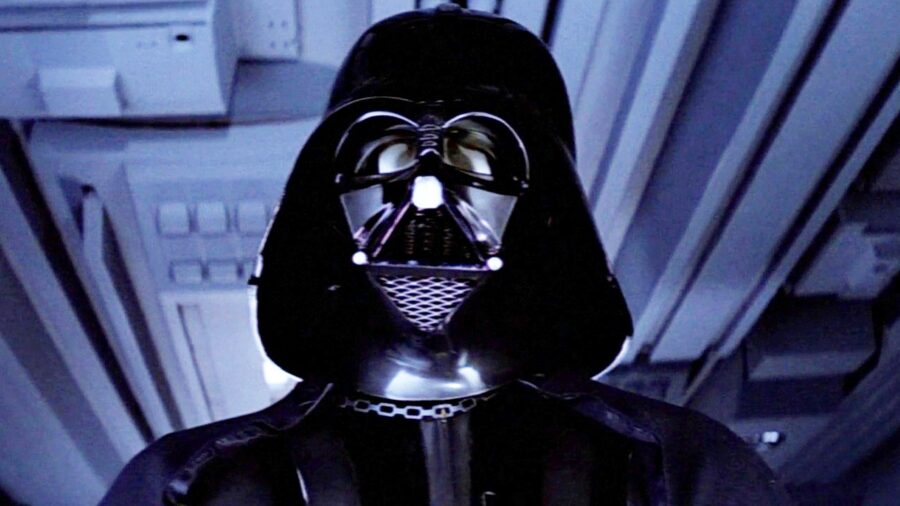
Had this extended scene from A New Hope made it to the final film, fans would have spent decades begging to know more about the Sith. Plus, they’d probably want to know how an Imperial commander knows all about one of the most secretive cults in a galaxy far, far away. However, Lucas cut this dialogue out, leaving the Sith to be a secret that he mostly explored onscreen in the prequels and, later, the Clone Wars TV show. Now, it’s left to fans like us to spread the word of a deleted scene that nearly changed everything.
Don’t know how to introduce it to your buddies? I recommend starting out by asking if they’ve heard the tragedy of General Tagge, the wise. Tell them it’s not a story that George Lucas would tell them, and then roll that beautiful bean footage!
Entertainment
House of the Dragon review: Season 3 atones for the sins of Season 2
Let’s face it: Season 2 of House of the Dragon promised fire and blood, but its baffling finale felt more like a puff of smoke.
The season fizzled to an ending with zero catharsis, forced Game of Thrones references, and a highlight reel of what was to come. In some ways, that structure mirrored the season’s core conflict. For all of Season 2, Queen Rhaenyra Targaryen (Emma D’Arcy) and Alicent Hightower (Olivia Cooke) tried everything they could to prevent all-out war. But while their stalling to prevent the inevitable was rooted deeply in the story, the show’s own reluctance to leap into the next phase of George R.R. Martin’s Fire and Blood felt more like it was spinning its wheels until Season 3.
Now, the third season of House of the Dragon is finally here, and its first four episodes manage to make up for Season 2’s finale and then some, delivering jaw-dropping spectacle and somber truths about the cost of war.
House of the Dragon‘s Battle of the Gullet is spectacular.

Steve Toussaint in “House of the Dragon.”
Credit: Ollie Upton / HBO
Remember how barely an episode of House of the Dragon Season 2 went by without a mention of Corlys Velaryon’s (Steve Toussaint) naval blockade in the Gullet? We finally get the payoff for that blockade at the top of Season 3, as the Triarchy’s fleet bears down on the Sea Snake’s forces. The ensuing clash, known as the Battle of the Gullet, is one of the defining fights of the Dance of the Dragons — the royal succession civil war between Rhaenyra Targaryen (Emma D’Arcy) and Aegon II Targaryen (Tom Glynn-Carney).
Given that so much of Season 2 was building to this point — hence the fan frustration that it wasn’t included — the pressure on House of the Dragon to pull off this battle is immense. Thankfully, the series more than delivers, with a sequence that had me yelling and pacing around my living room while also thinking, “We’re so back.”
Mashable Top Stories
A dazzling set piece involving ships, human soldiers, and multiple dragons, the Battle of the Gullet sets a new bar for Westerosi action. Every element is honed for maximum impact, from long takes of sailors boarding enemy ships to sweeping shots of dragons dive bombing the fleet. The battle, directed by Loni Peristere, wrings epic terror and awe from those big moments, but it also strikes gold in quieter moments, like a suspenseful boat chase that quickly becomes a stealth highlight of the episode.
Oh, and did I mention that this all takes place during the day, so you can make out every ounce of action taking place onscreen? For a franchise whose biggest battles have often been marred by darkness (looking at you, Battle of Winterfell), the Battle of the Gullet is a welcome adjustment. And, based on the first four episodes sent to critics for review, it’s only the beginning for House of the Dragon Season 3’s big action sequences.
House of the Dragon Season 3 pushes Rhaenyra to the brink.

Emma D’Arcy in “House of the Dragon.”
Credit: HBO
The Battle of the Gullet isn’t just an emphatic statement to open Season 3. It’s also a major turning point for the Dance of the Dragons, and for Rhaenyra in particular. All throughout House of the Dragon, she has balked at violence, worried at the havoc dragon warfare would wreak on the wider realm. By Season 3, though, Rhaenyra has lost so much to this conflict that she needs to do whatever she can to see it through. Only by taking the Iron Throne can she justify the pain she’s experienced. That means making impossible choices and committing to violence she once would have shunned, sometimes carrying it out with her own hands. As she does, House of the Dragon asks, even after all this, will victory be worth it?
It’s a haunting question, one that House of the Dragon teases out with tinges of psychological horror in the aftermath of the Battle of the Gullet. D’Arcy has always been magnificent as Rhaenyra, but here, they reach new heights with their raw portrayal of the queen’s grief and rage. Their trembling hands and wracking sobs were just as wrenching as some of the Battle of the Gullet’s most devastating moments, proving that House of the Dragon can match its biggest set pieces with pure human drama.
While the first half of House of the Dragon Season 3 manages to atone for Season 2’s ending, it still commits its share of familiar sins. Threats of sexual violence towards women abound unnecessarily in these episodes, a trend that harkens back to Game of Thrones‘ worst moments. (Although thankfully nothing here is nearly as graphic.) Elsewhere, several plot threads feel stagnant, with once major players like Criston Cole (Fabien Frankel) getting so little to do they may as well be set dressing. Their decreased roles may wind up paying off down the road, though, just like the many, many changes the show makes from Fire and Blood. While the latter reportedly strained the relationship between Martin and showrunner Ryan Condal, these changes do muddy the Targaryens’ already very complicated relationships in intriguing ways, to the point that I’m more fascinated at how the writers came to these new arcs than mad at not getting a precise adaptation.
Despite the occasional low point and my misgivings following Season 2, House of the Dragon Season 3 flies high. Instead of spinning its wheels, it roars into the Targaryens’ bloody future with action and creeping dread to spare, and that assurance and forward momentum turns out to be exactly what the show needs.
Topics
HBO
House of the Dragon
Entertainment
The Best New Show Of The Year Is A Supernatural Comedy Horror On AppleTV
By Jonathan Klotz
| Published

The 2026 television season has been a little lackluster so far when it comes to original, new series. The Boroughs was a fun binge on Netflix, Margo’s Got Money Troubles was a good comedy, but nothing can compare to the surprising success of Widow’s Bay on AppleTV. It’s a horror comedy, which might be the hardest combination of genres to pull off, that plays out like Twin Peaks meets Parks and Recreation. No show will leave you laughing so hard in one episode, before traumatizing you in the next.
Widow’s Bay Is The Most Original Show In Years

That odd mix of shows makes sense since Widow’s Bay was created by Katie Dippold, a writer for Parks and Recreation. The series takes place in the island town of Widow’s Bay in New England when Mayor Tom (Matthew Rhys) decides to boost tourism to the small community. The catch is that the community, primarily Wyck (Stephen Root) believes the island is cursed.
It’s not a spoiler to say that yes, yes it is cursed, and yes, there are real horrors at work on the island. That’s not surprising. What is surprising is the dry humor and Matthew Rhys’ perfect facial expressions, as the town’s residents will deliver the most absurd lines with a perfectly straight face. If you vibed with the humor of Parks and Recreation, you know what you’re getting into with the odd residents of Widow’s Bay, especially Kate O’Flynn as Tom’s assistant, Patricia. There’s a sequence with her involving a shotgun that is destined to be a social media hit for years to come, and one of those moments that you’ll think, “I’d do the same thing.”
Slapstick Comedy, Horror, And Amazing Sight Gags

Before starting your binge of the first season, avoid as many spoilers as you can. Widow’s Bay sets up mysteries early on with the chained church bell, the strange basement room, a rolling fogbank, and, while it’s not a supernatural mystery, how many Diet Cokes can Town Hall employee Dale consume? His desk is filled to the brim with cans. That can’t be healthy.
Keep your eyes peeled while watching Widow’s Bay as the production team was heavily influenced by The Simpsons usage of sight gags. Some are called out with blatant shots, others exist in the background of a conversation, but put together, they make the town of Widow’s Bay an absurdist version of Twin Peaks.
No one had supernatural slapstick down on their 2026 Bingo card, but here we are. While Netflix pulled the plug on The Boroughs, Widow’s Bay has already been confirmed for a second season, which is good considering the stakes-raising season finale ends by revealing a whole new layer to the mystery of the island. We have a long wait until Season 2 premieres, giving you plenty of time to watch the show of the Summer, and you can still convince your friends you were a fan of Widow’s Bay before it was cool. ]
Widow’s Bay Season 1 is now streaming on AppleTV.

Wyndham Clark ahead by 6 at US Open, Scottie Scheffler leads chasing pack
Reports: Suns agree to 4-year, $48M deal with G Collin Gillespie


