
Entertainment
Is Star Trek Right-Wing Or Left-Wing?

By Chris Snellgrove
| Published

Star Trek is often seen as a left-wing franchise. Thanks to cutting-edge technology (including replicators that can make anything you need), this moneyless society is often considered the embodiment of the old meme “Fully Automated Luxury Gay Space Communism.” With that being said, Trek has a far larger number of right-wing fans, and this often leads sections of the fandom to ask a simple question: “Why do conservatives watch Star Trek?” After trawling old messageboards and subreddits long enough, I found a tentative answer.
The general consensus online is that liberals like Star Trek for its emphasis on diversity and its portrayal of different groups coming together to solve problems through diplomacy and cultural understanding. Meanwhile, conservatives allegedly like Trek because they see Starfleet as a symbol of America and enjoy watching captains warping in and saving otherwise helpless alien societies (basically, world police on a galactic scale). As you might imagine, the internet considers these positions to be polar opposites. But Star Trek is all about Infinite Diversity in Infinite Combinations, and, in an ironic twist, the franchise has proven that both liberal and conservative readings of its text are, more or less, correct!
Is Star Trek Left-Wing?
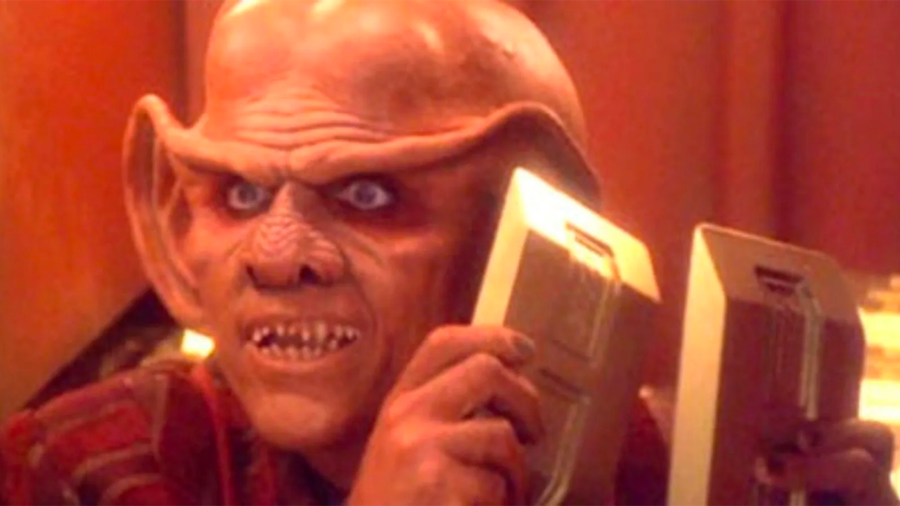
It’s not that hard to see why many consider Star Trek to be a left-wing franchise. Characters like Kirk and Picard have frequently insisted that their futuristic society has moved beyond the need or desire for money (this is largely thanks to the replicator). In this way, Trek thoroughly rejects capitalism, and writers go out of their way to mock 21st-century-style greed. The best example of this is the Ferengi, who are explicitly portrayed as a caricature of capitalist culture and, accordingly, always turned into the butt of the joke.
Star Trek also fully aligns with diversity, both in the stories (again, the future is all about IDIC) and its casting. Back in the ‘60s, The Original Series made Nichelle Nichols into an international icon, and she stayed on the show after Martin Luther King, Jr. told her that what she was doing (being a prominent Black actor during the Civil Rights era) was just as important as marching in the streets for freedom. Trek continued to emphasize diversity in the decades since, with the inclusion of more prominent Black characters, gay characters, trans characters, nonbinary characters, etc.

Finally, Star Trek often rejects prominent conservative values. Not only is Christianity practically non-existent in this franchise, but religion is often portrayed as a dangerous tool used to control others (like Kai Winn trying to force the Bajoran gospel in the classroom). Exceptionalism is more or less non-existent, with characters like Spock reminding us that no one person’s life is worth more than saving the lives of others.
Trek also rejects the notion of cowboy diplomacy: Kirk spends a lifetime shooting at Klingons and resents them for killing his son, but in The Undiscovered Country, he realizes the importance of laying his weapons down, forgiving his enemies, and using diplomacy to create a better future for billions of people.
Is Star Trek Right-Wing?

Star Trek still has great appeal to conservative audiences. For one thing, Star Trek has always stressed the importance of hierarchy, which is part and parcel to right-wing thought. We know exactly who’s in charge at all times, and that chain of command is frequently portrayed as vital to everyone’s survival.
Speaking of which, Starfleet is (despite the nominal emphasis on science and exploration) clearly the embodiment of Federation military might. Notably, we haven’t gotten any Trek series focusing on random space hippies; instead, we keep getting shows and movies focused on heroic military officers fighting hostile nations, terrorists, and other extremists, which clearly appeals to conservatives.
While Star Trek acknowledges the importance of diversity, the vast majority of the crew in any show or film are human. This is even lampshaded in The Undiscovered Country, in which the Federation is described as “nothing more than a homo sapiens only club.”
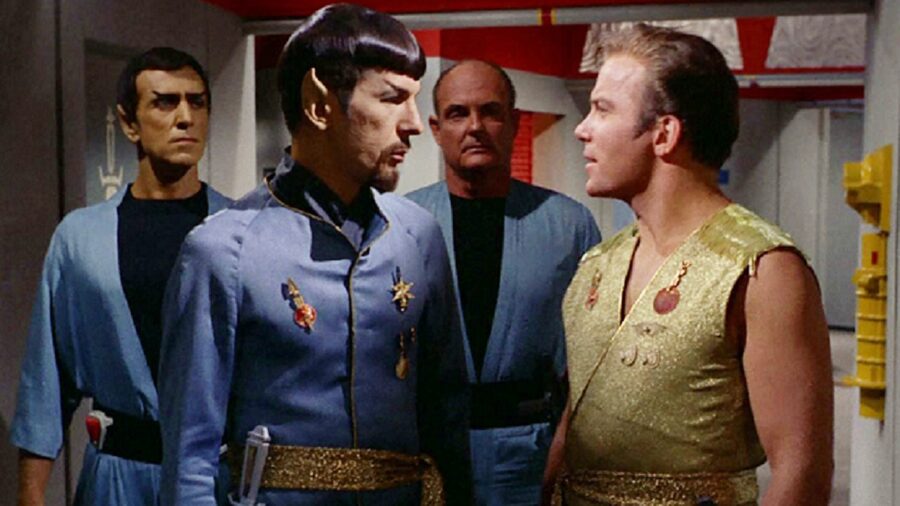
In general, human characters are easier for audiences of all stripes to relate to, but this arguably appeals more to conservatives. Not only does this franchise prominently feature tribalism, but it presents tribalism as necessary: now that humans have all united together, we have an easier time helping everyone in the galaxy learn and grow thanks to our superior wisdom.
That leads to the final point: Star Trek really is mostly about humans (most of them straight, white, and male) warping around the galaxy and solving everyone’s problems. In every alternate universe where Starfleet doesn’t exist (the Mirror Universe, the alternate reality of Picard Season 2, even the changed future in “City On the Edge of Forever”), the entire galaxy goes to sh*t. If you accept the premise that Starfleet is a stand-in for America, then the franchise has spent the better part of a century showing how everything falls apart without the United States intervening. Honestly, is it any wonder that conservatives love this message?
Shaka, When The Culture War Fell

What does all of this tell us about the political divide of the Star Trek fandom? That it is, on a pretty literal level, completely useless. Not because fans shouldn’t argue about their favorite media; heck, the entire internet was built on trivial fan debates! But Trek is the literal embodiment of its values, and with Infinite Diversity in Infinite Combinations, it can mean (wait for it) infinite things to infinite people. It can be a liberal show, with its emphasis on diversity and socialized everything creating a utopia. And it can be a conservative show, with its emphasis on protecting that utopia through military might and strong leadership.
Will this keep people from arguing about politics in Star Trek when they hop online? Probably not. But maybe it will soften the discourse a bit when both sides learn that their favorite franchise isn’t simply one thing. Trek is bigger than all of us, and its values are correspondingly complex. That’s a good thing, of course: we can always come back to our favorite shows and movies to uncover new meaning. If all you’re watching Trek for is to find something to scream about on the internet, though, you need to take William Shatner’s controversial Saturday Night Live advice to heart and do one thing right away: get a life!
Entertainment
House of the Dragon review: Season 3 atones for the sins of Season 2

Let’s face it: Season 2 of House of the Dragon promised fire and blood, but its baffling finale felt more like a puff of smoke.
The season fizzled to an ending with zero catharsis, forced Game of Thrones references, and a highlight reel of what was to come. In some ways, that structure mirrored the season’s core conflict. For all of Season 2, Queen Rhaenyra Targaryen (Emma D’Arcy) and Alicent Hightower (Olivia Cooke) tried everything they could to prevent all-out war. But while their stalling to prevent the inevitable was rooted deeply in the story, the show’s own reluctance to leap into the next phase of George R.R. Martin’s Fire and Blood felt more like it was spinning its wheels until Season 3.
Now, the third season of House of the Dragon is finally here, and its first four episodes manage to make up for Season 2’s finale and then some, delivering jaw-dropping spectacle and somber truths about the cost of war.
House of the Dragon‘s Battle of the Gullet is spectacular.

Steve Toussaint in “House of the Dragon.”
Credit: Ollie Upton / HBO
Remember how barely an episode of House of the Dragon Season 2 went by without a mention of Corlys Velaryon’s (Steve Toussaint) naval blockade in the Gullet? We finally get the payoff for that blockade at the top of Season 3, as the Triarchy’s fleet bears down on the Sea Snake’s forces. The ensuing clash, known as the Battle of the Gullet, is one of the defining fights of the Dance of the Dragons — the royal succession civil war between Rhaenyra Targaryen (Emma D’Arcy) and Aegon II Targaryen (Tom Glynn-Carney).
Given that so much of Season 2 was building to this point — hence the fan frustration that it wasn’t included — the pressure on House of the Dragon to pull off this battle is immense. Thankfully, the series more than delivers, with a sequence that had me yelling and pacing around my living room while also thinking, “We’re so back.”
Mashable Top Stories
A dazzling set piece involving ships, human soldiers, and multiple dragons, the Battle of the Gullet sets a new bar for Westerosi action. Every element is honed for maximum impact, from long takes of sailors boarding enemy ships to sweeping shots of dragons dive bombing the fleet. The battle, directed by Loni Peristere, wrings epic terror and awe from those big moments, but it also strikes gold in quieter moments, like a suspenseful boat chase that quickly becomes a stealth highlight of the episode.
Oh, and did I mention that this all takes place during the day, so you can make out every ounce of action taking place onscreen? For a franchise whose biggest battles have often been marred by darkness (looking at you, Battle of Winterfell), the Battle of the Gullet is a welcome adjustment. And, based on the first four episodes sent to critics for review, it’s only the beginning for House of the Dragon Season 3’s big action sequences.
House of the Dragon Season 3 pushes Rhaenyra to the brink.

Emma D’Arcy in “House of the Dragon.”
Credit: HBO
The Battle of the Gullet isn’t just an emphatic statement to open Season 3. It’s also a major turning point for the Dance of the Dragons, and for Rhaenyra in particular. All throughout House of the Dragon, she has balked at violence, worried at the havoc dragon warfare would wreak on the wider realm. By Season 3, though, Rhaenyra has lost so much to this conflict that she needs to do whatever she can to see it through. Only by taking the Iron Throne can she justify the pain she’s experienced. That means making impossible choices and committing to violence she once would have shunned, sometimes carrying it out with her own hands. As she does, House of the Dragon asks, even after all this, will victory be worth it?
It’s a haunting question, one that House of the Dragon teases out with tinges of psychological horror in the aftermath of the Battle of the Gullet. D’Arcy has always been magnificent as Rhaenyra, but here, they reach new heights with their raw portrayal of the queen’s grief and rage. Their trembling hands and wracking sobs were just as wrenching as some of the Battle of the Gullet’s most devastating moments, proving that House of the Dragon can match its biggest set pieces with pure human drama.
While the first half of House of the Dragon Season 3 manages to atone for Season 2’s ending, it still commits its share of familiar sins. Threats of sexual violence towards women abound unnecessarily in these episodes, a trend that harkens back to Game of Thrones‘ worst moments. (Although thankfully nothing here is nearly as graphic.) Elsewhere, several plot threads feel stagnant, with once major players like Criston Cole (Fabien Frankel) getting so little to do they may as well be set dressing. Their decreased roles may wind up paying off down the road, though, just like the many, many changes the show makes from Fire and Blood. While the latter reportedly strained the relationship between Martin and showrunner Ryan Condal, these changes do muddy the Targaryens’ already very complicated relationships in intriguing ways, to the point that I’m more fascinated at how the writers came to these new arcs than mad at not getting a precise adaptation.
Despite the occasional low point and my misgivings following Season 2, House of the Dragon Season 3 flies high. Instead of spinning its wheels, it roars into the Targaryens’ bloody future with action and creeping dread to spare, and that assurance and forward momentum turns out to be exactly what the show needs.
Topics
HBO
House of the Dragon
Entertainment
The Best New Show Of The Year Is A Supernatural Comedy Horror On AppleTV
By Jonathan Klotz
| Published

The 2026 television season has been a little lackluster so far when it comes to original, new series. The Boroughs was a fun binge on Netflix, Margo’s Got Money Troubles was a good comedy, but nothing can compare to the surprising success of Widow’s Bay on AppleTV. It’s a horror comedy, which might be the hardest combination of genres to pull off, that plays out like Twin Peaks meets Parks and Recreation. No show will leave you laughing so hard in one episode, before traumatizing you in the next.
Widow’s Bay Is The Most Original Show In Years

That odd mix of shows makes sense since Widow’s Bay was created by Katie Dippold, a writer for Parks and Recreation. The series takes place in the island town of Widow’s Bay in New England when Mayor Tom (Matthew Rhys) decides to boost tourism to the small community. The catch is that the community, primarily Wyck (Stephen Root) believes the island is cursed.
It’s not a spoiler to say that yes, yes it is cursed, and yes, there are real horrors at work on the island. That’s not surprising. What is surprising is the dry humor and Matthew Rhys’ perfect facial expressions, as the town’s residents will deliver the most absurd lines with a perfectly straight face. If you vibed with the humor of Parks and Recreation, you know what you’re getting into with the odd residents of Widow’s Bay, especially Kate O’Flynn as Tom’s assistant, Patricia. There’s a sequence with her involving a shotgun that is destined to be a social media hit for years to come, and one of those moments that you’ll think, “I’d do the same thing.”
Slapstick Comedy, Horror, And Amazing Sight Gags

Before starting your binge of the first season, avoid as many spoilers as you can. Widow’s Bay sets up mysteries early on with the chained church bell, the strange basement room, a rolling fogbank, and, while it’s not a supernatural mystery, how many Diet Cokes can Town Hall employee Dale consume? His desk is filled to the brim with cans. That can’t be healthy.
Keep your eyes peeled while watching Widow’s Bay as the production team was heavily influenced by The Simpsons usage of sight gags. Some are called out with blatant shots, others exist in the background of a conversation, but put together, they make the town of Widow’s Bay an absurdist version of Twin Peaks.
No one had supernatural slapstick down on their 2026 Bingo card, but here we are. While Netflix pulled the plug on The Boroughs, Widow’s Bay has already been confirmed for a second season, which is good considering the stakes-raising season finale ends by revealing a whole new layer to the mystery of the island. We have a long wait until Season 2 premieres, giving you plenty of time to watch the show of the Summer, and you can still convince your friends you were a fan of Widow’s Bay before it was cool. ]
Widow’s Bay Season 1 is now streaming on AppleTV.
Entertainment
Don’t pay $199 for Windows 11 Pro when it’s currently just $13
TL;DR: Microsoft Windows 11 Pro is down to just $12.97, giving users an easy OS upgrade with advanced security, productivity tools, gaming features, and Copilot AI.
Some upgrades just feel right. This is one of them.
If your PC has been running a little sluggish or you’ve been meaning to bring your system up to speed, Windows 11 Pro is just $12.97 (reg. $199) — a rare, time-sensitive offer that rewards quick, savvy decisions.
Mashable Deals
This isn’t about chasing trends; it’s more about giving your computer the modern foundation it deserves. Windows 11 Pro brings a sleeker UI, better multitasking, and enhanced security — all in a one-time lifetime license.
Think of it as the difference between driving a reliable car and suddenly upgrading to one with a smarter dashboard, smoother handling, and built-in security features.
For professionals, creators, and power users, this upgrade also unlocks features like Hyper-V, Windows Sandbox, BitLocker encryption, and seamless Azure AD integration — tools that make a real difference when you’re working across projects or managing sensitive data.
And yes, Windows 11 comes with Copilot, Microsoft’s AI-powered assistant that can summarize pages, change settings, or even help you generate code on the fly. It’s like having a co-pilot (literally) inside your OS.
Mashable Deals
But you don’t need convincing — you already know a smart upgrade when you see one. Get Windows 11 Pro for just $12.97 (reg. $199).
StackSocial prices subject to change.

Travis Bazzana's career night powers Guardians past Astros
Eloy Room helps Curacao earn first World Cup point with Ecuador draw


