
Entertainment
Internet Meme Takes On Disturbing Life Of Its Own In Max True Crime Documentary

By Robert Scucci
| Published

They say that you shouldn’t believe everything you read on the internet because there is so much misinformation floating around out there, but sometimes we can’t help ourselves. For as long as humanity has had the ability to tell stories, folklore and tall tales have been forms of entertainment that mirror our own lives as a means to make sense of our existence and whatever existential quandaries we face on a daily basis. 2016’s Beware the Slenderman, an HBO original streaming on Max, aims to unpack just how modern folklore birthed through the internet has real-life consequences when fiction is regarded as fact, and how grave the consequences can be when a mythological creature like the Slender Man takes on a life of its own despite the fact that it has always been a work of fiction.
Beware the Slenderman goes into the creation of the Slender Man, the mythology surrounding him, and the harrowing incident known as the Slender Man Stabbing that took place in Wisconsin back in 2014 when two girls, Anissa Weier and Morgan Geyser, stabbed their friend, Payton “Bella” Leutner, 19 times to appease the fictional character who allegedly influenced their behavior.
Slender Man Started As A Photoshop Contest
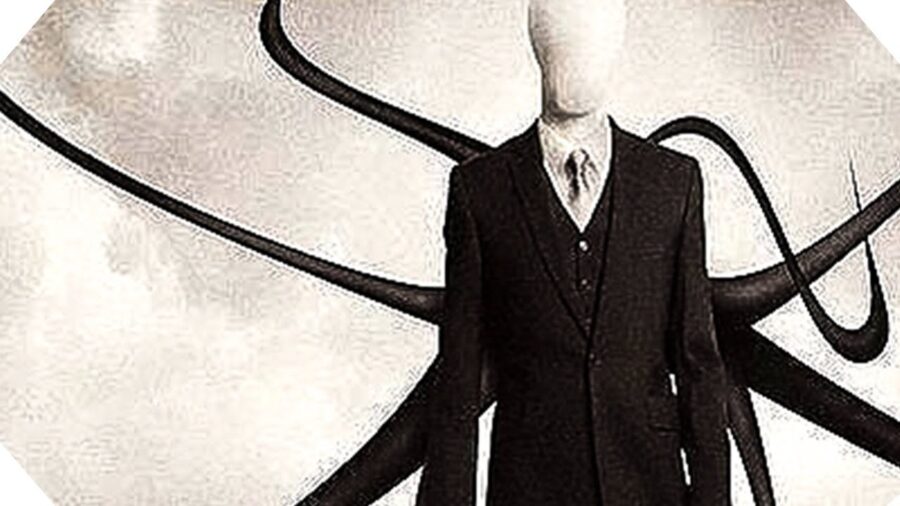
The Slender Man’s origin can be tracked down to the Something Awful forums in 2009, when Eric Knudsen entered the paranormal Photoshop contest that inspired him to create the creature. Beware the Slenderman explains that the creature – a tall and skinny, faceless and tentacled man in a suit – became so popular because online users started writing their own folklore about the being that reflected their own fears and anxieties in ways similar to traditional folk stories.
As the Slender Man’s popularity began to grow, so did the imaginations of Anissa Weier and Morgan Geyser, who became obsessed with the Slender Man, which led to their attempted murder of Bella. Feeling as if she were under the Slender Man’s spell, Morgan Geyser became increasingly paranoid, and claims she was instructed by the Slender Man to kill Bella before meeting him at his home, Slender Mansion.
Where Were Their Parents?

Geyser and Wesier’s parents are interviewed extensively in Beware the Slenderman, and their primary concern is how to handle supervising the online activity of their other children after the stabbing took place. Growing concerned over the amount of screen time their kids are required to have through iPads and other devices for their studies, they wonder what else they could do outside of supervising their children 24/7. But as the documentary goes deeper into Morgan Geyser’s psyche at the time of the murder, we learn that she was suffering from auditory visual and auditory hallucinations that she didn’t tell her parents – who are by all accounts active and attentive parents – about.
Revealing Interrogations


Though there are no first-hand accounts from Bella (who thankfully survived) in Beware the Slenderman, we learn through interrogation footage how Morgan Geyser and Anissa Weier reacted to the crime they had just committed shortly after they were apprehended. Given the severity of their crimes, they were both tired as adults, but not without a lengthy legal battle to determine how mentally fit each girl was at the time of the stabbing.
Beware the Slenderman provides a unique look at how sometimes internet memes and urban legends can get out of hand and have real life consequences. What I appreciated most is how the Slender Man Stabbing was framed as an isolated incident without placing blame on the Slender Man’s creator, Eric Knudsen. While there’s no clear-cut answer on how the stabbing itself could have been prevented given the course of events that Beware the Slenderman tries to make sense of, it still serves as a cautionary tale about just how quickly truth can become stranger than a collaborative work of fiction.
You can stream Beware the Slenderman on Max.
Entertainment
Is AdultFriendFinder safe to use? What a cybersecurity expert says.

There’s a commonly asked question about AdultFriendFinder, everyone’s favorite spicy dating platform: Is AFF safe to use? We get it. Unlike other big-name dating sites, its interface is packed with adult content. It’s extremely NSFW and appears to be a potential breeding ground for scams. Wannabe daters are right to question its legitimacy — they understandably want to know whether AFF is the real deal.
To better understand the risks of using AdultFriendFinder, we consulted Anna Larkina, a Web Data and Privacy Analysis Expert at Kaspersky, one of the world’s leading cybersecurity services, about the kinds of threats users might face on AFF and how they can mitigate those risks.
Credit: AdultFriendFinder
Understanding the risks of online dating
To begin, it’s worth remembering that there’s a risk inherent to using any online service, whether it’s an adult dating site or otherwise. Even the most reputable websites have been exploited and experienced major hacks over the years. “Users should remember that any service can potentially encounter various cybersecurity issues,” Larkina told us. That includes “data leaks, attacks on third-party contractors, or issues related to the human factor.”
Hookup apps for everyone
AdultFriendFinder
—
readers’ pick for casual connections
Tinder
—
top pick for finding hookups
Hinge
—
popular choice for regular meetups
But the risks are, of course, higher on certain websites. With a regular merchant website, for instance, you’re only handing over your credit card information (which is very valuable, admittedly), but with a dating site, you’re potentially providing your credit card details plus crucial personal information, from your date of birth and nationality to your address and phone number. That’s information that can prove very appealing to scammers and bad-faith actors.
While this is a risk you take with any dating service, AdultFriendFinder is perhaps more vulnerable than most dating sites because of the nature of its content and user base, so it’s important to understand the potential issues.
What risks are specific to AdultFriendFinder?
The “adult content” angle
While NSFW is permitted — encouraged, even — on AFF, users are under no obligation to post nude photos of themselves, or get down and dirty on a webcam feed. Many, many people opt to do so, of course, and while there’s no judgment here — no siree, let that freak flag fly high and proud — you are risking potentially awkward conversations with family, friends, or co-workers if they happen to stumble across your account. (That would mean they’d have to fess up to being AFF users too, but even so…)
Unfortunately, bad actors can exploit and use your own personal information against you.
Mashable Trend Report
“Data from services with adult content or dating services can be especially sensitive for users, because it’s more personal,” warns Larkina. “If fraudsters somehow obtain such private data, they can use it for more ‘efficient’ blackmailing or targeted phishing.” Needless to say, you should be wary of how you use the site and what information you share, especially if you have a public-facing job.
AFF security breaches
While dating sites invest heavily in cybersecurity protections, online threats are constant and keep evolving all the time. Hackers eager to discover treasure troves of personal and financial information often target online dating platforms, which can make users feel super vulnerable.
AdultFriendFinder has suffered two major security breaches, which is actually a pretty stellar record of security over its entire 30-year history. In 2016, hackers gained access to the personal information of four million AFF users before the breach was found and stopped. And a larger breach occurred in 2016, affecting some 300 million AFF accounts, including 15 million that had been officially deleted by users but whose data had not been properly expunged from the AFF servers.
Phishing scams
Another common hacking technique — and one particularly effective on dating websites — is phishing, in which a bad actor assumes a false identity to gain your trust and deceive you into revealing sensitive or compromising information. It’s easy to do on dating sites because, by their very nature, people sign up specifically to search people out and make connections. Scammers can pose as attractive people, telling users exactly what they want to hear and luring them into the scam.
To combat phishing, AFF offers the ability to verify identities with government-issued identification. This verification process is still an optional extra — it’s not mandatory when setting up an account. We recommended doing it though, and setting a search filter to verified accounts only. It’s a surefire way to protect yourself against bad actors.
Can your AFF account be found?
While the private information you give AFF (your real name and email address, for example) isn’t public-facing, AFF’s dating profiles are public by default, so if you include a picture of your face (as many accounts do), you can be recognized by friends, co-workers, and family members.
And since AFF has suffered two major hacks before, there’s always a chance it could happen again, which could result in your email address and information ending up in a dodgy database.
How to protect your online identity when using AdultFriendFinder
Does this all mean you should never use AdultFriendFinder, or any dating site? Absolutely not. We’re here to help you protect yourself and stay vigilant, not to discourage you from signing up.
Larkina has shared an additional list of best practices to help you mitigate risks while having fun on AFF or any other dating site:
-
Don’t use a professional email address to sign up for a dating site. If you’re especially nervous, consider creating a new email address just for the purposes of signing up.
-
To protect your accounts, use strong and unique passwords, change them regularly, and if possible, enable two-factor authentication
-
Be extremely cautious with what you share with strangers, especially when it comes to sensitive information or intimate photos. “Always assess reputational and other risks before posting or sending anything,” cautions Larkina.
-
When using AFF in particular, limit your interactions to users who have verified their identity
Summing up her advice, Larkina urges online dating service users to treat these “platforms as public spaces, not as private ones” as far as possible, and be ever mindful that “every piece of data you provide — email, phone number, username, etc. — becomes part of your digital footprint.” If you’re careful about what you share and who you share it with, you can safely enjoy AdultFriendFinder and any other dating site.
Entertainment
I tried the Jackery FridgeGuard portable power station: Its both functional and pretty
Table of Contents
For a short amount of time, a power outage feels nice. It’s an excuse to cancel plans and settle on the couch with a good book (or an e-reader) instead. That calm feeling fades once a low-battery alert shows up on your phone, and it’s never convenient to not have WiFi at home. But maybe even more inconvenient is the threat of the refrigerator heating up during a power outage.
Food spoilage is one of the biggest bummers of a power outage. It’s never fun to start calculating how many hours you’ve been without power and how many times someone has opened the fridge, releasing precious cooling. Jackery, one of the leaders in portable power stations, has a new solution. I’ve tested dozens of portable power stations, and I’ll admit I find this model to be both functional and one of the best-looking models out there.

$549.99
at Costco
$799
Save $249.01
What’s special about the Jackery FridgeGuard?
Immediately, you’ll notice the Jackery FridgeGuard does not look like most other portable power stations. Instead of the standard box shape with a handle, the FridgeGuard is a slim rectangle, measuring just a bit over 2.5 inches tall. The unique shape makes it ideal for sitting on top of the refrigerator. Jackery also includes two metal feet that attach to the bottom of the power station if you’d rather have it stand up vertically next to the fridge.

She’s just 2.63 inches thick.
Credit: Lauren Allain
But looks aside, the primary goal of the Jackery FridgeGuard is to keep your refrigerator cooling during a power outage. It has 1,024Wh of battery capacity, which Jackery says should keep a standard refrigerator cooling for about 15 hours.
When testing the Jackery, I plugged it into my bedside Blueair Blue Signature Air Purifier, and set it on a high fan speed, which pulled 17W. That power use means the Jackery would keep my bedroom air purifier powered up for about 27 hours. It also looked pretty slick when I used it at my home workstation.

Testing out the FridgeGuard as a laptop backup system.
Credit: Lauren Allain / Mashable
I was pleasantly surprised by the weight of the Jackery FridgeGuard while testing. At a bit over 23 pounds, I was able to get it on top of my fridge without asking for help. That was pleasing to my independent nature that much prefers to not ask for help.
Spec highlights of the Jackery FridgeGuard
-
Capacity: 1,024Wh
-
Battery type: LiFePO₄
-
Surge: 1,600W
-
Weight: Approx. 23.2 pounds
-
Dimensions: 23.6 in × 12.8 in × 2.6 in
-
Ports: AC (1)
-
Expected battery lifespan: 6.000 cycles to 70%+ capacity
-
Charge temperature: -4 to 113 degrees F
-
Discharge temperature: -4 to 113 degrees F
-
Expandability: One Jackery FridgeGuard Battery (1,024Wh)
Easy plug-and-play solution
On top of the physical design, the very nature of how the FridgeGuard functions is unique. Jackery used a plug-and-play function for this power station. Stick it on top of the fridge, plug it into the wall, and then plug your refrigerator into the Jackery, and you’ll have consistent power to the fridge when grid power fails.
The Jackery has a 10-millisecond uninterrupted power supply (UPS), which means it’ll take over powering the fridge within 10 milliseconds of a grid outage. Since we’re often not home or are asleep when the power goes out, using the Jackery FridgeGuard means there’s no concern about a gap in power to the refrigerator.
Once grid power comes back online, the Jackery will recharge itself to 100 percent and be ready for the next outage. From the Jackery app, you can monitor battery level, power output, and power input.
The sleek design makes it versatile at home
In all honesty, portable power stations are for function, not looks. For the most part, we don’t need a power station to look nice. We’re hauling them to the campground, the job site, or using them in the yard to power up tools. But if you’re placing a portable power station on top of your refrigerator to live there permanently, the slim Jackery FridgeGuard looks a lot nicer than a standard brick of a portable power station.
Mashable Light Speed
The gray colorway blends in well with my stainless steel fridge. That wouldn’t be the case if I placed the black Jackery Explorer 1000 V2 up there with its orange accents.
While the name suggests using it in the kitchen, I found it great to use around the rest of the house while testing. It makes for a great power backup solution if you sleep on an adjustable base or have a bed cooling system like the Eight Sleep Pod.

I tested out the Jackery FridgeGuard with an air purifier beside my bed.
Credit: Lauren Allain / Mashable
It’s also great for keeping the WiFi router online during a power outage or using it as backup for your home computer. If you sleep with a CPAP, it offers reassurance that you’ll have support all night in case the power cuts out. When testing, I found the Jackery FridgeGuard to be either silent or have a barely detectable fan hum. I never found the noise to be bothersome, even when I had it next to my bed at night.
What I don’t love about the Jackery FridgeGuard
The most glaring downside to the FridgeGuard is the port selection. It’s not even fair to say selection because the FridgeGuard has a single AC port. That’s sufficient if you’re using the Jackery for refrigerator backup power since it only requires a single port. Otherwise, you’re going to have to prioritize what gets to utilize the power of the FridgeGuard.

The on-unit display includes information like remaining battery, total output, and total input.
Credit: Lauren Allain / Mashable

The back of the FridgeGuard has the single AC port, the charging port, and a vent.
Credit: Lauren Allain / Mashable
It’s also not the best deal when it comes to portable power stations. At full price, Jackery lists the FridgePower at $799. That’s the same list price as the Jackery Explorer 1000 V2, which has a smidge more power at 1,070Wh but a lot more functionality. The Explorer 1000 V2 has three AC ports, two USB-C, one USB-A, and an onboard light.
Should you get the Jackery FridgeGuard?
If your main concern during a power outage is food spoiling, the Jackery FridgeGuard could be a great solution. Its unique design can easily tuck on top of your fridge, and the plug-and-play nature means you’ll have immediate power backup when grid power fails. That’s the ultimate convenience for powering your fridge, an aquarium, or a CPAP machine should the power go out in the middle of the night.
If you’re looking for a portable power station to take camping or use on the jobsite, you’re probably better off with a different model.
Other models worth considering
Both Bluetti and Anker Solix introduced fridge-specific models in the same quarter that Jackery launched the FridgeGuard. The world of portable power stations is getting crowded with models that only have the minorest of minor differences. So I’m surprised to say, all three fridge-backup models are glaringly different.
The Jackery FridgeGuard is the thinnest, so if that’s your main priority, go with the FridgeGuard. Otherwise, here’s a brief rundown of the other two models I’d consider for fridge backup.
Anker Solix S2000
Coming with double the power of the Jackery FridgeGuard, the Anker designed the Solix S2000 as a model that’ll sit nicely atop or beside a refrigerator. Anker says this 2,010Wh is capable of keeping a standard refrigerator running for up to 35 hours. If your home tends to experience longer outages, this capacity might be a better fit compared to the Jackery.
The Solix S2000 also has more ports. You get three AC on the front and dual AC on the back. When placed on your countertop, you can use a rear AC for powering the refrigerator while keeping the front AC ports open for the coffee maker or a lamp. It also has dual USB-C and a USB-A for recharging phones, earbuds, and other small devices. But keep in mind the Solix S2000 has a more traditional portable power station shape. You can set it on top of your fridge, but it might block cupboards.

$599.99
at Amazon
$1,199
Save $599.01
Bluetti FridgePower
The Bluetti FridgePower has a nearly identical physical layout to the Jackery FridgeGuard. The main difference is the battery capacity. The Jackery comes with 1,024Wh while the Bluetti has almost double at 2,016Wh. In short, that’s going to keep the refrigerator cooling for twice as long. It has two AC ports compared to the single AC port on the Jackery.
The slim design is similar to the Jackery, but the Bluetti is a bit larger and much heavier at 41 pounds compared to the FridgeGuard’s 23ish pounds. The Bluetti FridgePower also tends to be the most expensive model compared to the Jackery and Anker Solix.

$898.99
at Amazon
$1,499
Save $600.01
How to buy the Jackery FridgeGuard
At the time of launch and writing, the Jackery FridgeGuard is exclusive to Costco and Jackery. Costco members get a better deal, however, where the fridge backup is available for $549.99. If you’re lucky enough to find it in stock at Jackery, the station sells for $799. Jackery also sells a mounting bracket for $49 if you’d rather attach it to a nearby wall instead of setting it on top of the fridge or on the floor.
$549.99
at Costco
$799
Save $249.01
Entertainment
The best laptops of 2026: We tested 80+ models to find our favorites

Mashable has been testing laptops for over 10 years. Over the past two years alone, the team and I have researched dozens of models and tried more than 80 of the most promising configurations available. We use a meticulous testing procedure involving real-world stress tests and artificial benchmarks to evaluate our contenders on the basis of performance, battery life, design/build quality, and value.
This regularly updated guide serves as our laptop trophy case, highlighting the best-in-class models we’ve tried across different subcategories. For even more recommendations, check out my dedicated guides to the best MacBooks, the best Windows laptops, the best cheap laptops, and the best Chromebooks.
A note about laptop prices
A recent boom in AI data center construction has caused a global shortage of RAM and SSD storage chips (often referred to as “RAMageddon“). As a result, many consumer tech devices that use these components, including the best laptops, have seen steep price hikes this year. The shortage is expected to worsen and could last into 2028, driving up prices even further and making good values in the budget and mid-range tiers even scarcer. Apple was the most recent brand to raise laptop prices, with MacBooks getting $100 to $300 increases.
This is something the Mashable team is taking into consideration as we assess laptops and select ones to recommend to our readers. Moreover, we’ve gone back and re-evaluated several models that have gotten more expensive since we first tested them. At the time of writing, only one previous top pick has gotten so unreasonably pricey that we think it’s no longer worth buying. That would be the Lenovo Chromebook Plus 14, which jumped from an already-high $750 to $1,000 as tested. We’ve since replaced it with a much more cost-effective option that’s less snazzy, but still apt for most Chromebook users. You can read more about it and our other current picks below.
One thing to know before you buy a Windows laptop
Many great Windows laptops we’ve tried run on Qualcomm’s Snapdragon X and X2 series chips, which use ARM-based architecture instead of standard x86 architecture like Intel and AMD chips. The Zenbook A14 and A16 are two great example of outstanding ARM laptops.
These Qualcomm chips are great because they offer amazing performance and battery life, but they’re not compatible with some specialty software and PC games. Having said that, ARM support is getting better and should dramatically improve in the near future. Right now, I would only avoid ARM laptops if you’re a college student, or if gaming is the main thing you do on your PC. You can read more about this in my best Windows laptops guide.
Recent updates to this guide
I added two new picks to this guide in late July 2026:
-
The Asus ExpertBook Ultra is our new favorite business laptop for its dazzling ultra-thin-and-light design and impressive brawn.
-
The Asus Zenbook A16 joins the ranks as the best 16-inch laptop for most people: It’s also quite portable, its everyday performance is virtually unrivaled, and it’s a stellar value to boot.
-
I removed the Alienware 16X Aurora gaming laptop because the configuration we tested was out of stock at the time of writing. We’re currently testing potential replacements.
I’ve also adjusted the prices of the three MacBooks featured in this guide. Apple made them $100 to $300 more expensive in mid-June because of the ongoing memory shortage.

Carson Kvapil earns 1st OAP victory at Indianapolis
Is AdultFriendFinder safe to use? What a cybersecurity expert says.


