
Entertainment
How Worf Accidentally Created Star Trek's 2009 Reboot
By Chris Snellgrove
| Published
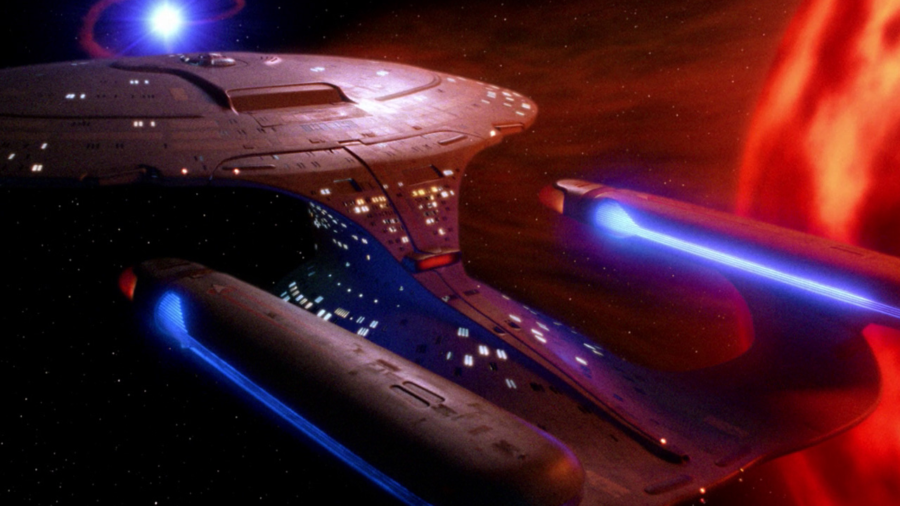
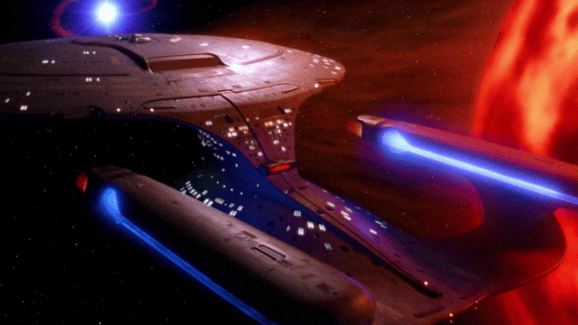
After Enterprise fizzled out, a new film brought the world’s greatest sci-fi franchise back to life: Star Trek (2009), a snazzy reboot that brought back the characters and impeccable vibes of The Original Series. To mollify fans worried that the new film would completely retcon older Star Trek media, Paramount set all of its Trek reboot films in a parallel universe that was completely different from the familiar “prime” universe. What most fans don’t realize, though, is that this parallel “Kelvinverse” (so named after Kirk’s father’s doomed starship) would have been impossible without “Parallels,” an often-overlooked episode of Star Trek: The Next Generation.
In that episode, Worf returns from a bat’leth tournament only to find himself slipping in and out of different realities; this allows him to experience the lives of different Worfs while seeing how different things could be aboard the Enterprise-D. He is married to Deanna Troi in one reality, for example, and is the first officer of the ship in another. Eventually, Worf (with the help of Data, Geordi, and the rest of the senior officers) discovers that this all started because his shuttle accidentally weakened the barrier between different quantum realities, and he is able to fly back to his own reality while closing the dimensional fissure behind him.
How Worf’s Multiverse Adventure Created The Star Trek Reboot

This makes for a fun episode (especially if you’re a Worf fan), but what does this story have to do with Star Trek (2009)? Back in 2008, that film’s cowriter, Bob Orci, gave an exclusive interview to TrekMovie, and their conversation focused primarily on how the new movie’s timeline could exist without erasing all the franchise lore that came before it. Orci basically gave fans a crash course on quantum mechanics, and he cited Data’s comments from “Parallels” to sum up that “all possibilities that can happen do happen” in various other realities.
That may sound pretty basic, especially for those who are familiar with Marvel’s various movies and TV shows involving the Multiverse. But the MCU was less than a year old when Orci gave this interview, and the Multiverse was not yet even a sparkle in Kevin Feige’s eye. Therefore, the writer walked Trek fans through how the upcoming Kelvinverse film was rooted strongly in both real-world quantum mechanics (which the interviewer helpfully pointed out is known as the Many Worlds Theory) and the Trek lore established in “Parallels.”
The Many Yawns Theory?

For Star Trek fans, the Many Worlds Theory is both blessing and curse: it allows for telling stories in different realities, contextualizing settings like the Mirror Universe and explaining how the Kelvinverse and any future reboot realities can exist alongside the Prime Universe of shows like The Original Series and The Next Generation. But (as Red Letter Media recently pointed out), this theory arguably cheapens the drama of the choices our characters make. Not only is there a dimension where they made a completely different choice, but the existence of countless other dimensions means it doesn’t really matter who lives and who dies because everyone is alive somewhere else.
Whether you love or hate the narrative sandbox it created, “Parallels” paved the way for the existence of Star Trek (2009), a movie that saved the franchise when Trek was falling into cultural obscurity. Those reboot films are controversial among some fans, but their success undeniably helped make Star Trek into a mainstream hit once again. If you’re one of the fans who hated it, that probably won’t bother anyone involved; after all, quantum mechanics tells us that there’s a universe out there where this is your favorite film series of all time!
Entertainment
Gene Roddenberry Secretly Fixed Star Trek’s Earliest Plot Hole

By Chris Snellgrove
| Published

Star Trek is celebrating its 60th anniversary this year. Part of why that is so impressive is that this franchise has managed to maintain the same continuity for so many years. Sure, the Kelvinverse rebooted everything for a few movies, and we occasionally get glimpses of alternate universes with their own twisted history. But the main Trek timeline, from The Original Series through Starfleet Academy, has remained the same, which is an amazing creative achievement. But it also leads to something as annoying as it is inevitable: plot holes!
There are many seeming plot holes throughout the franchise. Heck, Starfleet Academy introduced more than its fair share in only one season. However, the earliest plothole goes back to William Shatner’s very first episode, “Where No Man Has Gone Before.” This episode features a mock grave for James Tiberius Kirk that reads “James R. Kirk.” This weird screwup inspired decades of attempts by fans and creators to explain what happened. However, Star Trek creator Gene Roddenberry had a simple explanation from the very beginning. That is, the godlike character who created the tombstone was still fallible, meaning that this would be an in-universe screwup rather than a production error.
A Ghoulish Plot Hole

“Where No Man Has Gone Before” was actually the second pilot episode of Star Trek: The Original Series. It’s the episode that sold NBC on this new show, which isn’t surprising, because this is a great hour of television. Strange energy from the galactic barrier gives one of Captain Kirk’s best friends, Gary Mitchell, godlike powers. Those powers are getting stronger by the minute, so Kirk eventually has to make the difficult decision to kill his buddy in the name of keeping the entire ship (and quite possibly the entire galaxy) safe.
At one point, Mitchell uses his powers to summon a tombstone that reads “James R. Kirk.” It makes for a great threat, but there’s just one problem: the character’s name is James Tiberius Kirk. Incidentally, Gene Roddenberry seemingly knew Kirk’s middle name early on, even though it wasn’t officially revealed (outside of The Animated Series) until The Undiscovered Country. In the introduction to Star Trek: The Classic Episodes 1, Original Series writer D.C. Fontana claimed that once Roddenberry noticed the mistake, he came up with a quick and easy explanation. “Gary Mitchell had godlike powers, but at base he was human. He made a mistake.”
Powers Like A God, Mind Like A Human

Unfortunately, Roddenberry kept this plot hole explanation to himself. I say “unfortunately” because this mistake sent fans into a tizzy trying to explain the discrepancy. On top of that, various Star Trek writers tried their hands at providing explanations. One such explanation came from Michael Jan Friedman’s non-canonical My Brother’s Keeper series. In these books, when the future captain meets Gary Mitchell, he claims his middle name is “Racquetball.” Later, when Kirk steamrolls through a discussion, Mitchell says the man’s middle name should be “Rhinoceros.” Therefore, Friedman explained that the “James R. Kirk” on the tombstone is just an in-joke between former friends.
Additionally, the late, great Star Trek writer Peter David tried his hand at an explanation. In his novel Q-Squared, the events of “Where No Man Has Gone Before” take place in a parallel reality in which Kirk’s middle initial really is “R.” In this non-canonical book, we also find out that Mitchell’s powers came from briefly being possessed by Q, who had to pull himself together across all of time and space. Quick side note: while Marvel has really played out the concept of multiverses, Q-Squared is an amazing novel, and every Trek fan should read it at least once.

These writers did their best to explain where “James R. Kirk” came from. On top of this, fans have constantly debated this issue, all trying to one-up each other in coming up with a suitable explanation for this plothole. As it turns out, though, none of this debating and speculating was necessary because Gene Roddenberry had the perfect explanation ready. Namely, that having the power of a god isn’t the same as having the unlimited knowledge of a god. It’s short, it’s simple, and it’s effective. Most of all, it does what Star Trek has always done best: keep the sci-fi storytelling centered around humanity.
Entertainment
The most read Kindle books of 2026 (so far)
Table of Contents
For my fellow Kindle users, ever wonder what other people are reading on their Kindles? Well, Amazon has some answers.
Each week, Amazon puts out a list of the most read books, which ranks books by the average number of daily Kindle readers and Audible listeners. So unlike a bestseller list, it shows you what titles other Kindle users are actually reading. Because let’s be real, we’re all guilty of buying a book and letting it sit on the shelf for a little too long.
Now that we’re nearly halfway through 2026, it’s time reveal the most read books, according to Kindle readers and Audible listeners. We gathered this list using Amazon’s Most Read charts, collecting which books (both fiction and non-fiction) spent the most time in the top 10 spots. It’s a fun mix of titles, compromised of new releases and old favorites.
So without ado, here are the most read Kindle and Audible books of 2026.
25. Yesteryear by Caro Claire Burke
You’ll find Yesteryear by Caro Claire Burke on every lists naming the best books of the year. The tradwife satire was released April 7, 2026 but it’s made such a splash that it’s already spent seven weeks in the Most Read top 10.
24. The Psychology of Money by Morgan Housel
First published in September 2020, The Psychology of Money by Morgan Housel is still wildly popular. A compilation of 19 short stories, exploring the way we think about money, The Psychology of Money has spent seven weeks on the Most Read list in 2026.
23. London Falling: A Mysterious Death in a Gilded City and a Family’s Search for Truth by Patrick Radden Keefe
Acclaimed author Patrick Radden Keefe returned with his latest book London Falling: A Mysterious Death in a Gilded City and a Family’s Search for Truth, a feat of reporting diving into London’s seedy underbelly as a family fights to find the truth behind their son’s death. Released April 7, 2026, London Falling has already spent eight weeks on the Most Read list.
22. Famesick by Lena Dunham
The moment Famesick was released on April 14, 2026, it seemed like everyone was reading it and the Amazon charts confirmed that. Spending nine weeks on the Most Read charts, Dunham’s memoir which recounts the decade of her life marked by her HBO show Girls as well as the chronic illness that weighed her down, is a must read among Kindle and Audible readers.
21. Stripped Down by Bunnie XO
Bunnie XO has 2.5 million followers on Instagram and 12 million followers on TikTok all on top of her popular podcast Dumb Blonde. So it’s no surprise that her unapologetic memoir, Stripped Down, has spent nine weeks on the Most Read chart. Released, February 17, 2026, Stripped Down details Bunnie XO’s rise from the trailer parks of Vegas to the top of the podcast charts.
20. Dear Debbie by Freida McFadden
Dear Debbie is just one of Frieda McFadden’s books to spend weeks on the Most Read chart. Landing on the list for nine weeks, Dear Debbie is a thrilling read about a woman taking justice into her own hands, even if there are killer consequences.
19. The Subtle Art of Not Giving a F*ck by Mark Manson
Kindle and Audible users are all about self-help in 2026. The Subtle Art of Not Giving a F*ck by Mark Manson has spent nine weeks on the Most Read chart, helping reachers develop a mindset to weather the storm of modern day living.
18. Brimstone by Callie Hart
Finally, some romantasy on the Most Read charts. Callie Hart’s second book in the Fae & Alchemy trilogy, Brimstone, spent nine weeks on the charts. The sequel to Quicksilver dives back to the vampire courts where newly crowned queen Saeris Fan must send Fisher to her homelands, a mission that could kill him.
Mashable Light Speed
17. The Housemaid by Freida McFadden
Despite being released in 2022, The Housemaid by Freida McFadden remained one of the most read books of 2026. Interest in The Housemaid hasn’t faded thanks to the movie adaptation starring Sydney Sweeney and Amanda Seyfried. With over 3 million Goodreads ratings, if you still haven’t read The Housemaid, it begs the question — what are you waiting for?
16. You with the Sad Eyes by Christina Applegate
Beloved actress Christina Applegate is ready to say it all in her memoir You with the Sad Eyes, that spans her five decade long career, including her Multiple Sclerosis diagnosis in 2021. You with the Sad Eyes, spent 10 weeks on the Most Read charts since its March 3, 2026 release.
15. Harry Potter and the Order of the Phoenix by J.K. Rowling
There’s this little known series about a boy named Harry Potter. We joke. But it is cool to see the fifth book, Harry Potter and the Order of the Phoenix on the Most Read charts 23 years after its release. What’s even cooler is that Amazon notes the average reader age of the book is nine, meaning kiddos are still diving in as this book spent 12 weeks on the charts.
14. Dungeon Crawler Carl by Matt Dinniman
Dungeon Crawler Carl is just the beginning of Matt Dinniman’s epic, genre-bending series. First released in 2020, Dungeon Crawler Carl has spent fifteen weeks on the Most Read charts.
13. Harry Potter and the Prisoner of Azkaban by J.K. Rowling
What’s fun about following the Most Read chart from the beginning of the year, is seeing how the books in the Harry Potter flunctuate position on the list as kiddos move through the series. Plenty made their way through the third book, Harry Potter and the Prisoner of Azkaban, which spent 15 weeks on the list.
12. Harry Potter and the Chamber of Secrets by J.K. Rowling
The popularity continues with Harry Potter and the Chamber of Secrets by J.K. Rowling, which spent 15 weeks on the Most Read list in 2026, even 28 years after its release.
11. Harry Potter and the Goblet of Fire by J.K. Rowling
Harry Potter and the Goblet of Fire must be a fan favorite in the series as it spent 16 weeks on Amazon’s Most Read chart, letting readers bask in the magic of the Triwizard Tournament.
10. The Correspondent by Virginia Evans
Capturing the life of Sybil Van Antwerp, The Correspondent by Virginia Evans, tells the story of one’s life all through the letters she writes. Released in April of 2025, the novel has stayed on the Most Read charts for 17 weeks in 2026.
9. Theo of Golden by Allen Levi
Theo of Golden tells the story of a small town and the power of one stranger who slowly collects the stories of the people there. Allen Levi’s book has consistently been on bestseller lists and spent 20 weeks in the top ten most read books on Amazon.
8. Strangers by Belle Burden
Perhaps the most read memoir of 2026 is Belle Burden’s Strangers, which unpacks the end of her marriage in the early days of COVID. Already a bestseller, Burden’s memoir has spent 21 weeks on the Most Read chart.
7. The 48 Laws of Power by Robert Green
A classic can stand the test of time, best evidenced by Robert Greene’s The 48 Laws of Power, which was first released in 2000, but has stayed on the Most Read chart for 22 weeks of 2026.
6. Harry Potter and the Sorcerer’s Stone by J.K. Rowling
Of course the most read Harry Potter book is the first. Harry Potter and the Sorcerer’s Stone spent 22 weeks on the Most Read chart with readers as young as eight years old enjoying the classic fantasy.
5. Project Hail Mary by Andy Weir
Project Hail Mary topped the box office and the Most Read chart this year. Andy Weir’s sci-fi novel was the fifth most read Kindle book of 2026, spending a staggering 23 weeks on the Most Read chart.
4. Nobody’s Girl by Virginia Roberts Giuffre
Virginia Roberts Giuffre’s posthumous memoir details her brave stance against Jeffery Epstein and Ghislaine Maxwell. The powerful, riveting read has spent 24 weeks among the top 10 Most Read non-fiction books.
3. Atomic Habits by James Clear
Also in the 24 weeks club is James Clear’s Atomic Habits, a guide and framework for changing your habits and your life. Released in 2018, Atomic Habits remains one of the most read Kindle books eight years later.
2. 1929 by Andrew Ross Sorkin
In his bestselling book Too Big to Fail, Andrew Ross Sorkin details the history of the 2008 banking crisis. In his latest, 1929, Sorkin dives into the infamous 1929 crash that shaped our society today. 1929 has spent 24 weeks on the Most Read chart.
1. The Let Them Theory by Mel Robbins
Mel Robbins’ Let Them Theory has sold millions of copies, so it’s no surprise it remains one of the most read books, too. Spending 24 weeks on the Most Read chart, Kindle users are diving into Robbins’ bestselling book.
Entertainment
NYT Connections Sports Edition today: Hints and answers for June 20, 2026
Today’s Connections: Sports Edition will be easier if you know collegiate sports.
As we’ve shared in previous hints stories, this is a version of the popular New York Times word game that seeks to test the knowledge of sports fans.
Like the original Connections, the game is all about finding the “common threads between words.” And just like Wordle, Connections resets after midnight, and each new set of words gets trickier and trickier — so we’ve served up some hints and tips to get you over the hurdle.
If you just want to be told today’s puzzle, you can jump to the end of this article for the latest Connections solution. But if you’d rather solve it yourself, keep reading for some clues, tips, and strategies to assist you.
What is Connections: Sports Edition?
The NYT‘s latest daily word game has launched in association with The Athletic, the New York Times property that provides the publication’s sports coverage. The sports Connections can be played on both web browsers and mobile devices and require players to group four words that share something in common.
This Tweet is currently unavailable. It might be loading or has been removed.
Each puzzle features 16 words, and each grouping of words is split into four categories. These sets could comprise anything from book titles, software, country names, etc. Even though multiple words will seem like they fit together, there’s only one correct answer.
If a player gets all four words in a set correct, those words are removed from the board. Guess wrong and it counts as a mistake — players get up to four mistakes before the game ends.
This Tweet is currently unavailable. It might be loading or has been removed.
Players can also rearrange and shuffle the board to make spotting connections easier. Additionally, each group is color-coded with yellow being the easiest, followed by green, blue, and purple. Like Wordle, you can share the results with your friends on social media.
Mashable Top Stories
Here’s a hint for today’s Connections: Sports Edition categories
Want a hint about the categories without being told the categories? Then give these a try:
-
Yellow: Baseball nicknames
-
Green: Cyclist clothing
-
Blue: Geographically specific
-
Purple: Same word, different meanings
Here are today’s Connections: Sports Edition categories
Need a little extra help? Today’s connections fall into the following categories:
-
Yellow: New York Yankees, informally
-
Green: Tour de France jerseys
-
Blue: Locations of Big 12 Schools
-
Purple: What “boot” might mean
Looking for Wordle today? Here’s the answer to today’s Wordle.
Ready for the answers? This is your last chance to turn back and solve today’s puzzle before we reveal the solutions.
Drumroll, please!
The solution to today’s Connections: Sports Edition #635 is…
What is the answer to Connections: Sports Edition today?
-
New York Yankees, informally: BRONX BOMBERS, EVIL EMPIRE, PINSTRIPES, YANKS
-
Tour de France jerseys: GREEN, POLKA DOT, WHITE, YELLOW
-
Locations of Big 12 schools: BOULDER, FORT WORTH, MANHATTAN, WACO
-
What “boot” might mean: CLEAT, EJECT, KICK, MISHANDLE
Don’t feel down if you didn’t manage to guess it this time. There will be new sports Connections for you to stretch your brain with tomorrow, and we’ll be back again to guide you with more helpful hints.
Are you also playing NYT Strands? See hints and answers for today’s Strands.
If you’re looking for more puzzles, Mashable’s got games now! Check out our games hub for Mahjong, Sudoku, free crossword, and more.
Not the day you’re after? Here’s the solution to the latest Connections.

Byron Buxton slam in 10-run fifth propels Twins to rout of Diamondbacks
Japan shut out Tunisia, which will not advance from group stage


