
Entertainment
How to watch Drop: Catch the Blumhouse popcorn thriller at home

Table of Contents
One of the most anticipated movies out of SXSW this spring, Drop is the latest from filmmaker Christopher Landon (Happy Death Day) and Blumhouse (M3GAN, Five Nights at Freddy’s). Dubbed “solidly fun” and “a great date night movie” by Mashable’s Film Editor, it’s a popcorn thriller with some depth. It features The White Lotus star Meghann Fahy as its leading lady, alongside Brandon Sklenar (It Ends With Us), who are “a demented pleasure to watch.”
If you missed it in theaters, you can now get in on the action at home. Here’s everything you need to know about how to watch Drop.
What is Drop about?
Written by Jillian Jacobs and Chris Roach, Drop follows widowed mother Violet (Fahy) as she gets back on the dating scene. On her first date in years, she starts receiving anonymous airdropped threats on her phone that put her son (Jacob Robinson) and babysitting sister (Violett Beane) at risk. As it turns out, a masked intruder is in her house and monitoring her every move. The only way she can save her family is by killing her date.
Check out the official trailer:
Is Drop worth watching?
Despite a less-than-excellent opening weekend, debuting in fifth place at the box office — behind A Minecraft Movie, The King of Kings, The Amateur, and Warfare — Drop has already earned more than double its $11 million budget since its release. Earning $27.7 million worldwide to date, that’s a pretty good sign for a low-budget horror. Critics and audiences both have been loving it to boot. Drop currently holds an 84 percent critic rating and 79 percent audience rating on Rotten Tomatoes — a pretty impressive feat for a popcorn thriller.
“Jacobs and Roach’s script is so full of twists that while you may see some coming, others will undoubtedly catch you by sweet surprise. Whether relishing in the situational comedy of an awkward first date or combatting mysterious and malevolent forces, Drop‘s characters are a demented pleasure to watch,” Puchko writes in her review. “All of these successes mean that Drop is charming enough to make up for its biggest flaw. In the climax, when the plot takes a big swing with a dubious but pivotal kill, you might well eye-roll over the unlikelihood of such a demise, but you won’t get the ick.“
How to watch Drop at home

Credit: Universal Pictures
It’s time for audiences to show up for Drop from their couches. There are a couple ways to watch at the time of writing — and the streaming debut will expand your options at a later date. See the details below.
Buy or rent it on digital
Drop made its at-home debut on major digital platforms (Prime Video, Apple TV, etc.) on April 29, 2025. The film is available to buy for $24.99 or rent for $19.99. While it’s certainly tempting to save a few bucks and opt for the rental option, just be aware that you’ll only get 30 days to watch the film and just 48 hours to finish it once you start. If you choose to buy it instead, then it’s yours to keep.
Here are some quick links to rent or purchase Drop:
Stream it on Peacock
While Universal has yet to announce when Drop will make its streaming debut, we know that as a Universal Pictures film, it’ll premiere on Peacock. Based on the digital-to-streaming trajectory of previous Universal movies, it will most likely hit Peacock between the end of June and the end of July. Blumhouse’s other recent horror flick, Wolf Man, and fellow Universal horror hit, Abigail, started streaming about two months after their digital debut, while other Universal films like Fall Guy and Twisters had a longer window of three months or so.
Don’t have a Peacock subscription? You can sign up for as low as $7.99 per month with ads or $13.99 per month without. But before you get ahead of yourself, be sure to check out the best ways to save some money on a subscription below.
The best Peacock streaming deals
Best Peacock deal: Save 17% on an annual subscription
The best Peacock deal on any given day is the annual subscription deal. You’ll get 12 months of streaming for the price of 10 if you pay for a year upfront. The annual Peacock subscriptions cost just $79.99 per year with ads (which breaks down to about $6.67 per month) or $139.99 per year without ads (which breaks down to about $11.67 per month). That’s about 17% in total savings.
Best Peacock deal for Xfinity customers: free Peacock Premium for eligible accounts
Are you an Xfinity customer? Be sure to check the eligibility details below, as you might be able to score a Peacock Premium subscription for free. Here’s a breakdown of who is eligible for the deal or you can head to Xfinity.com for more details.
-
Xfinity Internet users on the Gigabit or Gigabit+ plans can get Peacock Premium (with ads) for two years (offer ends June 25, 2025) for free.
-
Xfinity Internet customers who are Diamond or Platinum Xfinity Rewards members can get Peacock Premium for free by redeeming a reward for it. Sign in at xfinity.com/rewards and choose Peacock as a reward. Then, wait for your email (it may take a few hours) with instructions on activating the offer.
-
NOW TV customers can also receive Peacock Premium as part of their service.
-
New customers with Xfinity Internet and an X1 TV Box, Flex streaming TV Box, or a Xumo Stream Box from Xfinity can get Peacock Premium for free for six months.
Best Peacock deal for students: Save $5/month for one year
Students can get an entire year of Peacock Premium at a discounted rate of $2.99 per month instead of $7.99. That’s a total of just $35.88 for the year. You’ll have to verify your student status via SheerID to get the unique promo code that will unlock the savings. Just note that it can only be used once, and after the promo year is up, you’ll be charged full price again.
Mashable Deals
Best Peacock deal for first responders: Save $4/month
First responders and medical professionals are also able to score a Peacock Premium subscription at a discounted rate. Just verify your first responder or medical professional status via SheerID, and you’ll get a unique promo code that will drop the cost of a subscription from $7.99 per month to just $3.99. If you continue to meet verification qualifications, you can renew the deal each year — although you may have to go through the verification process each time and receive a new promo code. Learn more about eligibility terms and requirements.
Best for active military and veterans: Save $4/month
Active duty U.S. military service members, Reservists, National Guard members, veterans, or U.S. military retirees can also score a Peacock Premium subscription for a discounted rate of $3.99 per month instead of the usual $7.99 per month. You’ll have to prove your military status using SheerID and retrieve a promotional code to activate the offer. Eligible military personnel who continue to meet requirements can redeem the deal annually.
Best for teachers: Save $4/month for one year
Teachers can get in on the savings as well. For one year, educators who can verify their status on SheerID can get Peacock Premium for just $3.99 per month. However, once the promotional period ends, you’ll be charged full price. Be sure to cancel before the year ends.
Best for Instacart users: free Peacock Premium for Instacart+ subscribers
If you sign up for Instacart+ for $99.99 per year, you’ll unlock a free Peacock Premium subscription. And that’s on top of free grocery delivery, lower fees, and credit back on eligible pickup orders. That’s a $79.99 per year value tacked on to your Instacart+ subscription for free. Not to mention, if you’re new to Instacart+, you’ll get a free two-week trial to test the waters. If you wait until the streaming release of Drop, you could even watch it for free during the trial period.
Best for JetBlue members: free Peacock Premium for one year for Mosaic status members
If you’re a JetBlue TrueBlue Mosaic status member, you can get your first year of Peacock Premium for free through July 2025 (a $79.99 value). If you don’t have Mosaic status, you can earn 1,000 free TrueBlue points when you sign up for Peacock. Learn more about eligibility and terms over on Peacock’s special offer page.
Entertainment
The Latest Poster For Avengers: Doomsday Secretly Spoils The Plot
By Chris Snellgrove
| Published

With less than five months left until the film’s release, Marvel has taken their marketing for Avengers: Doomsday to the next level. Right now, fans are mostly focused on the trailer that dropped today, which is no surprise; after all, it’s not every day that you see the reunion of Thor and Steve Rogers or, for that matter, a battle between Shang-Chi and Gambit. Amid all the breathless hype over the trailer, however, a more powerful advertisement is lurking in plain sight. At the same time Marvel launched the trailer, they also released a new Avengers: Doomsday poster.
Compared to that crowded character poster, the new poster is downright subdued. It features Doctor Doom staring at a huge tapestry with a broken world and two characters: a woman and a boy. Some comics fans think this image is Doom and his mother, a character who is eventually damned to Hell. However, other fans are convinced that this is actually an image of Doom’s wife and child; if true, this would effectively ruin the biggest plot twist. How does it do that? If you don’t mind some potential spoilers for this year’s biggest film, just keep reading!
You Can’t Spell “Painting” Without “Pain”

So, let’s start this story in reverse (just don’t let the TVA get me!): why do some fans think the woman in this poster is Doctor Doom’s mother? In the comics, she’s a big deal. To defeat an evil dictator who was ruling her country with an iron fist (an actual fist, not the kung-fu guy), she made a deal with the devil. As usual, the deal went wrong, and she lost control of the powers that she gained from Mephisto. She renounced those powers, got killed, and was then dragged into Hell. To see her again, Doom later mastered magic, visited Mephisto, and conducted an experiment that ruined his own face.
However, all of the lore behind this origin story is too dense to fit into Avengers: Doomsday, a movie which is already crowded with endless character cameos. It seems the movie is taking a different direction, as multiple reports have claimed that the two figures are actually Doom’s wife and child. An unconfirmed leak of the movie’s plot (don’t say I didn’t warn you about spoilers, kids!) claims that Doom actually lost his family to one of the incursions, which is when one reality collides with another. This motivates Doom to learn more about the incursions and to plot his revenge.
A Hero Will Be Broken

Revenge against whom, you ask? According to the leaked plot, Steve Rogers! Reportedly, Loki visits the former Captain America in the past and warns him that the TVA will prune his entire timeline because he’s not supposed to be there. In an act of seeming kindness, Loki brings Cap, Peggy, and their young son to the Fantastic Four’s universe. However, the leak claims that Steve’s presence in this universe somehow triggers an incursion and that Doom disfigured himself and killed his own wife and son trying to stop it. In a shocking twist, Doom reportedly kills Steve’s son in front of the hero in an act of vengeance.
Now, again, all of this comes from a leaked plot summary that hasn’t been confirmed, so all of this could be an Ego-sized bottle of hogwash. But it’s worth noting that the Avengers: Doomsday teasers last year prominently focused on both Captain America and Thor becoming fathers. This potentially adds credence to the idea that this is a film about family and how far someone will go to protect the ones they love. If the leaks are true, this innocuous poster featuring Doctor Doom is spoiling the motivation the villain will have to cross time and space and cross countless moral event horizons along the way.

A movie where costumed vigilantes (like Batman, Spider-Man, and so many more) are driven by the ghosts of family members they lost when they were children? Well, nobody ever accused Marvel of being all that original!
Entertainment
The Best Horror Series Ever Made Is Now Streaming For Free
By Chris Snellgrove
| Published

My absolute favorite kind of movie is the anthology. When you have a collection of short films all rolled into one, it provides the ultimate ROI for the audience. Don’t like one of the stories? You can just thug it out with the short runtime or skip ahead to the next tale. Either way is infinitely preferable to slogging through a two-hour film that started boring you to tears in the first scene. The anthology is much rarer in television, however, because networks and streamers have learned just how attached fans get to the same characters and stories, causing them to run these shows into the ground.
Heroes, Stranger Things, Star Trek: Discovery…what do all of these shows have in common? They were designed to be anthologies that would change things up each season, but their early success meant we were stuck with the same cast for years as the show got worse. Fortunately, true anthology lovers are just a click away from getting their fix. Right now, Tales From the Crypt is streaming for free on Tubi, just waiting to delight all you ghouls and boys. It’s not just the perfect anthology show; it is, in fact, the greatest horror series ever made!
Meet The Cryptkeeper
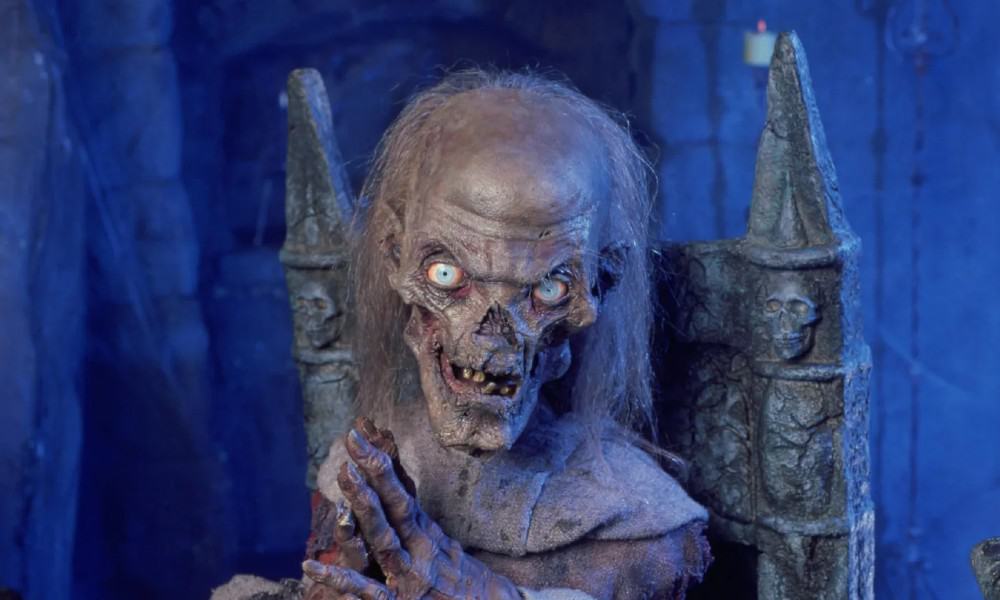
Tales From the Crypt fully embraces its anthology format, with every single episode focusing on different characters and different terrifying tales. What ties all of them together is our host, the Cryptkeeper. He’s a snarky, hilariously mean corpse of a character brought to life by a small army of puppeteers. The show originated on HBO, and its creators embraced the fact that it didn’t have to abide by any of the restrictive standards of network television. As such, episodes were filled to the brim with vulgar language, nudity, sex, and more buckets of blood than you can shake a bodybag at.
Younger horror fans should know that it’s almost impossible to overstate the popularity of Tales From the Crypt and its ghoulish host. Despite all the blood, breasts, and beasts, the show was wildly popular with kids, including my own underage self. Accordingly, it got two spinoffs aimed directly at children: Tales From the Cryptkeeper (a Saturday Morning children’s cartoon) and Secrets of the Cryptkeeper’s Haunted House (a weird gameshow). If that seems odd, this was during the same time that Kenner marketed toys based on Terminator 2 and Aliens directly to kids. What can I say? The ‘90s were weird, man!
Friends In Low Places

One compelling reason to check out Tales From the Crypt is that it had plenty of awesome guest stars, all of whom were happy to do an episode without being tied down to a long contract. Guests included Arnold Schwarzenegger, Brad Pitt, Michael J. Fox, Tom Hanks, and so many more. In most cases, these actors are performing against type, making what happens to them onscreen that much more shocking. Trust me: if you only know actors like Robert Picardo and Wil Wheaton from Star Trek, you’ll never look at them the same way after watching Tales From the Crypt.
For me, though, the single best thing about Tales From the Crypt is the show’s wicked sense of humor. With his relentless puns, wild expressions, and unhinged laughter, the Cryptkeeper sets the tone for a show that has black comedy running through its veins at all times. This adds serious entertainment value and also helps position the show as a light (but filling) bite for horror fans. Not in the mood for elevated horror and don’t have the time for a two-hour psychological thriller? You can always count on Tales From the Crypt to deliver a perfect slice of scary entertainment in under 30 minutes.

There’s not much more to say, especially without spoiling these awesome episodes. Ready to see if this early HBO success story lives up to the hype? Maybe you want to laugh and scream in equal measure, or just write down some weird new puns with which to torment your children? Whatever your reason, the best horror series ever made is just a click away. Tales From the Crypt is currently streaming for free on Tubi, which is arguably the best platform for any boils and ghouls who love a good scare!

TALES FROM THE CRYPT REVIEW SCORE
Entertainment
The Eufy E25 2-in-1 robot vacuum is $400 off at Amazon right now
SAVE 40%: As of July 20, you can get the Eufy E25 robot vacuum-mop combo for $599.99, down from $999.99, at Amazon. That’s a 40% discount or $400 in savings.

$599.99
at Amazon
$999.99
Save $400
As you’ve probably read by now, I have two beagles who love to destroy my floors (particularly right after I’ve cleaned the entire apartment). To keep my sanity intact, I own an arsenal of cleaning supplies, including the Dreame L60 Pro Ultra and the Aero Pro Steam (I call it my “Dreame Team“). But I also know that brand loyalty usually takes a backseat when a really good discount pops up. (Plus, it’s my job.)
Right now, you can get the Eufy E25 robot vacuum-mop combo for $599.99, down from $999.99, at Amazon. That’s a 40% discount or $400 in savings.
Mashable Trend Report
It features 20,000 Pa of suction, empties its own dustbin, and even washes its own mop roller. It also comes equipped with AI obstacle avoidance to dodge everyday clutter (like rogue dog toys), and an extending arm to scrub right up against your baseboards. But, according to some Amazon reviewers, there are a few minor drawbacks, including a louder-than-usual drying cycle and finicky rollers.
Even so, picking a good spot for the base or doing occasional maintenance is a small price to pay to never have to mop your own floors again.

AI music generator Suno breach affects 55M users, per Have I Been Pwned
The Latest Poster For Avengers: Doomsday Secretly Spoils The Plot


