
Entertainment
How To Save Christopher Nolan From Himself

By Robert Scucci
| Published

Christopher Nolan has spent the last 30 years going bigger and better, and I’m starting to wonder how much further he can push the medium of filmmaking. Having followed his career from Memento (2000) all the way through 2023’s Oppenheimer, there’s one pattern that’s become crystal clear: each production has to outdo the last. His first film, 1998’s Following, was produced for a modest $6,000, and it shows on screen. Meanwhile, his upcoming adaptation of The Odyssey tops out at $250 million.
Knowing how Christopher Nolan makes films, it’s safe to say not a single cent is wasted. When he wants to go epic, he goes epic. He’s so committed to scale and scope that I’m surprised he didn’t actually shoot Matthew McConaughey into space on an unsanctioned mission in order to prepare him for Interstellar (2014).
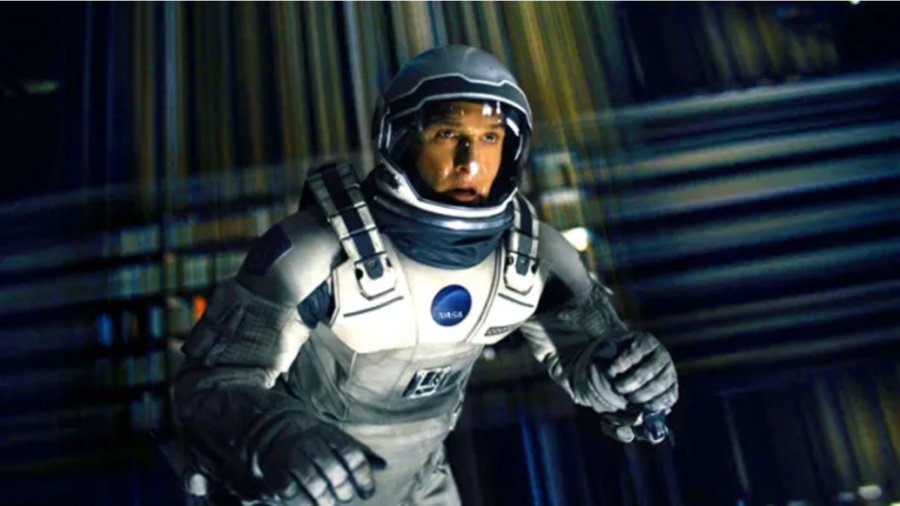
What goes up must come down, though, and I wonder how much bigger Christopher Nolan can realistically make another Christopher Nolan film. Like every privately owned company that demands to see a consistent increase in revenue and shareholder value quarter after quarter, Nolan keeps upping the ante. Most people would probably say the logical next step is to continue pushing the envelope and going even bigger.
Maybe after The Odyssey, Nolan decides he wants to make a film about Old Faithful and will only consider his vision fully realized once he causes the geyser to erupt prematurely, ushering in a new ice age. Or maybe, and feel free to call me crazy here, Nolan could go back to his roots, take a breather, and belt out another generation-defining thriller like Memento or Insomnia.
I’m Not Trying To Give Christopher Nolan Advice, He’s Much Smarter Than Me

While it would be easy to frame a piece like this as “Christopher Nolan Needs To Do This One Thing To Save His Career,” that’s not what I’m trying to do here. Christopher Nolan has made a career out of being Christopher Nolan, and I have not. I’ve been a fan of his filmmaking since his second film. While I can’t in good conscience say anybody can play Batman better than Michael Keaton, his Dark Knight trilogy is still the most cohesive Batman saga we’ve gotten so far, and often cited as responsible for redefining the superhero genre. Christopher Nolan has proven himself as an auteur and filmmaker who doesn’t need advice from anyone (especially me), and he has the clout and freedom to do whatever he wants, probably for the rest of his life.
What I keep thinking about, though, is what would happen if instead of scaling up again, he scaled back. The Odyssey will go down in history as the first major studio film shot entirely on IMAX film cameras. That’s cool and impressive. You know what else is impressive? Memento, one of the greatest psychological thrillers of all time, which was made possible with a $9 million production budget. It’s a perfect movie.

Insomnia takes that same energy and adds some serious star power to the mix in the form of Al Pacino and Robin Williams. It also had five times the budget, but given the talent roster, I’d imagine a healthy chunk of that went toward securing the cast. Even if you take a quick look at his first film, Following, it’s rough around the edges, but it’s still a tight thriller that holds up today despite being made with virtually no budget while Nolan still had to work various day jobs between shoots.
Christopher Nolan thrives in the psychological thriller space. He’s an expert at showing how troubled and conflicting personalities interact when they’re together, and how they act when they’re alone and ruminating. He also knows how to turn those character moments into tension once motives become clearer and the characters are forced to confront not only their demons, but their antagonists. He understands how to pace a man’s fall from grace as external forces beyond his control clash with the circumstances he can control. And he can do all of this for less than $50 million.
Not Asking For A Career Pivot, But Rather A Side Quest
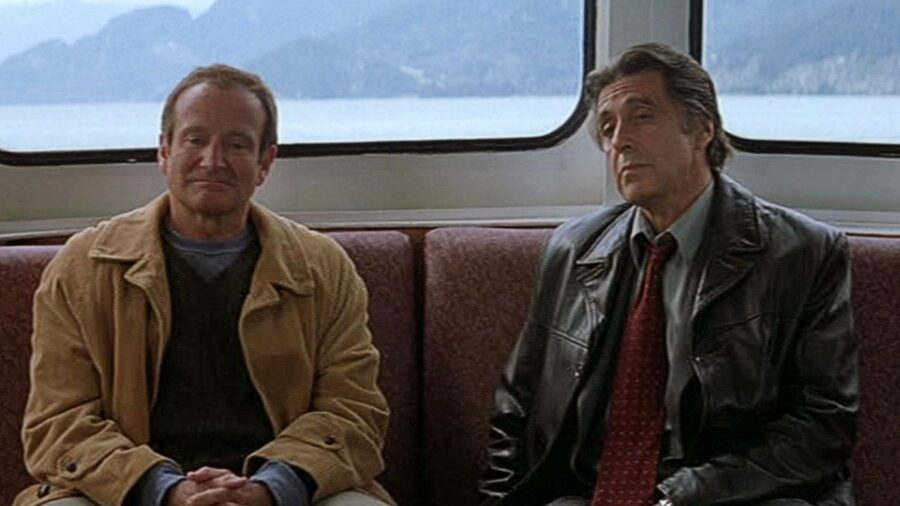
Recently I’ve been thinking about how movie studios could benefit from putting out more titles with shorter runtimes and smaller budgets. My argument is that a movie like Zach Cregger’s Weapons (2025) cost $38 million to make and has already pulled in more than $270 million worldwide. It’s just over two hours long, and it’s a self-contained story. You don’t need to do homework or study history to enjoy what Weapons has to offer. Weapons just happens to you, and you either get it or you don’t.
Memento and Insomnia are cut from a similar cloth. They both clock in under 120 minutes and, in the grand scheme of things, didn’t cost a hell of a lot to make. Imagine the kind of film Christopher Nolan could make today with, say, $100 million. Strip the whole thing down so it’s shot through more conventional, readily available means, and use the budget to secure the appropriate A-list talent, if needed, for the project.
Meanwhile, films like 2023’s The Flash, which cost more than $200 million to produce, didn’t even break even once marketing and distribution costs were factored in.

The problem Christopher Nolan has, and it’s a good problem to have, is that he’s been in the freakin’ zone for nearly 30 years. He takes massive creative risks, and they’ve all paid off up to this point. He can literally do anything he wants. If he wanted to bring back LaserDisc for a one-off feature, he could probably secure an investor willing to make it happen. If he wanted to make a time travel flick, he could probably snap his fingers and somebody would materialize out of thin air to help him track down an entire lot of functional DeLorean DMC-12s.
I’m a dreamer, though, and I’d love nothing more than to see Christopher Nolan take everything he’s learned and perfected since bursting onto the scene, scale things back, and go smaller instead of bigger after The Odyssey. This isn’t an indictment of his filmmaking or creative direction, but rather a celebration of it. I can’t say Nolan has ever missed. What I can say is that I’d love to see him make something more reminiscent of his roots now that he’s older, wiser, and influential enough to do whatever he wants whenever he wants, and see what that kind of wisdom could do for the genre that launched his career.

And no, I’m not asking for Memento 3D. But a tight, lean, dark, gritty thriller made today with Christopher Nolan’s talent and passion for the craft would absolutely pop off if he ever decided to give it a shot. He’s already done so much more with less, so just imagine the kind of thriller he could make now with the resources currently at his disposal.
Entertainment
The Worst Director’s Cut Ever Made Is Now Streaming For Free

By Chris Snellgrove
| Published

As a movie lover, there’s one phrase that always gets my blood pumping: “director’s cut.” We all know that studios often make changes that can absolutely ruin a movie, like when they added those awful voiceover narrations to Blade Runner. As soon as he could, Ridley Scott released a version without those voice-overs that is infinitely better.
While Scott might have gone a bit overboard in releasing so many different edits over the years, the point stands: a director’s cut is usually a way of improving a movie. Every now and then, though, a director comes along and does his best to ruin a classic.

One such man is Richard Kelly, best known as the director of Donnie Darko. The original film stalled out at the box office, but it’s now considered a cult hit due to its heady mixture of violence, time travel, and coming-of-age teen hijinks, complete with the creepiest bunny ever put on film.
The most compelling thing about the movie is that it refuses to explain most of its craziest events, forcing you to think about what the heck you just watched long after the credits roll. Unfortunately, Donnie Darko: The Director’s Cut ruins everything cool and mysterious about the original by painfully explaining everything in excruciating detail.
Not All Director’s Cuts Are Created Equal

If you loved Donnie Darko in 2001, then the arrival of the Director’s Cut in 2004 probably seemed like a big deal. This new cut promised over 20 minutes of new footage, new special effects, and improved sound quality. Sounds great, right?
Unfortunately, the new footage mostly comes from deleted scenes awkwardly shoehorned back into the movie, without any concern for pacing or characterization. The result is an overly lengthy film; while the original Donnie Darko was a comparatively svelte 113 minutes, the Director’s Cut’s 134 minutes makes it feel like a bloated, plodding mess.

There are some other unnecessary changes here, including tweaks to the soundtrack. For another film, such changes might not be a big deal. However, Donnie Darko had an absolutely perfect soundtrack, one which used a series of quirky bangers to set the scene for the surreal events of the film.
The original needle drops made everything feel hazy and dreamlike, so any changes to them (even minor changes, like replacing “The Killing Moon” with “Never Tear Us Apart”) feel like cinematic blasphemy that is as offensive as it is completely unnecessary.
A Frank Examination

The main reason the Donnie Darko director’s cut sucks, though, is that director Richard Kelly forgot the quintessential rule of sci-fi storytelling: less is more. The original movie presented plenty of time-tripping mysteries, including how (spoilers, sweetie!) the title character traveled into his own past, ensuring that he’d die when a jet engine inexplicably fell into his bedroom.
Donnie laughs right before he dies, secure in the knowledge that he is fixing a doomed timeline and saving someone he loves. As the credits roll, first-time viewers are always struck by the same question: “What the heck just happened?”

Unfortunately, the Director’s Cut answers that question in the most literal and boring way. You see, in the original cut, Donnie (Jake Gyllenhaal) takes an interest in time travel and receives a book, The Philosophy of Time Travel, written by a now-retired science teacher. But we don’t get much actual wisdom from the book and must figure out the timey-wimey narrative on our own.
In the Director’s Cut, we get pages from this book literally superimposed on the screen. Thanks to all this dreadfully boring exposition, we finally know what happened in the movie, and it’s pretty wild!
Ruining The Greatest Trip In Cinema

Apparently, the moment the jet engine landed in Donnie’s bedroom, it created a Tangent Universe. The young man is a Living Receiver who gains bizarre superpowers, including telekinesis and premonition, and has a seemingly impossible job: to return the jet engine to the Primary Universe, the only way to prevent the destruction of the entire universe.
By the end of the film, a traumatized Donnie creates a time portal and rips a jet engine off the plane that his mother and younger sister are in. He sends that engine and himself into the past, killing himself and closing the tangent universe while he laughs, knowing his sacrifice will save those he loved.

Is it a neat explanation? Maybe. But the one that you came up with in your head was probably way, way cooler. Unfortunately, this is the nature of science fiction: being handed the truth (like what the Smoke Monster is in Lost and what the Upside Down is in Stranger Things) is never as satisfying as trying to figure everything out on your own.
Donnie Darko: The Director’s Cut hands you every boring explanation on a plate, sapping the mystery from a movie it already ruined with new scenes and a botched soundtrack. If you want to watch the worst director’s cut ever made, though, it’s now streaming for free on Tubi.

Trust me, though: after seeing it, you’ll want to escape your new Tangent Universe and return to the timeline where you never watched this cinematic abomination!

Entertainment
The Unfairly Hated Sci-Fi Flop That's Suddenly Dominating On Streaming
Edit a lot of idiotic and stolen together into two hours of film, and you end up with a big, silly summer blockbuster in which legless men can be heroes, and the elderly can be useful.
By Joshua Tyler
| Updated
In theory, director Peter Berg’s Battleship is supposed to be based on the popular guessing game of the same name. In reality, there’s almost no connection between Battleship the movie and its Milton Bradley namesake at all, outside of a single thrilling ten-minute sequence involving buoys, missiles, and a big board. The rest of the movie is a puzzle made up of pieces cribbed from some of history’s most infamously ridiculous summer blockbusters.
Sometimes you want big, silly, and stupid on a random Friday night when you’re not going out.
Battleship is an alien invasion movie, I guess, but it’s also one of many Hollywood movies that only really uses aliens because killing them won’t offend anyone. Like any alien species imagined under such creatively corrupted circumstances, these extraterrestrials aren’t very good at their job.
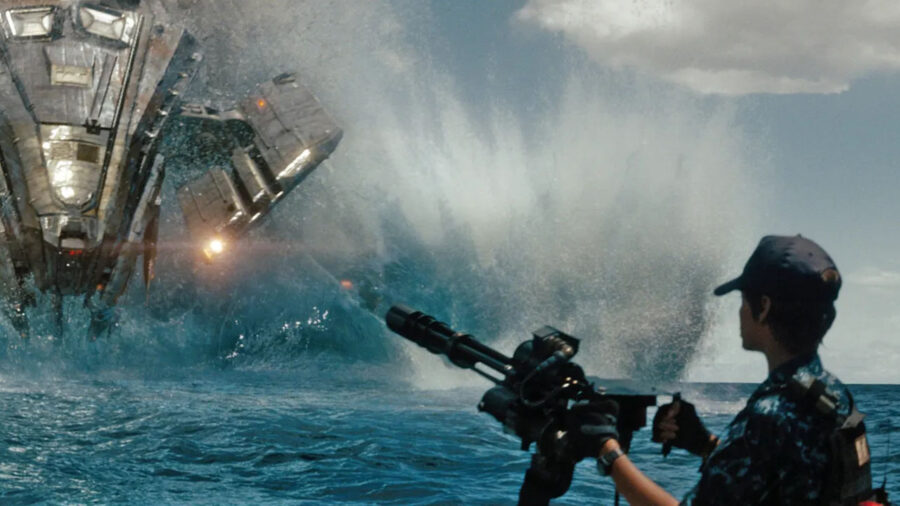
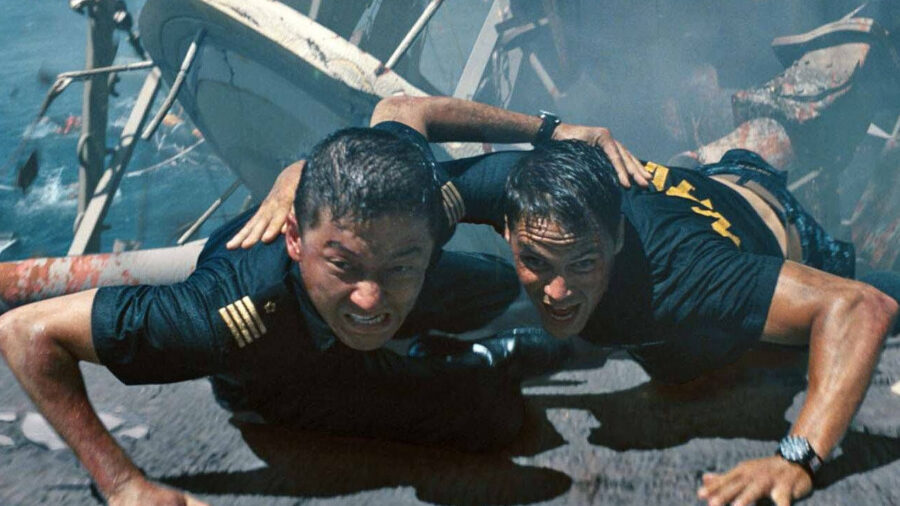
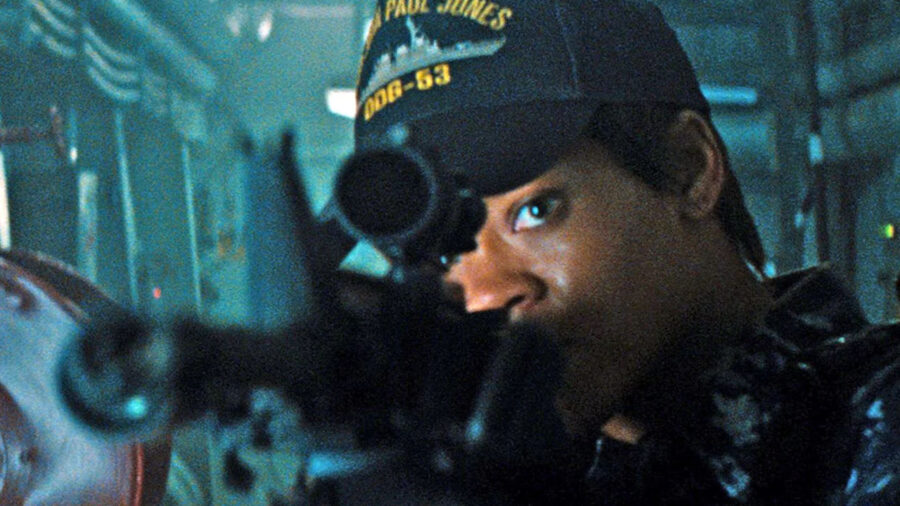
They land in the middle of a naval exercise, which might not be tactically ridiculous if their ships had some sort of technological superiority that would enable them to crush their human opponents without a thought, but they don’t. Their ships can’t even fly.
Edit a lot of idiotic and stolen together into two hours of film, and you end up with a big, silly summer blockbuster in which legless men can be heroes, and the elderly can be useful.
Instead, they sort of flop about in the water and shoot at the Navy with weapons that, while weirder, aren’t all that much more effective than those used on the deck of a World War II-era battleship. Actually, they’re exactly that effective, as the movie later goes on to demonstrate.
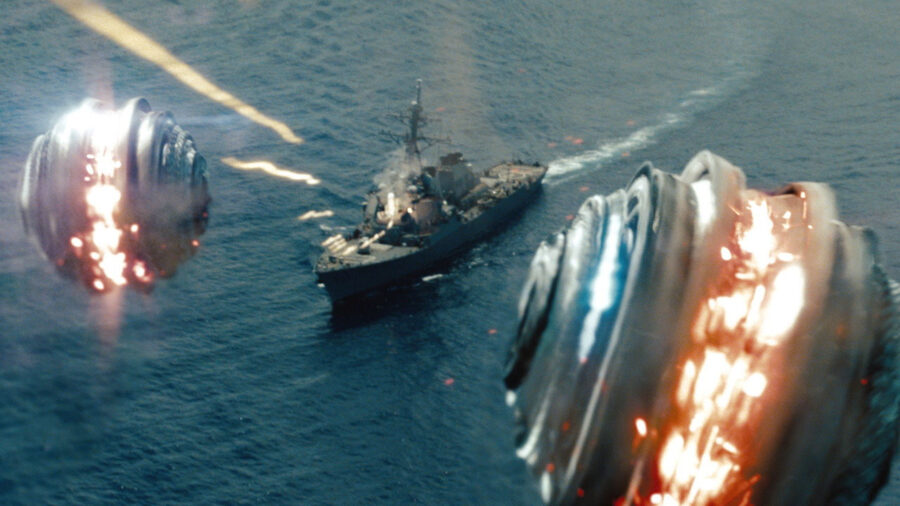
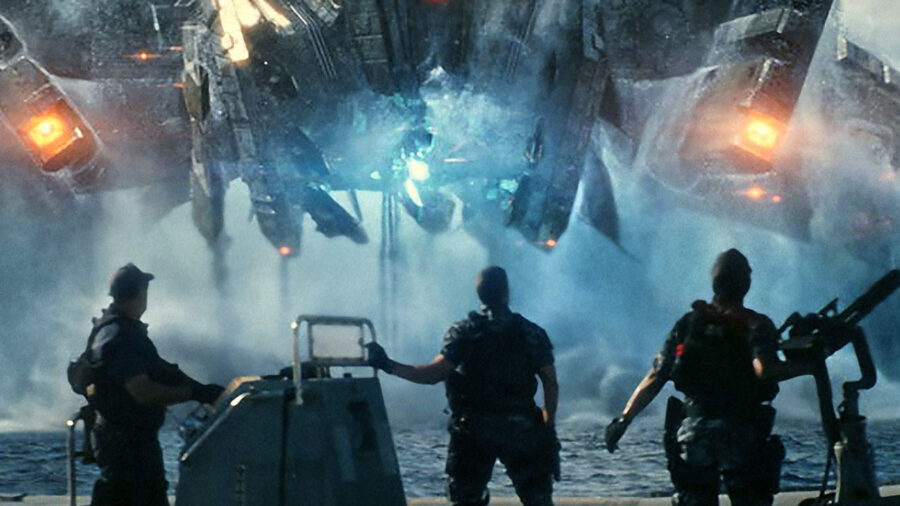
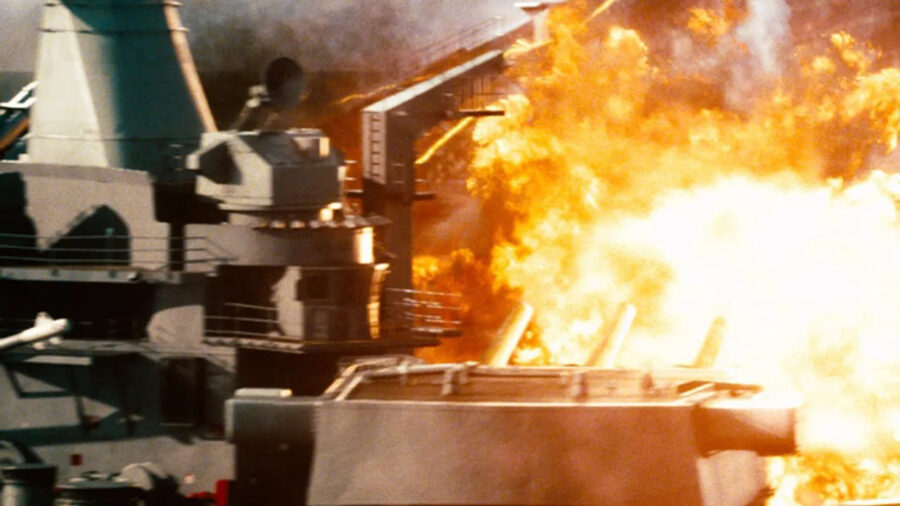
Eventually, we find out they’ve arrived as some sort of pre-invasion force, we learn this via an out-of-place scene stolen from every alien invasion movie you’ve ever seen in which an ET mind-melds with one of the crew. So they’re here to wipe out humanity and take the planet for themselves, thus it makes sense when they set about blowing up our ships and attacking the Hawaii mainland. What doesn’t make sense is the alien attackers’ hesitance to shoot at anything that isn’t already shooting at them (later abandoned) or their refusal to kill little kids playing baseball (though they’re happy to murder the ones who use our highway system).
Taylor Kitsch is heroic, Rihanna steals scenes running around shooting guns, and Brooklyn Decker’s moves are so hypnotic it doesn’t matter what sort of dreck comes out of her mouth as dialogue.
So the aliens are ineffectual, ill-equipped, and their tactics don’t make a lot of sense. This leaves the film’s human component to carry the day and, well, they sort of do.
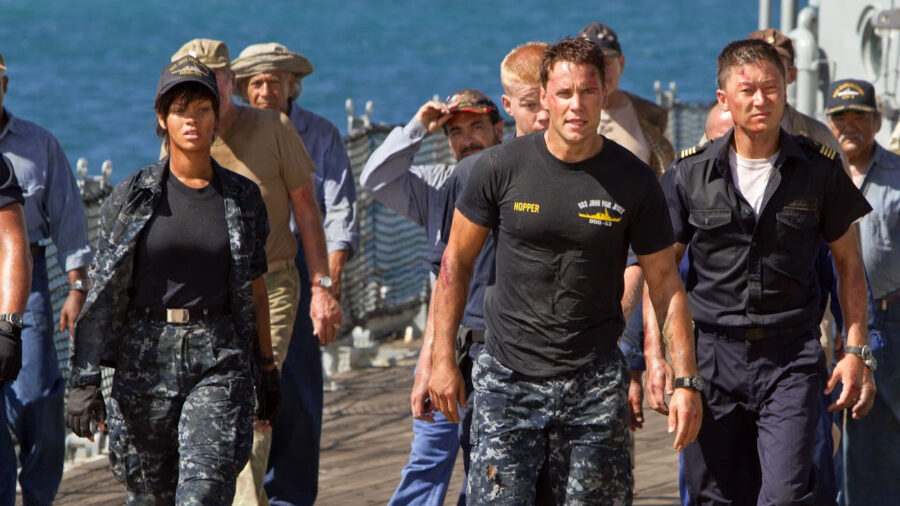
Taylor Kitsch is heroic, Rihanna steals scenes running around shooting guns, and Brooklyn Decker’s moves are so hypnotic it doesn’t matter what sort of dreck comes out of her mouth as dialogue. You won’t even mind that half the script seems like it was written as a PSA for the families of wounded soldiers.
Does it matter if you’re being manipulated if you know you’re being manipulated all along? I say it doesn’t.
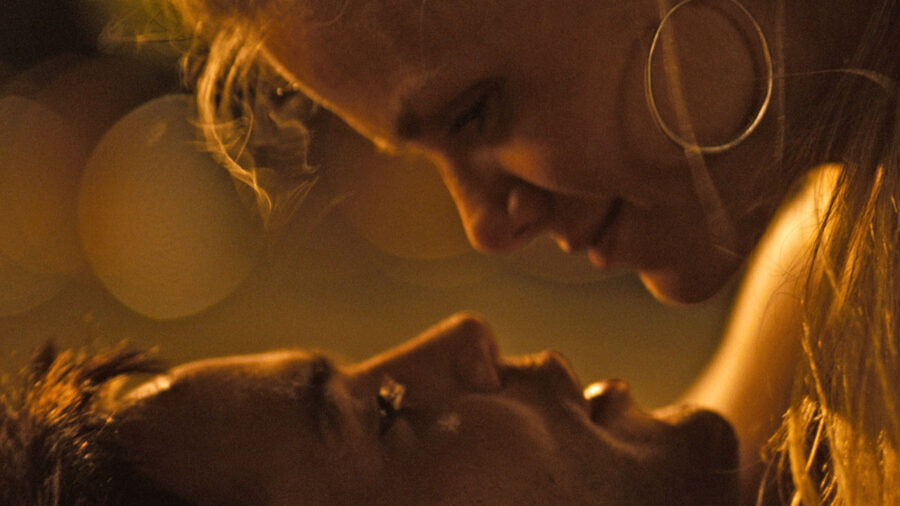


Every moment of Battleship is either idiotic or stolen. Edit a lot of idiotic and stolen together into two hours of film, and you end up with a big, silly summer blockbuster in which legless men can be heroes, and the elderly can be useful.
Sometimes you want big, silly, and stupid on a random Friday night when you’re not going out. It’s unlikely anyone will make anything sillier or stupider than Battleship any time soon. Go ahead and watch it; just don’t tell anyone.
Battleship is now widely available on most streaming platforms, including Amazon Prime Video, YouTube, Apple TV+, and Google Play.
Entertainment
Star Trek Is Releasing New DS9 And Voyager Stories In The Worst Possible Way
By Chris Snellgrove
| Published

You remember that old short story, “The Monkey’s Paw”? It’s a creepy tale with a classic conceit: after a family receives the titular monkey mitten, they realize that they can make wishes on it. Those wishes come true, but in the worst possible way. Like, if you ask for money, you’ll get it, but only when your kid dies, and you receive their life insurance. At any rate, I had this story firmly in mind as I learned about the latest Star Trek project, one that is guaranteed to piss off everyone who hated Starfleet Academy.
Fans are getting the new Star Trek series we begged for, but not on Paramount+. Instead, they are online comics that will premiere on WEBTOON, a platform featuring vertical comics. One of these comics is Stargazers, a slice-of-life story about a young man finishing up school aboard Deep Space Nine. The other comic is Recollection, a more mature adult mystery about an amnesiac woman who wakes up on a mysterious starship. The most interesting thing about these comics is that they offer a canonical look at life after the Dominion War. Unfortunately, this move is one that is guaranteed to annoy older fans while failing to bring any younger fans into the fold.
Star Trek Goes… Vertical?

If you grew up watching Star Trek: The Next Generation or even The Original Series, you probably have a simple question right now: what the heck’s a webtoon? Webtoons themselves are vertical comics that are designed to be read on your phone rather than a tablet or desktop monitor. While often referred to as “episodes,” most webtoons are designed as static, scrollable panels rather than motion comics or other types of animation. Incidentally, WEBTOON is also the name of the popular webtoon platform that Paramount will be using to launch Stargazers and Recollection.
As you might imagine, webtoons are typically aimed at younger audiences, and that’s exactly who Paramount is targeting with these new comics. Stargazers is particularly youth-coded as it focuses on a young human (Leon) and his faithful canine companion as he tries to make friends and find love with a peer group that includes a Bajoran and a Changeling. It’s designed as a Boys’ Love comic, which means you can expect plenty of same-sex romance and quirky dating escapades with Leon and the boy of his dreams.
Star Trek Forgets All About It

Comparatively, Recollection is a more adult tale focusing on an amnesiac woman who wakes up on a weird Federation vessel with six other people and a holopilot who is seemingly lying to her. Eventually, she meets a Vulcan who seems to know who she is, and this logic-loving alien gives our hero a device that allows her to see fragments of her old life. By the time it’s over, she’ll need to solve puzzles old and new to fully unpack the mystery that her life has become.
On paper, these webtoons have a few things going for them. Paramount is clearly throwing everything at the wall to see what sticks, and dropping new Star Trek stories on the most popular webtoon platform may win over younger audiences in a way that Starfleet Academy couldn’t. Plus, making these stories canonical is a downright diabolical way to get older audiences to read them. We’re apparently never going to get a Star Trek: Legacy series, so Stargazers and Recollection just became the only real way to find out more about what happened in the 25th century after the Dominion War ended and after Voyager made it home.
Can Star Trek Fans Live With It?

However, my inner cynic can’t help but think that these webtoons will fizzle out to very little fanfare. Star Trek has had three animated series (gout if you count those awful YouTube shorts), but none of them managed to win over young fans. Meanwhile, Starfleet Academy was designed from the ground up as a romance-driven teen drama in space, but it never found the young audience it was desperately searching for. If smart, brightly-colored cartoons and an insanely flashy show filled with hot actors weren’t enough to recruit young fans, I don’t think a cheap web comic with the art design of a mobile game is really going to move the needle.
At the very least, while Starfleet Academy was hidden behind a streaming subscription, fans of all ages can check out these web comics for free. Stargazers: A Star Trek Story will be releasing its first three episodes on the WEBTOON app for free on May 17. Meanwhile, Recollection: A Star Trek Story will launch on the same platform later this year. With no new Star Trek shows in production, these may be the closest we’ll get to a new series in a good, long time, but maybe that’s for the best.
After all, we older fans have spent decades wanting new stories to explore what happened after Deep Space Nine and Voyager. If these comics bomb, we may collectively learn the major lesson of “The Monkey’s Paw”: be careful what you wish for!

The Worst Director’s Cut Ever Made Is Now Streaming For Free
For Eclipse, the $2.5B Cerebras win is just the start of realizing its physical-world thesis


