
Entertainment
How The Most Popular Movie Of The 1990s Made You The Bad Guy

By Joshua Tyler
| Published
Below is what you think South America’s Aztec pyramids look like.

This is what they actually look like.

What the Aztecs actually built was so shoddy it dissolved in the rain after the Conquistadors showed up. The impressive, long-lasting structures you’ve been attributing to them weren’t built by the Aztecs or any other Native American culture. They predate them by thousands of years, and no one knows for sure who built them. The Aztecs found them in the jungle, moved in, and started using them to perform horrific human sacrifices.
You believe something different because of Hollywood’s persuasive ability. It’s a process that’s been happening since the dawn of film, and it began with the books of Zane Grey.
Hollywood Was Created By Agreeing To Do Anything For Money

If you know Zane Grey at all, it’s as the author of cheap cowboy books your Dad used to read before bed. But his work wasn’t always viewed that way. In the early 1900s, he was one of the pet authors of America’s elites, who had recently become enamored with a trendy ideology suggesting we had the American Indians wrong.
These ideas had been around since the mid-1800s, but never gained any traction. The elites continued circulating them, though, lapping up books which supported their unpopular view of American Indians as victims.
So Zane Grey wrote a book called The Vanishing American, in which he reframed American Indians as morally superior and European descendants as inferior murderers. The elites loved it. However, no one else did. The average American of the time, perhaps with the recently heard horror stories of their grandparents’ real experiences fighting them in their heads, still thought of Natives as brutal savages who had it coming.
Around that same time, movies were just starting to become a thing. But the movie industry was viewed as low-class, and it was sneered at by those same Zane Grey fanboy elites.

So, in what would become a pattern for the film industry, in 1923 Hollywood cynically adapted Zane Grey’s The Vanishing American into a movie, specifically to access the investment capital of the American upper class. This strategy worked and was one of the first steps toward legitimizing the film industry.
Despite being turned into a movie back in the days when there weren’t many movies, The Vanishing American didn’t change the minds of anyone outside that upper crust. While Hollywood had made the movie, it hadn’t made them true believers in its ideology.
Jimmy Stewart’s Broken Arrow Launders American Indians

Hollywood spent World War II cranking out government-mandated content showcasing Germans as crazed demon worshippers and the Japanese as evil caricatures. When the war was over, the head honchos in Hollywood, who were by then on their way to becoming the new elites, had begun to adopt those early-1900s elitist views.
Yet the war hadn’t changed the minds of average Americans, who returned from fighting Nazis with their belief in the superiority of their own culture not only intact, but fortified by their experience battling repugnant Nazi culture. So in 1950, Hollywood set out to change those average American minds, starting with their favorite and long-time cultural villain: the American Indian.
20th Century Fox hired director Delmer Daves to adapt a book by Elliot Arnold called Broken Arrow, a book that fictionalized the signing of a peace deal between the Apache Chief Cochise and the American government. Daves’s explicitly stated purpose in making the film was to make it Pro-Indian, something which was at the time basically unheard of.

To play Broken Arrow’s native loving crusader, he hired the most sympathetic actor who has ever lived: Jimmy Stuart. To play the chief Cochise, Daves hired a white man. In fact, all the Indian speaking roles are played by white actors in brownface, actors who talk in plain English rather than attempting some semblance of an accent.
That was Broken Arrow’s chief trick. Daves wanted his caucasian audience to think of Native Americans as being no different from them. This isn’t a guess; the movie explicitly states that as its primary goal. So Broken Arrow painted some Californians brown and called them Indians, while doing little to make them seem like Native Americans.
This is Familiarity Laundering.
Familiarity Laundering is the process of making a person, group, idea, or culture seem safer and more acceptable by stripping away the traits that make it feel foreign, difficult, alien, or threatening. It’s like changing the cover of a book and pretending that has somehow also changed its contents.

The native characters’ costuming is minimal. Feathers are nowhere to be seen, and most of the natives Jimmy Stuart encounters look more like day laborers hanging out in a Home Depot parking lot than they do fierce Apache warriors.
Of course, the real Apaches didn’t speak English and didn’t act like Europeans at all, but in this movie they do, and Broken Arrow papers over that factual inaccuracy at the outset with an announcement claiming everything you’re about to watch is totally factual and truly how it happened.
It’s a clumsy and obvious attempt at audience manipulation, but it worked. After decades of trying, public opinion started to shift. The myth of the noble savage began to grow among the media class.
Kevin Costner Pushes Jimmy Stewart’s Message Across The Finish Line

Average Americans continued to resist. Schools still taught the Plains Indians as savages and their Mesoamerican counterparts as doubly so, while the Conquistadors were still taught as heroes.
So the now fully convinced media doubled down on the noble savage myth, with crying Indians and rock songs about how cool they were. They had limited success, but it wasn’t until 1990 that it finally, fully took hold and became the common view. It was Kevin Costner who made it happen.
1990 was the year Dances With Wolves arrived in theaters, made half a billion dollars at the box office, and cleaned up at the Oscars. In it, Costner plays Union soldier John Dunbar. He becomes a war hero by accident and uses his reward to escape to a remote frontier post.
He finds his post abandoned, but stays anyway. Alone with his horse and a curious wolf, Dunbar slowly comes into contact with a nearby Lakota Sioux tribe.

What begins as fear turns into trust, helped by Stands With A Fist, a white woman raised by the tribe. Her entire family was slaughtered by the Lakotas she lives with, but the film glosses over that by only showing it in a flashback with slow motion and careful cutaways, so the audience never sees any of the true brutality.
Stands With A Fist is played by Battlestar Galactica’s Mary McDonnell, and she’s a key component. Until this movie, most people believed women taken by natives were kept as slaves or worse. But Dances With Wolves uses her to “prove” the Lakota are kind and caring. She loves her life there; is treated like an equal, and doesn’t want to leave.
Costner’s Dunbar learns their language, joins their hunts, fights beside them, and begins to understand that the “savages” he was taught to fear are not the threat. The audience is made to believe that real danger on the frontier isn’t the natives; it’s the army coming west behind Dunbar.
This is an Identification Reversal
Identification Reversals are something we’ve talked about a lot on Screenwashed. If you want to see how it’s used in other movies, check the link! It’s a psychological technique in which an audience is initially encouraged to identify with one character, viewpoint, or emotional response, only for that identification to gradually shift to an opposing or contrasting figure as the story progresses.

Soon Dunbar, as the audience representative, turns traitor and joins the Lakota in fighting his own people. The film justifies this by portraying American civilization as collapsing and corrupt. Every part of it Dunbar encounters is a mess.
American medicine is quackery; American forms of government are frauds; American frontier living is so terrible that people are literally committing suicide to escape it. It’s so cartoonish and ridiculous that your brain never questions it. You accept it as, ok, this is what history must have really been, because obviously no one would invent something this silly.

This is an Absurdity Bypass.
An Absurdity Bypass is a persuasion trick where an idea is made so extreme, exaggerated, or openly ridiculous that the audience stops applying ordinary skepticism and accepts it as part of the premise.

It’s an intellectual clown show, but Dances with Wolves looks and feels beautiful. It was all anyone could talk about that year. The world fell in love, and whatever remaining anti-Indian sentiment was left after decades of screenwashing totally evaporated.
Now Americans were clearly the evil ones, and Native Americans were a great and proud civilization which had somehow been conquered by a totally inferior one. None of that makes any sense, but that’s how it felt to audiences walking out of Dances With Wolves. That feeling has only intensified, pushed by further and continuous screenwashing being used on the public ever since.

Dances With Wolves finished the job Broken Arrow started, by fully flipping popular sympathy toward Native Americans and transferring the stereotype of violent savage Indians over to the soldiers who’d previously been portrayed as defenders of civilization.
That stereotype reversal was then transferred to all native cultures. Suddenly Aboriginal bushmen became noble, and the Aztecs invented an advanced civilization with a polite and peaceful culture that definitely didn’t ritually murder millions of children. Even those cannibalistic tribesmen in Papua New Guinea probably weren’t actually so bad. Sure, they may have eaten Michael Rockefeller back in 61, but have you seen a picture of him? That guy looked delicious.
For you see, my fellow Americans, you were the bad guy all along. Enjoy your fake Aztec pyramids, everyone; you’ve been screenwashed.
Entertainment
The Latest Poster For Avengers: Doomsday Secretly Spoils The Plot
By Chris Snellgrove
| Published

With less than five months left until the film’s release, Marvel has taken their marketing for Avengers: Doomsday to the next level. Right now, fans are mostly focused on the trailer that dropped today, which is no surprise; after all, it’s not every day that you see the reunion of Thor and Steve Rogers or, for that matter, a battle between Shang-Chi and Gambit. Amid all the breathless hype over the trailer, however, a more powerful advertisement is lurking in plain sight. At the same time Marvel launched the trailer, they also released a new Avengers: Doomsday poster.
Compared to that crowded character poster, the new poster is downright subdued. It features Doctor Doom staring at a huge tapestry with a broken world and two characters: a woman and a boy. Some comics fans think this image is Doom and his mother, a character who is eventually damned to Hell. However, other fans are convinced that this is actually an image of Doom’s wife and child; if true, this would effectively ruin the biggest plot twist. How does it do that? If you don’t mind some potential spoilers for this year’s biggest film, just keep reading!
You Can’t Spell “Painting” Without “Pain”

So, let’s start this story in reverse (just don’t let the TVA get me!): why do some fans think the woman in this poster is Doctor Doom’s mother? In the comics, she’s a big deal. To defeat an evil dictator who was ruling her country with an iron fist (an actual fist, not the kung-fu guy), she made a deal with the devil. As usual, the deal went wrong, and she lost control of the powers that she gained from Mephisto. She renounced those powers, got killed, and was then dragged into Hell. To see her again, Doom later mastered magic, visited Mephisto, and conducted an experiment that ruined his own face.
However, all of the lore behind this origin story is too dense to fit into Avengers: Doomsday, a movie which is already crowded with endless character cameos. It seems the movie is taking a different direction, as multiple reports have claimed that the two figures are actually Doom’s wife and child. An unconfirmed leak of the movie’s plot (don’t say I didn’t warn you about spoilers, kids!) claims that Doom actually lost his family to one of the incursions, which is when one reality collides with another. This motivates Doom to learn more about the incursions and to plot his revenge.
A Hero Will Be Broken

Revenge against whom, you ask? According to the leaked plot, Steve Rogers! Reportedly, Loki visits the former Captain America in the past and warns him that the TVA will prune his entire timeline because he’s not supposed to be there. In an act of seeming kindness, Loki brings Cap, Peggy, and their young son to the Fantastic Four’s universe. However, the leak claims that Steve’s presence in this universe somehow triggers an incursion and that Doom disfigured himself and killed his own wife and son trying to stop it. In a shocking twist, Doom reportedly kills Steve’s son in front of the hero in an act of vengeance.
Now, again, all of this comes from a leaked plot summary that hasn’t been confirmed, so all of this could be an Ego-sized bottle of hogwash. But it’s worth noting that the Avengers: Doomsday teasers last year prominently focused on both Captain America and Thor becoming fathers. This potentially adds credence to the idea that this is a film about family and how far someone will go to protect the ones they love. If the leaks are true, this innocuous poster featuring Doctor Doom is spoiling the motivation the villain will have to cross time and space and cross countless moral event horizons along the way.

A movie where costumed vigilantes (like Batman, Spider-Man, and so many more) are driven by the ghosts of family members they lost when they were children? Well, nobody ever accused Marvel of being all that original!
Entertainment
The Best Horror Series Ever Made Is Now Streaming For Free
By Chris Snellgrove
| Published

My absolute favorite kind of movie is the anthology. When you have a collection of short films all rolled into one, it provides the ultimate ROI for the audience. Don’t like one of the stories? You can just thug it out with the short runtime or skip ahead to the next tale. Either way is infinitely preferable to slogging through a two-hour film that started boring you to tears in the first scene. The anthology is much rarer in television, however, because networks and streamers have learned just how attached fans get to the same characters and stories, causing them to run these shows into the ground.
Heroes, Stranger Things, Star Trek: Discovery…what do all of these shows have in common? They were designed to be anthologies that would change things up each season, but their early success meant we were stuck with the same cast for years as the show got worse. Fortunately, true anthology lovers are just a click away from getting their fix. Right now, Tales From the Crypt is streaming for free on Tubi, just waiting to delight all you ghouls and boys. It’s not just the perfect anthology show; it is, in fact, the greatest horror series ever made!
Meet The Cryptkeeper
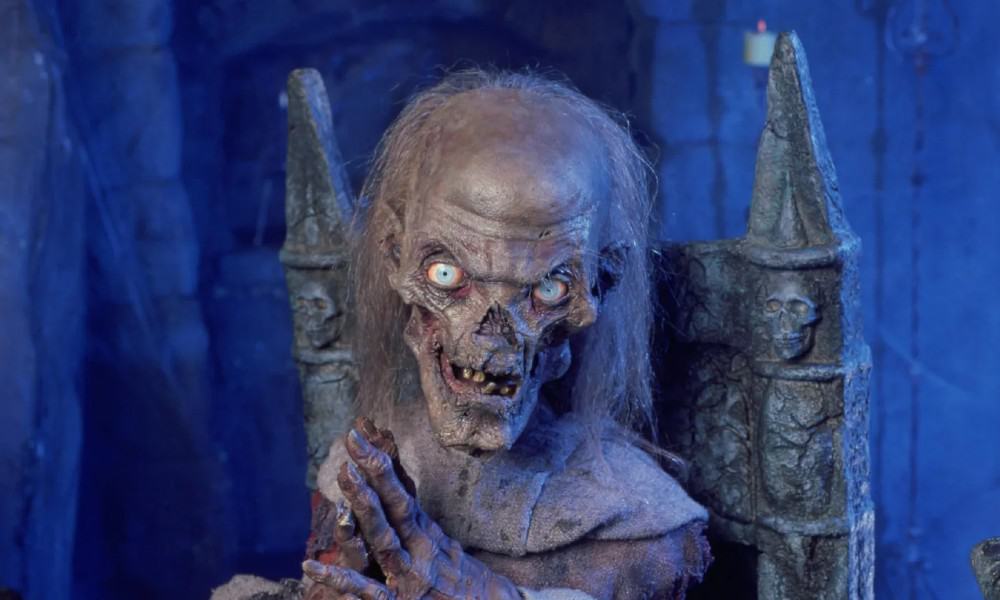
Tales From the Crypt fully embraces its anthology format, with every single episode focusing on different characters and different terrifying tales. What ties all of them together is our host, the Cryptkeeper. He’s a snarky, hilariously mean corpse of a character brought to life by a small army of puppeteers. The show originated on HBO, and its creators embraced the fact that it didn’t have to abide by any of the restrictive standards of network television. As such, episodes were filled to the brim with vulgar language, nudity, sex, and more buckets of blood than you can shake a bodybag at.
Younger horror fans should know that it’s almost impossible to overstate the popularity of Tales From the Crypt and its ghoulish host. Despite all the blood, breasts, and beasts, the show was wildly popular with kids, including my own underage self. Accordingly, it got two spinoffs aimed directly at children: Tales From the Cryptkeeper (a Saturday Morning children’s cartoon) and Secrets of the Cryptkeeper’s Haunted House (a weird gameshow). If that seems odd, this was during the same time that Kenner marketed toys based on Terminator 2 and Aliens directly to kids. What can I say? The ‘90s were weird, man!
Friends In Low Places

One compelling reason to check out Tales From the Crypt is that it had plenty of awesome guest stars, all of whom were happy to do an episode without being tied down to a long contract. Guests included Arnold Schwarzenegger, Brad Pitt, Michael J. Fox, Tom Hanks, and so many more. In most cases, these actors are performing against type, making what happens to them onscreen that much more shocking. Trust me: if you only know actors like Robert Picardo and Wil Wheaton from Star Trek, you’ll never look at them the same way after watching Tales From the Crypt.
For me, though, the single best thing about Tales From the Crypt is the show’s wicked sense of humor. With his relentless puns, wild expressions, and unhinged laughter, the Cryptkeeper sets the tone for a show that has black comedy running through its veins at all times. This adds serious entertainment value and also helps position the show as a light (but filling) bite for horror fans. Not in the mood for elevated horror and don’t have the time for a two-hour psychological thriller? You can always count on Tales From the Crypt to deliver a perfect slice of scary entertainment in under 30 minutes.

There’s not much more to say, especially without spoiling these awesome episodes. Ready to see if this early HBO success story lives up to the hype? Maybe you want to laugh and scream in equal measure, or just write down some weird new puns with which to torment your children? Whatever your reason, the best horror series ever made is just a click away. Tales From the Crypt is currently streaming for free on Tubi, which is arguably the best platform for any boils and ghouls who love a good scare!

TALES FROM THE CRYPT REVIEW SCORE
Entertainment
The Eufy E25 2-in-1 robot vacuum is $400 off at Amazon right now
SAVE 40%: As of July 20, you can get the Eufy E25 robot vacuum-mop combo for $599.99, down from $999.99, at Amazon. That’s a 40% discount or $400 in savings.

$599.99
at Amazon
$999.99
Save $400
As you’ve probably read by now, I have two beagles who love to destroy my floors (particularly right after I’ve cleaned the entire apartment). To keep my sanity intact, I own an arsenal of cleaning supplies, including the Dreame L60 Pro Ultra and the Aero Pro Steam (I call it my “Dreame Team“). But I also know that brand loyalty usually takes a backseat when a really good discount pops up. (Plus, it’s my job.)
Right now, you can get the Eufy E25 robot vacuum-mop combo for $599.99, down from $999.99, at Amazon. That’s a 40% discount or $400 in savings.
Mashable Trend Report
It features 20,000 Pa of suction, empties its own dustbin, and even washes its own mop roller. It also comes equipped with AI obstacle avoidance to dodge everyday clutter (like rogue dog toys), and an extending arm to scrub right up against your baseboards. But, according to some Amazon reviewers, there are a few minor drawbacks, including a louder-than-usual drying cycle and finicky rollers.
Even so, picking a good spot for the base or doing occasional maintenance is a small price to pay to never have to mop your own floors again.

Bluecore Energy raises $10M to build portable nuclear reactors on barges
Music streamer Deezer says more than 50% of daily uploads are AI-generated


