
Entertainment
How One PG-13 Sci-Fi Movie Destroyed An R-Rated Franchise

By Drew Dietsch
| Published
You know what I should talk about more? Sci-fi movies from the ‘90s. I feel like I haven’t given that niche genre enough attention.
Obviously, I love ‘90s cinema as many of our videos prove, and the sci-fi of the decade is a particular favorite genre. But I have another qualifier to add: franchise films. I find franchise filmmaking fascinating from a certain point of view.
While it can be fun and creatively stimulating to talk about canon and carryover characters and all the direct art involved in franchise films, it’s more intriguing to me to look at franchise movies from their strategic standpoints.
Specifically, what are these different movies attempting to do both collectively and individually when it comes to their franchise mindset?
Basically, what is an identifiable success point a franchise film entry is trying to achieve? Other than, you know, buttloads of cash.
Our subject today is a franchise sequel that many fans and casual audiences saw exactly what it was trying to achieve and rejected it, putting its movie franchise on ice for over two decades.
This is why RoboCop 3 failed.
RoboCop 3 And Why It Failed
Alright, let’s get personal real quick. RoboCop is my second favorite film of all time. It’s a movie that I could talk about forever and why it’s so personal to me, but we’ve got a failure to analyze. If you’d like to see that kind of video, make sure to mention that in the comments.
Suffice to say, RoboCop is a well-established genre classic that, if you haven’t seen it, you’re depriving yourself of an effects blockbuster that takes as much care with its story and characters as it does the action and comedy.
As far as RoboCop 2 is concerned, we’re only going to talk about it as it relates to RoboCop 3. If you’d like to hear my thoughts on RoboCop 2, check out the GenreVision movie club episode we did on it for our We Are the Robots theme month.
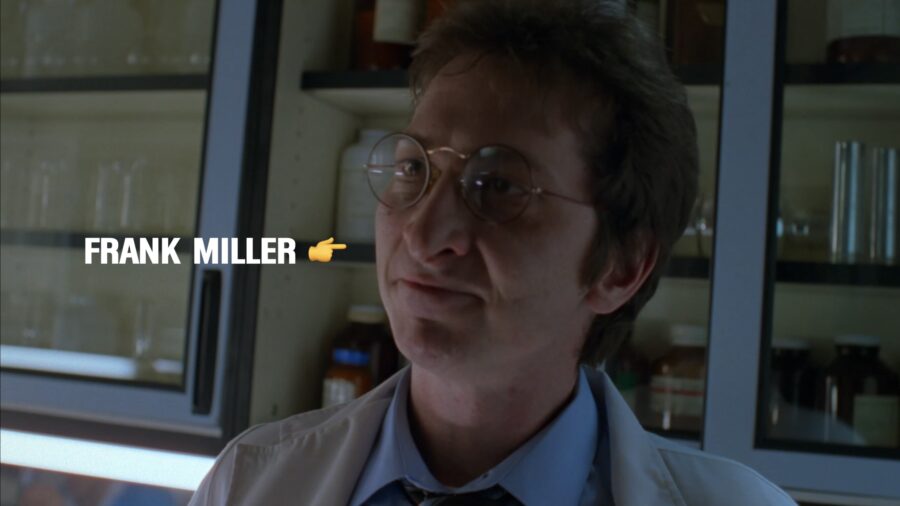
RoboCop 2 is important to the story of both RoboCop 3’s production and actual in-movie story. RoboCop 2 was mostly written by Frank Miller, one of the most celebrated comic book writers and artists of the ‘80s.
In June 1990, when Orion Pictures was about to release RoboCop 2, the studio gave the greenlight to two more movies. Since you won’t find a RoboCop 4 out there, you can guess how things are already headed.
Frank Miller had a tumultuous time during RoboCop 2’s production but returned for RoboCop 3, even though his screenplay would get handed to another writer, who would also end up directing the film.
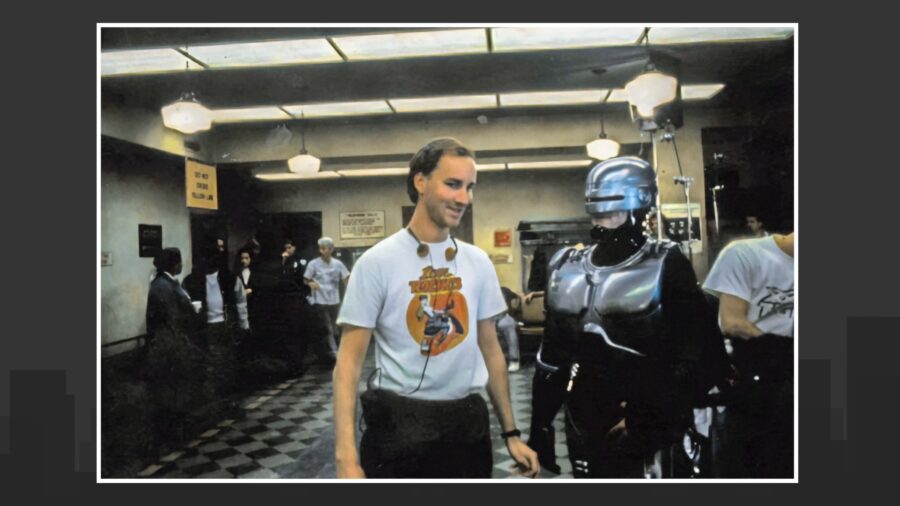
Fred Dekker got the job and he was certainly qualified when it comes to being a legitimate genre fan. He had written and directed the delightful Universal Monsters homage, The Monster Squad, and Night of the Creeps, a movie I’ve recommended on this channel in a video pretty much nobody watched.
Basically, Fred Dekker was someone who genuinely loved this stuff. But, his script had another major creative influence, one that would end up being a significant factor in RoboCop 3 being disliked by fans.
Orion Pictures had been able to turn the success from the first RoboCop into a merchandise cash cow, capitalizing with toys, comic books, video games, and even an ‘80s cartoon.
By the time RoboCop 3 was underway, Orion wanted to better their chances at the box office by making sure RoboCop 3 could sell tickets to as many potential theater patrons as possible. That meant RoboCop 3 would be the first film in the franchise to actively aim for a PG-13 rating.
Real quick aside:
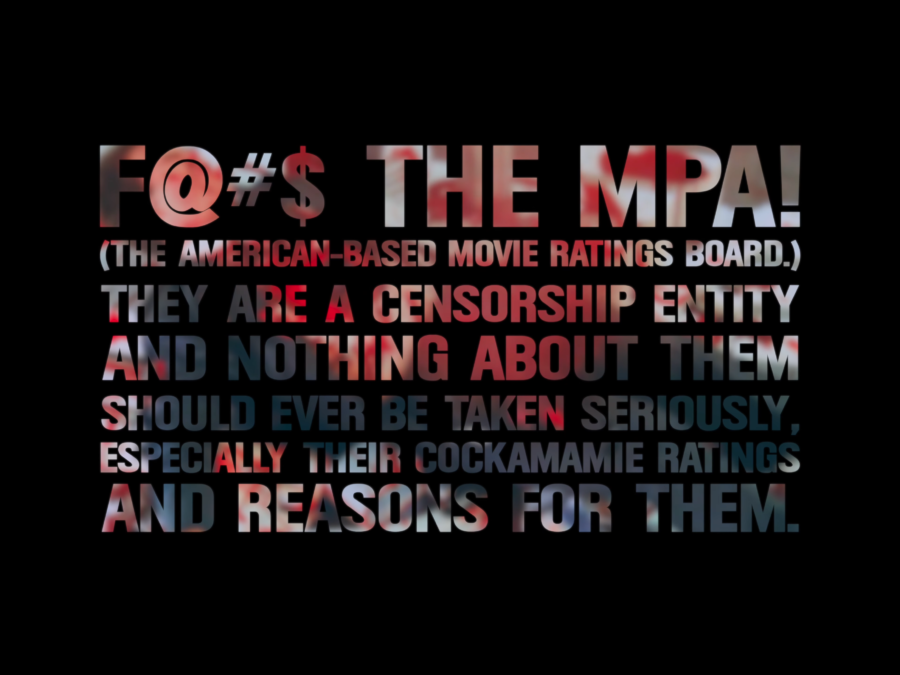
Moving on, RoboCop 3 would abandon the graphic violence of the first two films in favor of courting younger viewers. This was a prime directive from Orion to Fred Dekker. So, for all the problems people load on this movie, I have nothing but empathy when it comes to Dekker’s situation.
It didn’t help that RoboCop himself, actor Peter Weller, was not available for the sequel because he was busy making a wonderful David Cronenberg nightmare instead. And there are worthwhile reports about Weller being too expensive for Orion to afford for another sequel. I’m willing to believe some part of that considering the ultimate fate of Orion Pictures which ties directly to RoboCop 3.
RoboCop 3’s production began in February of 1991 and concluded in May that same year, with the film’s intended release set for mid-1992, giving the effects-heavy movie lots of post-production and marketing time.
However, Orion Pictures ended up having to close up shop and declare bankruptcy before they could facilitate the release of RoboCop 3, leaving the movie as part of an asset sale. Because of this, RoboCop 3 wouldn’t see a U.S. release until November 1993, debuting in international markets earlier that year thanks to a previous deal with Columbia Pictures.
As you can see, there were a lot of foundational issues RoboCop 3 had that were pretty much dooming it every step of the way. If the movie itself had been able to overcome those obstacles, maybe it would’ve found more appreciation.
And I’ll admit, when judging RoboCop 3 as its own singular thing, not as a RoboCop movie, it’s mostly okay for a kid’s sci-fi movie about the crossroads of capitalism and fascism.
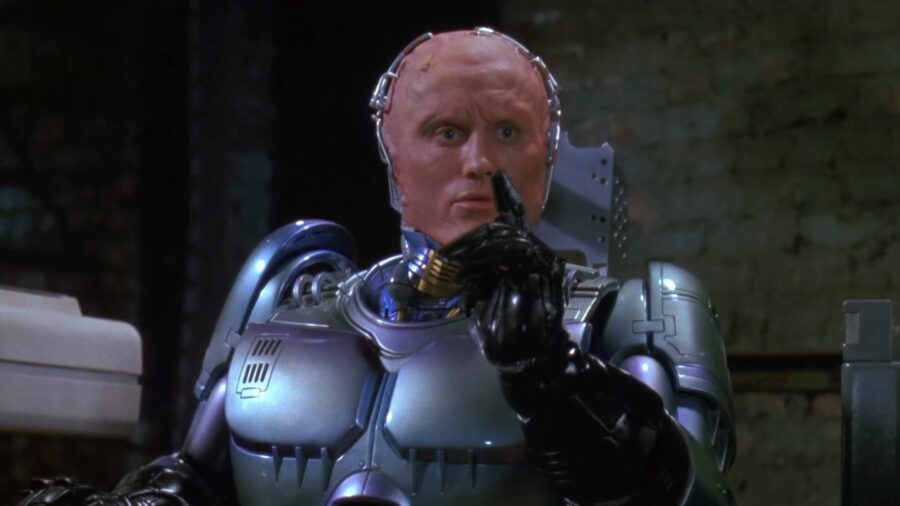
Robert Burke stands in for Peter Weller and it’s just not happening. Again, I also don’t envy Burke having to step in for the series’ lead actor. And the role can often be a thankless and effectively faceless one, but he just doesn’t have the spark of Alex Murphy in him.
There are positive elements worth highlighting in RoboCop 3. We get a number of great character actors like Stephen Root, the awesome CCH Pounder, and my personal favorite, Rip Torn. Plus, maestro Basil Poledouris is back after not being used for RoboCop 2, so at least we’ve got that iconic theme back and another score from one of cinema’s greatest composers.
There’s a lot going on in RoboCop 3’s story and that’s certainly one of its problems, like when it’s trying to shove an android assassin into the mix, but the best and key plot centers around the poor of Detroit being forcibly thrown out of their homes for the eventual construction of a proposed utopia called Delta City.
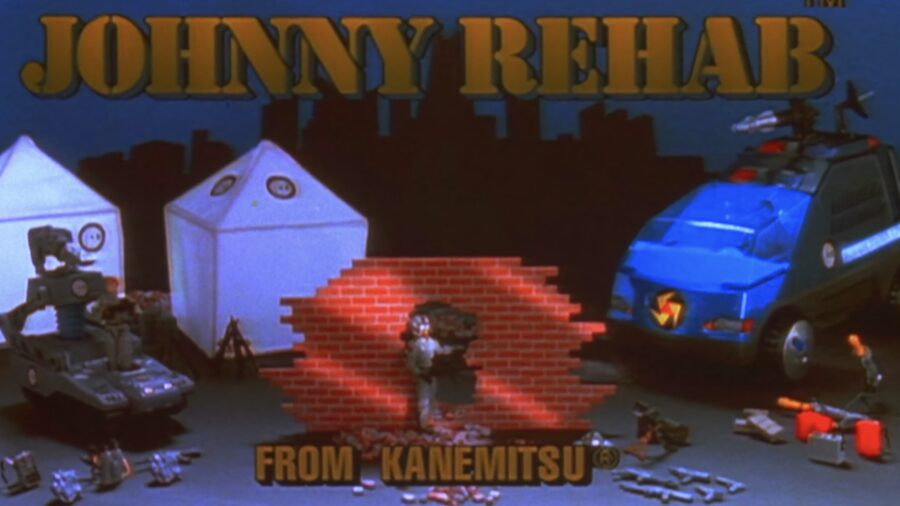
This is the movie’s best bit of commentary as we see fascist soldiers called Urban Rehabilitation a.k.a. Rehabs being nothing but stormtroopers, and then seeing them portrayed as heroic action figures in one of the franchise’s trademark in-world commercials.
But as poignant as that story thread could be, the rest of the movie is a mess. There’s an oddly resonant plot for Orion Pictures themselves where OCP, the evil mega-corporation from the first two films, is being sold off and taken over by another company. This does lead to a few moments of welcome dark comedy but it doesn’t really matter to the story.
There’s also a stereotypical brainy kid character in this that’s annoying, and RoboCop spends a lot of the movie on the sidelines, and they kill Nancy Allen’s Lewis for no good reason.
Look, there’s just a lot about RoboCop 3 that either doesn’t work or is dumb but not in a fun way. And after sitting on the shelf for too long, it was clear audiences could smell something was up.
RoboCop 3 unfortunately but somewhat appropriately opened at #3 at the box office in 1993 behind a #1 movie in its third week of wide release, The Nightmare Before Christmas. I guess Schoolhouse Rock was right: three is a magic number.
It ended its run in North America with only $10 million dollars to show for it, less than half of its reported budget. And the fallout from the film’s failure would see Fred Dekker sent to director jail from whence he has never returned. Yes, RoboCop 3 killed Fred Dekker’s directing career.
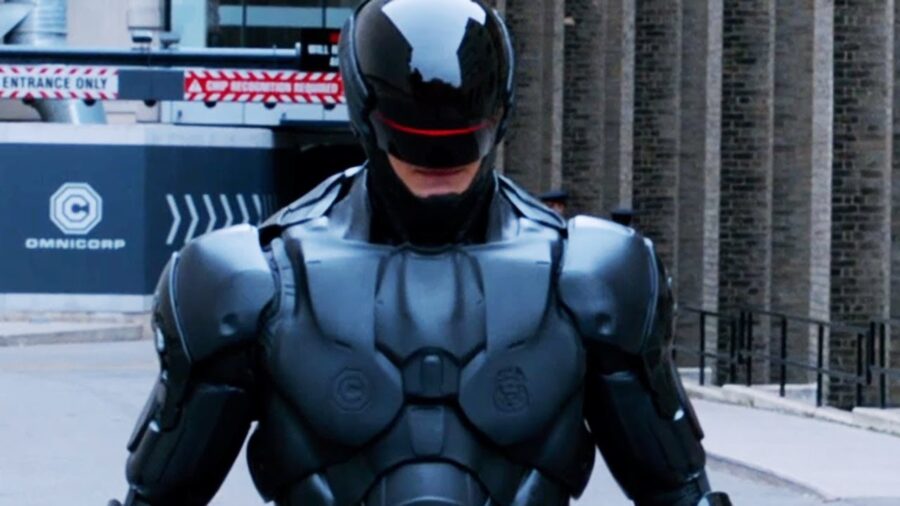
It would also kill the future of RoboCop movies for over twenty years until a reboot hit theaters in 2014.
RoboCop 3 failed for so many reasons. The studio imposed bad creative decisions at the same time they were falling apart financially, the series lead got recast, and the final movie simply didn’t offer anything more than audiences felt they’d already got out of the franchise.
When it’s all said and done, I don’t think RoboCop 3 is a horrendous movie but it feels like a weak episode of a RoboCop TV series. Oh no, please don’t make me watch the RoboCop TV series. Am I going to see a bunch of comments begging for a video on the RoboCop series? Will you liking this video put that evil on me?
If you do enjoy torturing me, you better subscribe to the channel. That’s the only way you can ensure my continued RoboCop suffering. Thank you for your cooperation and we’ll see you next time here on Giant Freakin Robot.
Entertainment
Moon phase today: What the Moon will look like on April 23

We’re almost at the First Quarter which means the Moon is almost half illuminated. Each night it gets a little brighter, and this will keep happening until the Full Moon when the reverse will then occur and each night it will appear less.
What is today’s Moon phase?
As of Thursday, April 23, the Moon phase is Waxing Crescent. Tonight, 41% of the moon will be lit up, according to NASA’s Daily Moon Guide.
If you’re looking at the Moon with just your naked eye, you should be able to catch a glimpse of the Mares Serenitatis, Tranquillitatis, and Fecunditatis. If you have binoculars, the Mare Nectaris and Endymion and Posidonius Craters should also come into view, appearing from halfway up the Moon to near the top. And, finally, with a telescope you’ll see all this plus the Apollo 11 and 17 landing spots, and the Rupes Altai.
When is the next Full Moon?
The next Full Moon is predicted to take place on May 1, the first of two in May.
What are Moon phases?
NASA says that the Moon completes a full orbit around Earth in about 29.5 days, during which it passes through eight stages. Although the same face of the Moon is always turned toward us, the portion illuminated by the Sun shifts as it travels along its path, producing the familiar cycle of full, half, and crescent shapes. These variations are referred to as lunar phases, and there are eight altogether:
New Moon – The Moon is between Earth and the sun, so the side we see is dark (in other words, it’s invisible to the eye).
Mashable Light Speed
Waxing Crescent – A small sliver of light appears on the right side (Northern Hemisphere).
First Quarter – Half of the Moon is lit on the right side. It looks like a half-Moon.
Waxing Gibbous – More than half is lit up, but it’s not quite full yet.
Full Moon – The whole face of the Moon is illuminated and fully visible.
Waning Gibbous – The Moon starts losing light on the right side. (Northern Hemisphere)
Third Quarter (or Last Quarter) – Another half-Moon, but now the left side is lit.
Waning Crescent – A thin sliver of light remains on the left side before going dark again.
Entertainment
Tinder responds to viral video about tricking facial scan
Earlier this month, journalist Christophe Haubursin published a YouTube video called “Something very weird is happening on Tinder.” In the video, which has over 1.5 million views as of this publication, Haubursin described a way to workaround to Tinder’s Face Check feature — the facial recognition that is now required for all U.S. users as of Oct. 2025.
What Haubursin and his interviewees discovered is a bunch of profiles that appeared normal, but the last photo on each profile was…off. It was usually a digitally-altered image of a different person in a weird scenario, like on a billboard or in a Victorian painting. And if someone matched with this person and asked about the image, they dodged the question. Instead, they asked to move the conversation to WhatsApp, where it became clear they were romance scammers.
But how did they evade Face Check? Haubursin found that Tinder and Hinge, both owned by Match Group, only need one photo for the facial recognition software. So these people may be the actual person in that odd image, and able to pass the face scan. Then, they could grift images of other people from the internet to use for the bulk of their profile.
Hookup apps for everyone
AdultFriendFinder
—
readers’ pick for casual connections
Tinder
—
top pick for finding hookups
Hinge
—
popular choice for regular meetups
Products available for purchase through affiliate links. If you buy something through links on our site, Mashable may earn an affiliate commission.
Tinder didn’t respond to Haubursin’s request for comment, but it did respond to Mashable’s.
“We’re aware of the concerns raised about our Photo Verification and Face Check features. In recent weeks, we’ve taken action to strengthen our Photo Verification badging logic, including requiring greater consistency across profile photos and additional reviews to achieve higher confidence in cases that warrant extra scrutiny,” a Tinder spokesperson told Mashable. “Face Check, our more recently launched verification system, builds on Photo Verification to help confirm accounts belong to real users. We are committed to continuously improving and investing in our systems to keep Tinder safe and authentic for our users.”
Mashable Trend Report
Mashable also recently spoke with Hinge’s Chief Product and Technology Officer, Ben Celebicic, about this, as Haubursin also replicated this on Hinge (which began implementing Face Check after Tinder). Celebicic hasn’t seen Haubursin’s video, but he did say that there’s a constant battle between trust and safety teams and policy-violating actors.
“They’ll find new ways,” he said. “We’ll find ways to prevent them from accessing the platform.”
There’s not going to be a single product the team builds that will fully prevent people from bypassing our solution, Celebicic continued. He said they have a big team working on these issues, and they’re in tune with new ways bad actors try to penetrate the platform and work to fix them.
Around one-third of Hinge’s workforce is dedicated to trust and safety, the app told Mashable, and Match Group invests $125 million annually in this area.
Trust and safety is a major concern for dating apps. In Sept. 2025, two senators sent a letter to Match Group CEO Spencer Rascoff, urging him to do something about romance scammers on the platforms. In Dec., a class-action lawsuit against Match Group claimed that a serial rapist was allowed on Tinder and Hinge after several women reported him.
Facial recognition scans have boomed recently thanks to the influx of age-verification laws, which require a robust method of proving someone’s age in order to access certain content, usually explicit content. These methods include uploading a government ID to a platform, using a credit card, or in other cases, scanning your face. But, like with Face Check, people have found workarounds to evade the scan and see the content they want to see.
Entertainment
The Unhinged, Raunchy 80s Robot Sci-Fi Almost No One Saw
By Robert Scucci
| Updated

When I fired up 1987’s Robot Holocaust on Tubi, I was expecting a Mad Max-style scenario with a bunch of clankers running amok and wiping out humanity. Instead, I got a weird, loincloth-laden odyssey where the most expensive special effects are red lights, and the villain is basically a giant, walking, talking Dr. Zoidberg from Futurama. I know I’m being anachronistic by comparing a 1987 film to a character that didn’t exist until 1999, but that’s the comparison I’m making, and I’m sticking with it.
Let me have this, because the other reality I have to live with is that this movie is pretty rough. There are barely any robots, and what transpires hardly qualifies as a holocaust. The male-to-female buttcheek ratio sits at a clean 50:50, and the nudity isn’t even the good kind. Everybody’s wandering around in punishing heat all day, so you just know the smell is so bad you can almost taste it.
It’s Listed As A Sci-Fi But It’s More Of A Fantasy Quest

The best way to describe Robot Holocaust is an ill-fated cross between Mad Max and the original Star Wars trilogy. You’ve got a ragtag group of city-dwelling slaves living under the thumb of the Dark One, with his laws enforced by Torque (Rick Gianasi), the robot who looks like Zoidberg.
These wasteland slaves are trying to overthrow the Dark One, and their plan mostly involves a lot of unsexy walking as they run into enemies, obstacles, and, occasionally, robots.

Leading the charge is Neo (Norris Culf), a New Terra drifter accompanied by his C-3PO-esque companion, Klyton (Joel Van Ornsteiner). Along the way, he links up with Deeja (Nadine Hart), Nyla (Jennnifer Delora), Bray (George Gray), and Kai (Andrew Horwath), all of whom are fed up with the Dark One’s evil machinations and willing to trudge half-naked through asphalt and overgrown wasteland to do something about it.
Alliances and wills are tested, but the goal stays the same. Our heroes, and there are too many of them to really invest in, especially given their almost aggressive lack of charisma, need to find the Power Station where the Dark One resides and wipe out him and his goons once and for all.
Amateur Hour, But Not Without Its Charm

While Robot Holocaust mostly plays like a college film project with no budget, I can appreciate what writer-director Tim Kincaid was going for with limited resources. Most of the exterior shots look like people wandering around the outskirts of NYC, and most of the interior scenes feel like they were filmed inside a Spirit Halloween. A lot of my enjoyment came from the production notes I made up in my head, like, “Places, everybody! This fog and these fake spiderwebs set us back $25, making it the most expensive scene we’re shooting!”
That said, I’ve got to give the cast credit for committing to the vision, even if they’re reaching pretty far to get there. The robot costumes actually look decent from a distance, but the illusion falls apart in the close-ups, which we get way too often.

At the end of the day, Robot Holocaust is perfect home-viewing material. It’s only 79 minutes long and packed with a healthy dose of camp. It doesn’t make much sense, and when the primary antagonist is finally revealed, it’s basically just a guy dressed like an egg. For that reason alone, it’s worth a watch because it’s just so random.

As of this writing, you can stream Robot Holocaust for free on Tubi.


Josh Naylor, Cal Raleigh rally Mariners to walk-off win over A's
Alabama coach Kalen DeBoer's contract extended through 2032-33 season


