
Entertainment
How Jerry Seinfeld Spent $150 Million On One Throwaway Joke
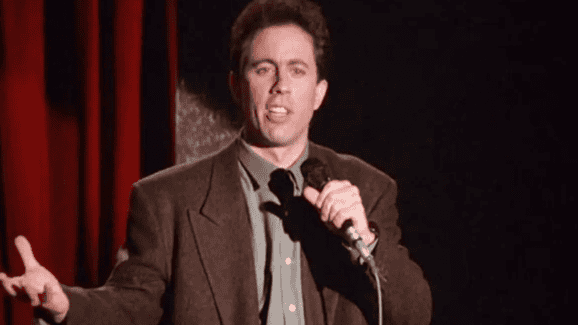
By Robert Scucci
| Published

If you have enough clout in Hollywood, like Jerry Seinfeld did after his eponymous series finished its run in the late 90s, just about any idea you have while you’re still hot will be bankrolled with a blank check made out to cash. 2007’s Bee Movie is a perfect example of what happens when somebody like Steven Spielberg chats with Jerry Seinfeld, who at the time was playfully frustrated over his wife’s new beekeeping hobby. The joke suggested that his wife was having an affair with the bees, and that he should make a movie about insects that pushes this concept to the extreme.
He said he’d call it Bee Movie, or something along those lines, because of the double entendre. You know, like a B-movie, but with actual bees. This was apparently all Spielberg needed to hear to chat with DreamWorks, the company he co-founded in 1994, so Jerry Seinfeld could secure roughly $150 million and make what might be the most misguided animated kids movie to ever grace the silver screen.
Why You Gotta Bee Like That?

Bee Movie attempts to tell a wholesome story about Barry B. Benson (Jerry Seinfeld), a young honey bee who’s about to graduate and enter the workforce. Barry is immediately disillusioned by the fact that whatever career path he picks at this point in his short life cycle will be the only job he ever has until he ultimately perishes, as bees are known to do. In a stroke of luck, paired with a dash of daring insubordination, Barry’s invited to tag along with the Pollen Jocks before officially declaring a proper job.
The Pollen Jocks keep everything back at the hive running like clockwork. They’re disproportionately jacked, gather pollen, and allow all the bees back at the hive to produce that sweet, sweet nectar known as honey.

After getting separated from the pack because he’s a grossly unqualified Pollen Jock wanna-bee, Barry has a run-in with a human woman named Vanessa (Renée Zellweger) and her boyfriend Ken (Patrick Warburton). The latter tries to kill Barry because he’s allergic to bees. Vanessa, on the other hand, values all life, scolding Ken for being so aggressive toward one of God’s beautiful creatures. Naturally, Barry becomes attracted to Vanessa, and the two form an interspecies romance, which leads Bee Movie directly into its true conflict.
Barry is horrified to find out that humans collect, jar, and sell honey made by bees for profit after a trip to the grocery store with Vanessa. According to Barry, the only reasonable thing to do at this point is sue humanity for exploiting bees, which conveniently allows Jerry Seinfeld to jam in as many celebrity cameos as humanly possible, including Ray Liotta and Sting.
Do Bees Brush Their Hair With Honeycombs?

On paper, Bee Movie has all the beats you’d expect from an animated kids movie made by DreamWorks Animation or Pixar. There’s one important distinction you need to consider, however. Jerry Seinfeld’s public persona is patently unlikable by design, which is something I’ll openly admit as a fan of Seinfeld, because that’s what makes Seinfeld such a satisfying watch. That energy transfers directly over to Bee Movie, making for a confusing watch despite his best efforts.
Jerry Seinfeld’s Barry B. Benson is witty and charming, and he points out the systemic flaws surrounding bee culture in the form of oppressive work conditions made even worse by their incredibly short life spans. Barry B. Benson also asks the Pollen Jocks what pollen is. Barry B. Benson romantically pursues a human woman while simultaneously undermining her live-in boyfriend’s relationship with her. Barry B. Benson, who has no legal experience and confirms earlier in the movie that he doesn’t know how to tell time, somehow represents every single bee in the world in a massive class action lawsuit against the entire human race.
Oh yeah, and Barry B. Benson, after realizing the error of his ways, casually suggests a suicide pact with Vanessa when his plan epically backfires and puts the entire world in jeopardy.
What’s All The Buzz About?

A tonally disjointed mess of a kids movie, Bee Movie has rightfully earned its cult status after the internet turned the entire thing into a meme in 2015. Its storylines and in-universe logic make absolutely no sense, which is a fundamental filmmaking problem because movies are supposed to tell coherent stories. The result is a surreal, half-baked, high-budget mess of one-liners, bee puns, and implied interspecies erotica that anybody could get bee-hind if they’re in the right mood for it.
Bee Movie is dripping with Seinfeldian humor, and that adds to its charm in small doses. Jerry Seinfeld has a grating personality, and much of his humor is based on complaining about trivial, relatable things. The problem is that bees aren’t relatable, and making an entire movie about Jerry Seinfeld working out his bee-based puns is something you truly have to see to bee-lieve. Of course the internet hivemind would chomp at the bit years after the film’s initial release, because it’s simply too weird not to celebrate for its inherent audacity alone.


As of this writing, Bee Movie is available for on-demand rentals and purchases through YouTube, Apple TV+, Prime Video, and Fandango at Home.
Entertainment
All the states Pornhub is blocked in now

The explicit tube site Pornhub is now blocked in 23 U.S. states.
This is due to age-verification laws. These laws vary state by state, but typically require visitors of a site with over a third of explicit content to submit a government ID or other form of age authentication. Louisiana was the first state to enact such a bill a couple of years ago, and now others have followed suit. In June, the Supreme Court deemed Texas’s age-verification law constitutional, setting a precedent for such bills that come before and after.
The best VPNs for Pornhub:
Best for Porn
ExpressVPN
30-day money-back guarantee

Best for security
Proton VPN
30-day money-back guarantee

Best for beginners
TunnelBear
30-day money-back guarantee

According to one preliminary study, age verification won’t work to keep minors off porn sites. This is because of software like VPNs that allow someone to appear to be in a different location, and because of non-compliant websites. (The Florida attorney general is suing foreign-based porn sites for not instituting age verification.) Yet, these laws keep getting passed — and are encroaching on non-explicit websites as well, experts told Mashable.
Hookup apps for everyone
AdultFriendFinder
—
readers’ pick for casual connections
Tinder
—
top pick for finding hookups
Hinge
—
popular choice for regular meetups
While Pornhub is not blocked in Louisiana, it is blocked in these states, a Pornhub representative confirmed to Mashable:
-
Alabama
-
Arizona
-
Arkansas
-
Georgia
-
Idaho
-
Kansas
-
Mississippi
-
Missouri
-
Montana
-
Nebraska
-
North Carolina
-
North Dakota
-
Oklahoma
-
South Carolina
-
South Dakota
-
Tennessee
-
Virginia
-
Wyoming
Pornhub isn’t blocked in Ohio despite the state’s age-verification law, due to a clause stating that establishing age verification methods doesn’t apply to a provider of an interactive computer service (Aylo considers itself one).
Mashable Trend Report
In Louisiana, where users must submit ID to view Pornhub, the site has seen traffic decline by around 80 percent, Aylo (Pornhub’s parent company) told Mashable.
“These people did not stop looking for porn. They just migrated to darker corners of the internet that don’t ask users to verify age, that don’t follow the law, that don’t take user safety seriously, and that often don’t even moderate content. In practice, the laws have just made the internet more dangerous for adults and children,” Aylo stated when asked for comment by Mashable back in January.
In a statement to Mashable, Aylo continued:
First, to be clear, Aylo has publicly supported age verification of users for years, but we believe that any law to this effect must preserve user safety and privacy, and must effectively protect children from accessing content intended for adults.
Unfortunately, the way many jurisdictions worldwide have chosen to implement age verification is ineffective, haphazard, and dangerous. Any regulations that require hundreds of thousands of adult sites to collect significant amounts of highly sensitive personal information is putting user safety in jeopardy. Moreover, as experience has demonstrated, unless properly enforced, users will simply access non-compliant sites or find other methods of evading these laws.
Industry experts say that, in addition to not working for their intended purpose, age verification laws also raise concerns about privacy protection and safety since websites now have to host (even more of) people’s personal information. It will be harder to be anonymous online, which experts warn is dangerous to free speech. Adult industry experts Mashable spoke to in an explainer on age-verification laws advocated for device-level filters, as did Aylo in its statement.
Some in the adult industry worry about what Trump’s second presidential term will bring due to the conservative policy outline Project 2025 and its measures to ban porn. One of Project 2025’s authors, Russell Vought, was caught on a secret recording stating that age-verification laws are the “back door” to a broader porn ban.
Entertainment
New Congressional scam alert issued for IRS fraud ahead of Tax Day
Tax Day is nearly here, and with it comes tax scams. The U.S. Congressional Joint Economic Committee has issued a scam alert, with less than a week to go until the tax filing deadline. The warning is, unfortunately, needed, given that nearly one in four Americans have reported being victimized by tax season scams, according to March 2026 research by McAfee.
The alert, seen by Mashable, has other alarming findings: During fiscal year 2025, the IRS reported more than 600 social media impersonators of the agency. Spam blocker app Nomorobo found a 400 percent increase in fraudulent calls claiming to be from the IRS between Jan. and Feb. this year. Fake tax websites are also on the rise, with McAfee identifying 43 new ones every day between Sept. 2025 and Feb. 2026.
“Criminal enterprises are exploiting tax season to target Americans, including seniors,” said Joint Economic Committee Chairman and Arizona Rep. David Schweikert in a press release shared with Mashable. Adults 70 years old and older lost more money to fraud than younger adults, according to the median of data collected by the Federal Trade Commission in 2024: $1,650 for seniors 80 and older and $1,000 for 70-79 year-olds, compared to $189-691 for younger groups.
Schweikert is issuing the alert, along with Ranking Member New Hampshire Sen. Maggie Hassan, Vice Chairman Missouri Sen. Eric Schmitt, and Senior House Democrat Virginia Rep. Don Beyer.
Mashable Light Speed
“As Americans file their taxes this month, scammers are deploying an onslaught of attacks — often enhanced by artificial intelligence — designed to steal people’s money,” Hassan stated in the release. “I encourage all taxpayers to review the tips in this bipartisan scams alert so that they can stay vigilant and protect their identities and accounts.”
Here are tips the Joint Economic Committee lays out to avoid common IRS impersonation scams:
-
Be wary of phone calls, emails, or social media outreach. The IRS will never message you on social media! The agency will almost always initiate contact by mail, according to the committee.
-
Watch out for urgent requests or threats. The IRS will never threaten to call law enforcement or request to see your driver’s license. On that note, the agency will never ask for payment via nontraditional methods such as gift cards.
-
You can verify any communications with the IRS directly on the official IRS.gov website.
-
You can share an IRS-issued identity protection PIN instead of your Social Security Number.
The committee also urges precaution when dealing with third-party tax services. Here are some tips for identifying non-IRS tax scams:
-
Research firms by searching them on sites like the Better Business Bureau. If an offer seems too good to be true, it often is.
-
Go to IRS.gov and verify the service’s Preparer Tax Identification Number (PTIN). If the service doesn’t provide this, avoid it.
-
Scammers may pretend to be legitimate third-party tax preparation companies or employees. Verify the provider by visiting the official website and calling the listed phone number.
If you believe you’re a victim of a tax scam, you can report it at ReportFraud.ftc.gov.
Have a story to share about a scam or security breach that impacted you? Tell us about it. Email [email protected] with the subject line “Safety Net” or use this form. Someone from Mashable will get in touch.
Entertainment
Raunchiest 90s Sci-Fi Series Features Worst Captain Of All Time
By Jonathan Klotz
| Published

Science fiction is filled with incredible spaceship captains. Star Trek alone gave the world Picard, Kirk, and Janeway, Firefly has Malcolm Reynolds, Farscape’s John Crichton, and Battlestar Galactica’s Adama, all of them are fantastic characters. All are noble and inspiring figures who make their crews better.
On the other end of the spectrum is Stanley H. Tweedle, captain of the Lexx, the most powerful weapon ever created. He’s a coward, a traitor, self-centered, shallow, and the last man in existence who should have the keys to the most powerful weapon in both galaxies.
Lexx’s Stanley H. Tweedle Is Sci-Fi’s Worst Captain

Stanley H. Tweedle, played by Brian Downey, kicks off the events of Lexx by skipping work to the point he’s deemed a fugitive from justice by the servitors inside His Divine Shadow’s headquarters and runs into another fugitive, Zev (Eva Habermann). Taking shelter on board the organic spacecraft Lexx, the command codes embedded in Stanley’s tooth are activated, and the ship recognizes him as the Captain. It’s not the most glorious origin story for the man who would eventually, sort of, save the galaxy. It gets worse.
Technically, Stanley’s responsible for the deaths of 685 billion people. He didn’t give the order to fire, and he was being tortured, but he did give the codes to the Lexx over to a band of mercenaries, and then they sold it to His Divine Shadow, and 100 worlds ceased to exist. No other captain in sci-fi can say thay also have the title “Arch-Traitor.”

During Season 2, “Stan’s Trial,” we learn that the root of Stanley’s cowardice is his fear of death. The threat of death causes Stanley to break under the smallest bit of pressure from any of the villains, which all comes to a head in Season 3 when he actually dies and has to face the judgment of Prince from the Fire Planet, Lexx’s version of the Devil. You’d think that anyone who’s that cowardly wouldn’t be respected by his crew, and you’d be right.
No One Respects Stanley
The Lexx’s crew of castoffs, including both Zev and Xev (Xenia Seeberg), the undead assassin Kai (Michael McManus), and the love robot 790/791 (Jeffrey Hirschfield), don’t respect Stanley. Eventually, Xev and Kai start to have a modicum of respect, but 790, competing with Stanley for the affection of both Zev and Xev, constantly belittles and insults its captain. Even Lexx has some difficulty with Stanley, often misunderstanding what he wants, including misinterpreting the captain’s request for the coordinates to a planet of loose women.

Early on in Season 3, Stanley’s desire for women comes to a head when Prince offers to revive Maya, a gorgeous woman from the Water Planet, if he’ll use the Lexx to destroy the Water Planet. Stanley doesn’t only think about it, he spends most of the second episode actively devising ways to betray everyone. Not even Kirk, sci-fi’s most famous womanizer, would contemplate an offer like that for a single second.
Stanley H. Tweedle is both sci-fi’s worst captain and one of the most interesting characters, because he is so detestable and openly not a good guy. At all. He helped save the galaxy from thousands of years of control under His Divine Shadow, but he’s still a coward and a lech. Worst of all, we never learn what the H stands for.

White Sox place LHP Chris Murphy (elbow) on 15-day injured list
Stanford star G Ebuka Okorie enters NBA draft


