
Entertainment
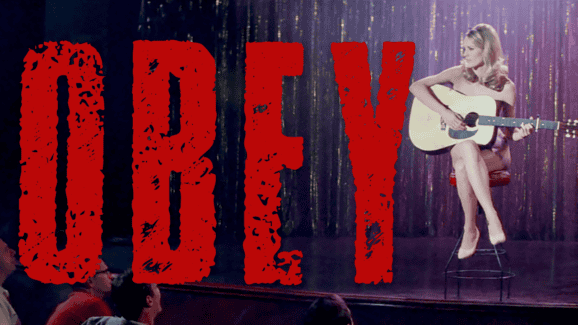
How A Movie Ruined The 1990s By Making Everyone Obey
By Joshua Tyler
| Updated

The 1990s are now, in the minds of many, supplanting the 1950s as humanity’s golden age. The internet was still in its earliest form, the economy was booming, and so was American innovation and culture.
In 1994, at the very center of that era was one blockbuster movie that the entire world rushed to fawn over. A supposed tale of optimism and high hopes, a recontextualizing of the path America had taken to reach a bright and shining future, as told through the lens of one very stupid man.
Or that’s what the film seemed to be. In reality, it may have been the first big step towards decline. Whether you knew it or not, while watching Forrest Gump, you were being screenwashed.
Forrest Gump’s Philosophy Of Total Obedience
Forrest Gump begins with a feather floating on the breeze. It has no weight, no impact, and no agency. The feather goes wherever the wind blows it, without complaint, confident that it’ll all work out in the end.
Life is like a box of chocolates, you never know what you’ll get out. Life is like a feather floating on the air. There’s no way of knowing which way the wind is blowing; all you can do is let it move you.

There’s no way of knowing what you’re putting in your mouth, so just keep eating and accept whatever touches your tongue next.
It’s a philosophy of total obedience and an abandonment of agency, a rejection of responsibility, and it’s something no normal human would ever agree to. Which is why it’s easy to dismiss Forrest Gump as just a movie.
To make that kind of insane message stick, you’d need to go far beyond a speech about a box of chocolates into a world of secret, weapons-grade psychological persuasion. So that’s exactly what Forrest Gump did.

Let’s start this by saying Jenny is at the center of everything, but it’s not because she’s a secret villain, which is the standard edgy Forrest Gump take. She’s not a secret villain at all, she’s an open villain, but a villain made to serve a secret purpose.
Before I explain that, you need to understand the movie itself.
Forrest Gump Triggers Emotional Reactions To Make The Audience Suggestible
Forrest Gump is beautifully made and sold as a feel-good fable about kindness and decency. It’s so good at being emotional and at making the audience feel that it’s almost impossible to see what it’s doing through the tears. And that’s exactly why it works.
While training to be a hypnotist, most of my earliest lessons revolved around how to trigger someone into a suggestive state. One of the best and most effective ways is by creating an emotional reaction. Psychologists sometimes call this emotional priming. Emotional priming takes advantage of the fact that strong emotion impairs critical thinking and increases suggestibility.

One of the most unique things about Forrest Gump is its structure. It’s not one, continuous narrative. Instead, it’s a series of short vignettes, set at different times in the life of Gump.
Each Vignette starts a story, and then ends with a swelling emotional scene. It’s timed so that as each new segment begins, the audience is in a strong emotional state created by the last one.
We feel Forrest’s shame as he’s mocked for being dumb. Fear in the jungles of Vietnam. Unbearable grief at the death of his mother. With the audience constantly primed, Forrest Gump then uses that to deliver something insidious: a morality play where obedience is rewarded and independent thought is punished.
All of that is then wrapped in nostalgia and empathy so thick you’re not supposed to notice.
Forrest Gump As A Compliance Exercise
From the start, Forrest Gump is a rule follower, no matter how bad the rules are around him. The movie starts with Forrest relaying things his mother told him and explaining how he followed her instructions.
The entire movie becomes a compliance exercise for Forrest Gump, a man who never questions anything, and a script that makes that work for the audience by portraying him as a person of limited intelligence.

Of course, Forrest just complies; he’s not smart enough to do anything else. But why Forrest complies isn’t as important from a persuasion perspective as the fact that he does comply, and the movie gets viewers to cheer for his compliance.
Forrest succeeds because he does exactly what he’s told. Not metaphorically. Literally.
Run, Forrest. He runs.
Join the army. He joins.
Play ping-pong. He plays.
Invest in shrimp. He invests.
Forrest never questions instructions from anyone. He never resists authority. He never evaluates outcomes. He doesn’t even really choose. He complies, and the universe showers him with rewards. Wealth. Fame. Love. Respect. A charmed life delivered one order at a time.

The film frames this as innocence. But structurally, it’s perfect obedience.
Obedience to his mother and Jenny. Obedience to the state that sends him to die in the jungle and then to play ping pong. Obedience is Forrest Gump’s entire life. He has no agency, and it’s celebrated.
One of the only moments where Forrest shows any agency is in a failed attempt to rescue Jenny, who he sees making out with a boy in a car and mistakenly thinks she’s being harmed. She yells at him, tells him he’s wrong.
So it’s right back to doing what he’s told. In that moment, after he apologizes and returns to compliance, Jenny rewards him by taking off her top.
Forrest Enters A Holding Pattern When There’s No One To Obey
When Forrest’s mother dies, and he runs out of people to obey, Forrest spends his time mowing lawns. Back and forth, back and forth, locked in a holding pattern while he waits for his next command.

When Jenny leaves him, that pattern repeats. Forrest starts running. Back and forth, back and forth, awaiting his next instructions. Like a feather being blown about by the wind.
Moral Laundering And Forrest Gump
Forrest Gump’s character is a textbook example of a persuasion technic call Moral Laundering. In Moral Laundering, an unpopular or contested idea is made more acceptable by attaching it to a trusted, heroic, or morally admired figure, allowing the figure’s perceived virtue to transfer onto the message.

Moral laundering alone wouldn’t be enough to screenwash an audience into viewing total compliance as optimal. So the film provides a contrast to our obedient hero, using our old friend, Poisoning the Well.
Poisoning the Well is a concept we’ve talked a lot about on Screenwashed, and it’s the polar opposite of Moral Laundering.

In Poisoning the Well, you have a villain say something good, to make people think that the good thing is as villainous as the person saying it.
Both Moral Laundering and Poisoning the Well take advantage of moral asymmetry.
Moral asymmetry is the tendency of humans to judge the same behavior as morally acceptable or unacceptable depending on who commits it, rather than on the behavior itself.

Forrest Gump is used to launder the idea that total obedience is an optimal behavior pattern, while another character poisons the well against thinking for yourself. Who’s the ultimate free thinker in Forrest Gump? Jenny.
Jenny’s Refusal To Follow Rules Unlocks Forrest Gump’s True Intention
From the moment we meet Jenny, she refuses to obey and follow the crowd. Forrest is getting picked on by the kids around him. Jenny has none of it; she defies the bullies’ authority and befriends him.

Throughout the movie, Jenny questions. Jenny rebels. Jenny does the unexpected. When she faces abuse from an authority figure, she gets away from it. She rejects traditional paths. She challenges authority. She experiments with politics, sex, and culture.
For that, the movie destroys her. It destroys her narratively by making her life a disaster, but it also destroys her in the eyes of the audience by making her a villain. It does that by having her express her independence through actions and ideas that most of the audience will find intolerable, and then turning her relationship with Forrest into one where she takes advantage of him.

The movie makes Jenny a villain on purpose, not accidentally, as some commentators seem to assume. Every time Jenny exercises agency, the film punishes her with escalating consequences: abuse, addiction, illness, and isolation. Her curiosity is framed as recklessness. Her defiance is reframed as self-harm. Her independence becomes pathology.
This is not subtle storytelling. It’s conditioning.
Jenny’s Suffering Only Ends When She Complies
The movie pretends Jenny’s suffering is the result of “bad choices,” but it carefully rigs the game so every choice outside obedience leads to pain. There is no version of Jenny’s life where thinking for herself works out. The audience is trained, scene by scene, to associate her autonomy with disaster.

Worst of all, Jenny is redeemed only when she stops rebelling.
She returns home. She settles down. She becomes quiet. Sick. Dependent. Her independence is stripped away, and only then is she allowed happiness. Only briefly, before she dies.
The message is unmistakable: a person who thinks for themselves must be broken before they can be accepted.

Forrest, meanwhile, never changes. He doesn’t grow. He doesn’t learn. He is rewarded precisely because he remains unchanged and never exercises any agency. He never thinks for himself. He always obeys.
This isn’t an accident. It’s a narrative machine built to make submission feel virtuous and independence feel dangerous.
Forrest Gump Wants You To Think You Have No Agency
In the movie’s final moments, Forrest tells the audience that there are only two possibilities to life: that everything is destiny or everything is random. Either possibility has the same commonality: you have no agency, you have no say in anything that happens to you. By the time the feather floats away, the audience has been trained to believe those two realities are the only possibilities, and that the best way through life is to follow orders, trust the system, and never ask why.

Life is a box of chocolates, and Forrest Gump teaches you to sit back and let life put whatever it wants in your mouth. So you cheer for the person who never questions. You mourn the person who does. You walk away thinking that’s just how the world works and there’s nothing anyone can do about it.
Congratulations, obedient slaves, you’ve been screenwashed.
Entertainment
BTS bring Arirang to NYC and break down that chaotic Hooligan lyric

For the past four years, BTS has been something international fans watched from a distance, as the members completed their mandatory military service in South Korea. In the meantime, they pursued solo projects and toured globally as individuals, while the group itself lived on through archived livestreams and social media posts.
On Monday night in New York City, they were back on stage as seven.
By late afternoon, fans had already lined up along the downtown Seaport, bundled in layers and rain ponchos, waiting for BTS to take the stage at Pier 17. The group’s return to the U.S. wasn’t a surprise. It was a moment fans had been tracking, anticipating, and counting down to. Still, the energy felt surreal once it was actually happening.
Just days after their massive live comeback concert drew tens of thousands of fans to central Seoul, BTS arrived in New York for Spotify x BTS: Swimside, an invitation-only event that marked their first public appearance in the U.S. as a full group since 2022. It also doubled as the first time they performed songs from their new album, Arirang, stateside.
The setting did a lot of the work. Pier 17 overlooks the East River, with the Brooklyn Bridge stretching out on one side and lower Manhattan lighting up the other. Even in the cold, with wind cutting across the rooftop and temperatures dropping into the 30s, hundreds of fans packed the space, many selected as top Spotify streamers in the area. Even producer Diplo was spotted in the crowd.
Mashable’s social manager on the ground captured the scene as it unfolded. Fans traded freebies, compared signs, and documented everything in real-time across social media. The night already looked like something built for the timeline. The difference was that everyone was actually there in person.
The event opened with a Q&A moderated by Suki Waterhouse, pulling the group into a more relaxed, conversational mode. BTS spoke about making Arirang together, including the experience of living in the same house again while recording in Los Angeles for two months.
“‘Swim’ is a really special song for us,” Jin said through a translator, describing the lead single as a reminder to keep going through uncertainty. “It’s about not stopping, even when you’re facing tough times and emotional waves, to just keep moving forward like you’re swimming through it all… It reminds us to love our lives and accept whatever comes next, so that’s the message: We want to keep moving forward and not give up.”
Mashable Trend Report

Credit: Kevin Mazur/Getty Images for Spotify
The conversation quickly loosened. RM joked about Jung Kook’s suitcase never leaving the floor during their time living together. “Whenever we entered his room, we always had to step [around] the luggage,” the leader explained. Suga admitted he doesn’t like swimming. (But importantly, he does like “Swim.”) Jimin, answering a question about habits at home, casually told the crowd he’s usually naked when he walks in the door, sending the audience into a frenzy.
The group also shared details from the making of the album, including a standout lyric from “Hooligan” — “ha-ha-ha-ha-ha-ha-ha-ha-ha-ha-ha-ha-ha-ha, hooligan” — which RM and Suga admitted they hate performing because of its tricky cadence. They broke it down as a rapid-fire “three-three-three” rhythm, then put Jung Kook on the spot to try it himself. He mostly succeeded, as expected from the group’s golden maknea.
The overall Q&A had the tone of a livestream, but louder. Immediate. Unfiltered in a way that only works when thousands of people are reacting at once.
During a short intermission, fans proved just how locked in they were. Arirang had only been out for three days, but the crowd sang along to every track playing over the speakers, lightsticks moving in sync.
When BTS returned to the stage, the focus snapped into place.
The group performed “Swim,” “2.0,” and “Normal,” marking their first live U.S. performances of the new album. The staging was simple, but the response wasn’t. Fans jumped, screamed, ha-ha-ha-ha’d, and waved their Army Bombs with every beat drop. RM, seated with a sprained ankle, delivered his verses from the side as the rest of the group moved through the choreography.

Credit: Kevin Mazur/Getty Images for Spotify
“It’s really an honor for us to do our first stage in America here,” RM told the crowd. “It’s been four years, but now we’re here.”
In the audience, fans held up red signs that read “We Stayed!” A small gesture, but one that carried weight after the group’s hiatus. V spotted them right away, calling out to the crowd in recognition.
By the end of the night, the mood felt less like a one-off event and more like a reset point. BTS are back in the U.S., performing new music, standing in front of fans who never left.
For years, that connection lived mostly online. In streams, clips, and constant updates that filled the gap while the group was apart. At Pier 17, it felt different. Still documented, still destined for the feed, but grounded in something more immediate.
Not just something to watch. Something you had to be there for.
Entertainment
Peter Jackson Is Making A New Lord Of The Rings Movie, It's About Tom Bombadil
By Joshua Tyler
| Updated
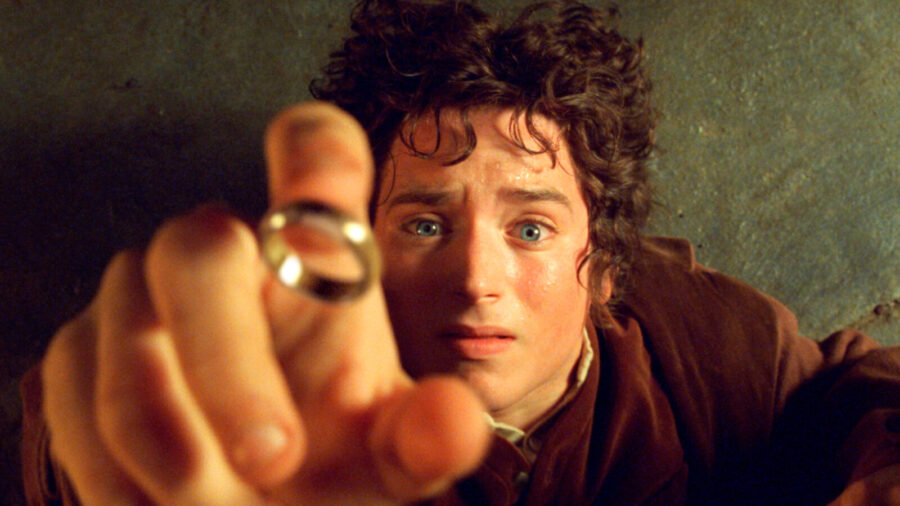
New Zealand filmmaker Peter Jackson is working on a new Lord of the Rings movie, and to make it, he’s teaming up with talk show host Stephen Colbert. This is not a joke or a drill; it’s happening, and they’re already writing the script.
Stephen Colbert, long known as one of Hollywood’s most obsessive Tolkien fans, is co-writing the film alongside his son, Peter McGee, and returning franchise writer Philippa Boyens. They’re using the working title The Lord of the Rings: Shadow of the Past to refer to the project. It’s not clear yet if that will be the movie’s final title.
Here’s the announcement recorded by Peter Jackson…
The story they’re developing is based on six specific chapters from J.R.R. Tolkien’s Fellowship of the Ring. Those chapters are numbers three through eight, often referred to as “Three Is Company through Fog on the Barrow Downs.” They involve Frodo first leaving the Shire, encountering his first Black Rider, and, most notably of all, encountering Tom Bombadil.

Tolkien fans will no doubt remember that Tom Bombadil was the biggest omission from the original Lord of the Rings movies. Jackson will now remedy that by making an entire, dedicated Tom Bombadil story.
Tom Bombadil is one of the strangest and most mysterious figures in The Lord of the Rings. Living in the Old Forest with his wife Goldberry, in Tolkien’s book, he appears cheerful and harmless, yet possesses immense, unexplained power. He’s so powerful that he’s totally unaffected by the One Ring.

Bombadil rescues the hobbits from multiple dangers, including the Barrow-downs, but exists completely outside the main conflict of Middle-earth, seemingly untouched by its wars, politics, or even its rules.
Peter Jackson is mostly involved in The Lord of the Rings: Shadow of the Past on the production side, reuniting with key members of the original creative team, signaling that this isn’t a reboot but another attempt to mine unused Tolkien material with the same people who built the franchise the first time. This new project is slated for release after Lord of the Rings: Hunt For Gollum, a feature film in production under the direction of Lord of the Rings alum Andy Serkis.
Entertainment
NYT Connections hints today: Clues, answers for March 25, 2026
The NYT Connections puzzle today is not too difficult if you keep up with the news.
Connections is the one of the most popular New York Times word games that’s captured the public’s attention. The game is all about finding the “common threads between words.” And just like Wordle, Connections resets after midnight and each new set of words gets trickier and trickier—so we’ve served up some hints and tips to get you over the hurdle.
If you just want to be told today’s puzzle, you can jump to the end of this article for today’s Connections solution. But if you’d rather solve it yourself, keep reading for some clues, tips, and strategies to assist you.
What is Connections?
The NYT‘s latest daily word game has become a social media hit. The Times credits associate puzzle editor Wyna Liu with helping to create the new word game and bringing it to the publications’ Games section. Connections can be played on both web browsers and mobile devices and require players to group four words that share something in common.
This Tweet is currently unavailable. It might be loading or has been removed.
Each puzzle features 16 words and each grouping of words is split into four categories. These sets could comprise of anything from book titles, software, country names, etc. Even though multiple words will seem like they fit together, there’s only one correct answer.
If a player gets all four words in a set correct, those words are removed from the board. Guess wrong and it counts as a mistake—players get up to four mistakes until the game ends.
This Tweet is currently unavailable. It might be loading or has been removed.
Players can also rearrange and shuffle the board to make spotting connections easier. Additionally, each group is color-coded with yellow being the easiest, followed by green, blue, and purple. Like Wordle, you can share the results with your friends on social media.
Mashable Top Stories
Here’s a hint for today’s Connections categories
Want a hint about the categories without being told the categories? Then give these a try:
Here are today’s Connections categories
Need a little extra help? Today’s connections fall into the following categories:
Looking for Wordle today? Here’s the answer to today’s Wordle.
Ready for the answers? This is your last chance to turn back and solve today’s puzzle before we reveal the solutions.
Drumroll, please!
The solution to today’s Connections #1018 is…
What is the answer to Connections today
-
Obfuscate: BLUR, CLOUD, MUDDY, OBSCURE
-
Magazines: FORTUNE, PEOPLE, SPIN, TIME
-
Payment methods: CASH, CHARGE, CHECK, WIRE
-
Units of volume with last letter changed: CUR, GALLOP, PING, QUARK
Don’t feel down if you didn’t manage to guess it this time. There will be new Connections for you to stretch your brain with tomorrow, and we’ll be back again to guide you with more helpful hints.
Are you also playing NYT Strands? Get all the Strands hints you need for today’s puzzle.
If you’re looking for more puzzles, Mashable’s got games now! Check out our games hub for Mahjong, Sudoku, free crossword, and more.
Not the day you’re after? Here’s the solution to yesterday’s Connections.

BTS bring Arirang to NYC and break down that chaotic Hooligan lyric
Lucid Bots raises $20M to keep up with demand for its window-washing drones


