
Entertainment
Hated Remake Starring The Ultimate ‘70s Icon Is Secretly Brilliant

By Chris Snellgrove
| Published

Ever watch the fandom collectively turn on a beloved franchise all at once? For Star Wars fans, it happened when The Last Jedi derailed decades of lore in favor of doing something completely different. For Star Trek fans, it happened when Starfleet Academy stopped exploring strange new worlds and started exploring Zoomer slang and CW-style teen drama. Meanwhile, for Halloween fans, it happened when Halloween Ends mostly replaced Michael Myers with a much more modern villain: a troubled young man who decides to solve all his problems, one murder at a time. At 40 percent on Rotten Tomatoes, it’s safe to say that Halloween Ends is one of the most reviled films in the entire franchise.
Here’s the thing, though: in the parlance of The Dark Knight, Halloween Ends wasn’t the film that franchise fans deserved, but it was the one they needed. After Myers became a figure of borderline parody in Halloween Kills, Halloween Ends did something we haven’t seen since the third film in the series: it took the focus off the most famous masked killer in horror history. The result (assuming you can ignore the goofy climax) is one of the most provocative horror films of the last decade, and you can check it out for yourself on Netflix.
Mikey Likes It

Halloween Ends begins with a babysitter (played by Rohan Campbell) accidentally killing the child he is watching in a freak accident. He becomes an outcast and pariah in Haddonfield, where even bored high school bullies harass him. After an unexpected run-in with a decidedly decrepit-looking Michael Myers, this bullied babysitter finally becomes the monster the whole town thinks he is. Things get messier when he falls in love with the granddaughter (played by Andi Matichak) of Laurie Strode (played by OG scream queen Jamie Lee Curtis), Myers’ oldest surviving victim. As the bodies pile up, the film barrels towards an explosive finale in which different generations of god and evil must fight for whatever is left of this troubled town’s soul.
While critics largely hated it, Halloween Ends deserves credit for taking big creative swings. David Gordon Green’s first Halloween movie was a solid reboot of the franchise, situating itself as a direct sequel to the John Carpenter slasher that started it all. That movie was good but not great, and much of what made it special was bogged down by weighty and sometimes awkward world-building. Halloween Kills, meanwhile, felt like a gonzo parody of the whole franchise, pairing over-the-top violence with cheesy dialogue and relentless nostalgia slop. Comparatively, Halloween Ends feels like a unique and fully-formed commentary on both the franchise and America’s epidemic of violence.
A Stab From The Past

Admittedly, some of the criticisms of Halloween Ends are fair. The tone is inconsistent, waffling between slow-burning psychological thrills and boiling slasher violence. The finale (a clearly shot-for-the-trailer, hilariously geriatric showdown between Laurie and Michael Myers )is unambiguously the worst part of the film. The characters are written as modern American archetypes, which sometimes interferes with the otherwise grounded storytelling. Finally, the film de-centers Myers in favor of a young, new killer, which will be off-putting to anyone who tuned in to see their favorite masked madman engaging in a bit of the old ultraviolence.
However, that last criticism is most definitely a feature of Halloween Ends rather than a bug. The brutal truth is that, narratively speaking, Michael Myers is played out and has almost nothing left to offer to this franchise. Director David Gordon Green wisely ignored the tangled continuity of Myers’ lore, returning him to his default state as the embodiment of pure evil. But there’s only so much you can do with “evil man is evil,” which is why Halloween Kills gave him nothing to do but hack up everyone he ran into. Halloween Ends, however, posits that Myers’ evil is infectious, effectively spreading throughout the entire town like a cancer.
Little Boy Blues

It certainly spread into our protagonist, a young man whose life is forever changed when he accidentally kills a boy. He shares something important in common with Myers: putting on a mask is how he leaves his humanity behind, fully embracing his identity as a monster. However, he is much more sympathetic than Myers because he fights his destiny, trying to rebuild his life after it is shattered into a thousand pieces. Thanks to Rohan Campbell’s compelling performance, audiences are forced to ask how culpable he is for his brutal actions and how much blame can be placed on Michael Myers, a legend who is simultaneously Haddonfield’s most immovable object and its most unstoppable force.
It helps that Campbell has very natural chemistry with Andi Matichak. Her character has endured so much tragedy in such a short time that she is in a perfect position to fall in love with the town’s resident bad boy. Together, they form a decidedly postmodern pair of star-crossed lovers: she just wants to escape from it all, while her serial killer boyfriend wants to tear everything down. Their relationship is as passionate as it is dysfunctional, and their doomed romance is every bit as compelling as the film’s satisfyingly gory kills.
Evil Smiles Tonight

Is Halloween Ends the best film in the franchise? Of course not. That honor goes to the John Carpenter original, a bloody slice of slasher perfection. But Ends is better than most of the original sequels (especially Halloween III and Halloween: The Curse of Michael Myers), and it’s infinitely better than both of Rob Zombie’s remakes put together. If you can get over the relative lack of Michael Myers, it’s even better than Green’s first Halloween film because it offers us a genuinely fresh story set in this venerable cinematic universe. Throw in great kills, crunchy actor chemistry, and a pitch-perfect performance from original Final Girl Jamie Lee Curtis, and you’ve got something truly special.
Care to decide for yourself if this hated film is secretly brilliant? Want to wash away the fetid odor of several stinkers in the franchise, or maybe just get the phrase “EVIL DIES TONIGHT” out of your head? All you have to do is stream Halloween Ends on Netflix to experience this melancholic meta-slasher for yourself. By the time the credits roll, you’ll have a new respect for one of horror’s most notorious modern films. But you’ll likely join the legion of Halloween fans who are all united by a single, simple hope: that Myers stays dead a little bit longer before Hollywood tries to bring this slasher series back to life again.

Entertainment
Meet the dental robot for tooth drilling
This robotic system could help make dental crown procedures faster.
on
The biggest stories of the day delivered to your inbox.
Thanks for signing up. See you at your inbox!
Entertainment
The Hottest Blockbuster Ever Made Is Secretly The World's Worst Sequel
By Chris Snellgrove
| Updated

I’m an ‘80s kid, so I come by my love of Transformers quite naturally. I absolutely mainlined the original GI cartoon, and my childhood bedroom was lined with my favorite robots, both heroic and evil. In the ‘90s, my best friends and I rediscovered the 1986 animated movie, and we hailed it as one of the best films ever made. So, when the first Transformers live-action movie came out, I was pumped, and I thought it really lived up to my expectations. Despite (or perhaps because of) director Michael Bay’s excesses and indulgent action porn, we finally had a blockbuster film to revive the Transformers brand.
If I’d had a One Wish Willow back then, I might have wished for Bay to keep making these movies. And like Bear in Obsession, my wish would have gone sideways almost right away. Bay went on to create four more Transformers films, and each of them was more painful than being eaten by Sharkticons. Why did he keep making these critically reviled films? Simple: the first sequel earned over $836 million at the box office, proving there is a market for pure slop if it has enough sexy poses and explosions in it. How bad is it? Find out for yourself: Transformers: Revenge of the Fallen (2009) is now streaming for free on Tubi.
Transform And Crash Out

The plot of Transformers: Revenge of the Fallen begins with the Autobots and humans teaming up to hunt down the remaining Decepticons on Earth. Unfortunately, an ancient Decepticon manages to resurrect Megatron, and the two embark on an insane plan: to activate a hidden Star Harvester and completely drain the sun’s energy, dooming humanity to a very cold extinction. All of this leads to a showdown in Egypt, where the sands and pyramids are the setting for a final battle that will determine the fate of the entire planet.
Transformers: Revenge of the Fallen introduces some new actors to the franchise, including Tony Todd as The Fallen. However, the cast is mostly comprised of returning actors from the first film. This includes original G1 voice actors Peter Cullen (who has spent a lifetime voicing Optimus Prime) and Frank Welker (the original Megatron voice actor who voices several major Decepticons in this movie). Hugo Weaving once again plays live-action Megatron, while Shia LaBeouf, Josh Duhamel, and John Turturro play humans who are caught up yet again in this war of the worlds. Oh, and Megan Fox returns to play the hottest eye candy this side of Cybertron (Bay decided this sexy siren is better seen than heard).
A Blockbuster Rerun

The actors do their best with what they are given; unfortunately, what they are given is a hot mess. Transformers: Revenge of the Fallen’s story was mostly based on a quick treatment that was penned in only two weeks and handed in right before a Writers’ Guild strike; it then got expanded by Michael Bay, who locked three writers (Ehren Kruger, Roberto Orci, and Alex Kurtzman) for four months until the final script was completed. The result was a complete disaster: despite its bloated, 2.5-hour runtime, all Revenge of the Fallen does is rehash the first film’s tired “gotta find the alien Maguffin” plot.
Of course, rehashing an old plot isn’t that bad if you make something interesting; Star Trek: The Motion Picture was basically a big-budget adaptation of a forgotten Original Series episode, but it added enough nuances to give the film its own identity. Unfortunately, Revenge of the Fallen doesn’t have nuance. In its place, we get the kind of humor edgelord teens might have enjoyed back in the ‘90s. Most of it comes from two new robots designed as jive-talking, racist caricatures, complete with (deep sigh gold teeth. The film also includes a visual gag about Devastator’s balls (talk about more than “meats” the eye).
The Worst Of Both Worlds

Plus, it feels like the entire back half of Transformers: Revenge of the Fallen is just characters jabbering about the plot in one bizarre exposition dump after another. From a storytelling standpoint, this is the worst of both worlds. Hardcore Transformers fans don’t need extensive lore about the Primes and about various bits of Autobot arcana because they already know it. Meanwhile, casual audiences don’t care about endless exposition because it gets in the way of the cool fight scenes. It’s an insane narrative choice that pisses off everyone watching, which would only be so bad if it didn’t take up (once more for the cheap seats) like 50 percent of the film!
The final major problem with Transformers: Revenge of the Fallen is that so many characters are completely unlikeable. This is true of The Fallen, a Big Bad with less charisma than Megatron has in his little finger. It’s also true of Sam Witwicky, an audience surrogate who does nothing but whine the entire film. Most depressingly, it’s especially true of Optimus Prime, who oscillates from “guy who gives useless speeches” to “guy who violently rips his enemies apart.” Honestly, before the credits roll, you’ll find yourself rooting for the OG Decepticons because they at least manage to be consistently interesting.
Bad Movies Are The Right Of All Sentient Beings
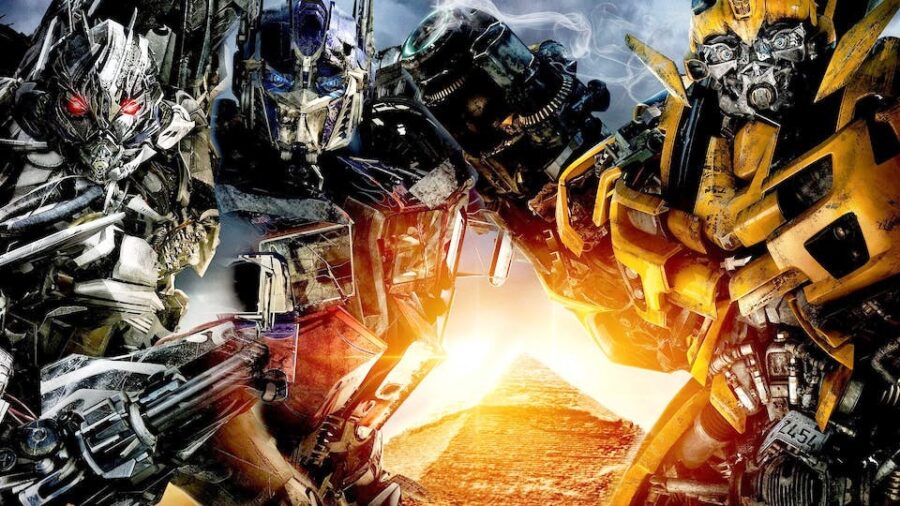
Unfortunately, quality doesn’t matter when it comes to modern-day Transformers films. Revenge of the Fallen was a critical abomination, but it earned over $836 million, leading to three sequels that might as well be war crimes. Years later, Transformers One, the best film in the entire franchise (yeah, I said it!), became a box office bomb that killed any hope of a sequel. Are you ready to share your pain with me? Do you want to drink your way through the worst Transformers movie ever made or stare at Megan Fox? Maybe you just want to return to a simpler time, when the worst thing you’d discover on any given day was that Michael Bay made a racist robot sequel?
No judgments here, friend. No need to transform and roll out; just go stream Transformers: Revenge of the Fallen for free on Tubi.
Entertainment
The Star Trek Episode That Took Its Cue From Seinfeld
By Chris Snellgrove
| Published

Star Trek: Voyager and Seinfeld couldn’t be more different. One is about a Starfleet vessel stranded halfway across the galaxy, trying to find its way home. The other is about a comedian and his neurotic friends navigating the trials and tribulations of New York City. Normally, the only thing these shows have in common is a few shared cast members. For example, Sarah Silverman once served as a love interest for both Kramer and Tom Paris. George Costanza actor Jason Alexander had his own memorable Voyager cameo. Oh, and George’s boss, Mr. Wilhelm, was played by Richard Herd, who went on to have an ongoing Trek role as Paris’ father.
However, one Star Trek: Voyager episode took its storytelling cues from Seinfeld rather than its actors. That episode is “Persistence of Vision,” in which Captain Janeway and her erstwhile crew have to deal with weird hallucinations being caused by a malicious alien with telepathic powers. It’s an episode that Paramount hated because it was so weird, but it ended up being surprisingly effective and popular. This is ironic because showrunner Michael Piller once pointed out that “Persistence of Vision” is a bit like any given Seinfeld episode; that is, it was a show about nothing!
Is Chakotay Spongeworthy?

“Persistence of Vision” begins with a fairly typical early Voyager plot. Captain Janeway must negotiate with some weird aliens for safe passage through their territory in the Delta Quadrant. However, things go sideways almost immediately when she and other crew members end up experiencing bizarre hallucinations. It’s a huge mystery that leads to a rather disappointing reveal: all of this mischief has been caused by a telepathic alien who did it for no reason and who isn’t even really there. Arguably, this resolution is frustrating because it emphasized how this loose episode was really just an excuse for some entertaining character acting.
Because of this, showrunner Michael Piller was pleasantly surprised by how the episode turned out, including how well fans received it. In an interview with Cinefantastique, he summed his feelings up by saying, “The show turned out particularly well, yet it’s not a show that is about anything.” As a lover of all things ‘90s, his phrasing here really tickled me. Piller seemed genuinely shocked that a show that’s not really about anything could resonate with audiences. However, that was Seinfeld’s claim to fame from the very beginning: that it was “a show about nothing.”
You Had To Replicate The Big Salad!

Seinfeld gained its “show about nothing” reputation early on for throwing out traditional sitcom storytelling in favor of weird (and sometimes, weirdly realistic) plots. A prime example of this is “The Chinese Restaurant,” an episode that takes place in real-time. Normally, sitting down for dinner would be the start of a story, or at least, just one element of it. However, this episode took place entirely at the restaurant and captured the hilarious frustration of simply waiting to be seated. According to Jason Alexander, the network thought this episode was “sacrilege,” but he sees it as “the defining beginning of the anarchy of Seinfeld.”
In its own way, “Persistence of Vision” was very similar. The network hated the script because it was so weird, and they wanted to add more aliens and more fight scenes. However, writer Jeri Taylor stuck to her guns and created an episode that arguably helped define the series’ creative legacy. In that same Cinefantastique interview, Michael Piller noted how desperately the show needed to start exploring new, buzzworthy ideas. He claimed this episode “marked the beginning of the turn” and that “We started building on that momentum, and I think if you look from that show on, we consistently started doing interesting things.”
They’re Real, And They’re Honorable

In other words, Star Trek: Voyager fans owe the improved quality of their favorite sci-fi show to an episode where B’elanna Torres wants to get down and dirty with Chakotay, her resident father figure. Paging Dr. Freud to the holodeck! With any luck, nobody on the ship started a bet with the chief about who’s really the master of their domain.

Eury Perez tosses 7 perfect innings, Marlins hold off Athletics
Olivia Miles, Natasha Howard guide Lynx into 2-game set with Sun


