
Entertainment
Good Omens Finale Is Bad Fanfiction Brought To Life

By Chris Snellgrove
| Published

When Good Omens first graced Prime Video with its presence, it felt a bit like a gift from God himself. Not only was it a very solid adaptation of the original Terry Pratchett/Neil Gaiman book, but its central duo was perfectly cast.
David Tennant plays a dastardly demon with a heart of gold, and Michael Sheen plays a natty angel who loves nothing more than tea and a good book. Their unexpected friendship is at the very heart of what makes Good Omens work, and Tennant and Sheen have the perfect amount of quirky chemistry to bring this unconventional relationship to life.

Good Omens later had something of a fall from grace. Season 2 went beyond the confines of the source material, and it was generally beloved thanks to guest stars like Jon Hamm and narrative input from co-showrunner Neil Gaiman. Unfortunately, Gaiman got canceled amid a slew of truly horrific allegations and was reduced from showrunner to co-writer.
It seemed like the right call, as a major association with a disgraced writer would be an albatross around this popular series’ neck. But in the absence of Gaiman’s more overt influence, the Good Omens’ finale became a cluttered mess of an unsalvageable story that feels like bad fanfiction.
Ready For Final Judgment

The Good Omens finale picks up more or less where Season 2 left off. Michael Sheen’s Aziraphale is now running the show in Heaven and trying to prepare the Earth for a kinder, gentler Second Coming. David Tennant’s Crowley, however, is now destitute and living in an alley. Rejected by Hell and personally rejected by Heaven (Aziraphale previously freaked out when the demon kissed him), Crowley eeks out a meager life that is all about getting his car back. Their plots intersect when a reborn Jesus begins wandering the Earth, kicking off a manhunt whose outcome may very well lead to the end of the world.
I walked into the Good Omens finale with a very open mind. I really enjoyed the first two seasons, and I was already a huge fan of the two leads. David Tennant is buoyantly funny and charismatically compelling in Doctor Who, and he almost single-handedly breathed new life into that aging sci-fi franchise. Michael Sheen, meanwhile, really blew me away in Masters of Sex, a show in which his character is defined by quiet dignity and barely restrained passion. In short, these actors represent two great tastes on their own, and in the first two seasons of Good Omens, they most certainly tasted great together (get your heads out of the gutter, demons!).
Heaven Help The Fans

Sadly, the breezy chemistry between Tennant and Sheen is pretty much the only thing the Good Omens finale has going for it. Early on, the plot gestures at some neat ideas, including a resurrected Jesus (played wonderfully by Bilal Hasna) trying to find his purpose in the brave new world that is Earth.
Jesus gets some of the best scenes in this finale and is nominally important to the plot because Aziraphale and Crowley must team up to find him. But his entire storyline is rendered meaningless by a rushed ending that (without giving any spoilers) quite literally renders everyone else’s plots completely meaningless.

Before the accusations against Neil Gaiman came to light, Good Omens was going to have a full third season, but everything got condensed into a single double-episode-length finale. I’m not sure what the hell the writers and producers were planning to do with a whole season. As is, there’s barely enough plot to hold this finale together.
We spend a weird amount of screen time watching an angel gamble to get his car back and Jesus scrambling to learn the meaning of life. It’s just marking time, and even major plot points about the Book of Life being stolen are just excuses to awkwardly jam our two lead characters back together.
All Puzzles, No Answers

David Tennant and Michael Sheen are doing their absolute best with this sloppy script, and watching their very different energies bounce off each other is always great fun. Unfortunately, the Good Omens finale is proof that you can’t make great television on fun vibes alone.
These two spend plenty of time bantering because, frankly, they have little else to do. The closest thing to character development is them coming to terms with their feelings for each other in such an oddly chaste way that it’s guaranteed to piss off those who hated the decision to make these characters gay and those who wanted to see more of a passionate, full-blooded romance.

The poor handling of their relationship is a microcosm of everything wrong with the Good Omens finale, currently streaming on Prime Video. From its meandering plots to its nonsensical conclusion, and to every annoying whimsy in between (including some distractingly stupid visual effects), this finale episode feels like nothing more than fanfiction.
As such, it has plenty of fan service but no actual substance, which is sure to disappoint fans praying for this show to stick the landing. Unfortunately, the Good Omens finale offers all who pray a rather bleak reminder: sometimes, the answer to your prayers is a firm “no.”
GOOD OMENS SEASON 3 REVIEW SCORE
Entertainment
Is eharmony still the gold standard for daters over 40?

If you’re dating in your 40s, some online dating sites and apps are a better bet than others, especially if you want to date within your age range. While most dating apps like Tinder and Hinge tend to be more popular with the 30-and-under crowd, dating websites attract a slightly older demographic, one more interested in substantive connection than fleeting attraction.
That’s where eharmony comes in. The site has been around for over 25 years, and boasts somewhere between 38 and 45 million registered users (according to DatingAdvice), and unlike the fast-paced, dopamine-driven apps, eharmony encourages its users to take their time, emphasizing compatibility through a proprietary personality quiz that the site then uses to assign all of your potential matches with a “compatibility score” between 60 and 140, with a higher score indicating that you have more in common.
Curious if the site is right for you? Here are its pros and cons for daters over 40:
Hookup apps for everyone
AdultFriendFinder
—
readers’ pick for casual connections
Tinder
—
top pick for finding hookups
Hinge
—
popular choice for regular meetups
eharmony benefits
Favorable user demographics
The major benefit of a site like eharmony for older daters is its age breakdown of users. Fully 40 percent of its active users are between the ages of 30 and 39, making it the largest on-site demographic, closely followed by the 40+ crowd at 35 percent of the total user base, while the under-30 crowd makes up just 25 percent of the site’s users.
But it gets even better. According to independent research by SwipeStats, the average age of an eharmony user is 34. Eharmony told Mashable that users are 51 percent women and 49 percent men.
Compatibility-focused matchmaking
On most dating sites these days, the “matchmaking” process is little more than a game of “hot or not,” where users are given a small handful of photos and a few seconds of time to make a decision. That’s not how eharmony operates. All of its users, including paid subscribers and free accounts, complete a comprehensive personality questionnaire known on the site as the Compatibility Quiz.
Based on extensive psychological research and eharmony’s own matchmaking experiences, this quiz aims to classify people around four basic questions:
Once it has this information, it can more accurately guess who you will likely vibe with and who you might butt heads with, all based on these fundamental differences in character.
Mashable Trend Report
It might not be a perfect system, of course, but it does offer a needed counterweight to the “picture first” approach of more superficial dating sites. If you’re in your 40s and eager for connection, it’s nice to see, at a glance, who is likely to appreciate your communication style or life goals.
A commitment to dating transparency
One glaring truth about most online dating sites is that they lack transparency. It keep its matchmaking algorithms hidden, for example, or they remain tight-lipped about its user demographics or success rates. Well, eharmony takes the opposite approach, and it’s refreshing.
Head to its Data and Research section, for example, and you’ll see it regularly releases reports about both online dating in general, always sourced from top-notch independent researchers like Pew, or about its own users in particular. Recent reports include subjects like “masculinity’s impact on dating dynamics” or the topics Gen Z and millennial daters are most likely to lie about in their dating profiles.
These reports aren’t just fun facts or curiosities you might be interested in; they’re valuable insights into modern dating dynamics, and a helpful tool for those eager to improve their dating game.
eharmony drawbacks
Paid membership required
One obvious drawback to eharmony is that, unlike Tinder or Hinge, for example, a paid membership is all but mandatory to actually use the website. With a free account, you can fill out your profile and take the eharmony personality quiz, but you can’t view other daters’ photos or send them substantive messages, so you’re really required to pull out your credit card.
Membership costs vary by location, but if you’re in the United States, expect to pay between $20 and $65 per month, depending on your subscription tier and duration. On the plus side, eharmony also regularly runs promotional sales events, often up to 40 percent off its usual price, so you shouldn’t have too much trouble finding a good deal.
Inactive accounts
This could be construed as both a pro and a con, since it indicates a lot of eharmony users actually end up pairing off with someone, but the fact nonetheless remains that a lot of its registered accounts are inactive.
While its own on-site statistics show close to 45 million registered accounts, there are only about 10 million active users at any given moment, and those tend to be concentrated in large urban areas. Worse still, because it locks its geo-search functions to paid members, you won’t be able to know, in advance, if there are a lot of active eharmony users in your area, which definitely won’t be an issue if you happen to live near a large metropolitan area, but could be a serious problem if you live somewhere a bit more rural.
Best eharmony alternatives for daters over 40
Facebook Dating
If you don’t like the idea of paying for a dating site but still want the benefits of a massive dating pool, consider giving Facebook Dating a try. It boasts more than 20 million daily active users, and has become particularly popular with older Millennials suffering from dating app burnout.
Because it’s separate from your regular Facebook account, Facebook Dating offers a discreet way to survey your local single scene, and if you’re active on Facebook, you can even opt to find people who share your interests or with whom you have Facebook Groups in common.
Hinge
If you can’t bear to part with the app-based dating experience but still want a more mature, substantive option, Hinge is still a great choice. Its approach to matchmaking, through prompt responses, is similar to eharmony’s personality-first ethos. Its newest feature, Signals, seeks to highlight users who have exhibited thoughtful dating behavior. , This will likely help to discourage the low-effort, ghosting culture that so many over-40 daters are running away from.
Entertainment
Deleted Scene Spoiled Darth Vader’s Secret Decades Early
By Chris Snellgrove
| Published

Back in 1998, the coolest Star Wars video game quietly dropped on PC. Star Wars: Behind the Magic was less a game and more an interactive encyclopedia, one filled with all kinds of weird secrets about the franchise. It was from this weird little CD-ROM that I first learned about the Rule of Two, something that would become a big deal in the Prequel Trilogy. It was also the first time I learned more details on Darth Vader being a Sith, something that was weirdly absent from most of the Star Wars Expanded Universe. Of course, the coolest thing about Behind the Magic was the inclusion of deleted scenes from A New Hope.
If we’re being honest, most of the deleted scenes from that first Star Wars movie are pretty bad, and it’s easy to see why they were cut from the film. However, one deleted scene that most fans have never seen (it most certainly wasn’t on that old CD-ROM!) was an extended version of the Death Star conference scene. It’s actually surprisingly great, with world-building and politics that feel right out of Andor. The scene also paints General Tagge as one of the most intense officers in the entire Empire. Most fascinatingly, though, this scene has Tagge call Darth Vader a “Sith,” a word we wouldn’t hear onscreen for another 22 years!
Tagge, You’re It
The extended version of this scene from A New Hope only has one angle, and it’s fixed on Tagge the entire time. While that’s a little weird, it also lets us appreciate how much passion the late, great Don Henderson is putting into his performance. Tagge puts forth some rather justified paranoia, saying that Vader has “gone too far” and that this Emperor-sent errand boy will be their “undoing.” He goes on to describe how dangerous the Rebel Alliance is and how the Death Star is more of a vanity project for Tarkin than a useful military asset. The rest of the scene plays out as it did in the original movie.
Beyond Henderson’s awesome performance, this extended scene is compelling because it provides some Andor-style Imperial worldbuilding. We find out that Motti isn’t the only one who distrusts Vader. We also find out that Vader was sent by the Emperor; the original film makes it seem like he is mostly Tarkin’s attack dog. Speaking of Tarkin, it’s awesome that Tagge calls out the Death Star as being part of “Tarkin’s bid for recognition” rather than “prudent military strategy.” Just like that, we have a fascinating glimpse into Imperial politics, including a high-ranked official saying that his boss is putting his ego ahead of the needs of the Empire.
When The Sith Hits The Fan

Of course, the main reason this extended scene excites Star Wars fans is that it represents the first time the word “Sith” is spoken onscreen. “Onscreen” is the keyword here: the novelization of A New Hope called Darth Vader a “Dark Lord of the Sith,” and he had the same title in some early Star Wars marketing. He was also referred to by this title or, more simply, by “Evil Sith Lord” on some of the Kenner toys. Despite Dark Horse Comics giving more details about ancient Sith in comics like Tales of the Jedi, we didn’t really get much information before the prequels about Vader’s Sith specifics.
This is likely because George Lucas was hesitant to let Star Wars Expanded Universe writers muck about with certain aspects of his mythology. That’s why the EU was filled with so many Dark Jedi bad guys, like Joruus C’baoth. Lucas didn’t have a problem with people writing about corrupted Jedi, but he had his own plans for how he’d portray the Sith. Those plans played out in the Prequel Trilogy, where the word “Sith” was first officially spoken onscreen in The Phantom Menace. In those prequels, details about the Sith were a well-kept secret, mostly known to Jedi and Sith practitioners such as Palpatine.
Keep It Secret, Keep It Safe
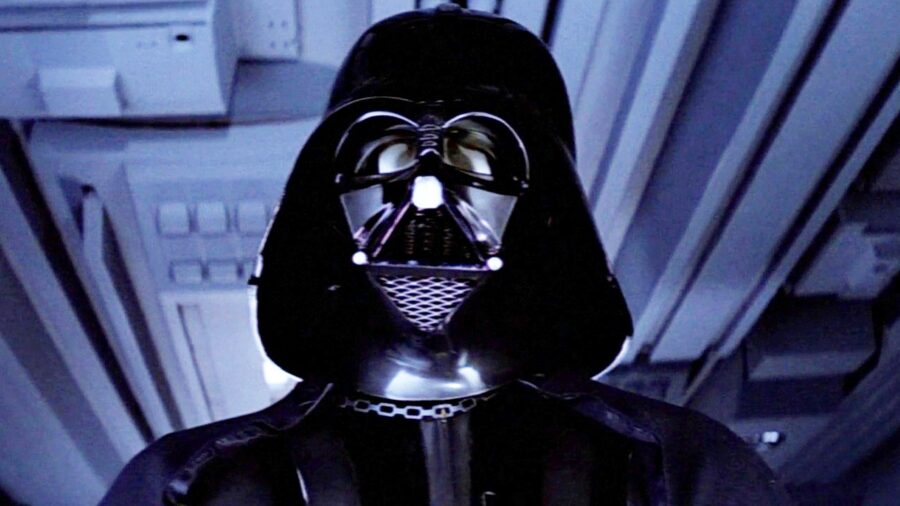
Had this extended scene from A New Hope made it to the final film, fans would have spent decades begging to know more about the Sith. Plus, they’d probably want to know how an Imperial commander knows all about one of the most secretive cults in a galaxy far, far away. However, Lucas cut this dialogue out, leaving the Sith to be a secret that he mostly explored onscreen in the prequels and, later, the Clone Wars TV show. Now, it’s left to fans like us to spread the word of a deleted scene that nearly changed everything.
Don’t know how to introduce it to your buddies? I recommend starting out by asking if they’ve heard the tragedy of General Tagge, the wise. Tell them it’s not a story that George Lucas would tell them, and then roll that beautiful bean footage!
Entertainment
House of the Dragon review: Season 3 atones for the sins of Season 2
Let’s face it: Season 2 of House of the Dragon promised fire and blood, but its baffling finale felt more like a puff of smoke.
The season fizzled to an ending with zero catharsis, forced Game of Thrones references, and a highlight reel of what was to come. In some ways, that structure mirrored the season’s core conflict. For all of Season 2, Queen Rhaenyra Targaryen (Emma D’Arcy) and Alicent Hightower (Olivia Cooke) tried everything they could to prevent all-out war. But while their stalling to prevent the inevitable was rooted deeply in the story, the show’s own reluctance to leap into the next phase of George R.R. Martin’s Fire and Blood felt more like it was spinning its wheels until Season 3.
Now, the third season of House of the Dragon is finally here, and its first four episodes manage to make up for Season 2’s finale and then some, delivering jaw-dropping spectacle and somber truths about the cost of war.
House of the Dragon‘s Battle of the Gullet is spectacular.

Steve Toussaint in “House of the Dragon.”
Credit: Ollie Upton / HBO
Remember how barely an episode of House of the Dragon Season 2 went by without a mention of Corlys Velaryon’s (Steve Toussaint) naval blockade in the Gullet? We finally get the payoff for that blockade at the top of Season 3, as the Triarchy’s fleet bears down on the Sea Snake’s forces. The ensuing clash, known as the Battle of the Gullet, is one of the defining fights of the Dance of the Dragons — the royal succession civil war between Rhaenyra Targaryen (Emma D’Arcy) and Aegon II Targaryen (Tom Glynn-Carney).
Given that so much of Season 2 was building to this point — hence the fan frustration that it wasn’t included — the pressure on House of the Dragon to pull off this battle is immense. Thankfully, the series more than delivers, with a sequence that had me yelling and pacing around my living room while also thinking, “We’re so back.”
Mashable Top Stories
A dazzling set piece involving ships, human soldiers, and multiple dragons, the Battle of the Gullet sets a new bar for Westerosi action. Every element is honed for maximum impact, from long takes of sailors boarding enemy ships to sweeping shots of dragons dive bombing the fleet. The battle, directed by Loni Peristere, wrings epic terror and awe from those big moments, but it also strikes gold in quieter moments, like a suspenseful boat chase that quickly becomes a stealth highlight of the episode.
Oh, and did I mention that this all takes place during the day, so you can make out every ounce of action taking place onscreen? For a franchise whose biggest battles have often been marred by darkness (looking at you, Battle of Winterfell), the Battle of the Gullet is a welcome adjustment. And, based on the first four episodes sent to critics for review, it’s only the beginning for House of the Dragon Season 3’s big action sequences.
House of the Dragon Season 3 pushes Rhaenyra to the brink.

Emma D’Arcy in “House of the Dragon.”
Credit: HBO
The Battle of the Gullet isn’t just an emphatic statement to open Season 3. It’s also a major turning point for the Dance of the Dragons, and for Rhaenyra in particular. All throughout House of the Dragon, she has balked at violence, worried at the havoc dragon warfare would wreak on the wider realm. By Season 3, though, Rhaenyra has lost so much to this conflict that she needs to do whatever she can to see it through. Only by taking the Iron Throne can she justify the pain she’s experienced. That means making impossible choices and committing to violence she once would have shunned, sometimes carrying it out with her own hands. As she does, House of the Dragon asks, even after all this, will victory be worth it?
It’s a haunting question, one that House of the Dragon teases out with tinges of psychological horror in the aftermath of the Battle of the Gullet. D’Arcy has always been magnificent as Rhaenyra, but here, they reach new heights with their raw portrayal of the queen’s grief and rage. Their trembling hands and wracking sobs were just as wrenching as some of the Battle of the Gullet’s most devastating moments, proving that House of the Dragon can match its biggest set pieces with pure human drama.
While the first half of House of the Dragon Season 3 manages to atone for Season 2’s ending, it still commits its share of familiar sins. Threats of sexual violence towards women abound unnecessarily in these episodes, a trend that harkens back to Game of Thrones‘ worst moments. (Although thankfully nothing here is nearly as graphic.) Elsewhere, several plot threads feel stagnant, with once major players like Criston Cole (Fabien Frankel) getting so little to do they may as well be set dressing. Their decreased roles may wind up paying off down the road, though, just like the many, many changes the show makes from Fire and Blood. While the latter reportedly strained the relationship between Martin and showrunner Ryan Condal, these changes do muddy the Targaryens’ already very complicated relationships in intriguing ways, to the point that I’m more fascinated at how the writers came to these new arcs than mad at not getting a precise adaptation.
Despite the occasional low point and my misgivings following Season 2, House of the Dragon Season 3 flies high. Instead of spinning its wheels, it roars into the Targaryens’ bloody future with action and creeping dread to spare, and that assurance and forward momentum turns out to be exactly what the show needs.
Topics
HBO
House of the Dragon

Rory McIlroy out of running at US Open after back-nine 40
Is eharmony still the gold standard for daters over 40?
Tigers' Dillon Dingler homers, drives in 2 in win over White Sox


Entertainment
Good Omens Finale Is Bad Fanfiction Brought To Life
By Chris Snellgrove
| Published
When Good Omens first graced Prime Video with its presence, it felt a bit like a gift from God himself. Not only was it a very solid adaptation of the original Terry Pratchett/Neil Gaiman book, but its central duo was perfectly cast.
David Tennant plays a dastardly demon with a heart of gold, and Michael Sheen plays a natty angel who loves nothing more than tea and a good book. Their unexpected friendship is at the very heart of what makes Good Omens work, and Tennant and Sheen have the perfect amount of quirky chemistry to bring this unconventional relationship to life.
Good Omens later had something of a fall from grace. Season 2 went beyond the confines of the source material, and it was generally beloved thanks to guest stars like Jon Hamm and narrative input from co-showrunner Neil Gaiman. Unfortunately, Gaiman got canceled amid a slew of truly horrific allegations and was reduced from showrunner to co-writer.
It seemed like the right call, as a major association with a disgraced writer would be an albatross around this popular series’ neck. But in the absence of Gaiman’s more overt influence, the Good Omens’ finale became a cluttered mess of an unsalvageable story that feels like bad fanfiction.
Ready For Final Judgment
The Good Omens finale picks up more or less where Season 2 left off. Michael Sheen’s Aziraphale is now running the show in Heaven and trying to prepare the Earth for a kinder, gentler Second Coming. David Tennant’s Crowley, however, is now destitute and living in an alley. Rejected by Hell and personally rejected by Heaven (Aziraphale previously freaked out when the demon kissed him), Crowley eeks out a meager life that is all about getting his car back. Their plots intersect when a reborn Jesus begins wandering the Earth, kicking off a manhunt whose outcome may very well lead to the end of the world.
I walked into the Good Omens finale with a very open mind. I really enjoyed the first two seasons, and I was already a huge fan of the two leads. David Tennant is buoyantly funny and charismatically compelling in Doctor Who, and he almost single-handedly breathed new life into that aging sci-fi franchise. Michael Sheen, meanwhile, really blew me away in Masters of Sex, a show in which his character is defined by quiet dignity and barely restrained passion. In short, these actors represent two great tastes on their own, and in the first two seasons of Good Omens, they most certainly tasted great together (get your heads out of the gutter, demons!).
Heaven Help The Fans
Sadly, the breezy chemistry between Tennant and Sheen is pretty much the only thing the Good Omens finale has going for it. Early on, the plot gestures at some neat ideas, including a resurrected Jesus (played wonderfully by Bilal Hasna) trying to find his purpose in the brave new world that is Earth.
Jesus gets some of the best scenes in this finale and is nominally important to the plot because Aziraphale and Crowley must team up to find him. But his entire storyline is rendered meaningless by a rushed ending that (without giving any spoilers) quite literally renders everyone else’s plots completely meaningless.
Before the accusations against Neil Gaiman came to light, Good Omens was going to have a full third season, but everything got condensed into a single double-episode-length finale. I’m not sure what the hell the writers and producers were planning to do with a whole season. As is, there’s barely enough plot to hold this finale together.
We spend a weird amount of screen time watching an angel gamble to get his car back and Jesus scrambling to learn the meaning of life. It’s just marking time, and even major plot points about the Book of Life being stolen are just excuses to awkwardly jam our two lead characters back together.
All Puzzles, No Answers
David Tennant and Michael Sheen are doing their absolute best with this sloppy script, and watching their very different energies bounce off each other is always great fun. Unfortunately, the Good Omens finale is proof that you can’t make great television on fun vibes alone.
These two spend plenty of time bantering because, frankly, they have little else to do. The closest thing to character development is them coming to terms with their feelings for each other in such an oddly chaste way that it’s guaranteed to piss off those who hated the decision to make these characters gay and those who wanted to see more of a passionate, full-blooded romance.
The poor handling of their relationship is a microcosm of everything wrong with the Good Omens finale, currently streaming on Prime Video. From its meandering plots to its nonsensical conclusion, and to every annoying whimsy in between (including some distractingly stupid visual effects), this finale episode feels like nothing more than fanfiction.
As such, it has plenty of fan service but no actual substance, which is sure to disappoint fans praying for this show to stick the landing. Unfortunately, the Good Omens finale offers all who pray a rather bleak reminder: sometimes, the answer to your prayers is a firm “no.”
GOOD OMENS SEASON 3 REVIEW SCORE
Entertainment
Is eharmony still the gold standard for daters over 40?
If you’re dating in your 40s, some online dating sites and apps are a better bet than others, especially if you want to date within your age range. While most dating apps like Tinder and Hinge tend to be more popular with the 30-and-under crowd, dating websites attract a slightly older demographic, one more interested in substantive connection than fleeting attraction.
That’s where eharmony comes in. The site has been around for over 25 years, and boasts somewhere between 38 and 45 million registered users (according to DatingAdvice), and unlike the fast-paced, dopamine-driven apps, eharmony encourages its users to take their time, emphasizing compatibility through a proprietary personality quiz that the site then uses to assign all of your potential matches with a “compatibility score” between 60 and 140, with a higher score indicating that you have more in common.
Curious if the site is right for you? Here are its pros and cons for daters over 40:
Hookup apps for everyone
AdultFriendFinder
—
readers’ pick for casual connections
Tinder
—
top pick for finding hookups
Hinge
—
popular choice for regular meetups
eharmony benefits
Favorable user demographics
The major benefit of a site like eharmony for older daters is its age breakdown of users. Fully 40 percent of its active users are between the ages of 30 and 39, making it the largest on-site demographic, closely followed by the 40+ crowd at 35 percent of the total user base, while the under-30 crowd makes up just 25 percent of the site’s users.
But it gets even better. According to independent research by SwipeStats, the average age of an eharmony user is 34. Eharmony told Mashable that users are 51 percent women and 49 percent men.
Compatibility-focused matchmaking
On most dating sites these days, the “matchmaking” process is little more than a game of “hot or not,” where users are given a small handful of photos and a few seconds of time to make a decision. That’s not how eharmony operates. All of its users, including paid subscribers and free accounts, complete a comprehensive personality questionnaire known on the site as the Compatibility Quiz.
Based on extensive psychological research and eharmony’s own matchmaking experiences, this quiz aims to classify people around four basic questions:
Once it has this information, it can more accurately guess who you will likely vibe with and who you might butt heads with, all based on these fundamental differences in character.
Mashable Trend Report
It might not be a perfect system, of course, but it does offer a needed counterweight to the “picture first” approach of more superficial dating sites. If you’re in your 40s and eager for connection, it’s nice to see, at a glance, who is likely to appreciate your communication style or life goals.
A commitment to dating transparency
One glaring truth about most online dating sites is that they lack transparency. It keep its matchmaking algorithms hidden, for example, or they remain tight-lipped about its user demographics or success rates. Well, eharmony takes the opposite approach, and it’s refreshing.
Head to its Data and Research section, for example, and you’ll see it regularly releases reports about both online dating in general, always sourced from top-notch independent researchers like Pew, or about its own users in particular. Recent reports include subjects like “masculinity’s impact on dating dynamics” or the topics Gen Z and millennial daters are most likely to lie about in their dating profiles.
These reports aren’t just fun facts or curiosities you might be interested in; they’re valuable insights into modern dating dynamics, and a helpful tool for those eager to improve their dating game.
eharmony drawbacks
Paid membership required
One obvious drawback to eharmony is that, unlike Tinder or Hinge, for example, a paid membership is all but mandatory to actually use the website. With a free account, you can fill out your profile and take the eharmony personality quiz, but you can’t view other daters’ photos or send them substantive messages, so you’re really required to pull out your credit card.
Membership costs vary by location, but if you’re in the United States, expect to pay between $20 and $65 per month, depending on your subscription tier and duration. On the plus side, eharmony also regularly runs promotional sales events, often up to 40 percent off its usual price, so you shouldn’t have too much trouble finding a good deal.
Inactive accounts
This could be construed as both a pro and a con, since it indicates a lot of eharmony users actually end up pairing off with someone, but the fact nonetheless remains that a lot of its registered accounts are inactive.
While its own on-site statistics show close to 45 million registered accounts, there are only about 10 million active users at any given moment, and those tend to be concentrated in large urban areas. Worse still, because it locks its geo-search functions to paid members, you won’t be able to know, in advance, if there are a lot of active eharmony users in your area, which definitely won’t be an issue if you happen to live near a large metropolitan area, but could be a serious problem if you live somewhere a bit more rural.
Best eharmony alternatives for daters over 40
Facebook Dating
If you don’t like the idea of paying for a dating site but still want the benefits of a massive dating pool, consider giving Facebook Dating a try. It boasts more than 20 million daily active users, and has become particularly popular with older Millennials suffering from dating app burnout.
Because it’s separate from your regular Facebook account, Facebook Dating offers a discreet way to survey your local single scene, and if you’re active on Facebook, you can even opt to find people who share your interests or with whom you have Facebook Groups in common.
Hinge
If you can’t bear to part with the app-based dating experience but still want a more mature, substantive option, Hinge is still a great choice. Its approach to matchmaking, through prompt responses, is similar to eharmony’s personality-first ethos. Its newest feature, Signals, seeks to highlight users who have exhibited thoughtful dating behavior. , This will likely help to discourage the low-effort, ghosting culture that so many over-40 daters are running away from.
Entertainment
Deleted Scene Spoiled Darth Vader’s Secret Decades Early
By Chris Snellgrove
| Published
Back in 1998, the coolest Star Wars video game quietly dropped on PC. Star Wars: Behind the Magic was less a game and more an interactive encyclopedia, one filled with all kinds of weird secrets about the franchise. It was from this weird little CD-ROM that I first learned about the Rule of Two, something that would become a big deal in the Prequel Trilogy. It was also the first time I learned more details on Darth Vader being a Sith, something that was weirdly absent from most of the Star Wars Expanded Universe. Of course, the coolest thing about Behind the Magic was the inclusion of deleted scenes from A New Hope.
If we’re being honest, most of the deleted scenes from that first Star Wars movie are pretty bad, and it’s easy to see why they were cut from the film. However, one deleted scene that most fans have never seen (it most certainly wasn’t on that old CD-ROM!) was an extended version of the Death Star conference scene. It’s actually surprisingly great, with world-building and politics that feel right out of Andor. The scene also paints General Tagge as one of the most intense officers in the entire Empire. Most fascinatingly, though, this scene has Tagge call Darth Vader a “Sith,” a word we wouldn’t hear onscreen for another 22 years!
Tagge, You’re It
The extended version of this scene from A New Hope only has one angle, and it’s fixed on Tagge the entire time. While that’s a little weird, it also lets us appreciate how much passion the late, great Don Henderson is putting into his performance. Tagge puts forth some rather justified paranoia, saying that Vader has “gone too far” and that this Emperor-sent errand boy will be their “undoing.” He goes on to describe how dangerous the Rebel Alliance is and how the Death Star is more of a vanity project for Tarkin than a useful military asset. The rest of the scene plays out as it did in the original movie.
Beyond Henderson’s awesome performance, this extended scene is compelling because it provides some Andor-style Imperial worldbuilding. We find out that Motti isn’t the only one who distrusts Vader. We also find out that Vader was sent by the Emperor; the original film makes it seem like he is mostly Tarkin’s attack dog. Speaking of Tarkin, it’s awesome that Tagge calls out the Death Star as being part of “Tarkin’s bid for recognition” rather than “prudent military strategy.” Just like that, we have a fascinating glimpse into Imperial politics, including a high-ranked official saying that his boss is putting his ego ahead of the needs of the Empire.
When The Sith Hits The Fan
Of course, the main reason this extended scene excites Star Wars fans is that it represents the first time the word “Sith” is spoken onscreen. “Onscreen” is the keyword here: the novelization of A New Hope called Darth Vader a “Dark Lord of the Sith,” and he had the same title in some early Star Wars marketing. He was also referred to by this title or, more simply, by “Evil Sith Lord” on some of the Kenner toys. Despite Dark Horse Comics giving more details about ancient Sith in comics like Tales of the Jedi, we didn’t really get much information before the prequels about Vader’s Sith specifics.
This is likely because George Lucas was hesitant to let Star Wars Expanded Universe writers muck about with certain aspects of his mythology. That’s why the EU was filled with so many Dark Jedi bad guys, like Joruus C’baoth. Lucas didn’t have a problem with people writing about corrupted Jedi, but he had his own plans for how he’d portray the Sith. Those plans played out in the Prequel Trilogy, where the word “Sith” was first officially spoken onscreen in The Phantom Menace. In those prequels, details about the Sith were a well-kept secret, mostly known to Jedi and Sith practitioners such as Palpatine.
Keep It Secret, Keep It Safe
Had this extended scene from A New Hope made it to the final film, fans would have spent decades begging to know more about the Sith. Plus, they’d probably want to know how an Imperial commander knows all about one of the most secretive cults in a galaxy far, far away. However, Lucas cut this dialogue out, leaving the Sith to be a secret that he mostly explored onscreen in the prequels and, later, the Clone Wars TV show. Now, it’s left to fans like us to spread the word of a deleted scene that nearly changed everything.
Don’t know how to introduce it to your buddies? I recommend starting out by asking if they’ve heard the tragedy of General Tagge, the wise. Tell them it’s not a story that George Lucas would tell them, and then roll that beautiful bean footage!
Entertainment
House of the Dragon review: Season 3 atones for the sins of Season 2
Let’s face it: Season 2 of House of the Dragon promised fire and blood, but its baffling finale felt more like a puff of smoke.
The season fizzled to an ending with zero catharsis, forced Game of Thrones references, and a highlight reel of what was to come. In some ways, that structure mirrored the season’s core conflict. For all of Season 2, Queen Rhaenyra Targaryen (Emma D’Arcy) and Alicent Hightower (Olivia Cooke) tried everything they could to prevent all-out war. But while their stalling to prevent the inevitable was rooted deeply in the story, the show’s own reluctance to leap into the next phase of George R.R. Martin’s Fire and Blood felt more like it was spinning its wheels until Season 3.
Now, the third season of House of the Dragon is finally here, and its first four episodes manage to make up for Season 2’s finale and then some, delivering jaw-dropping spectacle and somber truths about the cost of war.
House of the Dragon‘s Battle of the Gullet is spectacular.
Steve Toussaint in “House of the Dragon.”
Credit: Ollie Upton / HBO
Remember how barely an episode of House of the Dragon Season 2 went by without a mention of Corlys Velaryon’s (Steve Toussaint) naval blockade in the Gullet? We finally get the payoff for that blockade at the top of Season 3, as the Triarchy’s fleet bears down on the Sea Snake’s forces. The ensuing clash, known as the Battle of the Gullet, is one of the defining fights of the Dance of the Dragons — the royal succession civil war between Rhaenyra Targaryen (Emma D’Arcy) and Aegon II Targaryen (Tom Glynn-Carney).
Given that so much of Season 2 was building to this point — hence the fan frustration that it wasn’t included — the pressure on House of the Dragon to pull off this battle is immense. Thankfully, the series more than delivers, with a sequence that had me yelling and pacing around my living room while also thinking, “We’re so back.”
Mashable Top Stories
A dazzling set piece involving ships, human soldiers, and multiple dragons, the Battle of the Gullet sets a new bar for Westerosi action. Every element is honed for maximum impact, from long takes of sailors boarding enemy ships to sweeping shots of dragons dive bombing the fleet. The battle, directed by Loni Peristere, wrings epic terror and awe from those big moments, but it also strikes gold in quieter moments, like a suspenseful boat chase that quickly becomes a stealth highlight of the episode.
Oh, and did I mention that this all takes place during the day, so you can make out every ounce of action taking place onscreen? For a franchise whose biggest battles have often been marred by darkness (looking at you, Battle of Winterfell), the Battle of the Gullet is a welcome adjustment. And, based on the first four episodes sent to critics for review, it’s only the beginning for House of the Dragon Season 3’s big action sequences.
House of the Dragon Season 3 pushes Rhaenyra to the brink.
Emma D’Arcy in “House of the Dragon.”
Credit: HBO
The Battle of the Gullet isn’t just an emphatic statement to open Season 3. It’s also a major turning point for the Dance of the Dragons, and for Rhaenyra in particular. All throughout House of the Dragon, she has balked at violence, worried at the havoc dragon warfare would wreak on the wider realm. By Season 3, though, Rhaenyra has lost so much to this conflict that she needs to do whatever she can to see it through. Only by taking the Iron Throne can she justify the pain she’s experienced. That means making impossible choices and committing to violence she once would have shunned, sometimes carrying it out with her own hands. As she does, House of the Dragon asks, even after all this, will victory be worth it?
It’s a haunting question, one that House of the Dragon teases out with tinges of psychological horror in the aftermath of the Battle of the Gullet. D’Arcy has always been magnificent as Rhaenyra, but here, they reach new heights with their raw portrayal of the queen’s grief and rage. Their trembling hands and wracking sobs were just as wrenching as some of the Battle of the Gullet’s most devastating moments, proving that House of the Dragon can match its biggest set pieces with pure human drama.
While the first half of House of the Dragon Season 3 manages to atone for Season 2’s ending, it still commits its share of familiar sins. Threats of sexual violence towards women abound unnecessarily in these episodes, a trend that harkens back to Game of Thrones‘ worst moments. (Although thankfully nothing here is nearly as graphic.) Elsewhere, several plot threads feel stagnant, with once major players like Criston Cole (Fabien Frankel) getting so little to do they may as well be set dressing. Their decreased roles may wind up paying off down the road, though, just like the many, many changes the show makes from Fire and Blood. While the latter reportedly strained the relationship between Martin and showrunner Ryan Condal, these changes do muddy the Targaryens’ already very complicated relationships in intriguing ways, to the point that I’m more fascinated at how the writers came to these new arcs than mad at not getting a precise adaptation.
Despite the occasional low point and my misgivings following Season 2, House of the Dragon Season 3 flies high. Instead of spinning its wheels, it roars into the Targaryens’ bloody future with action and creeping dread to spare, and that assurance and forward momentum turns out to be exactly what the show needs.
Topics
HBO
House of the Dragon
Leave a Reply