
Entertainment
Everyone Is Wrong About Batman Forever
By Robert Scucci
| Published
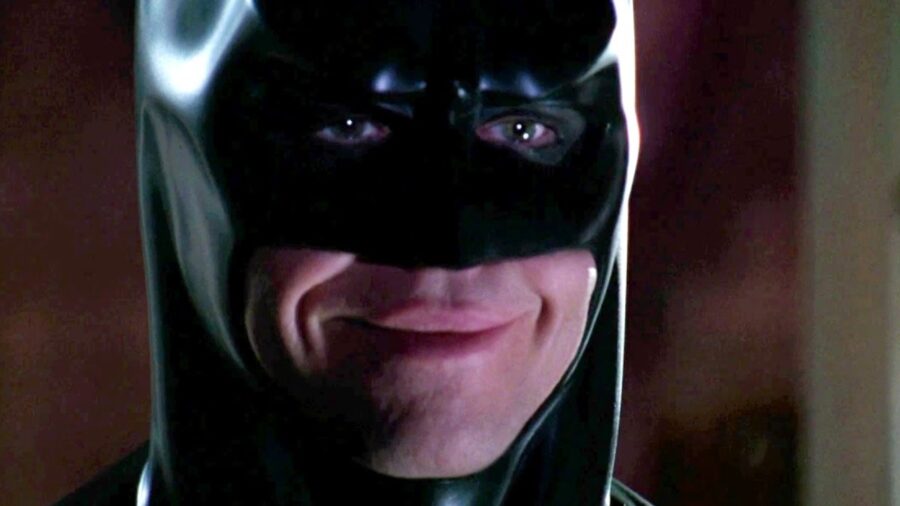
Of all the Batman movies that have been released over the past several decades, 1995’s Batman Forever receives what I consider to be a lot of unnecessary hate. Losing points among die-hard Batman fans for being incredibly campy and over-the-top when compared to Tim Burton’s Batman and Batman returns (and Christopher Nolan’s Dark Knight series), Joel Schumacher’s Batman Forever isn’t remembered fondly because it’s not dark and brooding like its predecessors or successors, but rather bright, explosive, stylish, and corny, much like the 1960s iteration of Batman that featured Adam West as the Dark Knight and Burt Ward as Robin.
I don’t necessarily see this stylistic pivot as a reason to hate on Batman Forever because when you look at any movie critically, you need to consider one very important aspect regardless of what critics and audiences say: did the movie accomplish what it set out to do?
I think yes.
Not The Best, But Definitely Not The Worst
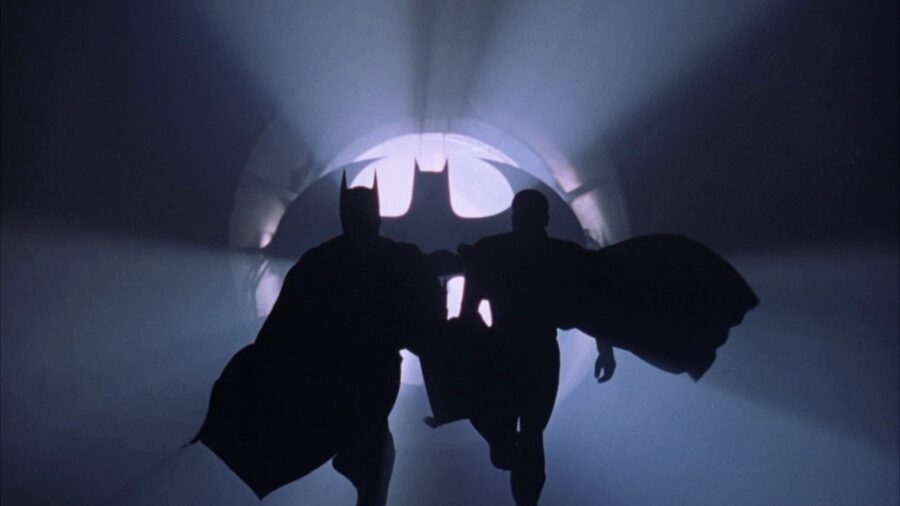
I’m going to first extend an olive branch because I need to go on record saying that Michael Keaton is the best Batman, bar none, because of his dry wit and deadpan delivery. Christian Bale working under Chistopher Nolan’s direction in the Dark Knight Trilogy is a close second for me because of how Nolan spent a considerable amount of time building up the backstories and emotional through lines that carried a significant amount of weight throughout the film series, all of which having tremendous payoffs that will stand the test of time.
I also need to go on record saying that Batman Forever’s ill-fated followup, 1997’s Batman & Robin is wholly deserving of its 12 percent critical score on Rotten Tomatoes for bringing George Clooney, who has publicly (and rightfully) disavowed his portrayal of Batman, into the mix.
But watching Batman Forever in a vacuum instead of comparing it to other adjacent intellectual properties makes for a better viewing experience because it did exactly what it set out to do. Remember, Batman Returns, my personal favorite Batman flick, was so heavy and dark that kids left the theater crying. In fact, Roger Ebert thought Batman Returns’ PG-13 rating was a joke because of how not kid friendly it was.
In other words, Batman Forever’s more light-hearted and campy approach, while not received well by long-time fans of the franchise, made logical sense from a financial standpoint because Batman Returns was considered a box office disappointment despite its $266 million earnings, as 1989’s Batman earned about $150 million more, making it the sixth-highest-grossing film in history at the time of its release.
Batman Forever’s Marketing Hype
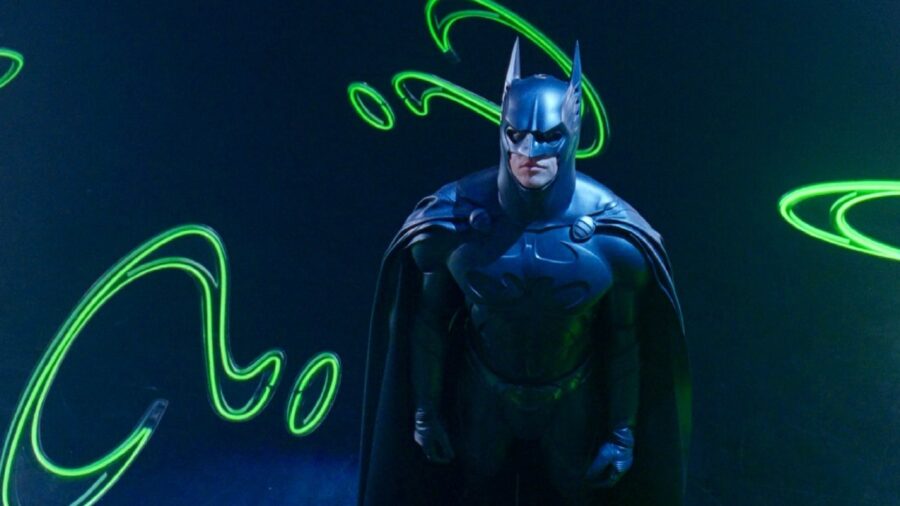
Growing up, I distinctly remember Batman Forever’s release being a cultural event – there were McDonald’s collaborations, Six Flags Great Adventure amusement parks had themed tie-ins and rides, its soundtrack reached the number five spot on the US Billboard 200 (even with that god awful U2 song leading the charge), and several video games related to the movie all saw releases to get everybody hyped.
Knowing how over-hyped projects tend to get the wind taken out of their sails upon their release because there’s no possible way they can live up to the lofty expectations made by their own aggressive marketing campaigns, I have reason to believe that Batman Forever was a victim of its own promotional material because everybody I knew was absolutely pumped ahead of its release, and gravely disappointed when they didn’t get what they expected.
Appreciate It For What It Is
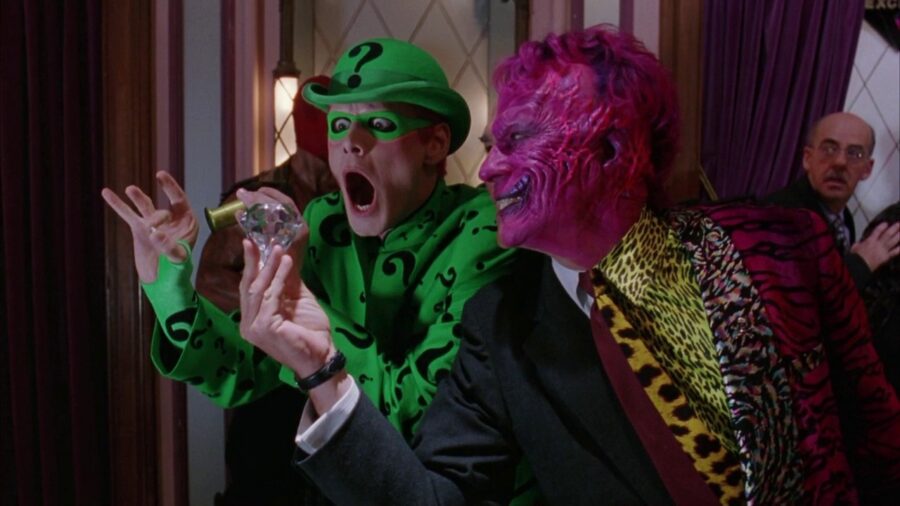
Behind the scenes, Jim Carrey and Tommy Lee Jones, who played the Riddler and Two-Face respectively, did not get along, to the point where Jones told Carrey to his face, “I hate you. I really don’t like you … I cannot sanction your buffoonery.” As Batman Forever’s two adversarial antagonists, this dynamic played out tremendously on-screen because both villains reluctantly worked together to take down Batman, and some of that animosity we see between the Riddler and Two-Face in the final cut was coming from a genuinely adversarial place behind the scenes.
Val Kilmer’s portrayal of Batman and Bruce Wayne also actually has some depth to it, as he experiences vivid flashbacks about his parent’s murder while unpacking his personal demons with Nicole Kidman’s Dr. Chase Meridian, his love interest and de facto psychologist in Batman Forever. Perfectly foiling Bruce Wayne/Batman’s secretive, lone-wolf disposition is Chris O’Donnell’s Dick Grayson, the young acrobat who wants to avenge the death of his parents after their run-in with Two-Face, and forces Bruce’s hand to allow him to suit up, call himself Robin, and become his partner.
The Batman/Robin dynamic in Batman Forever ends up paying off because Bruce explains in no uncertain terms to Dick that becoming a vigilante for the sake of revenge will corrode one’s soul, leaving them with a profound feeling of emptiness if they can’t find it within themselves to rally for a larger, more universal cause like keeping the streets of Gotham safe so other ruthless crime lords don’t have the opportunity to tear more families apart. Dick’s stubborn unwillingness to listen to Bruce pays off because when Batman finds himself in an impossible jam in Batman Forever’s third act, he comes to the realization that he can’t go alone in his crusade, and a partnership is finally forged to save the day.
Streaming Batman Forever
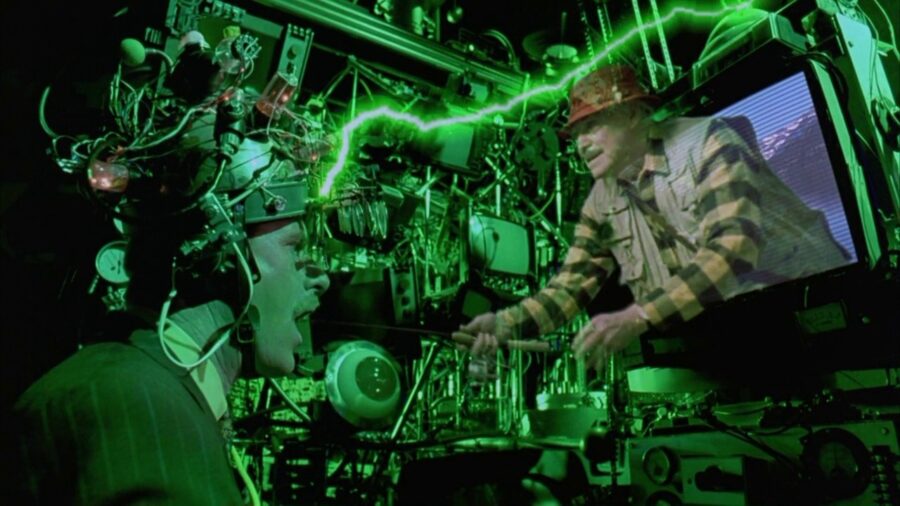

At the end of the day, Batman Forever isn’t among the best of the best Batman movies, but its successful in establishing easily digestible backstories, is visually charming in the sense that its fluorescent aesthetic makes it a perfect popcorn movie full of action that has no right being so colorful, and has a form of over-the-top charisma that makes you want to yell “ZIP!” and “POW!” whenever our heroes start throwing hands with their common enemies. For whatever reason you may want to dunk on Batman Forever, you might want to reconsider giving it a rewatch one of these days because it’s hypnotically campy, endlessly entertaining, and never fails to embrace its own inherent silliness.
Batman Forever, which is currently streaming on Max, should be loved for what it is, not hated for not being what it’s not trying to be.
Entertainment
NYT Pips hints, answers for April 19, 2026

Welcome to your guide to Pips, the latest game in the New York Times catalogue.
Released in August 2025, Pips puts a unique spin on dominoes, creating a fun single-player experience that could become your next daily gaming habit.
Currently, if you’re stuck, the game only offers to reveal the entire puzzle, forcing you to move on to the next difficulty level and start over. However, we have you covered! Below are piecemeal answers that will serve as hints so that you can find your way through each difficulty level.
How to play Pips
If you’ve ever played dominoes, you’ll have a passing familiarity with how Pips is played. As we’ve shared in our previous hints stories for Pips, the tiles, like dominoes, are placed vertically or horizontally and connect with each other. The main difference between a traditional game of dominoes and Pips is the color-coded conditions you have to address. The touching tiles don’t necessarily have to match.
The conditions you have to meet are specific to the color-coded spaces. For example, if it provides a single number, every side of a tile in that space must add up to the number provided. It is possible — and common — for only half a tile to be within a color-coded space.
Here are common examples you’ll run into across the difficulty levels:
-
Number: All the pips in this space must add up to the number.
-
Equal: Every domino half in this space must be the same number of pips.
-
Not Equal: Every domino half in this space must have a completely different number of pips.
-
Less than: Every domino half in this space must add up to less than the number.
-
Greater than: Every domino half in this space must add up to more than the number.
If an area does not have any color coding, it means there are no conditions on the portions of dominoes within those spaces.
Easy difficulty hints, answers for April 19 Pips
Equal (0): Every domino half in this red space must have 0 pips. The answer is 6-0, placed horizontally; 0-2, placed vertically.
Equal (3): Every domino half in this purple space must have 3 pips. The answer is 3-3, placed vertically.
Number (1): The domino half in this light blue space must have 1 pip. The answer is 1-4, placed vertically.
Equal (4): Every domino half in this yellow space must have 4 pips. The answer is 1-4, placed vertically; 2-4, placed horizontally.
Equal (2): Every domino half in this dark blue space must have 2 pips. The answer is 0-2, placed vertically; 2-4, placed horizontally.
Mashable Top Stories
Medium difficulty hints, answers for April 19 Pips
Number (7): Everything in this purple space must add up to 7. The answer is 3-0, placed horizontally; 5-4, placed horizontally.
Equal (0): Every domino half in this red space must have 0 pips. The answer is 3-0, placed horizontally; 0-5, placed vertically.
Equal (5): Every domino half in this light blue space must have 5 pips. The answer is 5-4, placed horizontally; 5-1, placed horizontally.
Less Than (7): Everything in this yellow space must add up to be less than 7. The answer is 1-6, placed vertically; 0-5, placed vertically.
Number (7): Everything in this dark blue space must add up to 7. The answer is 5-1, placed horizontally; 1-6, placed vertically.
Equal (6): Every domino half in this green space must have 6 pips. The answer is 6-6, placed horizontally; 6-5, placed vertically.
Greater Than (1): The domino half in this purple space must have more than 1 pip. The answer is 6-5, placed vertically.
Hard difficulty hints, answers for April 19 Pips
Number (2): Everything in this purple space must add up to 2. The answer is 1-0, placed horizontally; 1-2, placed vertically.
Less Than (2): Everything in this red space must add up to be less than 2. The answer is 1-0, placed horizontally; 0-2, placed horizontally; and 0-0, placed vertically.
Number (5): Everything in this light blue space must add up to 5. The answer is 0-2, placed horizontally; 3-4, placed vertically.
Number (5): Everything in this yellow space must add up to 5. The answer is 3-4, placed vertically; 1-6, placed vertically.
Number (2): Everything in this dark blue space must add up to 2. The answer is 1-2, placed vertically; 0-6, placed vertically.
Equal (3): Every domino half in this green space must have 3 pips. The answer is 3-3, placed vertically.
Number (9): Everything in this purple space must add up to 9. The answer is 1-6, placed vertically; 3-6, placed vertically.
Number (8): Everything in this red space must add up to 8. The answer is 6-4, placed vertically; 4-2, placed horizontally.
Number (4): Everything in this light blue space must add up to 4. The answer is 4-2, placed horizontally; 2-6, placed horizontally.
If you’re looking for more puzzles, Mashable’s got games now! Check out our games hub for Mahjong, Sudoku, free crossword, and more.
Entertainment
Hollywood’s New Obsession Is Called Zealot Porn, How To Spot It
By Joshua Tyler
| Updated

I recently coined the term “zealot porn” to help explain a new kind of entertainment. Zealot porn is what happens when you make programming specifically designed to torment characters for their personal ideological views, with the goal of your viewers deriving pleasure from their suffering.
zealot porn (noun) — Media that graphically depicts violent punishment of ideological opponents, crafted to gratify the viewer’s sense of moral superiority and deliver cathartic satisfaction through retributive spectacle.

The key to zealot porn is that not only must the characters on screen be portrayed as zealots, in order to dehumanize them, but the people watching must themselves be zealous opponents of the characters’ ideology, in order to fully enjoy their suffering. Zealot porn is what happens when you make stories about zealots for zealots.
zealot (noun) — a person consumed by devotion to a cause or belief, so blinded by passion that reason becomes collateral damage.
This new genre took its clearest and most defined form in the second season of Peacemaker, when creator James Gunn crafted a scene designed to give his viewers the jollies over watching the murder of people who seemed like they might think good things about Nazis. Obviously, no one likes Nazis, but whether you personally like or dislike the views of the people being harmed isn’t relevant to whether or not something is zealot porn.
What matters is the intent of the media you’re watching, and whether that intent is to give the audience pleasure by dehumanizing and punishing people for their views. What those views are or their morality is irrelevant to defining the genre.
How To Spot Zealot Porn
Zealot porn isn’t difficult to spot, if you’re not emotionally invested in the topic. It’s nearly impossible to spot, however, if you are.
To determine if you’re watching zealot porn, use this checklist. If more than three of these are true, you’re probably watching zealot pon.
-
The “bad side” is cartoonishly evil, leaving no room for nuance -
Violence or humiliation is framed as morally satisfying, not disturbing -
The hero is always right, even when acting brutally -
Opponents exist only to be punished, not understood -
Emotional payoff outweighs logic or realism -
Scenarios feel engineered to justify a specific worldview -
Complex issues are reduced to simple good vs. evil
Zealot Porn Wins Oscars
The movie One Battle After Another is a zealous feast, and that won it Best Picture. We put together a video to explain it in depth.
Zealot Porn In Real Life
Zealot porn isn’t limited to fictional entertainment. Often, people get catharsis by watching videos or reading coverage of real-life ideological opponents being made to suffer. That’s on the rise too.
As I write this, prominent Democrat Eric Swalwell is getting his comeuppance over various salacious accusations, and Republicans are cheering and gaining pleasure from his downfall. This is a milder form, since no actual violence or death is involved.
catharsis (noun) — the sudden, involuntary purge of buried emotion that floods the mind like a breached dam, leaving behind a raw, emptied stillness that feels strangely like peace.
A more extreme example would be people celebrating the murder of conservative debater Charlie Kirk with similar elation. For them, watching him shot was another form of zealot porn, despite his very clearly not being a Nazi.
Others had similar reactions to videos showing the public execution of a health executive carried out by Luigi Mangione in 2024. That, too, was real-life zealot porn.
Early Zealot Porn

Zealot porn is not a new invention, but it’s been a long time since it was accepted in the mainstream. In the early days of Christianity, Romans fed believers to lions in front of cheering audiences. That was a low-tech version of zealot porn. Using media like movies and television as a delivery mechanism is, however, a recent phenomenon.
Past creators would have balked at the idea of dehumanizing characters for the audience’s base pleasure. Entire books have been written about it being a bad idea. It’s why George Orwell wrote 1984.

On a creative level, it would have formerly been considered bad writing. Normally, good writing aims to humanize the writer’s creations and make them relatable. Zealot porn does the opposite.
Early media that skewed closest to zealot porn are propaganda films from World War 2 or some of the more extreme grindhouse or blaxploitation movies of the 1970s. Most of those, however, focused more on the idea of dismantling a system or punishing someone who’d actively done something wrong. They’re revenge fantasies and not really the same. In the most despicable cases, as with movies like Triumph of the Will, they focused on hurting people based on some immutable outward physical characteristic.
The idea that it’s acceptable to dehumanize and destroy someone for their thoughts is newer in the modern mainstream, and it’s a growing phenomenon.
Quentin Tarantino Births Modern Zealot Porn

If you’re looking for the start of modern zealot porn, its roots can be found in Quentin Tarantino’s 2009 movie, Inglourious Basterds.
The movie presents an alternate history in which a group of American commandos wipe out the evil Nazis and kill Hitler, without the need for a global war. It isn’t about character arcs or military realism; it’s about watching the most evil regime in history get flambéed to the sound of David Bowie.
Nazism was a uniquely perfect ideology to use in birthing modern zealot porn, because nearly everyone has been pre-conditioned toward a zealous hatred of Hitler and his cronies. So Tarantino gives audiences, raised on decades of history classes talking about how uniquely evil Nazis were, exactly what they want: Nazis humiliated, carved, and annihilated. Punished for their beliefs even more than just their actions.

Inglourious Basterds is bloody, indulgent, and engineered specifically for moral satisfaction.
Still, Inglourious Basterds largely focused on murdering those embedded in the Nazi regime’s power structure. It didn’t, for the most part, take pleasure in killing random Germans walking down the street who might be thinking Nazi thoughts.
Inglorious Basterds is a more high-class type of zealot porn, but its existence helped give a green light to the growing wave of more extreme copycats that followed.
If modern zealot porn has a father, it’s Quentin Tarantino.
Robert Rodriguez Targets Conservatives For Destruction

If modern zealot porn has a mother, it’s Robert Rodriguez.
Robert Rodriguez’s Machete began as a fake trailer and mutated into a full-on immigration revenge epic. Danny Trejo stars as a former Mexican Federale turned one-man army after being betrayed by corrupt politicians and anti-immigrant vigilantes.
Where Tarantino created a movie designed to visit violence on a historical group almost universally agreed to be evil, Robert Rodriguez targeted his movie at a mainstream, modern group of people and their current (and widely held) beliefs on border security.

To make that work, he had to dehumanize his targets by twisting their views to cartoonish extremes. Rodriguez takes anti-immigration rhetoric and dumbs it down to absurdist levels, so that he can turn those who agree with it into fodder for righteous decapitation.
Every kill in his 2010 movie is meant not just payback for Machete’s betrayal but for decades of what his audience would perceive as xenophobic cruelty. The film is indulgent, cartoonishly violent, and completely lost in the bubble of its own politics.
Kevin Smith Finds Catharsis In Crazy Christians

If modern zealot porn has a weird uncle, it’s Kevin Smith.
Two years after Inglorious Basterds, filmmaker Kevin Smith applied Robert Rodregeuz’s anti-Conservative formula to fundamentalist Christians with the movie Red State.
The Evangelicals depicted in the movie are a cartoonish, demonic caricature of what real-life hard-line Christians are. That’s a key piece of the zealot porn formula, since it serves to dehumanize the real-world group, thus allowing the audience to take pleasure in their violent end.

By the movie’s end, Red State takes intense pleasure in their doom. As an audience, it feels acceptable because the movie makes them into monsters before it does its worst.
Later examples of purified zealot porn won’t go through as much trouble, but Red State, like Inglorious Basterds before it, was still pushing at the boundaries of what audiences would find acceptable. It’s more restrained than its predecessors but also more pointed in its attack on its character’s beliefs.
Thriving In Independent Film

Once Tarantino, Rodriguez, and Smith showed creators the way, there was a brief explosion in copycats. Those copycats stuck mainly to the topics that those three had already covered.
God Bless America followed in Rodriguez and Smith’s footsteps, gleefully cartooning conservatives for the righteous satisfaction of its audience in 2011. Iron Sky continued Tarantino’s zealous crusade against Nazis in 2012. All of those movies followed a similar pattern, where they turned their ideological opponents into cartoonish straw men to justify dehumanizing them before the slaughter.
Like Machete and Red State before them, none of these movies gained the widespread acceptance and viewership that Tarantino earned when he kicked things off with Inglourious Basterds. Their targets were often too divisive, and most people still recoiled at the idea of getting satisfaction from watching the suffering of people who might share the same views as their neighbors.
The Purge Takes Zealot Porn Big Time

It wasn’t until the arrival of The Purge franchise’s first sequel, in 2014, that zealot porn began to flirt with mainstream acceptance again.
The first entry in the series is a simple survival horror, but the second movie, The Purge: Anarchy, begins drifting into zealot porn as it sets up cathartic violence against wealthy elites. By the time The Purge: Election Year rolls around in 2016, it’s closer to an early-stage blockbuster zealot porn franchise. Each Purge sequel picks a different ideological target.

The Purge: Election Year takes aim at conservatives by turning them into cartoonish caricatures worthy of slaughter, in the mold of Kevin Smith’s Red State.
2018’s The First Purge goes back to the old standby by turning white Americans into modern-day Nazis, thinking racist thoughts, and in need of some murdering.
That push transitioned into zealot porn against nationalists in 2021’s The Forever Purge. That movie takes a weaker approach to it than its predecessors and isn’t as clearly dedicated to its satiation through zealotry.
The Hunt Bait And Switches Audiences

If you’ve been paying attention, you’ve probably noticed that most of the earliest zealot porn entries are aimed squarely at pleasuring left-wing viewers. Their targets are always conservatives or Christians, and they expect their audience to be the most liberal of liberal extremists.
The Hunt tried to trick audiences into thinking it was a commentary on the phenomenon of conservatives being targeted by billing itself as a movie about elite liberals hunting conservatives for their views. In reality, it’s another example of zealous slaughter of conservatives as the movie turns the hunted right-wingers into idiotic caricatures and tries to make the case that they had it coming due to some conspiratorial tweets.

The movie’s only real hero is totally apolitical, which I guess is in its own way a commentary on political polarization, but a weak one.
The Hunt is more of a muddled commentary on the rising popularity of zealot porn than an example of zealot porn itself.
Streaming Pushes Zealot Porn Forward To Its Final Form

Movies had begun paving the way towards making zealot porn socially acceptable, and streaming television took the next step.
The Boys is the best example of this. It started as a show primarily designed to deconstruct and hate on the standard tropes of superheroes. Over time, it morphed into something increasingly political. It creates supervillains designed to embody the political ideology its writers loathe most and then constructs situations in which they’re either humiliated or killed in the worst possible ways.

No character embodies that more than the character of Homelander. He isn’t just evil, he’s the delusional cartoon version of what bubble-dwellers imagine Fox News viewers to be. And even while he survives, the show does everything it can to humiliate and degrade him. Meanwhile, the show’s creators used social media to openly invite audiences to see him as an avatar for Donald Trump and his ideological supporters.
Whenever Homelander or one of these symbols gets publicly humiliated, exploded, or blackmailed, the show delivers a dirty hit of catharsis to its similarly minded, zealous viewers. That’s exactly what they’re going for.
Peacemaker Perfects Zealot Porn
Peacemaker took zealot porn to the next and purest level. All previous efforts used cartoonish oversimplification to dehumanize their ideological opponents, before brutally making them suffer.
Peacemaker doesn’t bother. Returning to the genre’s roots by setting the show’s second season in a world run by Nazis, Peacemaker doesn’t show its residents as engaging in evil before killing them. It simply kills them, because they’re residents of a Nazi world. The show assumes that the viewers will do all the dehumanization in their heads, on their own.

That works because we’re dealing with Nazis, but as Inglorious Basterds demonstrated, it’s unlikely to stop there. Movies like One Battle After Another represent the next wave of mainstreamed zealot porn, which takes the dehumanization of wrongthinkers to previously unseen levels.
Entertainment
Nicole Kidman’s R-Rated Satire On Netflix Is A Masterclass In Manipulation
By Robert Scucci
| Updated

After watching Nicole Kidman’s Before I Go To Sleep on Netflix a couple weeks ago, I needed something that didn’t completely waste her talent. My search led me to 1995’s To Die For, which has such a stacked cast you’d think I was exaggerating if you didn’t check IMDb or Wikipedia yourself. Going as pitch black as a Gus Van Sant comedy can get, To Die For showcases Joaquin Phoenix, Casey Affleck, Kurtwood Smith, Wayne Knight, Matt Dillon, and even David Cronenberg in a brief appearance.
It’s a fourth-wall-breaking film that works as a thriller, comedy, drama, and mockumentary all at once, rolled into a murder mystery centered on Nicole Kidman’s Suzanne Stone, a woman so obsessed with fame and fortune that she throws her entire life away when nobody around her sticks to the script.
Multiple Timelines Effortlessly Intersect

There are two narratives in To Die For that strip away any real sense of mystery from the premise. Through television interviews, we’re introduced to Suzanne Stone, who got off scot-free after her husband, Larry Maretto (Matt Dillon), was murdered. We know she’s involved, maybe even directly responsible, right off the rip, but that’s not what the film is interested in. Instead, we get a full character breakdown of Suzanne and her sociopathic commitment to becoming a TV star. We know Larry is dead, and we know she had something to do with it. The story then rewinds to show us how everything led up to those interviews, introducing everyone she crossed paths with along the way.
Desperate to become a world-famous TV correspondent, Suzanne grows resentful of her husband Larry, despite the fact that he gives up his band and focuses on work so he can support her dreams. The guy does a complete 180, even though he comes from a mob-connected family running multiple successful businesses. In other words, Larry was never a screwup, but he still buckles down when he falls in love with Suzanne because he wants the best for her. That contrast exists purely to show just how unhinged Suzanne is when it comes to chasing clout.

While Larry works his ass off, occasionally hinting that he’d like to start a family, Suzanne takes a job at WWEN, a local cable network, under the supervision of Ed Grant (Wayne Knight), who we learn through interviews is absolutely terrified of her. It’s one thing to be ambitious, but Suzanne is aggressively so, making most people rightfully suspicious of what she’s capable of, including Larry’s sister Janice (Illeana Douglas).
While working her way toward a weather girl position, Suzanne recruits naive high school students for a “Teens Speak Out” documentary she hopes will launch her career. She pulls in a troublemaker named Jimmy (Joaquin Phoenix), who immediately falls under her spell, along with Lydia (Alison Folland), who admires her, and Russell (Casey Affleck), who was basically forced to participate. With three teenagers eating out of the palm of her hand, Suzanne starts plotting how to get rid of Larry, who she believes is holding her back because he wants a traditional life she finds completely suffocating.
A Masterclass In Manipulation

If I had to compare Nicole Kidman’s Suzanne to anybody, it would be Reese Witherspoon’s Tracy Flick from Election. She’s beautiful, driven, and easily the most dangerous person you could cross paths with if you happen to be in her way of her goals. Suzanne’s ruthlessness is initially softened by how charming and driven she is when she makes her first impressions. When you apply that level of manipulation to a group of teenagers, it’s only a matter of time before they start doing exactly what you want. This dynamic comes to a head when Suzanne fully sinks her hooks into Jimmy.
But nobody here is innocent. Suzanne may be the mastermind who sets everything in motion, but everyone else is self-aware enough to know better. That’s where half the fun comes from. Jimmy might be infatuated, but he still makes his own choices. Suzanne sizes him up, offers him a version of the life he thinks he wants, and he goes along with it despite the consequences because he’s short-sighted and naive. It’s fascinating to watch because at any point, anyone in Suzanne’s orbit could have just said “nah” and walked away. But they don’t.

One of the more uniquely structured black comedies I’ve seen in a while, To Die For is equal parts morbid and hilarious. Every character is painfully short-sighted, and they all become worse versions of themselves the moment they fall for Suzanne’s tricks. And while you should hate Suzanne for being an objectively terrible person, you still end up rooting for her because she’s living life on her own terms, just in the most antisocial way possible.
To Die For is currently streaming on Netflix.


FC Cincinnati back home, vying for turnaround vs. streaking Fire
Revolution bid to stay perfect at home vs. Crew


