
Entertainment
Discord defaults to teen experience for all users
The messaging platform Discord announced Monday that all user accounts will default to teen safety settings beginning in March.
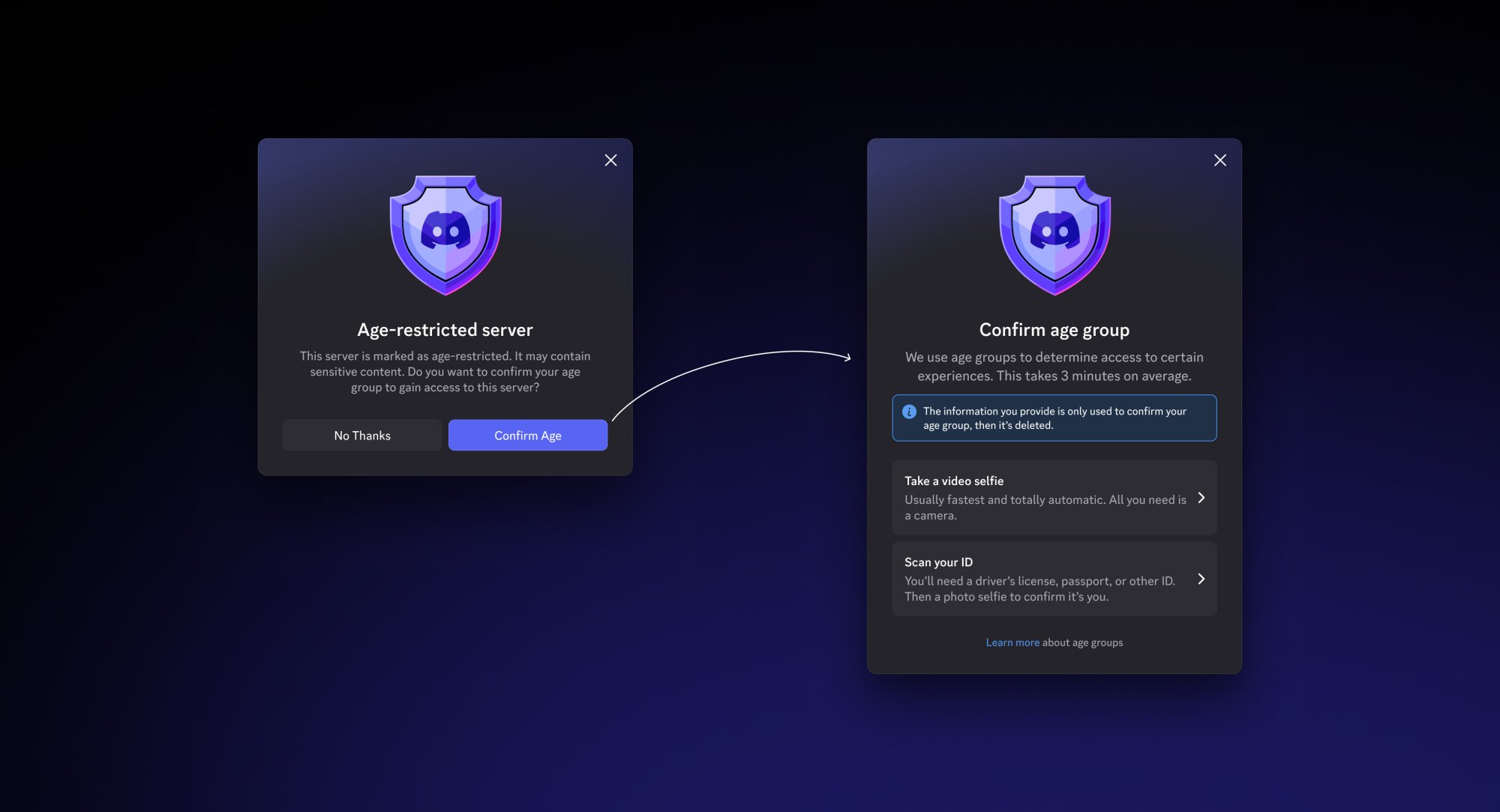
Discord, which has more than 200 million global monthly active users, will restrict adult content and spaces. In order to access those parts of Discord or change related settings, an individual must verify their age. If the platform has independently assessed an account as having a high likelihood of belonging to an adult, the user will not need to go through an age assurance process.
Discord will use the third-party verification service k-ID for age and identification checks and rely on an inference model with hundreds of signals, like account tenure and activity data, to detect the accurate age of an account holder.
“We would like the experience to feel more like you are on Main Street,” Savannah Badalich, head of product policy at Discord, told Mashable. “If you’re going into an adult space, you do ID verification or something like that, whereas the Main Street itself is built for just generally [everyone].”
Badalich suggested to Mashable that users will not be able to circumvent the safety measures by relying on a virtual private network, or VPN, that conceals their location, since the default settings will be universal.
Discord under pressure on teen safety
The new policy arrives in the wake of sustained pressure on social media platforms to improve safety for minors.
A 2025 lawsuit filed against Discord and the gaming platform Roblox alleged that together the platforms created a “breeding ground for predators.” At the heart of the complaint is an anonymous 11-year-old girl who was allegedly groomed, sexually exploited, and raped by a perpetrator who used Roblox and Discord to communicate with her.
In late 2025, the platform launched a hub that allows parents or guardians to view the top five users a teen messaged and called, the servers they messaged most frequently, their total call minutes in voice and video, and all the purchases they’ve made.
Mashable Light Speed
At the time, Haley McNamara, executive director and chief strategy officer of the National Center on Sexual Exploitation, told Mashable in a statement that Discord’s new safety features fell short by placing the burden of youth safety on parents rather than implementing fundamental design changes.
Age-gated content and experiences on Discord
Badalich said that though Discord will have teen safety settings for all users by default, the platform will preemptively assess accounts that seem to belong to adults and permit them to access age-gated content and features.
While Discord hopes to keep false positives to a minimum, Badalich did not share the platform’s confidence in accurately predicting user age.
Beginning in March, any user whose age is unverified or whose account has been placed in teen settings will need to either submit an ID or go through the facial estimation process in order to have full access to Discord.
Only adults will be able to unblur sensitive content, or turn off the setting; access age-gated channels and servers; receive message requests directly, instead of to a separate inbox; and speak on a “stage” in a Discord server.
Badalich described the new policy as “a foundational change to how we think about Discord.”
Age verification on Discord
Discord began using age assurance measures in the UK and Australia last year, though not without challenges.
In the UK, some users also initially bypassed the age check requirement by submitting a realistic-looking selfie of a video game character, which was deemed adult. Badalich told Mashable that Discord and k-ID worked “tirelessly” to patch that vulnerability, and that the experience has informed its subsequent age assurance efforts.
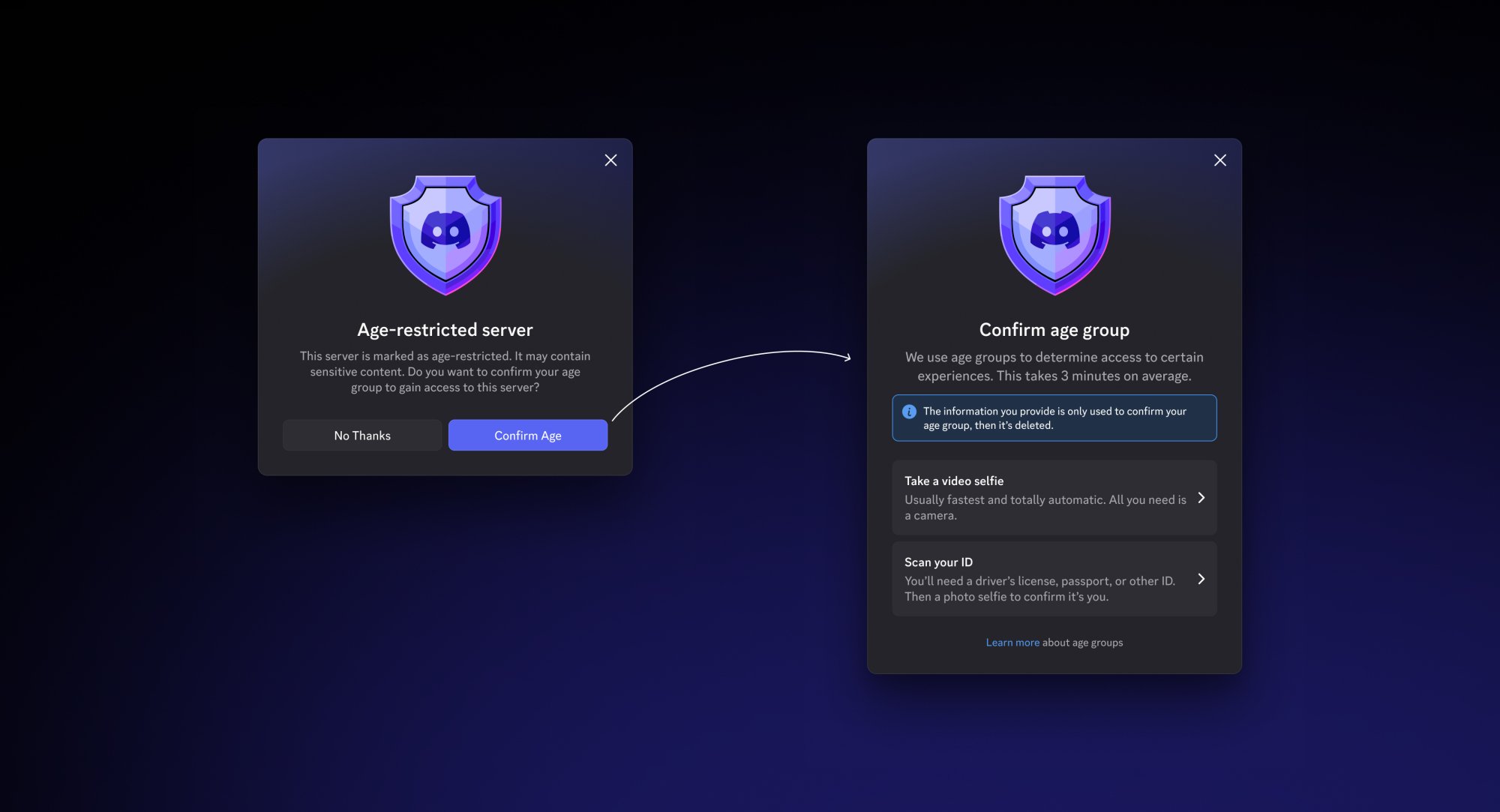
Discord’s new age-assurance efforts will restrict adult servers.
Credit: Courtesy of Discord
“[W]e know that teens are creative,” Badalich said. ‘They’re going to try to find ways around it.”
There are privacy concerns, too. In October, Discord announced a third-party customer support vendor had been hacked, breaching 70,000 government IDs provided by users.
When users submit identity documents to k-ID, the documents will be deleted quickly, if not immediately, according to Discord.
Entertainment
New Congressional scam alert issued for IRS fraud ahead of Tax Day

Tax Day is nearly here, and with it comes tax scams. The U.S. Congressional Joint Economic Committee has issued a scam alert, with less than a week to go until the tax filing deadline. The warning is, unfortunately, needed, given that nearly one in four Americans have reported being victimized by tax season scams, according to March 2026 research by McAfee.
The alert, seen by Mashable, has other alarming findings: During fiscal year 2025, the IRS reported more than 600 social media impersonators of the agency. Spam blocker app Nomorobo found a 400 percent increase in fraudulent calls claiming to be from the IRS between Jan. and Feb. this year. Fake tax websites are also on the rise, with McAfee identifying 43 new ones every day between Sept. 2025 and Feb. 2026.
“Criminal enterprises are exploiting tax season to target Americans, including seniors,” said Joint Economic Committee Chairman and Arizona Rep. David Schweikert in a press release shared with Mashable. Adults 70 years old and older lost more money to fraud than younger adults, according to the median of data collected by the Federal Trade Commission in 2024: $1,650 for seniors 80 and older and $1,000 for 70-79 year-olds, compared to $189-691 for younger groups.
Schweikert is issuing the alert, along with Ranking Member New Hampshire Sen. Maggie Hassan, Vice Chairman Missouri Sen. Eric Schmitt, and Senior House Democrat Virginia Rep. Don Beyer.
Mashable Light Speed
“As Americans file their taxes this month, scammers are deploying an onslaught of attacks — often enhanced by artificial intelligence — designed to steal people’s money,” Hassan stated in the release. “I encourage all taxpayers to review the tips in this bipartisan scams alert so that they can stay vigilant and protect their identities and accounts.”
Here are tips the Joint Economic Committee lays out to avoid common IRS impersonation scams:
-
Be wary of phone calls, emails, or social media outreach. The IRS will never message you on social media! The agency will almost always initiate contact by mail, according to the committee.
-
Watch out for urgent requests or threats. The IRS will never threaten to call law enforcement or request to see your driver’s license. On that note, the agency will never ask for payment via nontraditional methods such as gift cards.
-
You can verify any communications with the IRS directly on the official IRS.gov website.
-
You can share an IRS-issued identity protection PIN instead of your Social Security Number.
The committee also urges precaution when dealing with third-party tax services. Here are some tips for identifying non-IRS tax scams:
-
Research firms by searching them on sites like the Better Business Bureau. If an offer seems too good to be true, it often is.
-
Go to IRS.gov and verify the service’s Preparer Tax Identification Number (PTIN). If the service doesn’t provide this, avoid it.
-
Scammers may pretend to be legitimate third-party tax preparation companies or employees. Verify the provider by visiting the official website and calling the listed phone number.
If you believe you’re a victim of a tax scam, you can report it at ReportFraud.ftc.gov.
Have a story to share about a scam or security breach that impacted you? Tell us about it. Email [email protected] with the subject line “Safety Net” or use this form. Someone from Mashable will get in touch.
Entertainment
Raunchiest 90s Sci-Fi Series Features Worst Captain Of All Time
By Jonathan Klotz
| Published

Science fiction is filled with incredible spaceship captains. Star Trek alone gave the world Picard, Kirk, and Janeway, Firefly has Malcolm Reynolds, Farscape’s John Crichton, and Battlestar Galactica’s Adama, all of them are fantastic characters. All are noble and inspiring figures who make their crews better.
On the other end of the spectrum is Stanley H. Tweedle, captain of the Lexx, the most powerful weapon ever created. He’s a coward, a traitor, self-centered, shallow, and the last man in existence who should have the keys to the most powerful weapon in both galaxies.
Lexx’s Stanley H. Tweedle Is Sci-Fi’s Worst Captain

Stanley H. Tweedle, played by Brian Downey, kicks off the events of Lexx by skipping work to the point he’s deemed a fugitive from justice by the servitors inside His Divine Shadow’s headquarters and runs into another fugitive, Zev (Eva Habermann). Taking shelter on board the organic spacecraft Lexx, the command codes embedded in Stanley’s tooth are activated, and the ship recognizes him as the Captain. It’s not the most glorious origin story for the man who would eventually, sort of, save the galaxy. It gets worse.
Technically, Stanley’s responsible for the deaths of 685 billion people. He didn’t give the order to fire, and he was being tortured, but he did give the codes to the Lexx over to a band of mercenaries, and then they sold it to His Divine Shadow, and 100 worlds ceased to exist. No other captain in sci-fi can say thay also have the title “Arch-Traitor.”

During Season 2, “Stan’s Trial,” we learn that the root of Stanley’s cowardice is his fear of death. The threat of death causes Stanley to break under the smallest bit of pressure from any of the villains, which all comes to a head in Season 3 when he actually dies and has to face the judgment of Prince from the Fire Planet, Lexx’s version of the Devil. You’d think that anyone who’s that cowardly wouldn’t be respected by his crew, and you’d be right.
No One Respects Stanley
The Lexx’s crew of castoffs, including both Zev and Xev (Xenia Seeberg), the undead assassin Kai (Michael McManus), and the love robot 790/791 (Jeffrey Hirschfield), don’t respect Stanley. Eventually, Xev and Kai start to have a modicum of respect, but 790, competing with Stanley for the affection of both Zev and Xev, constantly belittles and insults its captain. Even Lexx has some difficulty with Stanley, often misunderstanding what he wants, including misinterpreting the captain’s request for the coordinates to a planet of loose women.

Early on in Season 3, Stanley’s desire for women comes to a head when Prince offers to revive Maya, a gorgeous woman from the Water Planet, if he’ll use the Lexx to destroy the Water Planet. Stanley doesn’t only think about it, he spends most of the second episode actively devising ways to betray everyone. Not even Kirk, sci-fi’s most famous womanizer, would contemplate an offer like that for a single second.
Stanley H. Tweedle is both sci-fi’s worst captain and one of the most interesting characters, because he is so detestable and openly not a good guy. At all. He helped save the galaxy from thousands of years of control under His Divine Shadow, but he’s still a coward and a lech. Worst of all, we never learn what the H stands for.
Entertainment
Starfleet Academy Died Before It Could Ruin Star Trek’s Most Beloved Character
By Chris Snellgrove
| Published

Starfleet Academy was canceled shortly after the end of its first season. Nonetheless, a second season had already been greenlit and filmed, so fans can look forward to more misadventures with their favorite band of space cadets. Even as those fans look forward to what Season 2 brings, though, at least one of the show’s biggest actors regrets that there won’t be a third season to tell his character’s most ambitious story yet.
Robert Picardo reprised his role as the Doctor for Starfleet Academy, and the first season provided a surprise follow-up to “Real Life,” one of his best Voyager episodes. In a recent interview, the actor revealed that he had pitched a Season 3 SFA follow-up to “Living Witness,” where he would encounter a backup version of himself that was left behind on an alien planet. Picardo saw the episode as a chance to grow the Doctor like never before. Unfortunately, his description of the plot makes it clear that the episode he pitched would have ruined his character altogether.
Is There A Doctor In The House?

“Living Witness” was a Star Trek: Voyager episode where a backup version of the ship’s holographic Doctor is activated on an alien planet seven hundred years after Voyager left. He is activated by a museum curator hoping to get to the bottom of a centuries-old conflict between two alien races. Eventually, the Doctor is able to make peace between the two groups and stays behind as their surgical chancellor before getting into a shuttle and very belatedly plotting a course back to Earth.
To many fans’ surprise, the first season of Starfleet Academy never followed up on “Living Witness.” However, Robert Picardo recently appeared on the D-Con Chamber Podcast (hosted by Enterprise alumni Dominic Keating and Connor Trineer) and revealed that he pitched a Season 3 story that would follow up on this iconic Voyager episode. “I wanted to do an episode—now we can talk freely about it, because the show’s canceled…I wanted to meet my Voyager backup, my old self, and be as I looked at 41 and play off my self.”
Doctor, Heal Thyself

At first, this would have the “Living Witness” Doctor chastising the Starfleet Academy version for programming aging into his subroutine. Eventually, they bond over the relationship they share with Lewis Zimmerman, the man who invented the Emergency Medical Hologram. “The Doctor and his backup program are two children of the same parent. One has resolved the issues, the other hasn’t, and after 800 years, those daddy issues, those parental conflicts, they don’t go away if you don’t deal with them,” Picardo said.
On paper, I love the idea of following up on “Living Witness,” and I previously wrote about how interesting it would be if the backup version was actually the Doctor in Starfleet Academy. Furthermore, Robert Picardo’s storytelling instincts are good in the sense that it would be fun to see multiple versions of this cranky hologram bouncing off each other. Unfortunately, the Starfleet Academy episode that he pitched was emblematic of the show’s biggest problem: that the adults on the show are no more mature than the young cadets.
Nearly Ruining A Beloved Character

Critics of Starfleet Academy have frequently dunked on the cadet characters for various reasons, including their vulgar language, constant insults, and frequent infighting. Fans of the show have traditionally responded to this criticism by pointing out that, as young characters growing up in a post-Burn galaxy, the cadets should be immature.
However, one of the show’s biggest problems is that the adult characters were equally immature. The Doctor and Captain Ake have a combined 1200 years between them, but they spend their screentime making poop jokes and laughing at a farting fish. Plus, their dialogue is equally vulgar, with the Doctor infamously declaring that “debate is not for the chickensh*t” and Captain Ake telling her enemy to “blow it out your *ss!”
What does this have to do with the Season 3 SFA episode that Robert Picardo pitched? Simple: the last thing the show needs is another older character acting just as immature as the younger characters. For example, having daddy issues is part of Genesis’s character, which makes sense because she is supposed to be so young. But both versions of the Doctor are now over 800 years old, making them some of the wisest and most ancient living beings in the galaxy. Why in the name of Neelix’s stinky cheese would either of them have the same kind of daddy issues as a teenager in her freshman year of space college?
Meet The Trauma Teacher

It was already weird enough in Season 1 that Starfleet Academy turned the Doctor into a tragic figure haunted by the death of his holographic son from “Real Life;”; before this, he never even mentioned the kid after the episode. Now, Picardo’s pitch would further tweak his character to explain that, after the better part of a millennium, the backup Doctor is suffering from daddy issues that, like him mourning his son, were never really mentioned before in Voyager. I can’t help but think this would ultimately ruin his character, turning the whimsical comic relief character from a beloved Star Trek show into just another NuTrek character defined primarily by trauma.
Because of this, I’m glad that Starfleet Academy got canceled. I actually warmed up to Season 1 over time, but it had an insanely rocky first half that made it really hard to love these characters. If Season 3 was going to ruin the Doctor (one of my favorite characters from the Golden Age of the franchise) with Picardo’s pitch, it’s best that the show died. Fans will have to make peace with the fact that the best days of the Doctor are just like the best days of Star Trek: stuck a few decades in the past.

Spurs look to continue torrid stretch against feisty Mavericks
Maniacal Masters? Players bracing for Augusta National at its crustiest


