
Entertainment
Did Alex Kurtzman Personally Sign Star Trek's Death Warrant?

By Chris Snellgrove
| Published
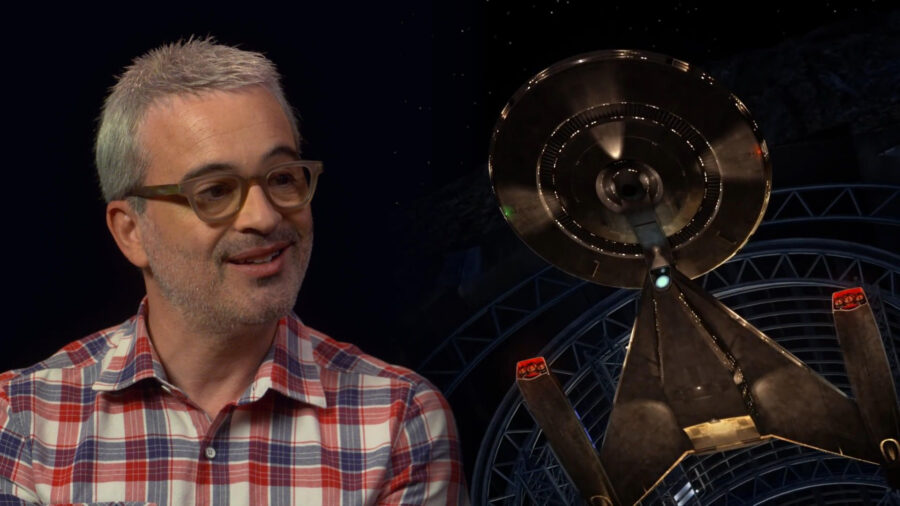
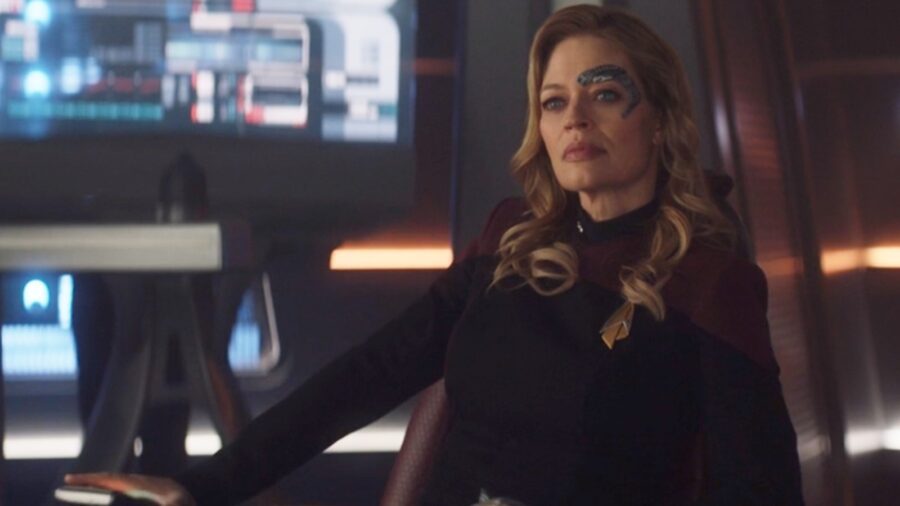
One of the many reasons Trekkies were salty about Starfleet Academy is that they wanted a different show entirely. Specifically, they wanted Star Trek: Legacy, a series in which Seven of Nine is the captain of the Enterprise.
Picking up where Picard left off, this show would give us adventures set in the 25th century while mixing new characters with familiar faces from shows like The Next Generation and Voyager. Fan demand for this show was insanely high, and since we never got it, there have been persistent rumors that Alex Kurtzman hated and ultimately killed that project, driving Picard showrunner Terry Matalas away so that he could focus on Starfleet Academy, his passion project.
Now, Jamie Rixom of the popular Tachyon Pulse podcast has presented a different narrative. He claims that both Kurtzman and Paramount were very eager to make Star Trek: Legacy, but that Kurtzman convinced them to do Starfleet Academy first.
However, the merger with Skydance and the subsequent purchase of Warner Bros. suddenly turned the future of the franchise into a question mark. If this is true, then Kurtzman effectively signed Star Trek’s death warrant by insisting on a doomed show that will almost certainly result in Paramount killing the franchise as we know it.
A New Spin On Old Rumors

During his recent podcast, Jamie Rixom addressed the most common narrative about Star Trek: Legacy. Namely, that Alex Kurtzman was jealous of how much fans liked Picard Season 3 and how much credit they were giving to showrunner Terry Matalas. That narrative (which, to be fair, is mostly touted by avowed Kurtzman haters) claims that Kurtzman wanted to ice Matalas out and then shove Starfleet Academy down our throats. There has never been any real confirmation of these rumors, but based on the fact that he was co-showrunner, it seems true that SFA was a real passion project for Kurtzman.
Rixom presents an interesting variant of these rumors. Citing his insider knowledge of studio wheelings and dealings, he claims that Paramount and Kurtzman were very keen to do Star Trek: Legacy, but that the network didn’t want more than two Trek shows streaming at once. Therefore, Starfleet Academy got the green light first, and there were allegedly plans to start working on Legacy after Strange New Worlds wrapped up. However, the merger with Skydance effectively shut down production of new shows in the franchise, though hopes were high that the already greenlit SFA would prove popular. Now, that show has been canceled after Season 1, leaving Star Trek in a kind of creative limbo.
Our Last Hope, Lost

Obviously, the show will go on, and Paramount will create new movies and TV shows in this franchise because it is one of their most bankable IPs. Why, then, do I believe that Alex Kurtzman has killed the brand as we know it? Because we’re never going to get another show anything like the Golden Age of Star Trek. Legacy was our last shot at getting a series that had familiar faces and took place in the beloved time period of TNG and DS9.
If Legacy had gotten the green light instead of SFA, then its inevitable success (remember how much everyone liked Picard Season 3?) would encourage Paramount to make more Trek shows and movies in this vein. Now, though, I’d bet my last bar of gold-pressed latinum that Paramount’s new leadership will look at the failure of Starfleet Academy and the general train wreck that is NuTrek and decide to reboot this entire universe for a second time. Kurtzman haters may cheer at this prospect, but consider this: new shows headed by a new empty suit who has even less reason to care about canon are going to be even less like classic Trek than ever before.
Star Trek In Name Only

Star Trek: Legacy wasn’t just fans’ wishful thinking: it was, in every way that counts, the last chance to get a new show with the vibe of beloved series like The Next Generation and Voyager. Even in the kinder, gentler narrative of Jamie Rixom’s alleged insider info, Alex Kurtzman is still the guy who personally championed making SFA instead of Legacy. He had no way of knowing about the upcoming changes to Paramount, but his decision still guaranteed the last show of the NuTrek era was a complete failure that will likely doom this franchise as the network builds new shows that are Star Trek in name only.
Before Paramount fully runs Trek into the ground, I have a simple request: can you please shoot Kurtzman’s contract out of the nearest airlock?
Entertainment
New safety rules for under-16 Snapchat users
Snapchat is rolling out new content-sharing protections for 13- to 15-year-old users.
The platform announced Wednesday that younger teens will get a “friends-only” experience for their Spotlight posts. That public feed consists of vertical videos short-form similar to Instagram Reels or TikTok.
The new rules make Spotlight content posted by 13- to 15-year-olds visible only to the user’s mutually accepted friends. Previously, under-16 users could post to Spotlight, without attribution to their profile.
“This allowed teens to participate, while helping to protect them from potentially unwanted contact that can come with public posting,” the Snap Company said in its announcement.

Under-16 Snapchat users will have a dedicated profile space for certain content.
Credit: Courtesy Snapchat
Now younger Snapchatters will get a space on their profile for creating, saving, and sharing Stories and Spotlight Videos with only their mutually accepted friends. Teens ages 16 and 17 can share content publicly with some safeguards.
“This new experience is designed to encourage creativity and self-expression within a trusted audience,” the company said.
Age checking on Snapchat
Currently, Snapchat relies on self-attested age and age inference, but safety advocates generally say social media platforms need high-quality age assurance to ensure their safety measures are effective.
When Mashable tested Snapchat’s age attestation prior to the announcement, we found that Snapchat defaulted user age to 18 years old.
Mashable Light Speed
With the new policy, if Snapchat determines a user is under 16, despite their stated age, that minor will be shifted into the friends-only sharing setting. That change will appear in the Snapchat app if they choose to post a Spotlight video.
Snapchat safety concerns
Last week, the advocacy groups Heat Initiative, Anxious Generation, ParentsTogether Action, and Design It 4 Us published the results of a survey of teen Snapchat users, alleging that the platform’s safety measures aren’t effective enough.
A third of the poll’s 1,016 respondents said they’d seen or received unsafe content or messages in the past week. More than half said they’d had at least one such experience in the past year.
The top three types of dangerous experiences reported by up to a third of teens were unwanted contact, bullying, and sexually suggestive content and messages. More than 40 percent of respondents who’d received unwanted messages believed the sender was an adult.
A Snap Company spokesperson told Mashable that the report “does not fully reflect the significant investments Snap has made to help protect young people.”
In the blog post Snap published Wednesday, the company noted that it works to prevent the delivery of friend requests from potential strangers, and that the platform doesn’t allow teens to be messaged by anyone they haven’t added as a friend or who’s not in their phone contacts. Additionally, when teens accept a stranger as a friend, Snapchat is designed to send warnings when minors begin chatting with that user.
“After years of advocacy by parents, kids, and experts, it’s encouraging that Snap is finally making some changes to try to prevent young children from posting in adult spaces, which has put kids in danger on the platform for years,” Brooke Istook, president and chief strategy officer at Heat Initiative, said in a statement to Mashable.
Istook added, however, that “fundamental dangers for kids that are baked into Snapchat’s design” remain unaddressed, including the facilitation of unsafe connections between teens and adults and the algorithmic recommendation of unsafe content.
Snapchat has been the target of youth safety activism and the target of legal action, like many major social media platforms. In January, Snap settled a lawsuit brought by a teenager who claimed that Snapchat’s design features, like algorithmic recommendations, led to addictive use and mental health harms. Soon after, Snap introduced new parental controls for teens.
UPDATE: Jun. 10, 2026, 8:27 a.m. PDT This story has been updated to include a statement from Heat Initiative.
Entertainment
Using Claude Fable 5 means your data will be collected. It’s not optional.
Anthropic just released its most powerful public model yet — Claude Fable 5. However, along with the model’s release, the AI giant also made a significant update to its data retention policies.
Fable 5 was released to the public on Tuesday. Fable 5 is a “safe for general use” version of Anthropic’s most powerful model, Mythos, which has been restricted from public use due to its potentially dangerous cybersecurity capabilities. Anthropic created a set of safety guardrails for Fable 5, and its benchmarks blow away much of the competition, per Anthropic.
But it looks like Anthropic has also blown away its data retention policies for Fable 5.
“To ensure we’re responsibly deploying Mythos-class models, we are requiring limited data retention and review as part of our safety work,” reads an update on Anthropic’s official Claude support page. “Prompts submitted to, and outputs generated by, Mythos-class models are retained for 30 days for trust and safety purposes, on every platform where these models are offered.”
The update was first noticed by Jun Park, the CEO of AI training company hillclimb.
Mashable Light Speed
“New policy from Anthropic: if you use Fable/Mythos, they collect your data. No exceptions. Not even for enterprise partners,” Park posted on X.
This Tweet is currently unavailable. It might be loading or has been removed.
This change is significant for Anthropic’s enterprise and API customers, says Jessica Eaves Mathews, a lawyer who specializes in copyright, trademark, and AI law.
In a post on Mathews’ Substack (as highlighted by CyberNews), the lawyer explains how Anthropic already retains user data for 30 days under its free and paid consumer plans. However, Matthews says this change nullifies part of any agreement Anthropic has with its enterprise and API partners.
“Every other Claude model available through the API, including Opus 4.8, Sonnet 4.6, and Haiku 4.5, can operate under Zero Data Retention (ZDR) agreements,” Mathews writes. “Fable 5 cannot. If your organization previously had a ZDR agreement with Anthropic, that agreement does not apply to Fable 5 traffic. This is a policy change that overrides existing enterprise commitments for this specific model class.”
Mathews says that any organization that believed that their data would not be stored by Anthropic should know that there is now a “mandatory exception” for Fable 5 and all future Mythos models.
While Mythos-class models seem to be quite powerful, companies should know about the change in Anthropic’s data retention policies and make adjustments where necessary.
Entertainment
Tons of Fitbits are on sale ahead of Prime Day
Best early Prime Day Fitbit deals at a glance:


Amazon’s Prime Day sales event is right around the corner (I can’t believe it’s that time of year again!), and I’m genuinely shocked by the deals we’re seeing this early in the game.
Usually, Amazon doesn’t put Fitbits on sale until the very last minute, and then they’re gone. (And some years, they don’t go on sale at all.) But right now, we’re seeing all-time lows on select Fitbit models, including the Charge 6.
Here are the best early Prime Day Fitbit deals you can shop right now:
Best deal overall

$99.95
at Amazon
$159.95
Save $60.00
Why we like it
The Fitbit Charge 6 isn’t the newest Fitbit on the market, but it still has (almost) everything you’d need in a smart wearable. (I say almost because the Fitbit Charge 6 doesn’t have an altimeter, but if you’re not a trail runner, this probably isn’t a deal breaker.)
The Charge 6 tracks your calories, steps, sleep, heart rate, and more. It also has built-in GPS, 40+ exercise modes, a seven-day battery life, and includes a three-month Google Health Premium (formerly Fitbit Premium) membership. Once the three months are up, you’ll need to either cancel or renew for $9.99 per month or $99.99 annually.
Mashable Trend Report
Right now, you can get the Fitbit Charge 6 for $99.95 at Amazon. This is the lowest price we’ve tracked on this model since its release in 2023.
Best runner-up deal
Why we like it
If you’re willing to spend a little bit more, the Fitbit Versa 4 is on sale for $149.95. This isn’t the lowest price we’ve seen (it was $104.96 in April 2024), but it’s still a pretty good deal.
Unlike the Charge 6, the Versa 4 has an altimeter and Bluetooth wrist calling. So, if you’re looking for a wearable that acts more like a smartwatch, the Versa 4 might be the better buy. That said, it doesn’t have the more “serious” health sensor that the Charge 6 does (e.g., ECG and EDA).
The Versa 4 also comes with three months of Google Health Premium.
Best budget deal

$79.95
at Walmart
$89.95
Save $10
Why we like it
If you’re just looking for something that’s affordable and efficient, the Fitbit Inspire 3 is your best option at $79.95.
It’s a no-frills fitness tracker that’ll give you the basic features you need to stay on top of your health. It can track your heart rate, steps, and stress levels. (It also offers menstrual health tracking, which is nice.)
You’ll also get 10 full days of battery life and, like the other models mentioned above, three free months of Google Health Premium.

Fresh off ending skid, Reds chase series win vs. Padres
Mariners overcoming obstacles heading into rematch vs. Orioles


