
Entertainment
Decades-Old Movie Predicted How Game Of Thrones Would Fail

By Chris Snellgrove
| Published

To this day, the failure of Game of Thrones feels a little bit surreal. Once upon a time, it was one of the most popular shows in the world, and it was lauded as the best example of how to adapt a popular book series into live-action. By the end, though, everything had gone fully off the rails. The writers started debating from George R.R. Martin’s books before running out of books to adapt. As a result, the writing and characterization suffered, and the final season was so universally hated that many of the show’s biggest fans made a Night’s Watch-style vow to never again watch this acclaimed series.
The critical failure of Game of Thrones came as a huge surprise to most of the fandom, but it really shouldn’t have. You see, this show was created by David Benioff, a man who first achieved mainstream success by writing Troy, a blockbuster adaptation of The Iliad starring Brad Pitt. While that film made a profit, it has a 53 percent on Rotten Tomatoes because it’s a poorly-written piece of trash. Between that and its obscenely poor adaptation of the original source material, writer David Benioff had a destiny that even Maester Aemon could see: to completely and utterly f*ck up Game of Thrones.
A Song Of Ice And Failure

The first film that David Benioff ever wrote was 25th Hour, a Spike Lee film about a man enjoying his last day of freedom before he goes to jail for seven years. It was critically acclaimed, but with a box office of only $23.9 million, clearly overlooked by the general public. Benioff’s next project was Troy, an infinitely more ambitious film. Directed by Wolfgang Petersen and starring big names like Brad Pitt and future Game of Thrones star Sean Bean, this blockbuster earned nearly half a billion dollars at the box office. Less than two years later, Benioff began talks with George R.R. Martin about adapting his famous book series.
Most fans agree that Game of Thrones was good, right until it wasn’t. Why, then, do I think Troy effectively predicted the downfall of this popular HBO series? Simple: Troy might have been Benioff’s breakout film, but it was also a stinker later declared “rotten” over on Rotten Tomatoes. There are many problems with the movie (a movie that both Brad Pitt and his co-star Peter O’Toole later trashed), but most of the biggest problems come from Benioff’s unwillingness to properly adapt the original source material. That means he screwed up a beloved story humans have been studying for literally thousands of years.
Game Of Thrones Choked At The End
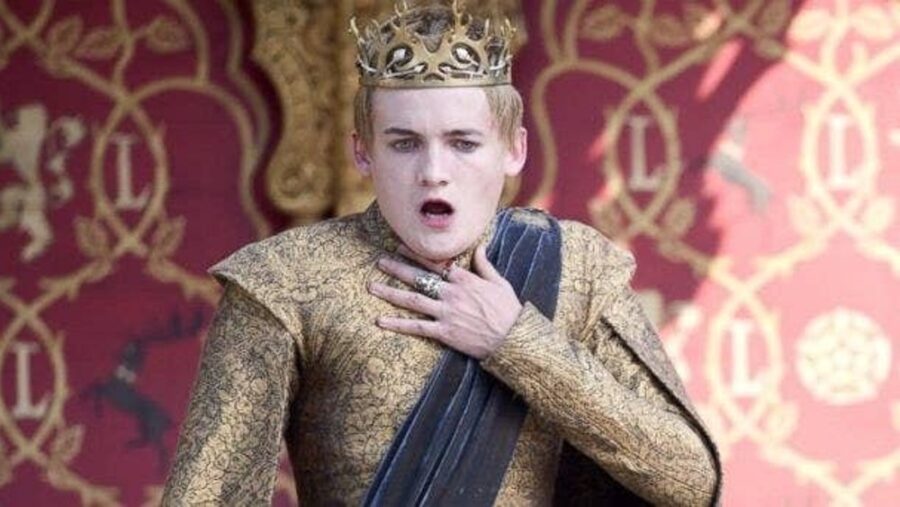
The movie’s portrayal of The Iliad is full of major changes from the original text. For example, the gods are removed almost entirely. Some characters die who are meant to survive (like Menalus), and other characters live who were supposed to die (like Paris). Other characters are rewritten for the worst, like war hero Odysseus being simplified to “the smart guy” and captive Briseis being promoted to a Trojan goddess. Finally, the movie condenses a decade-long conflict into a weeks-long skirmish while throwing in plenty of elements (including the Trojan Horse chicanery) that weren’t actually written about in The Iliad.
In short, the writing in Troy was awful, and those of us who love Greek mythology have despised this film for more than 20 years due to its various inaccuracies. A few years later, Benioff’s Game of Thrones showed the same sloppy disregard for the original source material. Major characters like Young Griff (who claims to be Aegon Targaryen, the rightful king of Westeros) are cut out entirely. In another case, the mystically terrifying and downright apocalyptic Euron Greyjoy was reduced to a cartoonish caricature of swashbuckling swagger.
That Face When You Read The Script
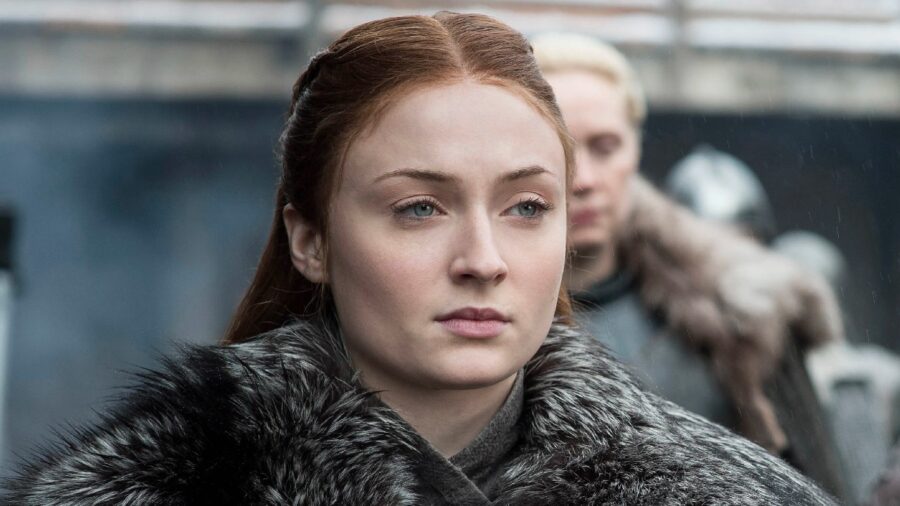
Fan-favorite character Tyrion was downright sanitized compared to his portrayal in the books, which was already bad enough. Later, his brother’s long journey towards independence was completely forgotten so he could simp for his sister yet again. The Dorne storyline was turned into an amateur side story (the Sand Snakes were just pure cringe), Lady Stoneheart was cut out, and franchise Big Bad the Night King got one-shotted by a little girl.
These are just a few of the problematic ways that the show disappointed its most dedicated fans (don’t even get me started on Daenerys’ dumb heel turn and Bran’s inexplicable importance to the ending). But it’s important to note that the biggest disappointments came from how Game of Thrones veered away from the original text in many frustrating ways. These were unforced errors overseen by lazy showrunners too concerned with wrapping everything up than making sure this show stuck the landing. One of those showrunners was David Benioff, who explained his sloppy approach to literary adaptations over two decades ago.
Now, Our Watch Is Complete
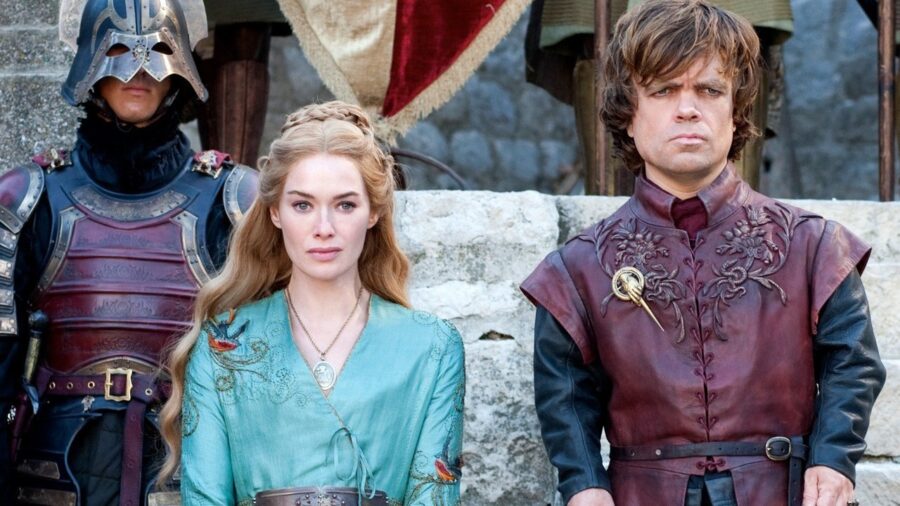
In a 2004 issue of the journal Creative Screenwriting, Benioff discusses his approach to adapting Homer’s epic poem The Iliad into Troy, a blockbuster feature film. “I always followed the route that I thought was better for the movie; if that meant that I was cheating on Homer, then so be it.” To the writer, it was an easy decision to cut or change things from the book in order to create a better film. But Benioff seemingly didn’t know or care that, to major fans of the original source material, major changes would keep us from actually enjoying the movie.
In short, that’s what happened with Game of Thrones. After relatively faithfully adapting earlier books, the show kept making bigger and bigger changes that angered the fandom. This culminated in a slopfest of a final season that very nearly ruined one of the biggest franchises in television history. All of this happened under the not-so-watchful eye of David Benioff, a man whose entire Hollywood career was built on badly adapting a beloved, swords-and-sorcery literary epic. Seriously, go watch Troy, and then listen to your favorite mythology bro tell you everything that movie got wrong about Homer’s ancient classic. After that, you’ll know why Game of Thrones’ failed fate was sealed long before its first episode ever aired on HBO.
Entertainment
NYT Pips hints, answers for May 17, 2026

Welcome to your guide to Pips, the latest game in the New York Times catalogue.
Released in August 2025, Pips puts a unique spin on dominoes, creating a fun single-player experience that could become your next daily gaming habit.
Currently, if you’re stuck, the game only offers to reveal the entire puzzle, forcing you to move on to the next difficulty level and start over. However, we have you covered! Below are piecemeal answers that will serve as hints so that you can find your way through each difficulty level.
How to play Pips
If you’ve ever played dominoes, you’ll have a passing familiarity with how Pips is played. As we’ve shared in our previous hints stories for Pips, the tiles, like dominoes, are placed vertically or horizontally and connect with each other. The main difference between a traditional game of dominoes and Pips is the color-coded conditions you have to address. The touching tiles don’t necessarily have to match.
The conditions you have to meet are specific to the color-coded spaces. For example, if it provides a single number, every side of a tile in that space must add up to the number provided. It is possible — and common — for only half a tile to be within a color-coded space.
Here are common examples you’ll run into across the difficulty levels:
-
Number: All the pips in this space must add up to the number.
-
Equal: Every domino half in this space must be the same number of pips.
-
Not Equal: Every domino half in this space must have a completely different number of pips.
-
Less than: Every domino half in this space must add up to less than the number.
-
Greater than: Every domino half in this space must add up to more than the number.
If an area does not have any color coding, it means there are no conditions on the portions of dominoes within those spaces.
Easy difficulty hints, answers for May 17 Pips
Greater Than (5): Everything in this space must be greater than 5. 6-4, placed vertically.
Number (9): Everything in this space must add up to 9. The answer is 4-5, placed horizontally; 4-2, placed vertically.
Greater Than (2): Everything in this space must be greater than 2. 4-3, placed horizontally.
Number (4): Everything in this space must add up to 4. The answer is 4-4, placed horizontally.
Equal (4): Everything in this space must be equal to 4. The answer is 4-5, placed horizontally; 6-4, placed vertically; 4-3, placed horizontally.
Medium difficulty hints, answers for May 17 Pips
Equal (5): Everything in this space must be equal to 5. The answer is 5-2, placed horizontally; 5-1, placed vertically.
Mashable Top Stories
Equal (2): Everything in this space must be equal to 2. The answer is 5-2, placed horizontally; 2-4, placed vertically.
Less Than (2): Everything in this space must be less than 2. The answer is 5-1, placed vertically.
Number (10): Everything in this space must add up to 10. The answer is 6-1, placed vertically; 2-4, placed vertically.
Greater Than (4): Everything in this space must be greater than 4. 2-6, placed horizontally.
Greater Than (5): Everything in this space must be greater than 5. 6-0, placed horizontally.
Less Than (2): Everything in this space must be less than 2. The answer is 6-0, placed horizontally.
Number (2): Everything in this space must add up to 2. The answer is 6-1, placed vertically; 3-1, placed vertically.
Hard difficulty hints, answers for May 17 Pips
Number (6): Everything in this space must add up to 6. The answer is 6-2, placed vertically.
Number (4): Everything in this space must add up to 4. The answer is 2-4, placed vertically.
Equal (2): Everything in this space must be equal to 2. The answer is 2-4, placed vertically; 6-2, placed vertically; 2-5, placed vertically.
Equal (6): Everything in this space must be equal to 6. The answer is 6-6, placed vertically; 6-5, placed vertically.
Number (5): Everything in this space must add up to 5. The answer is 4-1, placed vertically.
Number (10): Everything in this space must add up to 10. The answer is 5-0, placed vertically; 2-5, placed vertically.
Number (9): Everything in this space must add up to 9. The answer is 4-0, placed vertically; 6-5, placed vertically.
Number (0): Everything in this space must add up to 0. The answer is 4-0, placed vertically.
Number (10): Everything in this space must add up to 10. The answer is 6-4, placed vertically.
Equal (5): Everything in this space must be equal to 5. The answer is 5-5, placed vertically.
Not Equal: Everything in this space must be different. The answer is 2-3, placed vertically; 1-6, placed vertically; 0-6, placed vertically.
If you’re looking for more puzzles, Mashable’s got games now! Check out our games hub for Mahjong, Sudoku, free crossword, and more.
Entertainment
Will Ferrell confronts his look-alike during his SNL monologue
Saturday Night Live had its Season 51 finale over the weekend as former cast member Will Ferrell hosted the show for his sixth time.
However, before Ferrell could come out and perform his hosting duties, Chad Smith of the Red Hot Chili Peppers attempted a coup. Smith came out first to open the show, hitting the stage and acting as if he were Ferrell. There’s been a long-running joke that Ferrell and Smith, the drummer of the Red Hot Chili Peppers, bear a striking resemblance to each other, and SNL continued the gag on its final show of the season.
Shortly after Smith thanked the audience, Ferrell came out dressed exactly like Smith, claiming the drummer had attacked him backstage as part of his takeover attempt.
Ferrell convinces Smith to get off the stage but the former SNL cast member acts as if the whole ordeal has thrown for a loop and has trouble getting back to his duties as host. Ferrell decides to take questions from the audience, and the first question is from a very casual audience member – Sir Paul McCartney.
The legendary musician believes that Ferrell is actually the imposter Smith and demands Ferrell leave the stage and get back to his drum set, where he belongs.
Entertainment
Ghost of Jeffrey Epstein visits Trump in the SNL season finale cold open
Just because it’s the middle of Spring doesn’t mean we can’t get a little parody of “A Christmas Carol” on Saturday Night Live in May.
In the season 51 finale of SNL on Saturday, President Donald Trump, played by cast member James Austin Johnson, falls asleep in the Oval Office. However, Trump is soon visited by the ghost of Jeffrey Epstein, played by host Will Ferrell.
Ferrell’s Epstein gives Trump a look into the future, offering the president a peek at what his cabinet members, past and present, will be up to, ostensibly, after they leave their positions. The cold open also features Ashley Padilla as former Homeland Security Secretary Kristi Noem, Colin Jost as Defense Secretary Pete Hegseth, and Aziz Ansari as FBI Director Kash Patel.

Romelu Lukaku makes Belgium's World Cup roster
Manon Rheaume joins PWHL as GM of Detroit expansion team


