
Entertainment
Darth Maul Actor Thinks Star Wars Should Be More Like Star Trek

By Chris Snellgrove
| Updated

Right now, the state of Star Wars fandom can best be described by the opening crawl in The Empire Strikes Back: “It is a dark time for the Rebellion.” The Mandalorian and Grogu was the first franchise film in six years, one which features the most popular characters from the Star Wars shows on Disney+. Nonetheless, it really floundered at the box office, and this $165 million failure has currently grossed less than Obsession, a horror film made for $750,000. Between this, the poor performance of the sequels, and the awful fan reaction to shows like The Acolyte, things are looking bad for our favorite galaxy far, far away.
All of this is enough to make even the most diehard fans start asking a very sobering question: how do we fix Star Wars? Many ideas have been tossed around, including retconning the sequels, bringing back beloved EU characters, or just rebooting the universe altogether. Now, Darth Maul voice actor Sam Witwer has proposed a most unexpected proposal for saving his favorite franchise. According to him, Star Wars can save itself by becoming more like Star Trek!
A New Kind Of Star Wars

This came up during a recent interview that Sam Witwer gave to Naomi Kyle, someone gamers may remember from her time hosting IGN’s Daily Fix. She asked the Darth Maul voice actor if he had any ideas on how to “refresh” Star Wars and “help elevate it to a different level.” He responded that the franchise “needs to take creative risks” and compared this to the evolution of Maul. Star Wars has constantly taken this character in new directions, and Witwer sees this as a good thing and that writers “should leave him alone” if they can’t imagine how to take the character where he has never gone before.
He said that Star Wars should embrace this risk-taking philosophy, and then made a comparison to Star Trek. He said that he and other Trek fans were used to each new show being very different from what came before. This allowed the franchise to appeal to different audiences with different projects, but that “without that spirit of experimentation, you don’t get anywhere.” He then noted that Andor was a phenomenal success despite being such a departure from Star Wars and that he’s fine with the franchise taking big creative swings even if it meant that he wouldn’t connect with “everything” that comes out.
A Big Swing, And A Big Miss

To a large degree, Sam Witwer is absolutely right: from the prequels to the sequels to the Disney+ shows, the most common criticism of modern franchise entries is that they do not feel like Star Wars. With the notable exception of Andor, projects are greenlit largely on the basis of mass appeal. That’s why the prequels focused on existing characters and the sequels and shows brought many prominent characters back; the power of familiarity. Disney hopes that if a movie or show has enough familiar faces (like Boba Fett, Obi-Wan, Ahsoka, and Darth Maul), fans will be more likely to tune in. Unfortunately, this approach prematurely robs these projects of their individual identities.
Part of the problem is that Star Wars has become a multimedia empire unto itself. While there is still a long wait between movies, Disney cranks out TV shows at a rapid-fire pace in an attempt to keep the brand alive. But as Witwer points out, this has largely led to risk-aversion. Why do something completely new if it’s not going to resonate with fans? Speaking of which, it doesn’t help that when Disney did take a big swing with The Acolyte, it became a huge flop that was canceled after only one season. But is making Star Wars more like Star Trek actually the answer?
Star Trek Racing Star Wars To The Bottom

Yes and no. Sam Witer is correct that Star Trek flourished when it embraced making very different shows like Deep Space Nine, and Star Wars could definitely flourish if we got more Andors and fewer Acolytes. But DS9 was actually the black sheep as far as Paramount was concerned, and the main reason that show was allowed to get so weird is that execs primarily cared about Voyager, which was designed to be more like The Original Series and The Next Generation. Sure, there were major differences in characters and story, but all Golden Age of Trek shows except DS9 followed the well-worn formula of starships boldly going where nobody had gone before.
To make matters worse, Star Trek has been experiencing a quiet implosion that mirrors Star Wars. Under Alex Kurtzman, NuTrek did take major creative risks: Discovery dipped into sex, nudity, and ultraviolence, while Starfleet Academy was designed as a new kind of show (less exploration, more introspection) with a new kind of crew (fewer trained officers and more rough-around-the-edges cadets). Lower Decks ribbed the franchise with gentle, animated humor, while Prodigy slowly morphed into a Voyager sequel. Even Strange New Worlds, deliberately modeled after The Original Series, took big risks, including a somewhat notorious musical episode.
Time For A New Direction
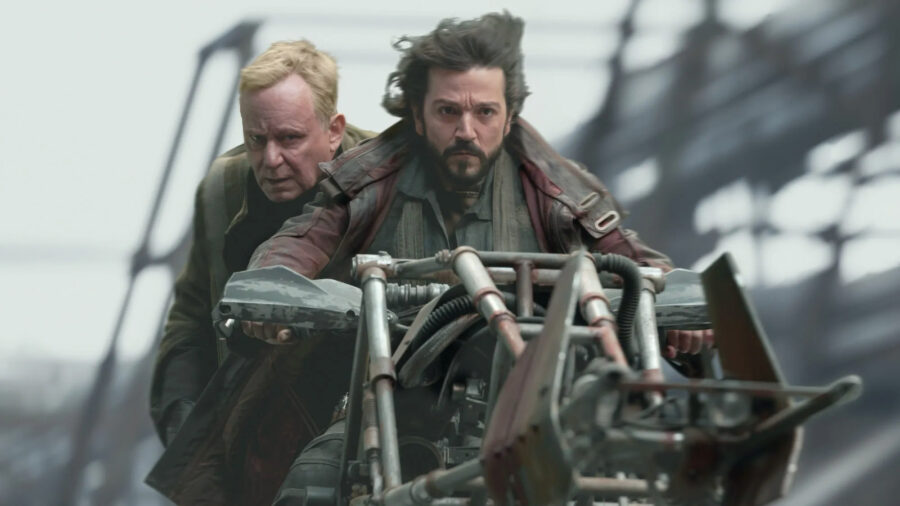
Unfortunately, NuTrek died because of a dwindling audience, proving that simply taking creative risks does not translate to pleasing fans. In its own way, Star Wars tried to do the same thing. Until it became bogged down in established lore, The Mandalorian was nothing more than a fun, no-frills space western like the franchise had never done before. The Book of Boba Fett was a very unconventional redemption story, and The Acolyte was an attempt to get away from tired franchise lore altogether. But it all comes down to the ability to tell a good, crowd-pleasing story, something both Star Wars and Star Trek have been struggling to do.
While it’s easier said than done, that’s the real way to fix Star Wars: by doing what George Lucas did so long ago and coming up with an original story. Sam Witwer is correct that Lucasfilm needs to take risks and tell new stories rather than being beholden to what comes before. If they take risks but tell a poor story, the franchise will fail; if they avoid risk altogether and serve up nothing but nostalgia slop, the franchise will fail. But with more visionary showrunners like Andor’s Tony Gilroy, Star Wars will have more showrunners who understand a crucial lesson: if you make big swings, you better be able to hit the ball!
Entertainment
Star Trek Showrunner Confirms Doctor Who Crossover Almost Happened
By Chris Snellgrove
| Published

Star Trek and Doctor Who are two of the world’s longest-running sci-fi franchises, with each show making its debut in the ‘60s and continuously telling new stories over the decades. There is some interesting parallelism to each franchise: both Trek and Who constantly reinvent themselves with new casts, and both have been off the air for long periods before coming back. Now, both of these iconic IPs are in the same boat. Doctor Who is off the air indefinitely until the BBC finds a buyer, and Trek is no longer producing shows as part of a (likely doomed) pivot to film.
For all of these similarities, however, the two franchises almost had something else in common: shared onscreen adventures. Former Doctor Who showrunner Russell T. Davies previously confirmed his desire to have a crossover between his show and Enterprise, but the cancellation of this Star Trek spinoff made that impossible. Now, Strange New Worlds showrunner Akiva Goldsman confirmed that he also worked with Davies for years to try to make a modern crossover happen. Unfortunately, history repeated itself, and they were unable to make a crossover happen before both shows were finished.
Crossover Plans Were Bigger On The Inside

Fans of both fandoms thought we might be getting a crossover when the Doctor Who episode “Space Babies” streamed in 2024. At one point, new Companion Ruby compares the technology of the TARDIS to the technology of Star Trek. She is clearly referring to the sci-fi franchise as a work of fiction. However, the Doctor smiles and enthusiastically responds, “We’ve got to meet them one day!” He seemed to think these characters were very real and worth a visit, strongly hinting that we might get a crossover. One year later, Trek upped the ante with an episode that made multiple references to Doctor Who.
The Strange New Worlds episode “The Sehlat Who Ate Its Tail” featured two very prominent Doctor Who homages. The first was the long-lived Pelia claiming that she had traveled with a Doctor, and her dialogue highly implies that she was a Companion to the Doctor. On top of that, eagle-eyed viewers noticed that the TARDIS was visible in some of the outer space shots. Between these references and the earlier Doctor Who episode, it seemed like a crossover was on the horizon, but we never got one. Now, Strange New Worlds co-showrunner Akiva Goldsman has revealed how heartbreakingly close we really got.
The Woman Who Lived (And Lived, And Lived, And Lived)
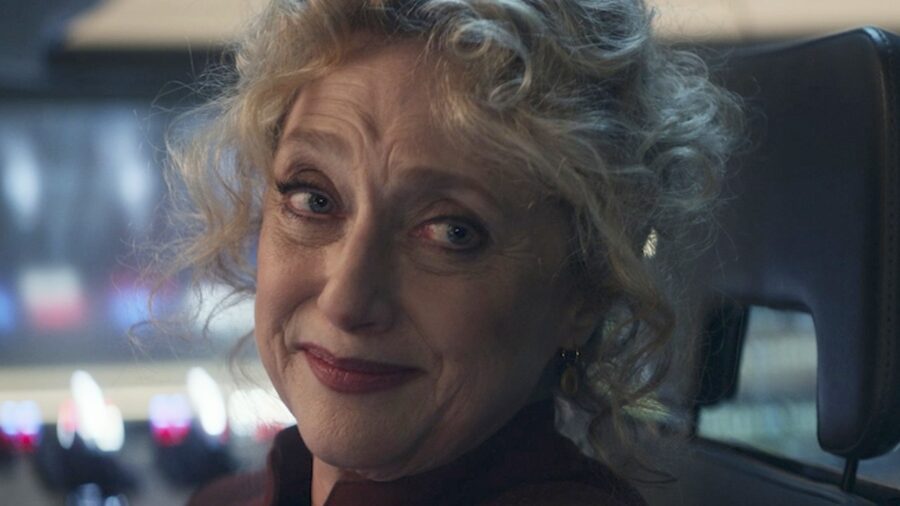
In a recent interview with Awards Radar, Goldsman was asked about “The Sehlat Who Ate Its Tail” and its reference to a certain timey-wimey someone. “We were trying with Russell to do a crossover. We were for years,” he said. “Again, these are the near misses, but we got not unclose, and we had some really cool conversations about it. And so, certainly in our view, I mean, Pelia traveled in the TARDIS. Why not?”
Back in 2024, Goldsman had announced his desire for a Star Trek/Doctor Who crossover at a fan convention. In response to a montage video showing what that might look like, he gushed, “That shows you what it would feel like, what it would look like… the joy of it. It must happen!” However, he also declared how difficult this would be and what role fans played in the whole thing. “If anyone can make that happen… it’s fans that can make that happen! Two great big broadcasters, two great big empires–and their lawyers!–would have to come together, but we can do that, can’t we?”
Doctor, To The Bridge!
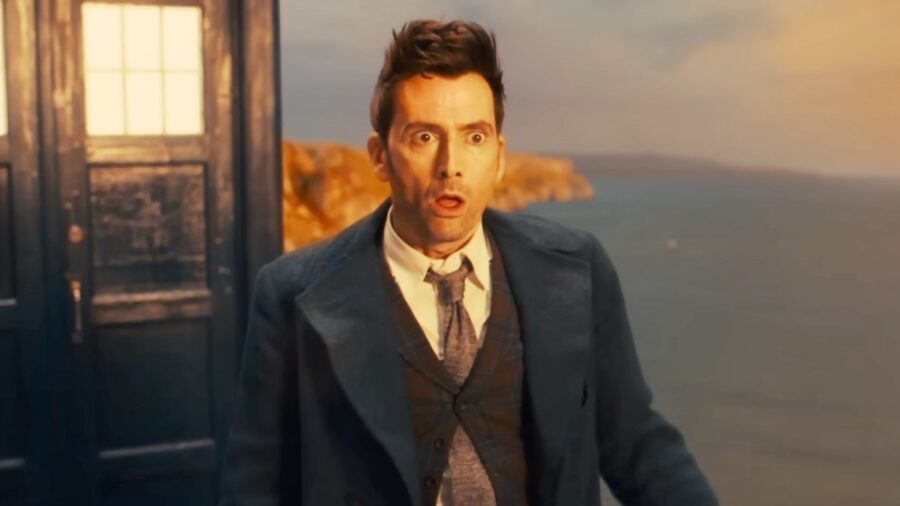
Sadly, that confidence was obviously misplaced. Goldsman didn’t delve into details, but it’s almost certain that the lawyers for these two sci-fi franchises never saw eye to eye. Eventually, the crossover became outright impossible: Strange New Worlds finished shooting its fifth and final season. More recently, the BBC and showrunner Russel T. Davies (the man who pushed for a crossover in the first place!) confirmed that Doctor Who was going on indefinite hiatus.
However, fans still wanting a taste of what that crossover would look like can always read the engrossingly weird crossover comics from IDW Publishing. And we can all cross our fingers that someday, we’ll see David Tennant’s Doctor on the bridge of the Starship Enterprise ordering warp speed as only he can: “Allons-y!”
Entertainment
Babylon 5's First Season Shatters Star Trek's Utopian View Of Humanity
By Jonathan Klotz
| Updated

Star Trek has always had, at its core, the belief that humanity will come together over time, see past manmade differences, and approach the stars as a unified species. Gene Roddenberry’s series includes plenty examples of that not happening, but the basic tenet is the same, while J. Michael Straczynski’s Babylon 5 starts off with a different belief: humans are humans, we’ll argue, fight, disagree, and always find a way to separate ourselves and others. In the case of Season 1 Episode 7, “War Prayer,” it’s the introduction of the Homeguard, a militant anti-alien group that reveals humanity still has its bad apples.
The War Prayer Introduces The Homeguard

“The War Prayer” kicks off with a string of alien attacks onboard the space station with the expected response from the different ambassadors. Deleen (Mira Furlan) wants Sinclair (Michael O’Hare) to investigate, while G’kar (Andreas Katsulas) is rallying the aliens demanding more be done to keep them safe and punish those responsible. At the same time, and completely unrelated, Ivanova’s (Claudia Christian) former lover Malcolm (Soap Opera star Tristan Rogers) arrives on Babylon 5.
Jeffrey Sinclair and Ivanova are one-step ahead of the attackers, purposely putting on a public display of anti-alien sentiment to gain their trust, which works. Malcolm reveals that the use of Earthforce stealth technology lets his group get close to the aliens with the goal of killing the ambassadors, thus kicking off an alien race war. It didn’t work when Charles Manson tried it in 1969, and it still didn’t work in 2258. What it does succeed at, is reinforcing the underlying currents of “Infection,” and “Mind War,” by showing viewers that there’s a dark side to the world of Babylon 5.
Babylon 5 Is About Hope For Tomorrow

The Homeguard remains in the background of Babylon 5 but it was only the precursor to something worse in later seasons: Nightwatch. Under the reign of President William Clark, the paramilitary group conducts a reign of terror that doesn’t differentiate between aliens and those insufficiently loyal to Clark. To the Nightwatch, Homeguard is where the misfits who couldn’t hack it in their ranks go.
Looking back at “The War Prayer,” Malcolm’s plan is quaint compared to what happens with the Earth Alliance. It also sticks out as an early example of Babylon 5’s cynical worldview which exists, not to be the status quo, but to highlight the work of Sinclair, John Sheridan (Bruce Boxleitner), Garibaldi (Jerry Doyle), and Ivanova in working for a better tomorrow as a sign of hope that eventually humanity can change. Instead of Star Trek’s optimism tempered by later signs that not all is right with the Federation, Babylon 5 goes the opposite direction, and by the end of the series, there’s no doubt that humanity, and the universe, is in a better place.
Babylon 5 was one of the darker sci-fi series of the 90s but that’s what helped it become a huge hit with a rabid following to this day. The world-building on display within the first season pays off throughout the rest of the series with intricate, character-driven storylines and elaborate political machinations that have their roots within the first few episodes of Season 1. It’s a masterclass in writing science fiction and “The War Prayer” is only one example of creator JMS lanting seeds that pay off later.
Entertainment
Supergirl’s Writer May Be Who Destroys The DCU
By Chris Snellgrove
| Published

What do Warner Bros. executives and DC fans have in common? Simple: they are all looking for a scapegoat to blame for the box office failure of Supergirl. There are some obvious contenders here, including director Craig Gillespie (who made this cosmic road trip film look and feel excessively bland) and DC Studios CEO James Gunn, who insisted on making this the second film in the DCU. However, the internet’s preferred scapegoat right now is Ana Nogueira, the woman who wrote Supergirl. Some fans sounded the alarm when she was first hired, noting that the actor and playwright had written literally zero movies or TV shows before getting hired by James Gunn.
Still, that’s not exactly a dealbreaker. Curry Barker had not written or directed any feature films until Obsession, a movie made for $750,000 that ended up making more money than The Mandalorian and Grogu. Plus, geek icon James Gunn said that Nogueira’s script was one of the best he had ever seen, causing him to move Supergirl’s production schedule up and make it the second film in the DCU. Now that the movie is a critical and commercial dud, though, fans are worried about the DCU as a whole. That’s because Nogueira is also set to write Teen Titans and Wonder Woman, two of the most highly anticipated DC films.
An Inexperienced Screenwriter

Before writing Supergirl, Ana Nogueira established herself in Hollywood in a different way: as an actor rather than a screenwriter. She had recurring roles in popular shows like Blue Bloods and The Vampire Diaries; more recently, she had a meatier recurring role in Hightown. As a writer, she has mostly written for the theatre. When Lin-Manuel Miranda was still workshopping Hamilton, it was Nogueira who originated the insanely popular character Eliza Hamilton. She went on to write two plays of her own: Empathitrax in 2016 and Which Way to the Stage in 2022. Therefore, it’s disingenuous to say that she has no experience as a writer.
The problem, however, is how little experience she has in screenwriting. Previously, she was co-writer on a short film, We Win, in 2018. Otherwise, she has no prior writing credits for any feature films or TV shows. Previously, she submitted a horror script to Warner Bros. that never got made into a film. However, the studio was impressed enough to hire her to write a Supergirl film for the DCEU. She wrote two scripts, but neither saw the light of day before the DCEU imploded. When WB decided to move forward with Supergirl for the DCU, she was asked to pitch and ultimately hired for the job. The rest, unfortunately, is history.
One Movie Down, Two To Go

Clearly, Warner Bros. thought Ana Nogueira was a talented writer. DC Studios CEO James Gunn agreed, praising her script as one of the best he’s seen in a long time. It impressed him enough to accelerate Supergirl’s production schedule, making it the second feature film in the DCU. Even more notably, Nogueira’s script impressed him enough that she was chosen to write two more films: Teen Titans and Wonder Woman. Now that Supergirl has become a critical and commercial flop, though, fans are understandably worried that her next films will similarly underperform and effectively destroy the DCU.
That’s not guaranteed to happen, of course: Nogueira may learn from her mistakes and craft much better scripts for Wonder Woman and Teen Titans. Or maybe her writing is better than cynical fans think, and she just needs a better director than Craig Gillespie. If the studio gets nervous enough, they might give her the boot and hand those films to someone else. Bottom line? If some major changes happen, then the DCU can still be saved, especially if James Gunn’s Superman: The Man of Tomorrow is a huge hit. If no changes happen, though, Ana Nogueira may go from being a beloved Hollywood wunderkind to the woman who killed the DCU.

Star Trek Showrunner Confirms Doctor Who Crossover Almost Happened
Govee’s smart nugget ice maker makes every iced drink feel like a luxury


