
Entertainment
Celebrating The 40th Anniversary Of The Greatest Batman Ever Made

By Chris Snellgrove
| Published

For better or for worse, we are currently living through the age of superhero cinema, with movies like Avengers: Endgame and Superman (2025) dominating the box office. But would you believe that this entire genre owes its existence to a single comic? A comic that also managed to inspire some of the greatest TV shows the world has ever known?
That comic is Frank Miller’s Dark Knight Returns, the seminal Batman comic that recently celebrated its 40th anniversary. Miller’s comic is very nearly perfect, and it helped usher in a modern age of darker and grittier superhero stories. That much is well known, but today, I’d like to focus on a lesser-known fact: that the modern superhero genre of movies simply wouldn’t exist without The Dark Knight Returns.
You’ll Believe A Batman Can Fly

The success of the 1978 Superman movie proved that tights-and-flights films had the potential to be critical and commercial hits. Accordingly, that film got three sequels, but the franchise did not keep going “up, up, and away.” Eventually, Superman IV: The Quest For Peace proved to be such a critical and commercial disaster that we didn’t get another Superman movie for nearly two decades.
Following the success of the first Superman movie, a new Batman film went into development at Warner Bros. in 1980. After he wowed everyone with Pee-Wee’s Big Adventure (his first feature film), young Tim Burton was hired in 1985 to direct this new Batman film. He immediately wanted a darker, less campy script.

Conveniently enough, The Dark Knight Returns came out one year later, and the success of Frank Miller’s comic made the public hungry for a serious take on the Caped Crusader even as it made Warner Bros. keener on bringing this Darker Knight to the big screen.
Obviously, the 1989 Batman film went through many rewrites over the years, including several lighter-hearted drafts that included Robin, the Boy Wonder. But Burton really wanted his film to have the grim and gritty atmosphere of Miller’s comic, so he insisted on a story with the same basic beats as The Dark Knight Returns: Batman is obsessive, the Joker is deadly, and Gotham City is a cesspool. Burton’s film ended up being a smash hit, launching a Batman film franchise that continues to this day.
When Cartoons Got Dark
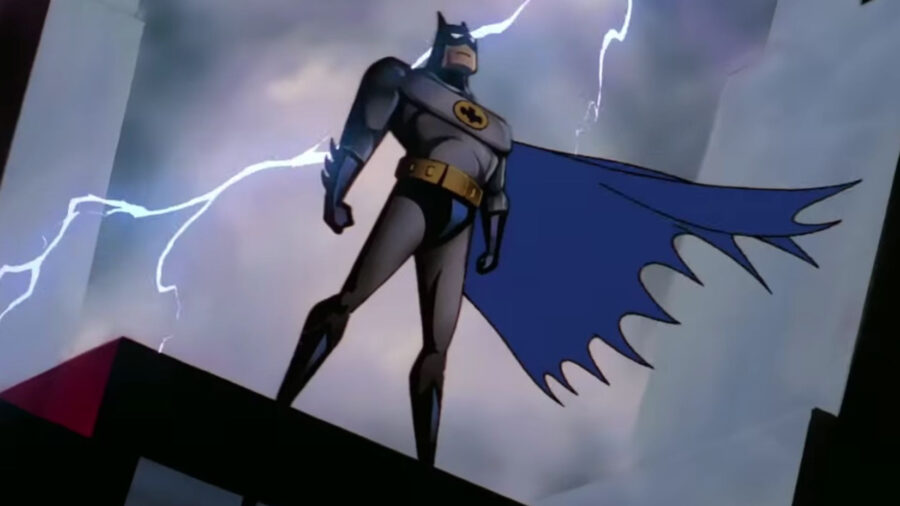
Tim Burton’s Batman made the character more popular than ever before, and Warner Bros. quickly began developing a new cartoon featuring the Caped Crusader. The result was Batman: The Animated Series, a show that modeled Gotham City after the one scene in the 1989 film. There were some different design flourishes (mostly, the abundant Art Deco style of the buildings), but Gotham retained the dark and broody atmosphere that electrified fans of the live-action film.
Batman: The Animated Series won multiple Emmy awards, so you may be shocked to hear that Warner Bros. executives were nervous about the new show. They feared that executive producer Bruce Timm was making everything way too violent for children.

Warners wanted to cancel the series before a single episode was animated, but the success of Burton’s movie kept that from happening. Eventually, Timm was able to create the pilot episode “On Leatherwings,” which was so impressive that it helped his controversial series (complete with music from and inspired by Danny Elfman, the composer of Burton’s Batman) get the green light.
Batman: The Animated Series quickly became one of the most popular cartoons ever made, and the release of various sequel series (including Superman: The Animated Series and Justice League) established the fan-favorite DC Animated Universe. The DCAU was the first truly viable superhero cinematic universe, one that helped pave the way for the MCU. Before that happened, though, The Dark Knight Returns helped inspire Earth’s mightiest mutants.
Rise Of The Mutants
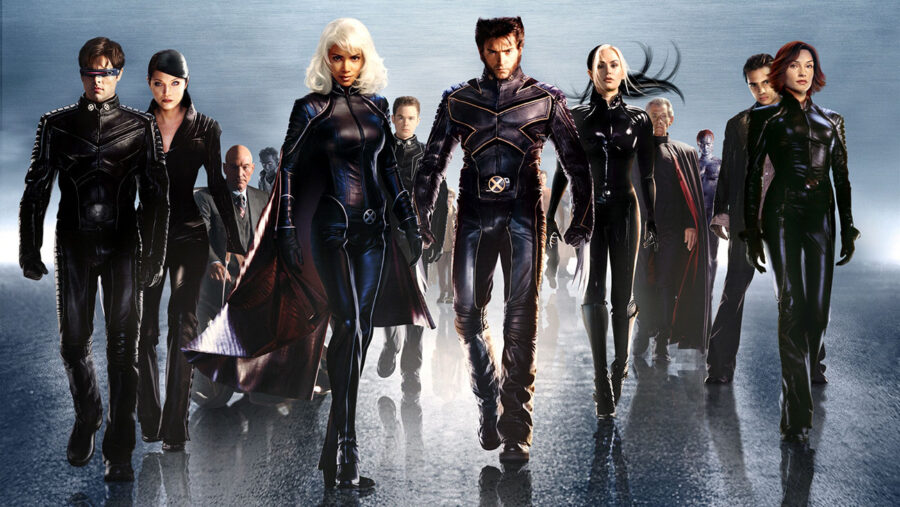
Tim Burton’s Batman would not have existed (or at least, wouldn’t have been worth watching) without the influence of Frank Miller’s The Dark Knight Returns. But after Burton left, the franchise was in the hands of Lost Boys director Joel Schumacher. He made the franchise over-the-top with Batman Forever and downright silly with Batman & Robin. After audiences rejected that campy crapfest and Blade proved to be a big hit, 20th Century Fox made a decision: they’d swoop in and take the comic book movie crown away from DC with an X-Men movie.
That film came out in 2000, eventually getting two sequels, four prequels, and three spin-offs featuring Hugh Jackman’s Wolverine. The success of Fox’s X-Men spurred Sony to create a Spider-Man movie in 2002, and Sam Raimi eventually delivered an entire trilogy of webslinging goodness.
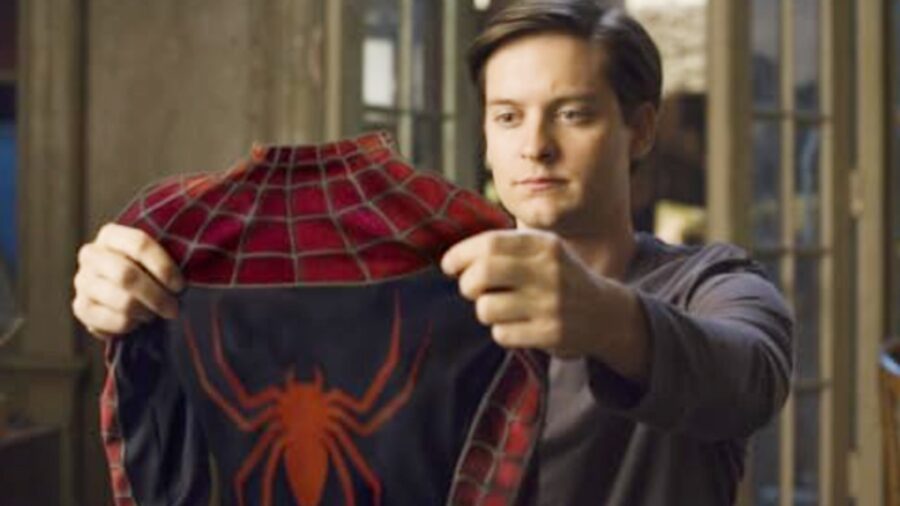
Ironically, these characters were only available to the studios because Marvel had to sell the movie rights back in the late 90s to avoid bankruptcy. After seeing how successful Fox and Sony were, though, Marvel decided to create its own films and television projects, all of which would later be known as the Marvel Cinematic Universe.
Obviously, the MCU proved to be a huge hit with audiences, spawning nearly 20 years of movies. Eventually, this inspired Warner Bros. to try its own hand at a superhero cinematic universe, and they created the DCEU as a direct competitor to the MCU. The second film in this new cinematic universe was Batman v. Superman: Dawn of Justice, and (for better or for worse), returning director Zack Snyder based his slightly older, much darker version of the Caped Crusader on Frank Miller’s The Dark Knight Returns.
It’s All Connected

Miller’s The Dark Knight Returns has had an outsized impact on movies and television, serving as the foundation of modern geek culture. Without the success of this comic, we don’t get successful Batman movies; without the later failure of Batman & Robin (which veered away from Miller’s dark tone), we don’t get the X-Men movies. Without those films and Raimi’s Spider-Man trilogy, we wouldn’t have the MCU, and without that, we wouldn’t have the DCEU or (more recently) the DCU.
It’s all connected, and comic nerds everywhere owe it to themselves to re-read this comic. Considering that it may be years before we see Batman properly appear in the DCU, re-reading it is currently the best way to experience the most iconic and fully formed version of the Caped Crusader ever made. Just be careful when handling this old comic; after all, you’ve got a genuine piece of pop culture history in your hands!
Entertainment
Stuff Your Kindle Day is live now — score 150+ free ebooks for 1 day only

FREE BOOKS: The latest Stuff Your Kindle Day takes place on April 23. The Cozy Mystery Book Blast, hosted by Cozy Mystery Book Club, isoffering cozy mystery books for free.
This has been such a huge month for Stuff Your Kindle Day. We’ve already been blessed by a number of free giveaways, and we’re not done yet.
The Cozy Mystery Book Blast, hosted by Cozy Mystery Book Club, is offering participants the chance to download 150+ ebooks without spending anything. Everything that you download is yours to keep forever, so take this as your sign up to stock up ahead of the summer reading season.
Looking to make the most of the latest Stuff Your Kindle Day? We’ve lined up everything you need to know about this popular event.
When is Stuff Your Kindle Day?
The Cozy Mystery Book Blast takes place on April 23. This free giveaway only lasts 24 hours, so you will need to act fast to download everything you want to read. Clear your schedule, make a list of priorities, and add to your TBR list with this limited-time promotion.
Which ebooks are free?
The Cozy Mystery Book Blast has a helpful hub page with everything on offer organized by sub-genre:
You can find these free ebooks from the Kindle Store and other popular retailers. There really is something for everyone in this latest book blast.
Mashable Deals
Is Stuff Your Kindle Day the same as Amazon Kindle Unlimited?
Everything you download on Stuff Your Kindle Day is yours to keep, and there’s no limit on the number of books you can download. Stuff Your Kindle Day downloads don’t count towards the 20 books that Amazon Kindle Unlimited subscribers can borrow at the same time, so don’t hold back.
The best Stuff Your Kindle Day deal
Why we like it
These popular e-readers let you take your entire library on the go. With weeks of battery life and an anti-glare display, you can read anywhere and anytime with the Kindle. Plus, you can get three months of Kindle Unlimited for free with your purchase for a limited time.
Entertainment
Moon phase today: What the Moon will look like on April 23
We’re almost at the First Quarter which means the Moon is almost half illuminated. Each night it gets a little brighter, and this will keep happening until the Full Moon when the reverse will then occur and each night it will appear less.
What is today’s Moon phase?
As of Thursday, April 23, the Moon phase is Waxing Crescent. Tonight, 41% of the moon will be lit up, according to NASA’s Daily Moon Guide.
If you’re looking at the Moon with just your naked eye, you should be able to catch a glimpse of the Mares Serenitatis, Tranquillitatis, and Fecunditatis. If you have binoculars, the Mare Nectaris and Endymion and Posidonius Craters should also come into view, appearing from halfway up the Moon to near the top. And, finally, with a telescope you’ll see all this plus the Apollo 11 and 17 landing spots, and the Rupes Altai.
When is the next Full Moon?
The next Full Moon is predicted to take place on May 1, the first of two in May.
What are Moon phases?
NASA says that the Moon completes a full orbit around Earth in about 29.5 days, during which it passes through eight stages. Although the same face of the Moon is always turned toward us, the portion illuminated by the Sun shifts as it travels along its path, producing the familiar cycle of full, half, and crescent shapes. These variations are referred to as lunar phases, and there are eight altogether:
New Moon – The Moon is between Earth and the sun, so the side we see is dark (in other words, it’s invisible to the eye).
Mashable Light Speed
Waxing Crescent – A small sliver of light appears on the right side (Northern Hemisphere).
First Quarter – Half of the Moon is lit on the right side. It looks like a half-Moon.
Waxing Gibbous – More than half is lit up, but it’s not quite full yet.
Full Moon – The whole face of the Moon is illuminated and fully visible.
Waning Gibbous – The Moon starts losing light on the right side. (Northern Hemisphere)
Third Quarter (or Last Quarter) – Another half-Moon, but now the left side is lit.
Waning Crescent – A thin sliver of light remains on the left side before going dark again.
Entertainment
Tinder responds to viral video about tricking facial scan
Earlier this month, journalist Christophe Haubursin published a YouTube video called “Something very weird is happening on Tinder.” In the video, which has over 1.5 million views as of this publication, Haubursin described a way to workaround to Tinder’s Face Check feature — the facial recognition that is now required for all U.S. users as of Oct. 2025.
What Haubursin and his interviewees discovered is a bunch of profiles that appeared normal, but the last photo on each profile was…off. It was usually a digitally-altered image of a different person in a weird scenario, like on a billboard or in a Victorian painting. And if someone matched with this person and asked about the image, they dodged the question. Instead, they asked to move the conversation to WhatsApp, where it became clear they were romance scammers.
But how did they evade Face Check? Haubursin found that Tinder and Hinge, both owned by Match Group, only need one photo for the facial recognition software. So these people may be the actual person in that odd image, and able to pass the face scan. Then, they could grift images of other people from the internet to use for the bulk of their profile.
Hookup apps for everyone
AdultFriendFinder
—
readers’ pick for casual connections
Tinder
—
top pick for finding hookups
Hinge
—
popular choice for regular meetups
Products available for purchase through affiliate links. If you buy something through links on our site, Mashable may earn an affiliate commission.
Tinder didn’t respond to Haubursin’s request for comment, but it did respond to Mashable’s.
“We’re aware of the concerns raised about our Photo Verification and Face Check features. In recent weeks, we’ve taken action to strengthen our Photo Verification badging logic, including requiring greater consistency across profile photos and additional reviews to achieve higher confidence in cases that warrant extra scrutiny,” a Tinder spokesperson told Mashable. “Face Check, our more recently launched verification system, builds on Photo Verification to help confirm accounts belong to real users. We are committed to continuously improving and investing in our systems to keep Tinder safe and authentic for our users.”
Mashable Trend Report
Mashable also recently spoke with Hinge’s Chief Product and Technology Officer, Ben Celebicic, about this, as Haubursin also replicated this on Hinge (which began implementing Face Check after Tinder). Celebicic hasn’t seen Haubursin’s video, but he did say that there’s a constant battle between trust and safety teams and policy-violating actors.
“They’ll find new ways,” he said. “We’ll find ways to prevent them from accessing the platform.”
There’s not going to be a single product the team builds that will fully prevent people from bypassing our solution, Celebicic continued. He said they have a big team working on these issues, and they’re in tune with new ways bad actors try to penetrate the platform and work to fix them.
Around one-third of Hinge’s workforce is dedicated to trust and safety, the app told Mashable, and Match Group invests $125 million annually in this area.
Trust and safety is a major concern for dating apps. In Sept. 2025, two senators sent a letter to Match Group CEO Spencer Rascoff, urging him to do something about romance scammers on the platforms. In Dec., a class-action lawsuit against Match Group claimed that a serial rapist was allowed on Tinder and Hinge after several women reported him.
Facial recognition scans have boomed recently thanks to the influx of age-verification laws, which require a robust method of proving someone’s age in order to access certain content, usually explicit content. These methods include uploading a government ID to a platform, using a credit card, or in other cases, scanning your face. But, like with Face Check, people have found workarounds to evade the scan and see the content they want to see.

Raiders back at No. 1, Jets comb best of Buckeyes
Hidden Storylines You Might Have Missed So Far in 2026 NBA Playoffs


