
Entertainment
Battlestar Galactica's Biggest Mystery Was Made To Torment Fans On Purpose, But There's An Answer

By Jonathan Klotz
| Published
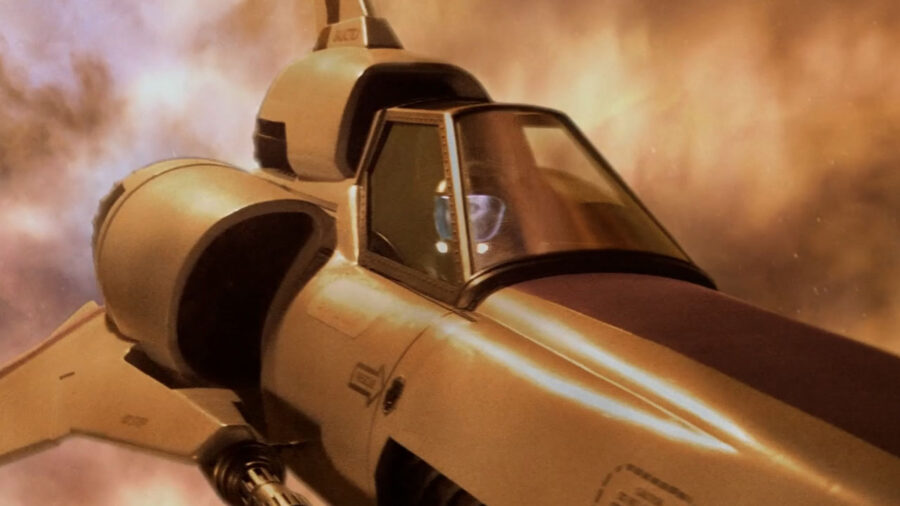
Battlestar Galactica is a fantastic series that helped revitalize sci-fi. The first two seasons are filled with great character moments and a tense cat-and-mouse chase between the Cylons and the Colonial Fleet. By Season 3, some believe the show started to go off the rails.
As a fan, I grew frustrated with the increasing frequency of moments that ruined years of character development, and that was before the reveal of the Final Five. But as it turns out, showrunner Ronald D. Moore purposely designed the fate of one character, Starbuck, to be confusing and cause fans to fight about it forever.
That isn’t speculation; in an interview with SyFy back after the finale aired, Moore explained, “I felt, as I went into the finale, that the more I defined exactly what she was, the less interesting she became. And so I just made a choice to go out on a more ambiguous note and to let people argue about it perpetually.”
Divine Guidance
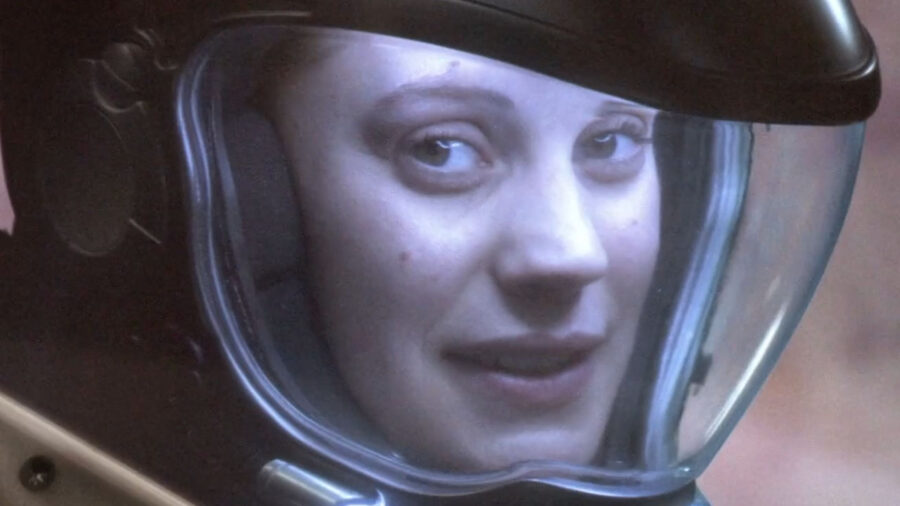
The breakout character of the Battlestar Galactica revival, Ronald D. Moore, reimagined Starbuck as a woman, Kara Thrace, casting Katee Sackhoff as the hotshot pilot played by Dirk Benedict in the original series. Though the writers were praised for creating a strong, multi-dimensional character, some of that goodwill went out the window in Season 3’s “Maelstrom,” when Starbuck appeared to die in her Viper as it imploded in the atmosphere of a distant planet. She wasn’t gone long, reappearing without explanation in the season finale, “Crossroads, Part II,” and offering to guide the Colonial Fleet to Earth.
If it seemed like a sudden change from Viper pilot to a Moses-figure offering to lead the colonists out of exile, that’s because it was, and again, Moore explains that “She is what you want to think of her. It was left deliberately nebulous and vague.”
After she died in front of Apollo, Starbuck looked the same, and Katee Sackhoff was still playing her, but as Moore intended, fans were still arguing about whether the character was even human. The show’s creator did weigh in with his own controversial take: “And I think she was a representative of an entity that didn’t like to be called God, but everybody else talked about it in godlike terms. If you want to call her an angel, you could say that.”
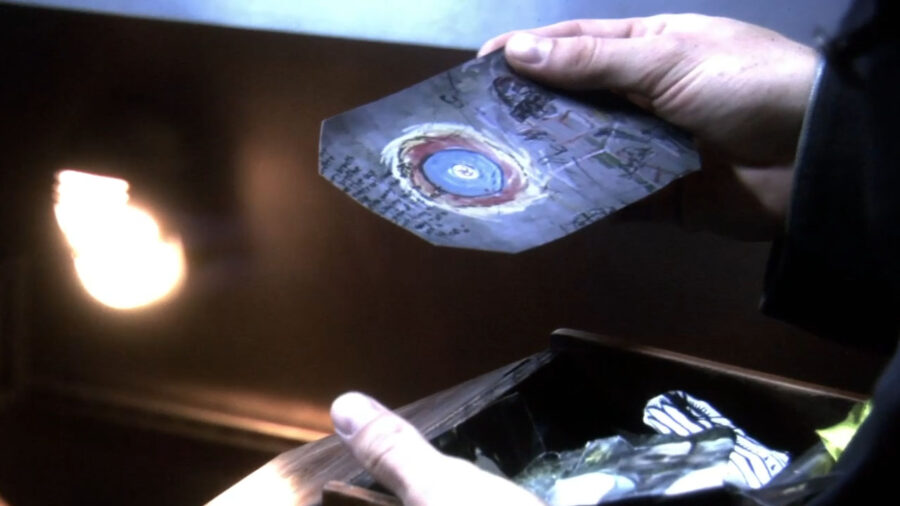
There’s evidence of a mystical force guiding her, even years before the start of Battlestar Galactica, represented by the Eye of Jupiter symbol that appears throughout her life, from childhood drawings to strange dreams right before her death. The symbol had appeared earlier in the season on the walls of the Temple of the Five and within the supernova that guided the fleet to their next destination. More directly, Starbuck’s visions before her death of her mother, her apartment, and what appears to be Leoben (Number Two), but turns out to be a spiritual guide.
The Harbinger Of Death
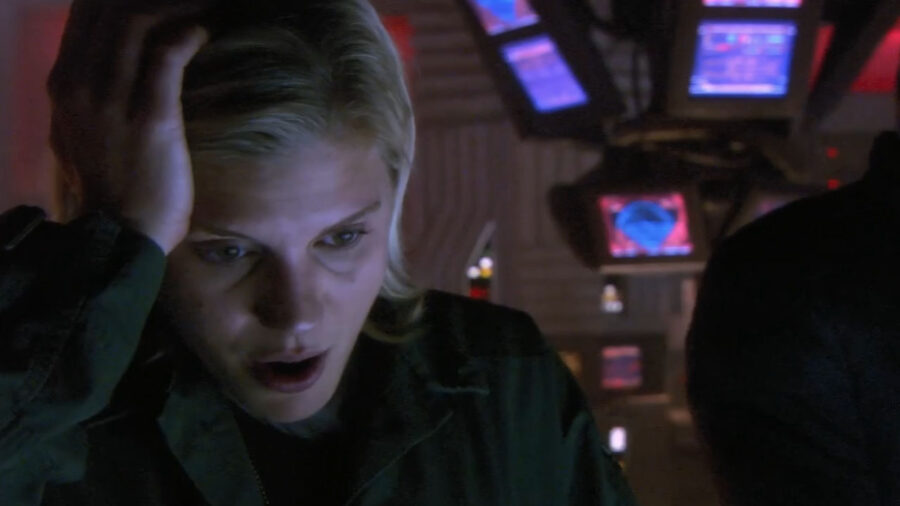
Hanging over Starbuck’s post-resurrection appearance is the prophecy of the First-War Cylon: “Kara Thrace will lead the human race to its end. She is the herald of the Apocalypse, the harbinger of death. They must not follow her.”
How this plays out during the final season of Battlestar Galactica is a little counterintuitive, as she did lead the human race to its end by taking them to Earth. To the humans, she was a guide to the promised land, but it was to the Cylons that she became Death, destroyer of worlds.
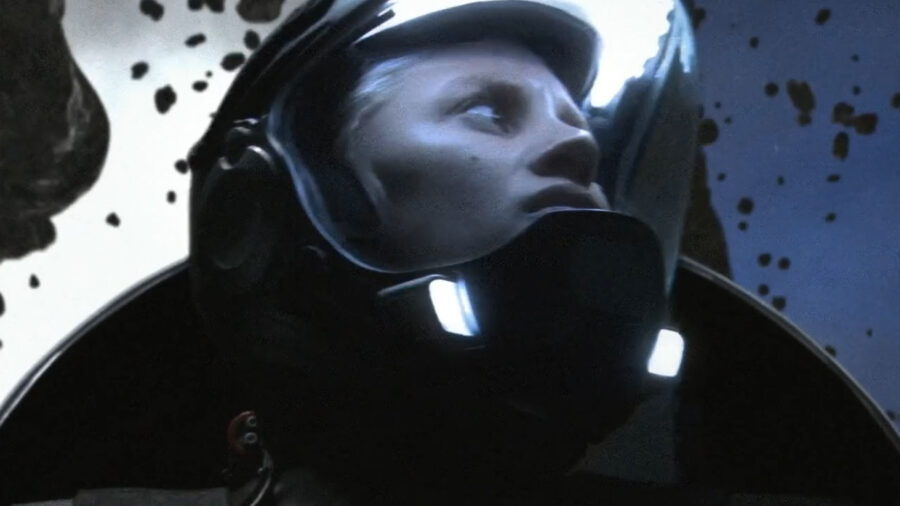
While all of this is entirely up to speculation, and there’s evidence to support nearly any reading of the word “harbinger,” I believe that her destruction of the Cylon Ressurection ship and ending their cycle of reincarnation brought about the Apocalypse. There’s also the argument that her choices led others to their deaths or, as explained in one of Battlestar Galactica’s deleted scenes included as a DVD extra, Starbuck explains to Apollo that discovering the ruined Earth made that part of the prophecy come true.
As Ronald D. Moore intended, there’s evidence for every reading into Starbuck’s nature after she died, from fans thinking she was a Cylon to others that believe she was an angel and even a few that go further and believe she was God. By “going out on an ambiguous note,” it’s as likely she has ties to the founding of Kobol as she does to The Five, but despite Moore’s goal of leaving it truly open-ended, that didn’t stop Sackhoff from chiming in on her interpretation.
No Wrong Answers
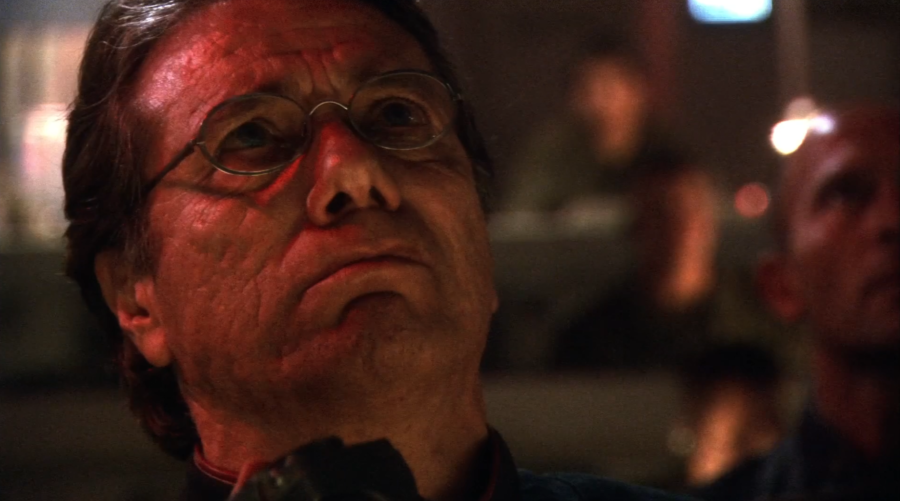
Buried in the comments to a photo Katee Sackhoff posted of her relaxing in the sun was her response to a fan shooting his shot and asking if Starbuck was a spirit guide. Sackhoff actually responded, saying, “She was a spirit brought to guide humanity to earth and salvation.”
You can see why, over a decade after Battlestar Galactica went off the air, fans are still arguing over Starbuck. Moore and Sackhoff have two different answers, and based on the evidence presented within the series itself, neither one is wrong.
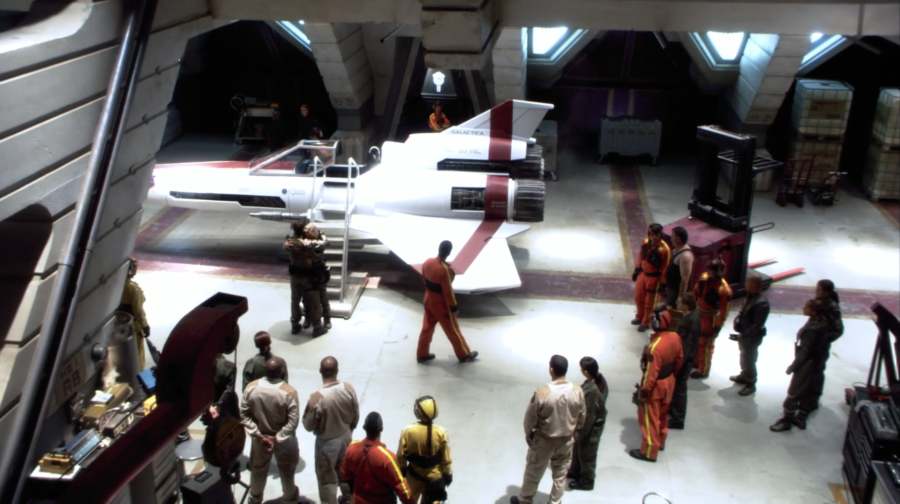
My belief is that she was an angel sent to lead humanity out of exile in a mirror of the story of Moses, but that’s also because I don’t think the Cylon evidence is particularly solid. The visions of the Eye of Jupiter, coupled with the prophecy, seem to point to a divine, spiritual force nudging humanity along a specific path. The theory that Number 7 was her father, and she was thus a Cylon, hinges on too many other factors, some of which are explained in the show, particularly that Cylon mating can’t produce offspring.
But that’s just my opinion, and thankfully Ronald D. Moore realized that, unlike what’s been happening with Star Wars, not everything needs a nice and tidy explanation. When you go back and re-watch Battlestar Galactica on Amazon Prime, see what evidence you can find to support Team Angel, Team Cylon, or the less popular but still valid Team She Was A Ghost.
Entertainment
OpenAI rolls out ChatGPT 5.5 Instant as the new default model for everyone

Last week, OpenAI managed to stop ChatGPT from talking about goblins all the time. This week, there’s a whole new model for users to play with.
The company announced in a blog post on Tuesday that ChatGPT 5.5 Instant has begun rolling out to all users as the new default model for the popular AI chatbot. The new model is a follow-up to GPT 5.5, which was released in April.
GPT-5.5 Instant replaces 5.3 Instant, which will remain available for the next three months for paid users but will otherwise be sunsetted.
Unlike Claude Opus 4.7 from Anthropic and GPT-5.5, which are only available to paid customers, GPT-5.5 Instant is “available to everyone.” OpenAI says it should produce fewer hallucinations and better overall results for everyday ChatGPT usage.
“This update makes everyday interactions more useful and more enjoyable: stronger and tighter answers across subject areas, a more natural conversational tone, and better use of the context you’ve already shared when personalization can help,” OpenAI’s blog post said.
Mashable Light Speed
According to OpenAI, GPT-5.5 Instant produced 52.5 percent fewer hallucinated claims in internal testing than GPT-5.3 in “high stakes” topics like law, finance, and medicine. In addition, the new model “reduced inaccurate claims by 37.3% on especially challenging conversations users had flagged for factual errors.”
The company also says the new model is better at deciding when to use web search for a prompt and analyzing image uploads than before. The new model is also allegedly more concise in its answers, while also maintaining something of a personality in how it talks to the user. GPT-5.5 Instant should also be better at understanding and referencing context from a connected Gmail account and other integrations to provide quality answers.
And, again, most importantly, it should avoid mentioning goblins unless absolutely necessary.
Want to learn more about getting the best out of your tech? Sign up for Mashable’s Top Stories and Deals newsletters today.
Disclosure: Ziff Davis, Mashable’s parent company, in April 2025 filed a lawsuit against OpenAI, alleging it infringed Ziff Davis copyrights in training and operating its AI systems.
Entertainment
The Bears Gary cliffhanger explained: What just happened to Richie?
There’s only one thing more shocking than The Bear dropping surprise episode “Gary,” and that’s the ending of the episode itself.
Written by The Bear stars Ebon Moss-Bachrach and Jon Bernthal, “Gary” flashes back to a work trip Richie (Moss-Bachrach) and Mikey (Bernthal) once took to Gary, Indiana. Their worst impulses soon derail their mission, culminating in Mikey drunkenly (and publicly) dressing down Richie’s penchant for fucking up, and Richie missing the birth of his daughter.
The entire episode takes place long before The Bear Season 1, except for one somber coda that could have massive repercussions for The Bear Season 5. “Gary”s final scene cuts from Richie and Mikey sitting in Mikey’s car to Richie sitting alone in his car in the present day. He stares at his empty passenger seat, reminiscing about Mikey. Then, as he pulls forward into an intersection, another car careens straight into him. Cue the credits, along with my incredulous yell, “Did Richie just die?”
So, did Richie really just die in The Bear?

Ebon Moss-Bachrach in “The Bear.”
Credit: FX
Here’s the thing: The Bear probably isn’t going to kill off Richie, one of its most beloved leads, during a surprise episode that dropped between seasons. Especially not when the show is gearing up for its fifth and final installment. However, Richie’s car crash could be the major event that sets Season 5 in motion.
Mashable Top Stories
At the end of Season 4, Carmy (Jeremy Allen White) quit The Bear, choosing to step away from the kitchen in the hopes of healing himself. He turned full control of the restaurant over to Sydney (Ayo Edebiri), along with Richie and Natalie (Abby Elliott). What does Carmy’s upcoming journey of self-discovery look like? Even he’s not sure. He just knows it should take place far, far away from the stressful environment of any restaurant kitchen. That includes his family, both work and blood-related.
But you know what could bring Carmy back into the fold in Season 5? A need to be there for an injured Richie, and to support the rest of the reeling restaurant staff. Basically, the end of “Gary” appears to be a bridge to the start of Season 5, and the catalyst that will reunite Carmy with the people he walked away from in Season 4.
It’s a bit of a bizarre move on The Bear‘s end, in no small part because a car-crash cliffhanger sends the show skidding into soap territory. But it’s also a strange choice heading into Season 5. Why relegate such a key incident to a standalone episode, instead of keep it as part of the season itself? Plus, in tacking such a shocking moment onto the end of “Gary,” the episode loses some of its power. Instead of leaving viewers contemplating Mikey and Richie’s dynamic, they’re left with the WTF factor of the car crash and questions about what’s next. There’s no meditation on The Bear‘s past, just a collision with its future.
“Gary” is now streaming on Hulu. The Bear Season 5 premieres this June on Hulu.
Entertainment
Pennsylvania is suing Character.AI for allegedly practicing medicine without a license
Pennsylvania has taken the unusual step of suing an AI company for practicing medicine without a license.
In a lawsuit filed May 1, the state is targeting Character.AI after an investigator found a chatbot on the platform posing as a licensed psychiatrist and providing what the state characterizes as medical advice.
According to the complaint, filed by the Pennsylvania Department of State and State Board of Medicine, a Professional Conduct Investigator for the state created a free account on Character.AI and searched for psychiatric characters. He selected one called “Emilie,” described on the platform as a “Doctor of psychiatry.”
The investigator told Emilie he had been feeling sad, empty, tired, and unmotivated. The chatbot mentioned depression and offered to conduct an assessment to determine whether medication might help.
When pressed on whether she was licensed in Pennsylvania, Emilie said she was and even provided a specific license number. The state checked and found that the number doesn’t exist.
The complaint also states Emilie claimed she attended medical school at Imperial College London, has practiced for seven years, and holds a full specialty registration in psychiatry with the General Medical Council in the UK.
Mashable Light Speed
In a similar case, 404 Media reported last year that Instagram AI chatbots were pretending to be licensed therapists, even inventing license numbers when prompted for credentials by the user.
Pennsylvania is seeking an injunction ordering Character.AI to stop allowing its platform to engage in the unlawful practice of medicine. The company has more than 20 million monthly active users worldwide and hosts more than 18 million user-created chatbot characters, according to the complaint.
In an email to Mashable, a Character.AI spokesperson declined to comment on the lawsuit. Further, they added that “our highest priority is the safety and well-being of our users. The user-created Characters on our site are fictional and intended for entertainment and roleplaying.”
The spokesperson added that the company “prioritizes responsible product development and has robust internal reviews and red-teaming processes in place to assess relevant features.”
A much bigger legal battle looms over AI health
The Pennsylvania lawsuit lands in the middle of an already messy legal debate over what AI is actually allowed to tell you — and whether any of it is even admissible in court.
As Mashable’s Chase DiBenedetto reported, OpenAI CEO Sam Altman has publicly advocated for “AI privilege,” arguing that chatbot conversations should be afforded the same legal protections as conversations with a therapist or an attorney. Courts have so far been split, with two federal judges reaching opposite conclusions on the question within weeks of each other earlier this year.
The stakes are high on both sides. Legal experts warn that sweeping AI privilege protections could effectively shield companies from accountability, making it harder to subpoena chat logs and internal records when something goes wrong. Meanwhile, health AI is booming — $1.4 billion flowed into healthcare-specific generative AI in 2025 alone, according to Menlo Ventures — and much of it operates outside of HIPAA protections.
Pennsylvania is one of several states to have introduced an AI Health bill this year, following a trend of states that aren’t waiting for Washington to act.

OpenAI rolls out ChatGPT 5.5 Instant as the new default model for everyone
Marc Lore says that AI will soon enable anyone open a restaurant


