
Entertainment
Babylon 5 Creator Made A Ninja Action Cult Classic, Stream On Max After Top 10 Success

By Jonathan Klotz
| Published
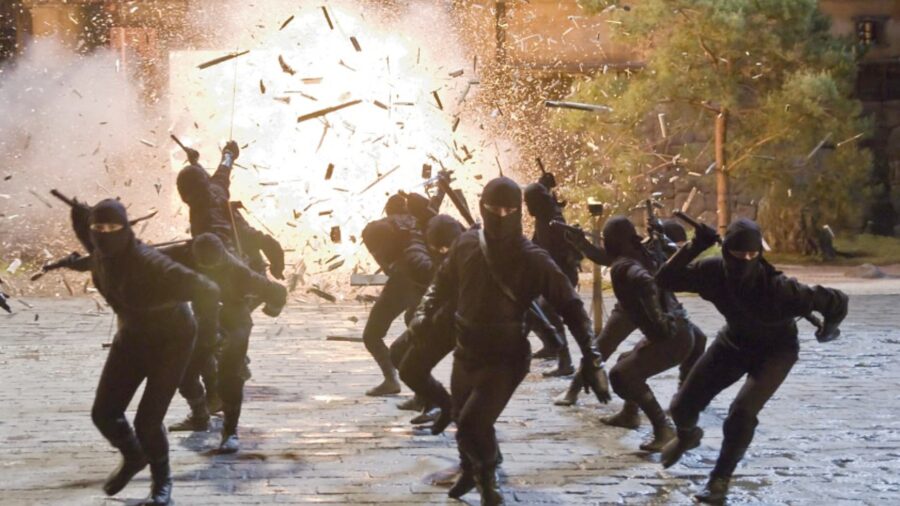
J. Michael Straczynski is an accomplished comic writer and the creator of Babylon 5, but he’s also contributed to dozens of other films and movies, ranging from Underworld: Awakening to episodes of Murder She Wrote. One of his most overlooked projects is now a streaming hit on Max, hitting the top 10 and staying there for over a week so far, which is especially impressive since it was a disappointment at the box office. Ninja Assassin is one of the most generic titles of all time, and the film itself is only slightly more interesting, but the violent action scenes make up for the predictable plot.
Assassinating Ninjas
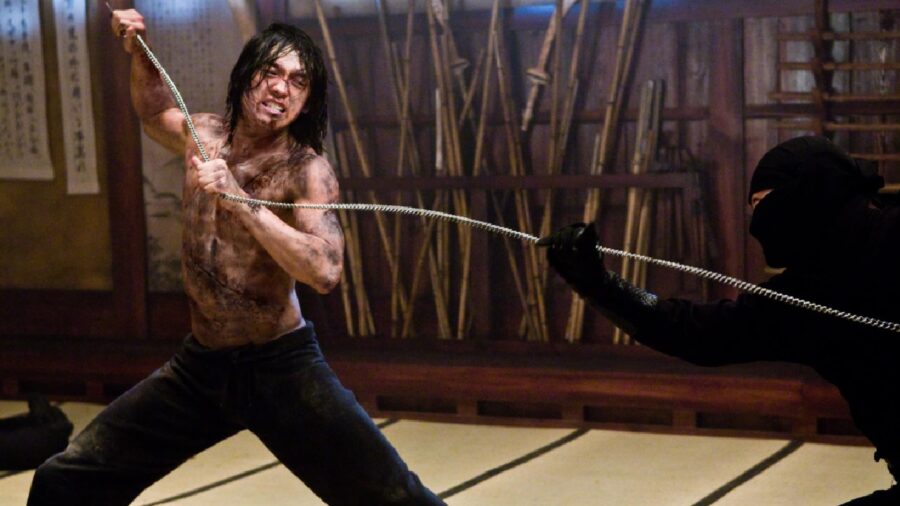
South Korean superstar Rain plays Raizo, the titular Ninja Assassin, who is both a ninja and an assassin, but also an assassin of ninjas, making the title accurate no matter how you choose to read it. Trained by the evil warlord Lord Ozunu to be a killer for hire, Raizo refuses to kill a female ninja (kunoichi) and instead lashes out against his clan, devoting his life to stopping their clandestine wave of terror. He’s eventually joined in his one-man crusade by Europol special agent Mika, played by Naomie Harris, who has made a career out of being one of the best parts of B-movies.
Honestly, the plot doesn’t really matter because there’s only one reason anyone is watching Ninja Assassin, and that is the fight scenes. They lack the raw feeling of later martial arts movies like The Raid: Redemption, but they’re bloody, especially one moment involving a laundromat. Raizo may be a great fighter, but he spends a lot of the film getting beat up as well, which helps make his moments of triumph cooler than they would be if he was like, oh, let’s say, Dwayne Johnson, and never lost a single fight on screen.
A Pair of Martial Arts Icons
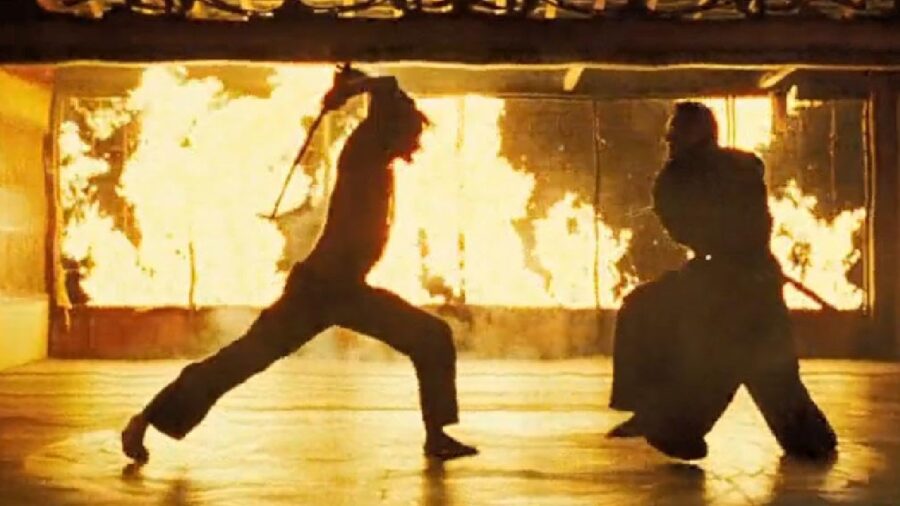
Rain carries Ninja Assassin as the heroic Raizo, and it’s clear why he was one of the biggest names in South Korean entertainment for a generation. The film is his first English leading role, though he made his English acting debut a year earlier in The Wachowskis Speed Racer, which is fitting, as the siblings then signed on as producers for the ninja fight fest. Rain had experience in a multitude of different martial arts before accepting the role, and while he didn’t do all of his own stunts, he did almost every fight scene himself.
While Rain may be a famous entertainer, Lord Ozunu should also be recognizable to fans of ninja action B-movies, or even Z-movies, because the villain is played by Sho Kosugi, the star of Cannon films Ninja trilogy, including the awesomely bad Ninja III: The Domination. Ninja Assassin was the last film the 80s icon starred in, choosing to focus instead on his multiple martial arts schools.
Ninja Assassin seems like an unlikely J. Michael Straczynski project, and while it lacks the depth of Babylon 5, keep in mind the prolific creator also wrote the infamous Spider-Man comic arc, “Sins Past,” which is considered one of the worst storylines in Peter Parker’s history. Not every swing at the plate is going to be a homerun, but at least with this ninja action B-movie, he helped provide the re-writes that have ensured it will be a cult classic for years to come.
Ninja Assassin is currently streaming on Max.
Entertainment
Christopher Lloyd's R-Rated 90s Heist Comedy Is The Best Scheme You Never Heard Of

By Robert Scucci
| Published

My favorite heist movies always involve bumbling protagonists who are really smart and good at the one thing they’re good at, but terrible at everything else. Which is why I was beyond thrilled to learn that Christopher Lambert and Christopher Lloyd shared the screen in 1990’s Why Me?, a comedy of errors involving two burglars who accidentally steal a priceless artifact that sends the whole world into a tizzy. What’s most impressive, though, is that both Lloyd and Lambert have done very well for themselves as supporting characters throughout their careers, but they both thrive sharing the lead in Why Me?
They share enough screen time to have their own individual shining moments, but the magic really happens when they’re riffing off each other as two of the dumbest criminals known to man while somehow staying one step ahead of their adversaries, despite remaining totally clueless most of the time.
Two Goofy Dudes Getting Chased By Goons

Why Me? kicks off with a seemingly simple robbery that sets the full conflict in motion. This first robbery involves The Byzantine Fire, an extremely valuable ruby making its rounds through the museum circuit in the United States for the first time ever. As it turns out, a group of religious extremists steal the rock, evade the authorities, and hide it in their safe-deposit box.
Completely unaware of this high-level thievery, low-level jewel thief Gus Cardinale (Christopher Lambert) just so happens to unwittingly break into that same safe-deposit box looking for a big score. In the process, he steals The Byzantine Fire, but he’s mostly interested in the box of diamonds valued at a million dollars. For context, The Byzantine Fire is a priceless, sacred, highly sought-after ruby that can’t even be reasonably appraised because of its rarity.

Knowing that he’s on the lam for stealing the diamonds, Gus doesn’t even think to mention The Byzantine Fire, which he assumes is probably a fancy knockoff that happened to be in the safe-deposit box, when he gets together with his partner Bruno (Christopher Lloyd) to figure out how they can get away with fencing the diamonds in their possession. Sitting there the whole time with a look of equal parts affection and disappointment is Gus’ girlfriend, June (Kim Greist), who wants him to stop working as a thief and find legitimate work.
Luck is not on either Gus or Bruno’s side in Why Me?, resulting in the duo being chased not only by the LAPD, but also Police Chief Francis Mahoney (J.T. Walsh), the Turkish government, and an extremely pissed-off Armenian terrorist named Gatou Vardebedian (Wendel Meldrum). It’s a full-on comedy of errors about two guys who are way in over their heads over an object they don’t even realize they have in their possession for a good two-thirds of the movie.
The Two Chris’ Commit

One blind spot I had before sitting down with Why Me? was Christopher Lambert’s willingness to do slapstick comedy. While he’s no Jim Carrey on the physical comedy front, he commits to the bit, and his facial expressions do a lot of the comedic heavy lifting. His ability to play somebody so clueless is half the fun because, on paper, he’s the last person you’d want in your corner if you had to make a serious judgment call, despite his good intentions.
One of his best scenes involves helping a little girl unlock her bike without hesitation, only for the real owner to show up seconds later wondering where the hell his Huffy went. Blissfully unaware that he’s now an accessory to theft, Gus just smiles and keeps walking as if the satisfaction of committing a good deed immediately blinds him to what’s actually happening around him.

Christopher Lloyd plays the straight man, if you could call it that, in the sense that Bruno is just as idiotic as Gus, but at the very least seems to think scenarios through before impulsively acting on them. This odd-couple dynamic drives Why Me? exactly where it needs to go by the third act, when every antagonist closes in and they have to figure out how to return the ruby, secure the diamonds they originally intended to steal but lost, and walk away from the entire ordeal without ending up in jail.

Why Me? is pure, goofy fun with two leads who clearly understood the assignment and ran with the premise. Is it the funniest movie ever made? Not by a longshot, but if you want to see both Chrises in their element, sharing the spotlight without ever overstaying their welcome, you can stream the film for free on Tubi as of this writing.

Entertainment
How Star Trek Was Destroyed: The Full History Of Its Modern Ruination
By Joshua Tyler
| Updated

Star Trek has never been at a lower point. The franchise’s last batch of shows received almost no ratings, and the brand’s total mismanagement became so bad that it drove away existing Trekkies while failing to attract any new viewers.
With no clear plan to turn it around, Star Trek has been shut down. It’s done. It’s finished. There’s nothing new in production, and there aren’t firm plans to make anything more. Paramount has torn down all its existing sets, and they’re currently auctioning off the Discovery-verse props to the highest bidders, and there aren’t many bidders.
Star Trek has been in a place where there’s nothing new coming before; in fact, it’s happened twice previously in the franchise’s history. But this time it’s different. Those previous Star Trek dark periods happened because of either Hollywood underestimating its potential or a cooling fan interest.
Star Trek enters this new dark age, drowning in hatred and indifference. Trekkies are so burned they’re now happy to see it go, convinced that no Star Trek at all is better than watching their favorite thing ruined over and over and over again. Things got that bad. It means getting out of this mess, if Star Trek ever does, will be harder than ever.

What happened? What went wrong? More than a year ago, we tried to find the answer, but since then, things have gotten so, so much worse. Our warnings weren’t heeded, and now the end times are here.
To find out how Trek can get out of this darkest of all timelines, we’re going to have to take some risks. Luckily, risk is our business. What follows is the full and complete history of how Star Trek self-destructed.
All Of This Has Happened Before

To find the answers we need, we’ll need to visit the Guardian of Forever and peer deep into Star Trek’s past. The year is 2017. Star Trek had been off television for 12 years. The last Trek release, Star Trek: Beyond, turned out to be a box-office disappointment.
Paramount devised a bold new plan to revitalize Star Trek with a prequel series.
Oh, wait, they’d just done that. The entire 2009 Star Trek movie franchise was a prequel.
But that was on the big screen; this time, it would be different. This time it wasn’t a movie, it was a television series.
Oh, wait, they already did that, too. It was called Enterprise, and Paramount pulled the plug on that show after four seasons.

That very recent past somehow totally forgotten, Paramount moved forward with another prequel, their third attempt in a row at making a Star Trek prequel happen. The focus of the plan was that it serve as a flagship show for their new streaming service, CBS All Access.
Oh, wait, they’d already tried that, too. When Paramount launched its own television network in the 1990s, it created Star Trek: Voyager to serve as its flagship program. The UPN network ceased broadcasting in 2005.
Third, and I guess also second, time was not the charm. These obviously stupid decisions began the worst chapter in Star Trek’s history: The Disco era.
Star Trek Enters The Disco Era With Brian Fuller

The Disco era of Star Trek did not actually begin in the era of disco, the ‘70s, no matter what Bones’ outfit from The Motion Picture might have you believe. The Disco era began with the debut of Star Trek: Discovery in 2017. It ended, spiritually at least, with the cancellation of Starfleet Academy in 2026, a television show widely agreed to be one of the worst things ever made.
Discovery was created by a man named Brian Fuller. Fuller was a well-known television writer and producer. He’d written for both Star Trek: Deep Space Nine and Star Trek: Voyager in the 90s. Since then, he’d established himself as a much sought-after talent, creating critically acclaimed series like Pushing Daisies and Hannibal.

Fuller had the right resume, and so, Paramount hired him to create a new Star Trek series. His initial pitch was for an anthology series, with “diversity” as a focus, and a dark, gritty tone inspired by Game of Thrones.
That’s right, Brian Fuller wanted to turn Gene Roddenberry’s bright and hopeful view of the future into dark, gritty, and violent Game of Thrones.

Fuller worked on the show for 9 months. His tenure was marked by missed deadlines and ever-expanding budgets. Paramount clashed with him over his desire to reboot Star Trek into a gritty Game of Thrones knockoff. The company wanted its brand to stick with the traditions that made Star Trek work, and Fuller wanted to warp it into something entirely different.
Eventually, Paramount grew fed up with Fuller and fired him.
Fuller’s Ghost Pushes Star Trek: Discovery Forward

Aside from the fact that no lessons were learned from their previous failures, Paramount had up til this point made at least some reasonable decisions on this project that, probably never should have happened in the first place. Hiring Fuller didn’t work out, but on paper, it should have. And when Fuller failed, Paramount made another good decision by firing him. Paramount’s good decisions stop here.
They replaced Fuller with Gretchen J. Berg & Aaron Harberts. Berg & Harberts were Fuller’s people. They’d worked with him on past projects and were already helping him make Discovery. The ideas Fuller was implementing, the terrible ideas that got him fired, were also their ideas. So they stayed the course and kept working on their Game of Thrones-ification of Star Trek.
Eventually, Berg & Harberts were also fired, amidst accusations of abuse towards the show’s writers.
Alex Kurtzman Seizes Control Of Star Trek

Alex Kurtzman was put in Berg & Harbert’s place. Kurtzman was the man most responsible for the worst of the recent Star Trek movies, Star Trek: Into Darkness. He now held the future of the entire franchise in his hands. He would remain in charge not just of Discovery, but of the entire Star Trek franchise, throughout the Disco era.
By then, production on Star Trek: Discovery was pretty far along. Kurtzman made tweaks to satisfy some of Paramount’s concerns, but much of what the show would be was already written in stone.
Discovery was the most expensive series Star Trek ever produced. Paramount could have trashed it and taken a tax write-off, but that’s tough to do with so much money on the line. So they released it.
Star Trek: Discovery Arrives On Streaming And Gets Quarantined

Star Trek: Discovery was poorly received by fans from the beginning. Critics initially praised it, but critics rarely watch shows beyond the first one or two episodes. They ignore it after that, which makes their reviews meaningless.
Reports of Discovery’s ratings were vague and unreliable. Most indications were that after an initially strong showing, people began abandoning the show.
Paramount took note and tried making big changes for season 2. They brought in Anson Mount to play Christopher Pike, and Mount was fantastic.

Unfortunately, the rest of the show was still the show it was always designed to be. Adding one good character to a terrible show cannot save it.
Stuck with a show no one liked, Paramount did the only thing they could do besides cancel it: They quarantined the entire series, separating it from the rest of Star Trek. They did that by time-jumping Star Trek: Discovery so far into the future that nothing it did could have any further impact on the franchise.
Strange New Worlds Rights Discovery’s Wrongs

Then, they created a spinoff called Star Trek: Strange New Worlds for Pike to rescue him from Discovery’s sinking ship. Though his new series was technically an extension of the Disco-verse, it quickly went to work differentiating itself from Discovery and the mistakes it had made. Strange New Worlds even fixed the Klingons.
That new direction should have been it for the Disco era. The franchise forked away from it; Paramount was working on other Star Trek shows. Discovery limped onward but was soon canceled after five seasons of disinterest
But as Discovery was canceled, Strange New Worlds soon morphed into something different.
Strange New Worlds Becomes A Vaudeville Act For Theater Kids

Star Trek: Strange New Worlds Season 2 was a distinct decline in quality from season one. By season three, the show had become a vaudeville act for theater kids, filled with musical episodes, puppet episodes, and endless silliness, which had nothing to do with Star Trek.
Paramount finally had enough. With season 3 still airing and two more seasons completed and awaiting airtime, Paramount pulled the plug. The remaining two seasons would eventually be allowed to stream because they’d already been completed, but the sets were torn down and thrown in the trash.
Michelle Yeoh Wins An Oscar And Changes Everything

Amidst all of this, Alex Kurtzman had been trying to make a Star Trek: Section 31 spinoff since the first season of Discovery. His plan centered on a widely disliked Star Trek: Discovery character, played by actress Michelle Yeoh.
Fans hated the idea, and no one at Paramount seemed particularly excited about it. They prioritized Strange New Worlds over it, and while a Section 31 series was announced, it never went into full production. Kurtzman’s last update stated clearly that Section 31 was now a very low priority.
And then, in March of 2023, Michelle Yeoh won an Oscar.
In April of 2023, Star Trek: Section 31 went into full production as a full-length feature film. Oscar-winning tends to have that effect.
The Worst Star Trek Movie

In January of 2025, Star Trek: Section 31 arrived as a direct-to-streaming movie on Paramount+. It was the first Star Trek movie released in nearly a decade. It’s now the worst-reviewed movie in the entire Star Trek canon, and audiences have given it an appalling 15% fresh score on Rotten Tomatoes.
Star Trek: Section 31 begins when a spitwad flies across the screen, tracing the shape of the Starfleet logo. Viewers would later learn that Spitwad is actually the movie’s hero ship, but that knowledge doesn’t make it any better.
The movie revolves around Michelle Yeoh’s Philippa character, a woman responsible for numerous acts of genocide, and she’s not sorry about any of it. The movie quickly confirms her status as a monster with a flashback, in which she exterminates her entire family for a job promotion, where she’ll get to spend decades committing galactic massacres and torturing the man she loves for fun. This murderous abomination is Philippa Georgiou, played by Michelle Yeoh on Star Trek: Discovery.
Star Trek Endorses Genocide And Cannibalism

The movie flashes forward to a present where she runs a floating space bar. We’re reintroduced to her while the soundtrack blasts badass chick rock music to clue the audience in on the notion that we’re supposed to think she’s really, really awesome, despite being an unapologetic slaughterer of innocents.
Then Georgiou pops a human eyeball into her mouth and savors its taste as the music swells and the camera swirls around her in adoration. Yes, Star Trek: Section 31 is selling the idea of cannibalistic mass murder being super cool, as long as it’s done in high heels. It’s the entire premise of this film.
Hooray for space Hitler?

There are other characters in Section 31, but they’re no better. The super cool Section 31 spy team engages in introductions by shouting at each other, making threats, and posing for the camera. Like Georgiou, they’re also mostly serial killers, and they’re all pretty upset they aren’t able to do more killing.
Luckily, this mission to do a thing takes place in the exact same space bar they’re already standing in. Paramount didn’t need to build any other sets for their heist. What a financially fortuitous coincidence.

There’s a confusing fistfight in front of a bad green screen rendering of a blurry tunnel. A murder mystery that no one cares about. A robot gets incapacitated by being kneed in the crotch. Star Trek: Section 31 ends when Phillipa Georgiou genocides an entire universe on suspicion of possible mischief and then tells her team she’s going to kill them.
If you still have doubts about the quality of Star Trek: Section 31’s writing, please enjoy this actual line of dialogue from the movie: “She died like she lived. By that you know what I mean.”
Alex Kurtzman Solidifies Star Trek As A Franchise For Criminals With Starfleet Academy

Using Star Trek to glorify atrocities while offering up a light endorsement of cannibalism in a movie everyone hated and no one watched should have ended the career of Alex Kurtzman and prompted a pause for self-reflection. That didn’t happen.
At the same time, he’d been pushing for this terrible Section 31 movie, Alex Kurtzman’s other pet project was a show set at Starfleet Academy. This idea had been kicking around for a long time as a way to get hot, young people on screen posing for the camera. Obviously, it’s a terrible idea; fans never liked it or wanted it. Which is why it never happened. With the failures stacking up, some coke fiend at Paramount said, ‘Why not?’ and Kurtzman made it.
Starfleet Academy begins with a hero character who is a criminal. It’s the second NuTrek series to be led by a criminal, and the third time a Star Trek project has been centered around a lawbreaker.

A criminal past was Michael Burnham’s introduction, too, on Star Trek: Discovery.
The 2009 Star Trek movie begins with a young James T. Kirk being arrested for stealing a car.
In the future, all the best people will be criminals, I guess? No more high-achieving, hardworking professionals. Something to aspire to, kids.
40,000 Viewers Per Episode Ends Star Trek

Star Trek: Starfleet Academy would go on to be the most hated thing in the history of the franchise. You might think otherwise, since Kurtzman did manage to convince critics to give it good reviews by stuffing every episode with woke political propaganda. Critics love that stuff and will praise it any time they see it.
Objective viewers and anyone who likes good writing hated it. The show has some of the lowest audience scores of any series in history. Some reports have Starfleet Academy’s viewership as low as 40,000 tune-ins per episode. For a Star Trek show. Paramount’s flagship Star Trek show.
Starfleet Academy was humiliation on an epic scale. Despite the fact that a second season had already been filmed, Paramount quickly waved the white flag and canceled Starfleet Academy, too.
No Lessons Were Learned

As of this moment, that’s the end. The end of Star Trek. There’s been some vague talk from Paramount that they’re exploring ideas, but for now, they aren’t making it anymore. It’s also the final legacy of Star Trek’s Disco era. The destruction of everything Star Trek fans loved. The destruction of a franchise 50 years in the making.
Along the way, no lessons were ever learned. Instead, mistakes were repeated over and over and over again.
Did your show about a criminal fail? Make another one.
Did your prequel fail? Make another one.
Did your network fail? Make another one.
Rejecting Good Ideas Along The Way

It didn’t have to be this way. Even after Fuller’s initial Discovery plans failed, Paramount had ways to correct course.
Developing in parallel with the Disco-verse was a Star Trek animated series called Lower Decks, helmed by Rick & Morty alum Mike McMahan. The show he created was a huge success, and it had nothing at all to do with the Disco-verse. Paramount rewarded McMahan’s success by canceling the show after five seasons and firing him.
There was also Star Trek: Prodigy, an animated series for kids, which was so beloved that fans basically forced Paramount to give it another season with a letter-writing campaign. Paramount gave in and allowed more of the show, but only begrudgingly. They didn’t put it on their streaming app, opting instead to let Netflix have it to defer costs.

Tangential to the Disco-verse was the Picard-verse, a series vanity project developed around Patrick Stewart’s Captain Picard character. The show was a standard Alex Kurtzman disaster for two seasons until the third, when Paramount turned the whole thing over to veteran TV showrunner and legit Star Trek fan, Terry Matalas.
Indications are that Kurtzman wasn’t involved in making the third season, occupied with filming his pet projects, instead. That allowed Matalas to run with it and make Picard season 3 a tribute to the thing he loved most: Actual Star Trek.
Terry jettisoned everything the series had done previously, started over, and, in the process, delivered the best Star Trek season of the modern Trek era. Fans loved it. Audience scores were through the roof.
Matalas lobbied to be given more work, pitching a spinoff series called Star Trek: Legacy. Fans launched petitions to support him, trying to convince Paramount to hand the entire franchise over.
But Kurtzman was still firmly in charge, and if I had to guess, probably jealous over the response Matalas was getting, in comparison to the way people were deservedly shitting on him. So, he responded to that outpouring of support by firing Matalas.
Why Star Trek Failed

That’s the current state of Star Trek. It’s dead. There are two more seasons of Strange New Worlds in the can to release, and maybe Paramount will also still release that completed second season of Starfleet Academy, but that’s it, and those last few dribbles are likely to do more harm than good since basically everyone hates all of it.
Ok, sure, the .001% of humans who spent their formative years as theater kids may like it. But is that really a demographic worth pursuing? It’s like five people, and four of them are named Skylar.
I get the impulse. The entertainment industry actually is run by theater types. By actors and drama dorks who actually really were theater kids. But that’s not who their audience is. That’s not who they’re making shows for.

Star Trek is supposed to be for people who like Star Trek, and instead of making that, Paramount got a bunch of theater kids together and let them turn Star Trek into something for themselves. It’s next-level narcissism. Rot from the inside. The antithesis of everything that the entertainment industry is supposed to be about.
Your job as a creative is to think outside yourself, to think beyond you to something bigger, greater, and more noble. What you create should be informed by your experiences, not imprisoned by them.
That’s what Star Trek is now: A prison. Let me out!
Entertainment
Get a free Samsung Galaxy S26 from T-Mobile without trading in your old phone
FREE SAMSUNG GALAXY S26: Sign up for a T-Mobile Experience Beyond plan for 24 months and get a free Samsung Galaxy S26 (256GB) which ordinarily costs $899.99. Existing T-Mobile Go5G Plus members also qualify for the deal.
It’s tough to find a free deal these days. We usually have a massive amount of fine text to read, but T-Mobile is making this deal pretty simple. Sign up for two years of coverage (which you probably needed anyway) and get a free Samsung Galaxy S26 (256GB). Here’s how to qualify.
To get a free Samsung Galaxy S26 (256GB) instead of paying the list price of $899.99, sign on for 24 months of a T-Mobile Experience or Better Value plan. You’ll save the $900 over the next 24 months of bill credit at T-Mobile. No trade in is required to cash in on this deal.
Announced in February, the Samsung Galaxy S26 is the latest model from the major iPhone competitor. It comes with added features like better AI capabilities and a 50 megapixel camera. Samsung also mentions improvements in display clarity with the new S26, giving off better colors and sharper details.
If you’re one for selfies, the Samsung Galaxy S26 could be a great option. Samsung designed the front-facing camera to have a wider view, making it easier to capture selfies with the group.
Mashable Deals
If you’re going with T-Mobile coverage, it’s well worth hopping on this free Samsung Galaxy S26 deal. The cell phone bill was inevitable so you might as well snag a free upgraded phone in the process.

Christopher Lloyd's R-Rated 90s Heist Comedy Is The Best Scheme You Never Heard Of
Barry Diller trusts Sam Altman. But ‘trust is irrelevant’ as AGI nears, he says.


