
Entertainment
Apple revokes iClouds Advanced Data Protection in the UK over government privacy dispute
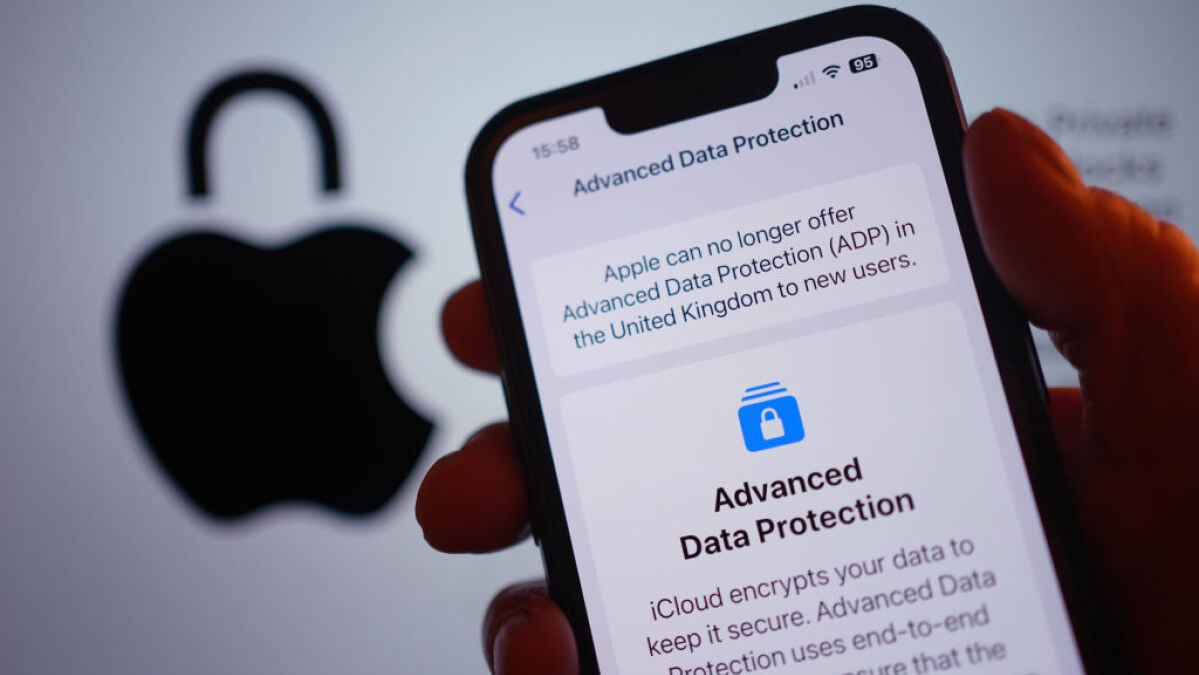
Apple has removed its strongest iCloud data protection for customers in the UK, as a refusal to comply with a government order demanding backdoor access to user data.
Apple has a security feature called Advanced Data Protection, which offers end-to-end data encryption of files and backups stored in iCloud — meaning only the owner can decrypt and access the data. But now, Apple users in the UK are left without this option because of a dispute between the tech giant and their government. According to The Washington Post, the UK government order demanded blanket access to Apple users’ encrypted iCloud data.
Instead of complying with the demands, Apple subsequently pulled the ADP tool altogether. “We have never built a backdoor or master key to any of our products or services and we never will,” Apple said in a statement to Bloomberg, which first reported the story.
UK-based users who haven’t enabled ADP will no longer be able to add this protection. Those who already have ADP enabled will be given a grace period to disable the setting and guidance on how to adjust to the privacy change, Apple told Mashable. Under default iCloud data protections, data from apps like Health, iMessage, Keychain are still end-to-end encrypted. You can see the full list here.
Mashable Light Speed
Apple’s decision leaves UK users’ data more vulnerable, as would have complying with the order. Removing access to their most advanced version of data protection voluntarily is Apple’s way of saying they won’t participate in granting access to private data for the sake of government oversight. Apple “remains committed to offering our users the highest level of security for their personal data and are hopeful that we will be able to do so in the future in the United Kingdom,” the statement continued.
Privacy and free speech advocates have praised the move for not bending to what they believe is an invasive law, which they say could establish a dangerous precedent for any government seeking access private data. “You can’t be tech-friendly while eroding the foundation of cybersecurity on which robust tech depends,” said Signal President Meredith Whittaker in a statement to Reuters. “Encryption is not a luxury – it is a fundamental human right essential to a free society that also happens to underpin the global economy.”
But still, the fact that Apple was forced to respond to the UK government in some way has users concerned about their suddenly vulnerable private data. The move has people wondering if its grounds for a breach of contract lawsuit, since privacy protection is a longstanding tent pole of Apple’s products and services.
Apple has a long history of battling over government requests for user data. Several times, the company has refused law enforcement requests to unlock the iPhones of suspected mass shooters, once in 2016, and another time in 2020.
UPDATE: Feb. 23, 2025, 2:19 p.m. EST This story has been updated to include statements from Apple.
Entertainment
Midjourney announces surprise purchase of popular horoscope app Co-Star

One of the world’s leading generative AI companies, with products licensed by tech powerhouses like Meta, has just announced its acquisition of one of the most popular astrology apps — and we didn’t have that on our Bingo cards in 2026.
Banu Guler, founder and CEO of Co-Star Astrology, took to X recently to announce her company’s acquisition by AI lab Midjourney, best known for making the generative AI tools used by popular services like Discord and Facebook. And because, on its surface, this is an odd acquisition to say the least, Guler went into some detail about the shared origins of these two companies:
This Tweet is currently unavailable. It might be loading or has been removed.
In a nod to the general public’s fear of artificial intelligence (a recent Reuters/Ipsos poll found that 71% of Americans worry that their job will be replaced by AI), Guler took pains to distinguish the Co-Star/Midjourney partnership by pointing to the shared interests she has with Midjourney founder David Holz as well as his lab’s commitment to “beauty, imagination, and supporting human thriving with technology.”
Mashable Light Speed
And to further reassure Guler’s users, most of whom are young and therefore no strangers to tech-induced anxiety, Midjourney used its announcement to reiterate that Guler would retain “complete control” of Co-Star.
But what does a generative AI company want with an astrology app?
Because of the company’s forays into health, including the development of a full-body ultrasonic scanner, as well as Midjourney Medical, a novel concept that would see the AI company create a series of spas focused around combining older technology (saunas, hot tubs and cold plunges) with the aforementioned ultrasonic scanning technology, it’s possible that this is just another step towards a more holistic approach to healthcare, a kind of mind-body-spirit gambit that would cover all our bases.
As a result of the partnership, Banu Guler will also become Midjourney’s new Chief Design Officer, so we should expect to see some of the seamless design touches that made Co-Star such a standout success incorporated into the Midjourney ecosystem.
Entertainment
Paramount agrees to delay merger with Warner Bros. after legal challenge
The prospective merger between entertainment giants Paramount and Warner Bros. has been officially delayed, prolonging the drama over what is proving to be an extremely controversial business decision.
Twelve states, led by California, and the Writers’ Guild of America have filed a lawsuit to block the $111 billion acquisition of Warner Bros. by Paramount Skydance, citing antitrust concerns, and a recent court order, voluntarily agreed to by Paramount, will see the merger delayed until either June 2027 or five days after the judge’s ruling, whichever comes first.
Amusingly, though, both sides of the case are claiming the delay as a victory. New York Attorney General Letitia James released a statement on Friday describing the delay as a “critical victory in our efforts to uphold the law and protect the film and television industry.” At the same time, California Attorney General Rob Bonta characterized the delay as a “tremendous win” and “great news for audiences, movie theaters, and the many people who write, build, and create the art, news, and entertainment so many of us enjoy.”
But a Paramount spokesperson told Variety that the company was also viewing the agreement as a victory: “Today’s agreement is a significant win because the result is exactly what we have sought from the outset: a direct path to a trial based on the evidence. This is the fastest and clearest way to prove that this transaction is good for competition, good for consumers, and good for creators, a conclusion dozens of competition authorities around the world have already reached.”
Mashable Top Stories
Any time two massive corporate entities merge, antitrust concerns arise. After all, LAMagazine has estimated that the two companies combine for roughly 34 percent of combined streaming viewership, which would give them significant control over industry practices. Concerned critics, who have mobilized behind the hashtag #BlockTheMerger, allege that this acquisition jeopardizes everything from fair hiring and wage standards to the artistic freedoms of creators, and it will be the job of the courts to assess these claims. But there’s another angle adding fuel to the fire: politics.
Paramount CEO David Ellison, son of Oracle founder Larry Ellison, is perceived to be sympathetic to President Donald Trump, whose own Justice Department approved the merger back in June. Meanwhile, Warner Bros. Discovery owns CNN, the media network most critical of the President, whom Trump has singled out for criticism and name-calling on numerous occasions.
Since David Ellison took over Paramount, the company has been accused of purging unfriendly CBS staffers and skewing coverage of the President in a favorable direction, as well as “spineless capitulation” in agreeing to a $16-million settlement with the President in his lawsuit against 60 Minutes.
In addition to the typical antitrust concerns, this merger also raises serious issues about freedom of the press, as more and more newsrooms end up in the hands of an ever-smaller number of media conglomerates. In other words, expect to hear a lot more about this deal in the near future.
Entertainment
We spent 12 months testing red light masks: Here are 6 that gave us real results (and 2 to skip)
How to choose a red light face mask: Look at wavelength first
There are some ways to tell that a red light face mask won’t be effective before you buy it and use it for a few months.
Wavelength is the first factor anyone will tell you to consider. You want to find products that emit light within the therapeutic window, or the range of wavelengths that can be effective when treating common skin conditions. There is now an abundance of evidence that specific wavelengths of red light can be effective for:
-
Reduction of fine lines, dark circles, and crow’s feet
-
Improving skin texture
-
Fighting wrinkles
-
Boosting collagen production
-
Reducing inflammation and redness
To be effective, the light coming from the mask must penetrate different layers of your skin. There are optimal wavelengths for each type of light a face mask emits, and any reputable brand will put their mask’s wavelengths front and center in the listing. These carefully chosen ranges are strong enough to penetrate your skin, but gentle enough to avoid over-activating delicate face skin.
Red light does its work in the middle layer (dermis) of your skin, requiring wavelengths between 630 and 633 nm to reach past the top layer. There, red light stimulates cells to produce rejuvenating proteins like collagen and elastin, evening out surface redness, and preventing scarring or post-pimple red spots.

The Shark CryoGlow’s Better Aging routine combines red and near-infrared light.
Credit: Leah Stodart / Mashable

The Shark CryoGlow’s Skin Clearing routine uses a special sequence of red, near-infrared, and blue light.
Credit: Leah Stodart / Mashable
Most red light masks also use near-infrared red light therapy, which requires longer wavelengths to travel further than regular red light. Near-infrared light between 830 and 850 nm reaches into tissue under the dermis to further stimulate cell turnover, firm skin, and heal deep-seated spots or stubborn dark circles.
What about blue light therapy?
Blue light is often used to target acne, and some of the best red light masks use a combination of blue and red light therapy.
Blue light operates on the top layer (epidermis) of your skin, so its ideal wavelength is shorter than either red light standard. Blue light at 415nm has an antimicrobial effect, ideally killing the bacteria that cause acne before a breakout starts. If hellbent bacterial acne makes it past the blue light phase — or if you’re also dealing with hormonal or cystic acne not caused by bacteria — red light swoops in to neutralize inflammation and speed up the healing process.
The thing is, most mainstream LED face masks hit those wavelength marks. So, how do you choose between masks if their wavelength numbers are all the same?
The importance of irradiance
Irradiance is another major element that determines whether or not a red light mask actually works. While wavelength refers to the length the light can travel, irradiance refers to the amount of light energy that’s actually reaching your skin per session (not just the intensity of light being generated at the bulb). If wavelength numbers are correct but irradiance is low, the mask will still be kind of a dud.

Bulb placement is one of the key factors we considered in our test.
Credit: Leah Stodart / Mashable

Comfort is another key factor, as consistent use is key to results.
Credit: Miller Kern / Mashable
Irradiance is officially expressed as milliwatts per square centimeter. The optimal irradiance range for a red light face mask is pretty wide (anywhere between 30 and 100 mW/cm²), though many brands don’t directly provide that number.
Most brands do note the length of each session, which is one way to quickly gauge irradiance without getting into calculations. Dr. Mamina Turegano sums it up best on her YouTube account: “Higher irradiance means more effective energy delivery per minute of use.” Longer sessions don’t automatically mean that results will be more powerful — a mask with sessions that last for less than 10 minutes has higher irradiance than a mask with sessions that last for 20 to 30 minutes. Since a mask with lower irradiance needs to sit on your face for longer, you might be less likely to keep up with wearing it.
Are bulb count and bulb placement a big deal?
The number of bulbs and the placement of bulbs inside the mask can also impact efficacy, especially if you’re expecting results on a specific area of your face. Masks with more bulbs packed evenly across the face will provide more even coverage across every inch of your face than masks with more sporadically-placed bulbs.
Some masks also provide more light sources overall by emitting both red and blue light simultaneously from every single bulb, like the Shark CryoGlow. This would be a better option for full-face acne prevention than masks with blue and red LEDs only concentrated in certain spots, like the Dr. Dennis Gross DRx SpectraLite.
What red light masks worked for us?
Of course, you probably didn’t come here for a science lesson. You want to find the best red light masks Mashable’s testers used and loved.
After trying out 11 different products, we ultimately found six that we can recommend. These masks delivered visible results for our product testers.
Remember: Consistency is essential for the best results (or any results)with LED face masks. You’ll need to wear your mask consistently for at least 1-2 months.

Midjourney announces surprise purchase of popular horoscope app Co-Star
Paramount agrees to delay merger with Warner Bros. after legal challenge


