
Entertainment
Another Major Delay Spells Doom For James Gunn’s DCU

By Chris Snellgrove
| Updated

When James Gunn’s DCU began with a Superman movie, many superhero fans had the same question: when are we going to see a team-up with Batman? Unfortunately, an onscreen collaboration between the World’s Finest seems increasingly farther away. Nobody has been officially cast as the DCU’s Batman, and his first movie doesn’t have a premiere date yet. Weirdly enough, that hasn’t kept Warner Bros. from greenlighting numerous projects focused on the Caped Crusader’s foes, including Clayface (releasing October 23) and a Deathstroke/Bane team-up film. Now, it seems like our odds of seeing Batman in the DCU have gotten worse with the surprise delay of a completely separate project.
Separate from James Gunn’s cinematic universe, Matt Reeves has continued working on the sequel to his 2022 hit film The Batman. The sequel was previously scheduled to be released on October 1, 2027, and fans were counting down the days until they’d see Robert Pattinson kicking butt and taking names once more. Unfortunately, the countdown just got longer: The Batman II has been officially delayed to February 18, 2028. This is actually the second delay for the movie, and one that may effectively endanger the DCU by forcing two different Dark Knights to compete against each other.
Dancing With The Delay In The Pale Moonlight

Fans of Matt Reeves’ The Batman are getting all too used to the sequel getting pushed back. Originally, the movie had a release date of October 2, 2026, but the studio delayed it until October 1, 2027, to give Reeves more time for postproduction. Now, it has been delayed until February 18, 2028, which gives the director even more time to polish the sequel. Nonetheless, the repeated delays have concerned some fans who worry that the film is a Supergirl-style stinker Reeves is trying to fix in post. Others worry that even if the film is great, making us wait over half a decade between sequels will kill any momentum the movie could have had.
DC Studios co-CEO James Gunn disagrees, of course. On Threads, he mentioned how several sequels achieved critical and commercial success despite a long wait between films. “7 years between Alien and Aliens. 14 years between Incredibles. 7 years between the first two Terminators. 13 years between Avatars. 36 years between Top Guns. And, of course, six years between Guardians Vol 2 and Vol 3.” While he has a point, it’s worth noting that several of his examples (including Aliens, Terminator 2, and The Incredibles 2) succeeded back before audiences were collectively hooked on the never-ending stream of new content from platforms like TikTok.
Will Audiences Respond To The Next Bat-Signal?
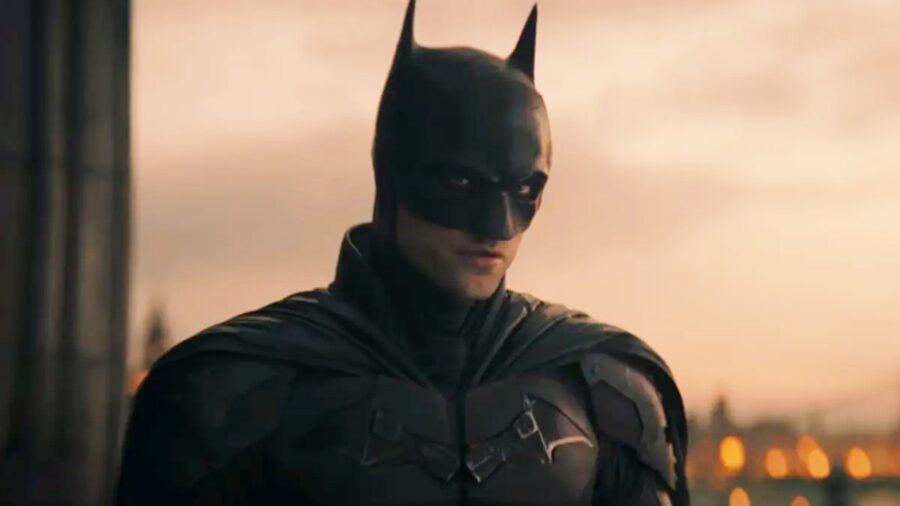
In other words, a huge wait between The Batman and The Batman II might be a turn-off for younger audiences more attuned to movies like Obsession and Backrooms, both of which were created by filmmakers who first achieved success on YouTube. The real elephant in the room, though, is that delaying Matt Reeves’ latest film may end up hurting the eventual Batman DCU film. Rumors have been swirling that Warner Bros. is trying to find the right actor for the role, and the failure of Supergirl may encourage the studio to focus on a new Dark Knight movie sooner rather than focusing on another relatively minor character.
If that happens, the DCU Dark Knight movie (Batman: The Brave and the Bold) could come out very soon after The Batman II; possibly less than a year later. Should this occur, one or both of the films are likely to suffer at the box office. For example, if mainstream audiences know that The Brave and the Bold is coming, they may avoid The Batman II, like audiences avoided Blue Beetle and The Flash when they knew the DCEU was coming to an end. Conversely, if Reeves’ sequel is really great, The Brave and the Bold may suffer from comparison, with fans wondering why the latest DCU film can’t be as good as what came before.

Batman is my absolutely favorite superhero, so I’d love to be wrong about this. In my perfect world, The Batman II will be even better than the original, and Batman: The Brave and the Bold will be the best film in the DCU. But the failure of Supergirl (which had very little to compete with) has underscored how fickle audiences can be when it comes to superhero cinema. Delaying The Batman II for over half a decade may very well sink that movie’s chances at the box office even as it sabotages the next film featuring the Caped Crusader. Forget the Joker: as it turns out, Batman’s greatest enemy may be studio interference!
Entertainment
Everything we expect from Samsung’s July event (Fold 8, watches, and glasses!)
Samsung’s next big event could reveal foldables, smartwatches, and its first Android XR glasses.
on
The biggest stories of the day delivered to your inbox.
Thanks for signing up. See you at your inbox!
Entertainment
AI just disproved a major math problem. A mathematician explains.
While the rest of the world was watching the World Cup on Sunday evening, mathematician Levent Alpöge casually announced on X that he had used Anthropic’s Fable 5 to disprove the Jacobian conjecture.
This Tweet is currently unavailable. It might be loading or has been removed.
The Jacobian conjecture is a long-standing open problem in algebraic geometry that’s bedeviled highly accomplished mathematicians for almost 90 years. It was included in “Smale’s problems,” a list of unresolved math problems put forward by mathematician Stephen Smale in 1998.
But that proved no obstacle for Fable 5, Anthropic’s latest frontier AI model. (You may remember Fable 5 as the public version of Claude Mythos Preview, the AI model that Anthropic says has such advanced cybersecurity capabilities that it was too dangerous for public release.)
Alpöge is part of Harvard’s Society of Fellows, and his Linkedin profile notes an affiliation with Anthropic. We’ve reached out to Anthropic with questions about Alpöge’s work.
Meanwhile, for those of us who don’t understand polynomial functions from n-dimensional space, the question is: Does this represent a major breakthrough in artificial intelligence, or mathematics, or neither?
“This did not cause me to update my priors about what AI can and can’t do,” professor and mathematician Andrew Blumberg told Mashable. “This is exactly the kind of thing I would expect AI to be able to do. If there was a counterexample that was concise and easy to state that people haven’t found because it’s a pain to search through all this stuff, AI will find it.”
Blumberg, who has a joint appointment in mathematics and computer science at Columbia University, is involved in the First Proof project, an effort to test the capabilities of frontier large language models in solving research-level mathematics. So, it’s safe to say he understands mathematics and AI better than most of us.
Mashable Light Speed
‘You want to learn something from the answer’
Providing a counterexample to the Jacobian conjecture is still a significant achievement for AI in mathematics, Blumberg notes. But he also says there’s a big difference between providing a positive proof for a major math problem and providing a single counterexample that disproves it. Here’s the metaphor Blumberg used to explain.
“Suppose that Moses came down from the mountain with tablets, and on the tablet was written, ‘Cancer can be cured.’ Would you care? You don’t just want the answer to the question. You want to learn something from the answer. And the reason Smale thought this problem was important is because he thought that if we solved it, we would understand more things about the about the way nature is structured.”
In other words, Blumberg says, “this counterexample tells us essentially nothing. It’s just, you know, there are a lot of polynomials, and it’s hard for people to check them all, but it’s not hard for machines.”
The Jacobian conjecture isn’t the only math problem AI has tackled in recent months. OpenAI announced in May an “internal model” had disproved the Erdős unit distance conjecture, a central conjecture in discrete geometry.
However, in that case, the result was more productive, Blumberg says. That’s because OpenAI didn’t just provide a counterexample — but a disproof of the problem itself.
“The disproof there already has led to interesting things because experts in the area unpacked what was going on in the disproof and then used it to do other things,” Blumberg says.
And that’s not necessarily the case with the Jacobian conjecture counterexample, he adds — while conceding he’s not expert enough to see if there’s something special about the structure of the counterexample that we can learn from. “But it’s not in and of itself interesting.”
Disclosure: Ziff Davis, Mashable’s parent company, in April 2025 filed a lawsuit against OpenAI, alleging it infringed Ziff Davis copyrights in training and operating its AI systems.
Entertainment
macOS 27 Beta has a secret Siri AI interface. How to try it.
You’ve waited long enough for Apple’s relaunch of Siri as an AI assistant, and now you can finally try out the Siri AI beta for iOS. But, psst, don’t tell anyone, but there’s even more Siri AI for you to try out with a secret Siri AI interface on Mac.
A Reddit user on the r/MacOSBeta subreddit has discovered a “hidden lightweight UI” for Siri AI in the macOS 27 Golden Gate beta. This feature basically provides users with an array of AI tools, presented in a pop-up menu whenever text is highlighted.
The Siri AI pop-up interface includes AI tools such as Rewrite, Proofread, “How does this sound?,” and “Edit with Siri.” There are also menu options for summarization and providing bullet points from the selected text.
Siri AI can also provide a selection of specific tools dependent on the context of what’s selected. For example, highlighting a phone number provides a pop-up to “Add to contacts” or when selecting an address the pop-up offers an “Open in Maps” option. There are tools for creating calendar events, composing messages and emails, and tracking flights and packages as well.
Why is the feature hidden? Well, as MacRumors points out, the Siri AI interface in macOS 27 developer beta 3 and public beta 1 is simply an unfinished product. Certain features don’t yet work how they’re supposed to. Some options don’t work at all. Clearly, Apple has yet to make it available because it’s simply not ready.
Mashable Light Speed
However, Reddit users say there is a way to turn the interface on in the macOS Golden Gate Beta. According to Redditor pdfu, if users running the macOS 27 beta simply need to open up the Terminal and input a few lines of code.
Please note: We do not recommend running terminal instructions or changing important OS files unless you fully understand what you’re doing. We have not tested these terminal instructions, so proceed at your own risk.
sudo mkdir -p /Library/Preferences/FeatureFlags/Domain && sudo defaults write /Library/Preferences/FeatureFlags/Domain/WritingTools LightweightUI_macOS -dict Enabled -bool true
After that, the Reddit threat instructs users to restart their computer and the Siri AI interface will be enabled.
If you’ve had enough of the unfinished interface, you can turn it back off by once again opening Terminal and the following input:
sudo defaults write /Library/Preferences/FeatureFlags/Domain/WritingTools LightweightUI_macOS -dict Enabled -bool false
It’s unclear if the Siri AI interface will launch with the official version of the new macOS. However, it’s certainly interesting to see Apple further brand its Siri AI relaunch as an all-in-one AI tool across the company’s products.

Twins, Guardians each seek cleaner baseball entering series
Red Sox welcome O's with eyes on 14th straight win


