
Tech
Android phones are getting more anti-theft features

Google on Tuesday announced an expanded set of Android theft-protection features, designed to make its mobile devices less of a target for criminals. Building on existing tools like Theft Detection Lock, Offline Device Lock, and others introduced in 2024, the newly launched updates include stronger authentication safeguards and enhanced recovery tools, the company said.
While iPhones are often the preferred targets for thieves because of their resale value, Android devices are also subject to theft. That’s particularly true for high-end Android smartphones like the Google Pixel Pro devices, premium foldables, and other top devices from well-known makers like Samsung.

With the new features, users of Android devices running Android 16 or higher will have more control over the Failed Authentication Lock feature that automatically locks the device after an excessive number of failed login attempts. Now users will have access to a dedicated on/off toggle switch in the device’s settings.
The devices will also offer stronger protection against a thief trying to guess a device owner’s PIN, pattern, or password by increasing the lockout time after failed attempts. Plus, Identity Check, a feature rolled out for Android 15 and higher last year, now covers all features and apps that use biometrics — like banking apps or the Google Password Manager.
Remote Lock, a tool that lets you lock a lost or stolen device from a web browser, will now include an optional security challenge or question. With this feature, available to Android 10+, only the real device owner can initiate the lock for added security.
In Brazil, two theft protection features will now be enabled by default, including the Theft Detection Lock, which uses on-device AI to sense motion that could indicate a “snatch-and-run” theft. The Remote Lock feature will also be automatically turned on and accessible from the website android.com/lock.
Tech
India makes Aadhaar more ubiquitous, but critics say security and privacy concerns remain
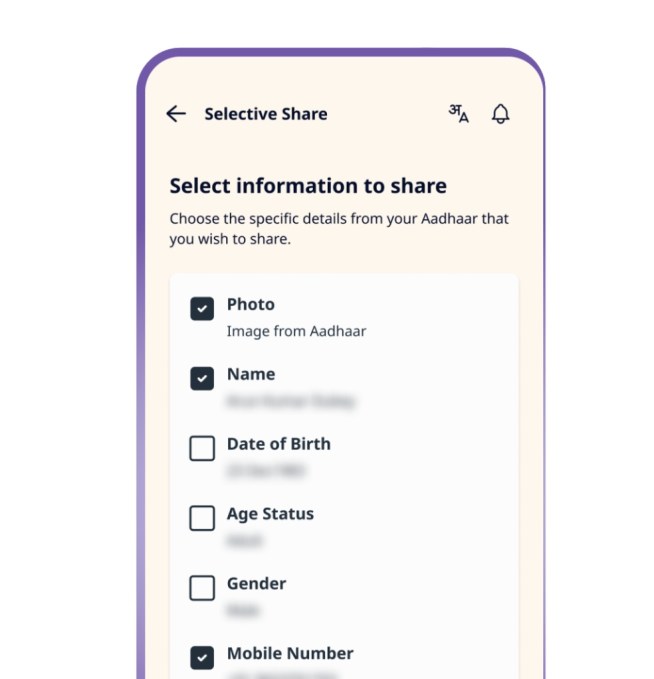
India is pushing Aadhaar, the world’s largest digital identity system, deeper into everyday private life through a new app and offline verification support, a move that raises new questions about security, consent, and the broader use of the massive database.
Announced in late January by the Indian government-backed Unique Identification Authority of India (UIDAI), the changes introduce a new Aadhaar app alongside an offline verification framework that allows individuals to prove their identity without real-time checks against the central Aadhaar database.
The app allows users to share a limited amount of information, such as confirming that they are over a certain age rather than revealing their full date of birth, with a range of services, like hotels and housing societies to workplaces, platforms, and payment devices, while the existing mAadhaar app continues to operate in parallel for now.
Alongside the new app, UIDAI is also expanding Aadhaar’s footprint in mobile wallets, with upcoming integration with Google Wallet and discussions underway to enable similar functionality in Apple Wallet, in addition to existing support on Samsung Wallet.

The Indian authority is also promoting the app’s use in policing and hospitality. The Ahmedabad City Crime Branch has become the first police unit in India to integrate Aadhaar-based offline verification with PATHIK, a guest-monitoring platform launched by the police department, aimed at hotels and guest accommodations to record visitors’ information.
UIDAI has also positioned the new Aadhaar app as a digital visiting card for meetings and networking, allowing users to share selected personal details via a QR code.
Officials at the launch in New Delhi said these latest efforts are part of a broader effort to replace photocopies and manual ID checks with consent-based, offline verification. The approach, they argued, is meant to give users more control over which specific identity information they want to share, while enabling verification at scale without having to query Aadhaar’s central database.
Techcrunch event
Boston, MA
|
June 23, 2026
Early uptake on top of massive scale
While UIDAI formally launched the new Aadhaar app last month, it had been in testing since earlier in 2025. Estimates from Appfigures show that the app, which appeared in app stores toward the end of 2025, quickly overtook the older mAadhaar app in monthly downloads.
Combined monthly installs of Aadhaar-related apps rose from close to 2 million in October to nearly 9 million in December.
The new app is being layered onto an identity system that already operates at enormous scale considering India’s population. Figures published on UIDAI’s public dashboard show that Aadhaar has issued more than 1.4 billion identity numbers and handles roughly 2.5 billion authentication transactions each month, alongside tens of billions of electronic “know your customer” checks since its launch.
The shift toward offline verification does not replace this infrastructure so much as extending it, moving Aadhaar from a largely backend verification tool into a more visible and everyday interface.
At the app’s launch, UIDAI officials said the move toward offline verification was intended to address long-standing risks associated with physical photocopies and screenshots of Aadhaar documents, which have often been collected, stored, and circulated with little oversight.
The expansion comes at a time of regulatory changes, easing restrictions, and a new framework (PDF), with UIDAI now allowing some public and private organizations to verify Aadhaar credentials without querying the central database.
Consent, accountability, and unresolved risks
Civil liberties and digital rights groups say those legal changes do not resolve Aadhaar’s deeper structural risks.
Raman Jit Singh Chima, senior international counsel and Asia Pacific policy director at Access Now, said the expansion of Aadhaar into offline and private-sector settings introduces new threats, particularly at a time when India’s data protection framework is still being put in place.
Chima questioned the timing of the rollout, arguing that the federal government should have waited for India’s Data Protection Board to be established first, and allow for independent review and wider consultation with affected communities.
“The fact that this has gone ahead at this point of time seems to indicate a preference to continue the expansion of the use of Aadhaar, even if it is unclear in terms of the further risks that it might pose to the system, as well as to the data of Indians,” Chima told TechCrunch.
Indian legal advocacy groups also point to unresolved implementation failures.
Prasanth Sugathan, legal director at New Delhi-based digital rights group SFLC.in, said that while UIDAI has framed the app as a tool for citizen empowerment, it does little to address persistent problems, such as inaccuracies in the Aadhaar database, security lapses, and poor mechanisms for redress, which have disproportionately affect vulnerable populations.
He also cited a 2022 report by India’s Comptroller and Auditor General, which found UIDAI had failed to meet certain compliance standards.
“Such issues can often result in disenfranchisement of people, especially those who were meant to be benefited by such systems,” Sugathan told TechCrunch, adding that it remains unclear how data shared through the new app would prevent breaches or leaks.
Campaigners associated with Rethink Aadhaar, a civil society campaign focused on Aadhaar-related rights and accountability, argue that the offline verification system risks reintroducing private-sector use of Aadhaar in ways the Supreme Court has already explicitly barred.
Shruti Narayan and John Simte of the group said enabling private entities to routinely rely on Aadhaar for verification amounts to “Aadhaar creep”, normalizing its use across social and economic life despite a 2018 judgment that struck down provisions allowing private actors to use Aadhaar to verify people’s information. They warned that consent in such contexts is often illusory, particularly in situations involving hotels, housing societies, or delivery workers, while India’s data protection law remains largely untested.
Together, the new app, regulatory changes, and expanding ecosystem are shifting Aadhaar from a background identity utility into a visible layer of daily life that is increasingly hard to avoid. As India doubles down on Aadhaar, governments and tech companies are watching closely, attracted by the promise of population-scale identity checks.
The Indian IT ministry and UIDAI CEO did not respond to requests for comments.
Tech
Tem raises $75M to remake electricity markets using AI
As AI data centers drive up electricity prices, London-based startup Tem thinks AI might be able to help solve it, too.
Tem has built an energy transaction engine that relies on AI to cut prices relative to other energy traders. The company has signed up more than 2,600 business customers throughout the U.K. on the promise that buying energy from its utility division can save them up to 30% on their energy bills.
The startup recently closed an oversubscribed $75 million Series B led by Lightspeed Venture Partners with participation from AlbionVC, Allianz, Atomico, Hitachi Ventures, Revent, Schroders Capital, and Voyager Ventures, TechCrunch has exclusively learned.
The round values Tem at more than $300 million, a source familiar with the deal told TechCrunch. The startup plans to use the funding to help expand to Australia and the U.S., starting with Texas.
“We’re in a nice position where we kind of have control over our own profitability. So I could have chosen not to raise at all and had a lovely, nice bootstrap business in some ways,” Joe McDonald, co-founder and CEO of Tem, told TechCrunch. “Well, we’re not that kind of business. We know what we want to achieve as someone who wants to go public over the years.”
Tem is a classic marketplace play, matching electricity generators with consumers. The company intentionally started by focusing almost exclusively on renewable energy generators and small businesses to fill both sides of the ledger. “The more decentralized and the more distributed, the better it is for the algorithms,” McDonald said. “But this works all the way up to enterprise.”
The company’s customers include fast-fashion retailer Boohoo Group, soft drink company Fever-Tree, and Newcastle United FC.
Techcrunch event
Boston, MA
|
June 23, 2026
Currently, Tem is running what amounts to two different businesses. One, called Rosso, is the transaction engine that matches suppliers with buyers. Here, machine learning algorithms and LLMs help predict supply and demand.
The goal with Rosso, McDonald said, is to cut costs by eliminating several layers that are present in current energy markets. “In each of them, you’ve got different teams doing different jobs, taking different levels of profit from back office to trading, trading desks to other trading desks, and probably five to six intermediaries in total that enable the flow of money to move from one side to the other,” he said.
With AI, he said, “you now have an opportunity to replace the humans, the labor costs, and the disparate systems into one single transaction infrastructure.” The goal is to make the price that customers pay for electricity closer to the wholesale cost.
The other part of Tem, called RED, is a “neo-utility” built to prove the value of Rosso.
“When we first started, we tried to sell our infrastructure to the energy companies, and we got nowhere,” he said. RED is currently the only utility using Rosso, and McDonald said its growth has pushed the company to prioritize it over opening Rosso to others.
At some point, though, Tem plans to allow other utilities in.
“In reality, it doesn’t matter how good [RED] is; it’s not going to get above a 40% market share. And it shouldn’t, because that becomes a monopoly in itself. So, me, I’d much rather go to get access to all the transaction flow,” McDonald said.
“Long term, we really don’t mind who owns the customer, who owns the generation as long as our infrastructure is being used,” he said. “This is just an infrastructure play in the same way AWS was, or Stripe was.”
Tech
The first signs of burnout are coming from the people who embrace AI the most

The most seductive narrative in American work culture right now isn’t that AI will take your job. It’s that AI will save you from it.
That’s the version the industry has spent the last three years selling to millions of nervous people who are eager to buy it. Yes, some white-collar jobs will disappear. But for most other roles, the argument goes, AI is a force multiplier. You become a more capable, more indispensable lawyer, consultant, writer, coder, financial analyst — and so on. The tools work for you, you work less hard, everybody wins.
But a new study published in Harvard Business Review follows that premise to its actual conclusion, and what it finds there isn’t a productivity revolution. It finds companies are at risk of becoming burnout machines.
As part of what they describe as “in-progress research,” UC Berkeley researchers spent eight months inside a 200-person tech company watching what happened when workers genuinely embraced AI. What they found across more than 40 “in-depth” interviews was that nobody was pressured at this company. Nobody was told to hit new targets. People just started doing more because the tools made more feel doable. But because they could do these things, work began bleeding into lunch breaks and late evenings. The employees’ to-do lists expanded to fill every hour that AI freed up, and then kept going.
As one engineer told them, “You had thought that maybe, oh, because you could be more productive with AI, then you save some time, you can work less. But then really, you don’t work less. You just work the same amount or even more.”
Over on the tech industry forum Hacker News, one commenter had the same reaction, writing, “I feel this. Since my team has jumped into an AI everything working style, expectations have tripled, stress has tripled and actual productivity has only gone up by maybe 10%. It feels like leadership is putting immense pressure on everyone to prove their investment in AI is worth it and we all feel the pressure to try to show them it is while actually having to work longer hours to do so.”
It’s fascinating and also alarming. The argument about AI and work has always stalled on the same question — are the gains real? But too few have stopped to ask what happens when they are.
Techcrunch event
Boston, MA
|
June 23, 2026
The researchers’ new findings aren’t entirely novel. A separate trial last summer found experienced developers using AI tools took 19% longer on tasks while believing they were 20% faster. Around the same time, a National Bureau of Economic Research study tracking AI adoption across thousands of workplaces found that productivity gains amounted to just 3% in time savings, with no significant impact on earnings or hours worked in any occupation. Both studies have gotten picked apart.
This one may be harder to dismiss because it doesn’t challenge the premise that AI can augment what employees can do on their own. It confirms it, then shows where all that augmentation actually leads, which is “fatigue, burnout, and a growing sense that work is harder to step away from, especially as organizational expectations for speed and responsiveness rise,” according to the researchers.
The industry bet that helping people do more would be the answer to everything, but it may turn out to be the beginning of a different problem entirely. The research is worth reading, here.


Toumani Camara's career night boosts Blazers past Sixers

With each team missing top scorer, Thunder push past Lakers


