
Entertainment
Sports Illustrated Swimsuit Model Cosplays As Ugly Misfit In Raunchy 80s Sci-Fi Adventure

By Robert Scucci
| Updated

Back in the 80s, being ugly on screen basically meant throwing a pair of glasses and some baggy clothes on a smokin’ hot babe. The most blatant case of this, at least to my knowledge, is 1988’s Alien from L.A., starring Kathy Ireland, who not only appeared in 13 consecutive Sports Illustrated swimsuit issues, but also landed on the cover three times.
In the movie, which plays like a strange combination of The Wizard of Oz and Journey to the Center of the Earth, our hero sets out to find the lost city of Atlantis, rescue her missing father, overcome her alleged homeliness, and show her surface-dwelling ex-boyfriend what he’s missing out on, all before riding off into the sunset on her new dude’s motorcycle.

Ironically, Alien from L.A., a direct-to-VHS outing, was followed by its straight-to-video sequel, Journey to the Center of the Earth (1989). After watching this one, I don’t think I’ll be watching that one. But it exists, and both titles are streaming on Tubi, so you can do whatever you want with that information.
These Glasses Are Holding Me Back!

Alien from L.A. is insulting to your intelligence in just about every way. We’re introduced to Wanda Saknussemm (Kathy Ireland), a woman who clearly hits the gym nine days a week, has long, flowing hair, and legs for days. If only it weren’t for those pesky glasses that are supposed to convince the viewer she’s a dud, as if no mortal man has ever fantasized about a sexy librarian. She also speaks in an incredibly squeaky voice that becomes a running joke.
Anyhow, her boyfriend Robbie (Don Michael Paul) dumps her for not being adventurous, whatever that means, and this sends our covert hottie on a soul-searching excursion to Zamboanga, North Africa, in search of her long-lost father, Professor Arnold Saknussemm (Richard Haines). As the legend goes, Arnold disappeared while searching for the lost city of Atlantis, claiming the city is of alien origin.

While digging through her father’s belongings, Wanda falls into a seemingly bottomless pit and eventually ends up in a strange underground society inhabited by miners who have never breached the surface. Though these inhabitants look just like humans, they refer to Wanda as an alien. Soon enough, she learns what’s truly at stake, but only after a bounty is placed on her head for invading their community.
What follows is a series of events involving a miner named Gus (William R. Moses), a shadowy government conspiracy led by General Rykov (Janie Du Plessis) tied to her imprisoned father, a steady stream of jokes about Wanda’s squeaky voice (it’s an affectation, she can stop talking like this whenever she wants), and a hunky rogue agent named Charmin’ (Thom Mathews).
Truly Terrible, But Also Kind Of Fun

After sitting through Alien from L.A., I’m still not sure what to make of it. It’s contrived, overtly campy, and the hero’s journey never fully clicks. When the film finally wraps, Robbie sees Wanda in a bikini and suddenly realizes he was dating a stone cold fox the entire time. Of course, this happens after Wanda wakes up from her “dream” and, in a clear callback to The Wizard of Oz, says as much.
If the movie has anything going for it, it’s the set design, which is actually pretty neat in that kitschy, low-budget way. Think foam rock formations with dry ice pumping behind them, along with some surprisingly fun city shots that give everything a cartoony vibe. Throw in Deep Roy’s Mambino character with the comically long eyelashes that are never explained, and you’ve got a bizarre viewing experience that won’t teach you anything new and might actually make you a little dumber in the process.


As of this writing, you can stream Alien from L.A. and its sequel, Journey to the Center of the Earth, for free on Tubi.
Entertainment
The '90s Dark Sci-Fi Thriller Cult Classic Saved By Its Director's Cut
By Jason Collins
| Published
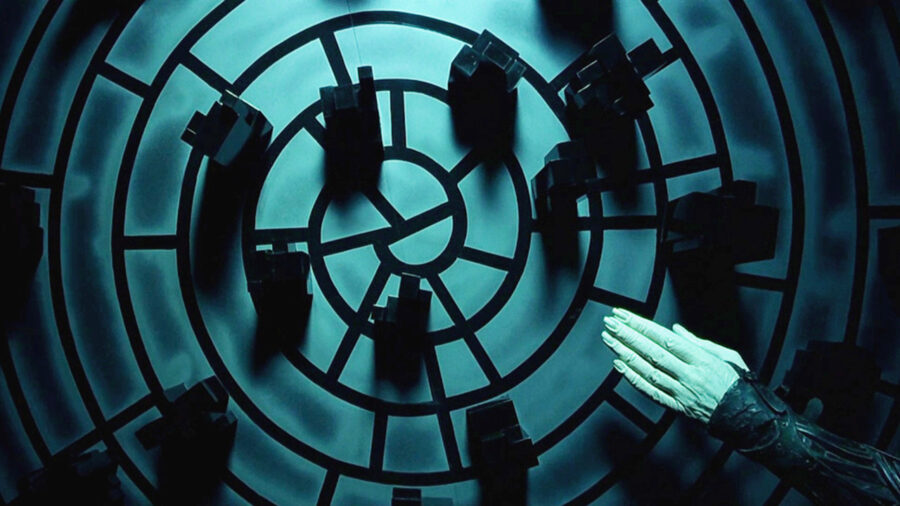
The removal of content from streaming, or the absence of definitive versions, underscores the importance of media preservation. That now applies to Dark City, the 1998 neo-noir sci-fi thriller about an amnesiac man trying to recover his identity while hunted for a series of murders. The theatrical cut is available to stream for free, but if you want to watch the superior Director’s Cut, you’ll have to rent or purchase the title on-demand.
A Dystopian City Ruled By The Strangers
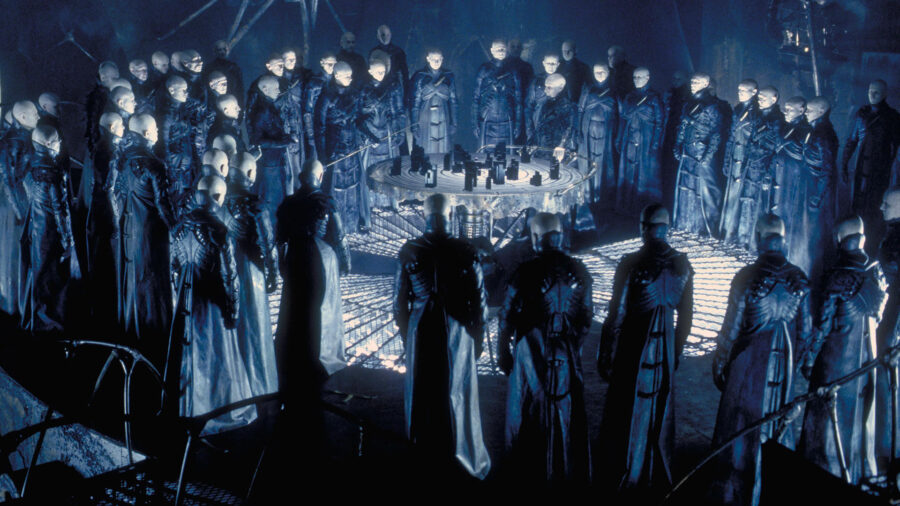
Dark City’s narrative is set in a dystopian city that is perpetually shrouded in darkness and controlled by a mysterious group known as the Strangers, beings that possess the ability to alter reality and reshape the city and its inhabitants’ memories at will.
The protagonist, John Murdoch (Rufus Sewell), wakes up with no memories and finds himself accused of murder, which sets him on a quest to uncover his past and the city’s darkest secrets and horrifying truths about his reality and Strangers’ manipulations.
Dark City Was Doomed At The Box Office

Dark City’s theatrical release was marred by studio interference from New Line Cinema, which diluted its thematic complexity and sense of mystery. Most notably, the studio insisted on an opening narration that prematurely explained many of the film’s biggest reveals, undercutting its suspense and intrigue.
Coupled with a marketing campaign that failed to convey the film’s unique blend of noir and sci-fi accurately, these interventions contributed to its initial lack of success among critics and audiences.
How The Director’s Cut Saved The Film

Something similar happened with Highlander II: The Quickening, which was also nearly completely ruined by its production studio, investors, and completion bond company. However, similar to Highlander II, Dark City was also saved by its Director’s Cut edition by removing the opening narration and restoring the film’s intended sense of mystery. The added scenes also deepened character development and clarified the narrative further, which significantly improved the audiences’ perception of the movie.
The added changes to the film transformed Dark City from a misunderstood gem into a cult classic that’s now appreciated for its bold narrative and visuals. Not to mention that some of its themes, such as the loss of individuality and the manipulation of reality, have become more relevant with time, particularly now, with the rising concerns about technology and privacy.
Without The Director’s Cut, It Might As Well Be Radio
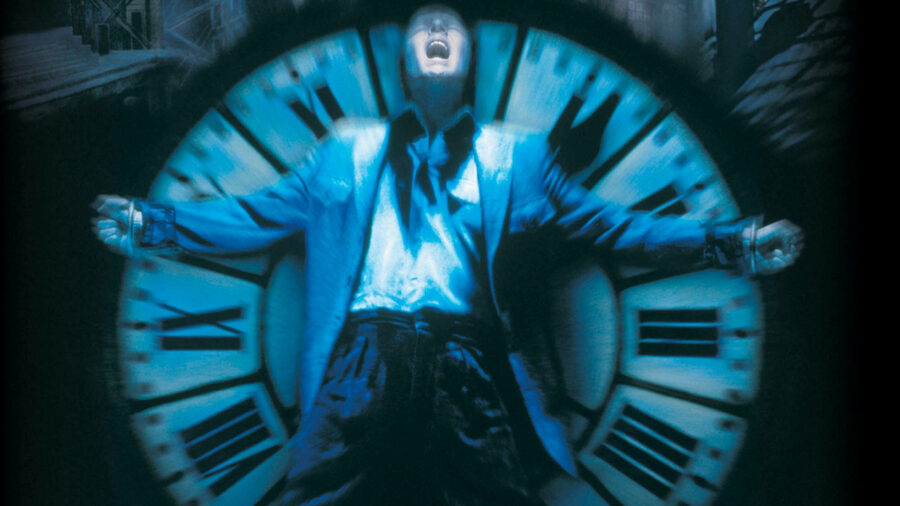
The improvement introduced with the Director’s Cut propelled Dark City into a Certified Fresh rating on Rotten Tomatoes. As of this writing, the film has a 78 percent critical score against an 85 percent approval rating on the Popcornmeter.
Yet, despite its acclaim, the definitive version remains relatively inaccessible. While the theatrical cut is available to stream for free on Tubi, the superior Director’s Cut is still locked behind on-demand purchases, making the film’s best version harder for casual viewers to discover.
Despite its immense quality, Dark City continues to elude many viewers because the version most deserving of its cult reputation isn’t the one most people are likely to stumble across.
Entertainment
The 2000s Sci-Fi Space Adventure Epic That Destroyed An Entire Studio
By Charlene Badasie
| Published

Titan A.E. is an animated sci-fi action adventure directed by Don Bluth and Gary Goldman. Released in 2000, it was a major project for Fox Animation Studios. But despite its ambitious scope and visual appeal, the film was a commercial failure, earning $36.8 million at the box office against a budget of almost $90 million. So, the studio closed its doors, and the movie became infamous as a result.
Leaving In The Titan

Titan A.E. tells the story of a young man named Cale Tucker (Matt Damon) who is tasked with saving humanity after a hostile alien species destroys Earth. The movie begins in 3028 when The Titan Project becomes the target of a hostile alien race called the Drej. Made of pure energy, the aliens fear that the ambitious Earthly undertaking will allow humans to challenge their power.
The Drej eventually launch a massive attack on Earth, forcing humans to evacuate the planet. Amid the chaos, Professor Sam Tucker (Ron Perlman) leaves his son Cale with his alien friend Tek (Tone Loc).

Before leaving in the Titan spaceship, Sam gives Cale a gold ring and tells him that as long as he wears it, there will be hope for humanity. Over a decade later, Titan A.E. finds the surviving humans living as refugees without a home planet.
Meanwhile, Cale has become jaded and works in a space station salvage yard. Former military officer and trusted companion of Cale’s father, Joseph Korso (Bill Pullman), finds Cale and reveals that the whereabouts of the Titan are hidden in his ring.
Becoming Fast Friends
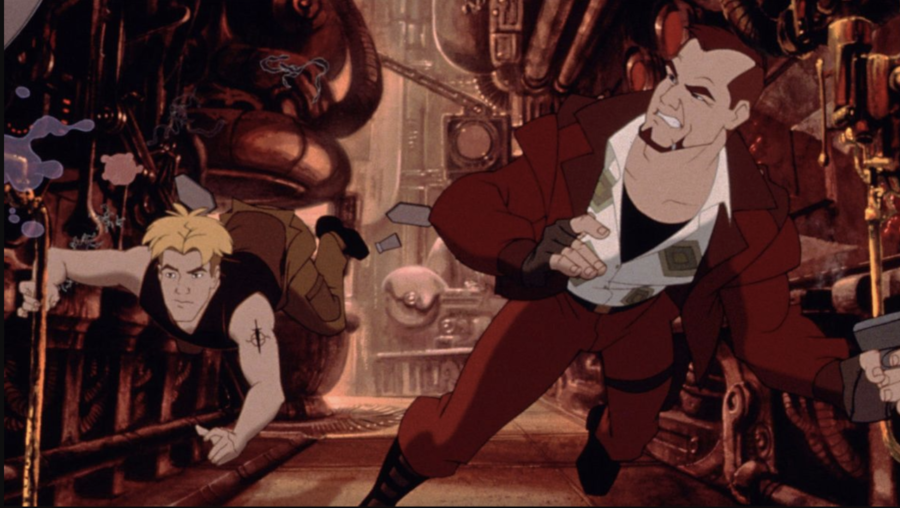
Upon activating it, a holographic map opens. Korso asks Cale to accompany his crew to Valkyrie so they can search for the Titan together. Cale agrees and becomes fast friends with pilot Akima Kunimoto (Drew Barrymore) and three alien crew members, including first mate Preed (Nathan Lane), weapons officer Stith (Janeane Garofalo), and scientist Gune (John Leguizamo).
Using Cale’s map, they reach the planet Sesharrim, where the Gaoul reveals the Titan’s location. But everything is not as it seems in Titan A.E., as the map often changes. The crew of the Valkyrie is also faced with various challenges, including a kidnapping and a shocking betrayal that takes the story to a new level.
The Deathblow To Fox Animation Studios

Originally planned as a live-action movie named “Planet Ice,” Titan A.E. was brought to life as an animated feature due to the high costs of the visuals.
Ben Edlund penned the initial script, with John August handling re-writes. With a budget of $55 million and 19 months to complete after $30 million had already been spent on pre-production, much of the animation was computer-generated, with traditional animation used for the main characters. Despite various setbacks, like studio cutbacks and executive changes, the film was released in 2000.

However, the closure of Fox Animation Studios shortly after hindered its promotion and distribution. In fact, cutbacks at the studio during the making of Titan A.E. were largely responsible for the movie underperforming. It kind of all went wrong at once here.
Still, Titan A.E. made almost $9.4 million in its opening weekend, ranking fifth behind other popular films. However, its audience dropped by 60 percent the following weekend.
Streaming Titan A.E.

Titan A.E. received mixed reviews from critics and currently holds a 51 percent approval rating on review aggregator Rotten Tomatoes alongside a 61 percent audience score.
The movie’s DVD release featured extras like commentary by the directors, deleted scenes, and a music video. Titan A.E. is available via various video-on-demand platforms such as YouTube, Apple TV+, Amazon Prime Video, and Fandango at Home.
Entertainment
Im watching the British GP for free this weekend — how to live stream F1 for free
TL;DR: In the UK, Channel 4 will be providing live coverage of the 2026 British Grand Prix for free. In the U.S., sign up for a 7-day free trial of Apple TV+ through Prime Video Channels to watch select F1 races for free.
Watch the British GP for free with a 7-day trial
The Austrian GP offered another thrilling weekend of racing from the best drivers in the world. George Russell came out on top after holding off the advances of Verstappen and Antonelli. Ferrari and McLaren constantly swapped positions just behind in what was one of the most interesting GPs of the season.
Will we get more of the same from the British GP? We certainly hope so.
If you want to watch F1 2026 for free from anywhere in the world, we’ve got all the information you need.
When is the British GP?
The British GP is the ninth race of the 2026 F1 season. Here’s the full schedule from Silverstone:
-
Practice 1 — 7:30-8:30 a.m. ET on July 3
-
Sprint Qualifying — 11:30 a.m. to 12:14 p.m. ET on July 3
-
Sprint — 7-8 a.m. ET on July 4
-
Qualifying — 11 a.m to 12 p.m. ET on July 4
-
Race — 10 a.m. ET on July 5
Fans can follow all the action from this race weekend without spending anything.
How to watch the British GP for free
It’s important to note that Channel 4 will be providing live coverage of the 2026 British Grand Prix for free in the UK. That’s nice and easy for fans in the UK.
If you’re based in the U.S., you’ll need to take a few additional steps to watch this race weekend for free.
I subscribe to Amazon Prime. I subscribe for the fast shipping, exclusive Prime Day deals, and access to Prime Video. It’s the access to Prime Video that becomes all-important for F1 fans.
It is now possible to sign up for a seven-day free trial of Apple TV+ through Prime Video Channels. F1 is exclusive to Apple TV in the U.S., so by accessing this free trial, you can watch select races for free this season. The subscription costs £9.99 per month after the trial ends, but you can cancel this renewal at any time. By cancelling ahead of the renewal, you can watch the British GP this weekend without spending anything.
Mashable Deals
I understand the argument that I’m not really watching for free because I subscribe to Amazon Prime. I get that, but Amazon Prime does offer a 30-day free trial period if you’re new to the service. By signing up for this free trial and then gaining access to Apple TV through Prime Video Channels, you can truly watch select races for free this season.
If you’ve already used this hack to watch a race this season, there are some alternatives.
My recommendation is to go direct to Apple TV. This popular steaming service comes with a seven-day free trial for new subscribers. Alternatively, Apple One bundles Apple TV with Apple Music, Apple Arcade, Apple Fitness Plus, Apple News Plus, and 50GB of iCloud Storage for $19.95 per month after a one-month free trial.
The best Apple TV free-trial offer comes with purchases of new Apple devices. New subscribers can get three months of Apple TV for free after purchasing any eligible Apple product. If you’re planning on buying something from Apple, you could gain access to Apple TV for a pretty large chunk of this season. You will obviously need to buy something, but if you were already in the market for an upgrade, this method makes a lot of sense.
How to live stream 2026 F1 for free in 2026
Best Apple TV Deal
Apple TV
7-day free trial


Best Apple One Deal
Apple One
30-day free trial


Williams sisters to play doubles Saturday at Wimbledon
Tigers' Jack Flaherty, Rangers' Kumar Rocker have momentum after rough starts to season


