
Entertainment
Did Star Trek’s Best Series Secretly Doom The Franchise?

By Chris Snellgrove
| Published

Star Trek: Deep Space Nine is considered the best show in the franchise by many fans, myself included. The show focused on extensive characterization, long-running arcs, and fairly dark plots, including the Dominion War story that dominated the last two seasons. Decades later, NuTrek shows like Discovery, Picard, and Starfleet Academy fizzled, leaving the frustrated fandom to ask a simple question: why can’t these newer shows be more like Deep Space Nine?
However, here’s a troubling fact: NuTrek sucked so much precisely because the creators were trying to make shows like DS9. Obviously, they didn’t do a very good job, mostly because executive producer Alex Kurtzman is a complete hack. But if you pound a few shots of Romulan Ale and squint, you can see that the architects of NuTrek went all-in on the idea of creating “darker” Star Trek shows in a failed attempt to recapture the magic of what made Deep Space Nine so special.
Star Trek Into Darkness

Deep Space Nine is considered the dark (if not the darkest) Star Trek show for many reasons. It doesn’t feature the squeaky-clean heroes of The Next Generation; instead, our heroes include a former terrorist (Kira), a former spy (Garak), and an angry widower who ends up becoming a reluctant Space Jesus (Sisko). His chief foe is basically Trek’s closest analog to Adolf Hitler (Gul Dukat). Even the relatively “normal” characters get dark backgrounds and plots. For example, fresh-faced medical prodigy Dr. Bashir is revealed to be a Khan-like augmented human. Affable everyman O’Brien, meanwhile, gets physically and mentally tortured at least once a season.
The show also used its Dominion War arc to test the boundaries of Star Trek’s endless idealism. Sisko becomes an accessory to a murder, but he never admits it because this act finally gets the Romulans to join the war. He also discovers that Starfleet has a secret wetworks division known as Section 31, which handles everything from assassinations to genocides. Odo gets so distracted by shapeshifter sex that he becomes a collaborator with monsters (again). Oh, and Worf murders Gowron (with Sisko’s blessing!) so he can install his buddy as Chancellor of the Klingon Empire.
NuTrek Is An Edgerlord’s Paradise
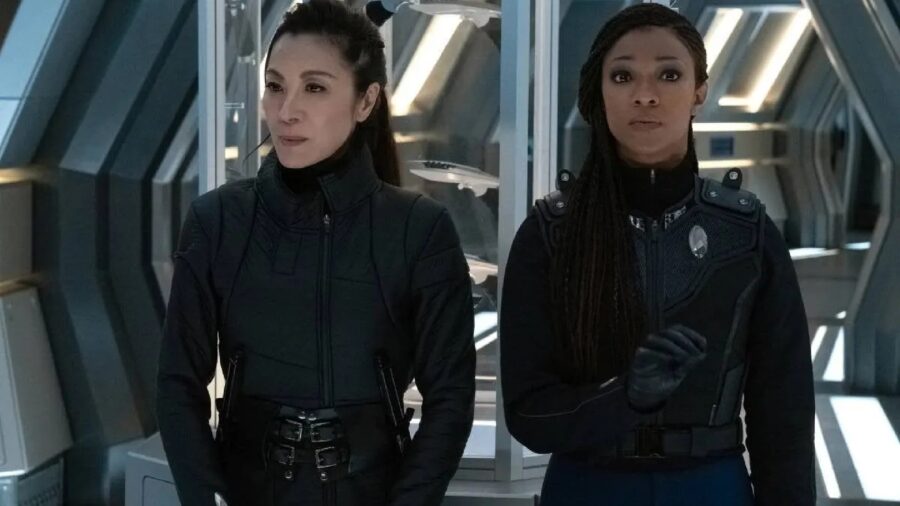
Obviously, DS9 had dark characters and storylines, but what does that have to do with NuTrek? In short, the entire Kurtzman era of this franchise has been filled with lame, edgelord attempts at making the franchise darker. The first season of Star Trek: Discovery, for example, centers on a mutineer who started a war as its main character. It’s a season where Klingons eat their dead foes and strip down to engage in sex that’s half play, half intimate assault. An evil Starfleet captain tortures a tardigrade before the good Starfleet captains one-up him with a plan to blow up an entire planet in an attempt to end a costly war.
Star Trek continued going (ahem) into darkness with other spinoffs. Picard inexplicably features a beloved Voyager B-lister getting tortured and murdered while Picard cozies up to a Romulan swordsman whose only solution to any problem is cutting someone’s head off. They’re fighting to save a Federation that is now cool with creating synthetic slaves. Later, Season 2 has our heroes fighting ICE, watching Q die, and discovering that a young Picard accidentally helped his mother unalive herself. Even the relatively lighthearted Starfleet Academy had the good guys put the entire Federation in danger because they meddled with and accidentally weaponized the most dangerous molecule in the galaxy.
It’s All About Testing Characters’ Morality

In retrospect, it’s clear that Alex Kurtzman and his writers thought they could recapture the old Deep Space Nine magic by throwing a bunch of grimdark characters into gritty situations and calling it a day. However, this didn’t work because DS9’s characters weren’t inherently dark; instead, they were good men and women forced to weigh their morals against the greater good. In the classic episode “In the Pale Moonlight,” Sisko isn’t compelling simply because he’s a morally murky character. No, what makes this episode fascinating is that he’s a good man forced to do bad things, with the fate of potentially billions of lives riding on his decision.
Similarly, Worf doesn’t kill Gowron because of petty vengeance or a haunted past. Instead, he weighs his cultural values as both a Klingon and a Starfleet officer, ultimately deciding it’s better to kill a tyrant than let him continue getting others killed. Even plain, simple Garak seems happy with his life as a tailor, and he’s only reluctantly drawn back into active spycraft because he realizes the best way to save his homeworld is to save it from the Cardassians who have sold its soul, one alliance at a time.
This obviously extends to the Dominion War arc as a whole. We see the toll the war has on good men and women: Nog becomes a wounded and disillusioned war veteran, and Rom nearly gets killed trying to save the Alpha Quadrant. Jadzia Dax does get killed fighting superpowered space Hitler, and Odo begins to question his loyalties. However, characters retain their morality throughout every ordeal. Bashir repeatedly refuses to join Section 31, and Odo saves the Changelings from that organization’s attempted genocide. Standing victorious on Cardassia, Captain Sisko and Admiral Ross refuse to toast their victory, instead choosing to mourn this utterly senseless and completely preventable loss of life.
NuTrek Made Its Worst Villain Into A Hero

Compare that to NuTrek, where the Klingon War hardens hearts and makes the wisest people lose their moral compass. Both Sarek and Starfleet are willing to blow up the Klingon homeworld and kill billions in order to end the war. Starfleet has suddenly decided to trust its war planning to Mirror Universe Georgiou, a woman who has terrorized the entire galaxy while murdering countless people. Later, she’s put in Section 31 (a DS9 invention NuTrek tried very hard to capitalize on) so the entire Federation can continue to benefit from her completely amoral advice. That’s because the Feds believed the same thing that Picard suddenly starts believing over a century later: violence is great as long as the ends justify the means.
This is basically the problem with NuTrek in a nutshell. We don’t get fully fleshed-out characters whose morality is tested by unthinkable scenarios. Instead, we get one-dimensional characters who are dark and compromised from the beginning. Michael Burnham is meant to be the embodiment of Starfleet ideals, but she comes to us as an angry, nearly broken mutineer who, in her guilt, saves an alternate universe’s most murderous monster from certain doom. Even formerly complex characters like Picard are made dumb, violent, and impulsive by writers who value blunt spectacle over elegant storytelling.
Star Trek Needs More Than Darkness
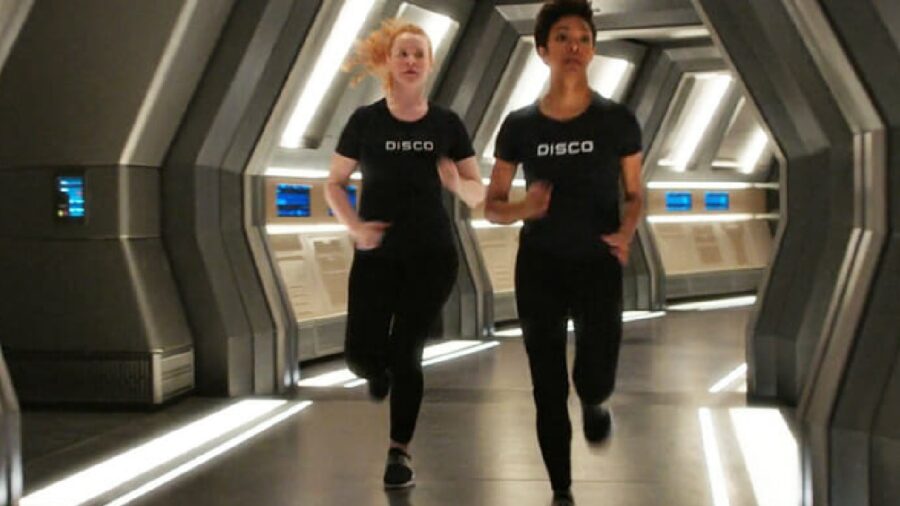
Alex Kurtzman tried to copy the Deep Space Nine formula for NuTrek, but, in typical fashion, he went about it in the stupidest possible way. It’s not enough to give us dark settings and plots; we need well-developed characters whose morality is an idealistic counterpart to the darkness around them. Stories needed to reinforce Star Trek’s hopeful ethos and reward audiences who never lost faith in the greatest sci-fi franchise of all time. Instead, what we got was a collection of dark characters, pointless action scenes, and endless violence, all wrapped up with another snoozeworthy Michael Burnham speech.
This is Kurtzman’s warped idea of what makes Star Trek so great. Is it any wonder that every one of his NuTrek shows has been a colossal failure?
Entertainment
Red Drink for Juneteenth

Amber Mayfield Hewett loves a good party. Not “good” in the sense that there were enough chairs and everyone liked the dip (though a killer dip and a place to sit definitely don’t hurt). To Amber, a good party is one where everyone in the room feels like they belong — no one feels like a plus-one or wonders if they should’ve stayed home. “In my early twenties, I was living in Harlem and working as an assistant at a TV network,” she explains in her new book, Your Turn to Host. “I loved going out, exploring the restaurant scene and private clubs… But something always felt missing. Even though I was surrounded by people all the time, I felt lonely.”
So, Amber started her own supper club, hosting dinners as a way to create community. “The first dinner was 24 people — roommates, co-workers, people I’d met out in the city,” she says. “Everyone walked in as strangers, but as the night went on, they were laughing and swapping stories like old friends.” Her supper club has since grown into a full-time career, and as of this week, a book — a guide to hosting meaningful gatherings of all kinds: Friendsgiving potlucks, Sunday suppers, and of course, cookouts.
“At the core, cookouts are a way for your village to come together,” Amber explains. “I keep an open-door policy for kids and friends of friends. And to me, cookouts are synonymous with freedom because of the holidays typically celebrated with them, including Juneteenth.” In her book, Amber offers a full guide for a Juneteenth cookout — everything from grilling tips to lawn games, as well as her own recipe for traditional Red Drink. “On Juneteenth, it’s customary to serve red foods and beverages,” she says. “Red is a symbol of the profound sacrifice and resilience of African American people.” Amber’s recipe starts with a classic sorrel-syrup base (“You can use the same technique to make other syrups, like lavender or elderflower”) and is spiked with a cup of rum. “You can easily omit the booze if you prefer a non-alcoholic version,” she adds. “The drink is delicious and refreshing on its own.” Here’s how to make it…
Red Drink
Serves 15
From Your Turn to Host by Amber Mayfield Hewett
Sorrel Syrup:
4 cups (1 L) water
1 1/2 cups (300 g) sugar
1 cup (1 1/2 oz/40 g) cut and sifted dried hibiscus flowers
2 cinnamon sticks
Punch:
2 (2 L) bottles club soda
1 cup (240 ml) dark rum
Juice of 2 large lemons
Ice cubes
4 lemons, sliced into wheels and seeded, for garnish
Make the syrup: In a medium pot, combine the water and sugar. Bring to a boil over a medium-high heat, stirring until the sugar has dissolved. Add the hibiscus flowers and cinnamon sticks, and stir until the flowers start to soften. Reduce the heat to medium to maintain a gentle boil. Cook, stirring occasionally, until the syrup is deep red in color and infused with a floral flavor (about 20 minutes). Remove from the heat and let stand for 5 minutes.
Strain the mixture through a fine-mesh sieve into a bowl, pressing on the solids to extract all the liquid; discard the solids. Let the syrup cool completely before using or storing (about 30 minutes). The sorrel syrup can be stored in an airtight container in the refrigerator for up to a week.
Make the punch: In a large punch bowl, stir together the club soda, 1 cup (240 ml) of the sorrel syrup, rum, and lemon juice to combine. (Amber notes: “If you’re skipping the rum, and want a little more flavor, you can add a splash of lemonade or a berry-flavored sparkling water.”) Serve with ice and garnish with lemon wheels.


Big thanks to Amber for sharing this recipe with us! You can find TONS of party recipes and hosting tips in her book and newsletter.
P.S. Five easy party foods, and a monochromatic fruit salad.
(Top photo by Xiana Gutierrez. Excerpted from Your Turn to Host by Amber Mayfield Hewett, published by Artisan Books. Copyright © 2026.)
Entertainment
A Little Help From My Friends

I was on my fourth radiation session. I was sitting across from my friend Rachel’s husband, Rob. He was holding a paperback, dog-eared copy of The Stories of John Cheever. Rob was my driver that day.
When we’d first arrived at the medical center, Rob found a seat in the waiting room, while I went to the dressing room. I carefully took off my clothes, peeled a rectangle of gauze from my chest, and pulled on a white gown. The Maine Med radiation oncology department is on the basement level, and the cold air felt uncomfortable on my bare arms. But pain had taken on an unanticipated psychological dimension: Feeling it meant I was still here to feel it.
Then I took a photo of myself in the dressing room, smiling. I’d taken one before each session since starting treatment, as a way of marking the weeks. As always, I sent the photo to my husband Dan, and to my friend Rachel. I was here. This happened. Then I left the dressing room to join Rob on the blue chairs.
Two weeks earlier, it was Rachel who had come up with the plan: my radiation buddy system. I’d gone in for my final pre-treatment CT scan, and sitting in my car afterward, I felt my courage abandon me. The aloneness of cancer is existential. You and only you go into the strange room with the beeping machines. You alone wake with a start in the middle of the night, thinking: I have breast cancer. Life will never be the same. I called Rachel from the parking lot and told her: I wasn’t sure I was brave enough to drive to radiation by myself. She paused, then replied, “I’ll figure this out.”
Within a few days, she had. Recruiting four female friends and three of their husbands, Rachel made a schedule of my radiation drivers, all of whom had gladly signed up. Since Rachel’s work schedule wouldn’t allow her to drive me herself, she served as coordinator, and texted me the night before each appointment with the plan. Tomorrow, your driver is Merry. She’ll be there at 9:15 a.m.
On that Monday, four days into treatment, the skin on my breast was already starting to sting. Rob sat across from me, and I asked him about the book he was reading. He told me about finding the paperback at the swap shop at our local dump. I told him I loved Cheever’s stories, too — especially “The Swimmer.” After my session, Rob drove me home, and I got out of the car feeling lighter.
When you’re preparing for radiation, the doctors will tell you that you can drive yourself. It’s easy; it’s only 20 minutes. But it’s not easy — and it’s never only 20 minutes. Perhaps I could have managed the actual mechanics of driving, but I know it was those rides from my friends that got me through the treatment.
When my friend Nora brought me to my appointment, she came into the exam room and asked questions. On Leah’s days, we’d have breakfast first at my house — a Dutch baby with raspberries. Emma cried with me when we saw a boy, the same age as my younger son, arriving at the radiation center for treatment. Merry showed up on her driving days with bouquets of flowers from her garden. Surrounded by longtime friends — chatting, the way we’d done for years — I was able to see cancer as only a part of my larger life.
On my last day of radiation, in mid-July, my husband, Dan, brought doughnuts for the radiation team at Maine Med. After my session, everyone gathered and clapped as I rang the cowbell to announce that I was done. When I got home, our older son was standing in the dining room with a Lazy Daisy cake he’d baked, covered with candles.
It’s now been almost a year since those appointments, and I still remember them clearly: my breast swelling to the size of a watermelon; my nipple bleeding and my areola peeling off; the instructions coming through the loudspeaker, reminding me to hold my breath and stay still.
But I can’t recall the pain anymore. What I can still feel is my friend Jess’s leg against mine on the waiting-room sofa; the relief that rolled through me when I left the treatment room and found Emma or Rob or Dan waiting for me. More than anything, I feel a deep sense of worthiness. During those five weeks of driving — with conversations about books and teenagers and what goes best on Dutch babies — I learned how it felt to be truly cared for. I realized that love can take on many shapes: flowers, cakes, spreadsheet schedules.
Sometimes it was as simple as a friend in the waiting room holding a paperback, ready to talk about it all the way home.
Caitlin Shetterly is a journalist, editor, and author. Her new novel, The Gulf of Lions, was published in May. She lives in Maine with her husband and two sons.
P.S. “9 life lessons I learned after my cancer diagnosis,” and what does it mean to think about cancer as a battle?
(Photo by Ángela Rober/Stocksy.)
Entertainment
Khloé Kardashian Says Daughter True Thompson Has an 'Elevated' Way of Wearing Her XO Blue Perfume
Like mother, like daughter! Khloé Kardashian’s new XO Blue perfume has already earned the approval of daughter True Thompson.
Ahead of the launch party in Malibu, California on June 16, The Kardashians star shared that Thompson, 8, is already taking after her in one unexpected way.
“She doesn’t wear fragrance on a daily basis, but she has the Squishmallows fragrance, which is so cute and age-appropriate, and then she has all of mine on her counter, and sometimes she sprays herself, and sometimes she doesn’t, but they’re into scents, these kids,” she explained during a virtual press day.
When Kardashian’s daughter does decide to borrow one of the reality television star’s favorites, she has her own way of doing things.
“I do let her use it, but it’s everything in moderation and she’s so great. She sprays her clothes and not herself, which I’m like, ‘Okay, elevated.’ I love when kids are smarter and more creative than we are. So, she doesn’t spray her body, which I’m fine with.”
It’s a far cry from Kardashian’s own spritzing habits growing up.
“When I was younger, it was Bath and Body Works. … I mean, we doused ourselves in the most potent of stuff.”
These days, though, Kardashian is chasing vacation vibes with her signature scent.
“XO Blue is very tropical, in my opinion. I think when you put it on, you immediately get this woody coconut. I feel very transported onto a beach with a piña colada. … It’s still something that you can wear, but I just love where it transports me to.”
And for the Khloé In Wonder Land podcast host, the appeal goes beyond an island getaway.
“I just want you to feel the sexiest at your core, and that doesn’t have to be this aesthetic thing.”
“For me, that’s all energetically. I just want you to feel just super sexy and feminine and that you can manhandle anyone and do whatever you want to do, and you’re just that girl. … You want to be in a summer dress or a tank top. It’s so silly that that’s how I feel when I’m wearing it, but I feel like the less clothes, the better.”
The Khloud founder is just as passionate about what goes into her body as what goes on it.
“I love peptides. I don’t know if that’s a secret. I feel like everyone takes a peptide. … I take injections, which I love, and they just make you feel good and you look good. … I’m also a big vitamin girl and just staying active. There’s not one thing that’s gonna make anything all better.”
RELATED CONTENT:

Elbow surgery to cost Phillies OF Johan Rojas rest of season
Snapchat limits users under 16 to sharing Spotlights with friends


