
Tech
Peak XV says internal disagreement led to partner exits as it doubles down on AI
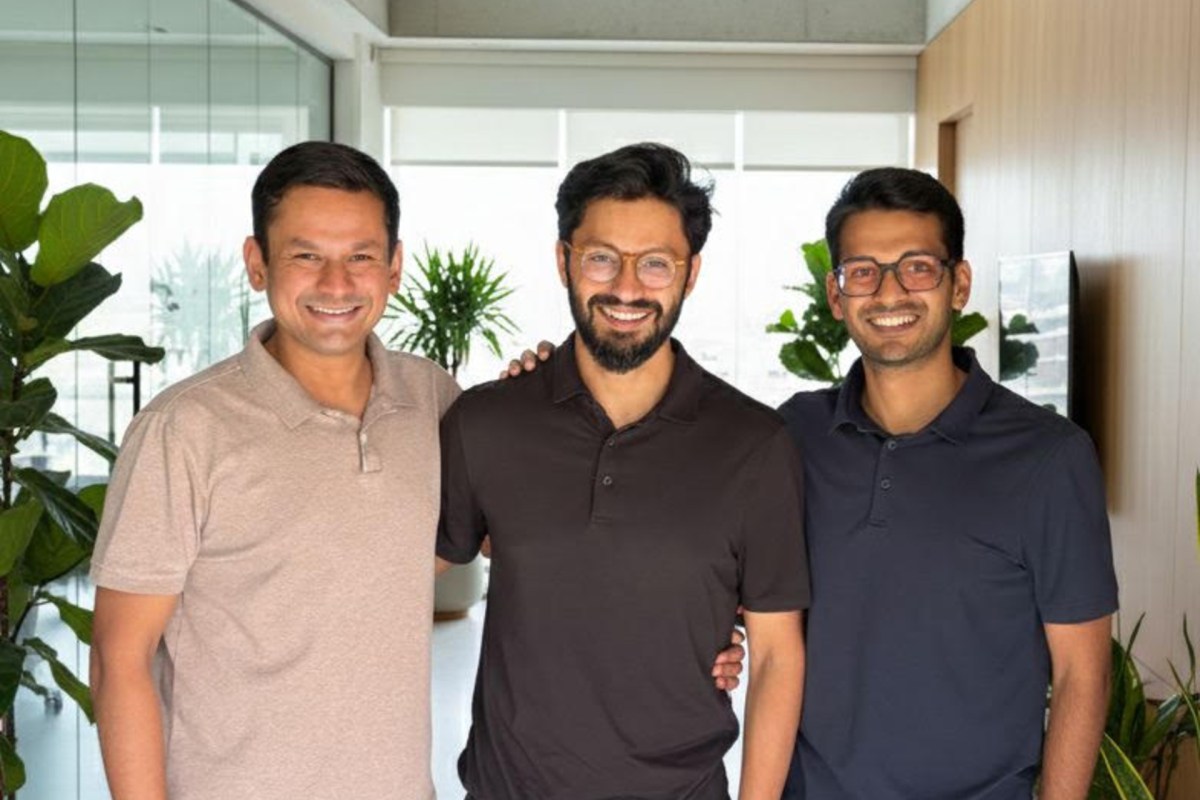
Peak XV Partners, a leading venture capital firm in India and Southeast Asia, has seen a fresh round of senior departures. These follow other leadership exits over the past year as it pushes ahead with plans to deepen its focus on AI investing and expand its footprint in the U.S., while keeping India as its largest market.
The latest departures stem from an internal disagreement with senior partner Ashish Agrawal (pictured above, left) that led to a mutual decision to part ways, Managing Director Shailendra Singh told TechCrunch. He added that two other partners, Ishaan Mittal (pictured above, right) and Tejeshwi Sharma (pictured above, center), chose to leave alongside him.
Singh said Peak XV did not want to go into the specifics of the disagreement and was focused on moving forward. “Just out of privacy, and out of, like, trying to be classy about it,” he said. Singh added that such departures were not uncommon at large, multi-stage venture firms and that Peak XV wanted to move on quickly after several years of working together.
All board seats held by the departing partners would be transitioned “imminently,” Singh said, noting that the firm already had overlapping representation across several portfolio companies. He said Peak XV was not concerned about continuity, noting that multiple general partners and operating partners were already involved across many of those boards.
The departures mark the exit of long-tenured investors from the firm. Agrawal had been with Peak XV for more than 13 years, while Mittal spent over nine years at the firm and Sharma more than seven years, per their LinkedIn profiles.
Agrawal wrote in a LinkedIn post that he had decided to “take the entrepreneurial plunge” and was teaming up with Mittal and Sharma to start a new venture capital firm. He described the move as an opportunity to build a new institution with longtime partners and thanked Peak XV’s leadership for what he called a “truly wonderful partnership.”
During his time at Peak XV, Agrawal led investments across fintech, consumer, and software, including Groww, one of the firm’s most prominent IPO exits in 2025. He also backed multiple early- and growth-stage companies alongside Mittal and Sharma, contributing to Peak XV’s broader portfolio build-out over the past decade.
Agrawal, Mittal, and Sharma did not respond to messages for comments.
Peak XV has also moved to strengthen its senior leadership from within. The firm on Tuesday promoted Abhishek Mohan to general partner, expanding its investment leadership bench, while Saipriya Sarangan was elevated to chief operating officer, taking charge of firm-wide operations.
The leadership changes come amid a standout year for Peak XV’s portfolio exits. Five of its companies — Groww, Pine Labs, Meesho, Wakefit, and Capillary Technologies — went public in November and December 2025, generating roughly ₹300 billion (around $3.33 billion) in unrealized, mark-to-market gains for the firm, in addition to about ₹28 billion (about $310.61 million) in realized gains from share sales during the IPOs.
In addition to the latest departures, Peak XV has seen a broader churn in its senior ranks over the past 12 months. Last year, long-time investment leaders Harshjit Sethi and Shailesh Lakhani exited the India team, while Abheek Anand and Pieter Kemps departed from the firm’s Southeast Asia operations. The firm has also seen leadership changes across its marketing, policy, and operations teams in recent months.
Singh dismissed a view circulating in the market that many of the partners who drove Peak XV’s largest exits were no longer at the firm, calling the narrative “not statistically true.” He said several of the firm’s most significant outcomes had been led by long-tenured partners who remained at Peak XV, and argued that the firm’s exit track record did not hinge on any single individual.
Peak XV currently has seven general partners, along with multiple partners and principals, according to Singh.
The VC firm, which split from Sequoia Capital in 2023 and currently manages over $10 billion in capital across 16 funds, has made about 80 investments linked to AI, Singh said, highlighting its push to deepen its focus on AI funding. It is also preparing to open a U.S. office within the next 90 days as it expands its global footprint, per Singh, while continuing to view India as its largest and most important market.
Singh stated the firm believed AI would reshape venture investing more profoundly than previous technology shifts, arguing that successful AI investing required investors with deep technical understanding rather than “generalist” experience. He added that Peak XV was looking to add more AI-native talent, including researchers and engineers with backgrounds in machine learning and large-scale model development.
The firm has invested in more than 400 companies, and its portfolio has seen over 35 initial public offerings and several M&As to date.
Tech
Crusoe makes big battery buys for its data centers

Data center developer Crusoe is ramping up its energy storage capacity with battery buys from Form Energy and Redwood Energy.
The company said it will buy 12 gigawatt-hours of Form Energy’s 100-hour batteries. It’s the second large sale made by Form, which last month said it would build a 30 gigawatt-hour battery for Google in Minnesota. That deal was worth about $1 billion, according to The Information.
Form, which didn’t disclose the value of the sale, will start delivering Crusoe’s batteries in 2027.
Crusoe’s smaller purchase should still bring Form hundreds of millions in new revenue as the battery company embarks on a $500 million funding round. Form has raised $1.4 billion to date, according to PitchBook. Previously, Form had signed smaller contracts with utilities interested in testing the technology.
Form’s iron-air batteries discharge when oxygen from the air flows over iron pebbles inside the battery. The oxidation process produces rust and electricity. To charge the battery, electricity essentially de-rusts the iron, releasing oxygen.
Form began expanding its first factory in West Virginia last year in anticipation of big contracts that are now materializing.
Crusoe also announced that it’s expanding a partnership with Redwood Materials, the battery recycling and reuse company founded by ex-Tesla CTO J. B. Straubel. The data center company has been operating a 12 megawatt, 63 megawatt-hour battery on a microgrid since June, which was the largest second-life battery installation at the time. Redwood will deliver an additional 8 megawatts of power using repurposed EV batteries.
Techcrunch event
San Francisco, CA
|
October 13-15, 2026
Tech
Databricks bought two startups to underpin its new AI security product
With an overflowing war chest from its $5 billion raise that closed last month (not to mention billions in revenue), Databricks is acquiring.
The company, best known for its cloud data analytics platform, announced on Tuesday that it was launching a new security product called Lakewatch. Lakewatch takes Databricks’ ability to store massive amounts of data and performs classic Security Information and Event Management (SIEM) tasks, like detecting and investigating threats. Only it does so with the help of AI agents powered by Anthropic’s Claude.
Databricks bought two startups to underpin this new product: Antimatter, in an undisclosed-until-now deal that closed last year, and SiftD.ai, in a deal that flew together over the last couple of weeks and closed on Monday, the company told TechCrunch.
Terms were not disclosed for either deal. Antimatter, founded by security researcher Andrew Krioukov, raised $12 million led by New Enterprise Associates in 2022, according to PitchBook estimates. If tiny SiftD.ai had raised money, PitchBook wasn’t aware.
SiftD.ai was so young, it had only launched its product in November: an interactive notebook (like a Jupyter notebook) intended to be a tool where people and agents worked together. The Databricks team knew the startup’s co-founder CEO Steve Zhang from his many years as chief scientist at Splunk (through 2021). He created the Search Processing Language while there. (His LinkedIn also says he was CTO of Astronomer, of the Coldplay CEO scandal, but left there in 2023 before founding SiftD.)
Both of these acquisitions were of small startups — only a few people in SiftD’s case and less than 50 for Antimatter, according to LinkedIn. SiftD appears to be an acqui-hire. With Antimatter, Databricks probably gained some IP, too. Krioukov had demonstrated Antimatter’s tech onstage in 2024 at RSA’s Innovation Sandbox Contest. Antimatter was working on a “data control plane” tool that allowed enterprises to deploy agents securely, while protecting sensitive data.
While Databricks declined to say how many employees it acquired, it confirmed that the startups’ employees did join the company. Krioukov, who’s been at Databricks for months now, is leading the Lakewatch team.
Techcrunch event
San Francisco, CA
|
October 13-15, 2026
We asked Databricks if it was going to keep shopping for startups and a spokesperson essentially said, yes, that it continuously has its feelers out. “We’re always looking to what’s next — our goal is to stay ahead of the market and close gaps in what our customers need,” the spokesperson said.
Tech
Spotify tests new tool to stop AI slop from being attributed to real artists
At a time when AI slop is flooding music streaming platforms, Spotify is beta testing a new “Artist Profile Protection” feature that allows artists to review releases before they go live on their profiles. The idea behind the new tool is to give artists more control over which tracks are associated with their name on the streaming service.
“Music has been landing on the wrong artist pages across streaming services, and the rise of easy-to-produce AI tracks has made the problem worse,” Spotify wrote in a blog post. “That’s not the experience we want artists to have on Spotify, and that’s why we’ve made protecting artist identity a top priority for 2026. Today, we’re announcing a first-of-its-kind solution to a problem that’s affected streaming for years.”
Artists in the beta have the ability to review and approve or decline releases delivered to Spotify. Only the releases that they approve will appear on their artist profile, contribute to their stats, and show up in users’ recommendations.
Spotify’s announcement comes a week after Sony Music said that it has requested the removal of more than 135,000 AI-generated songs impersonating its artists on streaming services.

Spotify says that while open distribution has made it easier for independent artists to release music, it also creates opportunities for mistakes and bad actors. Tracks can end up on the wrong artist’s profile due to metadata errors, confusion between artists with the same name, or malicious attempts to attach music to an artist’s profile.
“When that happens, it can impact your catalog, your stats, your Release Radar, and how fans discover your music,” Spotify explains. “We know how frustrating this can be for both artists and fans alike and one of the top requests we’ve heard from artists over the past year is that you want more visibility before music appears under your name.”
Spotify notes that while the new feature isn’t necessary for every artist, it’s designed for artists who have experienced repeated incorrect releases, have a common artist name, or want more control over what appears on their profile.
Artists who are included in the beta will see the feature in their “Spotify for Artists” settings on desktop and mobile web. If they turn “Artist Profile Protection” on, they’ll receive an email notification when music is delivered to Spotify with their name attached to it. From there, they can approve or decline the request.

Amazon Big Spring Sale 2026: Tablet deals are in full bloom with savings on the latest iPad Air
Crusoe makes big battery buys for its data centers


