
Entertainment
New Starfleet Academy Episode Takes One Small Step Forward, Then Totally Destroys Star Trek
By Chris Snellgrove
| Published

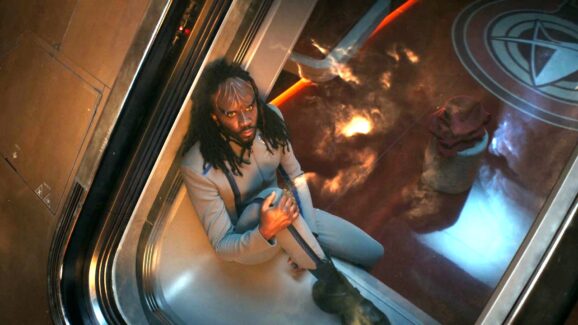
Starfleet Academy has been steadily improving as a show, and the latest episode showcases some of that improvement with a fairly compelling Klingon storyline. Unfortunately, the quality of this tale is undermined by the show’s weird penchant for vulgarity and its bizarre destruction of one of the franchise’s most iconic planets. The result is an episode that Charles Dickens (one of Captain Kirk’s favorite authors) might have summed up, “It was the best of Trek, it was the worst of Trek.”
The worst part of this episode (and beware major spoilers from here on, space cadets!) is the revelation that the Klingon homeworld and most of their empire have been destroyed because the Burn made their dilithium reactors blow up. There is so much wrong with this: the Burn doesn’t magically cause dilithium to explode (it only blew up starships because dilithium going inert caused warp core breaches), and it’s bizarre the Klingons would use dilithium as a power source in the first place when rival empires like the Federation figured out how to power planets with fusion nearly a millennium ago.
It Was Not A Good Day To Die

This plot point gets even stupider when you consider that dilithium was becoming really scarce in the galaxy about 15-20 years before the Burn, so aliens (even ones as dumb as the Klingons) relying on it to power every planet in their empire would have switched to an alternative power source long before the Burn somehow blew every planet to smithereens. Like, the Klingons of this show were willing to embrace a triple parent model to save their race; are these writers really suggesting they wouldn’t have simply switched power sources, given that they had up to two decades of warning that dilithium wasn’t sustainable?
On a narrative level, it’s also depressing that Star Trek’s writers felt the need to destroy Qo’noS, one of the most iconic planets in the entire franchise. In this Starfleet Academy episode, the primary reason to do this is seemingly to give a tragic backstory to Jay-Den, the show’s sensitive, pacifist Klingon. This is Trek’s third trip to this well (after giving tragic backstory to Spock by destroying Vulcan and to Picard by destroying Romulus), and I’m getting pretty sick of writers who can’t motivate their characters through anything less than destroying billions of lives and forever altering franchise history.
If you’re a Klingon fan, this plot point is that much more horrifying because these aliens believe that the only way they can get into their version of heaven is to die in battle. Now, we know that the vast majority of them died without a weapon in their hands, meaning that they all went to Klingon hell. Doing this to the franchise’s most famous aliens for any reason would have been downright weird, but doing it just to make the new softboy Klingon seem interesting is downright insulting.
The Dirty Talking Doctor Returns

On an even stupider note, Voyager’s Doctor (the same one who was cracking poop jokes in the first episode) uses the phrase “Speech and debate is not for the chickensh*t;” when a cadet asks if he can talk like that, the cranky hologram cites the privilege of his age and how he has earned the right to talk however he wants to.
That’s a fine sentiment (signed, a professor who sometimes curses in class), but “chicken” has never, ever been used in Star Trek as a synonym for “coward.” So even if we accept that characters in the 32nd century are still using the word “sh*t” (which has been used in the real world for over a thousand years), it’s weird that the Doctor would pair it with “chicken” in a way that was completely at least one century (and quite possibly many centuries) before he was even programmed.
Not That There’s Anything Wrong With That!

The final major problem with this episode is how it hints that Jay-Den, the sensitive Klingon featured in this episode, may be gay. Now, there’s obviously nothing wrong with having a gay character, and a gay Klingon (something we’ve literally never seen before) could provide plenty of narrative opportunities for talented writers to explore.
But as several fans have pointed out on social media, this Klingon is an aspiring healer, so the show is seemingly embracing the “gay male nurse/gay male doctor” stereotype that is very prevalent in modern culture. This is a harmful stereotype that has led to bullying of real-life men in healthcare, and it’s a little weird to see a progressive Star Trek show set in the 32nd century embracing a weird, retrograde stereotype of the 21st century.
Of course, the franchise did the exact same thing with Culber, the gay doctor that Discovery killed off in Season 1. He was resurrected, but his name on Starfleet Academy’s weird memorial wall implies that he somehow died again offscreen. Considering how wholeheartedly Star Trek has embraced the problematic “killing your gays” trope, I can only hope Jay-Den survives his apparent sexual awakening!
Age Gap Discourse Is Without Honor

If you can get past the aforementioned problems, there are some interesting things to enjoy about the latest episode of Starfleet Academy. Holly Hunter’s centuries-old chancellor finally stops spinning in her chair long enough to hook up with her Klingon ex, and (in what feels like a fun throwback to The Original Series) their continued sexual chemistry may be the key to saving the Klingons. You see, the Federation has discovered a replacement for their lost homeworld, but these stubborn aliens would rather die out than receive charity.
Knowing this warrior race as well as she does, the chancellor arranges a kind of mock battle between Starfleet and the Klingons so the latter can feel like they have conquered the world. The whole plot feels like a fun homage to “A Matter of Honor,” the Next Generation episode where Riker learned that assuaging Klingon pride is often a matter of letting them think they’ve won. This episode also deserves credit for a realistic teacher moment in which the chancellor promptly lets Jay-Den think the mock fight between empires was his idea, which boosts his confidence as a student and gets him some brownie points with the Klingons.
A few more things worth mentioning: while the whole “murder most of these aliens and send them straight to hell” plot remains wildly offensive, this Starfleet Academy episode has some interesting insights into Klingon psychology. Plus, the burgeoning friendship between Caleb and Jay-Den is much more effective than I ever imagined, echoing interactions between fan-favorite pairings like Nog and Jake or Tendi and Rutherford.
Time To Activate Your TV’s Cloaking Device

It was also fun to see Starfleet cadets nerding out over honing their debate skills. Oh, and in a “it had to happen eventually” moment, the show’s half-Klingon, half-Jem-hadar master of cadets gets to offer some solid advice to someone rather than just stand around cartoonishly screaming. Unfortunately, this episode sandwiches its better parts between so much offensive, canon-destroying bullsh*t that it’s tough to even see (much less appreciate) what works well.
Last week, I gently praised Starfleet Academy for its snobs vs. slobs prank war episode, hoping that the series was leaning into the college shenanigans that it does well and not the deep Trek lore that it keeps handling so poorly. Unfortunately, this episode is a return to form in the worst possible way: the show wants to use this famous IP to tell sweeping stories of family, friendship, and diaspora, but they are doing so while running the franchise into the ground. Previously, I quoted Captain Kirk in reminding Paramount executives that “risk is part of the game” when it comes to this beloved brand’s storytelling.
I was hoping these creators might “boldly go” and do something that builds a future for the IP while honoring its past, all while quoting the franchise’s most famous character. Since these clearly hate The Original Series so much and clearly don’t care about the fandom, I figured I would send the same message using the cool, measured, and rational language that these millionaires might finally understand: “Making Star Trek is not for the chickensh*t!”

Entertainment
Hollywood’s New Obsession Is Called Zealot Porn, How To Spot It

By Joshua Tyler
| Updated

I recently coined the term “zealot porn” to help explain a new kind of entertainment. Zealot porn is what happens when you make programming specifically designed to torment characters for their personal ideological views, with the goal of your viewers deriving pleasure from their suffering.
zealot porn (noun) — Media that graphically depicts violent punishment of ideological opponents, crafted to gratify the viewer’s sense of moral superiority and deliver cathartic satisfaction through retributive spectacle.

The key to zealot porn is that not only must the characters on screen be portrayed as zealots, in order to dehumanize them, but the people watching must themselves be zealous opponents of the characters’ ideology, in order to fully enjoy their suffering. Zealot porn is what happens when you make stories about zealots for zealots.
zealot (noun) — a person consumed by devotion to a cause or belief, so blinded by passion that reason becomes collateral damage.
This new genre took its clearest and most defined form in the second season of Peacemaker, when creator James Gunn crafted a scene designed to give his viewers the jollies over watching the murder of people who seemed like they might think good things about Nazis. Obviously, no one likes Nazis, but whether you personally like or dislike the views of the people being harmed isn’t relevant to whether or not something is zealot porn.
What matters is the intent of the media you’re watching, and whether that intent is to give the audience pleasure by dehumanizing and punishing people for their views. What those views are or their morality is irrelevant to defining the genre.
How To Spot Zealot Porn
Zealot porn isn’t difficult to spot, if you’re not emotionally invested in the topic. It’s nearly impossible to spot, however, if you are.
To determine if you’re watching zealot porn, use this checklist. If more than three of these are true, you’re probably watching zealot pon.
-
The “bad side” is cartoonishly evil, leaving no room for nuance -
Violence or humiliation is framed as morally satisfying, not disturbing -
The hero is always right, even when acting brutally -
Opponents exist only to be punished, not understood -
Emotional payoff outweighs logic or realism -
Scenarios feel engineered to justify a specific worldview -
Complex issues are reduced to simple good vs. evil
Zealot Porn Wins Oscars
The movie One Battle After Another is a zealous feast, and that won it Best Picture. We put together a video to explain it in depth.
Zealot Porn In Real Life
Zealot porn isn’t limited to fictional entertainment. Often, people get catharsis by watching videos or reading coverage of real-life ideological opponents being made to suffer. That’s on the rise too.
As I write this, prominent Democrat Eric Swalwell is getting his comeuppance over various salacious accusations, and Republicans are cheering and gaining pleasure from his downfall. This is a milder form, since no actual violence or death is involved.
catharsis (noun) — the sudden, involuntary purge of buried emotion that floods the mind like a breached dam, leaving behind a raw, emptied stillness that feels strangely like peace.
A more extreme example would be people celebrating the murder of conservative debater Charlie Kirk with similar elation. For them, watching him shot was another form of zealot porn, despite his very clearly not being a Nazi.
Others had similar reactions to videos showing the public execution of a health executive carried out by Luigi Mangione in 2024. That, too, was real-life zealot porn.
Early Zealot Porn

Zealot porn is not a new invention, but it’s been a long time since it was accepted in the mainstream. In the early days of Christianity, Romans fed believers to lions in front of cheering audiences. That was a low-tech version of zealot porn. Using media like movies and television as a delivery mechanism is, however, a recent phenomenon.
Past creators would have balked at the idea of dehumanizing characters for the audience’s base pleasure. Entire books have been written about it being a bad idea. It’s why George Orwell wrote 1984.

On a creative level, it would have formerly been considered bad writing. Normally, good writing aims to humanize the writer’s creations and make them relatable. Zealot porn does the opposite.
Early media that skewed closest to zealot porn are propaganda films from World War 2 or some of the more extreme grindhouse or blaxploitation movies of the 1970s. Most of those, however, focused more on the idea of dismantling a system or punishing someone who’d actively done something wrong. They’re revenge fantasies and not really the same. In the most despicable cases, as with movies like Triumph of the Will, they focused on hurting people based on some immutable outward physical characteristic.
The idea that it’s acceptable to dehumanize and destroy someone for their thoughts is newer in the modern mainstream, and it’s a growing phenomenon.
Quentin Tarantino Births Modern Zealot Porn

If you’re looking for the start of modern zealot porn, its roots can be found in Quentin Tarantino’s 2009 movie, Inglourious Basterds.
The movie presents an alternate history in which a group of American commandos wipe out the evil Nazis and kill Hitler, without the need for a global war. It isn’t about character arcs or military realism; it’s about watching the most evil regime in history get flambéed to the sound of David Bowie.
Nazism was a uniquely perfect ideology to use in birthing modern zealot porn, because nearly everyone has been pre-conditioned toward a zealous hatred of Hitler and his cronies. So Tarantino gives audiences, raised on decades of history classes talking about how uniquely evil Nazis were, exactly what they want: Nazis humiliated, carved, and annihilated. Punished for their beliefs even more than just their actions.

Inglourious Basterds is bloody, indulgent, and engineered specifically for moral satisfaction.
Still, Inglourious Basterds largely focused on murdering those embedded in the Nazi regime’s power structure. It didn’t, for the most part, take pleasure in killing random Germans walking down the street who might be thinking Nazi thoughts.
Inglorious Basterds is a more high-class type of zealot porn, but its existence helped give a green light to the growing wave of more extreme copycats that followed.
If modern zealot porn has a father, it’s Quentin Tarantino.
Robert Rodriguez Targets Conservatives For Destruction

If modern zealot porn has a mother, it’s Robert Rodriguez.
Robert Rodriguez’s Machete began as a fake trailer and mutated into a full-on immigration revenge epic. Danny Trejo stars as a former Mexican Federale turned one-man army after being betrayed by corrupt politicians and anti-immigrant vigilantes.
Where Tarantino created a movie designed to visit violence on a historical group almost universally agreed to be evil, Robert Rodriguez targeted his movie at a mainstream, modern group of people and their current (and widely held) beliefs on border security.

To make that work, he had to dehumanize his targets by twisting their views to cartoonish extremes. Rodriguez takes anti-immigration rhetoric and dumbs it down to absurdist levels, so that he can turn those who agree with it into fodder for righteous decapitation.
Every kill in his 2010 movie is meant not just payback for Machete’s betrayal but for decades of what his audience would perceive as xenophobic cruelty. The film is indulgent, cartoonishly violent, and completely lost in the bubble of its own politics.
Kevin Smith Finds Catharsis In Crazy Christians

If modern zealot porn has a weird uncle, it’s Kevin Smith.
Two years after Inglorious Basterds, filmmaker Kevin Smith applied Robert Rodregeuz’s anti-Conservative formula to fundamentalist Christians with the movie Red State.
The Evangelicals depicted in the movie are a cartoonish, demonic caricature of what real-life hard-line Christians are. That’s a key piece of the zealot porn formula, since it serves to dehumanize the real-world group, thus allowing the audience to take pleasure in their violent end.

By the movie’s end, Red State takes intense pleasure in their doom. As an audience, it feels acceptable because the movie makes them into monsters before it does its worst.
Later examples of purified zealot porn won’t go through as much trouble, but Red State, like Inglorious Basterds before it, was still pushing at the boundaries of what audiences would find acceptable. It’s more restrained than its predecessors but also more pointed in its attack on its character’s beliefs.
Thriving In Independent Film

Once Tarantino, Rodriguez, and Smith showed creators the way, there was a brief explosion in copycats. Those copycats stuck mainly to the topics that those three had already covered.
God Bless America followed in Rodriguez and Smith’s footsteps, gleefully cartooning conservatives for the righteous satisfaction of its audience in 2011. Iron Sky continued Tarantino’s zealous crusade against Nazis in 2012. All of those movies followed a similar pattern, where they turned their ideological opponents into cartoonish straw men to justify dehumanizing them before the slaughter.
Like Machete and Red State before them, none of these movies gained the widespread acceptance and viewership that Tarantino earned when he kicked things off with Inglourious Basterds. Their targets were often too divisive, and most people still recoiled at the idea of getting satisfaction from watching the suffering of people who might share the same views as their neighbors.
The Purge Takes Zealot Porn Big Time

It wasn’t until the arrival of The Purge franchise’s first sequel, in 2014, that zealot porn began to flirt with mainstream acceptance again.
The first entry in the series is a simple survival horror, but the second movie, The Purge: Anarchy, begins drifting into zealot porn as it sets up cathartic violence against wealthy elites. By the time The Purge: Election Year rolls around in 2016, it’s closer to an early-stage blockbuster zealot porn franchise. Each Purge sequel picks a different ideological target.

The Purge: Election Year takes aim at conservatives by turning them into cartoonish caricatures worthy of slaughter, in the mold of Kevin Smith’s Red State.
2018’s The First Purge goes back to the old standby by turning white Americans into modern-day Nazis, thinking racist thoughts, and in need of some murdering.
That push transitioned into zealot porn against nationalists in 2021’s The Forever Purge. That movie takes a weaker approach to it than its predecessors and isn’t as clearly dedicated to its satiation through zealotry.
The Hunt Bait And Switches Audiences

If you’ve been paying attention, you’ve probably noticed that most of the earliest zealot porn entries are aimed squarely at pleasuring left-wing viewers. Their targets are always conservatives or Christians, and they expect their audience to be the most liberal of liberal extremists.
The Hunt tried to trick audiences into thinking it was a commentary on the phenomenon of conservatives being targeted by billing itself as a movie about elite liberals hunting conservatives for their views. In reality, it’s another example of zealous slaughter of conservatives as the movie turns the hunted right-wingers into idiotic caricatures and tries to make the case that they had it coming due to some conspiratorial tweets.

The movie’s only real hero is totally apolitical, which I guess is in its own way a commentary on political polarization, but a weak one.
The Hunt is more of a muddled commentary on the rising popularity of zealot porn than an example of zealot porn itself.
Streaming Pushes Zealot Porn Forward To Its Final Form

Movies had begun paving the way towards making zealot porn socially acceptable, and streaming television took the next step.
The Boys is the best example of this. It started as a show primarily designed to deconstruct and hate on the standard tropes of superheroes. Over time, it morphed into something increasingly political. It creates supervillains designed to embody the political ideology its writers loathe most and then constructs situations in which they’re either humiliated or killed in the worst possible ways.

No character embodies that more than the character of Homelander. He isn’t just evil, he’s the delusional cartoon version of what bubble-dwellers imagine Fox News viewers to be. And even while he survives, the show does everything it can to humiliate and degrade him. Meanwhile, the show’s creators used social media to openly invite audiences to see him as an avatar for Donald Trump and his ideological supporters.
Whenever Homelander or one of these symbols gets publicly humiliated, exploded, or blackmailed, the show delivers a dirty hit of catharsis to its similarly minded, zealous viewers. That’s exactly what they’re going for.
Peacemaker Perfects Zealot Porn
Peacemaker took zealot porn to the next and purest level. All previous efforts used cartoonish oversimplification to dehumanize their ideological opponents, before brutally making them suffer.
Peacemaker doesn’t bother. Returning to the genre’s roots by setting the show’s second season in a world run by Nazis, Peacemaker doesn’t show its residents as engaging in evil before killing them. It simply kills them, because they’re residents of a Nazi world. The show assumes that the viewers will do all the dehumanization in their heads, on their own.

That works because we’re dealing with Nazis, but as Inglorious Basterds demonstrated, it’s unlikely to stop there. Movies like One Battle After Another represent the next wave of mainstreamed zealot porn, which takes the dehumanization of wrongthinkers to previously unseen levels.
Entertainment
Nicole Kidman’s R-Rated Satire On Netflix Is A Masterclass In Manipulation
By Robert Scucci
| Updated

After watching Nicole Kidman’s Before I Go To Sleep on Netflix a couple weeks ago, I needed something that didn’t completely waste her talent. My search led me to 1995’s To Die For, which has such a stacked cast you’d think I was exaggerating if you didn’t check IMDb or Wikipedia yourself. Going as pitch black as a Gus Van Sant comedy can get, To Die For showcases Joaquin Phoenix, Casey Affleck, Kurtwood Smith, Wayne Knight, Matt Dillon, and even David Cronenberg in a brief appearance.
It’s a fourth-wall-breaking film that works as a thriller, comedy, drama, and mockumentary all at once, rolled into a murder mystery centered on Nicole Kidman’s Suzanne Stone, a woman so obsessed with fame and fortune that she throws her entire life away when nobody around her sticks to the script.
Multiple Timelines Effortlessly Intersect

There are two narratives in To Die For that strip away any real sense of mystery from the premise. Through television interviews, we’re introduced to Suzanne Stone, who got off scot-free after her husband, Larry Maretto (Matt Dillon), was murdered. We know she’s involved, maybe even directly responsible, right off the rip, but that’s not what the film is interested in. Instead, we get a full character breakdown of Suzanne and her sociopathic commitment to becoming a TV star. We know Larry is dead, and we know she had something to do with it. The story then rewinds to show us how everything led up to those interviews, introducing everyone she crossed paths with along the way.
Desperate to become a world-famous TV correspondent, Suzanne grows resentful of her husband Larry, despite the fact that he gives up his band and focuses on work so he can support her dreams. The guy does a complete 180, even though he comes from a mob-connected family running multiple successful businesses. In other words, Larry was never a screwup, but he still buckles down when he falls in love with Suzanne because he wants the best for her. That contrast exists purely to show just how unhinged Suzanne is when it comes to chasing clout.

While Larry works his ass off, occasionally hinting that he’d like to start a family, Suzanne takes a job at WWEN, a local cable network, under the supervision of Ed Grant (Wayne Knight), who we learn through interviews is absolutely terrified of her. It’s one thing to be ambitious, but Suzanne is aggressively so, making most people rightfully suspicious of what she’s capable of, including Larry’s sister Janice (Illeana Douglas).
While working her way toward a weather girl position, Suzanne recruits naive high school students for a “Teens Speak Out” documentary she hopes will launch her career. She pulls in a troublemaker named Jimmy (Joaquin Phoenix), who immediately falls under her spell, along with Lydia (Alison Folland), who admires her, and Russell (Casey Affleck), who was basically forced to participate. With three teenagers eating out of the palm of her hand, Suzanne starts plotting how to get rid of Larry, who she believes is holding her back because he wants a traditional life she finds completely suffocating.
A Masterclass In Manipulation

If I had to compare Nicole Kidman’s Suzanne to anybody, it would be Reese Witherspoon’s Tracy Flick from Election. She’s beautiful, driven, and easily the most dangerous person you could cross paths with if you happen to be in her way of her goals. Suzanne’s ruthlessness is initially softened by how charming and driven she is when she makes her first impressions. When you apply that level of manipulation to a group of teenagers, it’s only a matter of time before they start doing exactly what you want. This dynamic comes to a head when Suzanne fully sinks her hooks into Jimmy.
But nobody here is innocent. Suzanne may be the mastermind who sets everything in motion, but everyone else is self-aware enough to know better. That’s where half the fun comes from. Jimmy might be infatuated, but he still makes his own choices. Suzanne sizes him up, offers him a version of the life he thinks he wants, and he goes along with it despite the consequences because he’s short-sighted and naive. It’s fascinating to watch because at any point, anyone in Suzanne’s orbit could have just said “nah” and walked away. But they don’t.

One of the more uniquely structured black comedies I’ve seen in a while, To Die For is equal parts morbid and hilarious. Every character is painfully short-sighted, and they all become worse versions of themselves the moment they fall for Suzanne’s tricks. And while you should hate Suzanne for being an objectively terrible person, you still end up rooting for her because she’s living life on her own terms, just in the most antisocial way possible.
To Die For is currently streaming on Netflix.

Entertainment
NYT Connections Sports Edition today: Hints and answers for April 19, 2026
Today’s Connections: Sports Edition will be a little easier if you love baseball.
As we’ve shared in previous hints stories, this is a version of the popular New York Times word game that seeks to test the knowledge of sports fans.
Like the original Connections, the game is all about finding the “common threads between words.” And just like Wordle, Connections resets after midnight and each new set of words gets trickier and trickier — so we’ve served up some hints and tips to get you over the hurdle.
If you just want to be told today’s puzzle, you can jump to the end of this article for the latest Connections solution. But if you’d rather solve it yourself, keep reading for some clues, tips, and strategies to assist you.
What is Connections: Sports Edition?
The NYT‘s latest daily word game has launched in association with The Athletic, the New York Times property that provides the publication’s sports coverage. The sports Connections can be played on both web browsers and mobile devices and require players to group four words that share something in common.
This Tweet is currently unavailable. It might be loading or has been removed.
Each puzzle features 16 words, and each grouping of words is split into four categories. These sets could comprise anything from book titles, software, country names, etc. Even though multiple words will seem like they fit together, there’s only one correct answer.
If a player gets all four words in a set correct, those words are removed from the board. Guess wrong and it counts as a mistake — players get up to four mistakes before the game ends.
This Tweet is currently unavailable. It might be loading or has been removed.
Players can also rearrange and shuffle the board to make spotting connections easier. Additionally, each group is color-coded with yellow being the easiest, followed by green, blue, and purple. Like Wordle, you can share the results with your friends on social media.
Mashable Top Stories
Here’s a hint for today’s Connections: Sports Edition categories
Want a hint about the categories without being told the categories? Then give these a try:
Here are today’s Connections: Sports Edition categories
Need a little extra help? Today’s connections fall into the following categories:
-
Yellow: AL East Teams
-
Green: First Words of Football Positions
-
Blue: Premier League Managers
-
Purple: Nicknames for the Dodgers Franchise, Over Time
Looking for Wordle today? Here’s the answer to today’s Wordle.
Ready for the answers? This is your last chance to turn back and solve today’s puzzle before we reveal the solutions.
Drumroll, please!
The solution to today’s Connections: Sports Edition #573 is…
What is the answer to Connections: Sports Edition today?
-
AL East Teams — BLUE JAYS, ORIOLES, RAYS, YANKEES
-
First Words of Football Positions — DEFENSIVE, RUNNING, TIGHT, WIDE
-
Premier League Managers — EMERY, GUARDIOLA, MOYES, SLOT
-
Nicknames for the Dodgers Franchise, Over Time — BRIDEGROOMS, DODGERS, ROBINS, SUPERBAS
Don’t feel down if you didn’t manage to guess it this time. There will be new sports Connections for you to stretch your brain with tomorrow, and we’ll be back again to guide you with more helpful hints.
Are you also playing NYT Strands? See hints and answers for today’s Strands.
If you’re looking for more puzzles, Mashable’s got games now! Check out our games hub for Mahjong, Sudoku, free crossword, and more.
Not the day you’re after? Here’s the solution to yesterday’s Connections.

Who Will New York Jets Draft at No. 2 Overall in 2026 NFL Draft?
Hollywood’s New Obsession Is Called Zealot Porn, How To Spot It


