
Entertainment
Star Trek’s Greatest Hero Saved The Day With Abstinence, In A Scene They Wouldn't Let You See
By Chris Snellgrove
| Published

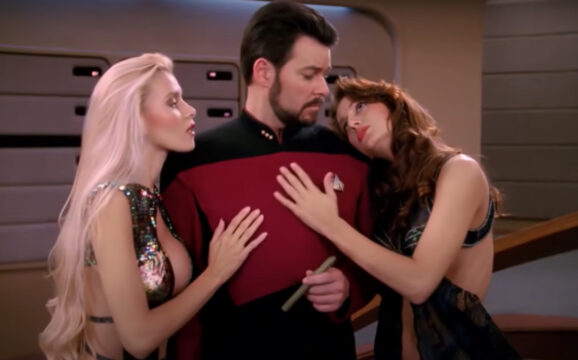
Star Trek is a relatively cerebral franchise, but its characters have always embraced sex, often using it to save the day: for example, Spock once seduced a Romulan commander to help complete his mission, and Sisko slept with Mirror Universe Dax to avoid blowing his cover. Even Data was willing (a little too willing) to get freaky with the Borg Queen so that he could eventually save the Enterprise-E. But in a deleted scene from one memorable Next Generation episode, the android did the reverse, saving the day by not having sex with an alien woman who wanted to see just how “fully functional” he really was.
The scene in question was written for “The Most Toys,” an episode where Data is kidnapped by a collector (Kivas Fajo) who wants this android as part of his collection. He treats Data like an exotic doll, dressing him in special clothing and forcing him to sit in a particular position. Eventually, Data makes a successful escape with the help of the collector’s assistant, an alien woman who feels betrayed after her boss threatens to kill her despite her 14 years of loyal service.
TFW You’ve Found The Galaxy’s Most Advanced Toy

In the broadcast episode of “The Most Toys,” this is the only reason given for her willingness to help Data out, but it’s a pretty good one; after all, who would want to stick by a boss who is threatening to kill them? However, in the original script, she is given another motivation in a scene that never made it into the final episode. It all starts when Kivas Fajo gives her a very unusual command: to go have sex with their captive android.
Why the heck would a collector of the galaxy’s rarest items send his assistant to go have sex with an android? Simple: as Data discussed in the Season 1 episode “The Naked Now” (and as he discusses with the assistant, Varria, in this episode), he is “programmed in multiple techniques” so that he can offer “a broad variety of pleasuring” to his companions. Kivas Fajo apparently wanted to verify the existence of those techniques, the same way that somebody who buys used electronics wants to make sure the items he purchased are still (ahem) fully functional.
A Booty Call Gone Wrong

Ironically, Data is initially down, which would have brought his body count to two after Tasha Yar. But once he learns that this is all a weird test on Fajo’s part, he refuses Varria, leaving her completely humiliated. Not only did her boss try to use her, but the person she was meant to seduce ended up rejecting her. This (along with the aforementioned threat on her life) ends up providing the motivation she needs to help Data escape from the clutches of Kivas Fajo.
In the original script, it seems like Varria wouldn’t have been willing to help if Data had slept with her, but the humiliation of his refusal spurred her into action against her abusive employer. In this way, everyone’s favorite android did something that perhaps nobody else in Star Trek has done before or since. Namely, he saved the day by staying abstinent (something Riker clearly never learned about in Starfleet Academy).
Given how weird the fandom gets about these sorts of things (don’t get Next Gen fans started about Beverly’s ghost obsession!), it’s probably for the best that this plot point from “The Most Toys” script was never actually filmed. It’s even better that such a scene never made it to a NuTrek show like Discovery. After all, the only thing more awkward than watching a Starfleet officer turn down beautiful women would be watching Tilly try to turn this into a moral lesson: “That’s the power of abstinence, people!”
Entertainment
With Title And Logo Revealed, The New Ghostbusters Is Still Shrouded In Mystery

By Chris Snellgrove
| Published
It’s been a pretty weird decade to be a Ghostbusters fan. Paul Feige’s all-female movie was supposed to reboot the franchise for modern audiences and make the franchise mainstream again. Instead, it became a firestorm of controversy, and we eventually got Ghostbusters: Afterlife. While it was more about Spielbergian wonder than cynical wisecracks, Afterlife appealed to the old-school fans, earning enough money to warrant a sequel: Ghostbusters: Frozen Empire. However, Frozen Empire was a crowded, somewhat sloppy film that cost more and made less than Afterlife, leaving the future of the franchise uncertain.
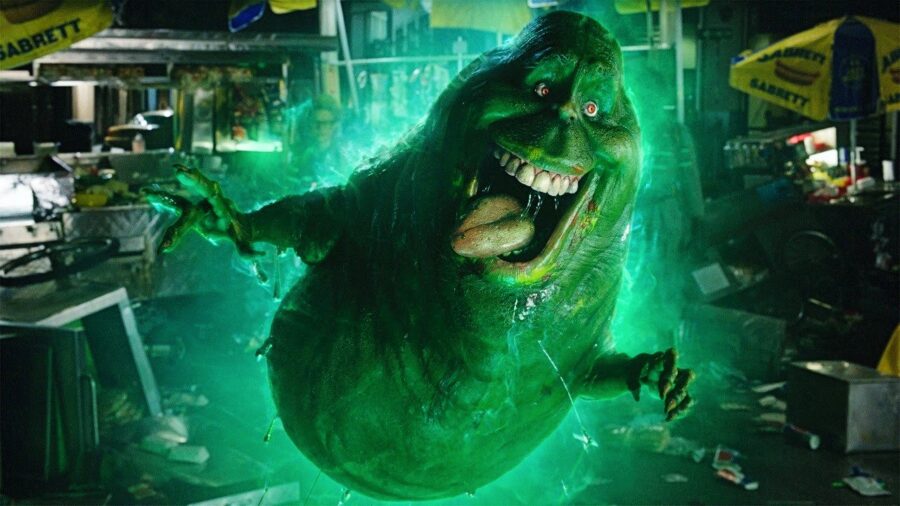
Now, the latest iteration of Ghostbusters will be on the small screen rather than the big screen. A new, animated show is launching on Netflix in 2027, and fans have been eager to hear more about what this cartoon will be about. Recently, Sony unveiled the show’s logo as well as its provocative new name, Ghostbusters: Night Shift. Many are buzzing with excitement, but some can’t help but ask the obvious question: “wait, that’s it?” This cartoon has been in the works for several years now, and the fact that it is still so shrouded in mystery is starting to feel like a very, very bad sign.
A New Take On A Classic Logo

When Sony unveiled the logo for Ghostubers: Night Shift, fans were divided. On the one hand, it’s nice that this logo shares so much in common with the original film logo; most reboots and revivals change so much that we love, so it’s nice to know that this upcoming cartoon isn’t shaking things up too much. On the other hand, the new logo is so close to the original logo that it seems almost odd that they changed it. The changes are also so odd and minimalist (like yellowed teeth and a beastly claw on the ghost) that it seems like a borderline AI creation. The prompt? “Make the Ghostbusters logo look scary.”
Additionally, the subtitle “Night Shift” has caused speculation about who the core Ghostbusters team will be and what the show will be about. The name implies that the cartoon likely won’t follow the original Ghostbusters, who (in addition to being very old) didn’t answer many calls in the wee hours. The show is also unlikely to follow the core crew of Aferlife and Frozen Empire. It’s possible that the new show will go full meta and feature the Ghostbusters as an in-universe franchise. Therefore, we might be following a new team of a local Ghostbusters branch, one that covers the titular night shift.
Trusted Names And Plenty Of Secrets

Aside from the new name and new logo, we know very little about Ghostbusters: Night Shift. The show will be a Netflix exclusive and is set to premiere in 2027, though an exact release date remains unknown. It’s not entirely clear what kind of animation style we are likely to see, either. While the smart money is on the show having the uncanny, CGI-animated look of Netflix’s Stranger Things cartoon, the show may end up with a more traditional 2D style, like the streamer’s steadily-growing list of exclusive anime titles. One thing we do know about Ghostbusters: Night Shift, though, is that it is being made by some names we can trust.
The show is being executive-produced by Dan Aykroyd, the franchise star who originally came up with the idea of the Ghostbusters in the first place. Other EPs include Jason Reitman, Gil Kenan, both of whom co-wrote Ghostbusters: Frozen Empire. Finally, Elliott Kalan is serving as writer and co-showrunner of this new cartoon; if his name doesn’t ring a bell, Kalan has written for The Daily Show and Mystery Science Theater 3000, and he’s the motormouthed, show-stealing cohost of the hit podcast The Flophouse. Kalan is also a comics writer who gave us the often-memed scene where the villainous Sauron tells Spider-Man he’d rather turn people into dinosaurs than cure cancer.

Akyroyd is the OG talent, Reitman is the shepherd of the modern movies, and Kalan is the passionate fan working on his dream franchise. Together, they might just have what it takes to make Ghostbusters: Night Shift into Netflix’s latest killer cartoon. Otherwise, this beloved franchise may fade away and become the worst kind of ghost: one that nobody even cares about watching, much less busting.
Entertainment
Catch This Screwball Comedy Disaster On Netflix Before Its Sequel Hits Theaters
By TeeJay Small
| Updated

If you’ve got your finger on the pulse of the latest comedy outings, you’ve probably already seen trailers for Focker-In-Law. The film, which stars Ben Stiller, Robert De Niro, and Ariana Grande, is the fourth entrant into the Meet The Parents franchise, which launched all the way back in the year 2000. The original Meet The Parents is an iconic comedy which still holds up to this day, and the 2004 follow-up Meet The Fockers is a fun, quirky film that has some solid moments.
Unfortunately, the fun sort of stopped in 2010 when Stiller and De Niro reunited for a third time with Little Fockers. This movie is a pale replica of its predecessors, offering little more than a tepid retread of jokes that were funnier the first time around. Despite the film being a bit of a slog, and Ben Stiller literally assuring fans that they don’t need to rewatch the trilogy to understand the upcoming sequel (he even claims that he doesn’t stand by the third film, per X), I decided to revisit Little Fockers on Netflix.
Move Along, Nothing To See Here!

I recall catching Little Fockers in theaters with my family upon release, and thinking little of it. In the years since, I’ve basically forgotten the entire plot, other than the fact that Gaylord ‘Greg’ Focker (Stiller) and his wife Pam now have children. In the movie, the Fockers are preparing a fifth birthday bash for their twins, when De Niro’s domineering Jack Byrnes drops in for a surprise visit.
Operating in his capacity as a hard-ass father-in-law, as well as a CIA retiree, Jack continually gives Greg a hard time. Jack has never approved of Greg, though extenuating circumstances have forced his hand in anointing him the new family patriarch and the arbiter of the coveted “circle of trust.” This is set in motion because Jack’s other daughter is in the process of getting a divorce, thus ousting the son-in-law that Jack actually enjoys.

Unfortunately, this passing of the torch is interrupted by a series of contrived, awkward situations that mistakenly lead Jack and others to believe Greg is unfaithful. If the plot sounds bare bones, that’s because it exists primarily to be a joke delivery system. If the jokes sound bare bones, it’s because the writers didn’t care about this movie at all when they were working on it.
Disappointing Lack Of Little Fockers
The primary source of comedy in this film stems from the fact that Focker sounds a lot like the F-bomb. If that joke blows your mind, you’ll probably be rolling on the floor by the time the film cuts to credits. If not, you’ll probably be half asleep by the fifth time Robert De Niro drops terms like “The god-Focker” and pauses for raucous applause. There are a few solid comedic beats on occasion, but it really feels like the script could have benefited from an extra draft or two.

If this film has anything going for it, it’s the stacked cast of side characters. Notable performers include Owen Wilson, Dustin Hoffman, Barbara Streisand, and Jessica Alba, but numerous top-notch comedians appear in small bit parts as well. Kevin Hart, Rob Huebel, John DiMaggio, Jordan Peele, and Nick Kroll comprise a few faces that wouldn’t have stood out in 2010, but make for a real DiCaprio-pointing-at-the-TV moment today.
At the end of the day, Little Fockers really doesn’t hold up. As it turns out, that Ben Stiller tweet and the 10 percent Rotten Tomatoes score really weren’t lying to me. This is a minor gripe, but I take umbrage with the fact that the movie doesn’t even focus on the kids all that much. For a film literally titled Little Fockers, I’d expect to see more of those little Fockers running around.

I guess I’m happy that I panned for any flecks of comedy gold within this sludge, if only to ensure that I won’t miss a beat when I queue up to see this comedic team remake the same comedy for the fourth time this November. Even still, you’d be better off brushing up on the first two films and letting your imagination fill in the blanks if and when you watch Focker-In-Law. At least Ariana Grande’s front-and-center billing on the poster implies that the new film will actually deliver on its title.

Little Fockers is currently streaming on Netflix, just in case you’re not willing to take my word for it. The first two films are on there as well, for those interested in turning a trilogy watch-through into a drinking game. Take a shot every time you hear De Niro drop Greg’s name in a silly way, and call it “getting Focked up.”
Entertainment
The Sexy Horror Movie That Was Almost A Documentary
By Steven Nelson
| Published

Delving into the shadowy world of online identity, Cam made waves on Netflix in 2018 as a psychological horror thriller that fuses modern technology’s allure with the age-old dangers of doppelgangers and obsession.
Directed by Daniel Goldhaber, with a script by former webcam model Isa Mazzei, the movie taps into the eerie facets of the digital age, offering a chilling look at how easily our online personas can be ripped from our control.
For those seeking a heart-pounding ride that also pushes them to reflect on the implications of life in a digitized world, Cam beckons with its siren call. Dive into a tale where the line between reality and the virtual realm blurs with every click.
Cam Girls Gonna Cam

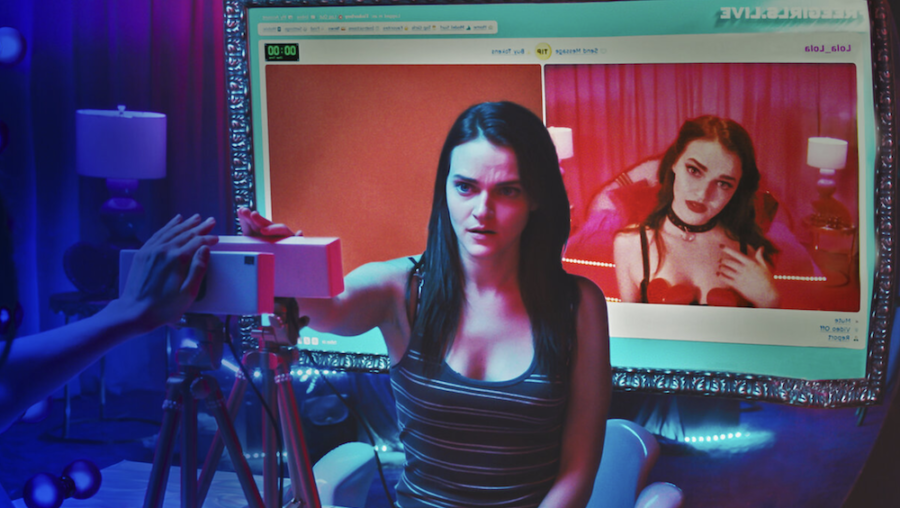
Set in the competitive world of cam girls, Cam introduces us to Alice, known online as “Lola.” Portrayed by Madeline Brewer, Alice is an ambitious cam girl seeking to break into the top ranks on her streaming platform, FreeGirlsLive. Every day, she stages creative shows, some intense and others downright bizarre, to climb the leaderboard, pushing the boundaries of her performances to attract more viewers and tips.
However, her relentless pursuit to rank higher takes a nightmarish turn when she unexpectedly finds herself locked out of her account. That’s puzzling enough, but the real shock comes when she realizes “Lola” is still online, streaming away. Only, it isn’t Alice behind Lola’s sessions anymore. A mysterious doppelganger, identical in appearance and mirroring her previous shows perfectly, has taken over her channel.

Desperate to reclaim her identity, Alice dives deep into the underworld of the camming industry. She encounters other models, shady figures, and obsessive fans as she tries to uncover the truth behind her digital twin.
Throughout her journey, Cam intelligently weaves themes of identity theft, the personal cost of online fame, and the dangers of exposing oneself in the vast, anonymous terrain of the internet.
Supporting Alice’s story is an array of characters, including her mother, Lynne (Melora Walters), and younger brother, Jordan (Devin Druid). There’s also Tinker (Patch Darragh), an obsessed fan who might know more than he lets on. Together, these characters enhance the layered narrative of Cam, reflecting different facets of Alice’s life as it spirals out of control.
Cam Started As An Idea For A Documentary
The intriguing narrative of Cam finds its origins not in the realm of fiction, but from real-life experiences. Before it was a psychological thriller, the idea for the film emerged from the actual experiences of its screenwriter, Isa Mazzei.
Mazzei herself was a former cam girl and initially considered making a documentary about the world of online camming based on her personal experiences. The realm of camming, with its blurred lines between the digital and the real, personal and public, seemed ripe for exploration.
The industry’s nuances, combined with its vast audience yet marginal mainstream understanding, made it a subject of potential intrigue for viewers.

However, as Mazzei collaborated with director Daniel Goldhaber (a close friend from college), the duo felt that a fictional narrative could dive deeper into the emotional and psychological experiences of a cam girl, particularly the dissociation and identity challenges one might face.
By shifting gears from a documentary to a thriller, they hoped to capture a broader audience and convey the complexities and perils of the camming world more viscerally. This decision gave birth to Cam, a movie that, while fictional, carries the genuine imprint of Mazzei’s lived experiences, adding an extra layer of authenticity to its story.

Cam is more than just a standard psychological thriller; it’s a riveting exploration of identity, digital duality, and the lengths one might go to reclaim a stolen life in the age of the internet. While some might brush it off as another by-the-numbers suspense flick, the film is a testament to the very real challenges and threats that individuals face in the online world.
Drawing inspiration from real-life experiences, it serves as a cautionary tale, reminding viewers of the fragile balance between our digital personas and our real selves. If you’re in the mood for a film that seamlessly blends suspense with societal reflection, you can stream Cam for free on director Daniel Goldhaber’s website for free as of this writing.

With Title And Logo Revealed, The New Ghostbusters Is Still Shrouded In Mystery
Hey Siri, here’s what I actually want from AI


