
Entertainment
Star Trek’s Greatest Hero Saved The Day With Abstinence, In A Scene They Wouldn't Let You See
By Chris Snellgrove
| Published

Star Trek is a relatively cerebral franchise, but its characters have always embraced sex, often using it to save the day: for example, Spock once seduced a Romulan commander to help complete his mission, and Sisko slept with Mirror Universe Dax to avoid blowing his cover. Even Data was willing (a little too willing) to get freaky with the Borg Queen so that he could eventually save the Enterprise-E. But in a deleted scene from one memorable Next Generation episode, the android did the reverse, saving the day by not having sex with an alien woman who wanted to see just how “fully functional” he really was.
The scene in question was written for “The Most Toys,” an episode where Data is kidnapped by a collector (Kivas Fajo) who wants this android as part of his collection. He treats Data like an exotic doll, dressing him in special clothing and forcing him to sit in a particular position. Eventually, Data makes a successful escape with the help of the collector’s assistant, an alien woman who feels betrayed after her boss threatens to kill her despite her 14 years of loyal service.
TFW You’ve Found The Galaxy’s Most Advanced Toy

In the broadcast episode of “The Most Toys,” this is the only reason given for her willingness to help Data out, but it’s a pretty good one; after all, who would want to stick by a boss who is threatening to kill them? However, in the original script, she is given another motivation in a scene that never made it into the final episode. It all starts when Kivas Fajo gives her a very unusual command: to go have sex with their captive android.
Why the heck would a collector of the galaxy’s rarest items send his assistant to go have sex with an android? Simple: as Data discussed in the Season 1 episode “The Naked Now” (and as he discusses with the assistant, Varria, in this episode), he is “programmed in multiple techniques” so that he can offer “a broad variety of pleasuring” to his companions. Kivas Fajo apparently wanted to verify the existence of those techniques, the same way that somebody who buys used electronics wants to make sure the items he purchased are still (ahem) fully functional.
A Booty Call Gone Wrong

Ironically, Data is initially down, which would have brought his body count to two after Tasha Yar. But once he learns that this is all a weird test on Fajo’s part, he refuses Varria, leaving her completely humiliated. Not only did her boss try to use her, but the person she was meant to seduce ended up rejecting her. This (along with the aforementioned threat on her life) ends up providing the motivation she needs to help Data escape from the clutches of Kivas Fajo.
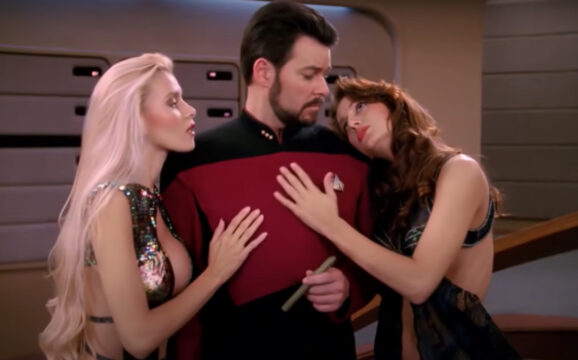
In the original script, it seems like Varria wouldn’t have been willing to help if Data had slept with her, but the humiliation of his refusal spurred her into action against her abusive employer. In this way, everyone’s favorite android did something that perhaps nobody else in Star Trek has done before or since. Namely, he saved the day by staying abstinent (something Riker clearly never learned about in Starfleet Academy).
Given how weird the fandom gets about these sorts of things (don’t get Next Gen fans started about Beverly’s ghost obsession!), it’s probably for the best that this plot point from “The Most Toys” script was never actually filmed. It’s even better that such a scene never made it to a NuTrek show like Discovery. After all, the only thing more awkward than watching a Starfleet officer turn down beautiful women would be watching Tilly try to turn this into a moral lesson: “That’s the power of abstinence, people!”
Entertainment
The First Billion-Dollar Movie Of The Year Proves Slop Is Here To Stay

By Chris Snellgrove
| Published

Right now, there’s a lot of buzz about Hollywood box office earnings. Some movies thought to be surefire hits are floundering, like The Mandalorian & Grogu: despite being the first Star Wars film in seven years, it had the poorest opening weekend of any live-action film in the franchise. When you factor in the costs of marketing, it’s possible it still won’t make enough (reportedly, at least $500 million) to break even. Meanwhile, the horror genre is cleaning up: with Backrooms, 20-year-old Kane Parsons became the youngest director to reach number one at the box office. Meanwhile, Obsession has earned over $224 million and was made for only $750,000.
With these movies making so many headlines, you might have overlooked another movie making surprising box office history. The Super Mario Galaxy Movie just quietly became the first film of 2026 to make over a billion dollars. This was the sequel to The Super Mario Bros. Movie, which went on to earn a jaw-dropping $1.4 billion. The sequel may yet hit that mark, and it’s already proven to be the most successful film of the year. That’s good news for superfans of this plucky plumber. But it’s bad news for everyone else, because the success of this subpar sequel ensures that cinematic slop is here to stay.
(Good) Mario Is Missing

To get this started, I need to rip the band-aid off with a harsh truth: The Super Mario Galaxy Movie is bad. Like, really, really bad. On Rotten Tomatoes, it currently has a critical score of 42 percent. Generally speaking, critics griped about everything feeling weightless and meaningless in this movie, and that the threadbare story was practically tacked onto the animation as an afterthought. This is significantly lower than The Super Mario Bros. Movie, which had a critical score of 59 percent. Fans were also disappointed: while the first film had a fan rating of 95 percent, the second one had a lower rating of 88 percent.
Why does the success of The Super Mario Galaxy Movie bum me out? For one thing, it always sucks to see crappy movies rake in money left and right because it’s a reminder that genuinely good films usually suffer at the box office. For example, Masters of the Universe was an attempt to revive He-Man (Mario’s fellow traveler from the ‘80s) for modern moviegoers. It’s a movie that critics liked better than either of the Mario films (it has a 67 percent critical rating on Rotten Tomatoes), but it earned less than $30 million in its opening weekend. Considering that its budget was $170 million, chances are high that this fan-favorite film won’t be getting a sequel.
A Failed Cinematic Universe

That’s a shame because, while He-Man isn’t exactly a new property, it’s a revival of a franchise that hasn’t had a film in nearly 40 years. Accordingly, it felt like a fresh-but-faithful labor of love from truly passionate creators. Now that The Super Mario Galaxy Movie has earned over $1 billion worldwide, we’re almost certainly going to get more movies exactly like it: rushed sequels that lack all of the charm and originality of the earlier movie. Obsession and Backrooms may be proving the viability of original, low-budget horror movies, but studios chasing billion-dollar box office are going to crank out their own sequel slop as bad (or worse) than The Super Mario Galaxy Movie.
While the success of this subpar movie is bad enough for other IPs, it’s arguably even worse for its own. While not perfect, The Super Mario Bros. Movie laid the groundwork for an entire cinematic universe with its cool characters, engaging plot, and memeworthy moments (like Jack Black’s demented “Peaches” song). By comparison, The Super Mario Galaxy Movie has tired characters (with the exception of Star Fox), a paint-by-numbers plot, and few memorable moments. Worse, the few memorable moments we do get are tied to forgettable action sequences. Be honest, now: if this is how bad the second Mario movie is, can you imagine how awful the third and fourth ones will be?
Slop In, Slop Out

It’s hard to say without sounding like an old man yelling at clouds (to be fair, one of those clouds was throwing spiky dudes at me), but The Super Mario Galaxy Movie is symbolic of everything wrong with Hollywood. It’s not a terrible movie, but it just never even comes close to its full potential. Nonetheless, it made so much money that the studio (and countless other studios chasing fortune and glory) will put in as little effort as possible into more crappy sequels than anything original. Why should they put in any more effort, though? We vote with our dollars, and when people pay top dollar for low-tier slop, they just get more of the same.
Slop in, slop out. Sorry, movie lovers: thanks to The Super Mario Galaxy Movie, your good films are in another castle!
Entertainment
Marshall announces an upgrade to the Stockwell speaker after 7 years
Table of Contents
These days, it’s not uncommon to see new generations of tech launch with higher prices than their predecessors.
Yet Marshall announced its latest Bluetooth speaker, the Stockwell III, on June 9 with a price of $249.99 — the same as the price of the Stockwell II. This decision is even more exceptional considering the older speaker launched seven years ago.
Despite the decision to keep the speaker at the same price point, Marshall is rolling out some significant improvements. Below, we break down what to expect from the speaker.
Marshall Stockwell III: Price and specs
The Marshall Stockwell III will be available for purchase on Aug. 4 on Marshall’s website and at Costco for $249.99. Spec-wise, here’s what to expect from the speaker:
-
Battery life: 40 hours
-
IP rating: IP55 rated
-
Drivers: One three-inch woofer and two 1.75-inch wide band drivers
-
Sound features: True Stereophonic 360-degree all-around audio
-
Charging: USB-C
-
Materials: Silicone sleeve, PU leather strap with velvet lining, brass control panel, metal front and back grilles
-
Size: 7.1 x 5.9 x 2.8 inches
-
Weight: 2.9 pounds
-
Extras: Modular and replaceable parts, including the battery, grilles, silicone sleeve, and carrying case
-
Colors: Black, brass and cream
Better battery and options for longevity
The headline news with this upgrade is the battery life, which Marshall doubled from 20 hours on the Stockwell II to 40 hours on the Stockwell III.
Mashable Light Speed
The IPX4 water- and dust-proof rating of the Stockwell II gets boosted to IP55 on the Stockwell II, and the control panel gets a cosmetic upgrade with the brass detailing. Still, you can adjust bass and treble settings directly from the speaker as you could with the past generation, in a design choice that feels very aligned with Marshall’s branding. Newly added is the M-button, which allows you to access your presets directly from the speaker.

The brass panel is a design upgrade that elevates the Stockwell III.
Credit: Marshall
Another major update is the replaceable parts, which have the potential to add some serious longevity to this speaker’s battery life. This isn’t the first time Marshall has pulled this move: the newly released Milton headphones also come with the option to buy and replace your own battery. In addition to the Stockwell III’s battery, you can also replace the strap, front and back grilles, silicone sleeve, and carrying case.
The Stockwell III versus other Bluetooth speakers
When our sister site PC Mag reviewed the Stockton II back in 2019, they called out the impressively well-rounded sound with “rich bass and bright highs.” While the reviewer appreciated the performance of the Stockton at the time, they did mention it was on the pricier end.
That’s not unusual for Marshall, and though we can’t speak firsthand to the experience of the Stockwell III, it is notable that there are options to replace parts on this speaker. The 360-sound feature also boosts this speaker’s value prop, especially as it delivers in performance. That said, there are more affordable Bluetooth speaker options, including from Marshall (if the design is what draws you in most).
Marshall Stockwell III: How to buy
The Stockwell III speaker isn’t yet available, with its official launch slated for Aug. 4 on Marshall’s website and at Costco.
Entertainment
Hugh Laurie Brings House Back By Roasting A Fan
By Chris Snellgrove
| Updated

While I mostly lurk these days, I’m still hanging around on X, formerly known as Twitter. Admittedly, the place has become a real hellscape, with a feed constantly serving up ragebait and idiots constantly asking Grok to do their thinking for them. Speaking of idiots, X is filled with people who pay for blue checks, and as you might imagine, the people who pay extra to force their comments to the top almost never have anything interesting to say. Why am I still there, then? Because every single day, there’s some insanely brilliant bit of sh*tposting that makes me utter the motto every Twitter veteran: “I’m never leaving this site.”
For example, even though the last House episode aired nearly a decade and a half ago, new fans are constantly discovering the show. New haters, too, as evidenced by one user (@jan_murray) starting Season 1 and griping about the show’s repetitive episode formula. Normally, this would be no big deal; people posting bad media takes on X is hardly anything new. What made her critique noteworthy, though, is that House star Hugh Laurie actually provided a response so wonderfully sarcastic and withering that it’s like he brought his famous TV doctor back for one last rodeo. A Golden Globe-winning actor dunking on a random fan out of nowhere? Man, I’m never leaving this site!
The New Main Character Is Here
All of this began with X user Janet Murray’s capsule review of House. Admitting that she was “late to the party,” she described starting Season 1 and getting annoyed with its repetitive story structure. “Patient has mysterious illness. Hugh Laurie (House) gets diagnosis wrong. Patient nearly dies.” She goes on to describe how the titular characters will get the diagnosis wrong again and nearly get fired, with the patient almost dying again. Finally, “Hugh Laurie has last minute leftfield idea. Gets diagnosis right. Doesn’t get fired.” She ends her critique with a rhetorical question: “Eight seasons of this?”
As expected, many House superfans began mocking her criticisms. But that was nothing compared to Hugh Laurie, House himself, coming into the comment section like a wrecking ball. He immediately began with his character’s signature snark, criticizing her use of brackets in the original post. The actor then sarcastically noted that the crew tried a couple of episodes where “House gets it right the first time, but they were only 6 minutes long. NBC weren’t happy.“ He then joked that they tried episodes “where House never gets it right and the patient dies. The audience wasn’t happy.”
Making A House Call
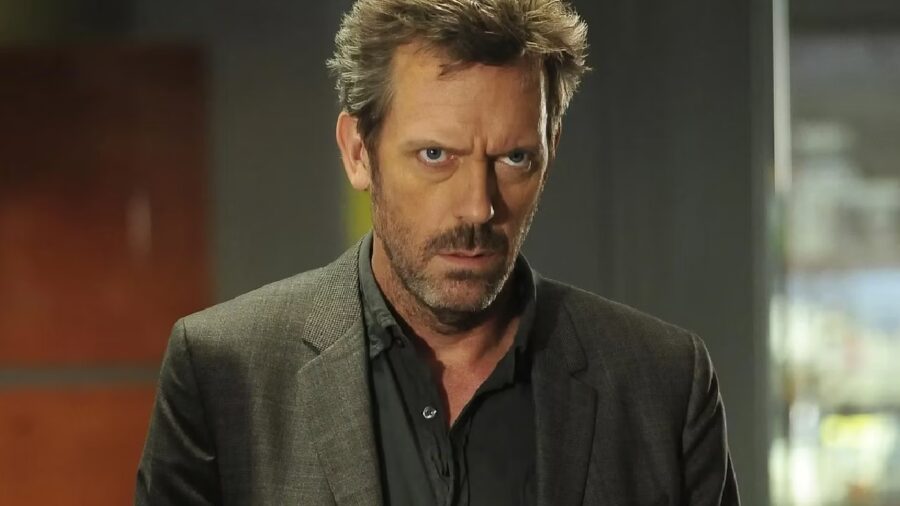
Honestly, this was already brutal enough, but Laurie wasn’t done. Continuing, he wrote, “One could apply your trenchant analysis to other art forms: JS Bach wrote 30 Goldberg variations on the same chord structure; Frida Kahlo painted 50 portraits of herself…The point is, or was, variations on a theme; if all you see is hospital, medical blah blah, then it wasn’t meant for you.” As if he could hear the House fandom crying for him to finish her, Laurie added an absolutely devastating final sentence: “Nonetheless, I look forward to your first novel!”
Aside from the relative novelty of a famous actor talking sh*t to a sh*t poster, what makes Hugh Laurie’s response so great is that it might as well have been written by House. From the initial mocking of her communication to dragging her for not understanding media, the whole thing feels like a (slightly) more polite version of the TV doctor’s famous onscreen takedowns. Plus, Laurie’s final dig, essentially pointing out that this is creative criticism from someone who hasn’t created much, feels like the kind of thing House might throw out, mid-argument, before dramatically walking away.
The Diagnosis Is Correct
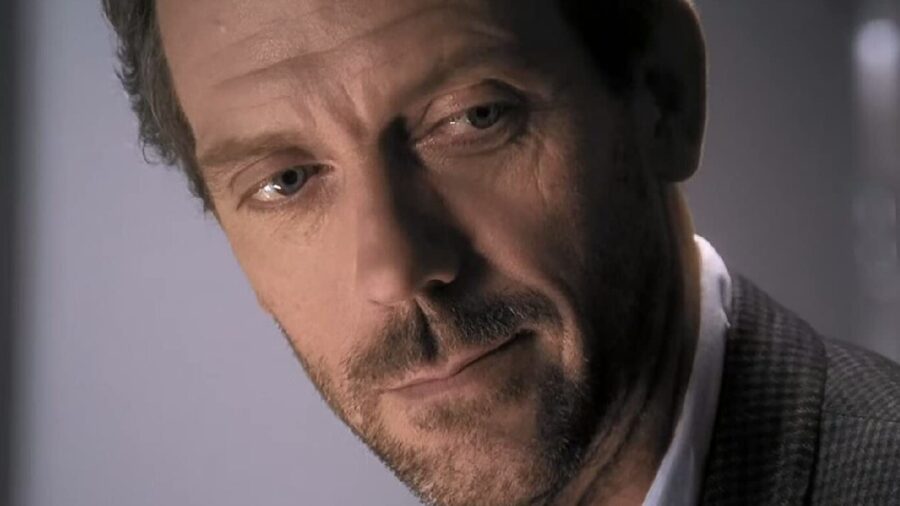
Beyond the sarcasm, Laurie offers some pretty spot-on media analysis. Most great new stories are, in fact, variations on stories we have seen before. Joseph Campbell pointed this out in his groundbreaking 1949 book Hero with a Thousand Faces. According to him, most great myths (ranging from The Odyssey to the Bible) tell the same essential story using different variations of the same tropes. He called this the “monomyth,” and his theories influenced George Lucas. This is why the first Star Wars, despite being sci-fi, has so many King Arthur callbacks: a magical mentor, an enchanted sword, and a hero of destiny who has to rescue a damsel in distress from a terrifying castle.
While many fans and even a few of the show’s actors have been hoping for a House revival, nothing has been announced. Realistically, we may never get another TV series that brings back Hugh Laurie’s famously cantankerous physician. However, this hilarious kerfluffle over on X is a reminder that fans can effectively summon House back for more wit and wisdom whenever they want. All they have to do is say something really, really stupid where Hugh Laurie can see it, and then brace themselves for the most hilarious clapbacks in celebrity history!

Anthropic’s Claude Fable 5 is a version of Mythos the public can access today
Golf Glance: Canada hosts final U.S. Open prep; Nelly Korda returns to LPGA's team event


